
Our readers keep the lights on and my morning glass full of iced black tea. As an Amazon Associate, I earn from qualifying purchases.
Specs are compiled from manufacturer listings and verified buyer reviews and can change over time — please confirm the key details on the product page before buying.
Before you buy an affordable solar generator, ask yourself one honest question: how much wattage do you actually need without paying for capacity you will never use? For most people, the balance is a LiFePO4 battery (a long-life lithium chemistry that survives thousands of charges) paired with a foldable solar panel that matches how you camp or how often the power goes out. This guide sorts the market into value, mid-range, and premium tiers so you can match the right machine to your real-world loads — from a CPAP machine at night to a fridge during a storm.
I’m Min — the founder and writer behind Gadgets Feed. This guide is built by comparing the manufacturers’ published specifications and the patterns across verified customer reviews, so you get each pick’s real strengths and trade-offs instead of marketing spin.
Note: because “affordable” means different things to different buyers, this list uses flexible matching on solar charging capability, so the nearest same-type size or wattage serves the same purpose and is never misrepresented. if you need a weekend camping companion or an emergency home backup, the best affordable solar generator is the one whose battery size, output wattage, and solar panel all fit your specific plan.
Our Picks at a Glance

How To Choose The Best Affordable Solar Generator
Start with the loads you will actually plug in. A phone, a laptop, and a string of lights need far less than a mini-fridge or a space heater. Once you list your devices, the two numbers that matter most are battery capacity (watt-hours, or Wh) and output power (watts, or W). Capacity tells you how long it runs; output tells you what it can run at all.
Match the Battery Chemistry to Your Lifespan Expectation
Nearly every modern unit here uses LiFePO4 cells (lithium iron phosphate), which handle far more charge cycles than older lithium-ion packs before degrading. You will see claims of 3,000 to 4,000+ cycles to 80% capacity, which translates to a decade or more of daily use. If you plan to use the generator weekly for years, LiFePO4 is the only chemistry worth paying for.
Look at Recharge Paths, Not Just Solar
Solar is the headline, but wall and car charging keep you flexible. Check how fast the unit refills from a wall outlet (some hit 80% in under an hour) and whether it accepts a 12V car socket. A generator that only charges from the sun is a liability on cloudy stretches — one that takes three input paths is a far more practical buy.
Ports and Pure Sine Wave Output
Count the ports before you buy. AC outlets power appliances, USB-C PD (Power Delivery, a fast-charging standard) handles laptops at 60W to 140W, and a 12V car socket runs things like CPAP machines efficiently. Pure sine wave AC output (a clean, stable power form) protects sensitive electronics like PCs and medical devices from damage.
Quick Comparison
| Model | Best For | Capacity | AC Output | Solar Panel | Amazon |
|---|---|---|---|---|---|
| EF ECOFLOW Delta 3 Classic (220W)★ Best Overall | Whole-home backup & heavy loads | 1024Wh | 1800W | 220W | Amazon |
| Daran NEO300LBudget Champion | Budget camping & outages | 288Wh | 350W | 40W | Amazon |
| Anker SOLIX C300 DCBest for Portability | Backpacking & CPAP users | 288Wh | 300W | 60W | Amazon |
| GRECELL EB500 | Travel & light home backup | 519.48Wh | 500W | 100W | Amazon |
| Jackery Explorer 300 | Light hikes & car camping | 292Wh | 300W | 40W | Amazon |
| BLAVOR S1600 | Fridges & CPAP in one box | 1024Wh | 1600W | Built-in 40W | Amazon |
| BROWEY S1600 | High-end camping & outages | 1024Wh | 1600W | Built-in 40W | Amazon |
| EF ECOFLOW Delta 3 Classic (110W) | Lighter solar bundle options | 1024Wh | 1800W | 110W | Amazon |
| OUPES Mega 1 Lite | High-watt cooking off-grid | 1024Wh | 2000W | 100W | Amazon |
| ALLPOWERS R2500 V2 | Heavy-duty home & job sites | 1920Wh | 2500W | 200W | Amazon |
| BLUETTI Elite 100 V2 | Balanced home & camping power | 1024Wh | 1800W | 200W | Amazon |
In-Depth Reviews
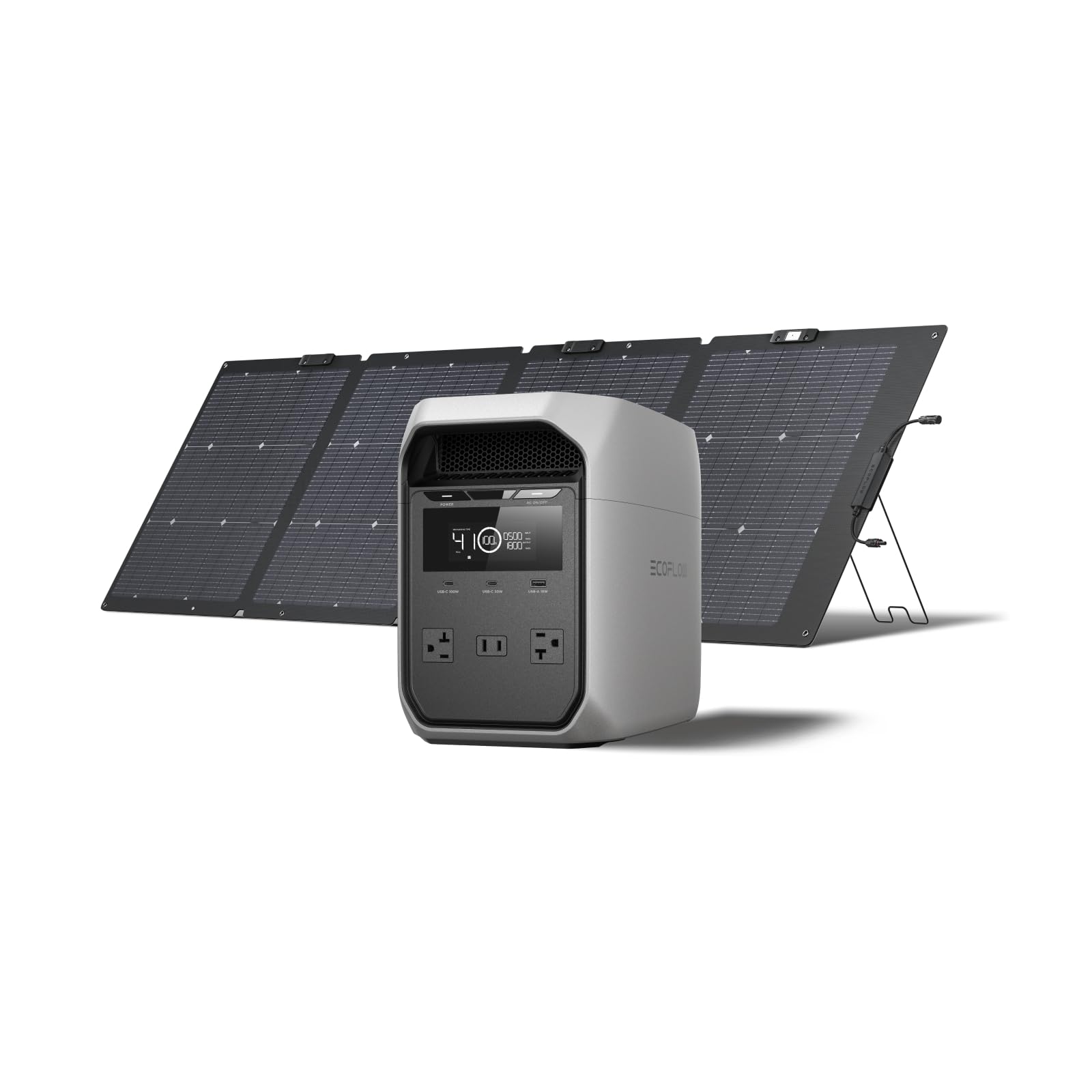
1. EF ECOFLOW Delta 3 Classic with 220W Solar Panel
Our pick — over 4.5★ from 300+ verified ratings; the strongest balance of quality and price.
The whole-home-level backup that still feels portable enough to carry a quarter mile to a picnic site.
This EcoFlow DELTA 3 Classic pairs a 1024Wh battery with a 1800W outlet (3600W surge, the brief burst that starts motors), which is enough to run refrigerators, microwaves, and laptops at once. Its 220W bifacial solar panel (one that collects light from both sides) refills the battery in about 5.8 hours of good sun, and it folds and resists water for camping. The included LiFePO4 cells are rated for 10+ years of daily use, and the smart Battery Management System keeps the pack protected from heat and over-current faults.
The spec that quietly wins over buyers is the sub-10ms UPS switch — when the grid dips, it flips to battery in under 10 milliseconds, so a PC or server never blinks. Buyers report running a CPAP and a 16-inch fan all night with power to spare, and another got about 55% charge in a few hours from the solar panel while charging phones and tablets the whole time. Recharging from a wall hits 0-80% in just 45 minutes via X-Stream AC charging, which makes this far more flexible than a sun-only unit.
What wins people over is build quality and reliability — the two most-discussed traits by a wide margin. It is noticeably heavier than smaller packs, but owners mention it packs in and out a quarter mile without complaint, and the power output justifies the weight. A few customers note the value is fair but not cheap, and the panel and station ship separately, so expect two boxes.
What earns it the top spot
- 1800W output (3600W surge) handles fridges, microwaves, and CPAP machines
- 220W bifacial panel recharges in ~5.8 hours of sun
- 0-80% wall charge in 45 minutes
- 10ms UPS protects sensitive electronics
- LiFePO4 cells rated for 10+ years of daily use
The honest trade-offs
- Noticeable weight; buyers call it manageable but not featherlight
- Solar panel and station arrive in separate shipments
- Value feedback is mixed — strong performance, but not a budget price
Reach for this if: you want one kit that can carry a fridge through an outage and still be portable enough for a campout.
Think twice if: you only need to top up phones and a laptop — the 1800W output is more muscle than that job requires.
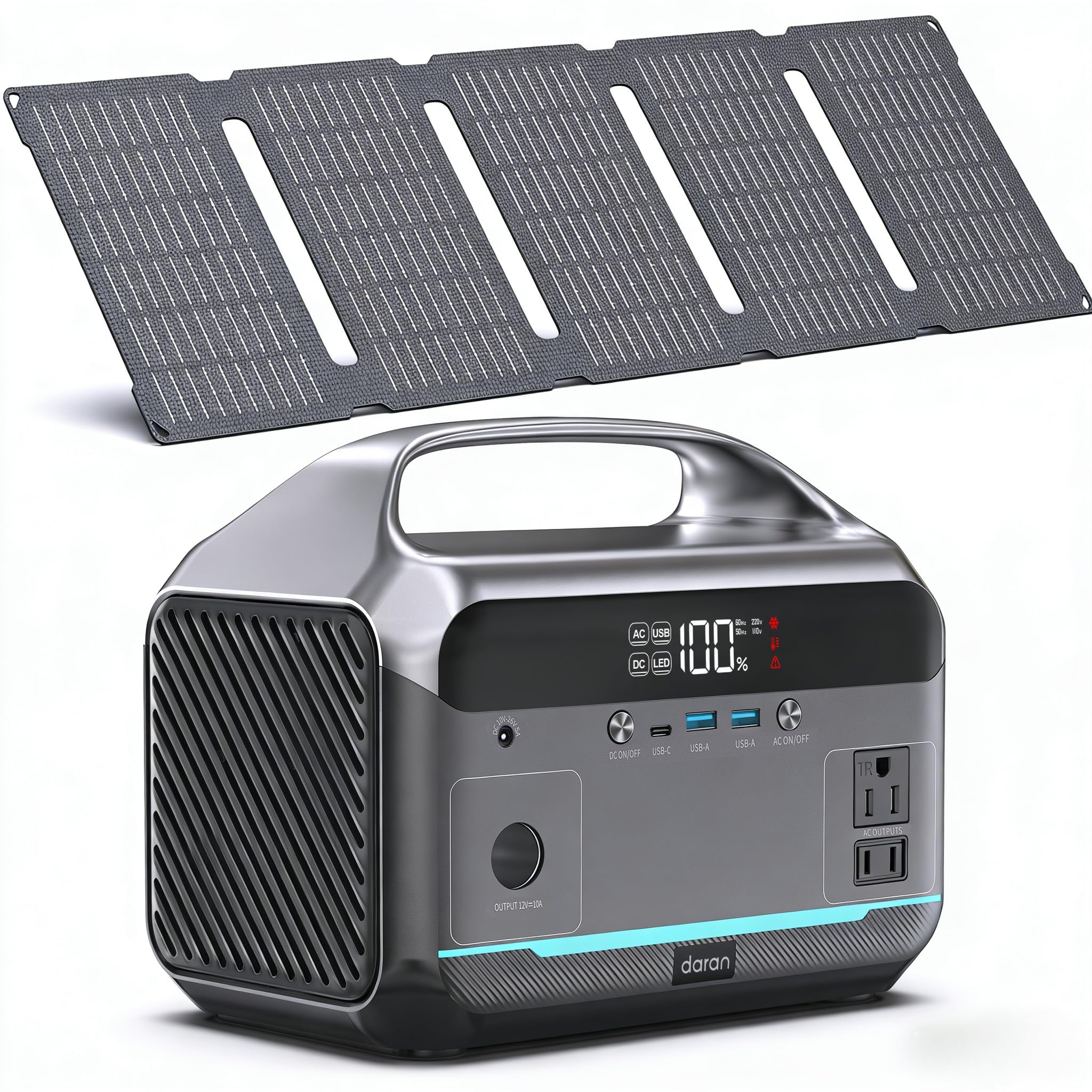
2. Daran 350W Portable Power Station with 40W Solar Panel
The lightest entry point into solar backup — one hand carries the whole setup.
The Daran NEO300L keeps things simple: a 288Wh battery with a 350W AC outlet (600W peak surge for starting small motors) and a tablet-sized 40W foldable solar panel. It runs mini-fridges, laptops, CPAP machines, and camping lights, and the built-in LED light offers Steady, Strobe, and SOS modes for night emergencies. At 8.2 lbs, it stows in a hiking pack or picnic basket without weighing you down.
Recharging is genuinely flexible — a wall outlet, the 40W panel, or a 12V car socket all work, with a 0 to 80% fill in just 2.4 hours via the 100W AC input. The LiFePO4 cells deliver 3,000+ deep life cycles, and the advanced BMS guards against short-circuits, over-charging, and extreme temperatures. Reviewers point out it runs quiet and efficiently, and the customer support team has a strong reputation for helping owners upgrade to bigger panels.
What gets the most praise is build quality — solid construction on both the station and the solar panels. Battery life draws mixed feedback, which is fair: the more you draw, the shorter the runtime, though it does recharge quickly.
The bottom line: a genuinely budget-friendly first solar generator that handles essential devices and recharges every way you’d want.
The catch is: 288Wh is for essentials, not appliances — treat it as a phone-and-CPAP companion, not a fridge runner.
3. Anker SOLIX C300 DC with 60W Solar Panel
A backpackable 288Wh pack that kept a CPAP running for six straight nights on one charge.
Anker’s SOLIX C300 DC squeezes 300W and 288Wh into a body 30% smaller than similar power stations, and it weighs just 2.8 kg. The 60W solar panel refills it in about 4 hours of sun, while a wall outlet hits 80% in just 50 minutes. Seven ports — including two 140W two-way USB-C — let you charge laptops, cameras, and phones simultaneously without touching the AC outlet.
The defining real-world story is CPAP longevity: shoppers say running a ResMed AirSense 11 for six nights on a single charge, ending at 2%, with no charging and no alarms. Another powered three phones, a speaker, and multiple USB-C fans 24/7 for four days, with the 60W panel keeping it topped off even in cloudy, rainy conditions. The Anker app tracks charge and solar input over Bluetooth, and the unit doubles as a tent light.
What wins people over here is performance — the most-mentioned trait — backed by rock-solid reliability. The solar panel is the weak link for some: it’s picky about shading and angle, with a flimsy kickstand, so position it carefully. An occasional unit reportedly won’t hold a charge, but the overwhelming pattern is a compact, dependable companion for off-grid nights.
Who it’s for: campers and CPAP users who want maximum runtime per pound in a genuinely small footprint.
Who it’s not for: anyone needing to run a fridge or power tools — 300W won’t start those motors.
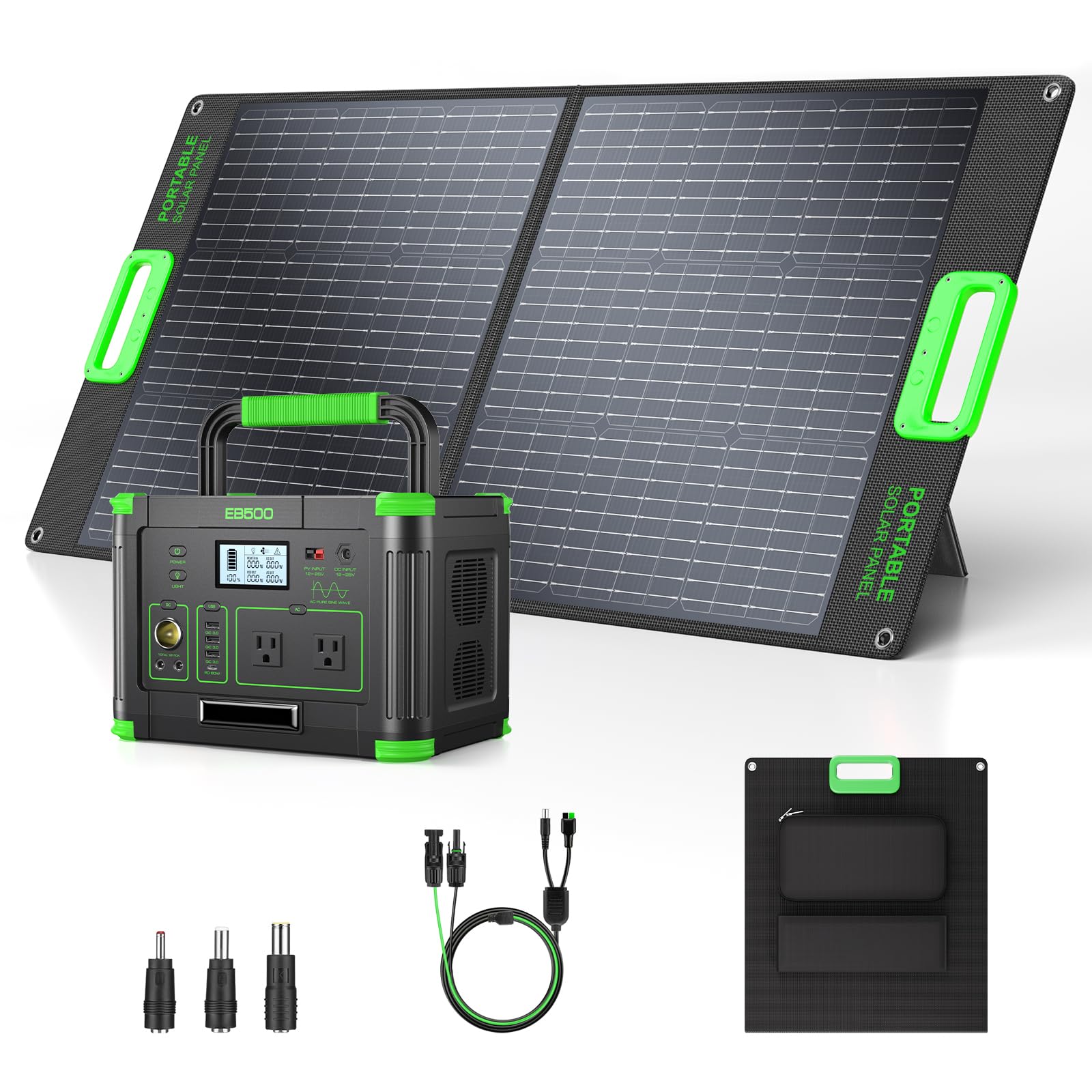
4. GRECELL 500W Portable Power Station with 100W Solar Panel
A 519.48Wh balance that balances cost, capacity, and a genuinely useful 100W panel.
The GRECELL EB500 splits the difference between tiny 288Wh packs and hefty 1kWh stations. Its 519.48Wh battery feeds a 500W rated output (1000W peak), and the bundled 100W monocrystalline panel — with up to 23.5% conversion efficiency — captures more sun to refill faster than polycrystalline alternatives. Ten ports cover nearly every common household device: two AC outlets, three USB-A QC3.0, one USB-C PD 60W, a car outlet, two DC barrel outputs, and a wireless charging pad.
Buyers in RVs report running a Starlink dish and phones for days on one charge, and another held a full charge through five days of dry camping while recharging via the solar panel through the trailer. The 18V panel output and smart chip detect connected devices to tune charging speed while guarding against overcharge. Owners praise the build quality more than anything else, with the fit into existing gear — like an EBL 1000-watt camp battery case — getting repeated mentions.
Value gets mixed feedback, which aligns with its mid-tier pricing: it’s not the cheapest per watt-hour, but the included 100W panel makes the whole kit ready to use from the start. A few buyers report runtime is shorter than expected, and one solar session returned just 25% in shade — panel placement matters. This is a travel-friendly capacity that still leaves room to grow.
Pick it for: weekend camping and light home backup where 500W covers phones, laptops, fans, and a Starlink dish.
skip it if: you need to run a fridge — that’s a 1000W-and-up job that this 519.48Wh pack can’t sustain.
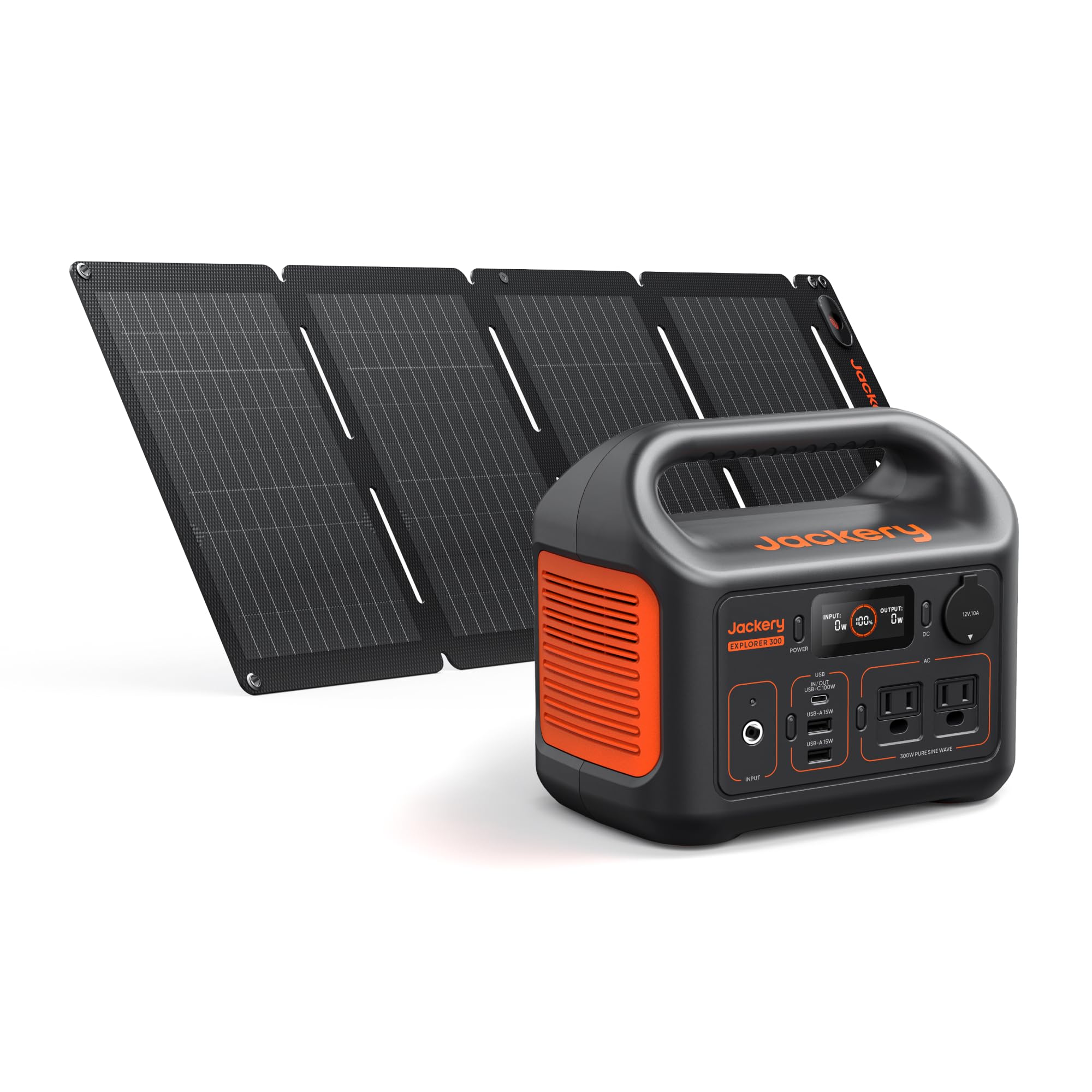
5. Jackery Solar Generator 300 with 40W Solar Panel
The 7.5 lb power bank that runs a CPAP all night and still leaves 20% in the morning.
Jackery’s Explorer 300 nails the light-and-capable balance at just 7.5 lbs — 17% lighter than the industry average for its class — with a 292Wh battery and 300W rated output (600W peak surge). It charges devices from two AC outlets, a 100W USB-C PD port, two USB-A ports, and a 120W car port. As a solar-powered companion for the 40W Air panel, it reaches 80% in about 7.5 hours of sun, or faster with a larger 100W panel at roughly 2.8 hours.
The upgraded LiFePO4 chemistry delivers over 4,000 charge cycles before reaching 70% capacity, which the maker says translates to more than 11 years of reliable service. Owners mention all-night CPAP runs with 20% battery left in the morning, phone and laptop charges several times over, and a string of 100 lights running for three hours. The built-in display shows live wattage draw, so you always know what you’re pulling.
What gets the most praise is overall performance, with size and versatility close behind — it’s a favorite gift for camping kids who already own every gadget. Battery life and charging capacity draw the mixed reviews: the 40W panel generally won’t bring it to full in a single day, and several owners suggest stepping up to a 100W charger for real solar refills. It charges fine from a wall or the van’s cigarette lighter, too.
Where it shines
- Ultra-light 7.5 lbs with an integrated carry handle
- Over 4,000 charge cycles before hitting 70% capacity
- Runs a CPAP overnight with 20% to spare
- Live wattage display on the front panel
Where it stumbles
- 40W panel needs a full sunny day to top it off
- Value opinions split — some find it overpriced for the capacity
- 600W surge won’t start fridge compressors
Best left to: hikers and van-lifers who want the lightest reliable pack for phones, laptops, and overnight medical gear.
A better fit elsewhere: anyone expecting solar to fully recharge daily — pair it with a 100W panel or accept the slower 40W pace.
6. BLAVOR 1600W Power Station with Built-in 40W Solar Panel
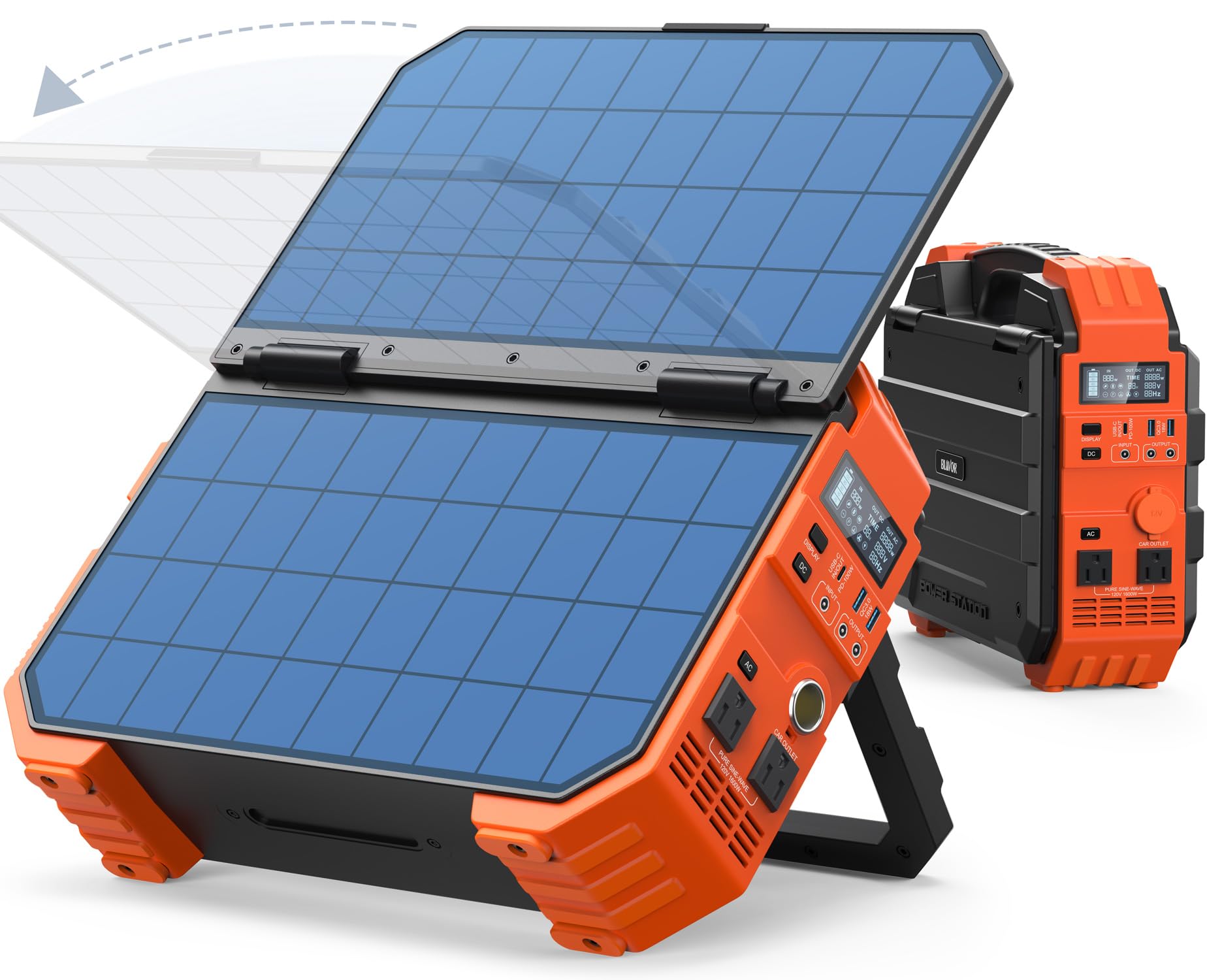
The suitcase-style station with a fold-out 40W solar panel built right into the lid.
BLAVOR’s S1600 packs 1024Wh and a 1600W rated output (3200W surge) into a rugged suitcase design with a foldable 40W solar panel integrated into the top — an award-winning layout that won the 2022 German IF Design Award. The LiFePO4 battery lasts over 3,500 charge cycles (more than 10 years of daily use), and the smart BMS prevents overheating, overload, and short circuits. Eight outlets keep a fridge, CPAP, coffee maker, and phones running at once.
Charging works four ways: wall outlet, car socket, the built-in 40W panel, or external solar panels for faster refills. A 100W USB-C port supports two-way fast charging, so it can power a laptop or recharge the station itself. Customers note running a 26 cu ft fridge for about five hours and satellite TV for hours without dropping from full charge, all while staying quiet and cool.
Reliability is the most-mentioned trait in buyer reviews, with battery life, charging, and portability all closely praised. Owners call it an absolute unit with sturdy hinges and heavy-duty plastic. Real-world notes: port labels can be hard to read against the orange background, and adding external MC4 panels (standard solar connectors) requires an adapter. At 26 lbs, it’s a home-backup workhorse, not a hiking companion.
The strongest angle: one box with solar built in — no separate panel to forget at home.
The honest limit: the built-in 40W panel (~30W real input) is a slow top-up, not a fast refill; pack an external panel for serious solar charging.
7. BROWEY 1600W Power Station with Built-in Solar Panel
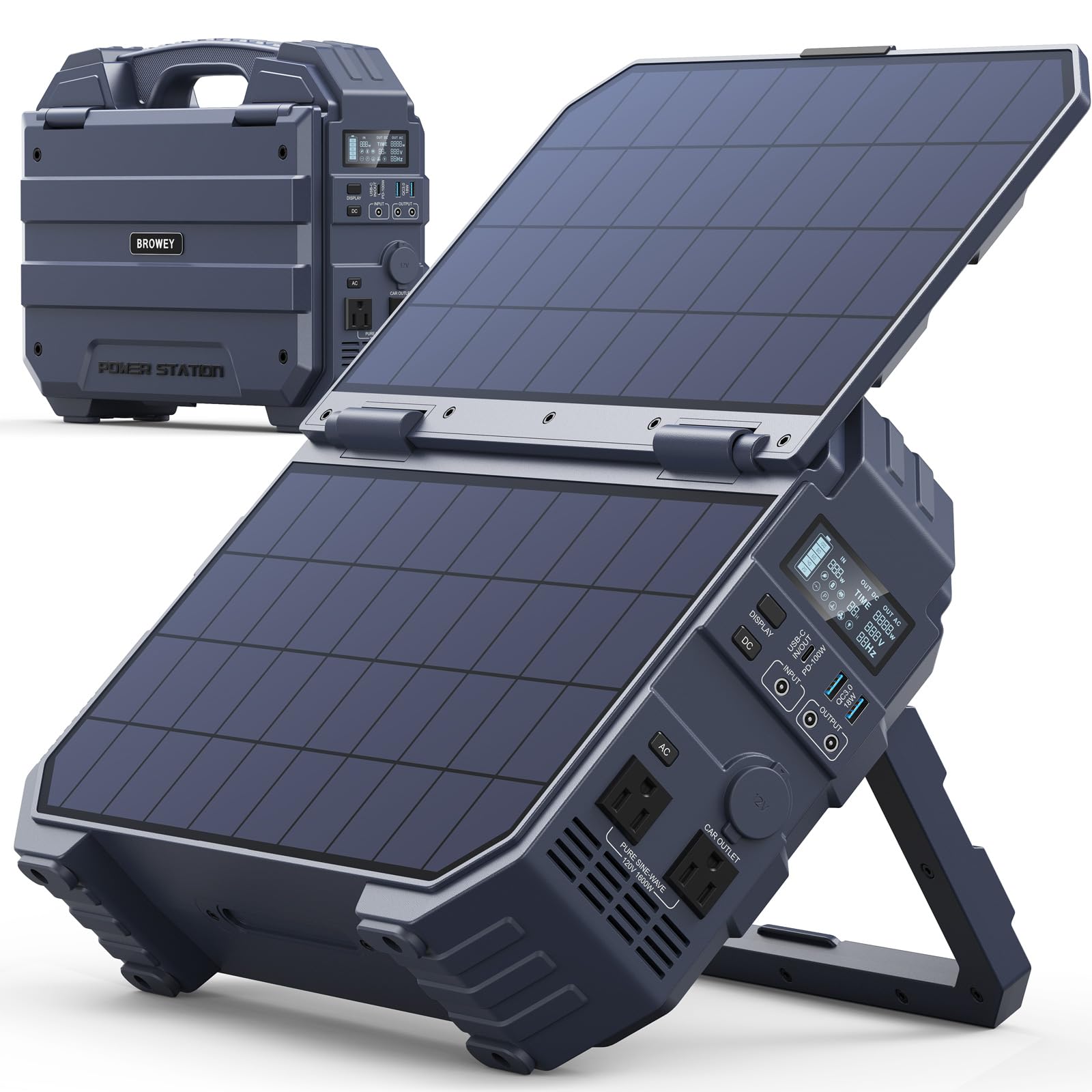
A 4.8-star crowd favorite that kept fridges running through hurricane season without a hiccup.
The BROWEY S1600 matches the BLAVOR’s spec sheet — 1024Wh, 1600W output (3200W peak), built-in 40W panel with an MPPT controller (a smart tracker that squeezes maximum power from the sun) — but earns the higher rating through reliability. At 26.5 lbs with a suitcase profile, it’s built for emergency backup and RV life. The LiFePO4 cells last 10+ years (3,000+ cycles to 80% capacity), and the advanced BMS (battery management system) guards against overvoltage, overheating, and short circuits.
Charging reaches 80% in just 3 hours using the AC adapter and 100W PD USB-C port simultaneously, or slower via the car outlet and 40W solar. Reviewers point out powering a refrigerator during an outage, running ham radio gear, and even a washing machine, window AC, and lawn mower in one impressive demo. One owner kept all devices running for a full week on the stored charge — the battery life is the standout.
Quality is the most-praised trait, with reliability right behind it, and both are consistently positive. The charging speed draws mixed comments, which fits its mid-tier panel. A few notes: it’s heavy, and one buyer had a solar charging failure that the company replaced free — good service, but worth knowing. The reputation here is strong enough that owners call it ideal for hurricane prep and camping alike.
The confident pick: the highest-rated unit in this lineup for good reason — reliability, power, and battery life all check out.
The caveat: a few owners needed customer support for charging faults; the company stood behind the product, but verify your unit on arrival.
8. EF ECOFLOW Delta 3 Classic with 110W Solar Panel
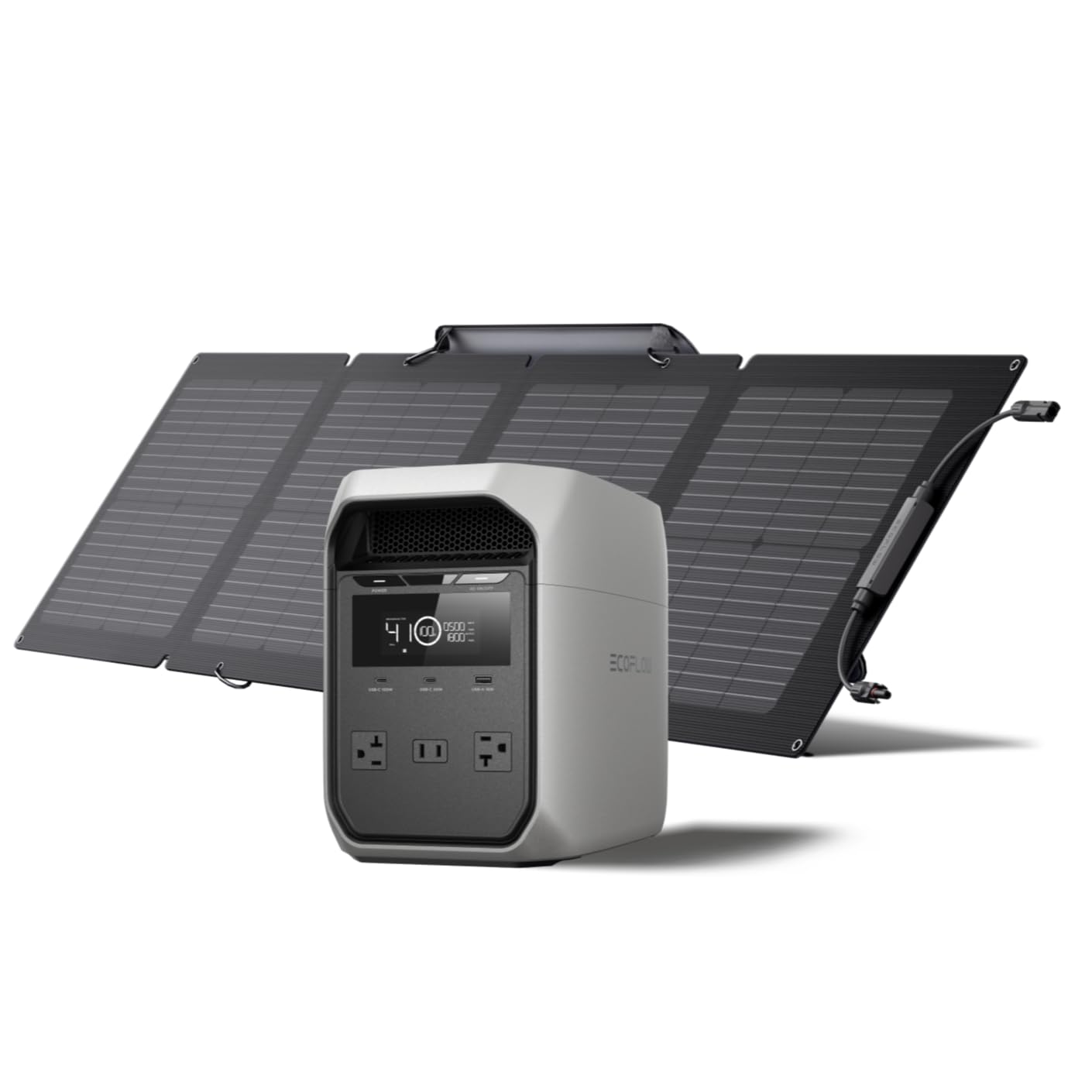
The same proven 1800W Delta 3 station, paired with a lighter 110W panel for a lower entry price.
This is the sibling to our Best Overall pick: identical 1024Wh Delta 3 Classic station with 1800W output (3600W surge) and X-Boost expansion up to 2600W, but bundled with a 110W solar panel instead of the 220W bifacial. That smaller panel stretches solar recharge to 11.6 hours in full sun — workable for weekend camping, slow for daily off-grid living. The wall adapter still hits 0-80% in just 45 minutes.
The station itself is the same crowd-pleaser: a sub-10ms UPS switch protects PCs and servers, LiFePO4 cells last 10+ years, and the EV-grade CTC design keeps it compact and sturdy. Shoppers say a 0-100% wall charge in about an hour, flawlessly powering a Starlink Mini, phones, iPads, and a projector through a full movie. One owner kept a mini fridge running for 18 hours.
What gets the most praise is quality — it holds the same premium build feel as its big-panel sibling — with charging speed close behind. The 110W panel has a 23% conversion rate, but buyers report it’s the slower path to a full battery; this bundle suits anyone who mostly wall-charges and wants solar as a backup. Weight is called out as manageable, and it ships in two boxes like the 220W version.
Who it fits: buyers who want the flagship Delta 3 station but don’t need a fast solar refill — wall charging is the primary mode.
Who should pass: off-grid purists who live on solar daily; the 220W bundle above tops up more than twice as fast.
9. OUPES Mega 1 Lite with 100W Solar Panel
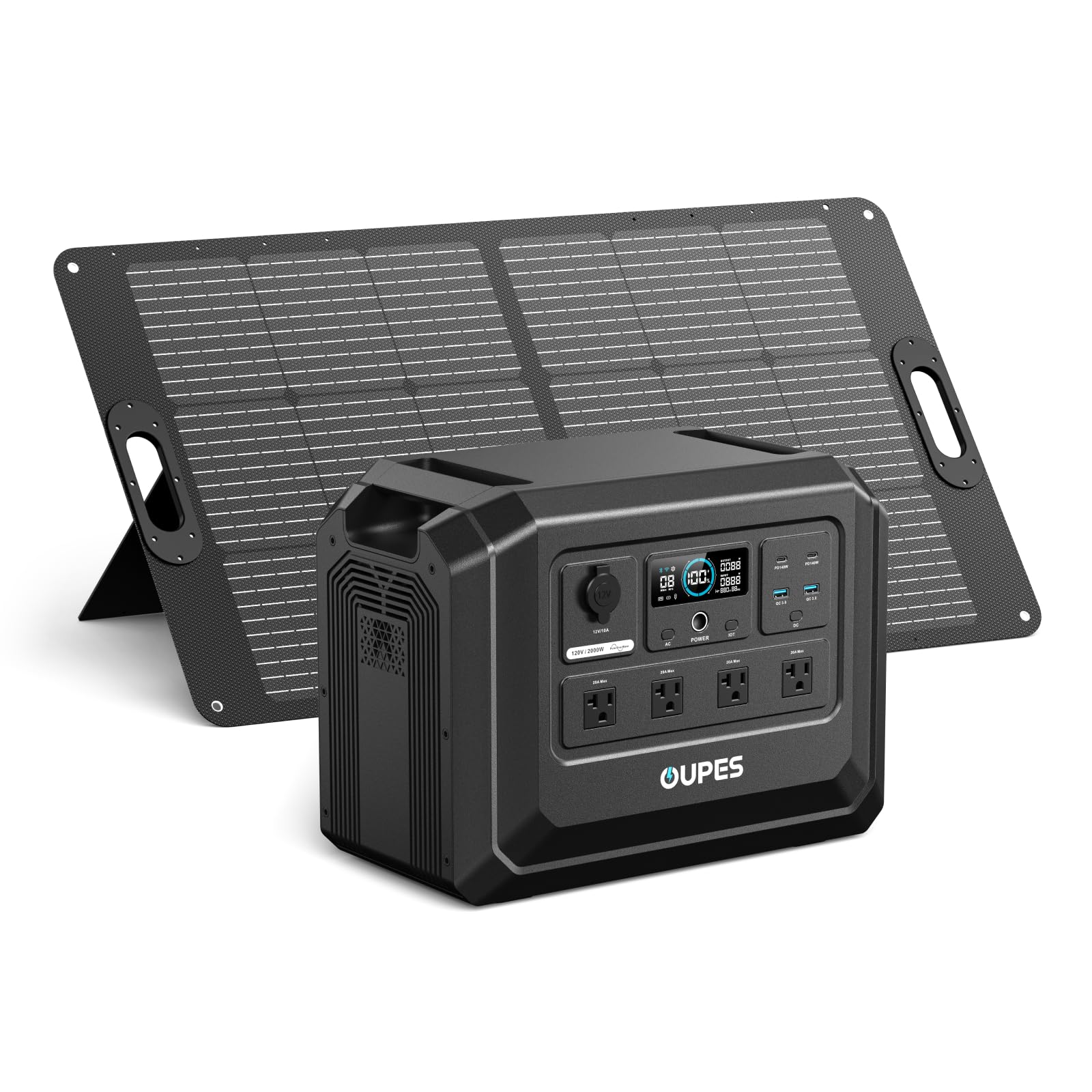
The 2000W powerhouse that fully refills from a wall outlet in a stunning 46 minutes.
OUPES Mega 1 Lite pairs a 1024Wh battery with a hefty 2000W rated output (4500W surge) — enough to run coffee makers, electric grills, and hair dryers off-grid. The bundled 100W monocrystalline panel converts up to 23% of sunlight, folds into briefcase size, and has an adjustable kickstand for optimal sun capture. Two 140W USB-C PD ports fast-charge laptops without needing bulky adapters.
The headline spec is the 46-minute full recharge from a wall outlet via bi-directional inverter technology — the fastest in its class and a genuine standout for outage prep. The LiFePO4 cells offer 3,500+ cycles to 80% capacity, delivering a decade of use. Nine ports, including four AC outlets, power up to nine devices at once, and the smart app adds Bluetooth and Wi-Fi remote control of solar intake and battery levels. Owners mention running a small fridge overnight in a food trailer and a 1000W percolator with ease.
What wins people over is quality, with performance and charging close behind — all consistently positive. The 100W panel is the slower solar path, so full solar refills take most of a day, but the wall speed more than compensates. At 26.7 lbs, it’s manageable for a car trunk or campsite carry, and customers note it replaces a gas generator entirely — quiet, fume-free, and safe indoors.
The standout strengths
- 46-minute full wall recharge — fastest in this lineup
- 2000W output (4500W surge) runs high-watt appliances
- Dual 140W USB-C PD for fast laptop charging
- Smart app with Bluetooth and Wi-Fi remote control
- 3500+ LiFePO4 cycles for a decade of service
What to weigh
- 100W panel is slow for full solar refills
- 26.7 lbs is fine for trunks, heavy for long hikes
- Price sits at the higher end of the mid-range tier
Grab it for: off-grid cooking and high-watt appliances where 2000W makes the difference.
Look elsewhere if: you need fast daily solar refills — this one shines on wall charging, not panel charging.
10. ALLPOWERS R2500 V2 with 200W Solar Panel
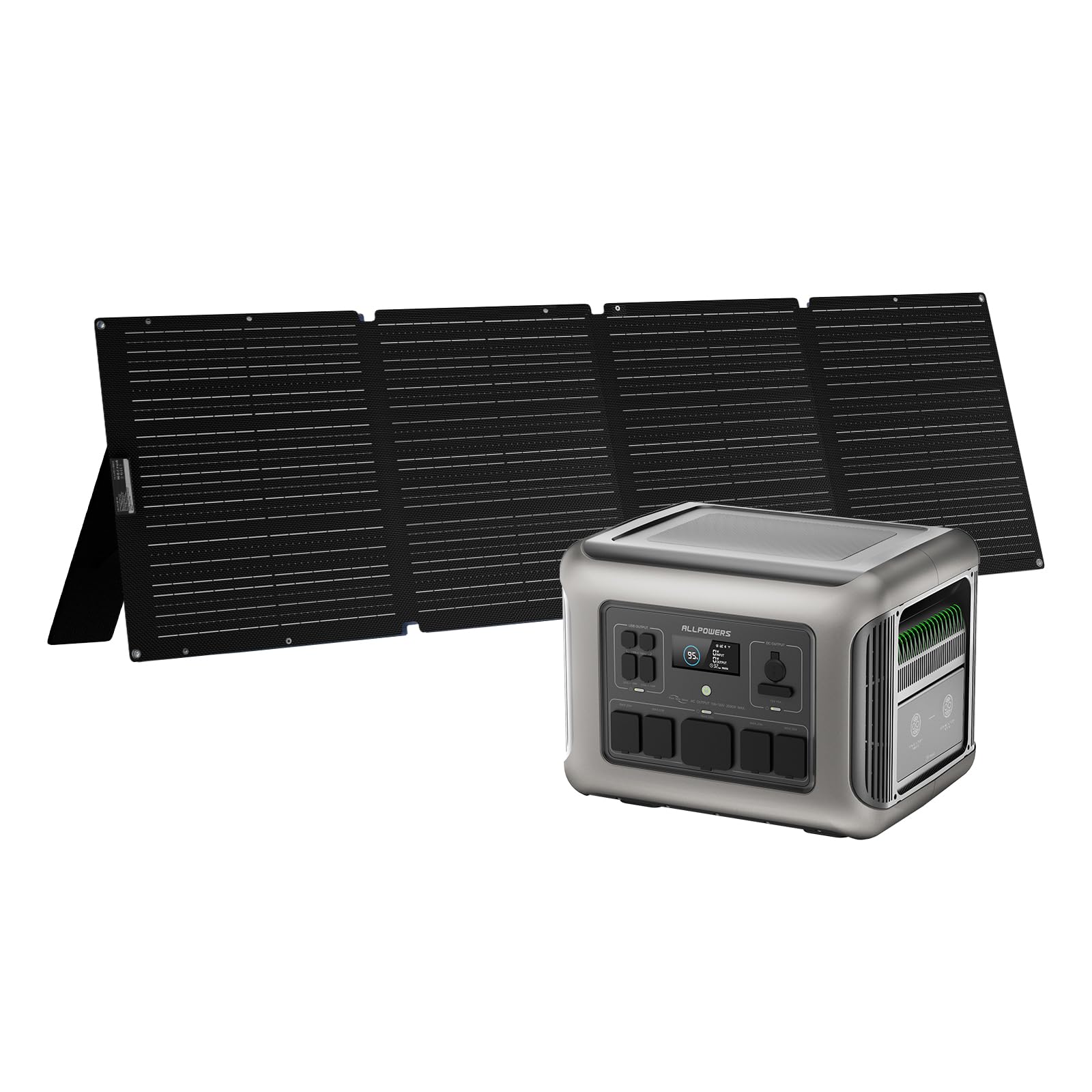
The biggest battery here at 1920Wh, with a 2500W output that runs two fridges through an outage.
ALLPOWERS R2500 V2 nearly doubles the capacity of the other picks at 1920Wh, with a 2500W rated output (5000W peak) that handles refrigerators, power tools, and air conditioners. The bundled 200W SE200 solar panel feeds a 1000W solar input, and the unit fully recharges from a wall in just 1 hour — a rare blend of size and speed. The pure sine wave inverter with sub-15ms UPS switchover keeps computers and networking gear online during grid failures.
Reviewers point out powering two refrigerators, kitchen and basement lights, a water heater fan, and a furnace fan for 3.5 hours during an outage — all while avoiding starting a loud gas generator at night. Another CPAP user gets 5-6 nights per charge with a heated hose and humidifier, or 10 nights without them. The 13 output ports and 5-year warranty round out a genuinely heavy-duty package.
The battery life draws the most mentions but carries mixed feedback — some owners find it works exactly as advertised, others hit issues. Quality is praised, and buyers call the power-per-pound “unreal,” preferring it to heavier competitors. The 62 lb weight is the real constraint: it’s a home-backup anchor, not a camping companion. A few shoppers say solar charging runs slow, and one found the initial 200W panel was swapped for 100W — customer service fixed it fast.
The strongest argument: nearly double the capacity of anything else here, with 1-hour wall refills.
The honest limit: at 62 lbs, this is for home backup and RV bases, not hiking — and battery reliability has a few mixed notes worth checking.
11. BLUETTI Elite 100 V2 with 200W Solar Panel
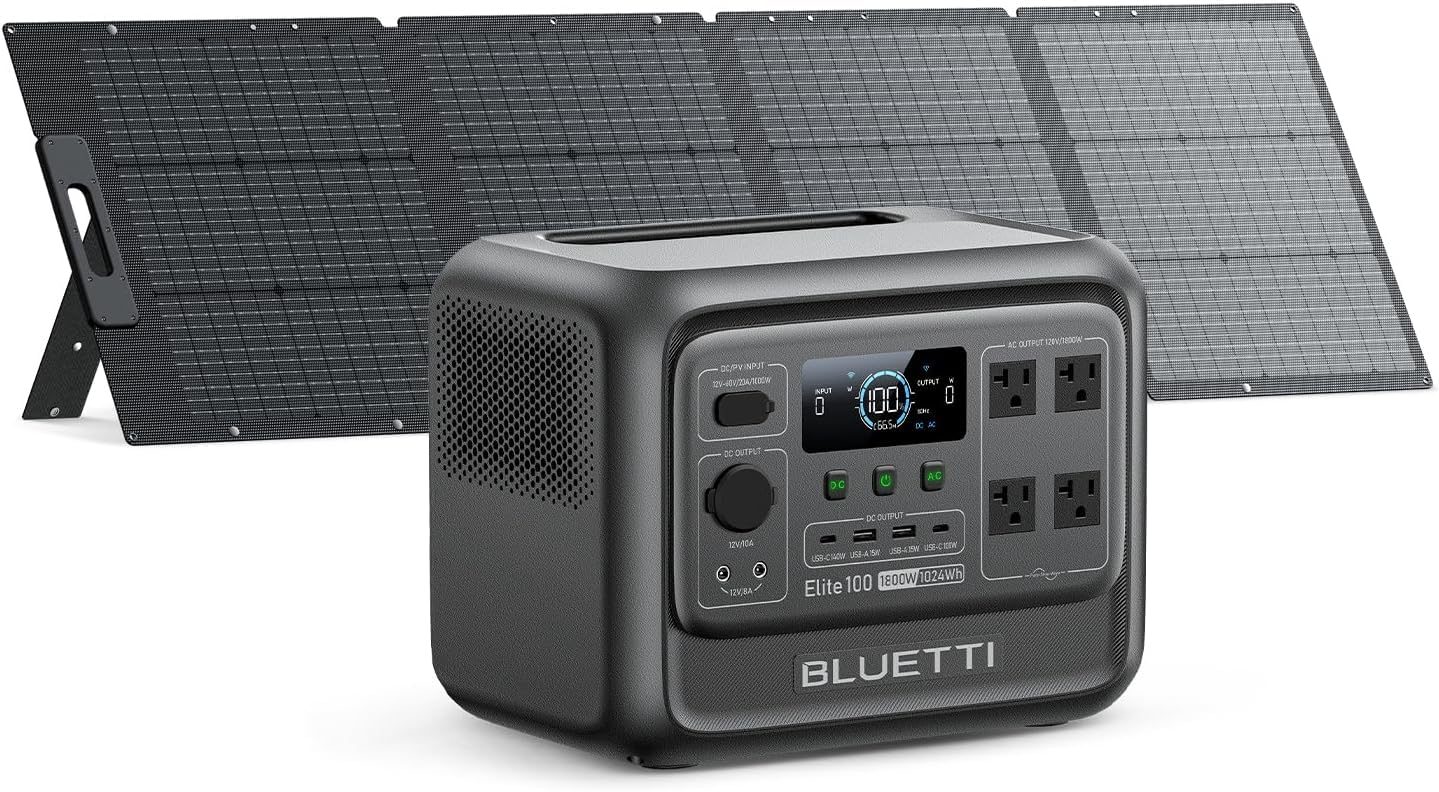
The 30dB silent station that ran an oxygen concentrator for 3.5 hours on a single charge.
BLUETTI’s Elite 100 V2 delivers 1024Wh and 1800W rated output (2700W Power Lifting for brief surges) with an 11-port layout that runs laptops, mini-fridges, coffee makers, and drones. The bundled 200W solar panel refills 0-80% in 4 hours of sun and full in 7 hours, while the 1200W TurboBoost AC charging hits full in about 70 minutes. A 10ms UPS switchover keeps WiFi routers and PCs running through outages.
In silent mode it runs at just 30dB — 50% quieter than other 1kWh stations — making it ideal for overnight camping and indoor use. Buyers report one charge powering a Philips Respironics oxygen concentrator for 3.5 hours, and a 3-day camping trip covering phones, laptops, a TV, stove, coffee maker, lights, and a projector. The BLUETTI app adds Wi-Fi and Bluetooth remote monitoring, power management, and OTA updates.
The most-praised traits are quality and reliability, both solidly positive, with battery life praised for quick charging. One buyer’s 25 lb unit powered a 500W heater, a Dometic fridge, and lights at a campsite with electric input, and another plans to buy a bigger model. A single critical unit reportedly shut off after a 12V fridge connection, though the overwhelming pattern is dependable performance — worth a heads-up but not a pattern.
The balanced choice: a strong all-rounder with fast AC and solar charging, a useful app, and genuinely quiet operation.
The caution: one buyer hit a shutdown after a 12V fridge hookup — test your specific loads early, and keep the 25 lb weight in mind for travel.
Understanding the Specs
Capacity (Watt-Hours, Wh)
This is the size of the battery’s fuel tank — it tells you how long the generator runs before needing a refill. A 288Wh pack handles a CPAP overnight or several phone charges; a 1024Wh pack runs a fridge for hours or powers a campsite for days. Bigger Wh means longer runtime, but it also adds weight and cost, so match it to your actual devices rather than buying the biggest number.
Output Power (Watts, W) and Surge
Output power decides what you can plug in at all. A 300W unit charges phones, laptops, and CPAP machines, while a 1800W to 2500W unit starts fridges, microwaves, and power tools. Surge wattage is the brief burst that starts motors — a fridge compressor might need 3x its running watts for a second — so check surge ratings when planning appliance loads.
Battery Chemistry and Cycles
LiFePO4 (lithium iron phosphate) is the chemistry that makes modern generators last. These cells handle 3,000 to 4,000+ charge cycles before dropping to 80% capacity, which translates to a decade or more of daily use. Older lithium-ion packs degrade far faster. If a unit quotes “3,500 cycles to 80%,” that’s the long-life benchmark worth paying for.
Solar Panel Wattage and Recharge Time
Panel wattage determines how fast the sun refills the battery. A 40W panel is a slow top-up — often a full day for a 292Wh to 288Wh pack. A 100W to 220W panel refills a 1kWh station in 4 to 7 hours of good sun. Bigger panels with higher conversion efficiency (around 23-25%) capture more light, so you get faster refills and more usable power on cloudy days.
FAQ
How long does it take to solar charge a portable power station?
Can a solar generator run a refrigerator?
What is the difference between watt-hours and watts?
Is LiFePO4 battery chemistry worth paying extra for?
Can I charge a solar generator from a wall outlet?
What size solar generator do I need for CPAP camping?
What does pure sine wave output mean and why does it matter?
How many devices can I run at the same time?
What is a UPS switchover and do I need it?
Final Thoughts: The Verdict
For most buyers, the affordable solar generator winner is the EF ECOFLOW Delta 3 Classic because it pairs a 1024Wh battery with 1800W output and a 220W panel — the rare kit that handles both home backup and portability. If you want a lighter carry for camping and CPAP nights, the Anker SOLIX C300 delivers a week of CPAP on a single 288Wh charge. And for serious appliance power — coffee makers, grills, even two fridges — the ALLPOWERS R2500 V2 with its 1920Wh battery and 2500W output is the heavy-duty pick worth the weight.
How We Picked
We do not accept paid placement. Every pick is matched to a real buyer and a real use-case; we do not hands-on test units.
Sources & Methodology
Specifications: manufacturer listings and product documentation. Review insights: verified customer reviews, as of August 2026. Pricing: not shown on this page (it changes often); check the current price via the retailer link.
As an Amazon Associate, Gadgets Feed earns from qualifying purchases. This does not affect which products we feature.