
Stepping into photography means choosing between a mirrorless system with modern autofocus and a DSLR with an optical viewfinder and a lower price tag. The right affordable starter camera balances image quality, usability, and room to grow without forcing you to replace the body within a year.
I’m Min — the co-founder and writer behind Gadgets Feed. I’ve spent months cross-referencing sensor sizes, autofocus point counts, stabilization systems, and real-world user feedback to isolate which entry-level cameras deliver actual value versus marketing fluff.
After analyzing over a hundred user reviews and spec sheets, I’ve narrowed the market to the models that genuinely serve beginners. This guide ranks the best affordable starter camera based on image quality, lens ecosystem, and long-term upgrade paths rather than bundle gimmicks.
How To Choose The Best Affordable Starter Camera
Three factors separate a camera you’ll outgrow in six months from one that will serve you for years: sensor format, autofocus capability, and the available lens ecosystem. Beginners often overvalue megapixels and ignore how many autofocus points cover the frame or whether the mount supports future lens upgrades.
Sensor Format — APS-C vs. Micro Four Thirds vs. Full-Frame
APS-C sensors (found in the Canon EOS R100 and Rebel T7) offer a good balance of low-light performance and lens affordability. Micro Four Thirds sensors, like the one in the Panasonic LUMIX G85, trade a bit of high-ISO noise for smaller bodies and deeper depth of field. Full-frame sensors (Canon EOS RP, Sony a7 III, a7 IV) deliver the best dynamic range and subject isolation but come with a higher price and heavier lenses. For a true starter, APS-C or Micro Four Thirds is the realistic entry point.
Autofocus System — Point Count and Type
Phase-detection autofocus points (like the 143 points in the Canon EOS R100 or the 693 points in the Sony a7 III) track moving subjects faster than contrast-detection systems, which struggle in low light. A camera with at least 100 phase-detection points will keep your shots sharp when photographing kids or pets. The Rebel T7’s 9-point system is dated but functional for stationary subjects.
Lens Ecosystem and Upgrade Path
Canon’s RF mount (R100, RP) and Sony’s E-mount (a7 III, a7 IV) have the widest third-party lens support, including affordable prime lenses from Sigma and Tamron. Micro Four Thirds also has deep lens options from Panasonic, Olympus, and Sigma. Canon’s EF/EF-S mount on the Rebel T7 is mature but dead-ended for future body upgrades unless you use an adapter with an RF-mount camera.
Quick Comparison
On smaller screens, swipe sideways to see the full table.
| Model | Category | Best For | Key Spec | Amazon |
|---|---|---|---|---|
| Canon EOS R100 | Mirrorless | Best Overall Starter | 143 phase-detection AF points | Amazon |
| Panasonic LUMIX G85 | Mirrorless | Video + Stabilization | 5-axis in-body stabilization | Amazon |
| Canon EOS RP | Mirrorless | Full-Frame Entry | 26.2MP full-frame sensor | Amazon |
| Sony a7 III | Mirrorless | Hybrid Photo/Video | 693 phase-detection AF points | Amazon |
| Canon Rebel T7 Bundle | DSLR | Budget DSLR Bundle | 24.1MP APS-C sensor | Amazon |
| Canon 2000D Bundle | DSLR | Accessory-Rich Kit | 9-point AF system | Amazon |
| Fujifilm X-E5 | Mirrorless | Film Simulations & Style | 40.2MP X-Trans 5 HR sensor | Amazon |
| Sony a7 IV | Mirrorless | High-Resolution Hybrid | 33MP full-frame sensor | Amazon |
| Panasonic S5II | Mirrorless | Unlimited 4K Video | Phase Hybrid AF + 6K Open Gate | Amazon |
| OM SYSTEM OM-1 II | Mirrorless | Weather-Sealed Adventure | IP53 dust/splash/freeze proof | Amazon |
| Sony a7 V | Mirrorless | AI Autofocus Powerhouse | 30fps blackout-free + AI AF | Amazon |
In‑Depth Reviews
1. Canon EOS R100 Mirrorless Camera with RF-S18-45mm Lens

The Canon EOS R100 packs a 24.1MP APS-C sensor and DIGIC 8 processor into the lightest body in the EOS R series, weighing roughly half of what most DSLRs do. Its 143 phase-detection points with Dual Pixel CMOS AF cover a wide area and include human and animal eye detection, which keeps moving subjects locked in focus at up to 6.5 frames per second.
Video shooters get 4K at 24 fps and Full HD at 60 fps, plus 120 fps slow-motion capture at HD resolution. The RF-S 18-45mm kit lens is optically stabilized and compact enough to pocket. Buyers note the missing external charger — the camera charges in-body via USB-C — and the 8-bit color depth limits extreme color grading compared to 10-bit rivals.
For a beginner stepping into an interchangeable-lens mirrorless system, the R100’s autofocus performance, 4K capability, and RF mount upgrade path to higher-end Canon bodies make it the most future-proof entry point in the budget tier. The menu system includes guided modes that explain settings without overwhelming new users.
Why it’s great
- 143 phase-detection AF points with eye tracking for humans and animals
- Compact, lightweight body with modern RF lens mount
- 4K video and 120 fps slow-motion at HD
Good to know
- No external charger included — charges via USB-C only
- 8-bit video limits color grading flexibility
- Battery life around 300 shots per charge
2. Panasonic LUMIX G85 4K Mirrorless Camera with 12-60mm Lens

The Panasonic G85 features a 16MP Micro Four Thirds sensor with no low-pass filter for extra sharpness, paired with 5-axis in-body image stabilization that works in both photo and 4K video modes. The kit lens, a 12-60mm Power O.I.S., adds optical stabilization that combines with the IBIS for handheld shots down to slower shutter speeds.
It captures 4K video at 30 fps and uses Panasonic’s 4K Photo mode to grab 8MP stills at 30 fps with post-shot focus adjustment. The magnesium-alloy body is weather-sealed, and the OLED viewfinder provides 2.36 million dots of resolution. Users report the autofocus hunts in low light during video recording, and smartphone photo transfer via Wi-Fi can be finicky with iPhones.
For a beginner focused on video content, the G85’s stabilization competes with cameras costing twice as much. The Micro Four Thirds lens ecosystem is affordable and lightweight, making this a strong pick for vloggers and travel videographers who prioritize smooth handheld footage over maximum sensor size.
Why it’s great
- 5-axis dual stabilization works for both stills and 4K video
- Weather-sealed magnesium-alloy body
- 4K Photo mode with post-shot focus shift
Good to know
- Autofocus hunts in low light during video
- Wi-Fi transfer to iPhone can be unreliable
- 16MP sensor shows less detail than 24MP APS-C rivals
3. Canon EOS RP Full-Frame Mirrorless with RF24-105mm Lens

The Canon EOS RP offers a 26.2MP full-frame sensor at an entry-level price point, making it the cheapest gateway into full-frame photography. Paired with the RF 24-105mm f/4-7.1 IS STM kit lens, the system delivers 5 stops of optical stabilization and a versatile zoom range that covers wide-angle to mid-telephoto.
The RP uses Dual Pixel CMOS AF with 4,779 selectable AF positions and supports eye detection for humans and animals. It shoots 4K 24p video with a crop factor and relies on the full-frame sensor’s larger pixels for clean images up to ISO 12800. The flip-out touchscreen works well for vlogging and low-angle shots. Buyers note the kit lens feels cheap at the edges wide open and lacks a physical AF/MF switch.
For a photographer who wants the shallow depth of field and low-light advantage of a full-frame sensor without spending flagship money, the RP delivers. The RF mount guarantees compatibility with Canon’s newer lenses, though you’ll need an adapter to use legacy EF glass.
Why it’s great
- Lowest-cost entry to full-frame mirrorless with solid high-ISO performance
- Dual Pixel AF with human/animal eye detection
- 5-stop image stabilization in the kit lens
Good to know
- 4K video has a significant 1.7x crop
- Kit lens soft at edges wide open, no physical AF/MF switch
- Single UHS-II SD card slot
4. Sony a7 III Full-Frame Mirrorless with 28-70mm Lens

The Sony a7 III pairs a 24.2MP back-illuminated full-frame sensor with 693 phase-detection autofocus points covering 93% of the frame. The BIONZ X processor enables 10 fps continuous shooting with AF/AE tracking and a 15-stop dynamic range that handles extreme contrast scenes without clipping highlights.
It records 4K video oversampled from the 6K sensor readout, delivering sharper results than many rivals. The NP-FZ100 battery lasts roughly 710 shots per charge, which is class-leading for mirrorless. The kit 28-70mm lens is optically adequate but the real value emerges when you pair the body with Sigma or Tamron primes via the deep E-mount ecosystem. The menu system, however, is notoriously dense and benefits from Sony’s updated UI on newer models.
For the hybrid shooter who wants professional-grade autofocus and full-frame image quality at a mid-range budget, the a7 III remains a benchmark. Its battery life and third-party lens support make it a long-term investment rather than a stepping stone.
Why it’s great
- 693 AF points with 93% frame coverage and excellent subject tracking
- 15-stop dynamic range and 4K oversampled from 6K
- 710-shot battery life — best in class for mirrorless
Good to know
- Dense menu system — steep learning curve for beginners
- Kit lens quality lags behind the body’s capability
- Single UHS-II card slot
5. Canon EOS Rebel T7 Bundle with 18-55mm and 500mm Telephoto
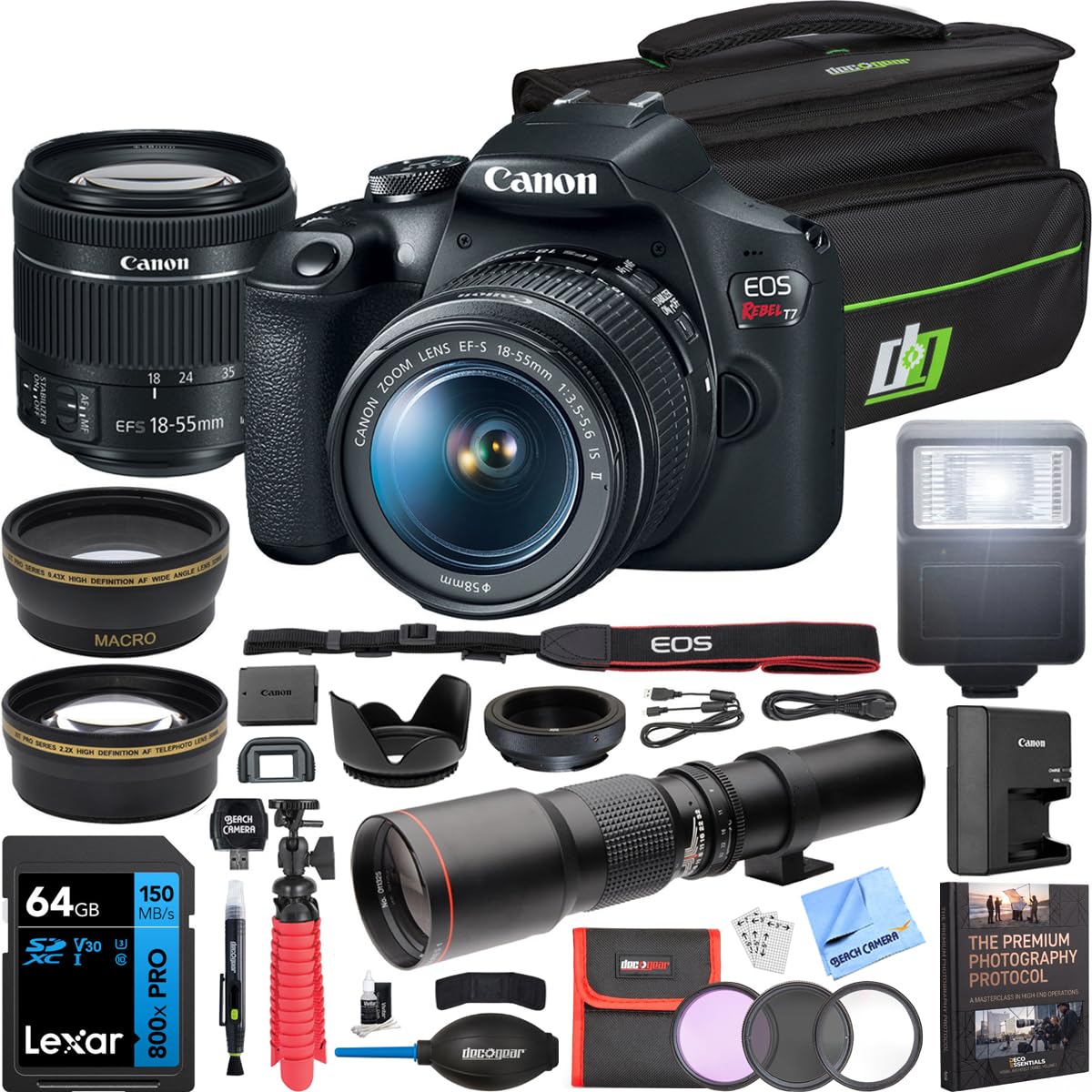
The Canon Rebel T7 uses a 24.1MP APS-C sensor with a DIGIC 4+ processor and an optical viewfinder with 95% coverage. This bundle includes the standard 18-55mm zoom, a 500mm preset telephoto lens for wildlife reach, a slip-on flash, and a 64GB memory card — everything a beginner needs to explore multiple genres without buying separate accessories.
The 9-point phase-detection AF system feels dated compared to modern mirrorless cameras but works reliably in good light for portraits and landscapes. Full HD 1080p video at 30 fps lacks 4K, and the battery drains quickly — one verified review reported a dead battery after just 8 shots from a full charge. The T-mount adapter and preset telephoto lens deliver long reach but require bright daylight due to the fixed f/8 aperture.
If your budget is tight and you want an optical viewfinder experience with a massive accessory bundle, the Rebel T7 kit gets you shooting across multiple scenarios immediately. The EF-S lens mount is dead-ended for upgrades, but the body is inexpensive enough to treat as a learning tool you won’t cry over when you eventually upgrade.
Why it’s great
- Massive bundle includes telephoto, flash, tripod, and 64GB card
- Optical viewfinder with no lag — classic DSLR shooting feel
- Canon’s scene intelligent auto mode handles exposure decisions
Good to know
- 9-point AF is slow for moving subjects
- Battery life reported as inconsistent in some units
- No 4K video — limited to 1080p at 30 fps
6. Canon EOS 2000D / Rebel T7 DSLR with 18-55mm + 20-Piece Bundle (Renewed)

The Canon 2000D (Rebel T7) features a 24.1MP APS-C sensor with a 9-point autofocus system and built-in Wi-Fi with NFC for wireless photo transfer to a smartphone. This renewed bundle includes a tripod, case, wide-angle and telephoto attachment lenses, and a 32GB SanDisk card — enough accessories to cover studio and field shooting scenarios out of the box.
Image quality in good light is solid thanks to the APS-C sensor, and the optical viewfinder provides a real-time, lag-free view. The EF-S 18-55mm kit lens covers the standard zoom range for walk-around photography. The 20-piece bundle ensures you won’t need to shop for extras immediately, though the attachment lenses degrade image quality compared to dedicated glass. Users highlight the easy smartphone connectivity for social media upload.
This renewed model is an economical way to learn shooting fundamentals on a traditional DSLR. The 9-point AF limits sports and action work, and the plastic body lacks weather sealing, but for portrait, landscape, and casual family photography, it more than holds its own at the price.
Why it’s great
- 20-piece bundle saves money on tripod, case, and filters
- Wi-Fi + NFC for easy phone photo transfer
- Reliable Canon image processing and color science
Good to know
- 9-point AF system struggles with fast-moving subjects
- Attachment lenses in bundle reduce sharpness compared to dedicated glass
- Renewed condition may have minor cosmetic wear
7. FUJIFILM X-E5 Mirrorless with XF23mmF2.8 Lens
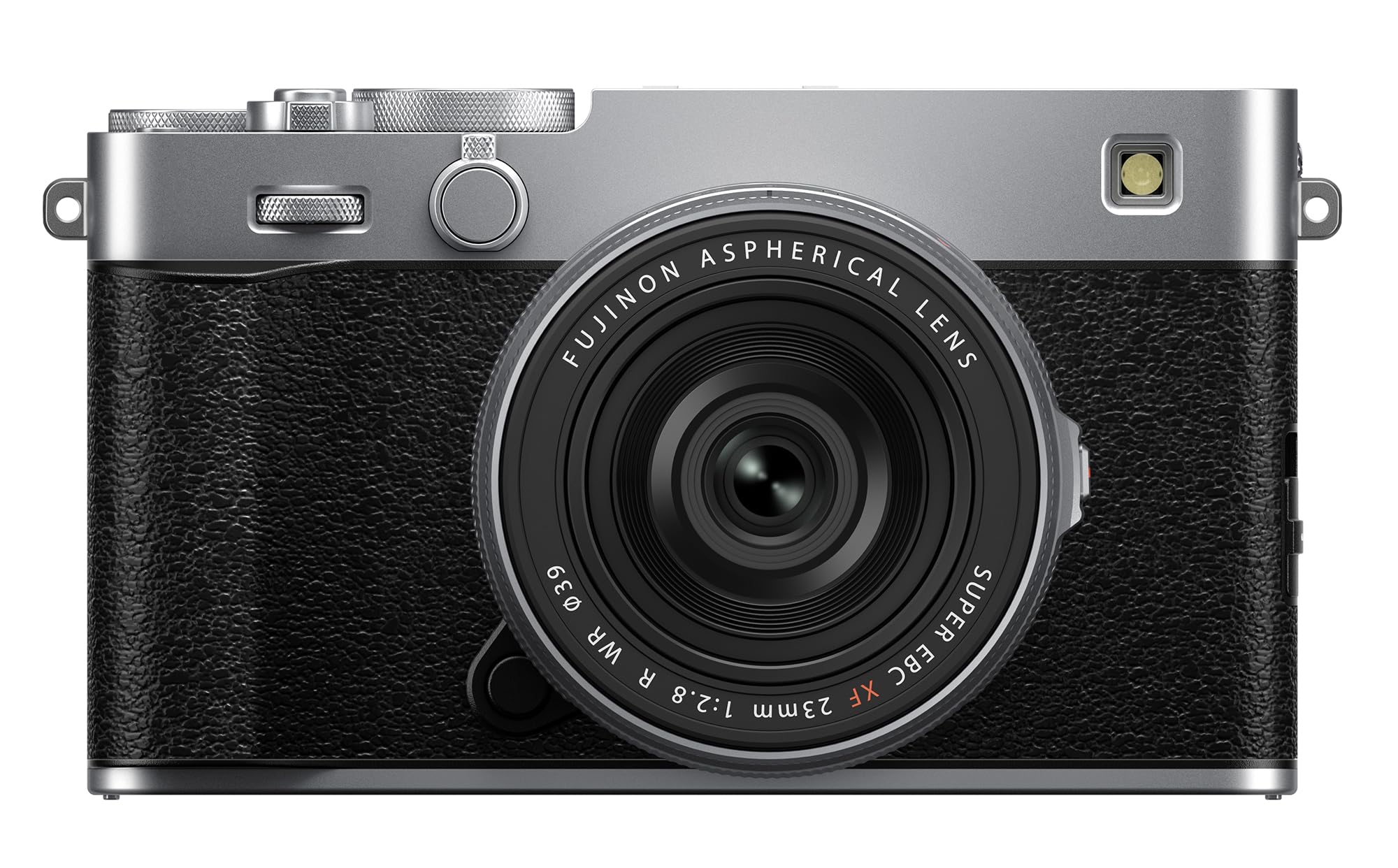
The Fujifilm X-E5 houses a 40.2MP X-Trans 5 HR sensor and X-Processor 5 engine within a body modeled after classic rangefinder film cameras. It features a dedicated Film Simulation dial under the top plate, giving quick access to Fujifilm’s film recipes, plus 7 stops of in-body stabilization at the center of the frame.
The 23mm f/2.8 R WR pancake lens keeps the system compact enough for a jacket pocket, and the subject detection AF uses deep learning AI for humans, animals, birds, and vehicles. The camera lacks weather sealing and a built-in flash, and the battery is smaller than the X-T5’s. The 40MP sensor out-resolves most full-frame sensors of the same vintage and allows a 2x digital teleconverter without significant quality loss.
For the photographer who values straight-out-of-camera JPEG colors and a tactile shooting experience, the X-E5 delivers results that mimic Fujifilm’s classic film stocks with no post-processing needed. The premium you pay goes into the sensor, stabilization, and aesthetic build rather than video-centric features.
Why it’s great
- 40.2MP X-Trans sensor delivers extraordinary resolution for APS-C
- 7-stop IBIS for low-light handheld shooting
- Film Simulation dial with customizable recipes for SOOC JPEGs
Good to know
- No weather sealing — caution in rain or dust
- No built-in flash
- Battery life is modest — plan for spares
8. Sony Alpha a7 IV Full-Frame with 256GB Bundle
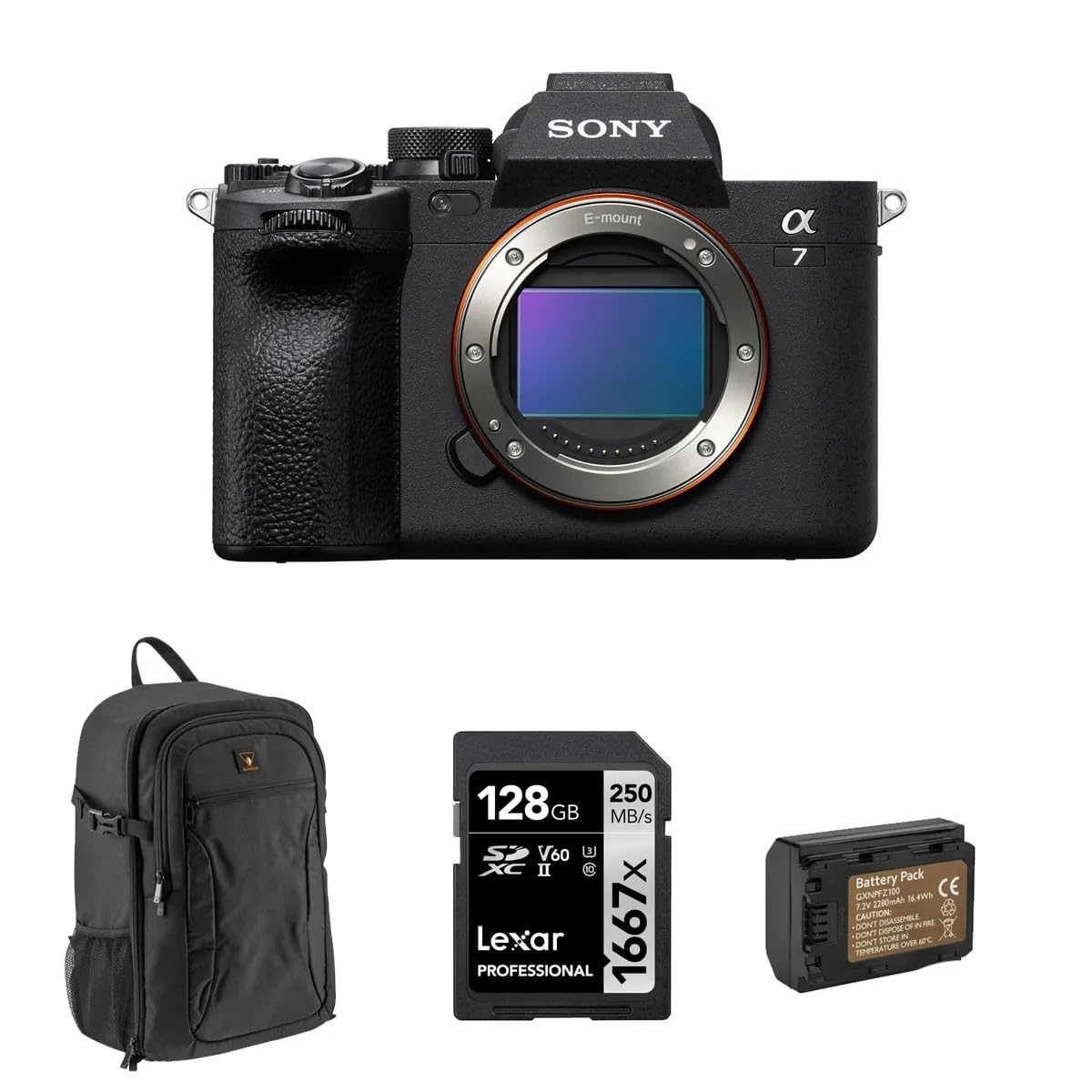
The Sony a7 IV upgrades to a 33MP full-frame sensor with the BIONZ XR processor, enabling 10-bit 4K 60p video with S-Cinetone and S-Log3 color profiles. The Fast Hybrid AF system uses 759 phase-detection points and Real-time Tracking to maintain focus on subjects even in challenging light.
The bundle includes a 128GB SD card, extra battery, and a camera backpack — practical additions that save you shopping time. The vari-angle touchscreen and high-resolution OLED EVF offer flexibility for both photo and video composition. The 33MP resolution bridges the gap between the a7 III’s 24MP and high-resolution bodies, delivering enough detail for cropping without the file sizes of 60MP sensors. The menu system is vastly improved over the a7 III, though some submenus remain dense.
For the serious hobbyist or semi-professional who needs a single camera for client portraits, event coverage, and video production, the a7 IV is the strongest hybrid value in Sony’s lineup. The 10-bit video and expanded dynamic range make color grading in post-production far more flexible than 8-bit alternatives.
Why it’s great
- 33MP sensor with 10-bit 4K 60p and S-Cinetone color science
- 759-point Fast Hybrid AF with Real-time Tracking
- Bundle includes SD card, battery, and backpack
Good to know
- 4K 60p uses a Super 35mm crop
- Menu system is deep — requires setup time
- Larger file sizes from 33MP require fast memory cards
9. Panasonic LUMIX S5II with 20-60mm F3.5-5.6 Lens
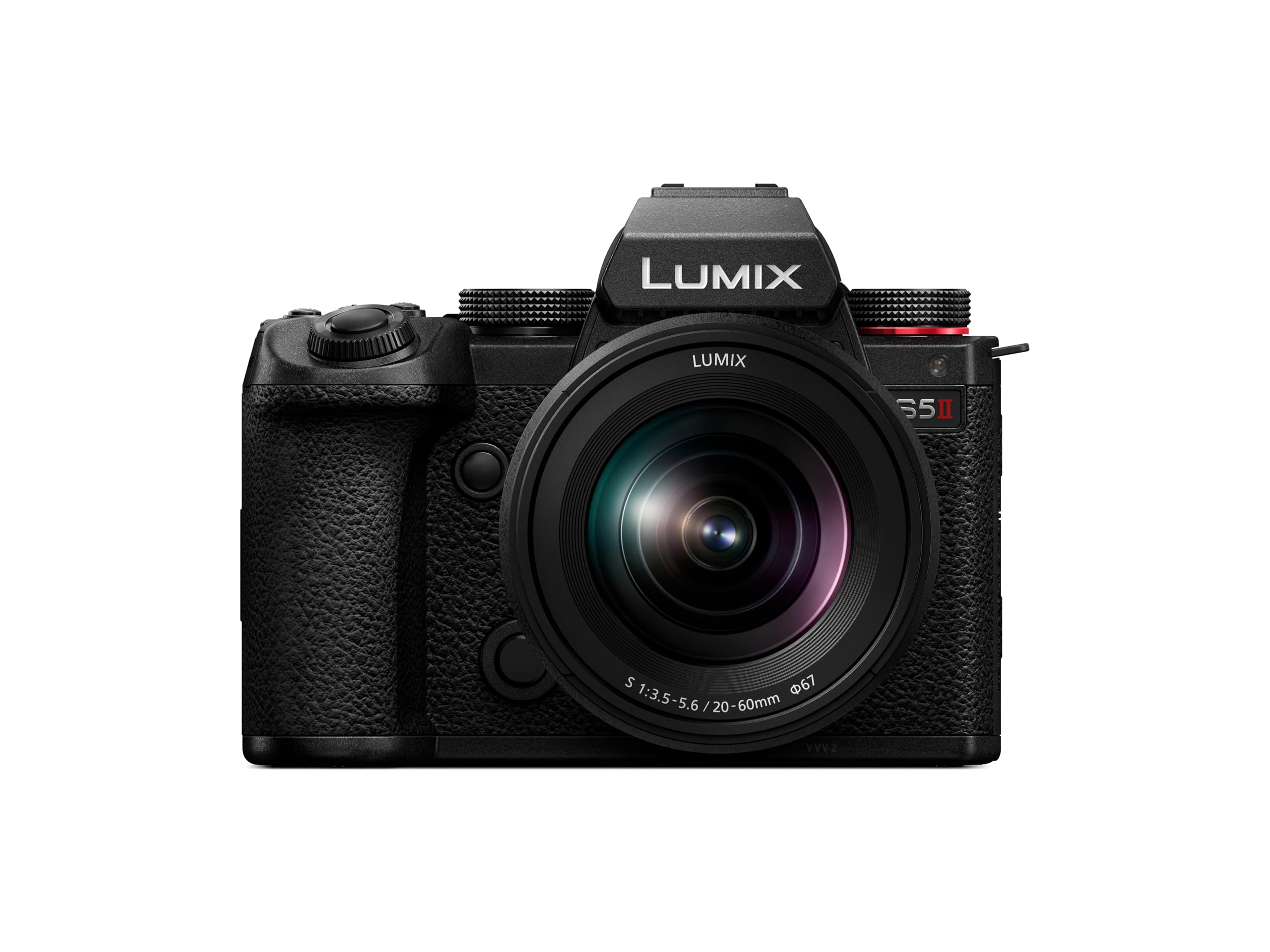
The Panasonic S5II introduces Phase Hybrid Autofocus to the LUMIX full-frame line, solving the long-standing autofocus criticism of earlier Panasonic bodies. It features a 24.2MP full-frame sensor, a heat-dispersion mechanism with a fan for unlimited 4K 422 10-bit recording, and 6K Open Gate capture at 30 fps.
Active I.S. technology supports walking shots without a gimbal, and Real-time LUT lets you apply color grading in-camera. The 20-60mm kit lens provides a usefully wide 20mm short end for landscapes and interiors. Build quality is high, with a solid magnesium frame and deep grip. Battery life is the weakest spot — expect around 250-350 shots per charge — and the L-mount lens ecosystem, while expanding with Sigma, Leica, and Viltrox, is smaller than Sony E or Canon RF.
For the video-first creator who needs unlimited recording times and professional 10-bit color without paying cinema camera prices, the S5II is a standout. The phase hybrid AF now makes it viable for event work where reliable tracking is non-negotiable.
Why it’s great
- Phase Hybrid AF finally delivers reliable continuous autofocus
- Unlimited 4K 422 10-bit with internal fan for heat management
- Active I.S. for gimbal-free walking footage
Good to know
- Battery life is below average — carry spares
- L-mount lens ecosystem smaller than Sony E or Canon RF
- High ISO performance not class-leading above ISO 51200
10. OM SYSTEM OM-1 Mark II with M.Zuiko 12-40mm F2.8 PRO II

The OM-1 Mark II uses a 20MP Stacked BSI Live MOS Micro Four Thirds sensor with the TruePic X engine for 3x faster processing than its predecessor. It is IP53-rated dustproof, splashproof, and freezeproof to -10°C, making it the most weather-resilient camera on this list for harsh environments.
Cross Quad Pixel AF provides 1,053 all cross-type phase-detection points covering 100% of the frame. Computational photography features include Handheld High Res Shot for 80MP stills, Live ND for long exposure effects without a filter, and Focus Stacking for macro work. The 12-40mm f/2.8 PRO II lens is a constant-aperture zoom with pro-grade build and sharpness. The Micro Four Thirds sensor has less dynamic range and high-ISO performance than full-frame, but the portability and lens size advantages are massive for hiking and travel.
For the outdoor photographer who shoots in rain, snow, or dust without hesitation, the OM-1 II is unmatched. The computational features eliminate the need for tripods and neutral density filters, and the compact system allows a full kit to fit in a small sling bag.
Why it’s great
- IP53 weather sealing — shoot confidently in rain and freezing conditions
- 1,053 cross-type AF points with 100% frame coverage
- Handheld High Res Shot and Live ND eliminate need for tripod/filters
Good to know
- M4/3 sensor has less dynamic range than full-frame
- High-ISO noise is visible above ISO 6400
- Premium price for Micro Four Thirds
11. Sony Alpha 7 V Full-Frame Hybrid Mirrorless (Body Only)
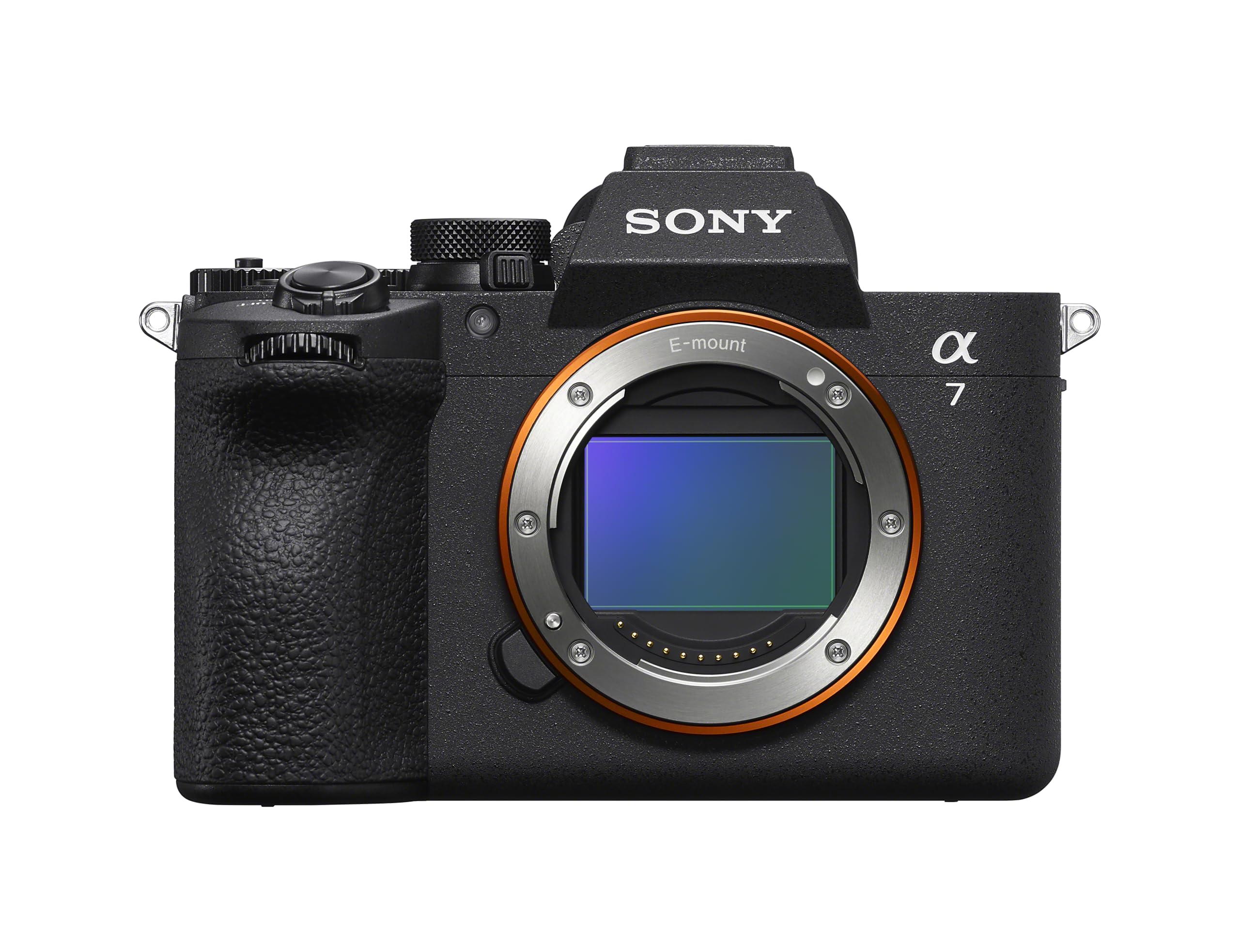
The Sony a7 V uses a partially stacked 33MP Exmor RS CMOS sensor with a readout speed approximately 4.5x faster than the a7 IV, enabling blackout-free 30 fps burst shooting with AF/AE tracking. The BIONZ XR2 processor integrates AI-based Real-time Recognition AF with human pose estimation that recognizes body and head position even when the face is obscured.
The sensor delivers up to 16 stops of dynamic range with smooth gradations from shadow to highlight. 4K 120p video is available with the high-speed readout, and the 5-axis in-body stabilization provides 7.5 stops at the center. The body-only format allows you to choose your own lens. The AI autofocus recognizes not just humans and animals, but also birds, vehicles, and insects. Two USB-C ports support faster workflows, and the electronic shutter reaches 1/16000 second.
For the serious creator who needs the fastest readout, best autofocus intelligence, and highest burst rate in Sony’s general-purpose lineup, the a7 V is a professional tool. The price reflects genuine advancements in sensor speed and processing that directly improve keep rates for sports, wildlife, and event work.
Why it’s great
- 30 fps blackout-free with full AF/AE tracking
- AI-based subject recognition with human pose estimation
- 16 stops dynamic range and 4K 120p video
Good to know
- Body only — you must purchase a separate lens
- High cost is suited for committed hobbyists or pros
- Steep learning curve for first-time Sony users
FAQ
Should a beginner buy a DSLR or mirrorless for their first starter camera?
How many megapixels does an affordable starter camera really need?
Does in-body image stabilization matter on a budget starter camera?
What kit lens focal length is best for a first camera?
Can entry-level starter cameras shoot 4K video?
Final Thoughts: The Verdict
For most users, the best affordable starter camera winner is the Canon EOS R100 because it pairs modern phase-detection autofocus with a compact RF mirrorless body and a clear upgrade path to higher-tier Canon cameras. If you want reliable 5-axis stabilization for handheld video, grab the Panasonic LUMIX G85. And for a full-frame sensor at an accessible budget, nothing beats the Canon EOS RP.