
Our readers keep the lights on and my morning glass full of iced black tea. As an Amazon Associate, I earn from qualifying purchases.
Specs are compiled from manufacturer listings and verified buyer reviews and can change over time — please confirm the key details on the product page before buying.
The biggest mistake when shopping for studio headphones is expecting consumer-style bass-boosted sound instead of a flat, honest response. A studio headphone is a tool that reveals the truth about your mix, not a flattering consumer speaker. This guide covers wired, closed-back models that deliver a flat response at budget-friendly prices.
I’m Min — the founder and writer behind Gadgets Feed. This guide is built by comparing the manufacturers’ published specifications and the patterns across verified customer reviews, so you get each pick’s real strengths and trade-offs instead of marketing spin.
You need headphones that expose flaws in your recording, not ones that mask them with boosted bass. affordable studio headphones balance accuracy, comfort for long sessions, and durability so you can trust every mix decision.
Our Picks at a Glance

How To Choose The Best Affordable Studio Headphones
First, decide your primary use: tracking vocals, mixing full songs, or critical listening. That choice determines if you need maximum isolation, a flat response, or some low-end flexibility.
Closed-Back vs. Open-Back Design
Every pick here is closed-back, meaning the outer shell blocks outside noise and stops your audio from leaking into a live microphone. That makes them the safer choice for recording sessions where bleed ruins takes. If you only mix alone in a quiet room, open-back designs give a wider soundstage, but you lose that isolation.
Frequency Response and Driver Size
The frequency response (the range of bass to treble a headphone can produce, measured in Hertz) tells you how much of the audible spectrum you can trust. Most of these use 40 millimeter drivers, which is the standard balance for a balanced, detailed sound without needing an external amplifier to drive them.
Comfort and Durability for Long Sessions
Studio sessions last hours, so comfort is critical. Look for cushioned earcups, an adjustable headband, and a design that doesn’t clamp your head like a vise. Replaceable cables and earpads extend a headphone’s life, making it repairable rather than disposable.
Quick Comparison
| Model | Best For | Driver Size | Frequency Response | Cable Length | Amazon |
|---|---|---|---|---|---|
| Sony MDR7506★ Best Overall | Revealing detail & critical listening | 40mm | 10 Hz – 20 kHz | 9.8 ft | Amazon |
| Audio-Technica ATH-M20xBudget Champion | Budget-friendly mixing & tracking | 40mm | — | 10+ ft (long) | Amazon |
| KRK KNS 8400 | Revealing detail & flat EQ | 40mm | 5 Hz – 23 kHz | Detachable | Amazon |
| Audio-Technica ATH-M30x | Mid-range definition & portability | 40mm | 15 Hz – 22 kHz | 9.8 ft | Amazon |
| Yamaha HPH-MT5 | Lightweight comfort & clean sound | 40mm | 20 Hz – 20 kHz | 9.8 ft (3m) | Amazon |
| Sennheiser HD 280 Pro | Maximum noise isolation | — | — | 3.3 – 9.8 ft Coiled | Amazon |
| Shure SRH440A | Balanced durability & studio accuracy | — | — | Detachable Locking | Amazon |
In‑Depth Reviews
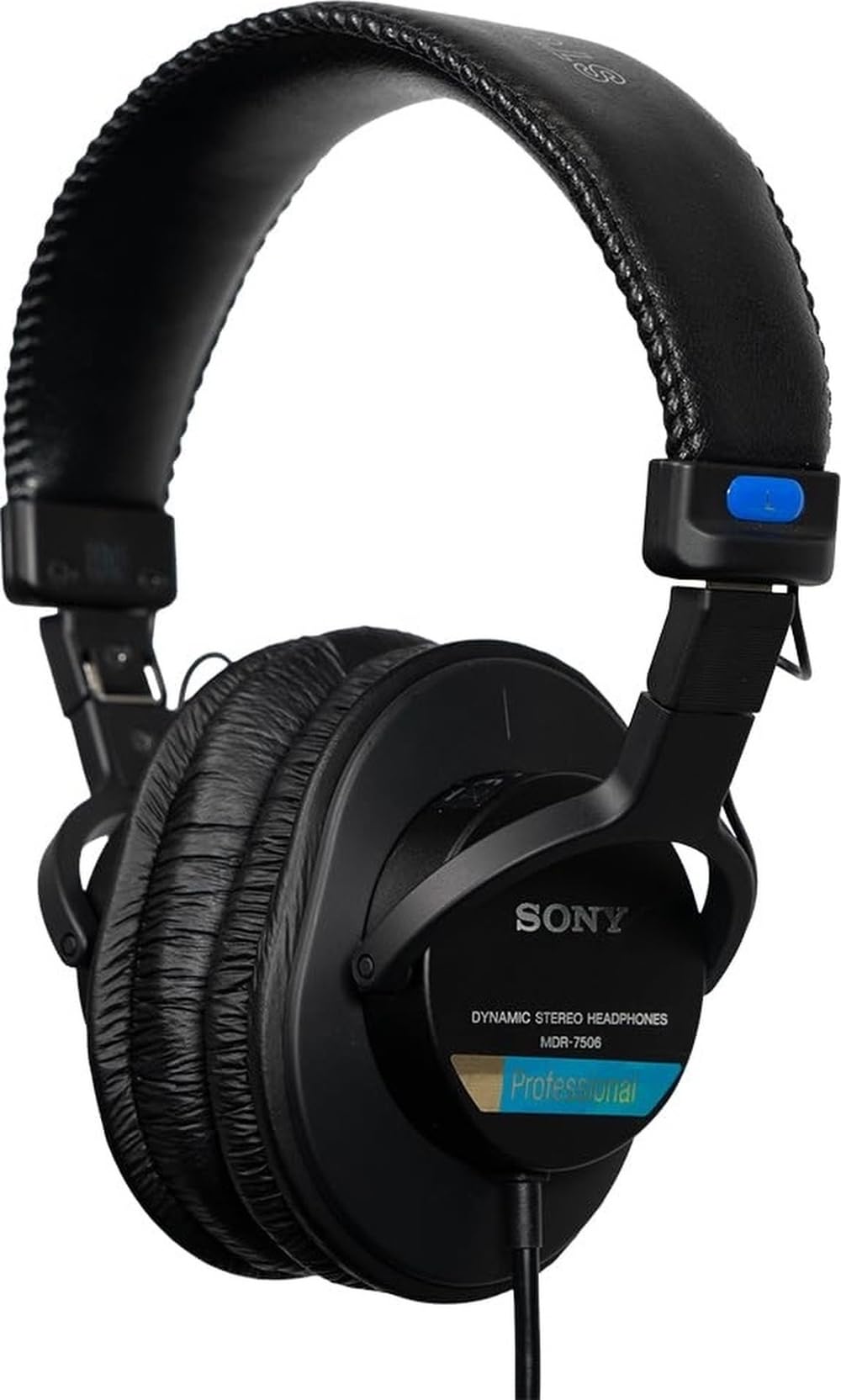
1. Sony MDR7506 Professional Large Diaphragm Headphone
Our pick — over 4.5★ from 28,000+ verified ratings; the strongest balance of quality and price.
The industry-standard reference that reveals every flaw in your mix with surgical clarity.
This is the benchmark against which other affordable studio headphones are judged. The 40 millimeter drivers with neodymium magnets deliver a frequency response of 10 Hz to 20 kHz, which means you hear the full spectrum of your recording without coloration. The closed-ear design cuts external noise so you can focus on the details of a single track.
When buyers do head-to-head tests, the MDR7506 consistently beats the Audio-Technica ATH-M50 with brighter, clearer treble and midrange, tighter bass, and a lighter, more comfortable fit — at a lower price. The 9.8 foot cord ends in a gold-plated plug, so you get a solid, noise-free connection to your interface. It folds up into the included soft case for travel.
The honest trade-off is the fit. The snug, collapsible design can feel tight on some heads, and the bass is lean by design — that’s what makes it so revealing for mixing, but it means you might compensate with extra low end in your mixes if you’re not careful.
The Detail Standard: The clarity and neutral tone are what win people over — it’s the rare pair that makes you trust your ears for critical listening.
Fit Reality: The snug clamping force and relatively weak bass are the two things that come up most in owner feedback.
Reach for it if: you need a transparent, revealing reference for mixing, editing, or DJ work and you want a proven workhorse.
Look elsewhere if: you have a larger head or you want a bass-heavy sound for casual listening — this is a tool, not a party headphone.
2. Audio-Technica ATH-M20x Professional Studio Monitor Headphones
A flat, clear response and a price that makes it the default first studio headphone.
If you’re just setting up a home studio, this is the pair that lets you start mixing with confidence. The 40 mm drivers use rare earth magnets and copper-clad aluminum wire voice coils, a combination tuned for enhanced low-frequency performance. The result is a balanced, clear sound with light bass that stays honest about your low end.
The circumaural design contours around your ears, giving you solid sound isolation even in loud environments. The single-side cable exit keeps the tangle-free cord out of your way, and buyers report it’s comfortable enough for 9-hour workdays. It’s a sturdy build that doesn’t flex when you handle it roughly.
Unlike the pricier ATH-M50, this one trades some detail and bass punch for a much friendlier price. The fit is a mixed bag — some find it snug and comfortable, while others say it feels too large. You also get a fixed, non-detachable cable, so if it ever fails, the whole unit is compromised.
Why It Wins Buyers Over
- Clear, balanced sound ideal for tracking and mixing
- Solid isolation that blocks out room noise
- Comfortable for marathon studio sessions
Where It Cuts Corners
- Non-detachable cable is a weak point if damaged
- Fit runs large for some heads
Best as a first pair: the ATH-M20x gets you a flat, reliable monitor at an entry-level price.
Skip it for: a replaceable cable or extra bass presence — step up the range for those.
3. KRK KNS 8400 On-Ear Closed Back Circumaural Studio Monitor Headphones

The closed-back pair that reveals subtle details in your music you never noticed before.
KRK built these to mirror the character of its class-leading studio monitors. The 40mm dynamic drivers sit behind acoustic memory foam earpads — a combination that delivers excellent detail with a flat equalization curve. Buyers describe rediscovering their music collections, hearing breathing and sleeve movement in recordings that other headphones blur over.
The detachable in-line volume control and detachable cable are massive practical wins. If a cable breaks, you replace the cable, not the headphones. The memory foam earpads and generous head padding keep you comfortable for long wear, and the closed-back design gives you strong noise isolation for tracking sessions.
The flat EQ means this is not a bass-heavy consumer sound. The bass is clear and not overpowering, but it rolls off below 130 Hz, which can lead to bassy mixes if you work with music that lives in the 40-70 Hz range. The top padding also feels heavy on some heads, and the fit runs large.
What The Review Pages Rave About
- Flat EQ and excellent detail for mixing and tracking
- Detachable cable and volume control add real longevity
- Memory foam earpads stay plush on long sessions
The Honest Gripes
- Bass rolls off below 130 Hz, so low-end mixes need caution
- Top head padding can feel heavy; fit runs large
Choose this for: critical listening and vocal mixing where detail and a flat response matter more than bass thump.
Think twice if: you produce bass-heavy genres — the rolled-off low end will mislead you.
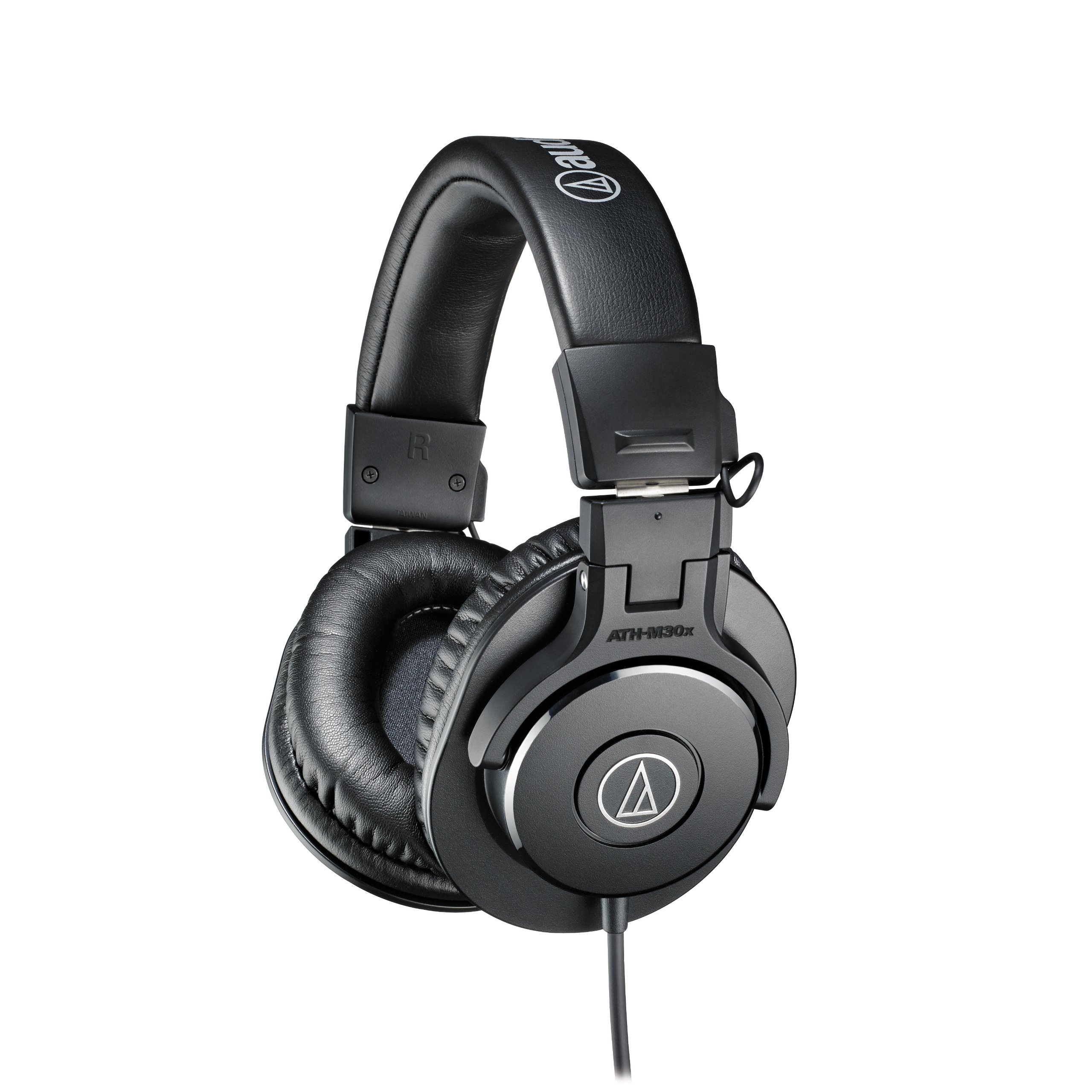
4. Audio-Technica ATH-M30x Professional Studio Monitor Headphones
The middle child of the Audio-Technica line that nails mid-range definition for clean, detailed mixes.
The ATH-M30x steps up from the M20x with a tuning focused on enhanced detail and excellent mid-range definition. The 40 millimeter drivers use rare earth magnets and copper-clad aluminum wire voice coils, pushing a frequency response of 15 Hz to 22 kHz. That extra top-end reach means cymbals and high-frequency content come through with clarity.
It’s collapsible for space-saving portability, and the circumaural design contours around the ears for solid isolation. The long, sturdy built-in 9.8′ cable gives you freedom to move around the studio. Buyers with larger heads specifically note that it doesn’t compress their head and causes no ear pain, even over multi-hour sessions.
Compared to the MDR7506, the M30x has a slightly more artificial but punchier bass and a tighter soundstage. It’s a great value, but the mid-range focus means it won’t have the same natural openness as the Sony. The plastic build clanks when folded, and the non-removable cable is a future failure point.
Comfort First: The lightweight, low-clamping design is what reviewers highlight most — it fits a size 8 head without squeezing.
Build Caveat: The plastic joints feel solid but the folded arms clank, and the fixed cable can’t be swapped.
Grab this if: you want the Audio-Technica sound with a focus on mid-range clarity and all-day comfort.
Pass if: you need a detachable cable or a more natural, open sound — the Sony delivers that.
5. Yamaha HPH-MT5 Monitor Headphones, White

A 250-gram featherweight that keeps your head cool and your sound balanced for hours.
Weight is the first thing you notice. At just 250 grams, the HPH-MT5 is dramatically lighter than most studio cans, which translates into low clamping force and no heat buildup during long sessions. This makes it a standout for anyone who gets headaches from heavy or tight headphones.
The 40 mm custom drivers with CCAW voice coils (copper-clad aluminum wire, which keeps the moving parts light for faster response) deliver a broad frequency range from 20 Hz to 20 kHz. The sound is balanced, accurate, and free of booming bass, with a crisp top end. Owners mention that it rivals headphones costing several times more in sheer audio quality.
It comes with a detachable straight 3-meter cable and a gold-plated 6.3 mm adapter, plus a carrying bag. The trade-off is the build — the lightweight feel also reads as slightly fragile. Reviewers recommend handling it with care, since it’s not built for rugged daily abuse.
Why It’s A Comfort Winner
- Ultra-light 250g build with low clamping force
- Balanced, accurate sound that stays clean at high volume
- Detachable locking cable for easy replacement
The Durability Question
- Build feels light and possibly fragile
- Not suited for heavy, rough daily transport
Best for: long mixing sessions and anyone sensitive to headphone weight or clamping force.
Not for: rough handling or gig bags — treat it as a studio-only tool.
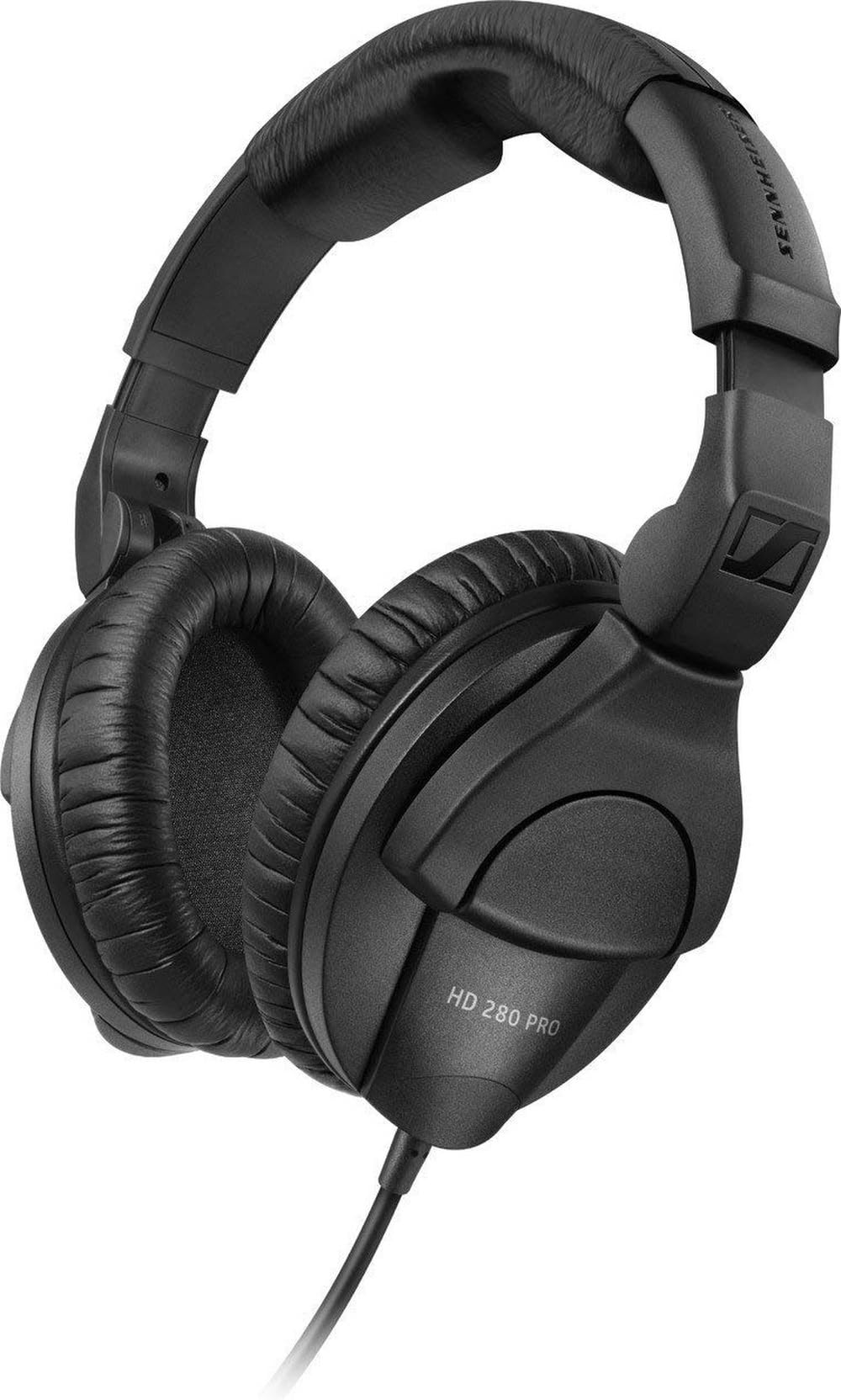
6. Sennheiser HD 280 Pro Headphone, Black
The closed-back workhorse that blocks up to 32 dB of outside noise for focused tracking.
If your studio is a busy room, this is the headphone that creates a quiet bubble. The dynamic, closed-ear design delivers up to 32 dB of attenuation of outside sound, which is the strongest passive isolation on this list. It masks room noise, air conditioners, and conversations effectively so you can focus on your audio.
The sound is warm and natural, with an extended frequency response and precise bass. It’s a neutral response with no artificial boosts, making it an excellent choice for DJ monitoring, drumming, and recording. The earpads, headband padding, and audio cord are all easily replaceable, which dramatically extends the life of the product.
The biggest complaint is the clamp. The very tight fit (reviewers measure the force at around 4N) can feel like it’s squeezing your head until the padding breaks in. The coiled cord extends from 3.3 to 9.8 feet, which is convenient but adds a bit of weight on one side.
The Isolation Edge: Buyers consistently praise how well it masks outside sounds — it’s the pair to grab for loud environments.
The Squeeze Factor: The tight clamp is the recurring gripe; it needs a break-in period and isn’t for sensitive heads.
Pick this for: maximum noise isolation in loud rooms, DJ work, and drummer monitoring.
Avoid if: you can’t tolerate a tight fit on first use — the clamp is genuinely firm from the start.
7. Shure SRH440A Over-Ear Wired Studio Headphones

An updated studio classic that brings accurate, transparent audio with a locking detachable cable.
Shure’s SRH440A modernizes the original design with enhanced durability and comfort built for today’s recording and monitoring workflows. It delivers a balanced, detailed sound signature with an extended frequency response, making it ideal for mixing, recording, and critical listening across music and spoken content. Buyers specifically praise the bass as the best in its price range — it’s present and defined without overwhelming the mids.
The build is where Shure’s pro audio heritage shows. The closed-back, over-ear design reduces ambient noise while keeping sound contained, and the detachable locking cable means a broken cable is a cheap fix, not a headphone replacement. The collapsible design and cushioned earcups make it easy to store, carry, and wear for long studio sessions.
The main concern is durability, which gets mixed feedback. Some customers note the build holds up well, while a few mention breakage within months of use. The sound is excellent for the price, but you should treat the plastic hinges with care.
Where It Shines
- Accurate, transparent sound with strong bass
- Detachable locking cable is a real longevity feature
- Lightweight and collapsible for easy transport
Where It’s Fragile
- Durability is the main mixed point in owner feedback
- Some report breakage after a few months of use
Reach for this if: you want a balanced, bass-friendly studio monitor with a modern design and a truly replaceable cable.
Be cautious if: you’re hard on your gear — the build demands respect to last.
Understanding the Specs
Driver Size & Magnet Type
Driver size (measured in millimeters) determines how much air the headphone can move. Most studio cans in this range use 40mm dynamic drivers — a proven balance. The magnet type matters too: neodymium magnets (found in the Sony MDR7506) are strong and lightweight, which helps the driver respond quickly to fast transients in your audio.
Frequency Response Range
This spec (measured in Hertz, like 20 Hz – 20 kHz) tells you the span of bass to treble the headphone can reproduce. The standard human hearing range is roughly 20 Hz to 20 kHz, so a headphone covering that range gives you the full picture. A response that extends lower (like 10 Hz on the Sony) or higher (22 kHz on the ATH-M30x) means you’ll catch more of the extreme low and high frequencies.
Noise Isolation & Closed-Back
Closed-back means the outer shell is sealed, physically blocking outside noise and preventing your audio from leaking out into a microphone. The Sennheiser HD 280 Pro advertises up to 32 dB of attenuation. For recording vocals or instruments, a closed-back design is non-negotiable to prevent bleed into your takes.
Cable Design & Detachability
A fixed cable (like the 9.8-foot cord on the Sony) is simple but means a damaged cord kills the whole headphone. A detachable cable (like the KRK and Shure) lets you replace a broken cord in seconds. Coiled cables, like the Sennheiser’s, stretch from about 3.3 to 9.8 feet, giving you extra reach while keeping things compact when not in use.
FAQ
Do I need an amplifier for these affordable studio headphones?
What does a flat frequency response actually mean for my mixes?
Are these studio headphones good for gaming too?
Why does the KRK KNS 8400 have a rolled-off bass below 130 Hz?
How long do the ear pads last and can I replace them?
What is the difference between the Audio-Technica M20x and M30x?
Are closed-back headphones better than open-back for recording?
Which of these has the strongest noise isolation?
Final Thoughts: The Verdict
If you want one dependable pick, the affordable studio headphones winner is the Sony MDR7506 because it balances revealing detail, a proven neutral sound, and a comfortable foldable design that has made it an industry standard. If you want maximum noise isolation for a loud room, grab the Sennheiser HD 280 Pro. And for the most comfortable long-session wear, the Yamaha HPH-MT5 is the one to reach for.
How We Picked
We do not accept paid placement. Every pick is matched to a real buyer and a real use-case; we do not hands-on test units.
Sources & Methodology
Specifications: manufacturer listings and product documentation. Review insights: verified customer reviews, as of September 2026. Pricing: not shown on this page (it changes often); check the current price via the retailer link.
As an Amazon Associate, Gadgets Feed earns from qualifying purchases. This does not affect which products we feature.