
The cold air hits your face before your eyes adjust to the darkness. Somewhere in that black expanse, there is movement — a coyote, a downed deer, or a trespasser you cannot see. Staring blindly into the brush with a flashlight announces your position and ruins what little night vision you have. A thermal monocular turns that void into a landscape of glowing heat signatures, letting you spot warm-blooded targets hundreds of yards away without revealing your own location. The key is finding a unit that delivers real thermal detection without forcing you to spend what a used car costs.
I’m Min — the co-founder and writer behind Gadgets Feed. I have spent countless hours digging through technical specifications, cross-referencing sensor resolutions, refresh rates, and NETD figures to separate the genuinely capable affordable thermal monoculars from the overpriced or under-built options that flood the market.
A budget constraint does not have to mean compromised detection. After methodically evaluating nine models spanning real-world sensors and build quality, this guide delivers the definitive breakdown of the best affordable thermal monocular options that actually perform when you need them most.
How To Choose The Best Affordable Thermal Monocular
Buying into thermal imaging on a budget means knowing exactly where to compromise and where to hold the line. A cheap sensor with a high NETD will turn a deer into a blurry blob at 100 yards, while a unit with a solid 256×192 detector and a sub-35mK noise floor can deliver usable identification ranges that rival units costing twice as much. Focus on the core sensor specifications and build integrity rather than gimmicky digital zoom numbers or inflated detection claims.
Sensor Resolution and Pixel Pitch
The 256×192 sensor with a 12µm pixel pitch is the sweet spot for affordable thermal monoculars. This combination delivers enough spatial detail to identify a coyote at roughly 150 to 200 yards while keeping manufacturing costs down. Models that claim 320×240 native resolution at this price point are rare and worth attention, as the extra pixels improve image clarity noticeably. Beware of “super resolution” marketing — upscaling software cannot recover detail that the physical sensor never captured.
Refresh Rate and Target Tracking
A 50Hz refresh rate is a significant upgrade over 25Hz when tracking moving animals or scanning rapidly across a field. The smoother image reduces eye strain and motion blur, especially when the target is walking through brush. If your use case involves stationary observation of bedding areas or bait sites, 25Hz is acceptable and saves money. For hog hunting or predator calling where targets move fast, prioritize 50Hz.
NETD — The Noise Floor
NETD (Noise Equivalent Temperature Difference) quantifies the smallest temperature difference the sensor can detect, measured in millikelvin. A rating of 35mK or lower is the target for affordable units. Higher numbers like 50mK produce grainy, noisy images that hide small animals against similar-temperature backgrounds like leaves or dirt. Units with NETD below 25mK are exceptional at this price tier and provide a noticeable advantage in challenging thermal environments.
Quick Comparison
On smaller screens, swipe sideways to see the full table.
| Model | Category | Best For | Key Spec | Amazon |
|---|---|---|---|---|
| AGM Taipan V2 | High-End | Replaceable battery & wide FOV | 256×192, 12µm, 50Hz, 7hrs | Amazon |
| RIX Pocket K2 | Mid-Range | Ultra-compact carry | 256×192, 12µm, 50Hz, 200g | Amazon |
| MiLESEEY TNV10 Pro | Mid-Range | Max battery life | 320×240 native, 50Hz, 12hrs | Amazon |
| TOPDON TS004 | Mid-Range | Manual focus versatility | 256×192, 50Hz, 5000mAh battery | Amazon |
| GOYOJO G210 | Budget | Beginner-friendly & replaceable batteries | 256×192, 25Hz, IP65 | Amazon |
| Teslong TTS260 | Budget | Built-in 32GB storage & HDMI out | 256×192, 25Hz, 10hrs | Amazon |
| ATN BlazeSeeker-207 | Mid-Range | ATN ecosystem & app control | 256×192, 25Hz, 8.8x zoom | Amazon |
| InfiRay T2 Pro | Budget | Smartphone thermal adapter | 256×192, 13mm, Android only | Amazon |
In‑Depth Reviews
1. AGM Global Vision Taipan V2
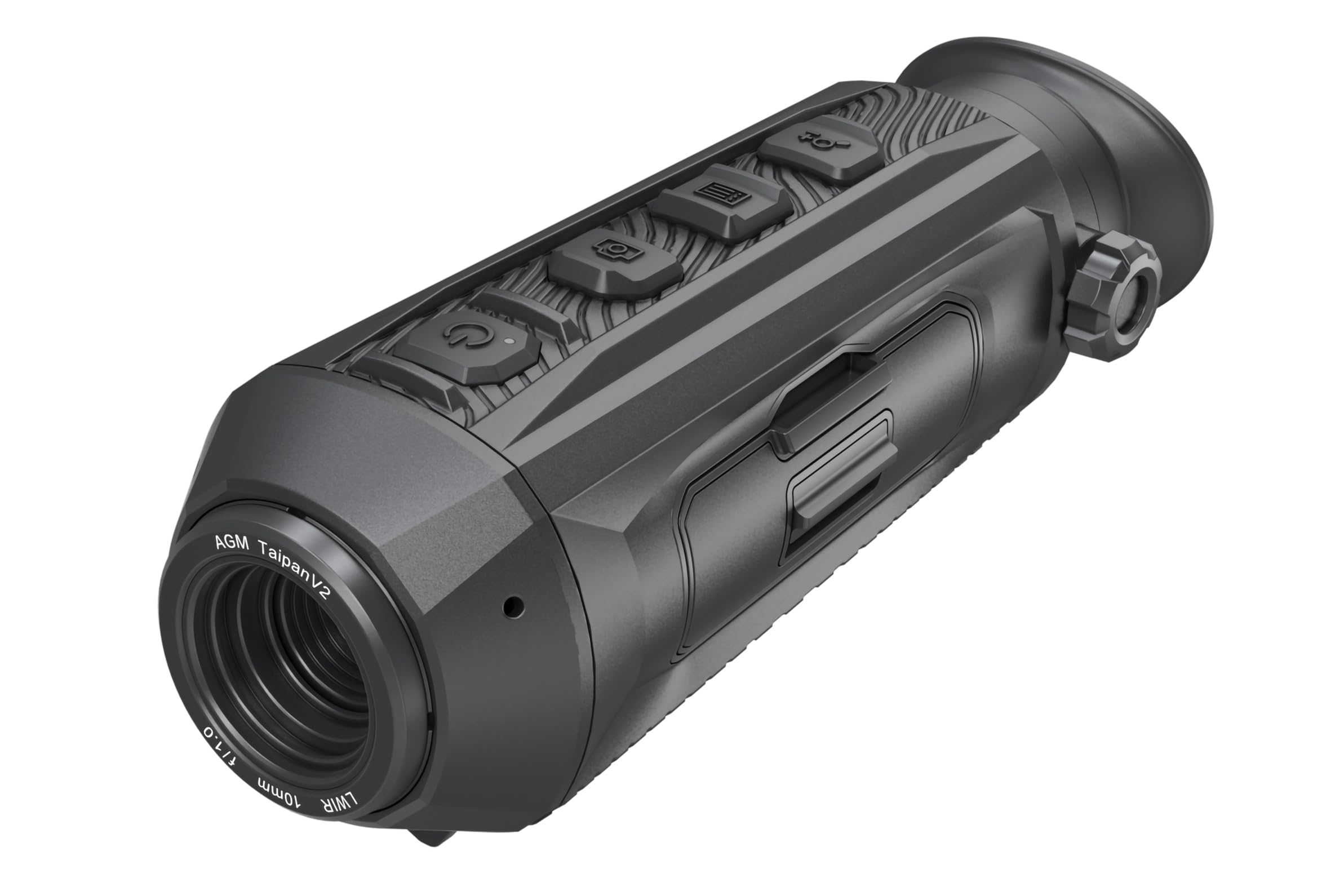
The AGM Taipan V2 hits a rare balance at this price: a native 256×192 sensor with a sub-25mK NETD, 50Hz frame rate, and a replaceable 18650 battery that keeps you in the field for up to seven hours. The 15mm objective lens provides a wide 10-degree field of view, making pasture and field scanning efficient without constant panning. The 1280×960 LCOS display offers noticeably more detail than the typical 800×600 panels found on most competitors, and the rubber-armored IP67 housing inspires confidence in wet or dusty conditions.
Reviewers consistently report detecting chipmunks past 40 yards and clearly identifying human-sized targets beyond 300 yards. The replaceable battery system — two batteries and an external charger included — eliminates the anxiety of a sealed unit dying mid-scan. The AGM Connect app streams live video and allows remote settings adjustment, which is rare at this tier. The built-in 16GB storage records video with audio, useful for documenting game movement or security patrols.
The fixed-focus objective lens means close-range targets under three meters will appear soft, which limits its utility for small-animal observation at very short distances. The digital zoom pixelates quickly beyond 4x, so the effective identification range is capped around 200 yards despite detection claims extending further. The included neck strap and carrying case are functional but could be more robust for serious field use.
Why it’s great
- Replaceable 18650 batteries with external charger included for unlimited field time
- Sub-25mK NETD delivers exceptional sensitivity — picks up chipmunks at 40+ yards
- IP67 waterproof rating and rubber overmolding handle rain and drops confidently
Good to know
- Fixed-focus objective blurs targets closer than three meters
- Digital zoom becomes grainy beyond 4x magnification
2. MiLESEEY TNV10 PRO

The MiLESEEY TNV10 PRO stands apart from the crowd by offering a true 320×240 native infrared sensor instead of relying on software upscaling from a lower resolution. This additional pixel density translates to noticeably sharper image detail when scanning fields for bedding deer or identifying heat signatures at moderate distances. The 50Hz refresh rate keeps motion smooth, and the 800×600 OLED display provides good contrast in low-ambient-light conditions. The 4500mAh battery delivers an exceptional 12 hours of continuous runtime, making it the longest-lasting unit in this guide.
Users report being able to identify deer clearly at 300 yards and detect cows and larger animals at extreme distances beyond 500 yards. The UHD Mode enhances definition in low-contrast scenarios like grass and brush, helping separate a hidden target from the background thermal clutter. The five color palettes — including Jungle mode — give flexibility for different terrain types. Hotspot tracking automatically locks onto the warmest object in the frame, useful for quickly locating a downed animal in thick cover.
Some reviewers noted that the body feels slightly less premium than the price suggests, with plastic housing that lacks the density of a magnesium-alloy chassis. The image can blur in high humidity — a common limitation across all thermal sensors at this price point. The 30-minute and 60-minute auto-off features help preserve battery but require a button press to reactivate, which could be frustrating during long sits.
Why it’s great
- True 320×240 native sensor delivers sharper detail than upscaled competitors
- 12-hour battery runtime outlasts every other model in the comparison
- UHD Mode reveals up to 50% more definition in brush and grass backgrounds
Good to know
- Build quality uses plastic body that feels less rugged than metal options
- Image quality degrades noticeably in high-humidity environments
3. ATN BlazeSeeker-207
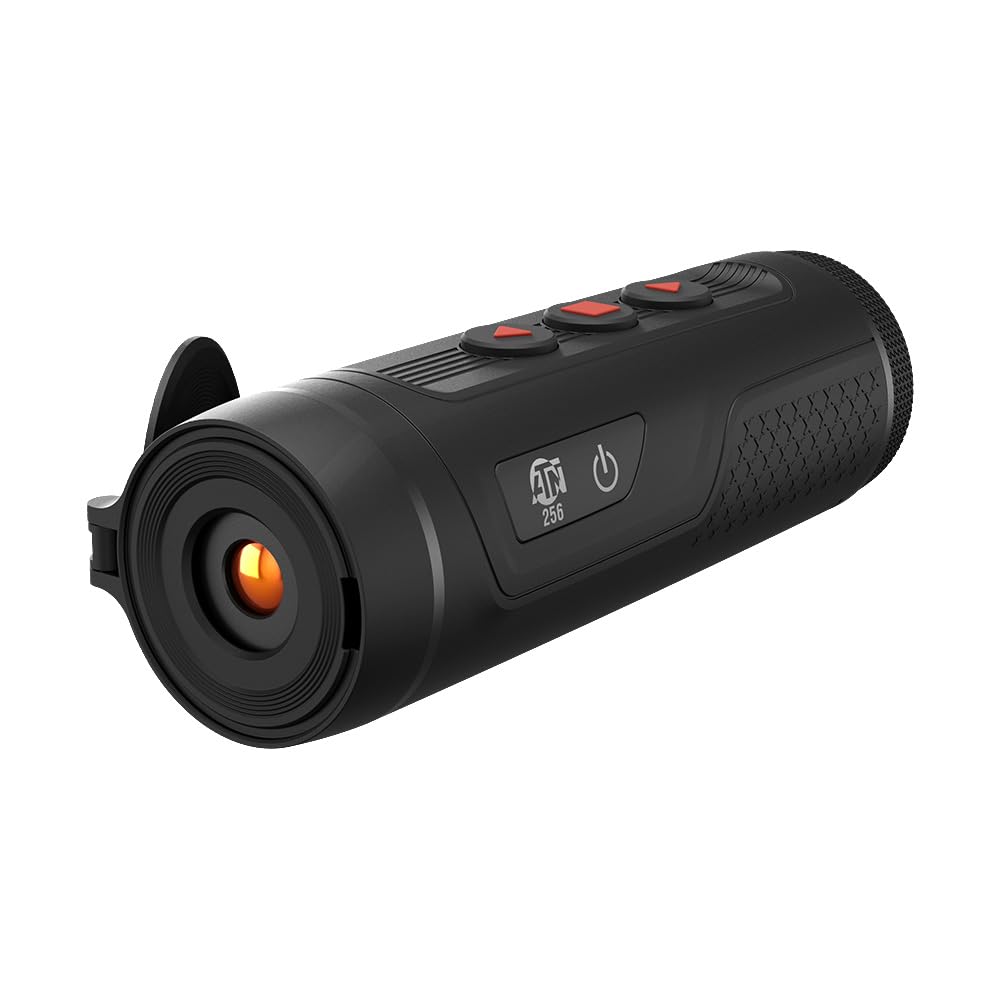
ATN’s BlazeSeeker-207 brings the brand’s established thermal imaging pedigree into a compact monocular format. The 256×192 sensor with a sub-35mK NETD performs reliably across varied conditions, and the 1x to 8.8x digital zoom range provides flexibility from wide-area scanning to closer inspection. The unit weighs only 0.6 pounds and measures compactly, making it comfortable to carry on a bino harness or in a jacket pocket during long stalks.
Users frequently praise the BlazeSeeker’s ability to detect heat signatures out to 600 yards, with reliable identification possible inside 200 yards. The Black Hot color palette is a consistent favorite for reducing eye strain during extended viewing sessions. The built-in Wi-Fi and ATN app allow wireless image transfer and remote control, which is helpful for sharing footage with hunting partners or documenting field conditions. The MicroSD card slot supports up to 256GB, giving ample storage for video recordings and time-lapse captures.
The 25Hz refresh rate is adequate for stationary observation but can feel slightly sluggish when tracking fast-moving hogs or coyotes in open country. The auto-focus system works well in most conditions but occasionally hunts for focus when transitioning between near and far targets rapidly. The included lens cap and carrying case are functional but basic.
Why it’s great
- Detects heat signatures up to 600 yards in clear conditions
- Lightweight 0.6-pound build is easy to pack and carry all day
- ATN app provides remote control and wireless file transfer
Good to know
- 25Hz refresh rate limits tracking performance on fast-moving targets
- Auto-focus can struggle when rapidly switching between near and far subjects
4. RIX Pocket K2

The RIX Pocket K2 redefines portability in the affordable thermal space by weighing just 200 grams — lighter than many smartphones. Despite the pocket-friendly size, it packs a 256×192 sensor with a 12µm pixel pitch and an impressive NETD below 25mK, ensuring that sensitivity is not sacrificed for compactness. The 50Hz refresh rate keeps motion fluid, and the 800×600 OLED display delivers a crisp image that punches above the unit’s physical footprint.
Reviewers highlight the clever integrated lens cover that slides open and closed with one finger, eliminating the annoyance of lost caps in the field. The Resolution Enhanced Technology (RET) uses AI algorithms to simulate higher pixel density, and while it is not a substitute for a native higher-resolution sensor, it noticeably improves edge definition and reduces the blocky appearance typical of digital zoom. The IP67 waterproof rating means rain and creek crossings are not a concern. The Electronic Image Stabilization (EIS) helps dampen hand shake at higher zoom levels.
The fixed-focus lens is optimized for distances beyond a few meters, making close-range inspection of small objects less effective. The battery is non-replaceable and integrated into the chassis, so field recharging requires a USB-C power bank. The compact form factor may feel cramped for users with larger hands, and the button layout takes some practice to navigate by feel in the dark.
Why it’s great
- Weighs only 200 grams — easily fits in a jacket pocket or range-finder pouch
- Integrated sliding lens cover eliminates the chance of losing a cap
- 50Hz refresh rate with EIS keeps the image smooth and stable
Good to know
- Fixed-focus lens does not handle close-range targets well
- Non-replaceable internal battery requires a power bank for extended sessions
5. TOPDON TS004
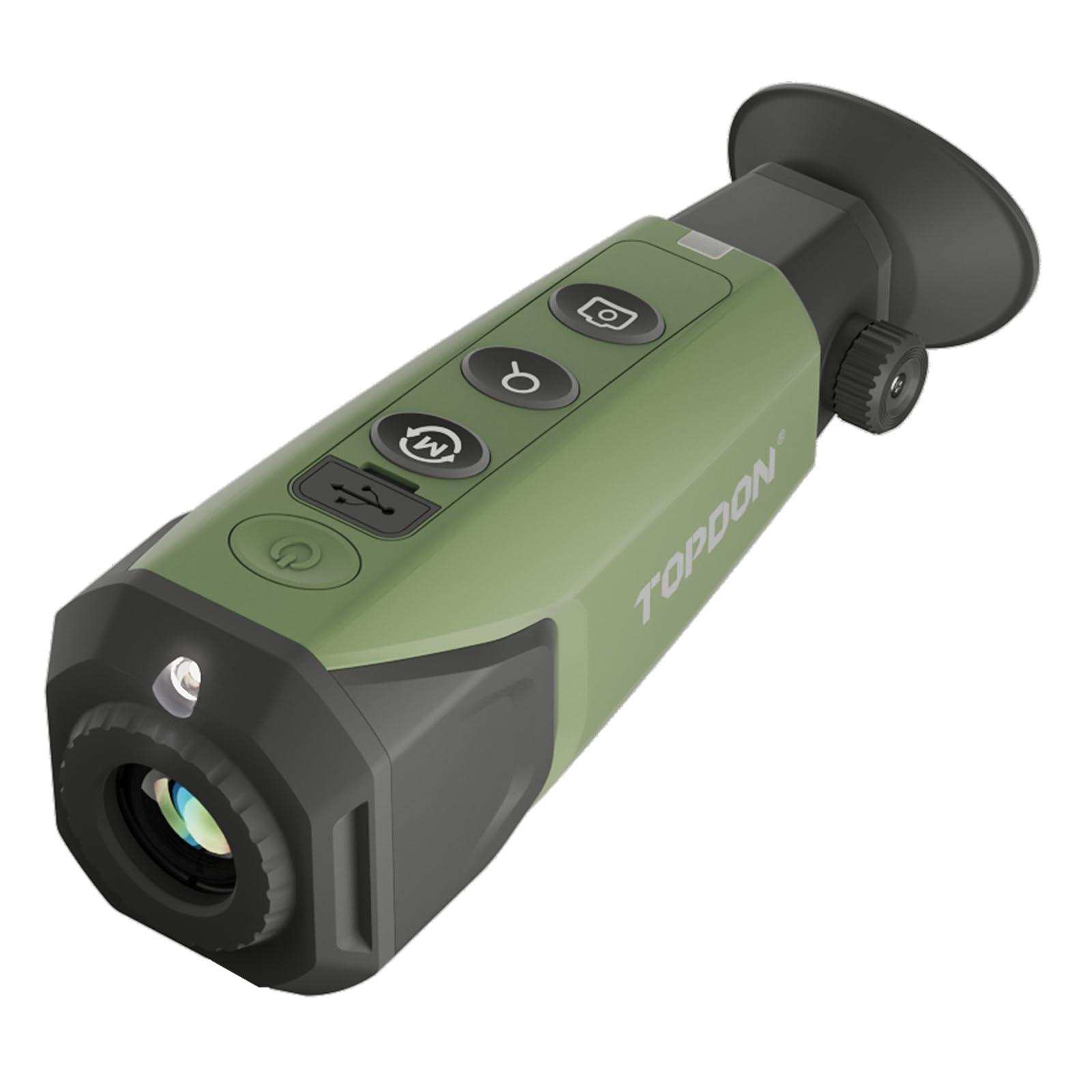
The TOPDON TS004 distinguishes itself with a manual focus ring on the 13mm objective lens, giving the user precise control over image sharpness that auto-focus units cannot match. This is a genuine advantage when scanning through fog, light rain, or vegetation where auto-focus systems frequently hunt for lock. The 256×192 sensor runs at 50Hz, and the large 5000mAh battery delivers up to 11 hours of continuous use — among the best endurance figures in this comparison.
Reviewers consistently report that the TS004 performs on par with units costing twice as much, including the FLIR Scout series. Detection of cows and large animals extends well beyond 200 yards, and small targets like rats are identifiable at 50 yards. The TopInfrared app enables live streaming and recording with audio, and the Bluetooth pairing works reliably in the field. The IP67 rating and silicone overmolding provide robust protection against the elements.
The 13.5-degree field of view is narrower than some competitors, requiring more head movement for scanning large open areas. The bright green power indicator light on the rear may compromise stealth in complete darkness, as some hunters have noted. The included neck strap is thin and the carrying case is basic, so upgrading both is recommended for serious field use.
Why it’s great
- Manual focus ring gives precise control in fog, rain, and vegetation
- 5000mAh battery provides up to 11 hours of field operation
- Bluetooth app connectivity enables live streaming and remote control
Good to know
- Narrow 13.5-degree FOV reduces situational awareness in open terrain
- Bright green power light can compromise stealth during night operations
6. GOYOJO G210
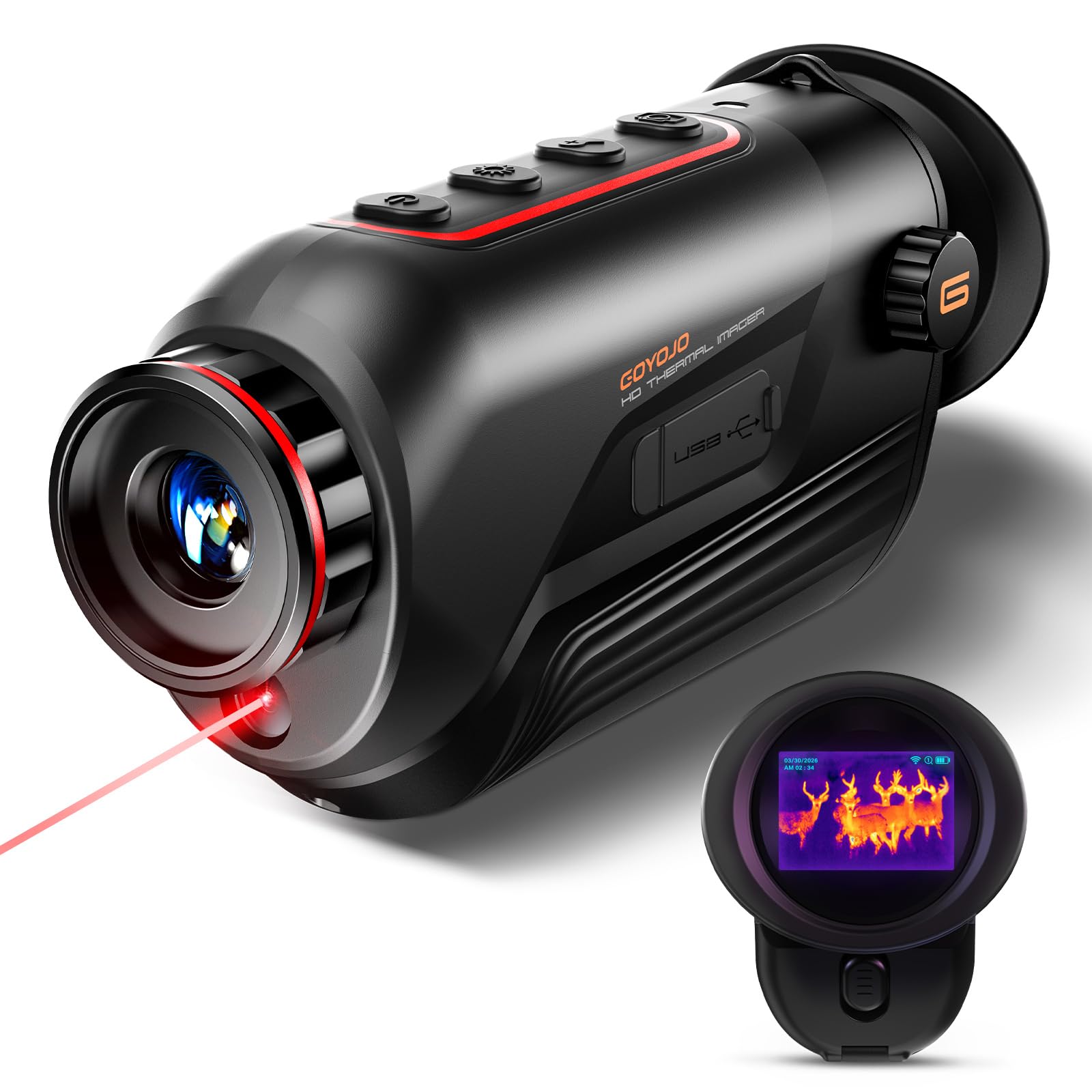
The GOYOJO G210 punches well above its price bracket with a 256×192 sensor, 12µm detector, and a 25Hz refresh rate that handles most scanning scenarios competently. The 10mm focal length provides a wider field of view than competitors using 13mm lenses, making it easier to sweep fields and locate targets quickly. The six color palettes include practical options like Black-Hot and White-Hot alongside more situational modes like Rainbow and Iron-Red for enhanced contrast in specific environments.
Users consistently report detecting hogs at 150 yards and distinguishing small animals like armadillos and possums in tall grass. The replaceable battery design — using standard 18650 cells — allows instant power swaps in the field, a major advantage over sealed units that require USB recharging. The IP65 rating sheds rain and dust effectively, and the WiFi app integration enables image sharing between multiple hunters. The 16GB internal storage provides ample space for photo and video capture.
At 25Hz, tracking fast-moving game like running coyotes can produce a slight stutter compared to 50Hz units. The digital zoom beyond 2x degrades image quality noticeably, so reliance on optical detection range is important. The menu system, while quick to learn, uses a multi-button sequence that can be confusing in the dark until muscle memory develops.
Why it’s great
- Standard 18650 replaceable batteries allow instant swapping for unlimited runtime
- 10mm lens provides a wide field of view ideal for scanning large areas
- IP65 weather resistance and durable build handle field conditions well
Good to know
- 25Hz refresh rate can show stutter on fast-moving targets like coyotes
- Digital zoom degrades image quality significantly beyond 2x
7. Teslong TTS260
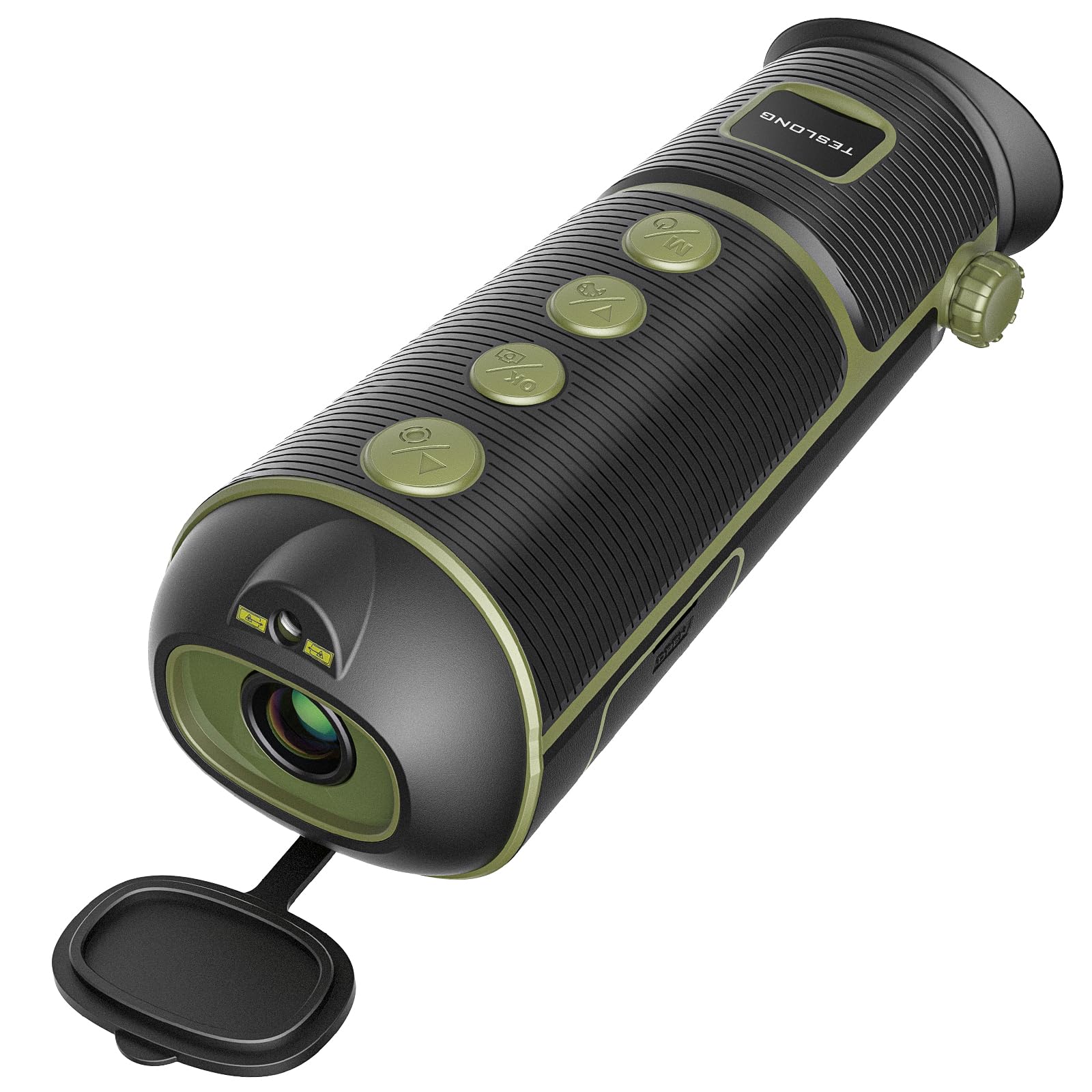
The Teslong TTS260 brings a standout feature set that rivals units costing significantly more. The 256×192 sensor with Super Resolution enhancement aims to produce 512×384 output, though the improvement is modest in real-world use. The 25Hz refresh rate and 12mm lens combination provides a practical balance of field of view and detection range. The real highlight is the 32GB of built-in storage and Mini HDMI output, which allows direct connection to an external monitor for group observation or training scenarios.
Reviewers praise the TTS260 for its 10-hour battery life and the clarity of the 800×600 OLED display, noting it appears sharper than some FLIR units costing hundreds more. Hotspot tracking and Picture-in-Picture mode help zero in on heat sources quickly. The eight color palettes offer flexibility across different terrain and weather conditions. Users have found it effective for hunting, property monitoring, and even detecting air leaks and engine overheating around the farm.
The unit requires approximately 10 minutes to warm up before the image stabilizes, which can be frustrating when you need immediate situational awareness. The lens cap fits loosely and can fall off during transit. The weight is slightly higher than some competitors, though users report it is not noticeable during handheld use.
Why it’s great
- 32GB internal storage and Mini HDMI output for direct external display connection
- 10-hour battery life supports all-night sessions without recharging
- Hotspot tracking and PIP mode aid rapid target identification
Good to know
- Requires up to 10 minutes of warm-up time before image stabilizes
- Lens cap fits loosely and can detach during movement
8. InfiRay T2 Pro

The InfiRay T2 Pro takes a unique approach by functioning as a camera attachment that turns your Android smartphone into a thermal monocular. The 256×192 sensor with 12µm pixel pitch provides genuine thermal detection that outperforms any phone-based thermal accessory. The Matrix III image algorithm processes the signal to deliver clear, sharp images in total darkness. The detection range of up to 1300 meters is the highest claimed in this guide, though practical identification range is shorter.
Users praise the T2 Pro for its ability to spot deer at 1200-plus yards and detect subtle temperature variations in insulated walls. The hot spot tracking feature quickly identifies the warmest object in the field of view. The compact size and lightweight design make it easy to carry as a backup or primary thermal solution for smartphone users. The included carrying case and USB cable are functional for transport and charging.
This unit is strictly limited to Android 6.0 and above — iPhone users need not apply. The app is not available on the Google Play Store and must be sideloaded, which introduces a setup barrier for less technical users. Several reviewers reported initial connectivity issues with newer Samsung Galaxy models, requiring Developer Options adjustments to enable USB file transfer mode. The fixed-focus design limits close-range utility, and the plastic clip attachment can feel less secure than a dedicated monocular body.
Why it’s great
- True 256×192 thermal sensor in an ultra-compact smartphone attachment form
- Detection range up to 1300 meters for long-range scanning
- Hot spot tracking quickly identifies the warmest target in view
Good to know
- Android-only with sideloaded app — no iOS support at all
- Setup can require Developer Options tweaks on newer Samsung phones
FAQ
Can I use a thermal monocular to detect animals through thick brush?
Why does my budget thermal monocular produce grainy images at longer distances?
Is a 50Hz refresh rate worth the extra cost over 25Hz for hunting?
Final Thoughts: The Verdict
For most users, the best affordable thermal monocular winner is the AGM Taipan V2 because it combines a sensitive sub-25mK sensor, smooth 50Hz refresh rate, and replaceable 18650 batteries into a rugged IP67 body at a price that undercuts competitors with similar specs. If you want the absolute longest battery life, grab the MiLESEEY TNV10 PRO for its native 320×240 sensor and 12-hour runtime. And for pocket-size portability, nothing beats the RIX Pocket K2 at just 200 grams with a 50Hz panel and clever slide-away lens cover.