
The difference between a captured performance and a frustrating mess often comes down to a single number: latency. For anyone plugging a microphone, guitar, or synth into a computer, the interface is the bridge between physical sound and digital reality. The preamp quality, converter resolution, and driver stability determine whether that bridge feels like a solid highway or a muddy trail.
I’m Min — the co-founder and writer behind Gadgets Feed. For this guide, I dug through hundreds of hours of user reports, comparing preamp noise floors, headphone output power, and driver compatibility across the most popular interfaces in the affordable range to find the units that actually deliver on their specs.
Whether you are laying down vocal tracks, starting a podcast, or just trying to get your guitar into your DAW without crackles and pops, selecting the right affordable usb audio interface is the single most important decision for your signal chain.
How To Choose The Best Affordable USB Audio Interface
An audio interface replaces your computer’s built-in sound card with professional-grade inputs and outputs. The goal is cleaner signal capture, lower latency, and reliable drivers. When shopping in the affordable tier, you are trading features for price, so knowing which compromises matter is critical.
Preamps and Dynamic Range
The mic preamp is the first active stage your signal hits. A noisy preamp adds a constant hiss that no amount of post-processing fully removes. Look for interfaces with at least -128dB EIN (Equivalent Input Noise) or better. Dynamic range of 110dB or higher on the converters ensures your quiet whisper and loud scream both stay clean without distortion.
Sample Rate and Bit Depth
24-bit 96kHz is the practical sweet spot for home studios. Higher sample rates like 192kHz use more CPU without audible improvement for most genres. The converters matter more than the maximum number on the spec sheet — a well-designed 96kHz converter outperforms a sloppy 192kHz one every time.
Connectivity and Monitoring
Direct monitoring eliminates the delay of routing audio through your computer. Without it, you hear your own voice a few milliseconds late, which makes singing or playing guitar impossible. Also verify the interface has enough headphone output power for your headphones — 250 ohm headphones need more voltage than budget interfaces often provide.
Quick Comparison
On smaller screens, swipe sideways to see the full table.
| Model | Category | Best For | Key Spec | Amazon |
|---|---|---|---|---|
| Focusrite Scarlett Solo 4th Gen | Premium | Vocalists & Guitarists | 120dB dynamic range | Amazon |
| Solid State Logic SSL 2 MKII | Premium | Clean preamps & HPF | 32-bit 192kHz converters | Amazon |
| Behringer UMC1820 | Mid-Range | Multi-channel recording | 8 Midas preamps | Amazon |
| Universal Audio Volt 1 | Mid-Range | Vintage tone seekers | 610 tube emulation | Amazon |
| Focusrite Scarlett Solo 3rd Gen | Mid-Range | Proven budget option | Air mode enhancement | Amazon |
| PreSonus AudioBox 96 | Mid-Range | Portable & MIDI | Class-A preamps | Amazon |
| Mackie Onyx Producer 2-2 | Mid-Range | Rugged & reliable | 192kHz recording | Amazon |
| Zoom H4 Essential | Premium | Field recording & backup | 32-bit float recording | Amazon |
| FIFINE AmpliGame KS5 | Budget | Gaming & streaming | XLR/USB hybrid | Amazon |
In‑Depth Reviews
1. Focusrite Scarlett Solo 4th Gen
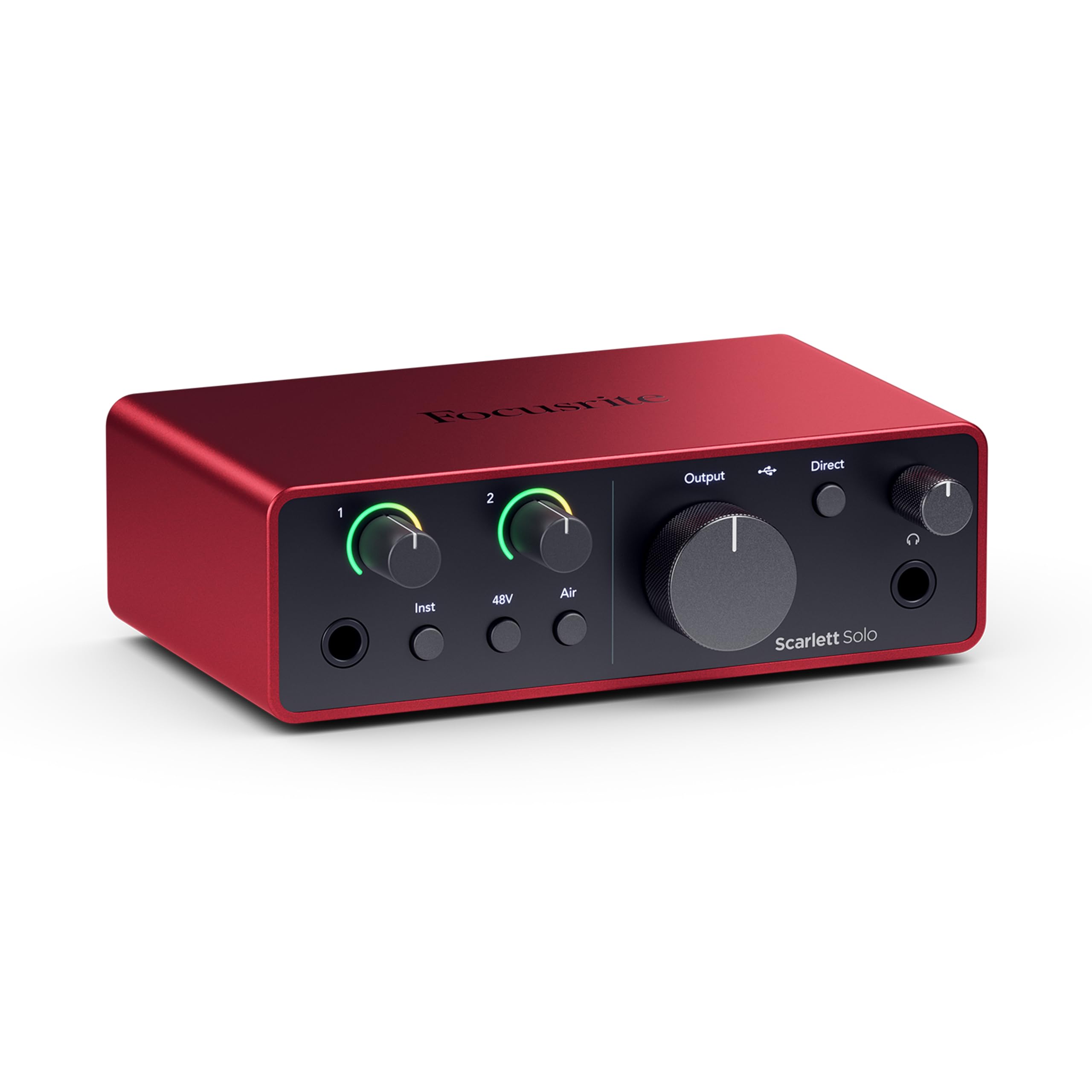
The 4th Gen Scarlett Solo brings converters from Focusrite’s flagship RedNet range into an affordable desktop interface. The 120dB dynamic range is a class-leading spec that translates to exceptionally clean headroom on both the mic preamp and the instrument input. The improved Air mode adds a high-frequency lift that genuinely makes acoustic guitars and vocals sit forward in a mix without sounding harsh.
The gain halo LEDs around the input knob are not just for show — they provide instant visual feedback on input level, which is particularly useful when recording alone and cannot watch software meters. The headphone output has been significantly boosted over the 3rd Gen, driving 250-ohm headphones like the Beyerdynamic DT 990 Pro to satisfying volumes with minimal distortion.
Setup is plug-and-play on macOS and nearly instant on Windows with Focusrite’s driver. The included Hitmaker Expansion bundle alone covers the cost of entry if you do not already own a DAW. The USB-A to USB-C cable in the box feels outdated, but a simple cable swap solves that. Firmware updates are now required out of the box but are straightforward.
Why it’s great
- Industry-leading 120dB dynamic range
- Improved headphone amp for high-impedance cans
- Intuitive gain halo meters
Good to know
- Firmware update required before use
- Included USB cable is USB-A to USB-C
2. Solid State Logic SSL 2 MKII

The SSL 2 MKII brings the legendary SSL console sound to a 2×2 form factor. The headline feature is the Legacy 4K button, which emulates the analog enhancement circuit from SSL’s iconic 4000 series consoles — adding a subtle upper-mid presence and harmonic saturation that gives vocals and drums a polished, radio-ready feel. The preamps are exceptionally clean with a low noise floor that voice actors will appreciate.
The built-in high-pass filter is a practical lifesaver for home studios dealing with rumble from HVAC systems or desk vibrations. At 24dB per octave, it cuts sub-80Hz content before it hits your DAW, cleaning up recordings without needing a plugin. The headphone amp is powerful and transparent, driving even 300-ohm headphones with authority.
Build quality is reassuringly solid with a stainless steel chassis that feels far more premium than its price suggests. The 32-bit 192kHz AD/DA converters are technically overkill for streaming and podcasts but provide excellent future-proofing. The MIDI I/O via 5-pin DIN is a welcome inclusion for hardware synth users that many competitors omit.
Why it’s great
- Legacy 4K analog enhancement adds console character
- Built-in high-pass filter eliminates rumble
- Stainless steel chassis is built to last
Good to know
- Heavier than comparable 2×2 interfaces
- Not true 32-bit float recording
3. Behringer UMC1820

The UMC1820 is the choice for anyone who needs multiple simultaneous analog inputs without spending thousands. Eight Midas-designed mic preamps provide consistently clean gain across all channels, and with ADAT I/O you can expand to 18 inputs by adding a companion unit like the ADA8200. This makes it a viable hub for recording a full band or drum kit.
The 24-bit 96kHz converters deliver professional audio quality with a noise floor low enough for critical recording. The unit is rack-mountable, which keeps your studio tidy, and it can be bus-powered or run from an external supply for maximum flexibility. The MIDI I/O is on the front panel, which is more convenient than rear-mounted ports on competing units.
Driver stability on both Windows and macOS is excellent, with native class-compliant mode on Mac and robust ASIO drivers for Windows. The preamps are neutral and clean, lacking the character of an SSL or Focusrite Air mode, but that transparency is preferred for multi-track recording where you want to add color later via plugins.
Why it’s great
- Eight Midas mic preamps at an unbeatable price
- ADAT expandable to 18 inputs
- Rack-mountable for permanent studio setup
Good to know
- Preamps are neutral — no built-in character
- No 192kHz support at full channel count
4. Universal Audio Volt 1

UA’s Volt 1 brings the company’s prestigious analog heritage to the budget-conscious creator. The Vintage mode engages a circuit that emulates UA’s classic 610 tube preamp, adding a subtle warmth and harmonic saturation that makes vocals and DI guitar sound instantly fuller. This analog character is difficult to replicate with plugins, giving the Volt 1 a distinct sonic fingerprint in its price class.
The converters run at 24-bit 192kHz, exceeding the practical needs of most home studios but ensuring excellent transient response and low jitter. The build quality is compact and dense, with a metal chassis and rubberized base that stays put on a desk. The included LUNA DAW is a full-featured recording environment that emulates analog console workflow.
Compatibility extends to iPad and iPhone with the proper adapter, making it a strong choice for mobile recording sessions. The headphone output is adequate for low-impedance headphones but lacks the voltage to properly drive high-impedance models. The software bundle is generous, including Ableton Live Lite and Melodyne essential for pitch correction.
Why it’s great
- Vintage 610 tube emulation adds analog warmth
- Excellent 192kHz converters
- Includes LUNA DAW and full software suite
Good to know
- Headphone amp underpowered for 250+ ohm cans
- Requires external PS for iOS compatibility
5. Focusrite Scarlett Solo 3rd Gen

The 3rd Gen Scarlett Solo defined the affordable interface category for years, and it remains a dependable choice. The single mic preamp with switchable Air mode emulates the impedance curve of Focusrite’s classic ISA preamps, adding presence and clarity to vocals and acoustic instruments. The 24-bit 192kHz converters capture plenty of detail for streaming and demo recording.
The Gain Halo system turns red when your input clips, which prevents the most common beginner mistake of recording too hot. The all-metal chassis feels robust and survived years of abuse in many user reports. Setup remains as simple as installing the driver and plugging in — no firmware updates or complex configuration menus to navigate.
Where the 3rd Gen shows its age is in the headphone amp, which is noticeably weaker than the 4th Gen or SSL 2 MKII. Low-impedance headphones work fine, but anything above 80 ohms will struggle to reach satisfying volume. The included software bundle is still generous with Ableton Live Lite and the Hitmaker Expansion pack.
Why it’s great
- Proven reliability and driver stability
- Air mode adds clarity to recordings
- Gain Halo prevents clipping
Good to know
- Headphone amp is underpowered for high-impedance cans
- No USB-C port on the interface itself
6. PreSonus AudioBox 96 25th Anniversary

The AudioBox 96 delivers two Class-A mic preamps in a compact metal chassis that barely takes up desk space. The preamps are transparent and clean, with enough gain for dynamic mics like the Shure SM58 without excessive noise. The 24-bit 96kHz converters are a step below the 192kHz competitors, but for podcasting and basic music recording the difference is negligible.
The MIDI I/O is a standout feature at this price point, allowing connection of keyboard controllers and hardware synths without a separate MIDI interface. The Mixer knob blends the direct analog input with the computer playback, enabling zero-latency monitoring — critical for recording while hearing yourself without delay. The included Studio One Artist DAW is a full-featured recording platform that integrates seamlessly with the hardware.
Bus-powered operation via USB 2.0 keeps the setup clean for mobile recording sessions. The plastic knobs feel less premium than the metal pots on competitors, but they maintain accurate control. The 51-ohm output impedance means it pairs well with most consumer headphones, though high-impedance monitoring headphones may sound slightly colored.
Why it’s great
- Class-A preamps with clean gain
- MIDI I/O for synth and controller connectivity
- Includes Studio One Artist DAW
Good to know
- 96kHz maximum sample rate limits future-proofing
- Plastic knobs feel less durable
7. Mackie Onyx Producer 2-2

The Mackie Onyx Producer 2-2 lives up to Mackie’s “Built Like a Tank” reputation. The all-metal enclosure is noticeably heavier and denser than competitors, and the Neutrik combo jacks feel like they will survive decades of plugging and unplugging. The Onyx mic preamps deliver 192kHz resolution with low noise and plenty of clean gain for both dynamic and condenser microphones.
The MIDI I/O via 5-pin DIN adds connectivity for hardware sequencers and synthesizers without needing a separate MIDI interface. Direct monitoring is handled via the Mix knob, and the dedicated monitor outputs with independent level control make connecting studio monitors straightforward. The headphone output is surprisingly powerful for a bus-powered unit, driving 150-ohm headphones with ease.
Plug-and-play compatibility extends to Ubuntu Linux according to user reports, making it a rare option for Linux-based recording rigs. The included “The Musician Collection” plugin bundle provides 23 effects and instruments, though the quality is behind what Focusrite and UA include. The design is utilitarian rather than sleek, but the trade-off is genuine durability that cheaper plastic units cannot match.
Why it’s great
- Extremely durable metal chassis
- Clean Onyx preamps with 192kHz resolution
- MIDI I/O and powerful headphone amp
Good to know
- Included plugin suite is less competitive than rivals
- Requires direct USB connection (not through hubs)
8. Zoom H4 Essential

The Zoom H4 Essential is a different beast — a handheld recorder that also functions as a USB audio interface. The headline feature is 32-bit float recording, which means you cannot clip the recording regardless of input level. This is revolutionary for field recording, interviews, and any situation where you cannot monitor levels in real time. The on-board 19.4mm X/Y microphone capsule captures spacious stereo imaging with impressive detail.
As a USB audio interface, it presents two XLR/TRS combo inputs to your computer with the same 32-bit float benefits, though you still need to set levels for monitoring. The dual A/D converters per channel handle the 32-bit float math, resulting in a noise floor far below analog alternatives. Battery life at 20 hours on two AA batteries makes it truly portable for all-day sessions.
The trade-off for this versatility is a more complex user interface than a dedicated desktop interface. The menu navigation takes practice, and the build is lightweight plastic that requires care. Handling noise is present when holding the recorder, though a tripod or desktop stand eliminates the issue. For a mobile content creator who needs both a field recorder and a desktop interface, the H4 Essential is uniquely capable.
Why it’s great
- Zero-clip 32-bit float recording
- Built-in X/Y stereo microphones
- 20-hour battery life on AA batteries
Good to know
- Handling noise requires tripod or stand
- Menu navigation is less intuitive than desktop interfaces
9. FIFINE AmpliGame KS5

The AmpliGame KS5 is a complete gaming and streaming bundle that includes a dynamic XLR microphone, a 4-channel audio mixer, and all necessary cables. The dynamic mic capsule rejects room noise well, making it suitable for untreated rooms where a condenser mic would pick up echoes. The mixer provides individual volume faders for mic, music, and system audio, plus a dedicated monitor output.
The voice changer effects are a unique addition for streamers who want to add comedy characters to their broadcasts. The elder and baby voices are surprisingly usable, while the robot and girl presets are more gimmicky. The RGB lighting on both the mic and mixer is fully customizable with five different effects, matching gaming setups that prioritize aesthetics.
Audio quality is limited to 16-bit resolution, which is fine for voice streaming and podcasting but noticeably behind the 24-bit interfaces for music recording. The plastic build is expected at this price point, and a few user reports mention the mixer sporadically rebooting, which would be disruptive during a live stream. For pure gaming chat and beginning streamers, the all-in-one convenience outweighs the limitations.
Why it’s great
- Complete bundle includes mic, mixer, and cables
- Dynamic mic rejects background noise
- Fun voice changer effects for streaming
Good to know
- 16-bit audio limits recording quality
- Some units have intermittent reboot issues
FAQ
Do I need a 192kHz interface or is 96kHz enough?
Can I use a USB audio interface with an iPad or iPhone?
What is phantom power and do I always need it?
How much headphone output power do I need for my headphones?
Final Thoughts: The Verdict
For most users, the affordable usb audio interface winner is the Focusrite Scarlett Solo 4th Gen because its 120dB dynamic range and improved headphone amp solve the two biggest pain points in budget recording: limited headroom and weak monitoring. If you want vintage analog character in your recordings, grab the Universal Audio Volt 1. And for multi-channel recording without a budget blowout, nothing beats the Behringer UMC1820.