
The search for the right camera often stalls between two bad options: a smartphone that overheats during a long vlog or a bulky rig that you leave at home. The category has matured past the point where buyers must sacrifice stabilization for low-light performance or battery life for portability. The current market delivers tools that are small enough to mount on a hat yet sharp enough to reframe in post, which makes the decision harder—but the output far better.
I’m Min — the co-founder and writer behind Gadgets Feed. I spend my time verifying the real-world specs from manufacturer claims, comparing sensor sizes against optical performance data, and stress-testing stabilization algorithms against real-world footage to separate the overhyped from the genuinely capable.
After analyzing hours of test footage and hundreds of verified user reviews, I’ve narrowed thousands of options down to nine that deliver real value. Whether you need a wearable for mountain biking or a PTZ for a studio, this guide to the best affordable video camera will give you the clarity to buy with confidence.
How To Choose The Best Affordable Video Camera
The sheer variety in the affordable segment can confuse even experienced shooters. Pocket gimbals, action cams, PTZ units, and traditional mirrorless kits all appear in the same price window. You must first decide whether you need hands-free POV operation, studio-grade tracking, or interchangeable lenses—and then weigh the sensor size and stabilization type against your primary use case.
Sensor Size and Low-Light Performance
The sensor is the most important factor for image quality. A 1-inch CMOS sensor (like the one in the Sony ZV-1F or the Xtra Muse) captures significantly more light than the smaller 1/2.3-inch sensors found in most budget action cameras. This translates to cleaner footage at dusk and natural background blur. If you shoot indoors or at golden hour, prioritize a 1-inch sensor over higher megapixel counts on a smaller chip.
Stabilization: Gimbal vs Electronic
Mechanical 3-axis gimbals (Xtra Muse) provide butter-smooth footage regardless of how much you move, but they add bulk and a learning curve. Electronic Image Stabilization (EIS) found in cameras like the GoPro MAX2 and Insta360 GO Ultra uses clever cropping and gyroscope data to steady the shot. EIS is lighter but can produce a jelly-warp effect during fast pans. For walking vlogs, a gimbal is superior; for action sports, high-quality EIS is more practical.
Recording Time and Battery Life
Affordable cameras often ship with small batteries to keep the price down. Look for models with a minimum of 160 minutes of total run time or a hot-swappable battery system. The DJI Osmo Nano offers 200 minutes with its Vision Dock, while the SJCAM C400 claims 7 hours from a single internal cell. Be wary of manufacturers that list battery life at lower resolutions—always check the figure for 4K recording.
Connectivity and Audio
If you plan to live-stream or use the camera as a webcam, check for UVC/UAC compliance and wireless protocols like NDI or RTMP. For vloggers, direct microphone connectivity is critical. The DJI Osmo Action 6 and Xtra Muse support external mics without adapters, while the OBSBOT Tail Air includes a wireless audio option. Built-in microphones vary wildly; the Sony ZV-1F’s directional 3-capsule mic is a standout in this price range.
Quick Comparison
On smaller screens, swipe sideways to see the full table.
| Model | Category | Best For | Key Spec | Amazon |
|---|---|---|---|---|
| SJCAM C400 | Action Vlogging | All-day outdoor vlogging | 7-hour battery life | Amazon |
| GoPro MAX2 | 360 Action Camera | Reframable 8K footage | True 8K 360 video | Amazon |
| Xtra Muse | Pocket Gimbal | Cinematic walking vlogs | 1” CMOS + 3-axis gimbal | Amazon |
| Insta360 GO Ultra | Wearable Action Camera | Hands-free POV sports | 53g body, magnetic mounts | Amazon |
| DJI Osmo Nano | Wearable Vlog Camera | Pet POV & travel vlogs | 128GB built-in storage | Amazon |
| DJI Osmo Action 6 | Premium Action Cam | 8K underwater footage | Variable aperture f/2.0–f/4.0 | Amazon |
| OBSBOT Tail Air | PTZ Stream Camera | AI tracking for church/studio | 320° pan, 180° tilt PTZ | Amazon |
| Sony ZV-1F | Vlog Point-and-Shoot | Solo vlogging on the go | 1” sensor, 20mm ultra-wide | Amazon |
| Canon EOS R100 | Mirrorless Camera | Interchangeable lens photography | 24.1MP APS-C sensor | Amazon |
In‑Depth Reviews
1. DJI Osmo Action 6 Enhanced Combo
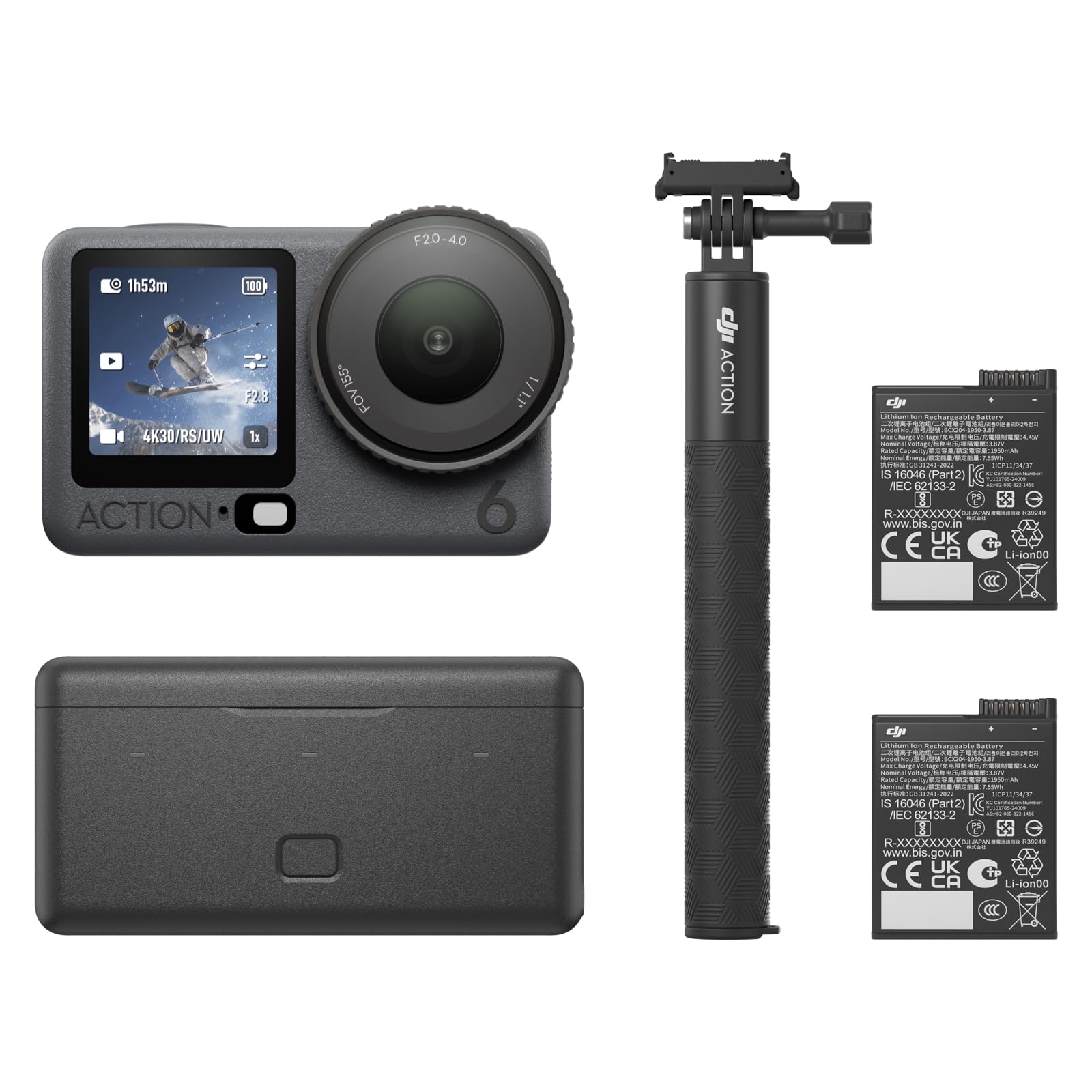
The DJI Osmo Action 6 is the most versatile camera in this list because its variable aperture physically adapts to changing light, which no fixed-aperture action cam can match. The 1/1.1-inch square sensor captures 8K video at 30fps, and the 4K Custom Mode lets you reframe for vertical and horizontal social cuts without losing quality. The Enhanced Combo includes two Extreme Batteries and a multifunctional case that charges them on the go, effectively extending your run time beyond the 4-hour single-cell claim.
HorizonSteady keeps the horizon locked even during a 360-degree roll, which makes it the best option for fast-paced sports and motovlogging. The 20-meter waterproof rating without a housing means you can take it snorkeling or surf without extra gear. Dual-screen operation helps when composing selfie-style shots, and the direct connection to DJI microphones solves the audio quality gap that plagued previous generations.
The main trade-off is bulk—this is a proper action camera, not a pocket day-carry. The internal microphone is usable but not pro-level, so you will want an external mic for serious vlogs. Considering the 50GB of built-in storage and the ability to flip between f/2.0 for low light and f/4.0 for sharp landscapes, this camera earns the best-overall slot for users who want one device that does action sports, underwater, and vlog duty.
Why it’s great
- Variable mechanical aperture adapts to any light condition
- 8K resolution allows aggressive post-stabilization cropping
- Two hot-swappable batteries in the Enhanced Combo
Good to know
- Heavier and larger than wearable 4K modules
- Built-in mic benefits from external upgrade
2. Xtra Muse

The Xtra Muse stands out because it combines a true 1-inch CMOS sensor with a mechanical 3-axis gimbal in a pocket-sized body—a feature set normally reserved for the DJI Pocket 3 at a higher price point. Recording 4K at 120fps gives you the freedom to create 5x slow-motion clips from your walking footage, and the 10-bit X-Log color profile captures a billion colors for post-production grading. Face and object tracking work reliably through the touchscreen interface.
The battery life of 161 minutes is adequate for a full day of casual shooting, and the USB-C PD port means you can extend it with a power bank during long timelapses. The standard bundle includes a carrying bag and a threaded handle that attaches to tripods, making this a self-contained vlogging kit. The stabilization is noticeably superior to EIS-based action cams—no warping or cropping artifacts, just smooth gimbal motion.
DJI microphones require a recent firmware update to auto-connect, though third-party wireless mics via the USB-C port work without issues. The camera does not have built-in storage, so budget for a high-speed U3 microSD card. For any creator who prioritizes smooth walking gimbal footage and cinematic color science over waterproofing or extreme action durability, the Xtra Muse delivers exceptional value.
Why it’s great
- 1-inch sensor delivers genuine background defocus
- Mechanical 3-axis gimbal eliminates electronic artifacts
- 4K/120fps for high-quality slow motion
Good to know
- No internal storage—requires a microSD card
- DJI mic pairing needs a firmware update
3. GoPro MAX2
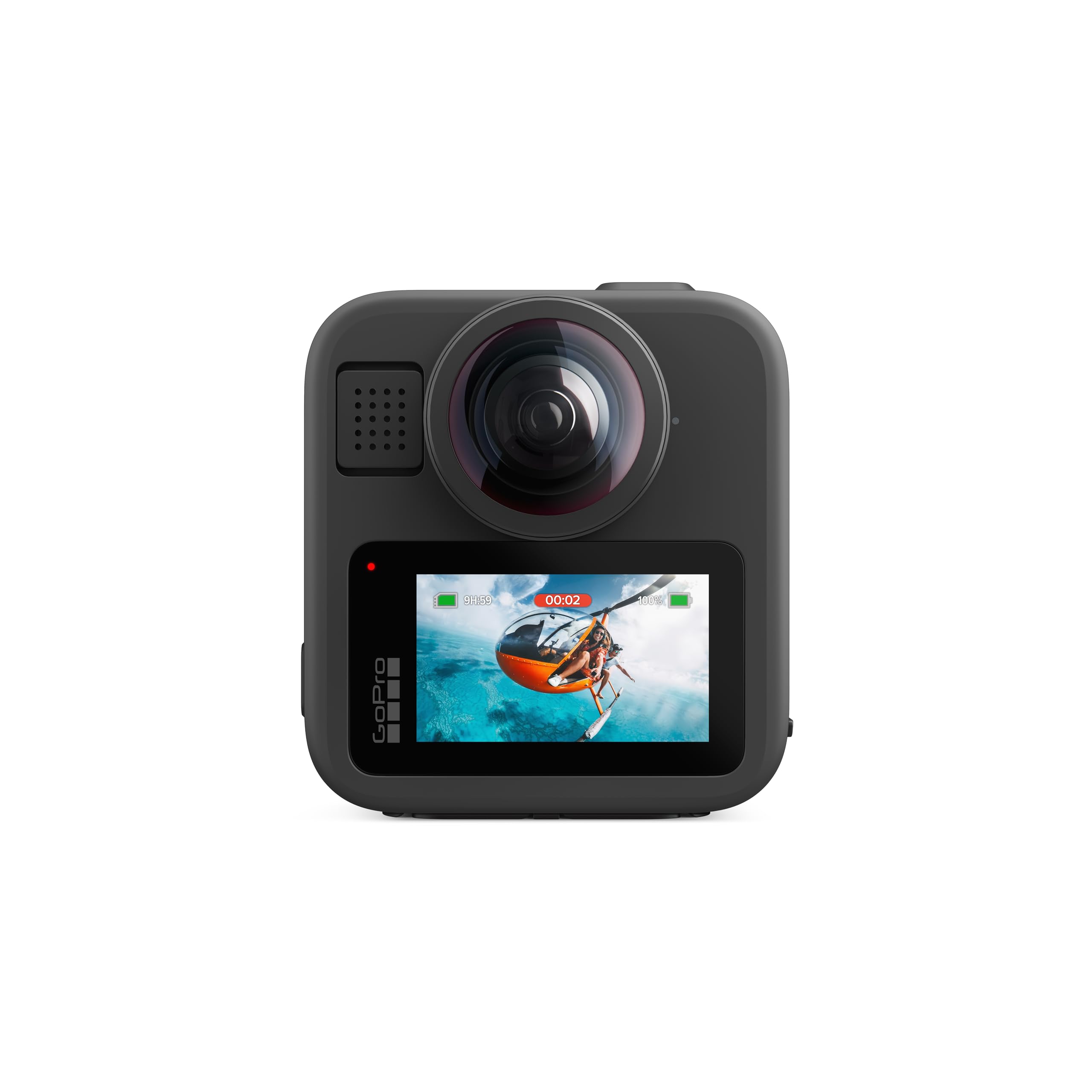
The GoPro MAX2 redefines the affordable 360 camera segment by offering True 8K spherical video that retains enough resolution to reframe into crisp 4K horizontal clips without the pixel softness of earlier 5.7K models. The 29MP 360 photos have impressive dynamic range for this class, and the stitching is virtually invisible—no exposure step between the two lenses. The replaceable glass lenses are a pragmatic feature for anyone who shoots in abrasive environments; a scratched lens can be swapped instead of bricking the camera.
HyperSmooth stabilization is paired with Horizon Lock that can be adjusted after recording via the GoPro Quik app, which is unique in this price bracket. The 6-microphone array captures proper ambisonic audio with perspective shift that follows the reframe direction. The Invisible Mount feature works flawlessly with the extension pole, creating drone-like follow shots from a handheld pole.
The heat issue reported by some users is real during prolonged 8K recording in still air, though active use like skiing or biking dissipates heat effectively. Battery life is moderate—expect about 60 to 70 minutes of 360 time-lapse per 1960mAh cell. If your workflow demands 360 capture for one-shot reframing, the MAX2 is the clear leader in this price zone.
Why it’s great
- True 8K spherical without distracting stitching
- Replaceable lenses extend camera lifespan
- Ambisonic audio with perspective tracking
Good to know
- Can overheat during static 8K recording
- Battery life is the limiting factor for long shoots
4. DJI Osmo Nano Standard Combo
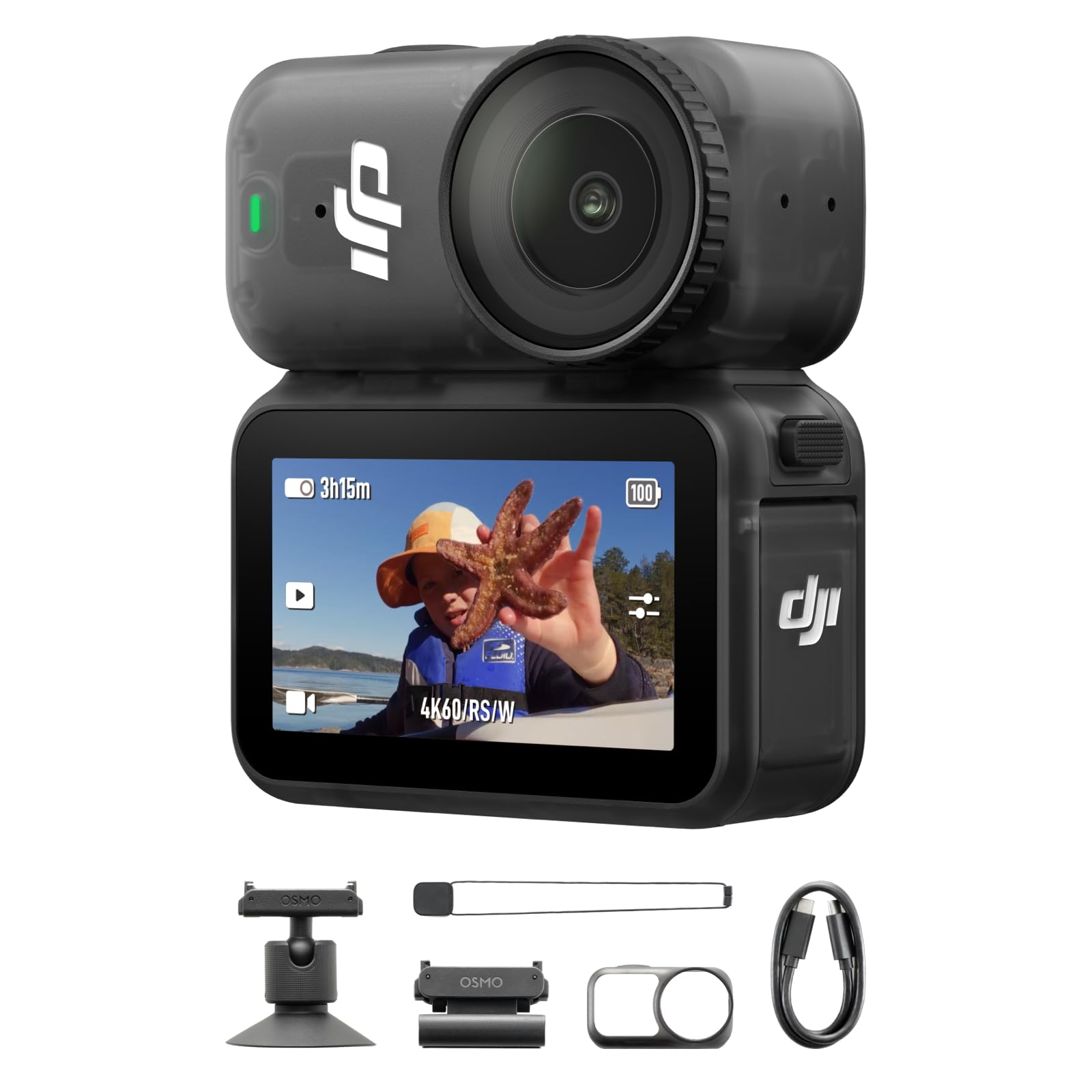
The DJI Osmo Nano is the best wearable 4K solution for vloggers who need hands-free POV without sacrificing image quality. The 1/1.3-inch sensor delivers excellent dynamic range for a camera that weighs practically nothing, and the 143-degree ultra-wide FOV captures immersive pet POV or first-person travel footage. The magnetic mounting system—hat clip, lanyard, and ball-joint adapter—makes it incredibly fast to deploy, and the 200-minute total battery life with the Vision Dock covers a full day of event shooting.
The 128GB of built-in storage means you can start shooting straight out of the box without buying a microSD card, though you can expand with a card if needed. The 10-bit D-Log M color profile provides enough latitude for color grading, which is rare in a body this small. Direct connection to two DJI microphones via OsmoAudio ensures clean dialogue without a receiver.
The Vision Dock drains battery when idle, so you must detach the camera or dock when storing. The camera module overheats during extended 4K recording in hot conditions, and the Endurance Mode reduces quality. Despite these quirks, the Osmo Nano is the lightest uncompromising 4K wearable on the market—ideal for runners, cyclists, and parents who want a hands-free daily companion.
Why it’s great
- Ultra-compact magnetic form factor for any activity
- 128GB internal storage eliminates immediate accessory costs
- 10-bit D-Log M for professional color grading
Good to know
- Dock drains battery when not in active use
- Requires Endurance Mode for long hot recording sessions
5. Sony ZV-1F Vlog Camera

The Sony ZV-1F is the gold standard for solo vloggers who want a traditional camera form factor with no learning curve. The 1-inch sensor and F2 lens produce the most natural background defocus in this price range, and the 20mm ultra-wide focal length keeps your arm-length selfie shots fully framed without a fisheye warp. Eye-AF and real-time tracking lock onto your face reliably, which eliminates the hunting focus that plagues budget cameras.
The directional 3-capsule microphone with the included windscreen delivers audio that often surprises reviewers—clear, directional, and usable out of the box. The side-articulating touchscreen flips forward for selfie composition, and the Product Showcase Mode automatically pulls focus to an object held near the lens, which is brilliant for unboxing and review videos. The camera connects to a smartphone via Bluetooth for wireless file transfer and remote control.
The battery life is a genuine weakness—expect roughly 45 minutes of continuous 4K recording, so you must stock multiple batteries. The body feels fragile compared to action cameras; a drop can knock the autofocus module out of alignment. The ZV-1F is not for action sports or waterproof use. But for sit-down vlogging, walking city tours, and interview-style content, it produces the most polished image of any camera at this tier.
Why it’s great
- 1-inch sensor delivers natural background blur
- Directional microphone with windscreen is best-in-class
- Product Showcase mode automates close-up focus pulls
Good to know
- Battery life is very short—carry backups
- Body is not ruggedized for drops or moisture
6. OBSBOT Tail Air NDI Streaming Camera

The OBSBOT Tail Air is a purpose-built PTZ camera that brings professional AI tracking to a sub- price point. The 1/2-inch sensor feeds a 23mm f/1.8 lens that covers a 320-degree horizontal and 180-degree vertical range, and the AI Director mode can track humans, animals, or objects with a stable frame. The gesture control—raising your hand to trigger tracking—is genuinely useful for solo presenters who cannot reach a controller.
Connectivity is the Tail Air’s superpower: it supports USB-C UVC/UAC for webcam duty, Micro HDMI, Ethernet, Wi-Fi, and NDI (license key sold separately). This makes it the only camera in this guide that can integrate into a multi-camera broadcast workflow with live switching. The companion Obsbot Start app provides full manual control over exposure, white balance, and preset positions, and the Stream Deck integration is a huge time saver for streamers.
The Achilles heel is the non-replaceable battery. Several reports indicate that the internal battery stops taking a charge after 6 to 12 months, which bricks the camera. Ensure your unit stays plugged into USB-C power during operation to minimize battery cycling. The Tail Air is for desk-bound creators and church AV teams who need automated tracking—it is not a travel vlog camera.
Why it’s great
- NDI, USB-C, HDMI, and Ethernet connectivity in one unit
- AI tracking works with humans, animals, and objects
- Gesture and Stream Deck control for solo operation
Good to know
- Non-replaceable battery has a short lifespan
- NDI license key costs extra
7. Insta360 GO Ultra Creator Bundle
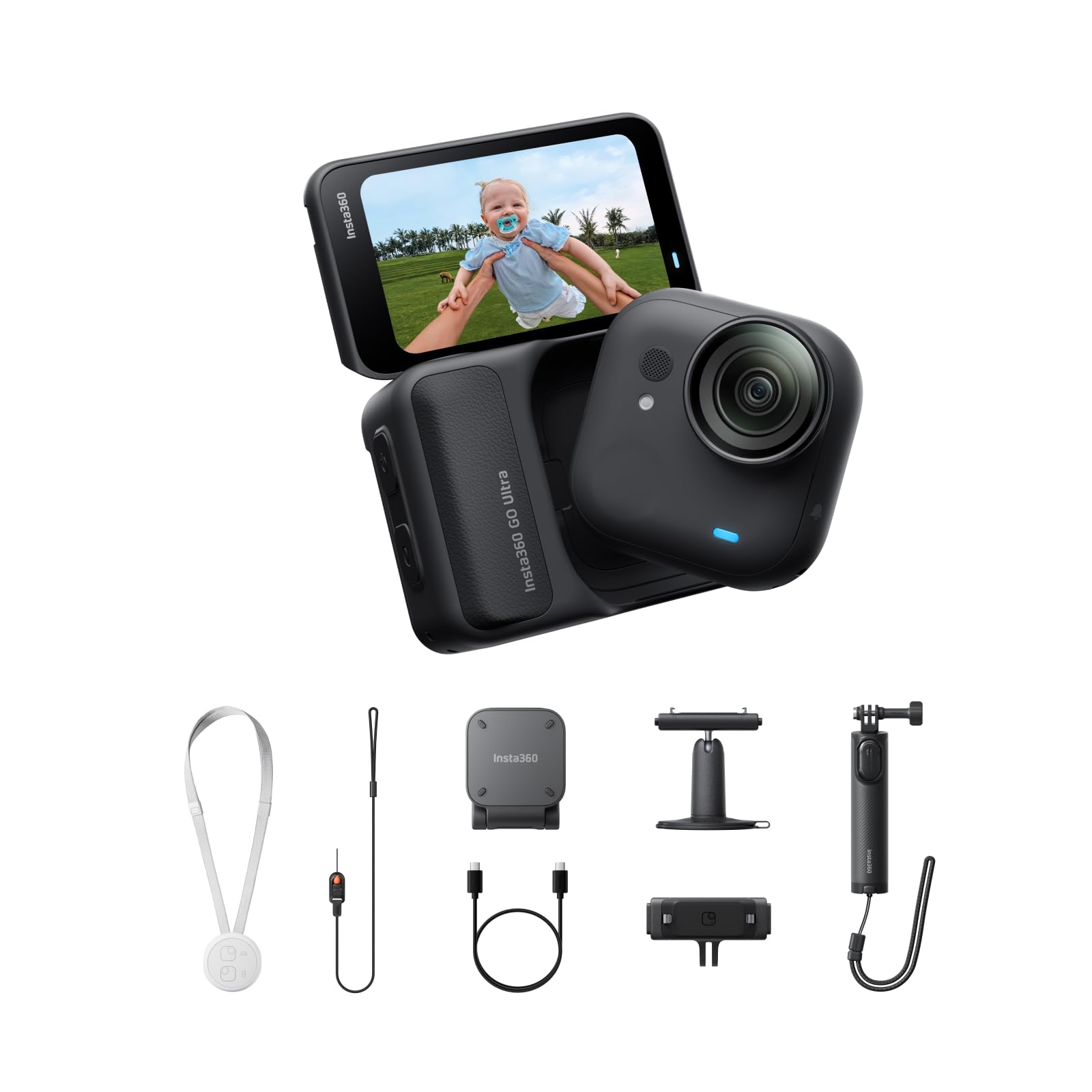
The Insta360 GO Ultra Creator Bundle is the lightest 4K action camera system you can buy—the standalone module weighs only 53 grams, and the magnetic mounting system lets you attach it to a hat, a dog collar, or a surfboard in seconds. The 1/1.28-inch sensor with the 5nm AI chip enables a PureVideo mode that produces clean low-light footage despite the small body, and the 4K Active HDR preserves highlight and shadow detail during high-contrast outdoor scenes.
The Action Pod extends the battery life to 200 minutes total, and the 12-minute 0–80% fast charge means you can recharge between shoots. The FlowState Stabilization offers three levels of smoothness, and the 360 Horizon Lock keeps the horizon level even during full camera rotation. The IPX8 waterproof rating on the standalone camera goes to 10 meters without a housing, and the Dive Case extends that to 60 meters.
The non-swappable battery in the standalone module is a long-term concern—once it degrades, the camera loses its main feature. The Action Pod is only IPX4 splashproof, so heavy rain requires the Dive Case. The 4K video quality is competitive but not as sharp as the DJI Osmo Action 6. For the ultra-portable, magnetically mountable use case—especially biking, rollerblading, and pet POV—the GO Ultra is uniquely capable.
Why it’s great
- 53g magnetic module enables creative POV angles
- 12-minute fast charge from 0% to 80%
- IPX8 waterproof without a housing
Good to know
- Internal battery is non-replaceable
- Action Pod is only splashproof
8. SJCAM C400 4K Travel Vlogging Camera with 256GB Card
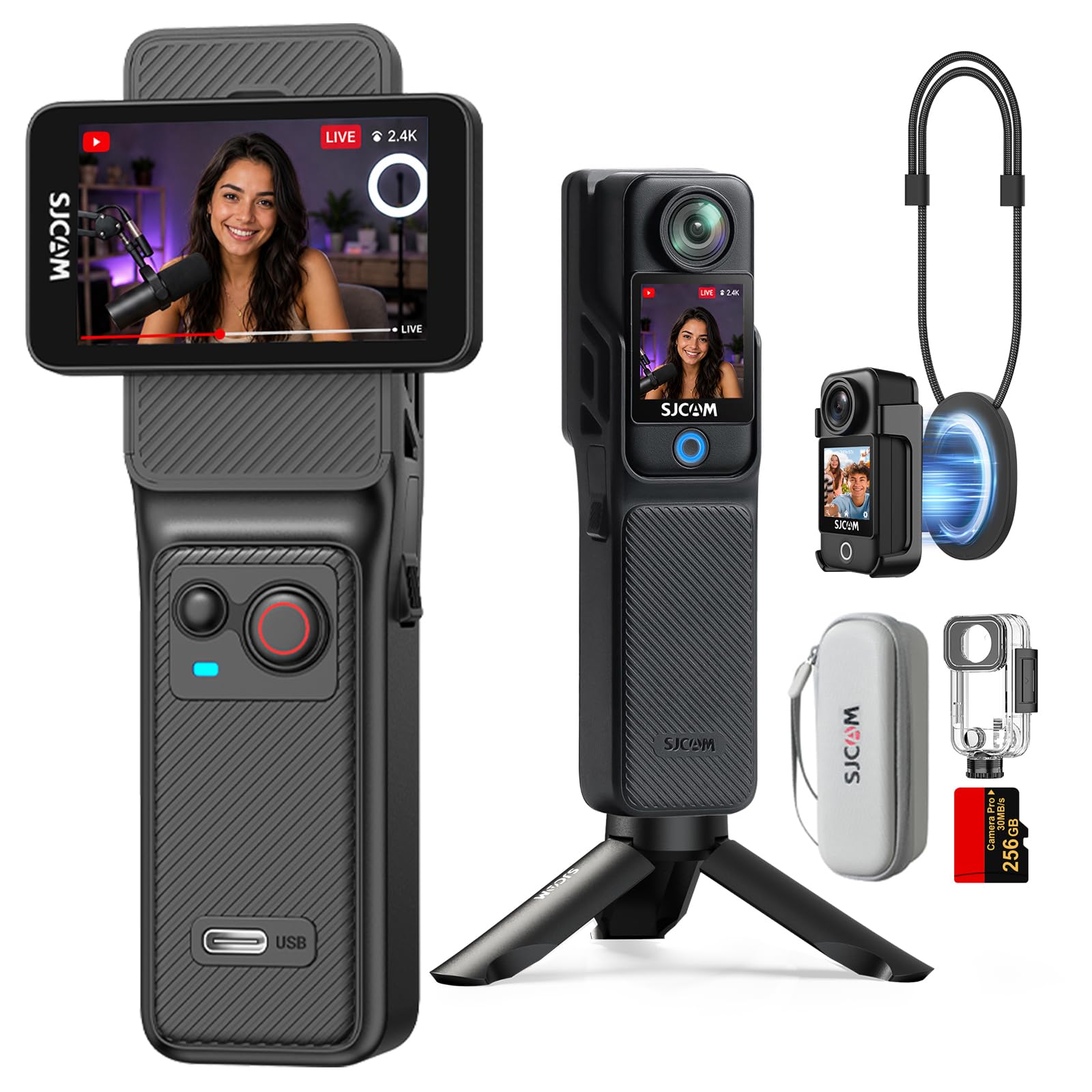
The SJCAM C400 is built for one overriding virtue: stamina. A single charge delivers 7 hours of continuous recording, which is more than double the endurance of any other camera in this guide. This makes it the only choice for all-day event vloggers, long-form live streamers, or anyone who cannot stop to swap batteries. The 6-axis EIS with horizon correction keeps footage smooth when walking, and the 154-degree wide-angle lens captures immersive first-person travel shots.
The 5G WiFi module transfers 4K files to your phone quickly, and the bundled 256GB microSD card means you can start shooting immediately. The f/2.0 aperture performs adequately in daylight but the 4K video quality is not as sharp as the 1-inch sensor competitors—some reviews note that the 4K is softer than 2K from name-brand devices. The touchscreen interface is intuitive, and the included remote controller separates the camera from the operator for creative angles.
The watermark removal requires a setting in the smartphone app, not the camera menu—a minor setup step. The SJCAM C400 is not waterproof, so it requires a housing for underwater use. If your primary constraint is battery endurance and you shoot mostly in good light, this camera eliminates the single biggest frustration of vlogging: the dead battery at the wrong moment.
Why it’s great
- 7-hour battery life is unmatched in this class
- 256GB card included for out-of-box recording
- 6-axis stabilization with horizon correction
Good to know
- 4K video is softer than 1-inch sensor competitors
- Watermark removal requires app setting adjustment
9. Canon EOS R100 Mirrorless Camera with RF-S18-45mm Lens Kit

The Canon EOS R100 is the entry point into the EOS R mirrorless system and the only interchangeable-lens camera in this guide. The 24.1MP APS-C sensor delivers still-image quality that surpasses every action camera and point-and-shoot here, and the Dual Pixel CMOS AF with human, animal, and vehicle detection provides reliable autofocus for stills. The 4K video capability tops out at 24fps, which is perfectly usable for cinematic clips but not smooth enough for fast-paced action.
The camera body is the lightest and smallest in the EOS R series at just 356 grams with the kit lens attached, making it genuinely portable for travel. The DIGIC 8 processor enables 6.5fps continuous shooting with One-Shot AF, which is fast enough to capture a running child or a passing car. The kit lens (RF-S18-45mm F4.5-6.3 IS STM) includes optical image stabilization that helps with handheld video, and the RF mount opens up the entire Canon lens ecosystem for future upgrades.
The video limitations are the main reason this camera sits at the bottom of the video-focused list: no 60fps at 4K, no in-body stabilization (only lens-based), and a crop factor when shooting 4K. The kit lens is slow at the telephoto end, making indoor video difficult without adding light. For beginners who want a camera that does excellent photos first and video second, the EOS R100 is a fantastic gateway—but dedicated video shooters should look at the gimbal cameras above.
Why it’s great
- APS-C sensor produces true interchangeable-lens quality
- Dual Pixel AF with eye detection for people and animals
- Smallest and lightest EOS R body for travel
Good to know
- 4K limited to 24fps without high frame rate options
- Kit lens is slow in low light (f/6.3 at 45mm)
FAQ
What is the minimum battery life I should accept for an affordable video camera?
Do I need a 1-inch sensor for good video quality in this price range?
Can I use an affordable video camera as a webcam for Zoom or Teams?
Final Thoughts: The Verdict
For most users, the best affordable video camera winner is the DJI Osmo Action 6 Enhanced Combo because its variable aperture and 8K resolution deliver unmatched versatility for both action and vlog use. If you want smooth gimbal walking footage and cinematic color, grab the Xtra Muse. And for hands-free POV sports where weight matters most, nothing beats the Insta360 GO Ultra.