
The single biggest fear when buying budget waders isn’t the cold — it’s that cold trickle of water running down your leg ten minutes into the first cast. Affordable waders are a gamble between a season of dry comfort and a wet, miserable hike back to the truck. The real challenge is finding gear that seals out the river without costing as much as your rod.
I’m Min — the co-founder and writer behind Gadgets Feed. I’ve spent countless hours combing through technical specs, seam construction methods, and real-world durability reports to separate the truly waterproof from the just-water-resistant.
From breathable four-layer membranes to insulated neoprene that laughs at sub-freezing currents, this guide breaks down the best affordable waders that deliver real protection without the premium price tag.
How To Choose The Best Affordable Waders
Buying affordable waders means trading features carefully without trading away dryness. The market is full of options that look identical on a shelf but perform completely differently on the water. Here is what separates a smart buy from a soggy mistake.
Seam Construction Is Everything
Water always finds the weakest point, and on waders that is the seams. The minimum acceptable standard is double-stitched seams that are both glued and tape-sealed. Breathable waders use taped seams on the inside, while neoprene models rely on bonded and taped construction. Avoid anything that only claims “stitched seams” without mentioning taping or bonding — those will leak within a season.
Bootfoot vs Stockingfoot
Bootfoot waders have integrated rubber boots and are faster to put on — ideal for quick sessions and cold weather where you need maximum insulation. Stockingfoot waders end in neoprene socks that go inside separate wading boots. They offer better ankle support, lighter weight for hiking, and replaceable components. For all-day walking and technical wading, stockingfoot is the superior choice. For quick trips and duck hunting in cold swamps, bootfoot saves time.
Insulation Weight and Breathability
Insulation is measured in grams of Thinsulate in the boots. 200G is fine for spring and fall, 600G handles mild winter, and 800G is for sub-freezing temperatures. Above the boots, neoprene thickness (3.5mm to 5mm) dictates warmth but limits breathability. Breathable membrane waders (rated by MVP — moisture vapor permeability in gr/m²/24hr) let sweat escape, making them the right choice for active fishing in warmer months. Layering underneath a breathable shell gives you year-round flexibility that neoprene cannot match.
Quick Comparison
On smaller screens, swipe sideways to see the full table.
| Model | Category | Best For | Key Spec | Amazon |
|---|---|---|---|---|
| Dark Lightning Breathable | Breathable / Stockingfoot | All-day wading in warm weather | Breathable nylon shell, elastic straps | Amazon |
| FROGG TOGGS Rana II | PVC Bootfoot | Pier and shallow water wading | PVC material, felt soles | Amazon |
| Foxelli Wading Boots | Wading Boots | Rough rocky terrain protection | Rubber sole, lightweight build | Amazon |
| HISEA 200G Neoprene | Insulated Bootfoot | Cold weather duck hunting | 4.5mm neoprene, 200G Thinsulate | Amazon |
| BASSDASH FW11 Black Camo | Breathable Stockingfoot | Long hikes and fly fishing | 15,000mm waterproof, 5,000 MVP | Amazon |
| Compass 360 Deadfall | Breathable Stockingfoot | All-season versatility | 4-layer breathable fabric, DWR coating | Amazon |
| OXYVAN MAX-7 Camo | Insulated Bootfoot | Extreme cold waterfowl hunting | 4.5mm neoprene, 600G Thinsulate | Amazon |
| HISEA 800G Camo | Insulated Bootfoot | Frigid water and early morning hunts | 4.5mm neoprene, 800G Thinsulate | Amazon |
| FROGG TOGGS Amphib Neoprene | Insulated Bootfoot | Comfort in single-digit temperatures | Neoprene, stretch panel design | Amazon |
In‑Depth Reviews
1. HISEA 800G Insulated Camo Waders

This is the warmest option in the entire affordable category, packing 800-gram Thinsulate insulation into the boots — enough to keep feet comfortable in water as cold as 15°F for hours. The 4.5mm neoprene body traps heat effectively, and real-world reports confirm no leaks even after extended submersion in waste-deep Colorado River water. The integrated LED light system in the chest pocket is a genuinely useful extra for pre-dawn blind setups.
Going through the technical specs, the double-stitched and bonded seams are wider than typical budget neoprene models, which directly addresses the most common failure point. The reinforced knees add meaningful puncture resistance for kneeling on gravel bars or muddy banks. Multiple users confirm these run slightly large in the boot — order one full size down from your street shoe for a snug fit with thick socks.
The trade-off is weight and breathability. At this insulation level, you will overheat fast during warm-weather fishing or long hikes. The chest belt can shift during casting, and the LED light has a reported failure rate after a couple of months. But for sub-freezing duck hunts and steelhead sessions where staying warm is the only priority, this is the best value in extreme-cold waders.
Why it’s great
- 800G Thinsulate boots handle frigid water comfortably
- Reinforced knees and wide bonded seams resist punctures
- Built-in LED light helps in low-light conditions
Good to know
- Too warm for spring, summer, or active hiking use
- Boot sizing runs large — verify against size chart carefully
- Chest belt tends to shift during overhead casting
2. BASSDASH FW11 Black Camo Waders
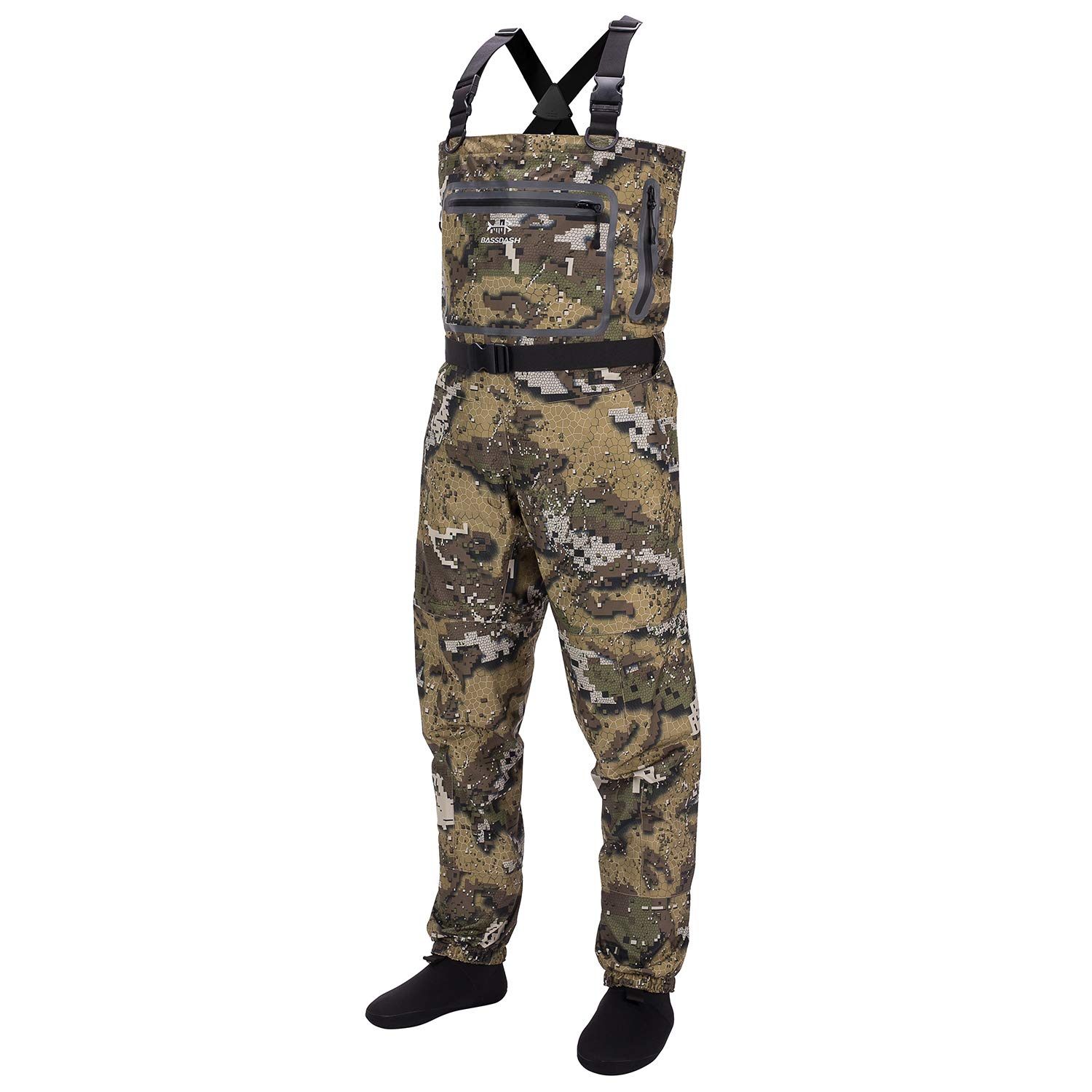
This stockingfoot wader punches far above its price segment with an actual published waterproof rating of 15,000mm H2O and breathability of 5,000 gr/m²/24hrs — specs you normally see on waders costing nearly double. The three-layer nylon shell is both lightweight and abrasion-resistant, making it a strong choice for anglers who hike long distances to remote water. User reports confirm zero moisture ingress after eight continuous hours in 48-52°F water.
The design details are unusually refined for this price bracket. The Desolve Veil camouflage pattern is genuinely effective in hunting scenarios, and the YKK waterproof zippers on the chest and hand-warmer pockets are a premium touch that prevents pocket contents from getting soaked. The front leg seam placement improves mobility by moving the high-wear inner leg seam to a less stressed position. The 4.2mm neoprene stocking feet are anatomically contoured for a better fit inside wading boots.
The main downside is that the sizing runs slightly generous — the XXL fits a 5’10”, 230lb frame with room for layering, but the top can feel baggy if you are between sizes. The belt loops are also oversized, causing the included belt to slip out when unbuckled. For warm-weather fly fishermen who prioritize breathability and packability, this is the clear winner in the affordable bracket.
Why it’s great
- Published 15,000mm waterproof rating is industry-leading at this price
- Lightweight three-layer shell ideal for hiking to remote water
- YKK waterproof zippers on all pockets
Good to know
- Top section can feel baggy for shorter torsos
- Belt loops are too large for the included belt
- Requires layering for cold weather — not insulated
3. Compass 360 Deadfall Breathable Waders

The Deadfall represents the best blend of technical build quality and affordability in a breathable stockingfoot wader. It uses a 4-layer waterproof/breathable membrane with a DWR (durable water repellent) finish that prevents the outer fabric from absorbing water and adding weight — a subtle but important feature for all-day wading. The double-reinforced knees and shins reduce puncture risk in rocky rivers, and the ergonomically contoured neoprene socks are noticeably more comfortable than the flat-cut socks on cheaper models.
One standout design feature is the flip-out interior security pocket for valuables, which keeps your phone and license protected inside the wader rather than in a chest pocket that could get submerged. The adjustable elastic drawcord at the chest allows fine-tuning the fit, and the opposed suspender buckles let you roll the wader down to waist-high configuration — bridging the gap between chest and hip waders. Real-world feedback from XL users at 6’4″ confirms the sizing accommodates tall frames well.
The only real limitation is lifespan expectation. Like most breathable waders in this price range, users report 1-2 seasons of regular use before the taped seams begin to degrade. The neoprene booties run slightly loose for some users, requiring extra wool socks to take up the space. For anglers who want technical features like DWR and graval cuffs without jumping to Simms-level pricing, this is the smartest mid-range choice.
Why it’s great
- 4-layer breathable membrane with DWR coating sheds water effectively
- Reinforced knees and shins for rocky riverbed durability
- Flip-out interior pocket keeps valuables truly safe from water
Good to know
- Taped seams may show wear after 1-2 seasons of heavy use
- Neoprene socks run slightly loose on narrow feet
- Not insulated — requires layering for cold-water fishing
4. Dark Lightning Breathable Chest Waders
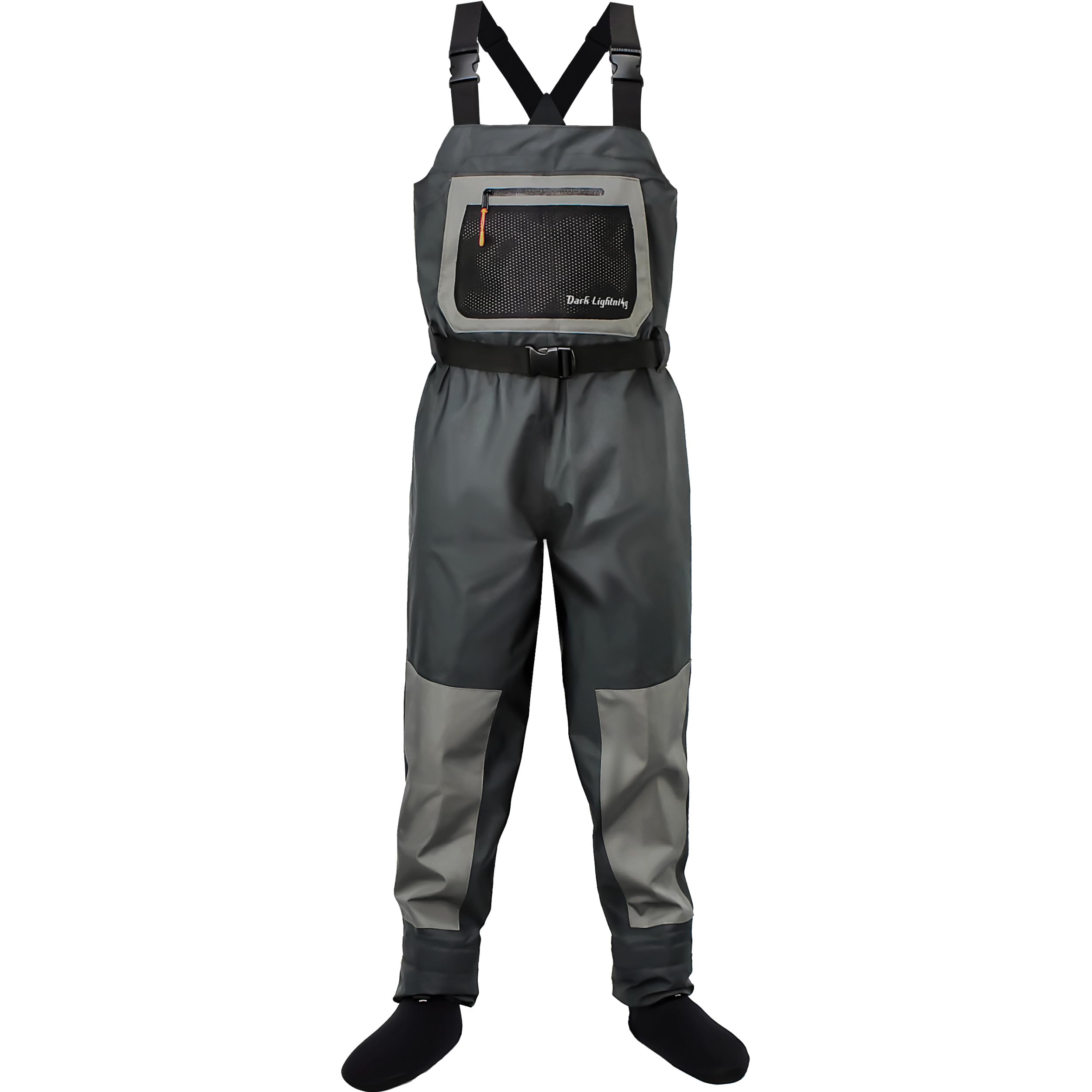
These waders are the entry-level champion for a reason — they offer a genuinely breathable nylon construction with elastic shoulder straps and a large chest pocket at a price that undercuts almost everything in the category. Users consistently report that they perform as well as models costing twice as much, with one reviewer specifically noting that friends wearing premium brands could not tell the difference in on-water performance. The camo design is subtle enough for both fishing and hunting use.
The material is lightweight enough to wear over shorts and a t-shirt during hot Michigan trout season, yet the elastic straps and high-waist design accommodate thermal layers underneath for colder mornings. The front waterproof pocket is a rare feature at this price point, providing secure storage for a phone or license without needing an extra dry bag. The included patch kit is a practical addition that extends the life of the waders if you do get a tear.
The biggest issue is sizing consistency — the XL fits 5’9″ 255lb users snugly in the hips and crotch, while 6’2″ 230lb users in the same size find it comfortable. This suggests a body shape sensitivity that may require sizing up if you have wider hips or thighs. The breathability is good but not exceptional for hot hiking, and durability is decent for the price but not on par with the reinforced models above this one.
Why it’s great
- Genuinely breathable fabric at an entry-level price point
- Comfortable elastic straps and large waterproof chest pocket
- Patch kit included for on-the-go repairs
Good to know
- Fit can be tight in hips and crotch for wider body types
- Not as durable as reinforced models for heavy brush
- Breathability is decent but lags behind the premium options
5. OXYVAN MAX-7 Camo Duck Hunting Waders

The OXYVAN is purpose-built for winter waterfowl hunting where staying stationary in near-freezing water is the primary demand. The 600-gram 3M Thinsulate insulation in the boots keeps toes warm without requiring multiple sock layers, and the 4.5mm neoprene body provides the kind of thermal protection that breathable waders simply cannot match. Users confirm staying warm in waist-deep water at sub-30°F temperatures with just one pair of wool socks.
The construction is genuinely heavy-duty for the price tier — armor weld double-stitching combined with visible bonded and taped seams creates a watertight barrier that holds up to punctures from submerged branches and rocky lakebeds. The eight shell holders on the front pocket are thoughtfully positioned for quick reloading during a hunt, and the reinforced double-layer knee pads provide real protection for kneeling in shallow water. The Realtree MAX-7 camo pattern integrates well into marsh environments.
The boots are notably heavy, which limits mobility for long walks or technical wading. Sizing is the most common complaint — the size chart can be inaccurate, particularly for women or anyone with wider hips, and the boots themselves run small. Several users advise ordering one full size larger than your normal shoe size. For stationary winter hunts where warmth and durability are the only metrics that matter, these deliver disproportionate value.
Why it’s great
- 600G Thinsulate boots keep feet warm in sub-freezing water
- Double-stitched and taped seams resist water intrusion
- Reinforced knee pads and shell holders for hunting use
Good to know
- Boots run small — size up at least one full size
- Heavy build is not ideal for long hiking approaches
- Sizing chart can be unreliable for wider frames
6. FROGG TOGGS Amphib Neoprene Bootfoot Waders
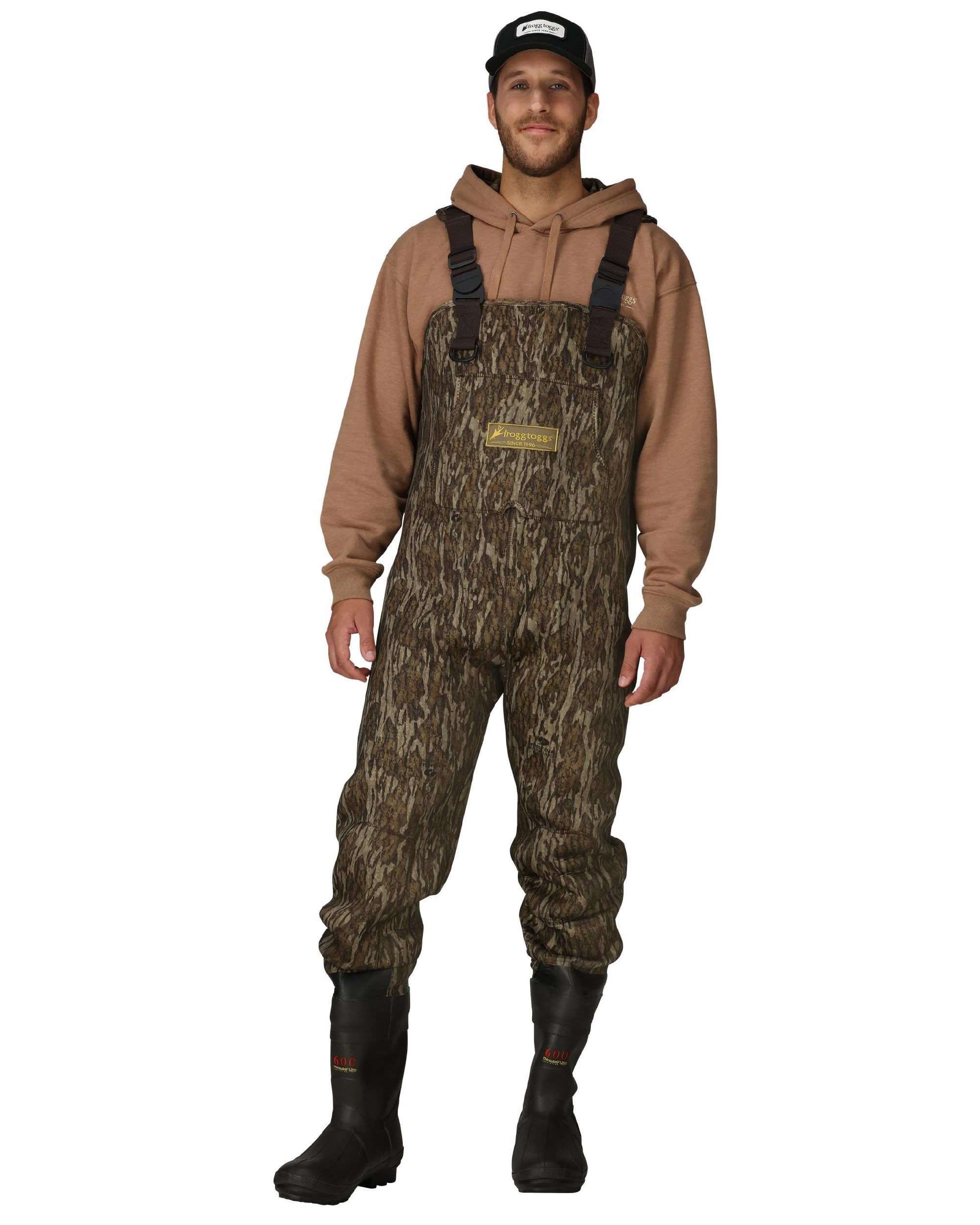
FROGG TOGGS brings its reputation for reliable budget gear to the Amphib model, which features a flexible neoprene construction with a stretch panel design that reduces bunching and increases comfort during long sits in the blind. The boots are designed with a round opening that avoids the “leg biting” common on tighter boot tops, and the internal shoulder strap routing prevents snagging on fishing line or brush. Users consistently report this model rivals the comfort of waders costing over .
The temperature range is impressive for a neoprene wader — tested comfortably in single-digit Fahrenheit for three-hour sessions with no cold feet when wearing two pairs of wool socks. The sizing is notably true: a 5’11”, 205lb frame with size 10 feet fits perfectly in a Medium size 10 boot, with room for thermal layers underneath. The stretch band across the back prevents the waders from sagging and creating cold spots at the waist.
The main criticism comes from larger users — the cut is relatively slim around the belly, making it tight for anyone with a significant midsection. The boots are slightly wide for narrow feet, requiring extra sock layers to fill the volume. For average to slimmer builds who fish in cold conditions and want bootfoot convenience without premium pricing, the Amphib is the most comfortable option tested.
Why it’s great
- Stretch panel design reduces bunching and improves comfort
- Round boot opening prevents leg biting during long use
- Comfortable in single-digit temperatures without cold feet
Good to know
- Slim belly cut may not fit larger or wider midsections
- Boots run slightly wide for narrow foot shapes
- Neoprene is not breathable for warm weather use
7. Foxelli Wading Boots

These are the most reviewed and highest-rated wading boots in the affordable segment, and the reason becomes obvious the moment you put them on. They wear like a hiking boot rather than a clunky wading shoe — the rubber sole delivers genuine traction on mud, gravel, and sharp rocks, with a tread pattern that clears debris effectively. Users report no hotspots or blisters even when wearing them brand new for three consecutive days of trout fishing in rough terrain.
The durability is remarkable for the price point. Multiple reports confirm five years of heavy use with no visible degradation, including saltwater trips over oyster beds that would destroy cheaper boots. The removable insole and good drainage design keep feet from feeling waterlogged, and the boots accept traction spikes for icy conditions. They are specifically designed to fit over 3mm neoprene wader socks, accommodating stockingfoot waders beautifully.
The rubber sole has less grip on wet moss than felt soles, which is a trade-off for the better all-terrain performance. A handful of users note that the water resistance above the sole is limited — these are wading boots, not waterproof boots, so expect water to enter through the top when submerged past the ankle. For anglers using stockingfoot waders who need reliable footwear that lasts years, the Foxelli boots are the best investment you can make.
Why it’s great
- Hiking boot comfort with no break-in period required
- Five-year durability reported even in saltwater conditions
- Accepts traction spikes and drains water effectively
Good to know
- Rubber sole slips on wet moss — not as good as felt
- Not waterproof above the sole
- Sizing runs large to accommodate thick neoprene socks
8. HISEA 200G Neoprene Duck Hunting Waders

These are the most popular entry-level bootfoot waders on Amazon for a simple reason — they work reliably at a budget price. The 4.5mm neoprene construction with 200-gram Thinsulate boots is warm enough for spring duck hunts and early fall fishing, and the armor weld double-stitched seams provide genuine waterproofing that passes the 25-minute waste-deep submersion test. The Truetimber camo pattern is a legitimate hunting pattern that hides well in marsh environments.
The design focuses on user-friendliness. The adjustable neoprene suspenders with quick-release buckles make entry and exit fast, the eight shell holders on the hand-warmer pocket keep ammunition accessible, and the built-in zippered pocket provides a secure dry space for essentials. The rubber boots feature a rugged textured sole that provides decent traction on mud and wet grass, though not as aggressive as dedicated wading boots. The reinforced knees genuinely add puncture resistance for kneeling.
The boots are the weak point — they run small, have thin soles, and offer minimal ankle support. Multiple users advise ordering at least one size larger than normal. The boots also lack the warmth needed for extended sessions in truly cold water; the 200G insulation is fine for 40°F but inadequate for below-freezing. The sock-style wader design inside the boot takes longer to get on and off compared to standard bootfoot waders. For casual use in mild conditions, these deliver solid value.
Why it’s great
- Reliable waterproofing from double-stitched bonded seams
- Convenient quick-release suspenders and shell holders
- Reinforced knees provide real puncture protection
Good to know
- Boots run small and lack ankle support
- 200G insulation is not warm enough for sub-freezing conditions
- Sock wader design makes entry and exit slower
9. FROGG TOGGS Rana II PVC Bootfoot Waders

The Rana II is the simplest wader on this list — a PVC rubber bootfoot design built for one job: keeping you dry in shallow water for short sessions. The felt soles provide excellent grip on slippery rocks and algae-covered surfaces, making them a strong choice for pier fishing and river wading where you are not hiking long distances. Users consistently report no leaks even in cold spring rivers, and the material holds up better than comparable Cabela’s PVC models.
The fit is accurate and accommodates tall frames with long inseams well — a specific advantage for women who need that length. The boots are comfortable and warm enough for netting bait in shallow bays for hours. The PVC material is easy to clean and does not absorb water weight like neoprene. For the price, it is a durable option if your use case is confined to short, stationary wading sessions.
The limitations are significant. PVC does not breathe at all — you will sweat inside on warmer days, and walking on dry land for extended periods becomes uncomfortable. The sizing issue with the boots running half a size small is a common complaint, particularly for size 13 feet. These are not suitable for long days of hiking and wading; they are purpose-built for brief, wet environments where felt sole traction and simplicity matter more than comfort features.
Why it’s great
- Felt soles provide excellent traction on slippery, algae-covered rocks
- Durable PVC material outlasts cheaper rubber alternatives
- Long inseam accommodates tall frames effectively
Good to know
- PVC material has zero breathability — sweat buildup is common
- Boots run about half a size small
- Not comfortable for long hikes or all-day wading sessions
FAQ
Should I buy stockingfoot or bootfoot waders for my first pair?
How do I properly care for affordable waders to make them last longer?
How do I test my waders for leaks before my first fishing trip?
Can I use breathable waders in freezing weather?
Final Thoughts: The Verdict
For most users, the best affordable waders winner is the HISEA 800G Insulated Camo Waders because it delivers extreme-cold protection with 800G Thinsulate and reinforced construction at a fraction of premium brand pricing. If you want breathable versatility for year-round fishing, grab the BASSDASH FW11. And for the absolute best value in an entry-level breathable wader, nothing beats the Dark Lightning Breathable Chest Waders.