
A weighted vest that shifts, bounces, or chafes during a run isn’t just annoying — it actively breaks your stride and sabotages your form. Finding one that locks the load tight to your torso without pinching the shoulders or riding up on the hips is the real challenge in this category, not the raw poundage on the spec sheet. The difference between a vest you actually wear every day and one that collects dust on a shelf comes down to the quality of its strap system and how evenly it distributes iron across your center of mass.
I’m Min — the co-founder and writer behind Gadgets Feed. I’ve spent countless hours comparing weight distribution systems, closure mechanisms, and fabric durability across dozens of models to isolate what separates a true training tool from a glorified sandbag carrier.
best affordable weighted vest options blend secure fit, durable construction, and smart adjustability without demanding a premium price for unnecessary features.
How To Choose The Best Affordable Weighted Vest
The market is flooded with vests that look identical online but feel dramatically different after a mile of jogging. Focus on four core elements — weight material, strap security, torso fit length, and fabric breathability — to avoid buying a vest you’ll hate within the first week.
Weight Material: Iron Plates vs. Iron Shot vs. Sand
Solid iron plates win for durability and zero-leak construction. Iron shot packed into fabric pouches distributes weight more naturally but carries a slight risk of dust leakage over years of use. Pure sand bags are the cheapest option, but they absorb sweat, develop odors, and eventually split at the seams. For the best value, look for vests with removable iron plates or sealed shot packs where the weight stays dry and contained regardless of how much you sweat.
The Closure System: Velcro, Buckles, or Double Rings
Wide Velcro straps offer the fastest on-off experience but can lose grip as the hook material collects lint over months of use. Buckle systems (side-release or ladder-lock) provide consistent tension every time but require two hands to adjust mid-workout. Double-ring cinches offer the most precise incremental tightening but demand more effort to fasten securely. For running and HIIT where bounce is the enemy, a combination of waist belt plus shoulder straps delivers the best stability.
Length and Torso Coverage
A vest that hangs too low digs into the hips and limits mobility; one that sits too high chokes the neck and restricts breathing. Measure from your collarbone to your navel — the vest should cover roughly that range without extending past your hip bones. Shorter users (under 5’4″) should prioritize vests with a compact front panel, while taller athletes need longer panels to prevent the weight from bunching at the ribcage.
Quick Comparison
On smaller screens, swipe sideways to see the full table.
| Model | Category | Best For | Key Spec | Amazon |
|---|---|---|---|---|
| Yes4All Adjustable Weighted Vest | Mid-Range | Balanced all-around performance | 20–32 lbs adjustable iron sand | Amazon |
| FUFF Adjustable Weighted Vest | Premium | Pro-grade adjustability with iron plates | 20/30/40 lbs removable iron blocks | Amazon |
| CAP Weighted Vest | Mid-Range | Outdoor running with phone storage | 8–30 lbs with 360-degree reflective strips | Amazon |
| MSPORTS Premium Weighted Vest | Mid-Range | Maximum weight ceiling (11–65 lbs) | 65 lb max capacity, tear-resistant nylon | Amazon |
| ZELUS Adjustable Weighted Vest | Mid-Range | Heavy-duty training (up to 60 lbs) | 20–60 lbs adjustable iron bars | Amazon |
| UOPON Adjustable Weighted Vest | Budget | Ergonomic X-design for smaller frames | 20–32 lbs neoprene with iron sand | Amazon |
| KUKZO Weighted Vest | Budget | Short-torso friendly fixed-weight design | 6–30 lbs iron shot filling | Amazon |
In‑Depth Reviews
1. Yes4All Adjustable Weighted Vest 20-32 lbs

The Yes4All vest hits the sweet spot of this category because it uses breathable neoprene instead of stiff 1000D nylon, which means it conforms to your torso rather than fighting against it during dynamic movement. The six individual iron sand weight packs let you distribute mass evenly between front and back, preventing the lopsided loading that causes shoulder strain. Multiple reviewers specifically praise the absence of an awkward chest strap — the front panel sits flat against the sternum without digging in.
Two large mesh pockets on the sides provide genuine storage capacity for a phone and keys, and the high-visibility reflective strips wrap around the front, shoulders, and back for low-light safety. The side straps use a ladder-lock buckle system that holds tension reliably, though a few users note the straps can slip if not knotted. At this weight range and price point, the balance of comfort, storage, and adjustability is hard to beat.
The vest works best for users between 5’6″ and 6’2″ — shorter athletes may find the front panel slightly long, but the adjustable side straps help compensate. For progressive training from 20 to 32 pounds, this is the most thoughtfully designed option in the mid-range tier.
Why it’s great
- Breathable neoprene reduces sweat buildup compared to nylon vests
- Six weight packs allow precise front/rear distribution
- Ladder-lock buckles hold tension better than Velcro
Good to know
- Side straps can loosen without a knot tie
- Weight bags feel thin — handle carefully during adjustment
2. FUFF Adjustable Weighted Vest 20/30/40 lbs
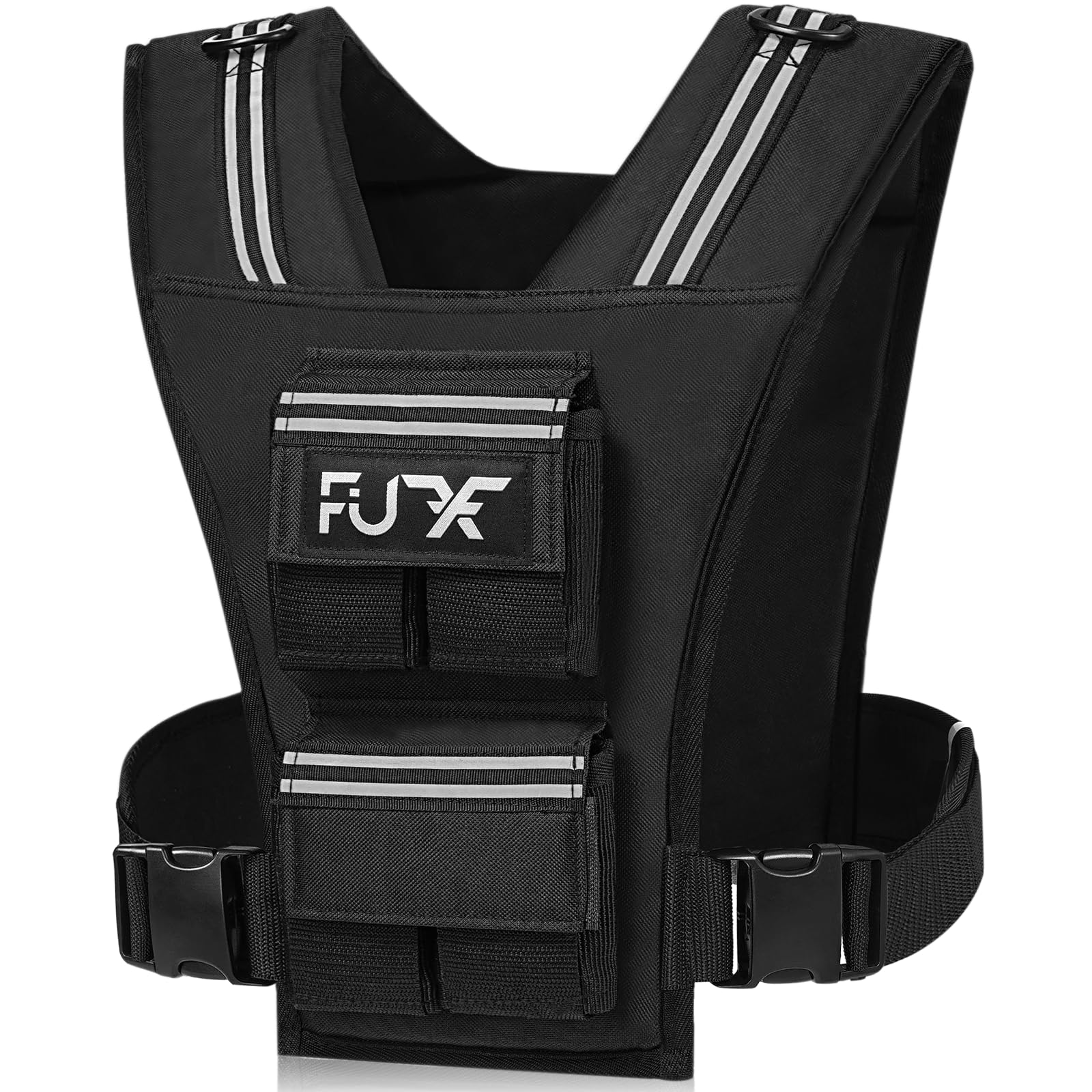
The FuFF vest stands apart from nearly every competitor at this price because it uses solid removable iron blocks instead of sand or shot packs. There is zero risk of leakage, zero dust migration, and the individual plates slide into dedicated pockets so they don’t shift during burpees or box jumps. The outer shell uses 1000D nylon with TPE foam backing, which provides enough rigidity to keep the vest’s shape while adding a cooling layer against the skin.
Reviewers consistently comment on the bounce-free fit, attributing it to the padded adjustable straps that wrap the waist securely. The vest comes in three fixed-point weight options (20, 30, and 40 lbs), each loaded with the appropriate number of iron plates — 8, 12, or 16 blocks respectively. The reflective strips on the front and back add practical night-training safety, and the reinforced seams hold up to cycling and HIIT sessions without fraying.
The trade-off is that the 1000D nylon is less breathable than neoprene, so heavy sweaters will notice more heat retention compared to mesh-backed designs. Additionally, the side cinches use a dual-ring system that some users find loosens slightly during high-intensity motion — a double-knot solves this easily.
Why it’s great
- Solid iron blocks — zero leakage, zero dust, easy to swap
- TPE foam backing reduces chafing and sweat pooling
- Available in three weight variants for clear progression
Good to know
- Nylon shell runs warmer than neoprene alternatives
- Side cinches may require knotting for a truly locked fit
3. CAP Weighted Vest 8-30 lbs
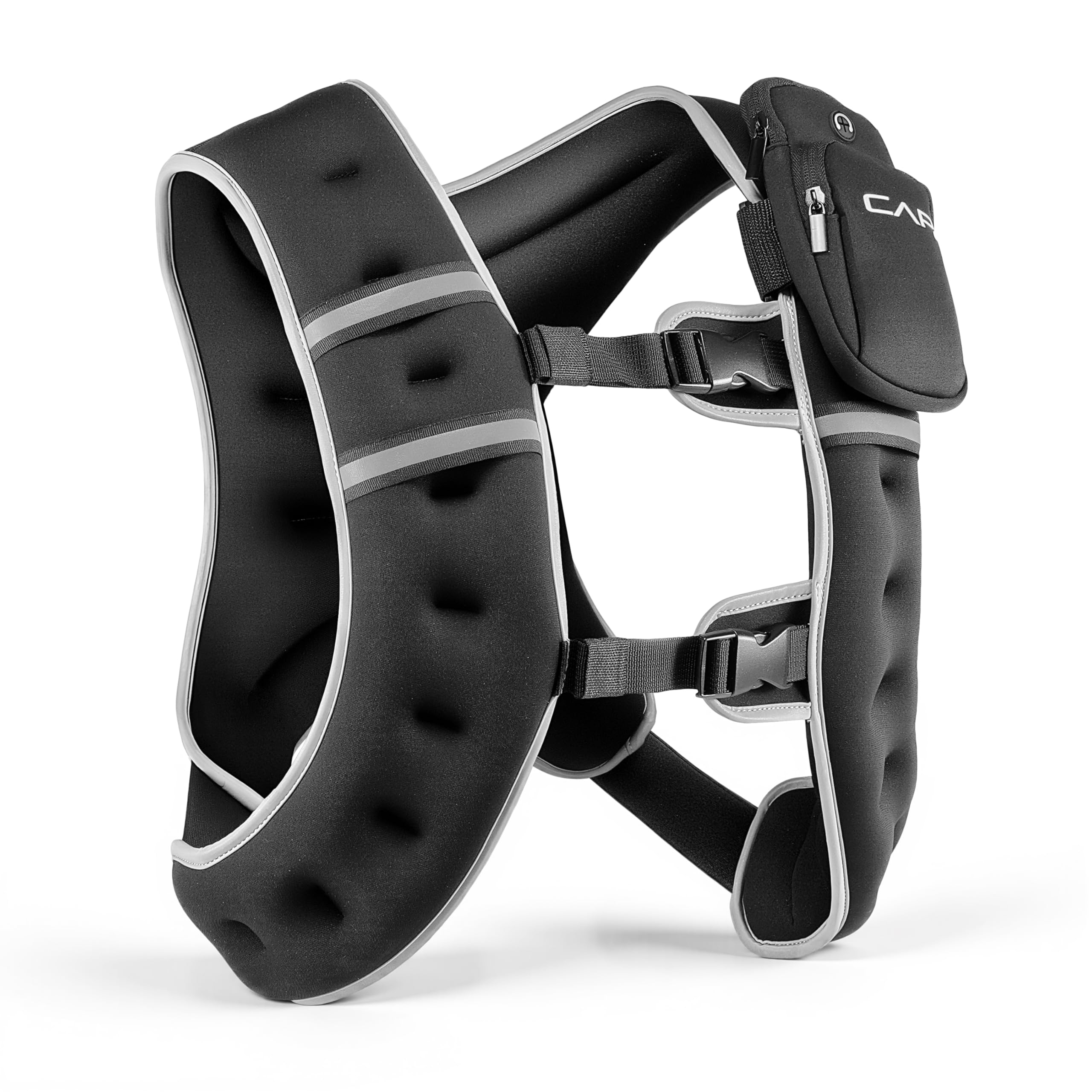
The CAP vest is engineered specifically for outdoor cardio, which shows in its full-perimeter reflective striping and integrated storage system. A zippered front pouch securely holds a phone, while a rear mesh pocket accommodates keys or a small wallet — features that matter when you’re running without a belt or armband. The neoprene-polyester blend construction keeps the vest flexible without sagging, and the adjustable buckle closure provides quick on-off access at the start and end of a run.
Customers consistently report that the weight stays evenly distributed during walking and jogging, with minimal bounce at the shoulders. The vest comes in weight increments from 8 to 30 pounds, making it suitable for both beginners and intermediates. A notable ergonomic detail is the elastic side paneling, which accommodates fluctuating body measurements — useful for users who are actively losing weight.
However, the vest runs long. Users under 5’4″ report the front panel hanging past the hip, which can interfere with leg drive during running. Taller users above 6’0″ find the length ideal. This is not a one-size-fits-all design — it clearly favors longer torsos.
Why it’s great
- Zippered phone pocket eliminates the need for an armband
- Elastic side panels accommodate body size changes
- Reflective coverage on all sides for low-light safety
Good to know
- Front panel is long — short torsos will experience overhang
- Fixed-weight design requires buying a new vest to progress
4. MSPORTS Premium Weighted Vest 11-65 lbs
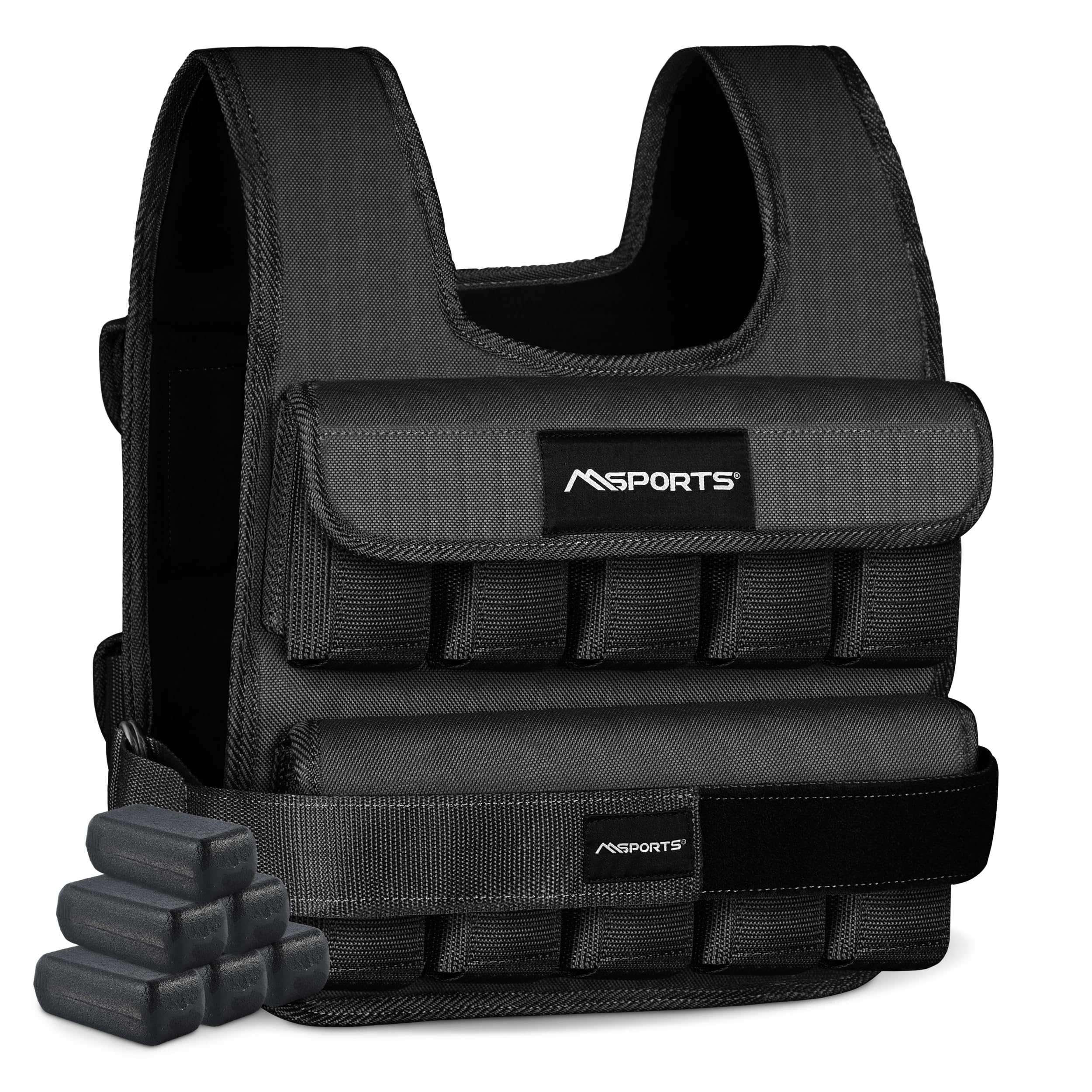
The MSPORTS vest targets athletes who need a single platform spanning from light cardio loads to serious rucking weight. It ships with removable weight packs that allow adjustment from 11 pounds all the way up to 65 pounds, which is the highest ceiling in this comparison. The tear-resistant nylon shell and reinforced stitching are clearly designed for the abuse of CrossFit, tactical training, and long-distance rucking sessions where equipment failure is not an option.
Wide Velcro straps combined with an adjustable hip belt create a dual-anchor system that minimizes bounce during running. The tactical-style cut positions the weight packs close to the body’s center of mass, which reduces the pendulum effect that cheaper vests produce. A free digital workout guide is included, which adds genuine value for users new to progressive loading.
The main limitation is fit for petite users. At 5 feet tall and 140 pounds, one reviewer reported the vest couldn’t cinch tight enough to feel secure, resting on the lower back instead of the torso. This is a vest built for average-to-large frames — smaller athletes should look at the shorter-panel options in this guide.
Why it’s great
- 11 to 65 lb range covers beginner to advanced in one vest
- Wide Velcro plus hip belt gives dual-secure closure
- Tactical weight distribution reduces forward lean
Good to know
- Not suitable for users under 5’2″ or very narrow frames
- Velcro may lose grip over extended use with heavy sweat
5. ZELUS Adjustable Weighted Vest 20-60 lbs

The Zelus vest uses a classic iron-bar-and-sandbag system where individual weight bags slide into vertical chambers, allowing you to customize the load from 20 to 60 pounds. The foam-padded shoulder straps are noticeably thicker than budget alternatives, distributing the weight across a wider surface area to prevent the sharp digging sensation that cheap vests cause above 40 pounds. The hook-and-loop closure runs the full length of the waist, providing a wide adhesion surface that resists peeling open during lateral movements.
Customers using the vest for firefighter training and high-volume rucking report that it simulates the weight distribution of turnout gear effectively. The hi-vis reflective strips on the front, shoulders, and back provide 360-degree visibility for outdoor sessions. The one-size-fits-most design accommodates a wide range of body types, with a 6’4″, 248-pound reviewer confirming the 60-pound variant fits without restriction.
The major consideration is bulk: the rear weight chamber is thick enough that sitting in a backed chair is uncomfortable, making this vest better suited for standing workouts, runs, and field training. Additionally, the sandbag weight packs fit tightly into their sleeves, so frequent removal and reinsertion can be tedious.
Why it’s great
- Thick foam shoulders prevent nerve pressure at heavy loads
- 60 lb capacity supports advanced tactical and strength training
- Reflective strips rated by users for low-light visibility
Good to know
- Chunky rear profile makes seated rest periods uncomfortable
- Weight bags are tight to insert and remove for frequent adjustments
6. UOPON Adjustable Weighted Vest 20-32 lbs
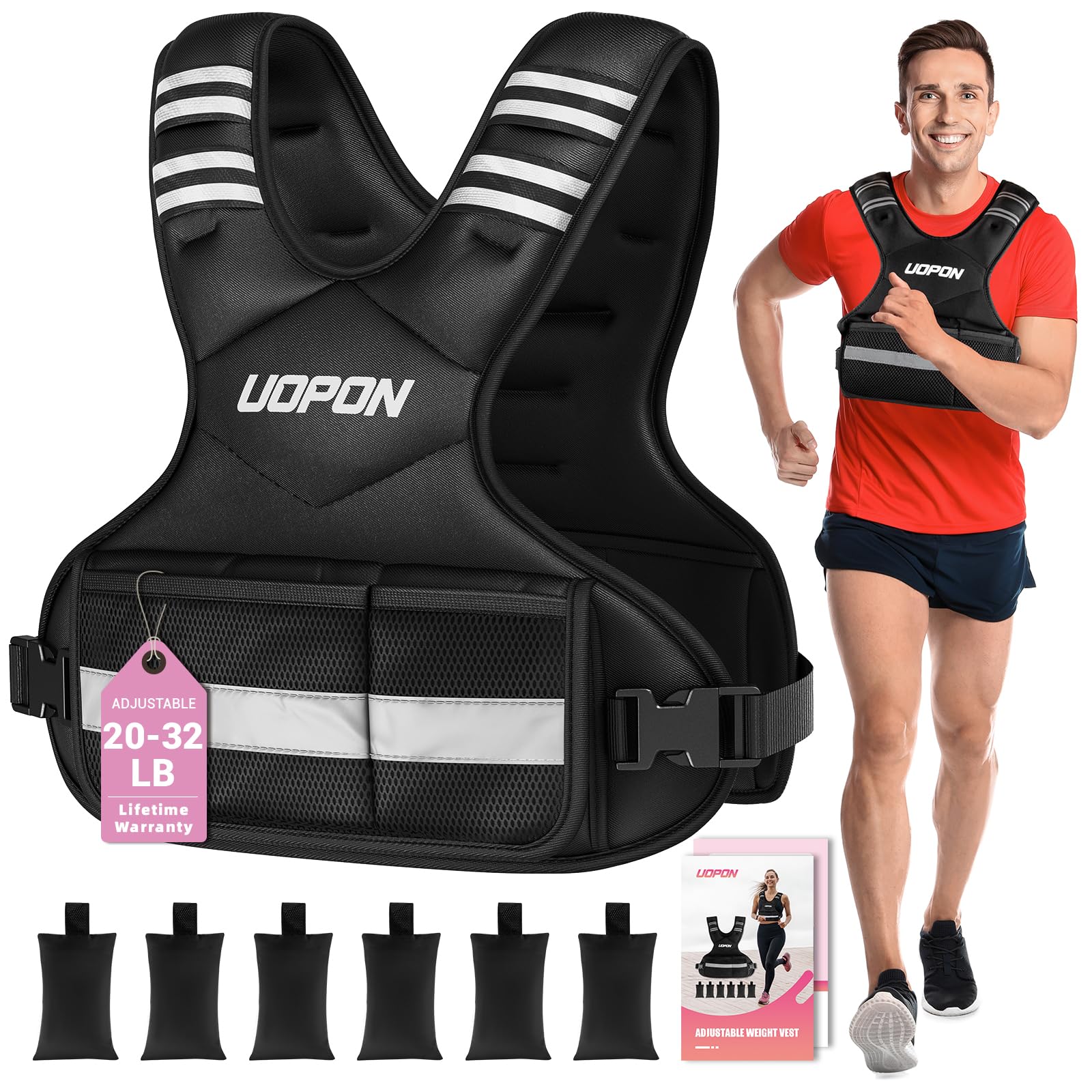
The UOPON vest differentiates itself with an X-shaped structural design that wraps the torso from both front and back, distributing the load toward the centerline rather than the shoulders. This geometry significantly reduces bounce during running and jumping, which reviewers consistently highlight as the vest’s strongest attribute. The base unit weighs 20 pounds and accepts six 2-pound removable iron sand packs to reach 32 pounds, offering a practical progression range for most recreational athletes.
The neoprene construction is lightweight and flexible, making it comfortable for yoga, brisk walks, and household chores where a rigid nylon vest would feel restrictive. Enlarged mesh pockets on both sides accommodate large smartphones, and the reflective strips provide adequate visibility for evening training. The adjustable buckle straps fit chest sizes from approximately 31 to 45 inches.
The main drawback is the initial chemical odor from the neoprene, which requires airing out for a few days before first use. A few users also note that the iron sand packs feel less premium than solid plates — they are functional but produce a slight rustling sound during movement.
Why it’s great
- X-frame design centers weight for minimal bounce
- Neoprene material is flexible and low-profile under clothing
- Large mesh pockets fit oversized phones securely
Good to know
- New neoprene odor requires ventilation before use
- Iron sand packs produce audible rustling during movement
7. KUKZO Weighted Vest 6-30 lbs

The KUKZO vest solves a problem that most budget options ignore: fit for shorter torsos and women with larger busts. Multiple female reviewers at 5’4″ and below confirm the front panel is short enough to avoid hip overhang, and the two-buckle closure system accommodates chest sizes up to 45 inches without pressure points. The iron shot filling provides a more natural drape than solid plates, conforming to the body’s contours instead of standing rigid.
The vest is available in fixed-weight increments from 6 to 30 pounds, with dense iron shot and iron sand packed into heavy-duty double-stitched pouches. A rear mesh pocket offers storage for small essentials, and the reflective strips enhance visibility without adding bulk. The spandex outer fabric is soft against the skin and cleans easily with a damp cloth, which is practical for daily use.
The fixed-weight design means you cannot adjust the load within a single vest — to progress from 16 to 20 pounds, you must buy a different unit. Additionally, the light purple and lighter color variants show sweat stains quickly, so the black version is the practical choice for regular training.
Why it’s great
- Short front panel fits 5’4″ and below without hip overhang
- Two-buckle system secures well for larger bust sizes
- Iron shot filling drapes naturally against the torso
Good to know
- Fixed weight — no adjustability within a single vest
- Lighter color options show sweat stains quickly
FAQ
What is the ideal starting weight for a beginner using an affordable weighted vest?
Can I wear a weighted vest during high-intensity interval training or burpees?
How do I measure my torso to find the right vest length?
Final Thoughts: The Verdict
For most users, the best affordable weighted vest winner is the Yes4All Adjustable Weighted Vest because it combines breathable neoprene construction with six independently adjustable weight packs and a comfortable strap system. If you want solid iron plates for zero-leak durability, grab the FUFF Adjustable Weighted Vest. And for high-volume rucking with a 65-pound capacity, nothing beats the MSPORTS Premium Weighted Vest.