
An Afghan War Rug is not just a floor covering—it’s a woven chronicle of conflict, a piece of modern geopolitical history rendered in wool and dye. Unlike tribal rugs that repeat centuries-old patterns, these pieces deliberately incorporate images of Soviet helicopters, Kalashnikovs, and American tanks, documenting the wars that have defined Afghanistan since 1979. The challenge for a Western buyer is separating authentic, artist-driven weavings from commercial imitations that slap a few “military” motifs onto a generic medallion design.
I’m Min — the co-founder and writer behind Gadgets Feed. I have spent dozens of hours analyzing the weave structures, provenance indicators, and motif authenticity markers that distinguish genuine Afghan war rugs from decorative reproductions, ensuring this guide focuses on pieces that carry real historical and artistic weight.
Whether you are a collector of militaria, a geopolitical history enthusiast, or a design buyer looking for a conversation-starting centerpiece, this guide to the best afghan war rugs will help you identify pieces that genuinely reflect the Turkmen tradition of documenting conflict through wool, rather than shallow decorative copies.
How To Choose The Best Afghan War Rugs
The market for Afghan War Rugs is split between hand-knotted wool pieces woven by Turkmen and Baloch artisans in northern and western Afghanistan, and machine-made, often Chinese-produced polypropylene rugs that simply mimic the style. Understanding a few key factors will prevent you from overpaying for a decorative facsimile.
Authenticity of Motifs and Historical Period
Genuine war rugs from the Soviet-Afghan period (1979–1989) feature specific, identifiable military hardware: the Mi-24 Hind helicopter (with its distinctive side windows and stub wings), the AK-47 with its characteristic banana magazine, and the T-62 or T-72 tank silhouette. Post-2001 pieces add American Black Hawk helicopters and M-16 rifles. Rugs that use vague “military” shapes without these identifiable details are likely decorative productions. Examine the weaving: authentic war rugs use the asymmetrical (Persian) knot, and the design will follow the natural, slightly irregular contours of hand-weaving rather than the perfect geometric repeat of a power loom.
Wool Quality, Knot Density, and Dye Analysis
The foundation of any collectible war rug is high-quality hand-spun wool from Ghazni or Herat provinces—it should feel slightly oily and dense, not dry or brittle. Measure knots per square inch (KPSI): a minimum of 80–100 KPSI suggests a rug woven for durability and detail, while anything below 40 KPSI is a coarse, low-end piece. Check the dyes: natural dyes (madder root for reds, indigo for blues, walnut husk for browns) will show subtle, uneven transitions and age gracefully with a patina. Synthetic chemical dyes create perfectly uniform colors that can fade or bleed over decades.
Construction Type and Pile Height Implications
Hand-knotted wool (the only authentic construction for war rugs) will have a pile height between 0.3 and 0.5 inches—tall enough to show motif detail, short enough to lie flat under furniture. Machine-made polypropylene rugs claiming to be “war rugs” are typically 0.25 inches or less and use printed or tufted designs that lack the tactile depth of hand-knotting. Always check the back of the rug: genuine hand-knotting shows two to three strands of warp thread visible between each row of knots, while machine-made rugs have a uniform, glued, or woven backing.
Quick Comparison
On smaller screens, swipe sideways to see the full table.
| Model | Category | Best For | Key Spec | Amazon |
|---|---|---|---|---|
| SAFAVIEH Heritage 8×10 | Hand-Tufted Wool | Premium collector’s floor piece | 1.0″ pile, 100% hand-spun wool | Amazon |
| Abani Cream Grid Textured | Power-Loomed Poly | High-traffic living room style | 0.4″ pile, machine washable | Amazon |
| Rugs.com Bokhara 9×12 | Machine-Made Poly | Large room, stain resistance | 0.33″ pile, stain resistant | Amazon |
| SAFAVIEH Antiquity 8×10 | Hand-Tufted Wool | Mid-range wool traditional design | 0.5″ pile, 64 lbs wool | Amazon |
| Unique Loom Tekke 8×11 | Machine-Made Poly | Budget-friendly saturated color | 0.33″ pile, stain resistant | Amazon |
| Allen Home Oushak 4×6 | Hand-Tufted Wool | Entry-level handcrafted wool | 0.4″ pile, 100% wool pile | Amazon |
| Casavani Kilim 8×10 | Handwoven Wool/Jute | Reversible southwest decor piece | 0.27″ flatweave, reversible | Amazon |
| Hazo Haus Boho 10×14 | Machine-Made TPR | Washable, pet-friendly large rug | 0.25″ pile, machine washable | Amazon |
| Aquailis Southwest 7×9 | Machine-Made Flannel | Budget-friendly Navajo-style decor | 0.3″ pile, flannel material | Amazon |
In‑Depth Reviews
1. SAFAVIEH Heritage Collection 8×10
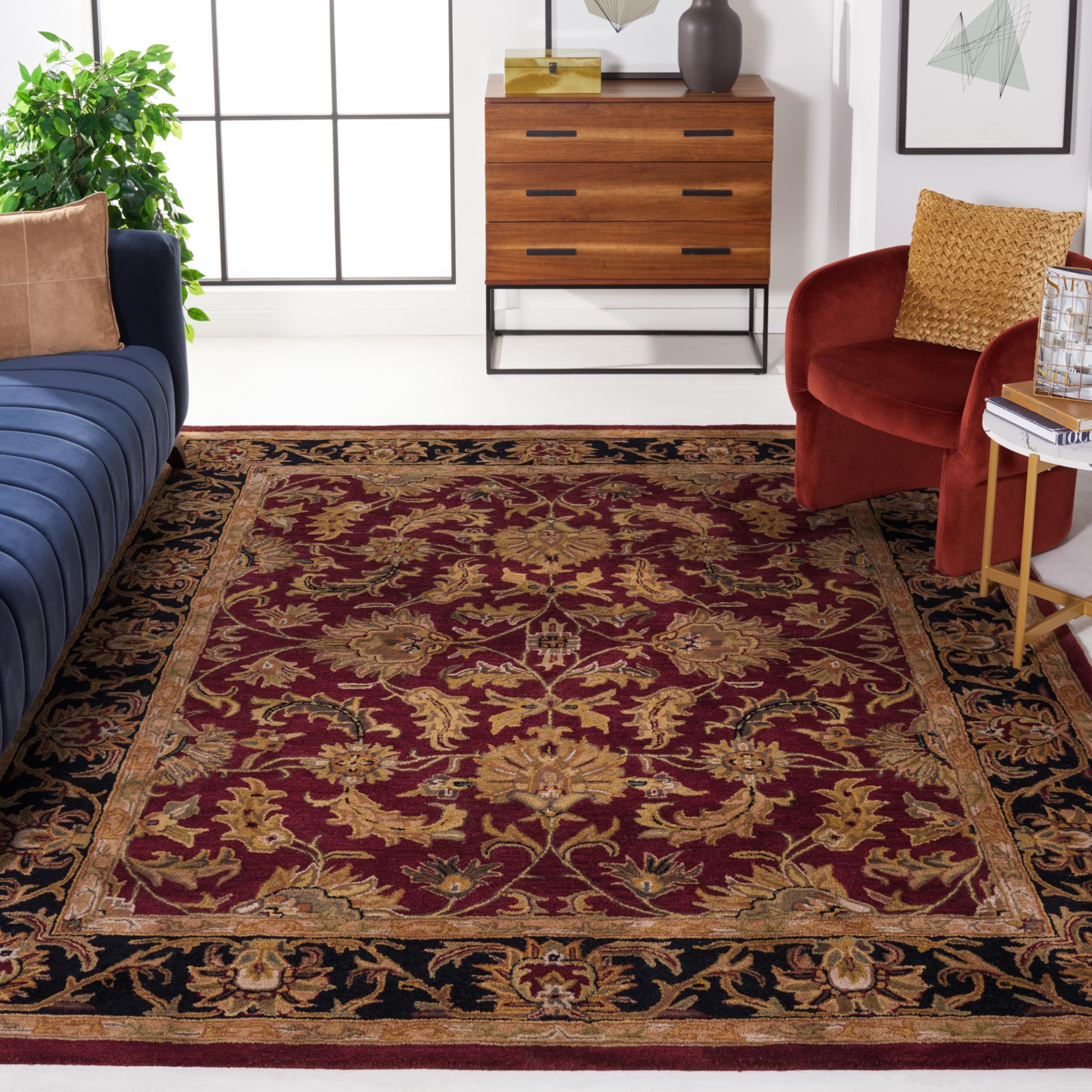
This is the gold standard for anyone seeking a dense, high-quality wool rug that can anchor a living room or study. The Heritage Collection uses 100% hand-spun wool with a luster wash, giving it a plush 1.0-inch pile that feels substantial underfoot—dramatically thicker than the 0.3-0.5 inch pile found on most machine-made alternatives. The Persian and European-inspired motifs are hand-tufted, meaning each knot is individually inserted, which produces deeper color saturation and a more defined pattern than power-loomed polypropylene.
Weighing 72 pounds, this rug has the heft and density that signals long-term durability. Multiple verified buyers specifically note that it requires no rug pad because the wool backing grips well on hardwoods, and the hand-spun fibers show minimal shedding compared to machine-spun wool rugs. The intricate red and black design works well in both traditional and transitional interiors, providing the visual depth that collectors of war rug motifs will appreciate for its similarity to classic Turkmen gül patterns.
The primary trade-off is that this rug is not stain-resistant—wool naturally absorbs liquids, so spills need immediate attention. The hand-tufted construction also means the rug may show slight irregularity in the fringe or edges, which is a sign of authenticity rather than a flaw. If you want a single piece that delivers the tactile and visual weight of a genuine Afghan war rug, this is the most compelling option in this price tier.
Why it’s great
- Full 1.0-inch dense wool pile provides unmatched comfort underfoot
- Hand-tufted construction with luster wash creates vibrant, saturated color
- 72-pound weight confirms premium wool density and durability
Good to know
- Not stain-resistant—wool requires immediate spot cleaning
- Hand-tufted edges may show slight irregularities
2. Abani Cream Grid Textured 7.5×10
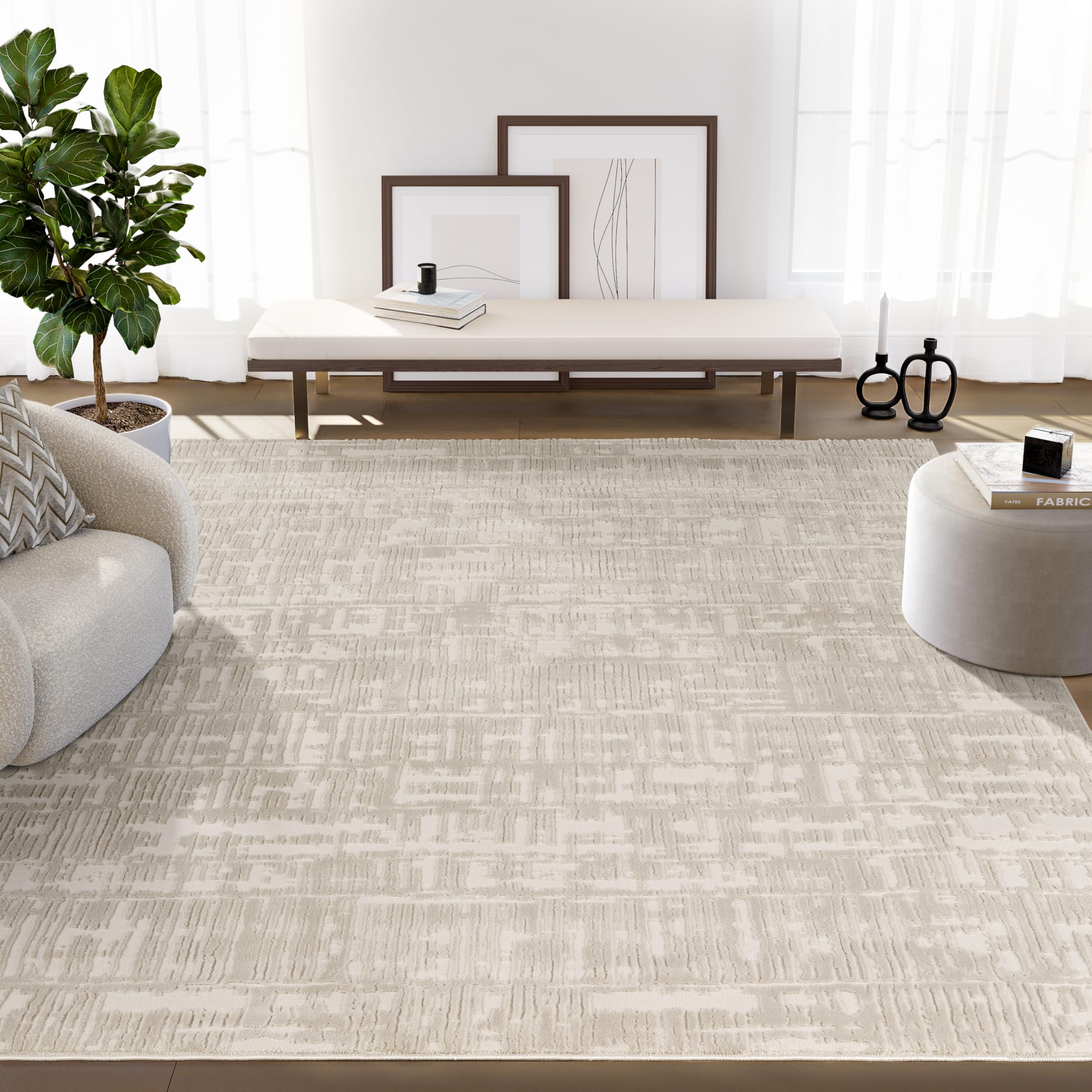
If your priority is a rug that can survive heavy foot traffic, kids, and pets while maintaining a sophisticated look, this Abani piece is the best choice. The power-loomed polypropylene construction with a 0.4-inch pile offers a chunky, plush texture that reviews describe as “velvety soft,” yet the material is inherently stain-resistant and machine-washable. At 7.5×10 feet, it covers a substantial living room footprint without the cost or maintenance demands of wool.
Buyers with multiple dogs consistently report that this rug stands up to daily wear and cleans easily, with one customer specifically noting that “5 dogs love to lay on it” and it retains its texture after repeated vacuuming. The cream grid pattern with textured variation provides a contemporary, minimalist look that contrasts sharply with traditional war rug motifs. It arrives tightly rolled but reviews confirm it flattens within a day with heavy objects placed on the edges—much faster than wool rugs which often require a week to settle.
The trade-off is that the polypropylene fibers cannot replicate the natural lanolin and hand feel of wool, and the power-loomed construction means the design is mechanically repeated rather than each knot being individually placed. For buyers who need a washable, high-traffic floor covering with a designer appearance, this unit delivers exceptional value, but it lacks the historical authenticity that purists seek in a genuine war rug.
Why it’s great
- Machine washable and stain-resistant for pet and kid households
- Chunky 0.4-inch pile with velvety texture stays soft after washing
- Lays flat within 24 hours with minimal crease memory
Good to know
- Polypropylene lacks the hand-feel and patina of natural wool
- Power-loomed design lacks hand-knotted motif authenticity
3. Rugs.com Bokhara 9×12
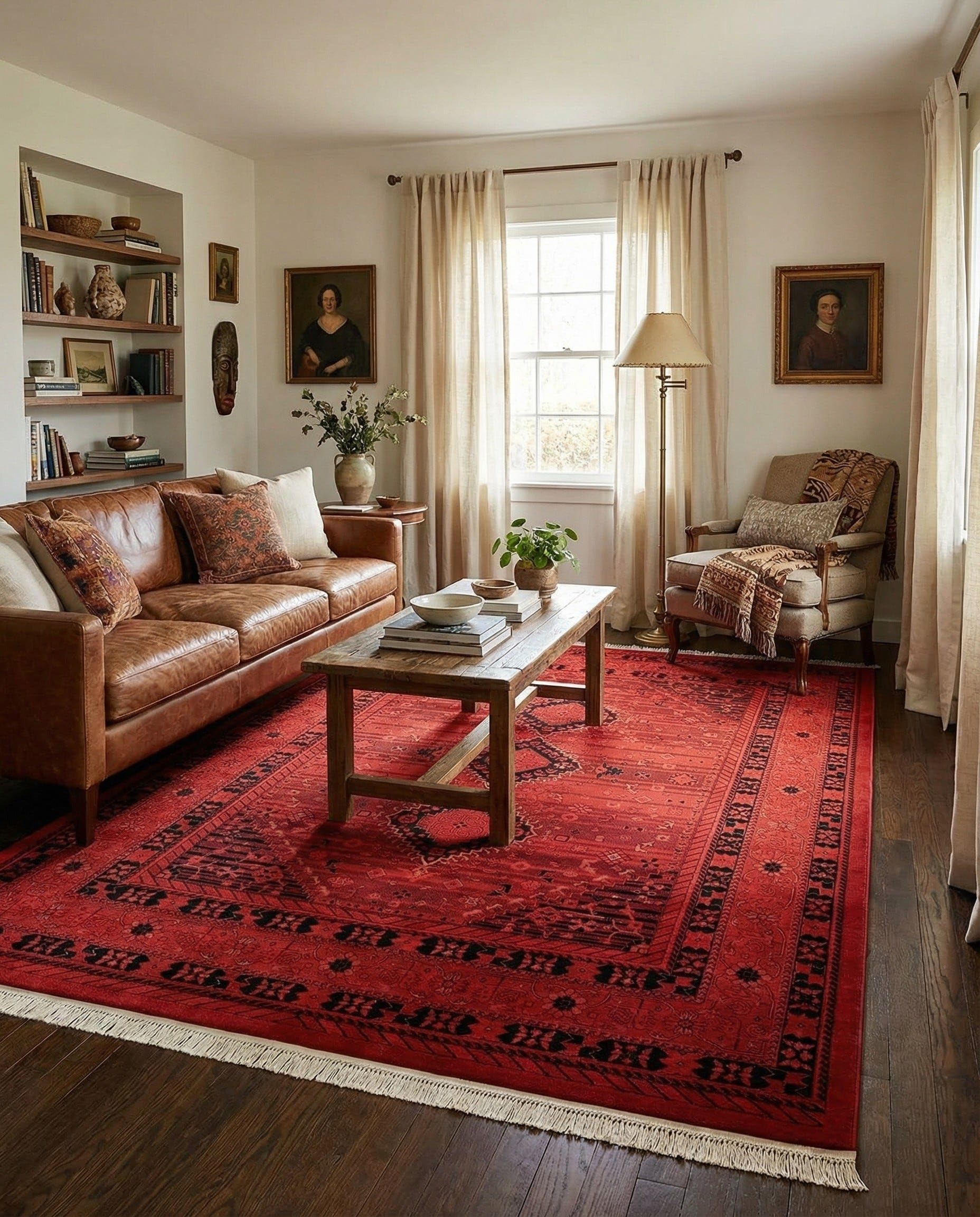
For buyers who need a 9×12 foot presence—enough to anchor an entire living room or under a large dining table—this Bokhara from Rugs.com delivers a deep red palette with intricate black accents that mimic the medallion-and-corner design of traditional Turkoman rugs. The 0.33-inch low pile is machine-made from polypropylene, which means it is inherently stain-resistant and will not absorb spills the way a wool rug would. Multiple customers describe the color as “rich” and “vibrant,” noting that it does not emit any off-gassing odor, a common issue with cheaper synthetic rugs.
The Bokhara collection pattern uses classic tribal motifs, including the distinctive octagonal gül that is the hallmark of Tekke Turkmen weaving. The low 0.33-inch pile makes it ideal for high-traffic areas and under furniture where a thick rug would cause doors to bind. Reviews specifically praise its performance at the price point, with one buyer calling it a “beautiful bargain” that “looks better than more expensive Iranian rugs.” The rug is also easy to clean—simple vacuuming and occasional spot treatment maintain its appearance.
The limitations are that it does not include a non-slip backing—a rug pad is essential, especially on hard floors. The machine-made construction also means the design is perfectly symmetrical and mechanically repeated, lacking the organic variation of hand-weaving. For large-scale coverage with a classic tribal aesthetic and minimal maintenance, this is a solid choice, but it functions as a decorative piece rather than an heirloom-quality textile.
Why it’s great
- Large 9×12 size at a reasonable cost for polypropylene construction
- Rich, saturated red and black palette with no off-gassing odor
- Stain-resistant low pile easy to clean with routine vacuuming
Good to know
- No non-slip backing—requires a separate rug pad
- Machine-made design lacks hand-knotted authenticity
4. SAFAVIEH Antiquity Collection 8×10
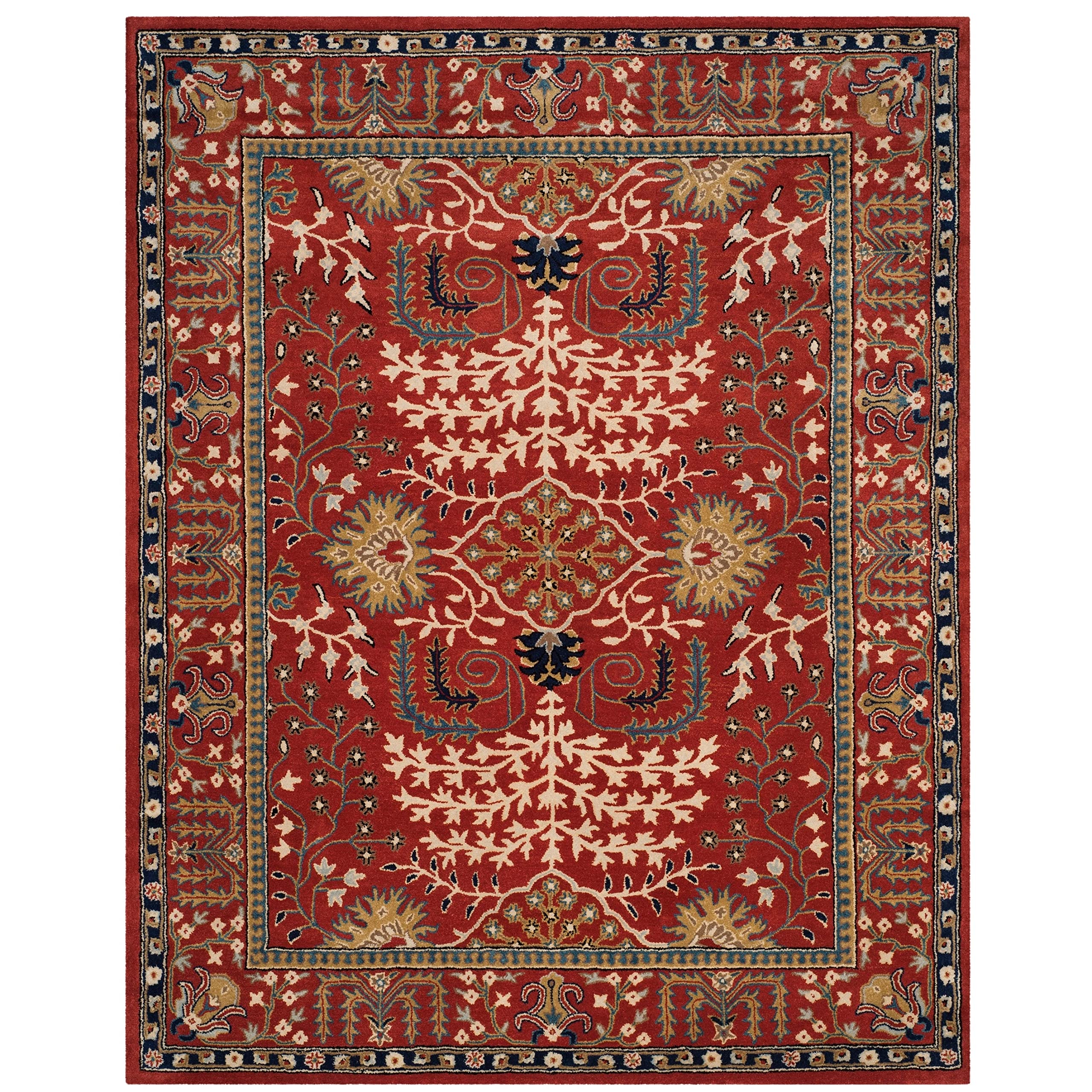
The Antiquity Collection from SAFAVIEH sits in the sweet spot between the higher-end Heritage line and budget synthetic rugs. This 8×10 rug is hand-tufted from 100% hand-spun wool with a 0.5-inch pile height, giving it a medium thickness that is plush enough for comfort but low enough to use under a dining table or in an entryway. The red and multi-color design incorporates traditional bohemian and Persian motifs that share DNA with the gül and latch-hook patterns found in real Afghan war rugs.
Weighing 64 pounds, this rug has the solid feel of a quality wool piece without reaching the 72-pound heft of the Heritage line. Buyers consistently mention the “beautiful colors” and “high quality,” though some note significant shedding during the first several vacuum sessions—a common characteristic of hand-spun wool where loose fibers from the spinning process need to be mechanically removed. The 0.5-inch pile is enough to show pattern detail but not so high that it traps dust or creates tripping hazards.
The key limitation is that this rug is not stain-resistant—wool is naturally absorbent, and spills can be challenging if not addressed immediately. Some customers reported pilling in high-traffic zones, though this appears to be inconsistent across units. For buyers who want a genuine hand-tufted wool rug with a traditional design at a moderate cost, this is a strong contender, though the shedding period requires patience during the first month of use.
Why it’s great
- Hand-tufted 100% wool with 0.5-inch pile for balanced comfort and usability
- Traditional bohemian motifs closely resemble authentic war rug pattern language
- Solid 64-pound weight confirms dense wool construction
Good to know
- Significant initial shedding may require several deep vacuums
- Not stain-resistant—wool absorbs spills quickly
5. Unique Loom Tekke 8×11

This Unique Loom piece from the Tekke collection is a machine-made polypropylene rug designed specifically to replicate the over-dyed, deeply saturated look of vintage Turkmen rugs. The “over-dyed” technique—where an existing rug is intentionally re-dyed to create a uniform, saturated color with a slightly faded or distressed edge—is a deliberate aesthetic choice that gives this rug an antique appearance. The 0.33-inch pile is short and dense, making it easy to clean and resistant to staining.
Customer reviews are overwhelmingly positive regarding the color saturation, with phrases like “simple gorgeous, rich and luxurious” and “vibrant” appearing consistently. The red and black colorway is dark enough to hide dirt but bright enough to serve as a room focal point. The polypropylene construction means no shedding, no fiber degradation from sunlight, and the ability to spot-clean with Resolve without worrying about dye bleeding. The machine-made weave is tight and uniform, producing a consistent pile across the entire surface.
The downside is that this is a power-loomed rug, not hand-knotted, so the pattern is mechanically repeated and lacks the organic variation of hand-weaving. The “Tekke” label is a brand name, not a description of Turkmen Tekke tribal weaving—buyers seeking authentic provenance should not be misled by the marketing. For someone who wants the visual impact of a saturated, traditional-looking rug without the cost and care of wool, this unit delivers excellent value.
Why it’s great
- Deeply saturated over-dyed red and black color that looks expensive
- Polypropylene construction is stain-resistant and sheds zero fibers
- Tight 0.33-inch low pile stays flat under heavy furniture
Good to know
- Power-loomed design lacks hand-knotted motif authenticity
- “Tekke” name is brand marketing, not a tribal provenance indicator
6. Allen Home Oushak 4×6
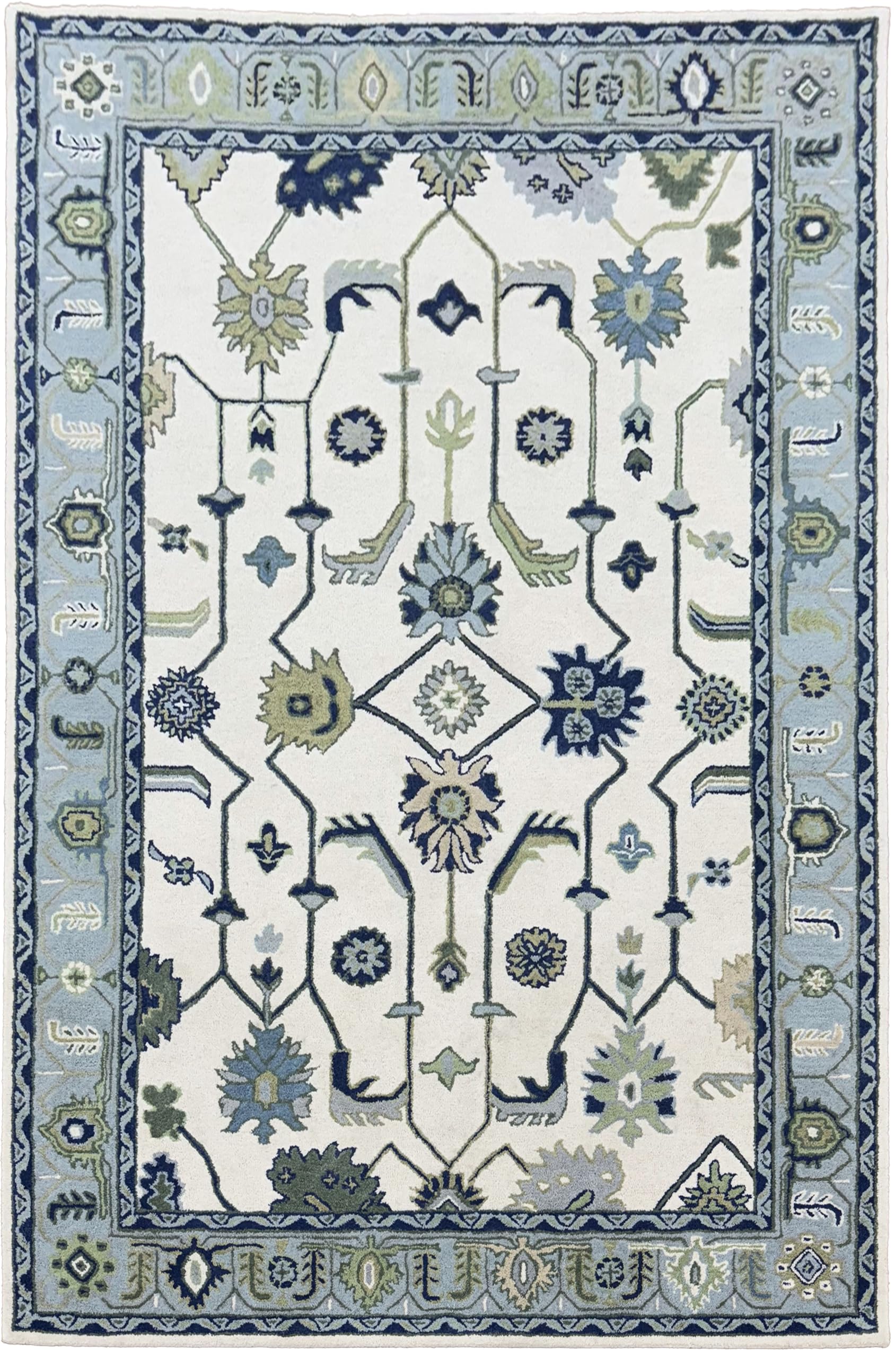
The Oushak design from Allen Home is one of the few options here that uses 100% wool pile with a cotton backing and natural latex adhesive—a construction method closer to authentic hand-tufted rugs than most machine-made alternatives. The 0.4-inch pile height is medium, providing enough cushioning for comfort while remaining low enough for door clearance. The blue Oushak Lori pattern features traditional geometric motifs that share design language with the Herati and Mina Khani patterns found in genuine Afghan war rugs.
Buyers note the “excellent value” and confirm that the color is slightly more grey than the product images suggest, which actually makes it more versatile for contemporary interiors. The hand-tufted nature means that the rug has natural variation in size (up to 5% variance is stated by the manufacturer) and color (up to 10%), which is a hallmark of handmade rugs rather than a defect. The wool fibers are yarn-dyed, meaning the dye penetrates the fiber before weaving, producing more durable color than surface-printed designs.
The primary issue reported by customers is prolonged shedding—one review describes filling a vacuum cleaner “12+ times” over weeks, with the pile eventually wearing down to a flat, bare appearance. This is a known risk with hand-tufted wool rugs that use lower-grade wool or looser spinning. The initial shedding may be manageable with frequent deep vacuuming, but buyers should be prepared for a break-in period. The 4×6 size is useful for smaller spaces or as a layered accent piece.
Why it’s great
- 100% wool pile with cotton backing for authentic handcrafted feel
- Yarn-dyed wool produces durable, fade-resistant color
- Compact 4×6 size fits small rooms and entryways
Good to know
- Prolonged excessive shedding reported by multiple buyers
- Wool pile can wear down to a flat appearance in high-traffic areas
7. Casavani Kilim 8×10
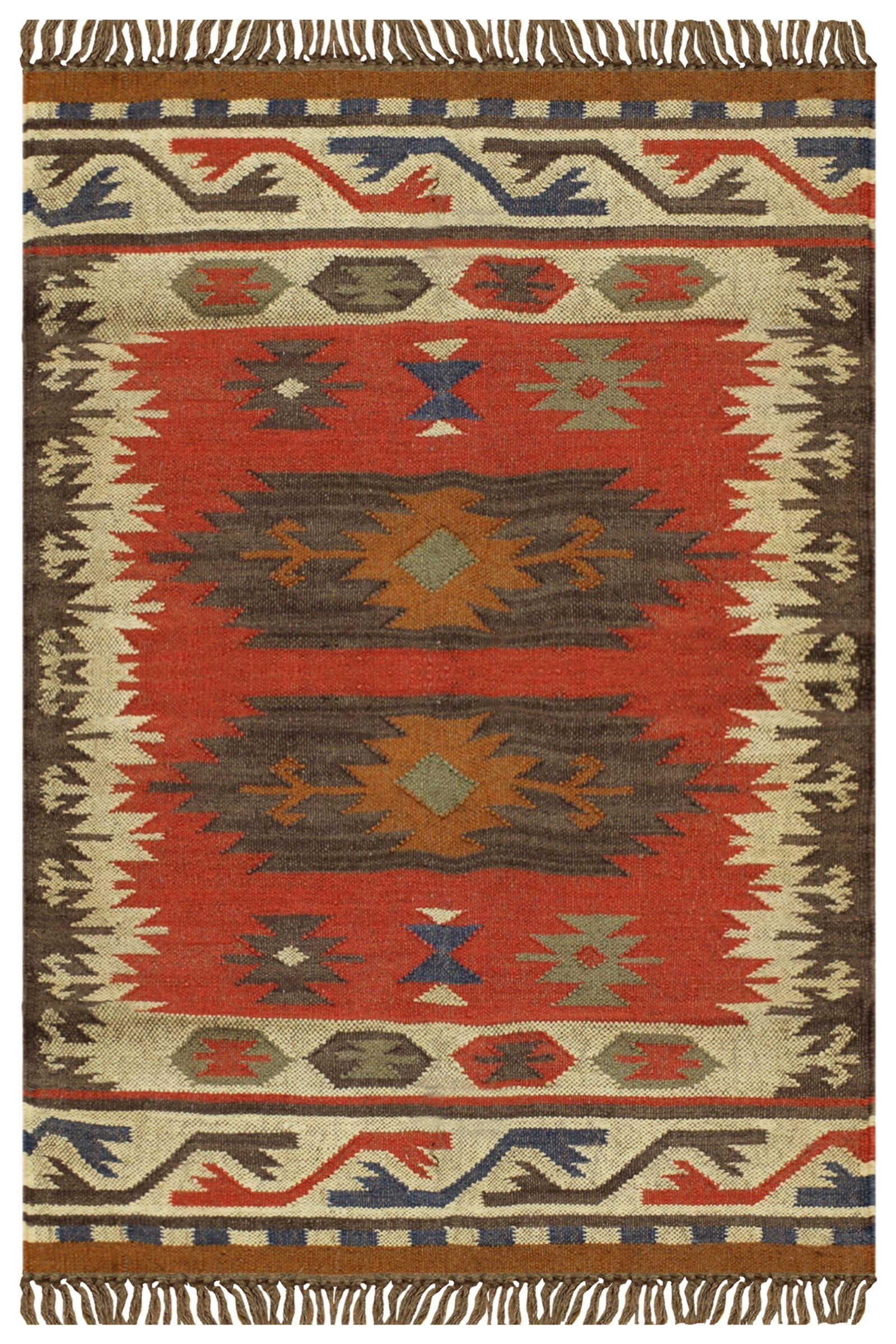
This Casavani Kilim is a handwoven flatweave rug constructed from a wool and jute blend, which produces a firm 0.27-inch profile that lies perfectly flat without bunching. The flatweave construction is the same technique used in traditional Baloch and Turkmen kilims, where the warp and weft threads create the pattern without a pile. This rug is reversible—both sides are usable, effectively doubling its lifespan. The southwestern-inspired geometric design in red and multicolor tones is bold and graphic.
Buyers consistently describe the color as “vibrant” and the construction as “well made,” with one review specifically noting that the rug looked “even more beautiful than the picture.” The wool and jute blend provides a sturdy, textured surface that is ideal for high-traffic areas or even outdoor covered patios, as the jute fibers are naturally resistant to moisture and mildew. The handwoven nature means each rug is unique, with subtle variations in pattern and color distribution. Customers also praise the seller’s communication and shipping speed from India.
The drawbacks are that the flatweave construction has no cushioning—it feels firm underfoot—and the jute fibers can be rough on bare feet. The edges are described as “wavy” in one review, which can cause the rug to shift on hard floors or catch under doors. A rug pad is highly recommended. This kilim is an excellent choice for buyers who want a durable, authentic handwoven textile with a bold geometric design, but it lacks the softness and pile depth of a knotted rug.
Why it’s great
- Handwoven wool and jute flatweave construction is durable and reversible
- Bold southwestern geometric design with vibrant, saturated colors
- Suitable for both indoor and covered outdoor use due to jute’s moisture resistance
Good to know
- Flatweave has no pile cushion—firm underfoot
- Wavy edges may cause shifting on hard floors without a pad
8. Hazo Haus Boho 10×14

At 10×14 feet, this Hazo Haus rug is one of the largest options available, covering a substantial floor area. The machine-made construction uses a 0.25-inch low pile with a thermoplastic rubber (TPR) backing that provides strong non-slip grip without requiring an additional pad. The boho tribal distressed pattern uses a charcoal base with muted tones of beige, red, yellow, and green—a faded vintage aesthetic that deliberately avoids high contrast. This rug is explicitly designed to be machine washable, which is rare for a rug of this size.
Customer reviews strongly recommend this rug for households with dogs, specifically noting that the low pile resists pet hair accumulation and stands up to multiple machine washes without deteriorating. The TPR backing is effective at preventing sliding, even on hardwood floors, and the low pile means vacuum cleaners will not lift or catch the edges. The distressed pattern is also forgiving—minor stains or wear blend into the deliberately faded design. Buyers describe the texture as “velvety soft” despite the low pile height.
The caveat is that the 0.25-inch pile is very thin, providing minimal cushioning—it functions more as a floor covering than a soft surface for sitting or lying on. The rug arrives folded and may retain creases for several days or require gentle heat from a dryer to fully flatten. The boho distressed aesthetic is also a deliberate manufacturing effect, not the result of actual age or wear, so purists may find the “faded” look inauthentic. For a large, washable, pet-friendly floor covering, this is a practical choice.
Why it’s great
- Massive 10×14 size with strong non-slip TPR backing
- Machine washable and pet-friendly—resists hair and stains
- Low pile stays flat under vacuum and heavy furniture
Good to know
- Very thin 0.25-inch pile offers minimal cushioning
- Folded packaging causes creases that require time or heat to remove
9. Aquailis Southwest 7×9
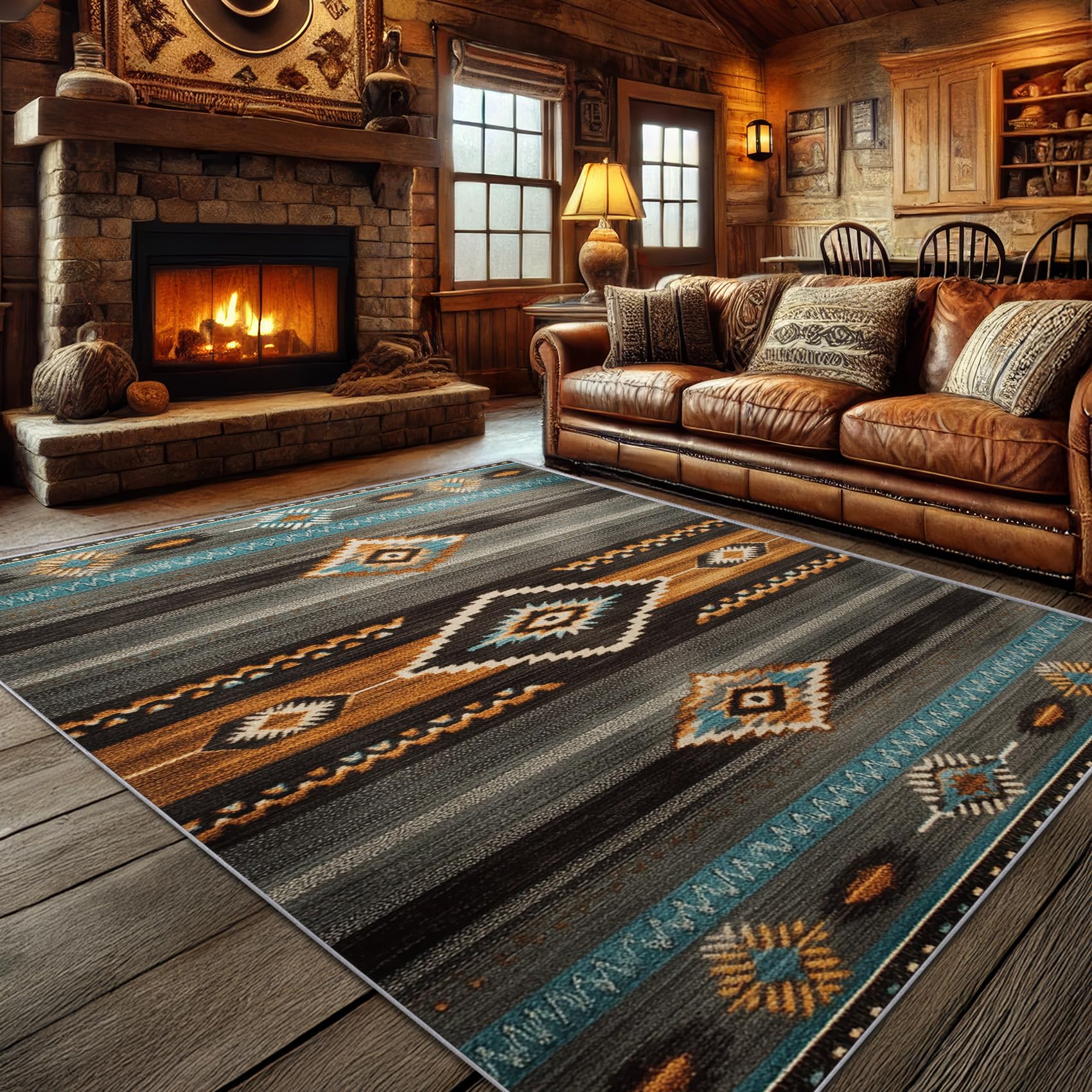
The Aquailis Southwest rug is the budget-friendly entry point for buyers who want a Navajo-inspired tribal pattern without the cost of hand-knotted wool. The machine-made construction uses a flannel material—a soft, low-pile fabric that is lightweight at 15.9 pounds for a 7×9 size. The TPR backing provides effective non-slip grip, and multiple customers confirm it stays in place on hard floors and even prevents dogs from skidding. The multi-color design features bright, fade-resistant colors with a traditional southwestern pattern.
Reviews are predominantly positive, with the rug described as “soft,” “stylish,” and “well worth the price.” The low pile is easy to clean—dog hair can be swept off with a rubber broom, and the rug can be machine washed. The TPR backing is a clear differentiator from other budget rugs that rely on thin, poorly-adhered slip-resistant coatings. The pattern options include multiple colorways that fit well with rustic, boho, or modern farmhouse decor.
The primary downside is that the flannel material is thin and lightweight—it will not provide the same cushioning or visual weight as a wool rug. One customer strongly criticized the quality as “pure JUNK,” though this appears to be an outlier experience compared to the majority of positive reviews. The flannel surface can be lifted by a powerful suction vacuum, so customers recommend using a rubber broom instead. For a colorful, functional, and affordable rug with a tribal pattern, this option serves well as a starter piece.
Why it’s great
- Soft flannel surface with bright, fade-resistant southwestern design
- Effective TPR non-slip backing prevents movement on hard floors
- Machine washable and easy to clean pet hair with a rubber broom
Good to know
- Thin, lightweight construction offers minimal cushioning
- Flannel surface can be lifted by powerful upright vacuums
FAQ
How can I tell if a rug is an authentic Afghan War Rug or just a decorative copy?
Does higher KPSI always mean a better rug?
Should I choose a polypropylene rug for durability over wool?
What does the term “over-dyed” mean on a rug label?
Why do some wool rugs shed heavily while others don’t?
Final Thoughts: The Verdict
For most users, the best afghan war rugs winner is the SAFAVIEH Heritage 8×10 because its 1.0-inch hand-tufted wool pile delivers the tactile substance and design depth that collectors and design-conscious buyers demand. If you want a machine-washable rug that survives pets and kids, grab the Abani Cream Grid Textured 7.5×10. And for a classic Bokhara pattern at a large 9×12 size, nothing beats the Rugs.com Bokhara for its saturated color and stain-resistant polypropylene construction.