
Atrial fibrillation affects millions, yet many people only discover they have it after a serious event. A watch that continuously monitors your heart rhythm isn’t a luxury — it’s a frontline defense that can alert you to an irregular heartbeat before it becomes a crisis. The right device gives you FDA-cleared ECG recordings, 24/7 pulse checks, and notifications that could send you to a doctor rather than an emergency room.
I’m Min — the co-founder and writer behind Gadgets Feed. I’ve spent countless hours dissecting the medical clearance documentation, ECG sensor specifications, and real-world user outcomes across every major smartwatch platform to separate the tools that deliver clinical-grade alerts from those that merely offer wellness suggestions.
Whether you have a known heart condition or simply want proactive monitoring, this guide examines the most reliable afib watches that combine medical-grade sensors with everyday wearability so you never have to wonder what your heart is doing.
How To Choose The Best AFib Watches
The best AFib watch for you depends on whether you need on-demand ECG recordings, 24/7 passive rhythm monitoring, or both. You also need to consider your phone ecosystem because advanced features like ECG reports require a companion smartphone app from the same brand.
ECG vs. Irregular Rhythm Notification
An ECG app requires you to touch an electrode on the watch for 30 seconds to generate a waveform you can share with your doctor. An irregular rhythm notification runs in the background, periodically checking your pulse for signs of AFib without any action from you. Many watches offer one but not both.
Sensor Accuracy and FDA Clearance
Look for watches with optical heart rate sensors that use multiple LEDs and photodiodes to improve signal quality through skin tone variations and movement. FDA clearance for the specific AFib detection algorithm is a significant trust marker — it means the watch underwent clinical testing to prove its sensitivity to real arrhythmias.
Battery Life and Continuous Monitoring
AFib episodes can be sporadic, so passive monitoring must run all day and night. Watches that need daily charging may miss overnight episodes. Models with 24+ hours of real-world battery are safer bets, while hybrid designs with reflective displays can last weeks on a single charge while still tracking your heart rhythm.
Quick Comparison
On smaller screens, swipe sideways to see the full table.
| Model | Category | Best For | Key Spec | Amazon |
|---|---|---|---|---|
| Apple Watch Series 11 | Mid-Range | Seamless iPhone integration & ECG on demand | ECG app + Irregular Rhythm Notification | Amazon |
| Apple Watch Ultra 3 | Premium | Rugged use with multi-day battery & satellite safety | ECG + Blood Oxygen + 42h battery | Amazon |
| Samsung Galaxy Watch Ultra | Premium | Android users wanting titanium build & LTE | ECG + Samsung Health Monitor app | Amazon |
| Google Pixel Watch 4 LTE | Premium | Android wear with Gemini AI & Fitbit integration | ECG + Fitbit Irregular Rhythm Notification | Amazon |
| Garmin fēnix 8 51mm | Premium | Hardcore athletes demanding ECG & extreme battery | ECG + 29-day smartwatch mode | Amazon |
| Fitbit Sense 2 | Mid-Range | Budget-friendly ECG & stress tracking | ECG app + High/Low HR alerts | Amazon |
| Withings ScanWatch Nova | Premium | Classic analog style with ECG & 30-day battery | ECG + 30-day battery life | Amazon |
| Amazfit T-Rex Ultra 2 | Premium | Outdoor explorers needing offline maps & dual-band GPS | 10 ATM + 30-day battery + sapphire glass | Amazon |
| Garmin Instinct 3 Solar | Mid-Range | Ultimate battery life & durability without daily charging | Solar + unlimited battery + heart rate | Amazon |
In‑Depth Reviews
1. Apple Watch Series 11 [GPS 46mm]
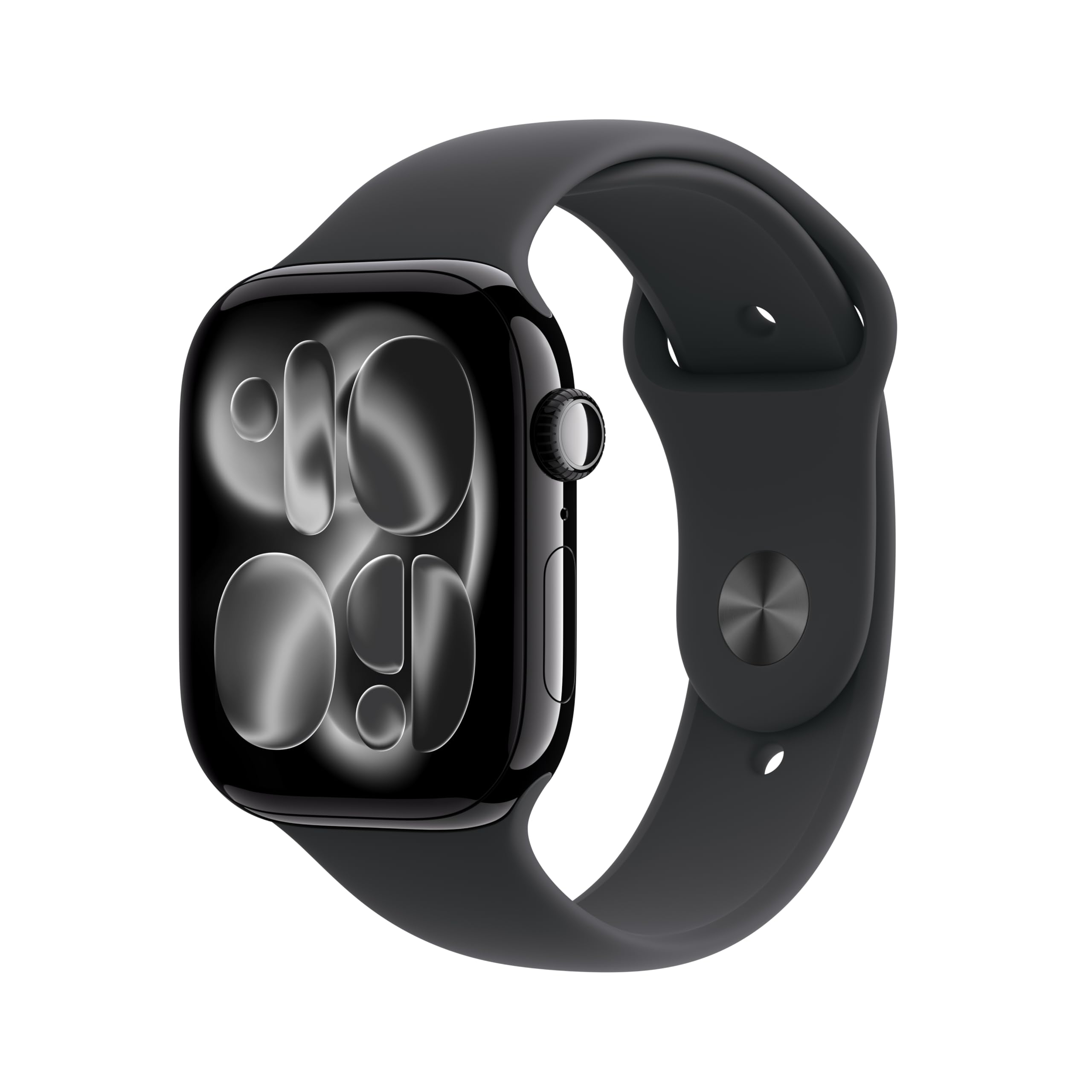
The Apple Watch Series 11 offers the most complete AFib detection package on the market today. It pairs an FDA-cleared ECG app that generates a single‑lead waveform you can export as a PDF with a background Irregular Rhythm Notification algorithm that samples your pulse rate every two hours. This dual‑layer approach means you get both proactive alerts and the ability to create a clinical record on demand. The S11 SiP drives the Vitals app, which flags overnight metrics like respiratory rate and wrist temperature alongside heart rhythm data, so you see the full picture.
Battery life reaches 24 hours with the always‑on display, and fast charging delivers eight hours of use after just fifteen minutes on the puck — critical for overnight sleep tracking that might catch nocturnal AFib. The 46mm Jet Black aluminum case is water resistant to 50 meters and the ion‑X glass display is twice as scratch‑resistant as the Series 10. For iPhone users, there’s simply no better smartwatch for heart rhythm surveillance because the Health app centralizes ECG reports, medication logging, and trends into a single timeline your cardiologist can review.
Reviewers highlight the seamless pairing with iOS and the consistency of the heart rate monitor during exercise and rest. The always‑on Retina display makes glancing at your rhythm status effortless. The only real trade‑off is daily charging — if you forget to top up before bed, you miss an entire night of passive monitoring.
Why it’s great
- FDA-cleared ECG app and background Irregular Rhythm Notification work together
- Fast charging recovers 8 hours of use in 15 minutes
- Vitals app consolidates overnight health metrics with ECG data
Good to know
- Requires daily charging for 24/7 monitoring
- Only pairs with iPhone
2. Apple Watch Ultra 3 [GPS + Cellular 49mm]
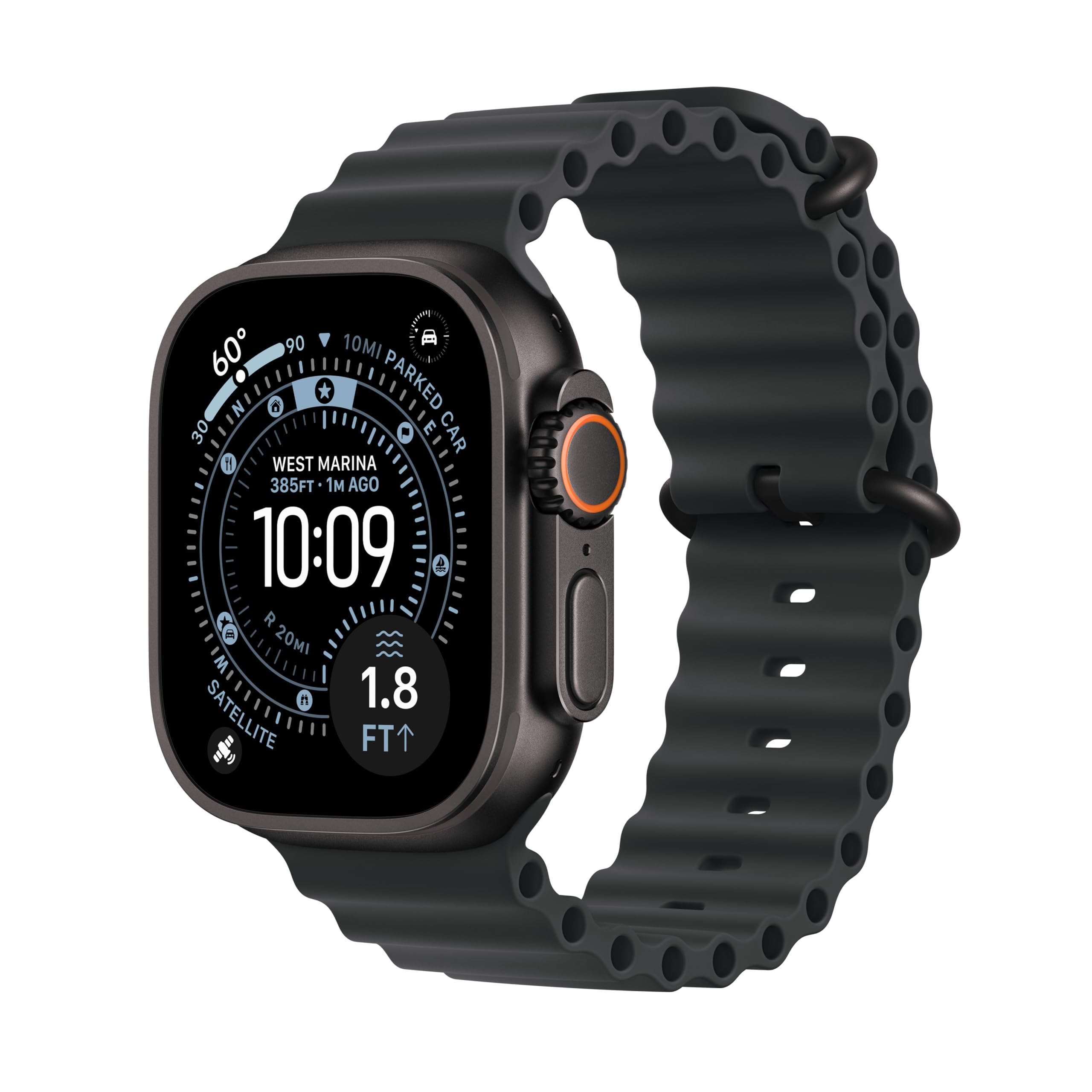
The Ultra 3 is Apple’s most capable heart health tool, adding blood oxygen monitoring and a 42‑hour battery to the Series 11’s ECG and irregular rhythm detection. The titanium case and sapphire crystal display survive 100‑meter water immersion, so you never have to take it off for diving or high‑speed water sports — continuous monitoring even in extreme environments. The customizable Action Button can launch an ECG recording instantly, which is critical when you feel a palpitation and need a reading within seconds.
The larger 49mm display emits more light at wider angles, making ECG graphs and heart rate zones legible in direct sunlight. Satellite messaging gives you a safety net if an AFib episode occurs in a remote area without cell service. The dual‑frequency GPS and training load metrics serve serious athletes who need to correlate workout intensity with heart rhythm changes. Reviewers report charging every 2 to 3 days with moderate use, a meaningful improvement over the Series 11 for overnight sleep tracking.
The premium build is evident in every detail — the Digital Crown with haptic feedback and the flat sapphire crystal resist scratches from trail debris and gym equipment. If you want the absolute best AFib monitoring platform money can buy and you live in Apple’s ecosystem, the Ultra 3 is the one to get.
Why it’s great
- Blood oxygen sensor adds another health dimension alongside ECG
- 42‑hour battery covers overnight and all‑day wear
- Satellite connectivity for emergency help during an episode
Good to know
- Significantly more expensive than Series 11
- Action Button can be pressed accidentally during weightlifting
3. Samsung Galaxy Watch Ultra (2024) 47mm LTE

The Galaxy Watch Ultra brings Samsung’s ECG app and blood pressure monitoring (after calibration with a cuff) to a rugged titanium frame with LTE cellular. The 590 mAh battery is the largest in this comparison, easily lasting two full days with the always‑on display active, so your passive heart rhythm checks never stop. The Samsung Health Monitor app generates an ECG report that you can share directly with your provider, and the watch also alerts you to high and low heart rate thresholds that may indicate an AFib episode brewing.
The 47mm titanium case is MIL‑STD‑810 rated and water resistant to 100 meters, making it the most durable Android‑compatible AFib watch available. The BioActive Sensor array combines optical heart rate, bioelectrical impedance, and temperature sensing into a single module. Reviewers praise the premium design and LTE freedom, though some note the included silicone band absorbs sweat and can feel scratchy against the skin during long wear.
Energy Score with Galaxy AI analyzes yesterday’s sleep, heart rate, and steps to tell you how ready your body is for physical exertion — useful context when you’re trying to understand how an AFib episode affected your recovery. For Android users who want the full suite of Samsung health features in a package that can survive ocean swimming, this is the obvious pick.
Why it’s great
- 590 mAh battery delivers two days of continuous heart monitoring
- Titanium case and 100m water resistance ensure durability
- ECG app and blood pressure monitoring in Samsung Health Monitor
Good to know
- ECG and BP features require Samsung phone for full functionality
- Stock band material can be uncomfortable during exercise
4. Google Pixel Watch 4 (41mm) LTE

The Pixel Watch 4 is the only AFib watch that bundles two years of LTE data and texting through Google Fi, so your heart rhythm data syncs even when your phone is left behind. It runs Fitbit’s FDA-cleared irregular rhythm notification algorithm in the background, automatically checking your pulse for AFib patterns while you sleep, work, or exercise. The Gemini AI assistant can respond to health‑related queries without you touching the screen — ask when your last high‑heart‑rate alert was and it pulls the answer from the Fitbit database.
Battery life reaches 30 hours with the always‑on display, and the side charging dock gives you 15 hours of runtime from a 15‑minute top‑up. The 41mm matte black aluminum case is the smallest in this list, appealing to those who found 46mm+ watches too bulky for sleep tracking. Reviewers consistently praise the crisp 30Hz‑capable AMOLED display and the accuracy of the dual‑frequency GPS, but note that the included band is shorter than expected and many replace it immediately.
The Fitbit Premium trial (6 months) unlocks detailed Health Metrics dashboards showing heart rate variability trends, breathing rate, and SpO2 — all relevant context for someone managing AFib. For Android users who want the deepest AI integration combined with proven Fitbit AFib detection, this is a compelling package.
Why it’s great
- Fitbit’s irregular rhythm notification algorithm runs passively 24/7
- 2‑year LTE data plan included for untethered heart monitoring
- Gemini AI provides voice‑based health insights
Good to know
- Stock band is short — many users buy a replacement
- ECG app requires Fitbit app on a compatible Android or iOS phone
5. Garmin fēnix 8 – 51mm AMOLED Sapphire

The Garmin fēnix 8 integrates an ECG app into the most rugged, longest‑lasting smartwatch platform available. The 1.4‑inch AMOLED display with sapphire lens and titanium bezel is built to survive 40‑meter dives, and the 500 mAh battery delivers up to 29 days in smartwatch mode — so you can leave the charger behind on a month‑long expedition without missing a single rhythm check. The ECG app records a 30‑second lead‑I waveform and stores it in Garmin Connect, where you can add symptoms and export the PDF for your physician.
Real‑time stamina tracking and training readiness scores use HRV status, sleep quality, and recovery data to tell you if your body is prepared for high‑intensity effort — crucial context when AFib may have impacted your autonomic nervous system overnight. The built‑in speaker and microphone allow phone calls from the wrist, and the off‑grid voice command works without a smartphone connection. Reviewers switching from Apple Watch Ultra praise the battery life and the depth of training metrics, though some note the sleep tracking struggles with irregular schedules.
The LED flashlight with variable intensity is a genuinely useful addition for nighttime walks or finding your way in a dark room without waking your partner. If you need the most durable AFib‑capable watch that doesn’t need a charger for weeks, the fēnix 8 is unmatched.
Why it’s great
- ECG app combined with 29‑day battery for continuous unattended monitoring
- Sapphire lens and titanium bezel withstand extreme conditions
- Training readiness and HRV status contextualize AFib patterns
Good to know
- Sleep tracking can be unreliable with split or non‑standard sleep schedules
- Major price jump from mid‑range AFib watches
6. Fitbit Sense 2 Advanced Health Smartwatch
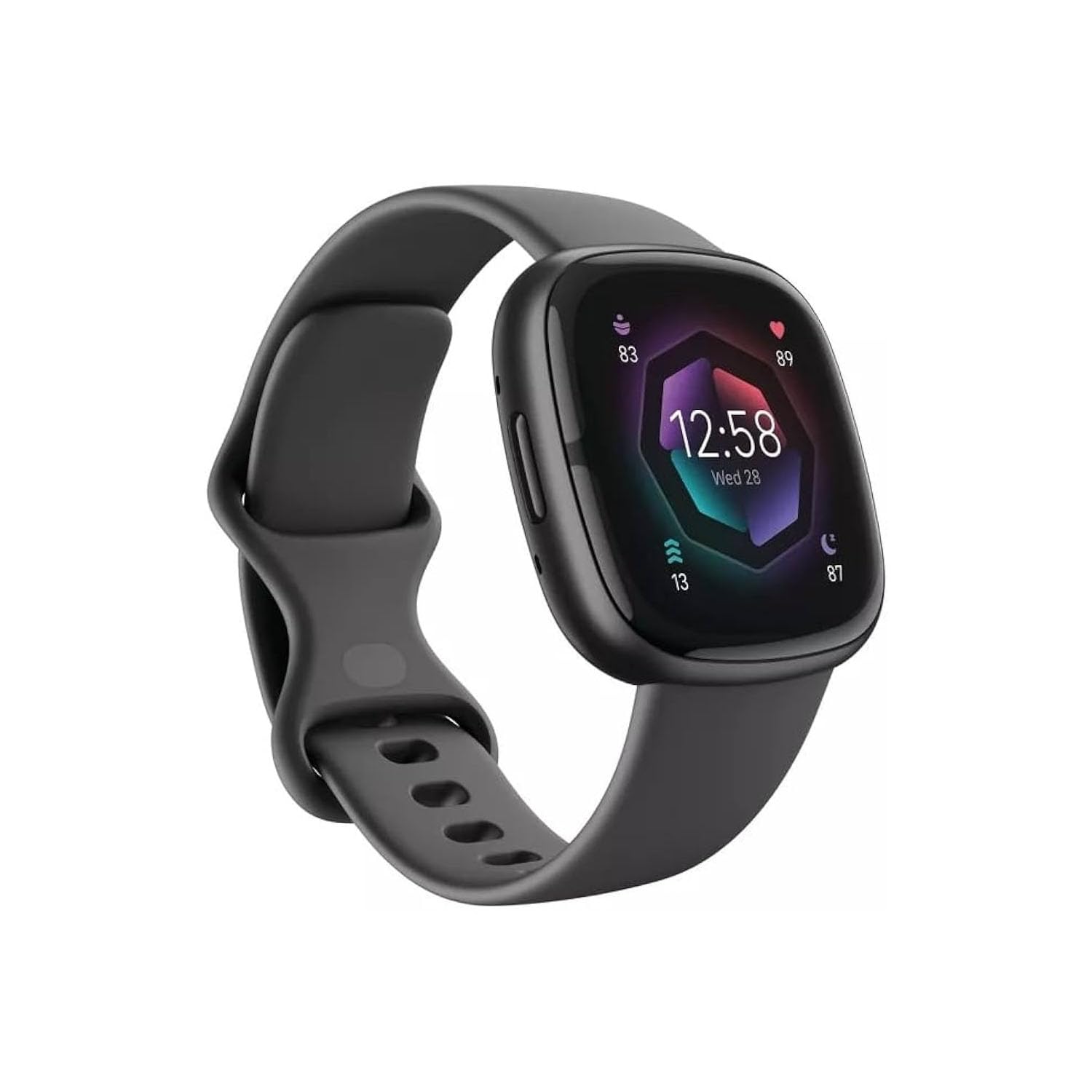
The Fitbit Sense 2 brings FDA‑cleared ECG to the most accessible price point on this list. You place your fingertips on the stainless steel bezel for 30 seconds and receive a waveform classified as sinus rhythm, AFib, or inconclusive — all stored in the Fitbit app with notes you can add about symptoms. The watch also uses an EDA sensor to detect electrodermal activity, which correlates with stress responses that can trigger AFib episodes. High and low heart rate notifications alert you when your resting pulse exceeds 125 bpm or drops below 40 bpm, providing an early warning system between scheduled ECG recordings.
The body‑response tracking continuously monitors your wrist for signs of physiological stress and sends a notification asking you to log your emotional state. For people whose AFib episodes are triggered by anxiety or overexertion, this feature helps identify patterns that an ECG alone might miss. The 6‑month Fitbit Premium trial unlocks the Health Metrics dashboard showing heart rate variability trends, skin temperature variation, and breathing rate — all useful for spotting subtle changes before an episode occurs.
Reviewers confirm the ECG feature works reliably and has alerted users to high heart rates during confirmed AFib attacks. A small but significant number report battery charging failures after extended use, so testing the unit early in the return window is advisable. For a budget‑friendly on‑ramp to ECG‑equipped AFib monitoring, the Sense 2 delivers where it counts.
Why it’s great
- FDA-cleared ECG at the lowest entry price in the category
- EDA sensor correlates stress events with potential AFib triggers
- High/low heart rate notifications catch off‑rhythm episodes between ECGs
Good to know
- Some units develop battery charging issues after a few months
- No built‑in GPS for workout route tracking
7. Withings ScanWatch Nova
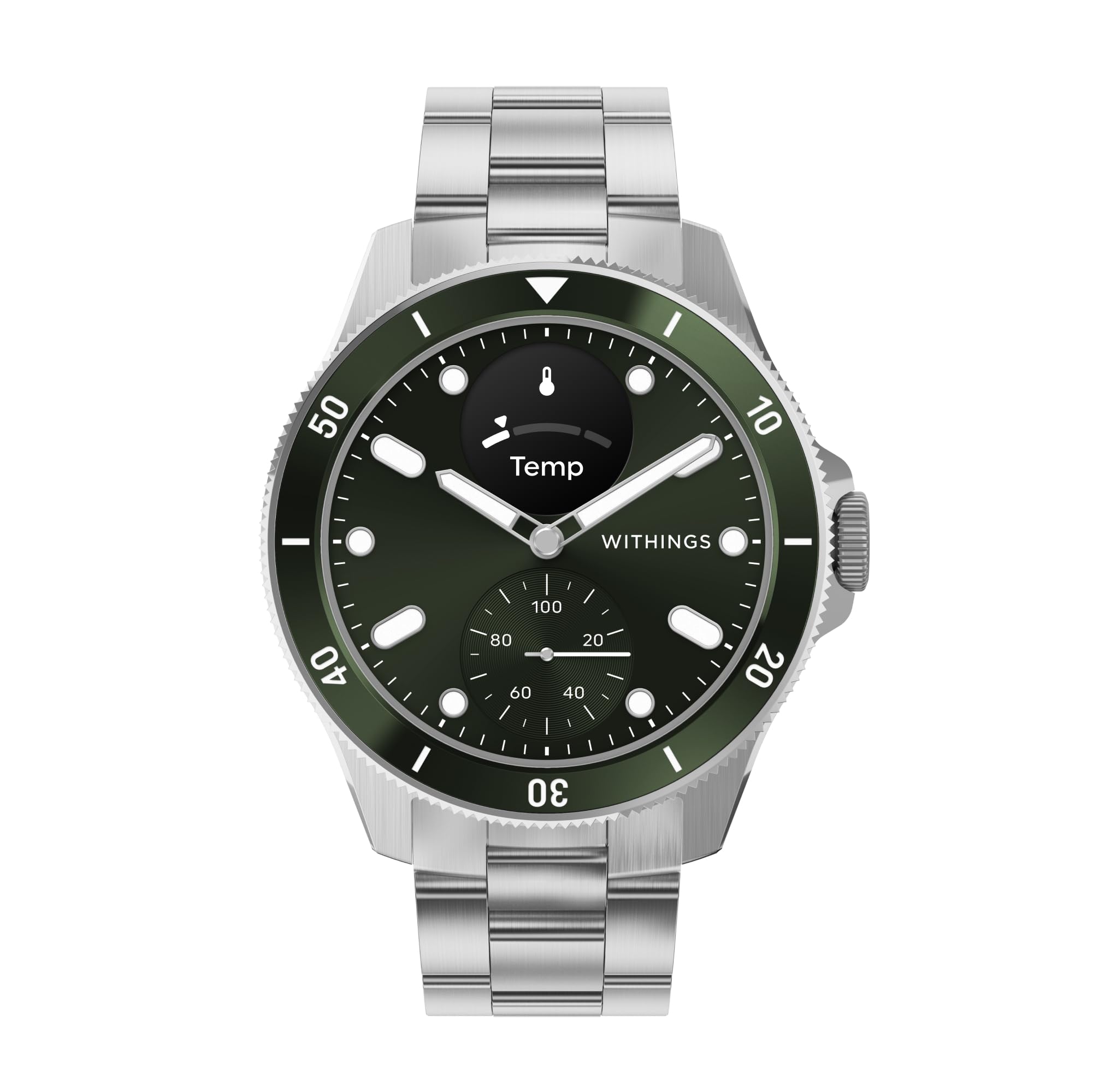
The ScanWatch Nova hides its clinical‑grade AFib detection inside an analog watch that looks at home in a suit or on a hiking trail. Press and hold the crown for 30 seconds to activate the ECG, and the watch records a medical‑grade waveform while a small OLED screen in the dial confirms your heart rate. The accompanying Withings app stores all ECG recordings and offers a PDF export for your doctor. The 30‑day battery life means continuous heart rate monitoring and sleep tracking run for nearly a full month between charges — unmatched by any full‑screen smartwatch on this list.
The 42mm stainless steel case and sapphire glass are water resistant to 50 meters, and the watch automatically detects over 40 activities including swimming. Sleep tracking provides a Sleep Quality Score that breaks down light, deep, and REM stages alongside respiratory rate. Reviewers praise the genuine luxury watch aesthetic — it weighs less than 80 grams and draws compliments that no fitness trackers ever receive. The included charger uses a convenient magnetic docking station with USB‑C compatibility.
The key compromise is the lack of an active display for glancing at metrics; you need to press the crown to see your heart rate on the OLED panel. Some users report sleep tracking that occasionally misclassifies quiet reading as sleep, shifting timing data by an hour or two. If you prioritize style and a traditional watch feel but refuse to compromise on AFib ECG detection, the ScanWatch Nova is the only option that truly delivers both.
Why it’s great
- ECG recordings in a genuine analog wristwatch design
- 30‑day battery makes charging almost irrelevant
- Sapphire glass and stainless steel offer true luxury durability
Good to know
- No always‑on display — metrics require a button press
- Sleep timing can be off by 1–2 hours compared to dedicated trackers
8. Amazfit T-Rex Ultra 2
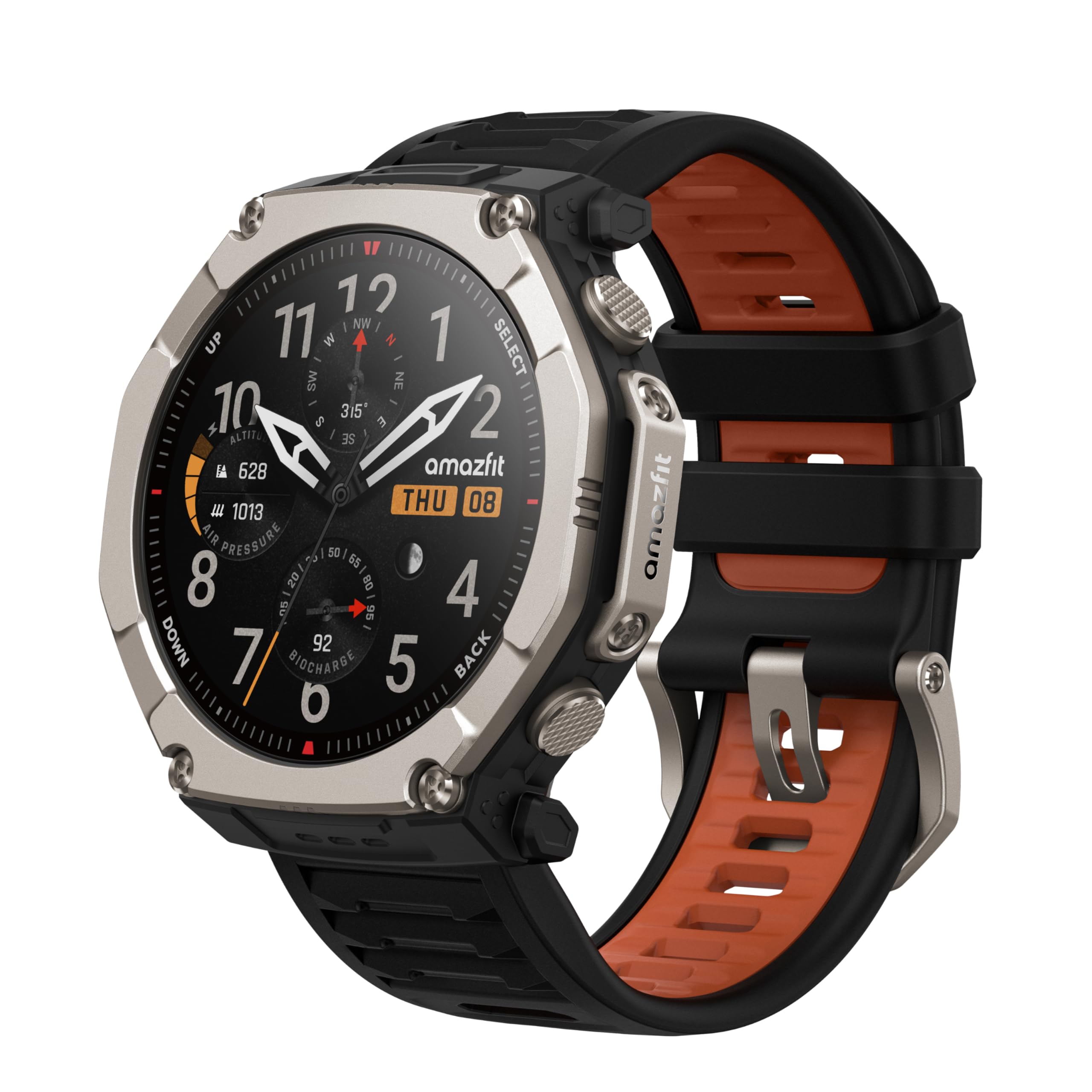
The T‑Rex Ultra 2 does not include an ECG app, but its 24/7 heart rate monitoring and SpO2 tracking provide a strong foundation for noticing AFib‑related pulse irregularities. The BioTracker PPG sensor uses six LEDs and four photodiodes to deliver accurate readings even during high‑motion activities like trail running or mountain biking. The Zepp app provides heart rate zone alerts, high/low heart rate notifications, and a daily health summary that can reveal patterns worth discussing with your doctor.
The Grade 5 titanium body and sapphire glass AMOLED display are certified to 10 ATM (100 meters) and MIL‑STD‑810, making this the most physically robust watch in the lineup. The 30‑day battery with typical use means you can wear it for weeks in the backcountry without a charger — crucial when AFib detected in a remote location could prompt a medical evacuation. The dual‑band GPS with SatIQ delivers superior positioning in canyons and under tree cover, and the full‑color preloaded base maps support route planning and automatic rerouting if you stray off trail.
Reviewers with larger wrists (6’3″ and above) find the 51mm case comfortable, while those with smaller frames report it looks oversized. Sleep tracking accuracy is contested — some find it on par with premium Garmin models, while others note inconsistencies with nap detection. For outdoor enthusiasts who want rugged construction, massive battery life, and continuous heart rate surveillance without the price of a Garmin fēnix, this is a strong contender.
Why it’s great
- Six‑LED heart rate sensor maintains accuracy during intense motion
- 30‑day battery supports multi‑week expeditions without charging
- Sapphire glass and Grade 5 titanium survive extreme impacts
Good to know
- No ECG recording capability for clinical AFib documentation
- 51mm case is very large — not suitable for small wrists
9. Garmin Instinct 3 Solar 45mm

The Instinct 3 Solar solves the biggest problem with heart rhythm monitoring: the need to charge. Its solar‑charging display can extend battery life indefinitely — Garmin claims unlimited in smartwatch mode with three hours of daily outdoor exposure at 50,000 lux. For someone with persistent AFib who must not miss a single day of monitoring, this removes the most common failure point. The watch uses Garmin’s Elevate wrist‑based heart rate sensor to log pulse data 24/7, and it can alert you if your resting heart rate stays abnormally high or low — a potential indicator of an AFib episode.
The 45mm fiber‑reinforced polymer case with metal‑reinforced bezel meets MIL‑STD‑810 for thermal and shock resistance, and the 10 ATM water rating makes it suitable for swimming and snorkeling. The 0.9‑inch MIP display is exceptionally readable in direct sunlight and consumes negligible power. The built‑in LED flashlight with red safety mode provides illumination without affecting night vision — a small but meaningful detail for nighttime bathroom trips when you’re trying to avoid triggering an elevated heart rate from fumbling for a light switch.
Reviewers praise the battery as a “game‑changer,” reporting 38 days out of the box before the first charge. The MIP display lacks the vibrancy of AMOLED, but the trade‑off is that it never sleeps, so your heart rate stats are always visible. No ECG recording is available here, and the watch doesn’t support Garmin’s Pay contactless payments or music storage. For people whose top priority is uninterrupted, long‑term heart rate monitoring without ever worrying about a dead battery, the Instinct 3 Solar delivers uniquely.
Why it’s great
- Solar charging enables unlimited battery for continuous heart monitoring
- MIP display stays legible in bright sunlight without draining power
- Rugged MIL‑STD‑810 construction suits active, outdoor lifestyles
Good to know
- No ECG recording feature for clinical AFib verification
- No touchscreen or music storage
FAQ
Can an AFib watch replace a visit to the cardiologist?
What is the difference between AFib detection and high/low heart rate alerts?
Why do some watches need you to trigger the ECG manually?
Final Thoughts: The Verdict
For most users, the afib watches winner is the Apple Watch Series 11 because it combines an FDA‑cleared ECG app with a background Irregular Rhythm Notification algorithm, fast charging that supports overnight wear, and deep integration with the Health app for sharing data with your doctor. If you want the toughest build and multi‑day battery without sacrificing ECG, grab the Apple Watch Ultra 3. And for the longest possible battery life in a classic analog design, nothing beats the Withings ScanWatch Nova.