
Our readers keep the lights on and my morning glass full of iced black tea. As an Amazon Associate, I earn from qualifying purchases.
Specs are compiled from manufacturer listings and verified buyer reviews and can change over time — please confirm the key details on the product page before buying.
Most African coffee buyers face a frustrating choice: either commit to one origin you might not love, or pay a premium for a tiny bag from a famous name. The smarter move is a curated sampler that lets you taste the region’s range — and the clear crowd favorite is a four-bag set that covers Kenya, Ethiopia, Sumatra, and Rwanda in one gift-boxed order.
I’m Min — the founder and writer behind Gadgets Feed. This guide is built by comparing the manufacturers’ published specifications and the patterns across verified customer reviews, so you get each pick’s real strengths and trade-offs instead of marketing spin.
The right african coffee balances origin character, roast level, and freshness to match your daily brew ritual.
Our Picks at a Glance

How To Choose The Best African Coffee
African coffee is not one flavor — it is a spectrum. Ethiopian beans tend toward bright, floral, and citrusy cups, while Tanzanian peaberries offer a smoother, more buttery body. Start by identifying the flavor profile you enjoy most in your daily cup.
Choose a roast level that fits your brewing method.
Light roasts preserve the origin’s delicate fruit and floral notes, which is why many Ethiopian Yirgacheffe fans prefer them. Darker roasts bring out chocolate and earthy tones but can mute the bean’s signature character. If you drink espresso or cold brew, a medium roast often balances body and acidity best.
Decide between ground, whole bean, and green
Ground coffee is the fastest path from bag to cup, but whole beans stay fresher longer because you grind only what you need. Green coffee offers the deepest control—you roast it yourself—and stays viable for up to 12 months before roasting. Your grinder and willingness to roast determine which format suits you.
Quick Comparison
| Model | Best For | Format | Roast | Size | Amazon |
|---|---|---|---|---|---|
| Cooper’s Cask Sampler★ Best Overall | Exploring four African origins | Ground | Light to Dark | 16 oz total (4 x 4 oz) | Amazon |
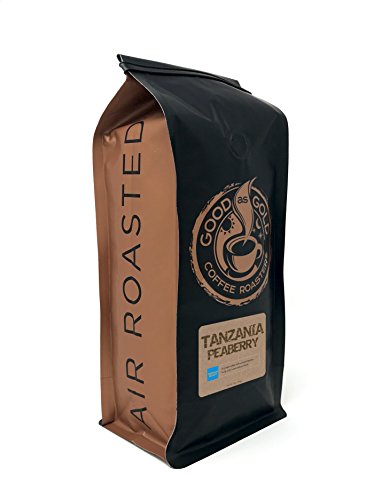
| Good As Gold Tanzania PeaberrySmooth Daily Pick | Smooth daily whole-bean brew | Whole Bean | Medium | 12 oz | Amazon |
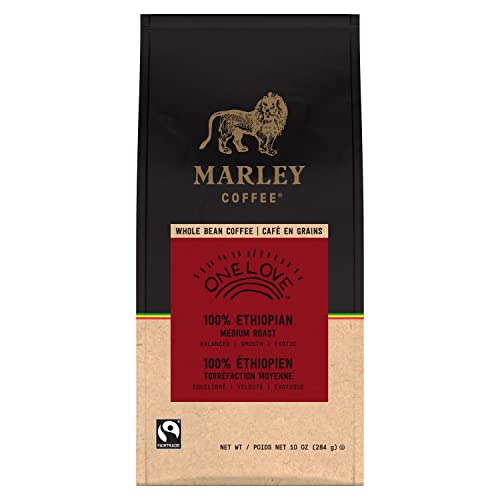
| Marley Coffee One LoveChocolatey Easy Cup | Chocolatey Ethiopian daily cup | Whole Bean | Medium | 10 oz | Amazon |
| Volcanica Yirgacheffe | Organic certified Ethiopian origin | Ground | Medium/Light | 16 oz | Amazon |
| Blue Bottle Three Africas | Fruity blend for cold brew | Whole Bean | Medium | 12 oz | Amazon |
| Orinoco Yirgacheffe | Bulk whole beans for daily drinkers | Whole Bean | Medium | 2.5 lb (40 oz) | Amazon |
| Fresh Roasted Tanzanian Peaberry | Rare varietal in bulk, light roast | Whole Bean | Light | 2 lb (32 oz) | Amazon |
| Fresh Roasted Organic Yirgacheffe | Certified organic, tested for purity | Whole Bean | Light | 2 lb (32 oz) | Amazon |
| Smokin Beans Green Yirgacheffe | Home roasting enthusiasts | Green (Unroasted) | You roast it | 5 lb (80 oz) | Amazon |
In‑Depth Reviews
1. Gourmet Coffee Sampler Gift Box Set
Our pick — over 4.5★ from 750+ verified ratings; the strongest balance of quality and price.
Four African single origins in one box — the fastest way to find your favorite.
This sampler solves the biggest problem with trying African coffee: guessing wrong on a full bag. You get four 4 oz portions of ground coffee — Kenyan, Ethiopian, Sumatran, and Rwandan — each roasted to show off its character. That means a medium-dark Kenya AA with a heavy syrupy body, a light Ethiopian with lively aromas, and a sweet medium Rwandan, all in one order.
You get a smooth, rich cup without needing creamer or sugar, according to buyers. Cooper’s Cask is a family-owned, small-batch roaster in Rhode Island that imports only grade 1 single-origin beans (the top quality tier for coffee). One reviewer noted “a little goes a long way,” so a 4 oz bag stretches further than you expect, and a “sweet-coffee lover” was surprised to enjoy this one black.
It also earns its keep as a gift. The custom Cooper’s Box presentation drew repeated “great gift” praise, and unlike many samplers that hand you skimpy 2 oz bags, this one gives you a proper 4 oz of each origin. The packaging ships outside a traditional Amazon box, so keep that in mind if the surprise matters.
Why it wins people over: the four-origin variety is the thing everyone raves about, letting you compare Kenya, Ethiopia, Sumatra, and Rwanda side by side in generous 4 oz bags.
The honest trade-off: some buyers feel the cost-per-ounce is higher than a single big bag, so it suits exploration and gifting more than everyday bulk buying.
Reach for this if: you are new to African origins or shopping for a coffee-loving gift — the variety makes the decision for you.
Look elsewhere if: you already know your single favorite origin and just want the cheapest large bag of it.
2. Tanzania Peaberry Coffee – Good As Gold
A buttery, non-bitter peaberry that converts even devoted fans of other beans.
If smoothness is your priority, this Tanzanian peaberry from Good As Gold is a standout. Peaberry beans are a rare natural mutation where one round bean grows inside the cherry instead of two flat ones, and the result here is a smooth buttery body with a sweet delicate finish. It is small-batch roasted in a custom-built air roaster, and the medium roast keeps the cup clean.
Buyers report it rivals even famous coffee origins — one admits to finishing a pound of Blue Mountain before trying this and promptly finding a new favorite, calling it “so smooth so delicious.” Over 150 owners single out the taste as the top quality, and it performs well hot or iced, even as espresso. Unlike some African coffees that carry a lingering bite, the non-bitter aftertaste is a repeated theme.
The one split among owners is roast preference. Some love the medium roast as-is, while others wish it came lighter, and a few find the flavor mild. If you are used to a bold, punchy cup, this leans gentle and refined.
What stands out: the smoothness is the headline — buyers consistently describe a clean, non-bitter cup that works black, with milk, hot, or iced.
Who should skip it: anyone who prefers a bold, heavily roasted profile will find this too delicate.
Choose this when: you want a reliable daily whole-bean African coffee that never bites back.
Pass it by if: you are chasing maximum intensity or a darker roast character.
3. Marley Coffee One Love Ethiopian
A chocolate-forward Ethiopian medium roast that doubles as dessert coffee.
Marley Coffee’s One Love brings a different side of Ethiopia — rich chocolatey flavor instead of the usual bright citrus. It is a 10 ounce bag of 100% Arabica whole beans, kosher certified and dairy free, and the roast lands at a smooth, balanced medium. The resealable bag keeps the beans fresh between uses, which matters for a slow daily drinker.
Owners describe it as a great daily brew or dessert coffee, and some are genuinely hooked — one buyer who got attached while living in Canada now tracks it down on Amazon after returning to the U.S. That loyalty speaks to the flavor, but the reviews also carry a caution worth hearing. Some buyers received fewer bags than expected in multi-pack orders, and a few found the batch less fresh or the taste closer to generic than truly Ethiopian.
The mixed experiences point to consistency as the real variable here. When the roast is right, it is a lovely chocolatey cup; when a stale batch slips through, it falls flat. Buy a single 10 oz bag first to judge a batch before committing to more.
The appeal: a smooth, chocolatey Ethiopian profile that works as a daily brew or an after-dinner treat.
The risk to know: freshness and packaging consistency vary, so an occasional bag arrives less than ideal.
Pick this for: chocolate-flavored coffee lovers who want Ethiopian beans with a gentler, dessert-like profile.
Think twice if: you need guaranteed fresh-roast quality and sharp origin clarity in every single bag.
4. Ethiopian Yirgacheffe – Volcanica Coffee
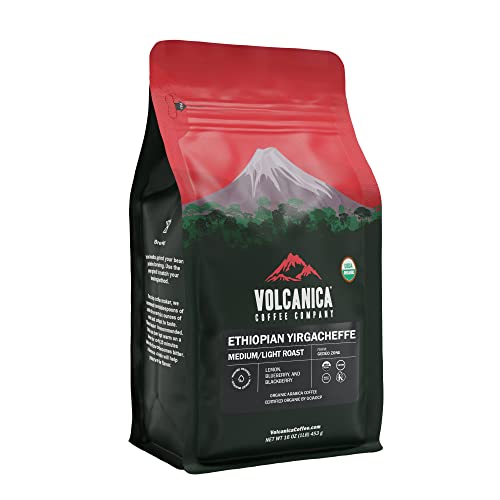
A 16 oz organic Yirgacheffe with the classic blueberry-and-lemon brightness.
For the classic Ethiopian Yirgacheffe experience in ground form, Volcanica delivers a 16 ounce bag with medium-bodied, brilliantly acidy character. The flavor profile is the textbook stuff — lemon, blueberry, and blackberry notes over an earthy aroma — and the medium/light roast lets those true flavors come through clearly. Owners praise it as not bitter and notably smooth with a sweet, floral smell.
You get confidence from the certifications. This is USDA Organic and Fair Trade, and the beans are tested for mold and quality, then roasted at over 400°F to ensure a fresh, safe cup. If you care about where your coffee comes from and what is in it, this checks more boxes than most ground options.
The catch is caffeine strength. Several owners found the cup mild on energy, and a few sensitive to acid noted the brightness runs a bit higher than expected. It is a flavor-forward morning pour, not a rocket-fuel pick-me-up.
Why it is popular: the smooth, flavorful, non-bitter cup is what owners praise most, wrapped in organic and fair-trade certifications.
Know before buying: the caffeine is on the lighter side for some, and the natural acidity may not suit a low-acid preference.
Best for: buyers who want a certified-organic, ready-to-brew Yirgacheffe with authentic fruity character.
Not for: anyone needing maximum caffeine or a very low-acid cup.
5. Blue Bottle Coffee – Three Africas Blend

A fruity, radiant organic blend built for the cold brew crowd.
Blue Bottle’s Three Africas is a 12 oz whole-bean blend with a fruity, radiant, creamy profile — and it is USDA Organic. what separates it in this list is the fan base: owners repeatedly single it out as a great cold brew base. The blend structure means you get the vibrant African character without committing to one origin’s quirks.
The reception is positive but measured. Buyers call it very tasty, rich, and aromatic with a smooth body, and one plans to buy it again. The honest caveat from the same set of reviews is that it does not necessarily outclass a good local roaster — the phrase “as good as Pete’s but not better” captures the consensus. It is a dependable, well-rounded cup, not a revelation.
For cold brew specifically, the fruity notes shine through the long steep, which is why that use case keeps coming up. If your routine is a big batch of cold concentrate, this blend is a strong candidate.
The draw: owners praise it as rich and aromatic, with smooth fruit character that cold brew brings out beautifully.
The realistic view: it is solidly good rather than transcendent, so set expectations accordingly.
Grab this if: cold brew is your daily ritual and you want an organic African blend that shines in it.
skip it if: you expect a dramatic upgrade over your current favorite supermarket roast.
6. Orinoco Ethiopian Yirgacheffe

A 2.5 lb bag of rich, fruity Yirgacheffe that tastes like a coffee shop pour.
Orinoco attacks the value problem head-on with a 2.5 pound bag of Ethiopian Yirgacheffe medium roast whole beans — 40 ounces in a resealable E-Zip foil bag. For a household that drinks coffee daily, that bag reportedly lasts about a month for two people, which changes the cost-per-cup math significantly. Owners say it is on par with higher-end coffees at a friendlier price.
The flavor profile is the classic rich, fruity Yirgacheffe with hints of chocolate and citrus, and the feedback is emphatically positive — over 200 owners praise the coffee quality and another 200-plus the flavor. Buyers describe it as bold yet smoother and less acidic than a light roast, with a pleasant acidity and uniform roasting. One called it “coffee shop coffee” quality, roasted not too dark and not too light.
The trade-off is commitment. A 2.5 lb bag is a big purchase if you are not sure you love the profile, and the resealable bag still depends on you drinking it within a reasonable window for peak freshness. But for confirmed Yirgacheffe fans, this is the value pick of the list.
What wins people over: the coffee quality and flavor are the top praises, with freshness, aroma, and value for money all pulling strongly positive.
The commitment: you are buying nearly three pounds at once, so be sure the profile suits you first.
Choose this if: you already love Yirgacheffe and want the best per-pound value in a daily-drinker bag.
Hold off if: you are still exploring African origins and prefer a smaller commitment first.
7. Fresh Roasted Tanzanian Peaberry
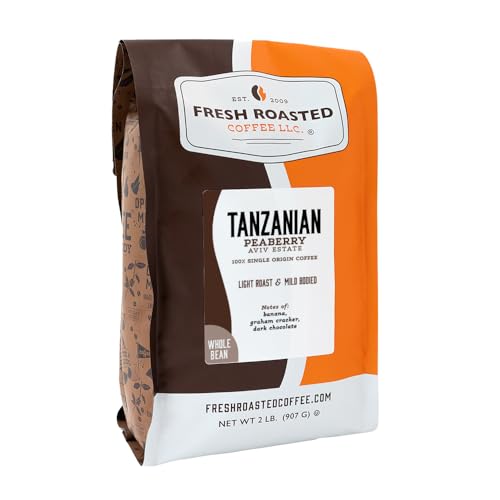
A rare light-roast peaberry from Tanzania’s Mbeya region with lemon and peach notes.
This is the pick for coffee snobs and bulk buyers alike. Fresh Roasted Coffee’s Tanzanian Peaberry is a rare varietal with notes of lemon, peach, and black tea, grown in the Mbeya region of Tanzania as a Bourbon varietal, farm-washed, and sun-dried. The light roast preserves that delicate profile, and the 2 lb bag gives you room to dial it in.
Owners are enthusiastic about the flavor — it is the most-praised trait by a wide margin, with over 260 buyers calling it out. The consensus describes a mild, slightly nutty taste that is super smooth, with an incredible aroma and minimal bitterness. Several note it shines in a moka pot, and one called it ideal for office bulk use. The beans are small, consistent, and from the eastern coast of Africa.
The honest caveat is freshness timing. One owner noted an Amazon batch arrived a few months old, losing a star for that reason, even though the beans themselves were still a great deal. For the best experience, use it within a reasonable window after arrival.
Why it shines: the flavor leads the praise — smooth, mild, nutty, and aromatic, with roast quality and value both drawing strong positive feedback.
The freshness factor: occasional Amazon stock is not as fresh as roasted-to-order, so check what you receive.
Pick this for: a rare, smooth light-roast African coffee in a generous 2 lb bag at a strong value.
Pass if: you prefer a darker roast or need beans roasted-to-order with a guaranteed recent date.
8. Fresh Roasted Organic Ethiopian Yirgacheffe
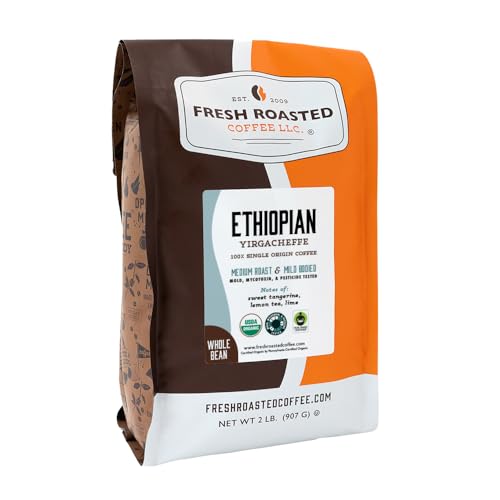
A 2 lb organic Yirgacheffe with sweet tangerine notes and lab-tested purity.
If purity is your top concern, this is the African coffee built for you. Fresh Roasted Coffee’s Organic Ethiopian Yirgacheffe holds both Fair Trade and USDA Organic certifications, and it goes further — the beans are 3rd-party tested for mold, mycotoxins, and pesticides, with no trace levels detected in sampled lots. The profile is a sweet, mild cup with bright sweet tangerine and lime notes and a clean, dry lemon tea finish.
Owners consistently rate it among their favorite beans, praising the crisp citrus notes, freshness, and aroma. Owners mention it is well-balanced with low acidity and incredibly smooth, and it pairs beautifully with vanilla and caramel in lattes — one owner says it replaced their coffee shop visits entirely. An interesting detail: some find it takes about 25% less grinds for the same strength, which stretches the 2 lb bag further.
The mixed notes are about roast and weight. A few buyers found the roast lighter or darker than expected, and one measured an underweight bag. If you are sensitive to batch consistency, this is the variable to watch.
The core appeal: coffee quality and flavor lead the praise, with buyers loving the crisp citrus and the lab-verified purity.
Watch for: occasional roast or weight inconsistencies between batches, per a small number of owners.
Best for: buyers who prioritize organic certification and third-party purity testing in their daily bean.
Not for: anyone who dislikes a lighter, citrus-forward Ethiopian profile.
9. Smokin Beans Ethiopia Yirgacheffe Green
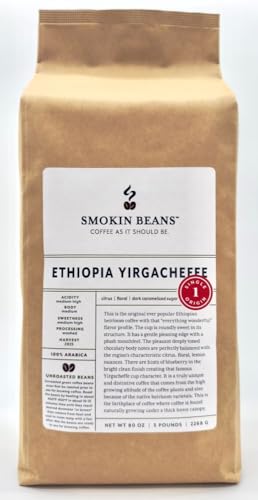
Five pounds of unroasted Yirgacheffe for home roasters who want full control.
This is the specialist’s choice — a 5 lb bag of washed, unroasted green coffee from the Gedeo Zone of southern Ethiopia, near Yirgacheffe town. The flavor profile is beautifully documented: fresh sweet citrus acidity with Meyer lemon, floral, orange, toffee, and dark caramelized sugar, over a round juicy finish. These are heirloom varietals grown wild in native rainforest at 2,100 meters above sea level.
Because it is green, you must roast it yourself before brewing — but that is the point. Green coffee’s 12-month storage potential makes a 5 lb bag last far longer than roasted beans, and owners prize the control and freshness. Buyers describe it as roasting well with little chaff, yielding a smooth, non-bitter cup they can drink black without sugar. It is a repeat-purchase staple for the home-roasting crowd, praised as better value and longer-lasting than supermarket coffee.
The trade-off is obvious: it demands equipment, patience, and a willingness to learn. Roast quality varies with your skill, and some owners note the roast is not perfectly even depending on your machine. For anyone with a home roaster, this is the most rewarding — and most involved — option here.
Why it wins for its niche: the flavor is the top praise — smooth, non-bitter, and fruity — with freshness and aroma close behind from devoted home roasters.
The commitment: this is unroasted coffee that requires you to roast before brewing, so it only suits the equipped and willing.
Perfect for: home roasters who want a large supply of high-altitude Yirgacheffe with 12-month storage life.
pass on it if: you have no roaster — it cannot be brewed as-is.
Understanding the Specs
Roast Level
Light roasts keep the bean’s original fruit, floral, and citrus notes — ideal for Ethiopian Yirgacheffe. Medium roasts build a balance of body and acidity, which is why many Tanzanian peaberries shine there. Darker roasts add chocolate and earth but can hide the origin’s signature. Match the roast to your method: cold brew and pour-over favor lighter roasts, while espresso and moka pot suit medium.
Ground vs. Whole Bean vs. Green
Ground coffee is fastest but loses aroma quickly after opening. Whole beans stay fresher because you grind per cup, and they suit most home setups. Green, unroasted beans store for up to 12 months and give you total control, but require home roasting. Pick ground for speed, whole bean for freshness, or green for maximum control.
FAQ
What is the difference between Ethiopian Yirgacheffe and Tanzanian Peaberry?
How much coffee do I get in a sampler versus a single bag?
Should I buy ground coffee or whole beans for African coffee?
Can I drink African coffee black, or does it need cream and sugar?
How long does green coffee stay fresh before I roast it?
Is organic certification worth it for African coffee?
What roast is best for cold brew with African coffee?
Why does Ethiopian Yirgacheffe sometimes taste acidic or sour?
How many cups do I get from a 12 oz bag of whole beans?
Is it better to buy a blend or a single-origin African coffee?
Final Thoughts: The Verdict
Across the board, the strongest african coffee starting point is the Cooper’s Cask Sampler because its four 4 oz bags let you taste Kenya, Ethiopia, Sumatra, and Rwanda without gambling on a full bag. If you already love smooth whole-bean cups, the Good As Gold Tanzania Peaberry delivers buttery, non-bitter daily quality. And for confirmed Yirgacheffe fans who want the best value per pound, the Orinoco 2.5 lb bag is the one to reach for.
How We Picked
We do not accept paid placement. Every pick is matched to a real buyer and a real use-case; we do not hands-on test units.
Sources & Methodology
Specifications: manufacturer listings and product documentation. Review insights: verified customer reviews, as of August 2026. Pricing: not shown on this page (it changes often); check the current price via the retailer link.
As an Amazon Associate, Gadgets Feed earns from qualifying purchases. This does not affect which products we feature.