
Our readers keep the lights on and my morning glass full of iced black tea. As an Amazon Associate, I earn from qualifying purchases.
Specs are compiled from manufacturer listings and verified buyer reviews and can change over time — please confirm the key details on the product page before buying.
Most bagged potting soils you find at big stores are too heavy and hold too much water for African violets, which leads straight to root rot and droopy leaves. You need a mix that drains fast, breathes well, and hits a slightly acidic pH — and the differences between brands matter more than you’d think. This guide breaks down six top-rated mixes, comparing their ingredients, volume, and real buyer experiences so you can pick the one that fits your plant and your pot size without wasting money on a bag you’ll never finish.
I’m Min — the founder and writer behind Gadgets Feed. This guide is built by comparing the manufacturers’ published specifications and the patterns across verified customer reviews, so you get each pick’s real strengths and trade-offs instead of marketing spin.
After looking at what hundreds of actual buyers reported, the single most important factor is matching bag size to your needs, and we have found the top-rated options for you in this roundup of the african violet potting soil worth considering.
Our Picks at a Glance

How To Choose The Best African Violet Potting Soil
African violets need a specific soil environment — not regular potting mix, not garden soil. The right mix is light and airy so water flows through quickly, preventing the root rot that kills most violets. Here is what to look for.
Bag Size and How Many Pots You Need to Fill
The first thing buyers mention in reviews is bag size. A 1-quart bag works for one small plant or two repots. A 2-quart bag fills about 6 four-inch pots. A 4-quart bag handles several plants or a large collection. Check the unit count in ounces — a 64-ounce bag equals 2 quarts, while a 32-ounce bag equals 1 quart. Buy what fits your number of plants so you do not end up with leftover soil that dries out.
Quick Comparison
| Model | Best For | Volume | Unit Count | Key Ingredient | Amazon |
|---|---|---|---|---|---|
| rePotme Imperial★ Best Overall | Single small plant owners | 2 Quarts | 64 Ounce | Peat moss, bark chips | $21.95Amazon |
| Espoma OrganicBest Value | Multiple plants & organic gardens | 4 Quarts | 128 Ounce | Sphagnum peat moss, humus, perlite | $13.15Amazon |
| Josh’s Frogs | Budget-friendly repotting | 1 Quarts | 32 Ounce | Peat, vermiculite, perlite | $10.98Amazon |
| Omitgoter | Seed starting & small pots | 64 Fluid Ounces | 64 Fluid Ounces | Peat, bark | $11.12$13.20Amazon |
| Baby Violets | Single plant value | 2 Quarts | 64 Ounce | 50% peat moss, 50% perlite | $12.99Amazon |
| Perfect Plants | Reviving struggling violets | 2 Quarts | — | Pine bark compost, perlite, peat moss | $14.99Amazon |
In‑Depth Reviews
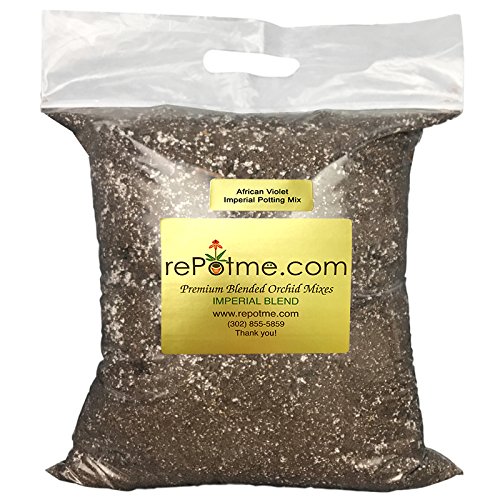
1. rePotme African Violet Imperial Potting Soil Mix – Mini Bag
Our pick — over 4.5★ from 750+ verified ratings; the strongest balance of quality and price.
The priciest pick per quart, but buyers report it delivers more blooms.
This 2-quart bag from rePotme comes packed in a resealable 7 x 11.5 inch bag, and owners mention it is “the perfect size bag” for a single small African violet. The mix includes bark chips, peat, and roots — visible organic matter that feels different from standard potting soil. One reviewer noted “Great Soil – Lots of Blooms!” after repotting, which matches the brand’s claim that this blend encourages houseplant growth.
The catch is the cost.
What buyers love
- Comes with a bonus plant tag and butterfly clip
- Sealed bag keeps soil clean and odor-free in apartments
- Lightweight because it ships dry
The trade-off
- Expensive — one reviewer called it “too expensive” for larger pots
- 2 quarts may not be enough for multiple plants
Reach for this if: you have one small violet and want a premium mix with visible bark and peat.
Look elsewhere if: you need to repot several plants or want the most soil for your dollar.
2. Espoma Organic Natural and Organic Premium Potting Soil Mix for African Violets, 4 Quart Bag
The biggest bag on this list, and the one that revived a 20-year-old violet.
Espoma’s 4-quart bag holds 128 ounces — double the volume of the 2-quart picks from rePotme or Baby Violets. That means you can repot several plants or a large collection without running out. The blend includes sphagnum peat moss, humus, perlite, and yucca extract, all organic with no synthetic chemicals. One buyer wrote that this mix “worked wonderfully to revive my poor plant” after their neglected violet perked up post-repotting.
Buyers consistently praise the value here. At this size, you are paying less per quart than almost any other option, making it the smart choice if you have more than one violet or plan to propagate.
Why it stands out
- 4 quarts — enough for several plants
- Organic ingredients (sphagnum peat moss, humus, perlite, yucca extract)
- 527 ratings with a 4.6/5 star average
Keep in mind
- Some buyers noted the bag can arrive slightly dusty
- Not a soilless mix — contains humus, which may hold more moisture than perlite-heavy blends
Grab it for: anyone with multiple African violets or an organic garden who wants the biggest bag that lasts.
skip it if: you have only one small violet and prefer a lighter, perlite-heavy mix.
3. African Violet Plant Potting Soil Mix Peat Moss & Perlite (½ Gallon / 2 quarts) by Baby Violets

A straightforward 50/50 mix of peat moss and perlite — nothing more, nothing less.
Baby Violets keeps it simple: 50% peat moss and 50% perlite, with no fertilizers or extra additives. The super-coarse perlite provides extra drainage, while the peat moss holds just enough moisture. The bag is 2 dry quarts and the maker estimates it fills 24 two-inch pots, 12 three-inch pots, or 6 four-inch pots. One buyer called it “perfect size for one plant; good value,” and another said their African violet is “thriving after repotting from grocery clearance.”
Unlike the rePotme mix, this one has no bark chips or roots — just perlite and peat. That makes it a lightweight, airy mix that drains fast. The key difference from the Espoma pick: this is half the volume at 2 quarts, so it is best for a single plant or a small collection.
What works
- Simple, predictable formula with no mystery additives
- Resealable clear poly bag for storage
- Exact filling guide per pot size
What to watch
- No added nutrients — you must fertilize separately
- Bag is smaller than some expect; check the 2-quart size before ordering
Ideal for: a single violet owner who wants a pure peat-perlite mix and is comfortable adding their own fertilizer.
Not for: anyone who wants pre-mixed nutrients or needs a larger bag for multiple plants.
4. Perfect Plants African Violet Potting Soil 2qt.
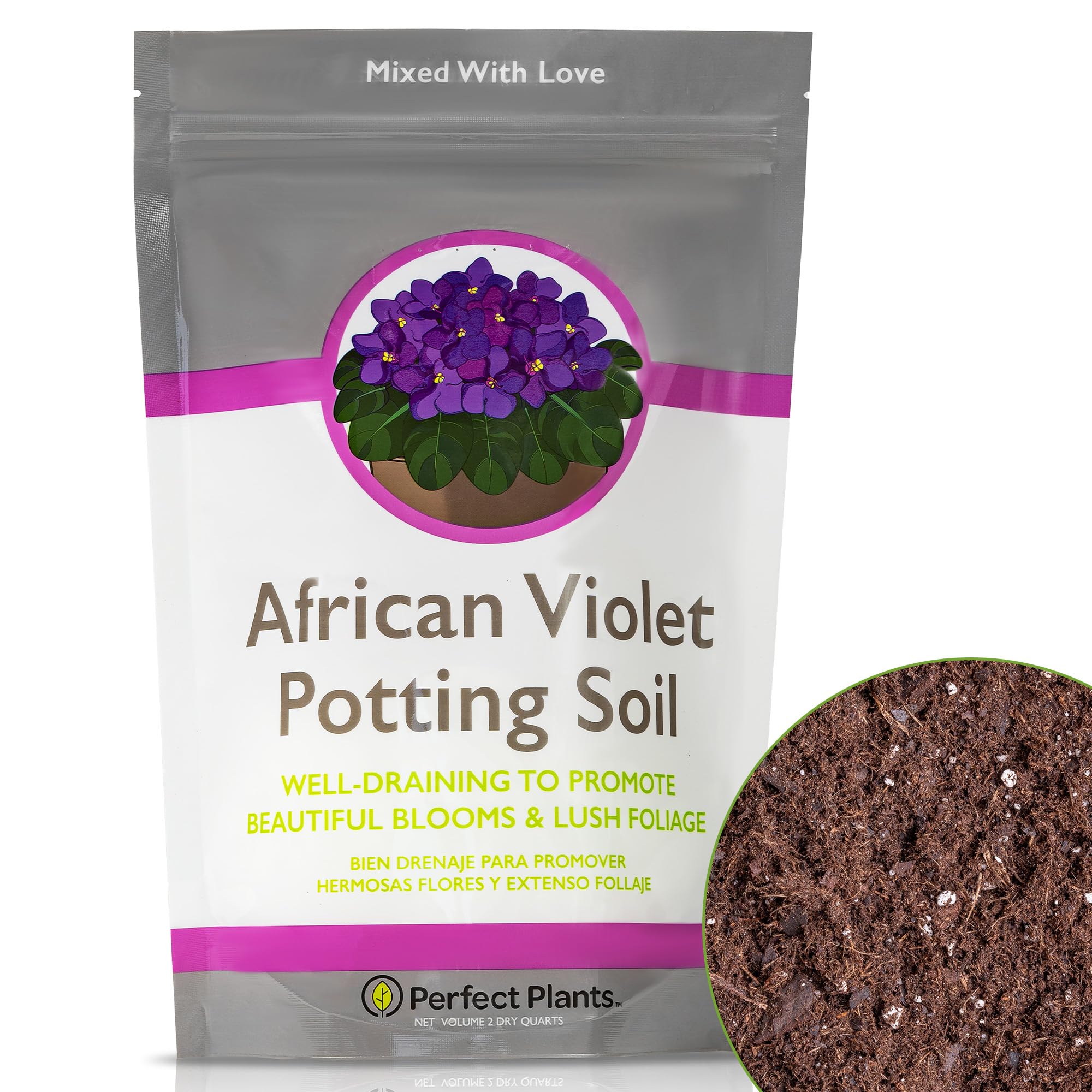
One buyer mentioned this soil “revived nearly dead plants” after another brand failed.
This 2-quart bag from Perfect Plants uses pine bark compost, perlite, peat moss, and garden lime — a slightly different formula than the peat-perlite mixes above. The composted ingredients add natural nutrients without chemical fertilizer, and the lime helps balance pH for African violets. One reviewer wrote that it “revived nearly dead plants after a Chinese brand (Dote) killed them,” giving it high marks for saving struggling violets. Another buyer said their plant “made a huge difference” and is “making a come back!” after repotting.
Compared to the Baby Violets mix, this one has more organic matter (pine bark compost) that feeds the plant slowly, so you might not need to fertilize as often. The bag is resealable and made in the USA.
Strong points
- Contains composted nutrients for slow-release feeding
- Great for reviving unhealthy plants, per multiple reviewer reports
- Resealable heavy-duty bag
Weak points
- One owner reported it is “not anything special” compared to other brands
- Bark compost may break down faster than pure perlite mixes
Best for: rescuing a struggling violet or someone who wants slow-release organic nutrients without mixing fertilizer.
Not ideal for: purists who prefer a sterile, predictable peat-perlite blend.
5. Josh’s Frogs African Violet and Gesneriad Soil (1 Quart)
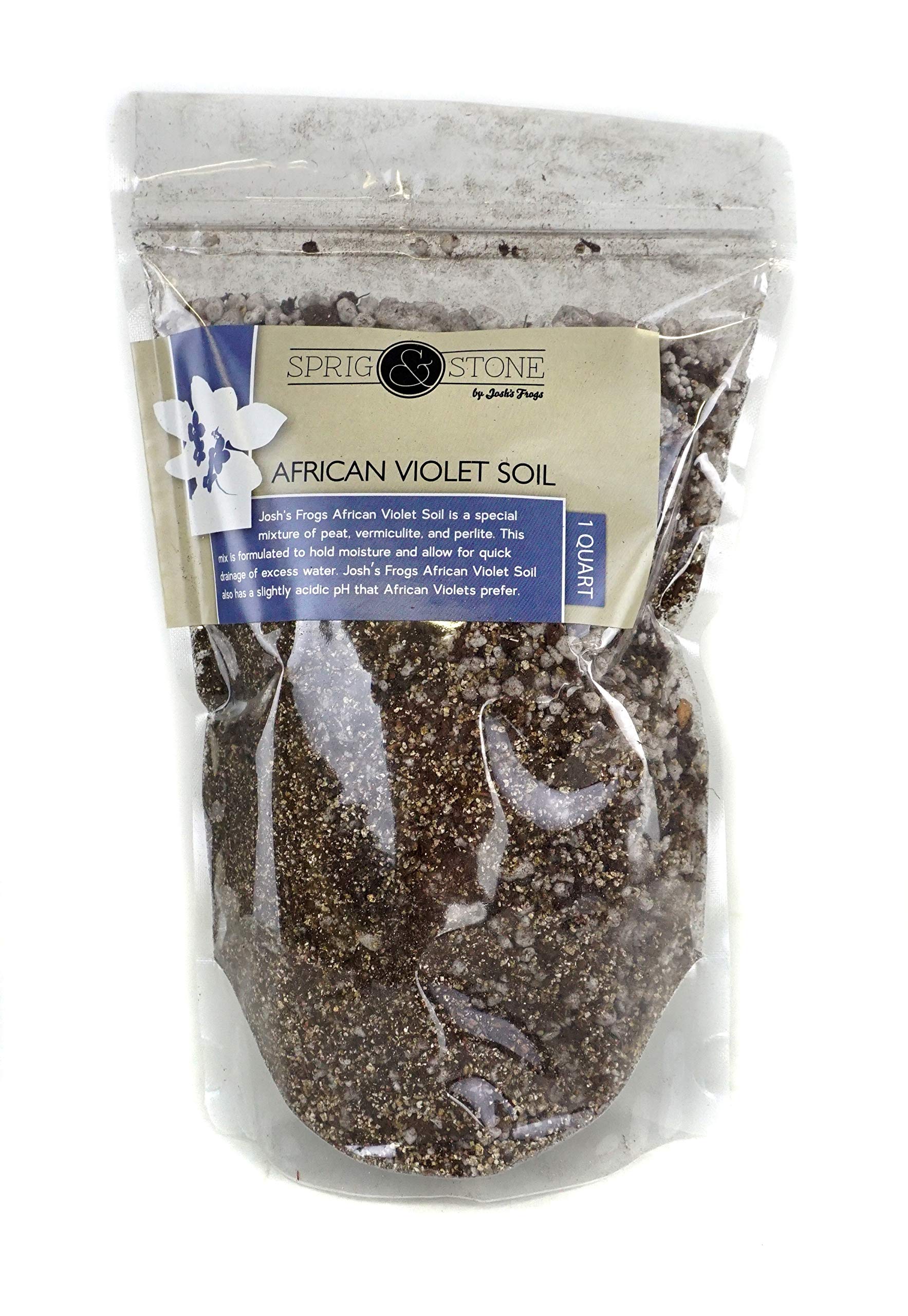
The smallest bag, but one customer observed their plant “perked up” in just two days.
At 1 quart (32 ounces), this is the smallest bag on the list — half the volume of the 2-quart picks from Baby Violets or Perfect Plants. But buyers rave about the quality. One wrote, “When I repotted my African violet with this soil, 2 days later my plant just ‘perked’ up!” Another said, “This is a world of difference than what I had previously been potting my African violet.” The blend uses peat, vermiculite, and perlite — a soilless mix that drains quickly and allows airflow to roots.
The trade-off is volume. At 1 quart, you can repot one plant about 3-4 times as it grows, but you get less soil per dollar compared to the 4-quart Espoma bag. Think of this as a test batch: try it on one violet and if you love it, you might want the larger size.
Why people like it
- High-quality soilless mix with visible vermiculite/perlite
- Quick-draining formula reduces root rot risk
- One bag goes a long way for a single plant
What holds it back
- Small bag — one reviewer found an 8-quart bag for at a local store
- Some buyers felt it is “a little bit overpriced” for the quantity
Pick this for: a first-time violet owner who wants a small, high-quality batch to try before buying in bulk.
pass on it if: you already know what your violet needs and want the most volume per dollar — grab the Espoma 4-quart instead.
6. African Violet Potting Soil Mix 2qt by Omitgoter
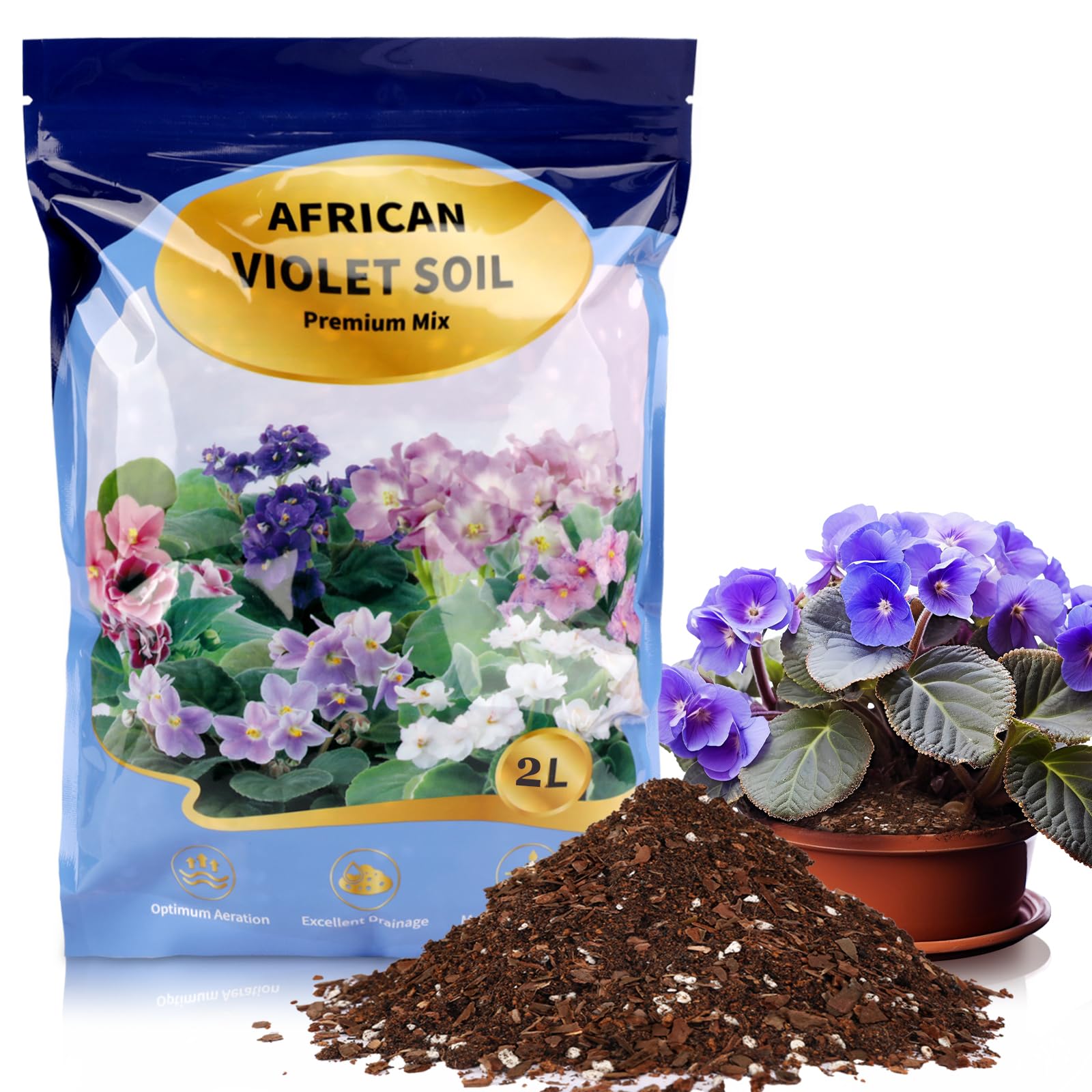
Formulated to a specific pH range — 6.0 to 6.5 — for optimal bloom color.
Omitgoter’s 2-quart bag is the only pick on this list that advertises a precise pH range between 6.0 and 6.5, which is ideal for African violets to absorb nutrients and produce vibrant blooms. The mix is enriched with organic materials like peat and bark. One user highlighted it is a “high quality seed starter” that sprouted seeds in about 5 days with no mold. Another praised it as “excellent soil — the violets love it.”
However, volume complaints are common. One reviewer wrote “bag smaller than expected for price (filled 18-count tray)” and another said “cannot comfortably fill even two of my five inch pots.” Compare this to the Baby Violets mix at 2 quarts for a comparable price — both are 2 quarts, but the Omitgoter is 64 fluid ounces, so the volume is nearly identical. If pH precision matters to you, this is the one.
What it does well
- Exact pH range (6.0-6.5) for nutrient uptake
- Works as a seed starter — fast germination, no mold
- Universally suitable for all African violet varieties
What to consider
- Small bag for the price — multiple reviewers mention the volume is less than expected
- Price per quart is higher than the Espoma 4-quart bag
Reach for this if: you want a pH-balanced mix specifically tuned for African violets and are starting from seed.
Pass on it if: volume-for-dollar is your priority — the Espoma 4-quart gives you more soil for a similar price.
Understanding the Specs
Volume (Quarts)
The most practical spec on this list: it tells you exactly how many pots of soil you get. A 1-quart bag fills one or two repots for a small violet. A 2-quart bag fills about 6 four-inch pots. A 4-quart bag handles several plants or a large collection. Always check the unit count — 64 ounces = 2 quarts, 32 ounces = 1 quart.
Drainage Ingredients (Perlite & Vermiculite)
African violets rot quickly in dense soil. Perlite (volcanic glass popped into lightweight white pebbles) creates air pockets for drainage. Vermiculite (a mineral that expands when heated) holds moisture while still draining. A mix with visible perlite or vermiculite is a good sign — it means the soil is light and airy, not compacted.
FAQ
Can I use regular potting soil for African violets?
How much soil does one African violet need?
What is the ideal pH for African violet soil?
Should I add fertilizer to African violet potting soil?
How long does an opened bag of African violet soil last?
Can I use African violet soil for other houseplants?
What is the difference between peat moss and perlite?
Are these mixes organic?
Final Thoughts: The Verdict
Across the board, the african violet potting soil winner is the Espoma Organic 4-Quart because it gives you the most volume per dollar, is made from organic ingredients with no synthetic chemicals, and has proven itself with a 4.6/5 rating across 527 reviews. If you want a premium small-batch mix with visible bark and peat, grab the rePotme Imperial Mini Bag. And for a simple, predictable peat-perlite blend that works perfectly for a single plant, the standout is the Baby Violets 2-Quart mix.
How We Picked
We do not accept paid placement. Every pick is matched to a real buyer and a real use-case; we do not hands-on test units.
Sources & Methodology
Specifications: manufacturer listings and product documentation. Review insights: verified customer reviews, as of July 2026. Pricing: not shown on this page (it changes often); check the current price via the retailer link.
As an Amazon Associate, Gadgets Feed earns from qualifying purchases. This does not affect which products we feature.
Related Guides
Product prices and availability are accurate as of the date/time indicated and are subject to change. Any price and availability information displayed on Amazon at the time of purchase will apply to the purchase of this product. As an Amazon Associate I earn from qualifying purchases.
CERTAIN CONTENT THAT APPEARS ON THIS SITE COMES FROM AMAZON. THIS CONTENT IS PROVIDED "AS IS" AND IS SUBJECT TO CHANGE OR REMOVAL AT ANY TIME.
Amazon and the Amazon logo are trademarks of Amazon.com, Inc. or its affiliates.