
Our readers keep the lights on and my morning glass full of iced black tea. As an Amazon Associate, I earn from qualifying purchases.
Specs are compiled from manufacturer listings and verified buyer reviews and can change over time — please confirm the key details on the product page before buying.
The right set of aftermarket speakers can transform a dull daily commute into a concert, but picking the wrong ones means facing adapters, trimming, and muddled sound. The real choice isn’t about the loudest brand—it’s about matching the speaker’s power handling to your stereo and ensuring the mounting depth clears your door panel. You need a pair that actually fits your vehicle without a fight and sounds clear at the volume you actually listen to.
I’m Min — the founder and writer behind Gadgets Feed. This guide is built by comparing the manufacturers’ published specifications and the patterns across verified customer reviews, so you get each pick’s real strengths and trade-offs instead of marketing spin.
Upgrading your car’s sound starts with picking the right aftermarket auto speakers—here’s how to match them to your power, fit, and listening habits so you can swap your factory units with confidence.
Our Picks at a Glance


How To Choose The Best Aftermarket Auto Speakers
Upgrading your car’s sound starts with understanding that door speakers do the heavy lifting for vocals and midrange, while a subwoofer handles the deep thump. The most common mistake is buying speakers with huge peak power ratings that your factory stereo can’t drive, leaving you with quiet, distorted audio.
Match Power to Your Head Unit
Look at the RMS (continuous power a speaker can handle) rating, not the peak number. A speaker rated for higher RMS needs an external amplifier to shine, while a lower-rated one pairs well with a stock stereo. Buyers report that pairing a speaker with the right amp makes the difference between “loud” and “clear and loud.”
Check Fit Before You Buy
Measure your door’s mounting depth and the speaker hole’s cutout diameter before ordering. Even a great speaker like the RECOIL MS65-4P needed “1/8″ trim to fit an Audi S6,” so check the depth against your vehicle’s specs. The KICKER CS series specifically slims its mounting depth to fit “nearly every make and model.”
Coaxial vs. Component
Coaxial speakers combine the woofer and tweeter in one unit, making them the easiest drop-in replacement. Component systems separate the tweeter and woofer for better sound staging, but require more installation work—you have to mount the tweeter separately and wire the crossover. If you want an easy swap, go coaxial; if you want audiophile imaging and can handle the extra effort, go component.
Quick Comparison
| Model | Best For | Power (RMS) | Type | Size | Amazon |
|---|---|---|---|---|---|
| KICKER 46CSC654★ Best Overall | Shallow-fit drop-ins | — | Coaxial (2 Pairs) | 6.5″ | Amazon |
| RECOIL MS65-4PBudget Champion | Budget loud midbass | 300W | Midrange | 6.5″ | Amazon |
| Kenwood KFC-1666RTop Performer | Easy all-rounder | 30W | 2-Way Coaxial | 6.5″ | Amazon |
| Kenwood KFC-6966S | Rear deck 6x9s | 90W | 3-Way Coaxial | 6″ x 9″ | Amazon |
| Rockford Fosgate Prime R165-S | Component clarity | 40W | 2-Way Component | 6.5″ | Amazon |
| DS18 PRO-X6.4BM | High-power mids | 250W | Midrange | 6.5″ | Amazon |
| HERTZ UNO K-165 | Natural vocal clarity | — | 2-Way Component | 6.5″ | Amazon |
| JBL GTO629 | 3-ohm stock boost | — | 2-Way Coaxial | 6.5″ | Amazon |
| Pioneer TS-M651PRO | SPL midrange output | 120W | Component | 6.5″ | Amazon |
In-Depth Reviews
1. KICKER 46CSC654
Our pick — over 4.5★ from 350+ verified ratings; the strongest balance of quality and price.
The shallow-mount set that slides into nearly any door without surgery.
This KICKER set solves the classic upgrade headache: fitting big sound into tight doors. By drastically reducing the mounting depth, these 6.5-inch coaxials fit “nearly every make and model of vehicle on the road today,” so you skip the adapter plates and trimming that plague other installs. The rigid polypropylene cone and stamped-steel frame keep things solid, while the zero-protrusion PEI tweeters mean the grille clears the factory panel.
Sound quality is what wins people over—the bass stays clean even without an amp, and vocals come through loud and clear. One owner running them in a VW Golf noted the bass is good “and I’m not even running an amp,” with sound clearly better than stock. The UV-treated poly-foam surround resists heat and direct sunlight, so they hold up in a hot car. The neodymium tweeter magnets push high frequencies to a satisfying volume without harshness.
Owners mention these are still going strong after 8 months of daily use, calling them “easy to install” and “perfect fit.” The reliability feedback is mixed, but the overwhelming sentiment is a truck or SUV that simply sounds better with minimal effort. If you want a guaranteed fit and clean bass without buying an amplifier, this is the pair to beat.
bass-heavy kicker
- Remarkable clean bass from a shallow-mount design
- Fits nearly every make and model without mods
- Neodymium tweeters deliver clear, loud highs
needs power
- Midrange clarity is decent but not class-leading
- Reliability feedback is mixed over the long term
- You’ll want an amp for real sub-bass punch
bass lovers: you want the easiest drop-in upgrade with great bass for trucks, SUVs, and sedans.
stock radios: you’re building a high-SPL system and need massive power handling in a shallow frame.
2. RECOIL MS65-4P
Budget midrange bruisers that demand an amp and reward it with SPL.
Don’t let the low price fool you—this RECOIL pair is built for those chasing serious output, not casual listening. It delivers a total 600W Max Power with 300W RMS at 4 Ohms in a pair, meaning it needs a real amplifier to stretch its legs. The 1.5-inch high-temperature Kapton voice coil handles the heat of extended high-volume play, so the speaker keeps its structural integrity when you push it.
These are midrange speakers, not full-range drop-ins. Owners pair them with separate tweeters and subwoofers for a 3-way active setup, crossing them around 80-100Hz. The clarity is striking for the money—feedback puts them above pricier competitors like DS18 and PRV, with one buyer calling the quality “way better” than brands he’d paid more for. A 200W per channel test at 2 ohms came back clean, so they take power without distortion.
Customers note they needed “1/8″ trim to fit an Audi S6,” so check your door depth before ordering. The durability feedback is mixed, so a high-quality amplifier with clean gain settings is essential. If you’re building a budget SPL system where midrange clarity matters, these are the value pick that punches far above their weight.
budget friendly: massive 300W RMS output and crystal clarity for a fraction of premium competition.
not for stock: without an amp, they’ll underperform—these want power.
3. Kenwood KFC-1666R
A faithful factory replacement that reveals detail your stock set hid.
Kenwood’s Road Series nails the balance for drivers who want a clear, noticeable upgrade without adding an amplifier. The KFC-1666R runs on 30W RMS (root mean square, the continuous power it handles) with a 40Hz–22kHz frequency response (the range of bass to treble it can reproduce), and the cloth woofer cones deliver a sound that stays true to the original recording. The balanced dome tweeter reproduces “pristine highs” that let you hear tambourines and drumsticks clearly—details buried by factory speakers.
The heavy-duty magnet design keeps the tweeter height low and the depth shallow, so installation in tight factory locations is straightforward. Owners installing them in a Honda Element found the multiple hole patterns fit the stock locations “without drilling,” while a GMC Sierra driver called them a “huge upgrade” over the blown factory units. The 4-ohm impedance conducts power evenly, keeping the speakers at an appropriate level for the head unit.
Bass isn’t this speaker’s specialty—one owner noted “bass isn’t the best but for the price they sound amazing.” That honesty is exactly why they’re a crowd favorite: clean, accurate sound at a budget price with a fit that just works. If you want an authentic music reproduction and keep things simple, this is your pick.
midrange clarity: drivers replacing blown factory speakers who want detail and easy fit without an amp.
high volume: bass heads—the low end is polite, not punchy.
4. Kenwood KFC-6966S

Big 6×9 presence for rear decks and oversized factory openings.
When your vehicle has that large 6″ x 9″ opening in the rear deck or doors, this Kenwood is the natural fit. The KFC-6966S is a 3-way coaxial with a polypropylene mid-woofer cone and foam/rubber surround, handling 90W RMS per pair with an 800W peak. The frequency response spans 35Hz to 20kHz, giving you deeper lows than a 6.5-inch can muster in the same space.
Installation feedback is strong—an Altima owner called it “a perfect fit for the far back speakers,” and another noted they could still use the factory grilles on a classic Dodge. The 4-ohm impedance and 3-inch top-mount depth make it a straightforward swap in most 6×9 locations. Sound quality is the most-praised aspect, with solid highs and mids that fill the cabin.
The catch is fit across every model—some owners with specific vehicles like a 2005 Dodge 2500 quad cab front door found compatibility issues. Check your cutout dimensions against the 6-1/16″ x 8-3/4″ opening before buying. If your car takes 6x9s and you want rear fill with real presence, these deliver.
big sound: the 6×9 footprint gives you bass weight a 6.5-inch just can’t produce.
measure first: this size is less universal than 6.5-inch—verify your cutout.
5. Rockford Fosgate Prime R165-S

Separate tweeters and crossovers for staging that coaxials can’t match.
Moving up to a component system means better sound imaging—and Rockford Fosgate’s R165-S makes that leap accessible. The kit includes two 6.5-inch woofers with grilles, two 1-inch tweeters with integrated crossovers, and all mounting hardware. Rated at 40W RMS and 80W peak, it’s designed as a direct OEM replacement that works with factory head units.
The Mica injected polypropylene cone extends the frequency response (the range of bass to treble it can reproduce), while the Mylar balanced dome tweeter “reproduces crisp highs.” You can mount the tweeters flush, on the surface, or at an angle to aim the sound at your ears. Owners replacing the factory speakers in a 2004 Monaro/GTO needed zero mods for the main speaker, just a tweeter angle adjustment.
The honest feedback is that these deliver “plenty of treble and midrange, not much bass.” They shine in the vocal range—crisp and clean when paired with the right equipment. The 1-year warranty adds confidence. If you want clearer staging than a coaxial and don’t need sub-bass, this is a smart step up.
reliable upgrade: crisp vocals and true component staging without breaking mid-range budget.
audiophiles: you want door-thumping bass—you’ll need a sub for that.
6. DS18 PRO-X6.4BM

A 250W RMS midrange punch for builds that live at high volume.
DS18 built the PRO-X6.4BM for serious systems where vocals need to cut through loud music. Delivering 500W Max Power with 250W RMS at 4 Ohms, this 6.5-inch midrange driver is a workhorse for the most significant part of the audible spectrum. The 1.5-inch high-temperature CCAW voice coil handles extreme heat while keeping its structural integrity, meaning long life under constant abuse.
The specifically designed bullet dust cover protects the voice coil and tune the sound. Owners praise the mids and vocal clarity—one buyer running them for a year said they’re “still kicking strong” and ordered another set for the quality. Paired with the same brand tweeter and a couple of amps, they deliver “extremely loud” output with “absolutely zero distortion.”
Durability feedback is mixed, with a rare unit failing early, though the replacement worked perfectly. These are bulky, so check your door depth. They need an amplifier and a crossover to shine in a 3-way active setup. If you’re building a loud system and vocals matter, this is a proven midrange choice.
spl workhorse: handles 250W RMS and rewards a clean amp with zero distortion.
system dependent: this is a midrange driver, not a full-range drop-in.
7. HERTZ UNO K-165
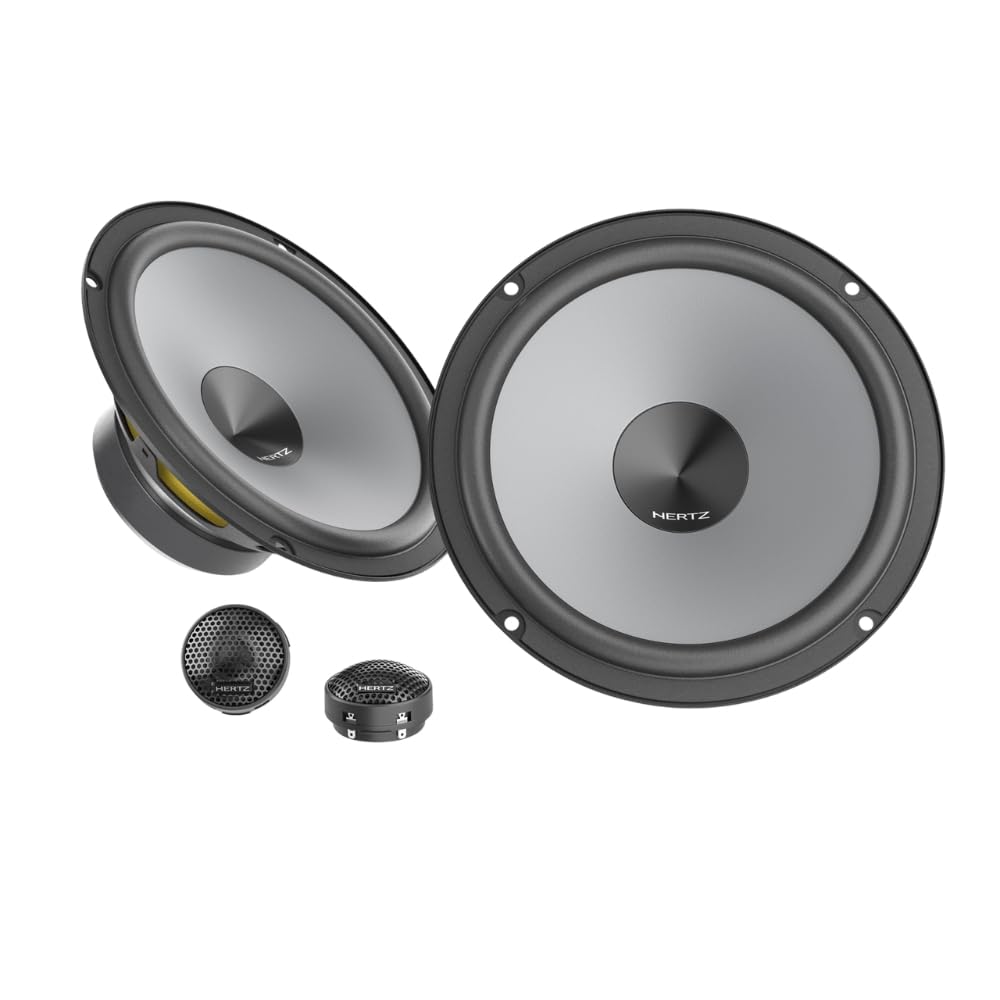
Italian-engineered components that play louder at any given wattage.
HERTZ brings a refined approach to component sound with the UNO K-165. This 2-way system pairs a ferrite-magnet woofer with a neodymium-magnet tweeter for efficiency—owners find they “can play louder at any given wattage.” The water-repellent pressed paper cone and PEI tweeter dome combine for a natural, clean sound that blends bass well.
The build quality earns consistent praise, and owners consider them excellent value. One buyer replacing the stock units in a 2019 Honda Accord Hybrid found them “louder, with better bass,” while another running a vintage Italian sports car with a 1990s Alpine head unit was impressed by how loud and clear they play. The tweeters can run slightly bright on a factory head unit, so a touch of EQ helps.
These do require power to sound their best—”they do require power to sound good” is the recurring note. The sound is natural and articulate, especially in the midrange where vocals live. If you want premium component clarity without the premium price, the HERTZ is a strong contender.
critical listeners: natural, articulate sound with high efficiency from a trusted name.
budget buyers: you’re running a low-power factory unit—these want watts behind them.
8. JBL GTO629
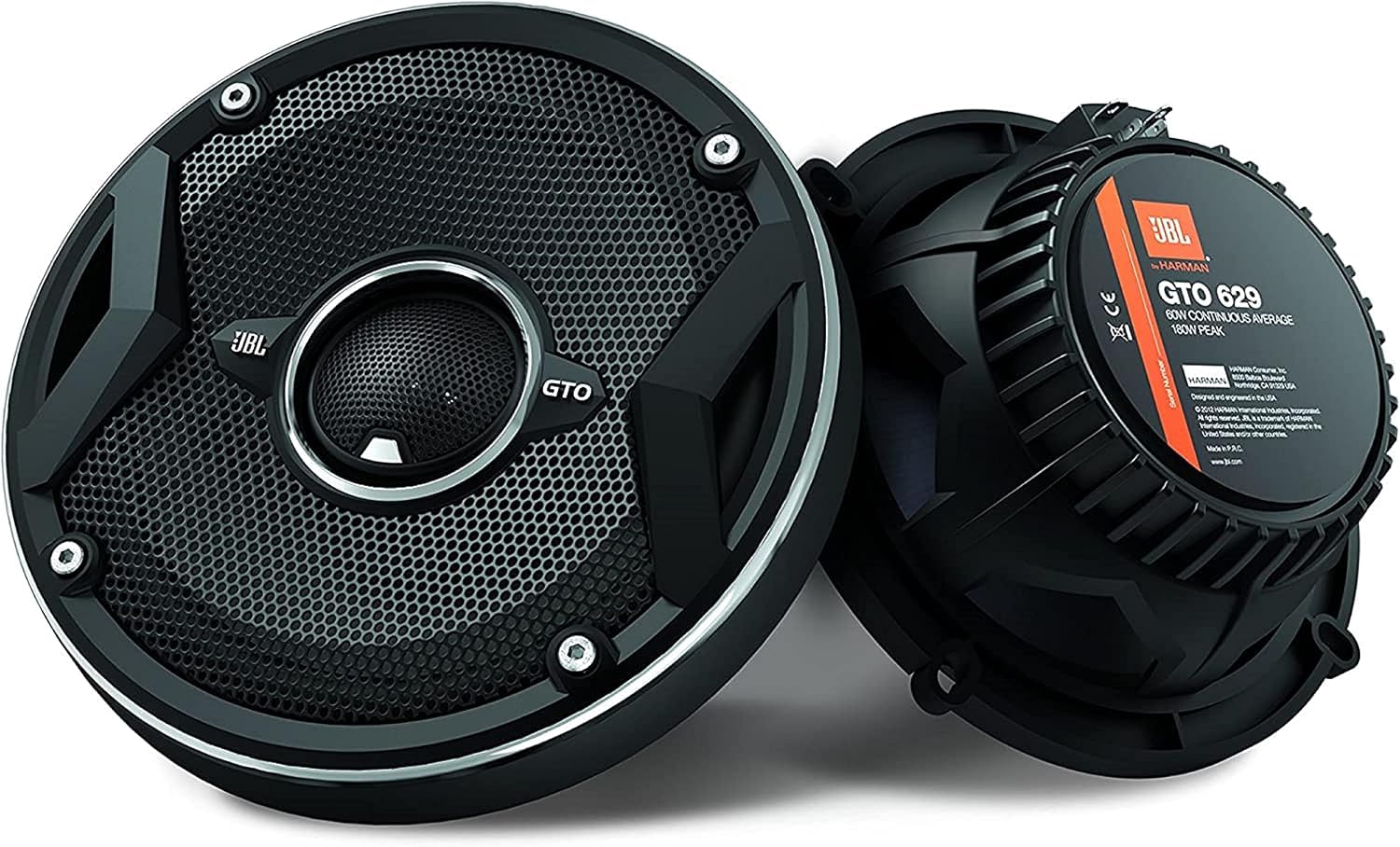
Smart 3-ohm engineering that squeezes more wattage from stock wiring.
JBL’s GTO629 gets clever about a real-world problem: the undersized wires in many cars. These are low-impedance, three-ohm speakers that compensate for that thin factory wiring, making the most of every watt your stereo delivers. The carbon-injected Plus One cones are larger than others in their size class, moving more air and producing more bass.
The patented UniPivot tweeter lets you aim the sound at your ears even when mounted low in the doors, creating a much more lifelike soundstage. A dual-level tweeter volume adjustment compensates for less-than-perfect placement or personal taste. Dedicated 12dB/octave crossover components direct highs and lows to the right drivers for clean output.
Owners call it a “great upgrade from factory ones,” with strong mid-bass and crisp highs. A Ram ProMaster EV driver found it a worthwhile drop-in, and a Honda Element owner noted the sound “outweighs” the slight fit mods needed. Durability feedback is mixed, with some not lasting a year, so treat them with care.
efficient watts: 3-ohm design pulls more from stock stereos with Plus One cone bass.
harsh highs: durability is the mixed note—some units don’t last a year.
9. Pioneer TS-M651PRO

Pioneer’s SPL-focused midrange with a featherlight cone and 94dB efficiency.
The Pioneer P.R.O. Series TS-M651PRO is built for the Reference for Open Show crowd who want serious sound pressure levels. The lightweight pulp cone material ensures minimal distortion, giving you “exceptional audio clarity” at high output. With 500W max power handling and 120W continuous, it delivers dynamic sound whether you’re chasing crisp highs or deep lows.
The 94dB sensitivity rating is the key spec here—these speakers produce clear, powerful sound even from lower power inputs. The frequency response spans 50Hz to 18kHz, covering the midrange spectrum where vocals and instruments live. Owners call them “the best sounding mids I have heard,” replacing PRVs and noticing a huge difference in sound quality.
One Chevy Silverado owner with the Bose system noted you “will have to trim your door panels” for similar trucks, so measure carefully. The versatility shines—they work well for both mid-bass and midrange applications. Performance feedback is mixed, with some never working from the start, so check your units on arrival. If you want SPL output with clarity, this is the specialist.
loud systems: SPL builders who want 94dB efficiency and clean mids at high volume.
smooth sound: fitment needs measuring—and testing units early for defects.
Understanding the Specs
RMS vs. Peak Power
RMS (Root Mean Square) is the continuous power a speaker can handle, while peak is the brief maximum. The RMS number tells you what the speaker can play all day without damage. A speaker like the RECOIL MS65-4P with 300W RMS needs a hefty amp, while a 30W RMS Kenwood KFC-1666R thrives on a factory stereo. Match the speaker’s RMS to your amp’s output for clean, undistorted sound.
Impedance & Sensitivity
Impedance is the electrical load a speaker presents to the amp, measured in ohms. Most car speakers are 4-ohm, but the JBL GTO629 uses 3-ohm to squeeze more wattage from factory wiring. Sensitivity measures how efficiently a speaker converts power into sound, in decibels. The Pioneer TS-M651PRO’s 94dB rating means it gets loud even with modest power—perfect for systems without a massive amp.
FAQ
Will 6.5-inch speakers fit in my car without modifications?
Do I need an amplifier for aftermarket speakers?
What is the difference between coaxial and component speakers?
Can I install aftermarket speakers myself?
Are 3-ohm speakers better than 4-ohm speakers?
Why does my new speaker sound worse than my stock one?
Is a midrange speaker good for replacing factory door speakers?
How long do aftermarket car speakers last?
Final Thoughts: The Verdict
For most buyers, the best aftermarket auto speakers winner is the KICKER 46CSC654 because it wraps clean bass, easy fitment, and reliable build into a two-pair package that upgrades your whole car at once. If you want component-stage clarity on a budget, grab the Rockford Fosgate R165-S. And for SPL builders chasing maximum output, the Pioneer TS-M651PRO delivers that 94dB efficiency to get loud on less power.
How We Picked
We do not accept paid placement. Every pick is matched to a real buyer and a real use-case; we do not hands-on test units.
Sources & Methodology
Specifications: manufacturer listings and product documentation. Review insights: verified customer reviews, as of August 2026. Pricing: not shown on this page (it changes often); check the current price via the retailer link.
As an Amazon Associate, Gadgets Feed earns from qualifying purchases. This does not affect which products we feature.