
Our readers keep the lights on and my morning glass full of iced black tea. As an Amazon Associate, I earn from qualifying purchases.
Specs are compiled from manufacturer listings and verified buyer reviews and can change over time — please confirm the key details on the product page before buying.
An aftermarket blind spot system does one job: it tells you when a car is sitting in the spot your mirrors can’t reach. The two main flavors are camera systems that show you the view on a screen and radar systems that light up an LED and beep when something is beside you. This guide breaks down the best of both so you can pick the one that fits your vehicle, your skill level, and how you drive.
I’m Min — the founder and writer behind Gadgets Feed. This guide is built by comparing the manufacturers’ published specifications and the patterns across verified customer reviews, so you get each pick’s real strengths and trade-offs instead of marketing spin.
The key is matching the technology to your needs—a camera shows you everything, while radar just warns you. This is your complete look at the best aftermarket blind spot system options available today.
Our Picks at a Glance

How To Choose The Best Aftermarket Blind Spot System
Before you buy, you need to decide between seeing the blind spot and being warned about it. Both approaches work, but they demand different things from you and your vehicle.
Camera Systems: See It Yourself
A camera system replaces or adds to your rearview mirror with a screen showing the view down the sides of your vehicle. You get a constant visual, which is great for parking and for trailers where mirrors fail. The trade-off is your eyes leave the road to check the screen, and a wide-angle lens can mess with your sense of distance.
Radar Systems: Get Warned Automatically
Radar systems use sensors in the bumper to detect moving vehicles approaching from behind. They alert you with an LED light in the mirror or on the pillar, and with a beep if you signal a lane change. They are more hands-off, but they only work on vehicles with plastic bumpers—metal blocks the radar signal entirely.
Quick Comparison
| Model | Best For | Technology | Detection Range | Display | Amazon |
|---|---|---|---|---|---|
| PDZGZ 6.25″ System★ Best Overall | Full visibility on screen | 170° Cameras | — | 6.25″ Touch LCD | Amazon |
| Brandmotion RDBS-1600Premium Pick | Factory-like integration | 76-77GHz Radar | 40 ft | LED + Tone | Amazon |
| BlueDex BSD Kit | Budget radar warning | 24GHz Radar | 32.8 ft | LED + Buzzer | Amazon |
| EASYGUARD EBS001 | Simple radar alert | 24GHz Radar | 12 m | LED + Buzzer | Amazon |
| GRLATG A65 | Lightweight camera pair | 120° Cameras | — | 6.25″ IPS LCD | Amazon |
| Roadwitness Mirror Cam | Dash cam + blind spot | 4K Cameras | — | 12″ Touch Mirror | Amazon |
| INNOVV ThirdEYE | Motorcycle riders | 77GHz Radar | 50 m | Watch + LED | Amazon |
In‑Depth Reviews
1. PDZGZ 6.25″ Car Side View Blind Area System
Our pick — over 4★ from 30+ verified ratings; the strongest balance of quality and price.
The full-picture system that shows you the road beside you in brilliant night vision.
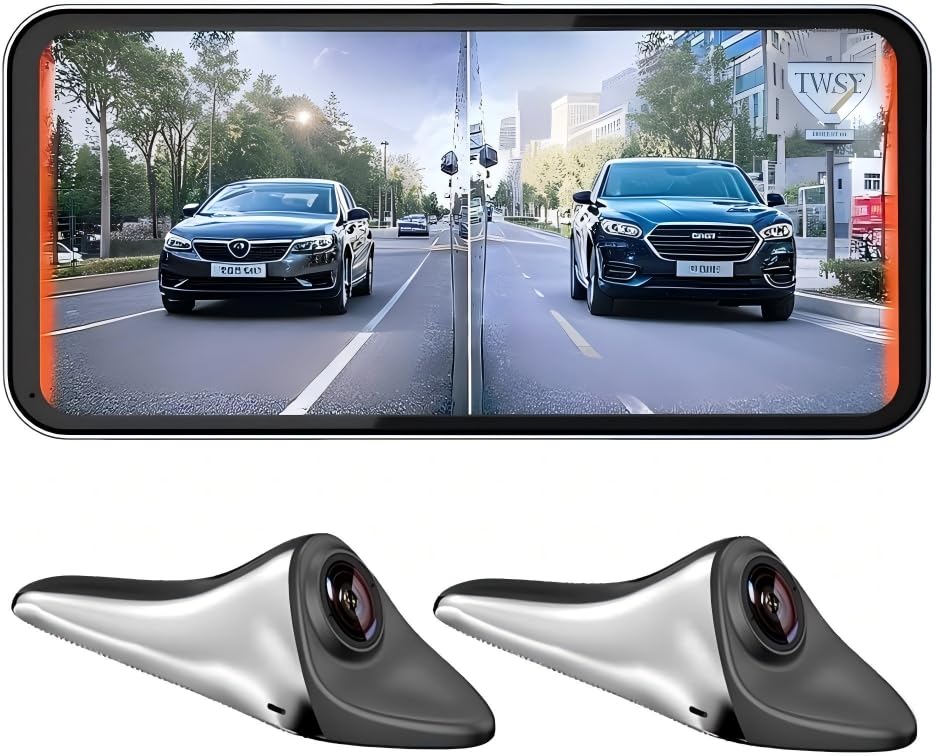
This is the pick for drivers who want to actually see the blind spot rather than beeped at. A 170-degree fixed wide-angle lens captures both sides of your vehicle on a 6.25-inch touchscreen, and buyers report it covers spots regular mirrors miss entirely. The all-aluminum body is built to handle heat, and a magnetic bracket lets you position the screen without tools.
Night vision here is the standout—owners say it beats the cameras in a vehicle that costs far more. The touchscreen is a full system hub, letting you adjust warning areas and image shift right from the display. It also pulls double duty as a driving recorder and parking monitor, so you get blind spot coverage plus dash cam function in one unit.
This is not a system you bolt on in five minutes. Owners mention the short wires may need extensions, and the screen itself runs hot, so it needs some thought about mounting and airflow. The fish-eye view can make judging distance tricky, which is why owners insist you still use your mirrors. Weighing 2.3 pounds, it is substantial, and the 10-piece kit gives you spares and all the cables you need.
Visibility King: the thing everyone raves about is the blind spot coverage, and the night vision is so strong it rivals factory systems.
The Fit Note: image quality is the most-discussed point, but opinions split—some love the clarity, others struggle with depth perception from the wide lens.
Reach for this if: you drive an RV, tow, or just want the most complete view of your vehicle’s sides, day or night.
Look elsewhere if: you want a simple plug-and-play warning light without running wires or thinking about heat dissipation.
2. Brandmotion RDBS-1600 Radar Blind Spot System
The closest thing to a factory radar system that monitors two lanes over without false alarms.
This is the premium radar route for vehicles from 2007 onward, and it brings a feature most aftermarket kits skip entirely: rear cross-traffic detection. That means it senses cars approaching from the sides when you are backing out of a parking spot, not just in the next lane. The radar operates on the 76-77 GHz frequency band, which is exactly what modern factory systems use, and it tracks vehicles accurately without warning you about cars two lanes over.
Owners consistently call it OEM-quality after living with it for months. The bright day-night indicators mount cleanly at the bottom of the windshield trim with no exposed wires, and the alert is a light plus an audible tone when your turn signal is on. It is a 3.2-pound kit with radar sensors, all wiring, and a CAN integration module that talks to your car’s speed signal, so it knows when you are actually driving.
The catch is the install and the cost. This is the most expensive system here, and it needs a skilled hand—bumper removal and wiring to the CAN-BUS speed signal are mandatory. It also goes inactive below 15 mph and ignores static objects like parked cars, which is by design but still a limitation to know. The support experience draws mixed words, so verify your installer before you commit.
Factory-Feel Performance
- Adds rear cross-traffic alert for safer parking lot exits
- No false alarms, even in busy city traffic
- Monitors the lane beside you, not two lanes over
Serious Commitment
- Complex install requiring bumper removal and CAN wiring
- Best left to an experienced professional installer
- No warnings under 15 mph or for stationary objects
Choose this when: you want the most factory-like, feature-complete radar system and are prepared to pay for professional installation.
Think twice if: you are on a budget or want a weekend DIY project—this one can turn into an expensive gamble without the right tech.
3. INNOVV ThirdEYE Motorcycle Blind Spot System

A radar guardian built specifically for two wheels, tracking up to 64 targets at once.
Motorcyclists have the biggest blind spot problem of all, and this system attacks it with a high-precision 77-79 GHz sensor. That is the same frequency class as automotive radar, but tuned for bikes, and it detects hazards from the side and rear lines ahead of you. It can track up to 64 targets simultaneously at a maximum distance of 50 meters, which means it keeps an eye on a whole pack of traffic, not just the one car beside you.
The real innovation is how it alerts you. A watch-style display sits near your GPS or on your wrist and uses both voice and LED indicators, so you do not have to take your eyes off the road to check a mirror. It is built for weather, too, with an IP67 waterproof and dustproof rating that handles rain, wind, and fog from -40°C to 80°C. Riders on BMW GS and Harley Iron 883 report easy installs and a noticeable boost in confidence on the road.
Its 15.8-ounce weight is minimal for a motorcycle, and the radar mounts on the rack while the display goes where you can see it. The honest limitation is the LED visibility in bright climates—one rider in strong Florida sun found the light hard to see, which is the main complaint. A few units also had wiring quirks, so it is worth confirming your bike’s power setup before install.
Situational Superpower: the multi-target tracking and long 50 m range give riders far more reaction time than mirrors alone.
Weather Worthy: with IP67 protection, this is one of the few systems you can trust in heavy rain on a long ride.
Best for: riders who commute in traffic or tour long distances and want to cut the mental load of constantly checking mirrors.
Not for: riders in consistently bright, sunny regions where a subtle LED may get washed out.
4. GRLATG A65 Blind Spot Camera and Display System

A featherlight camera duo with 120-degree lenses that mount without a single drilled hole.
This system is the easy-install champion, weighing just 7.36 ounces total for both cameras and the host display. The cameras use a 120-degree side view angle and hide discreetly on the side of your car with double-sided tape, so there is no drilling and no damage to your paint. It is a genuine plug-and-play setup that owners say even a novice can handle in an afternoon.
The 6.25-inch high-definition IPS screen shows both sides simultaneously, and you can switch to a single view or shift the image up, down, left, or right to dial in the perfect angle. A magnetic bracket lets you place the display anywhere it is convenient. The rotating cameras adjust horizontally to fit different vehicles, and with an IP68 waterproof rating, the fully sealed design shrugs off harsh weather and corrosion.
Buyers use it far beyond cars—it works great on a skid steer, and older drivers find it a big help. The main note is that it runs at 720p even if you try to select 1080p, and the included cable clips are flimsy enough that owners budget for better ones. For the price, the camera quality and coverage win people over quickly.
easy Install: the non-drilled, tape-on cameras and plug-and-play display make this the least intimidating system to fit.
Built Tough: the IP68-rated, fully sealed cameras are waterproof, shockproof, and corrosion-resistant for harsh environments.
Grab this if: you want a discreet, lightweight camera system you can fit yourself without any permanent modification.
skip it if: you demand true 1080p resolution or premium cable hardware from the start.
5. Roadwitness 4K+4K Smart Mirror Dash Cam
Turns your rearview mirror into a 4K screen with digital blind spot alerts built in.
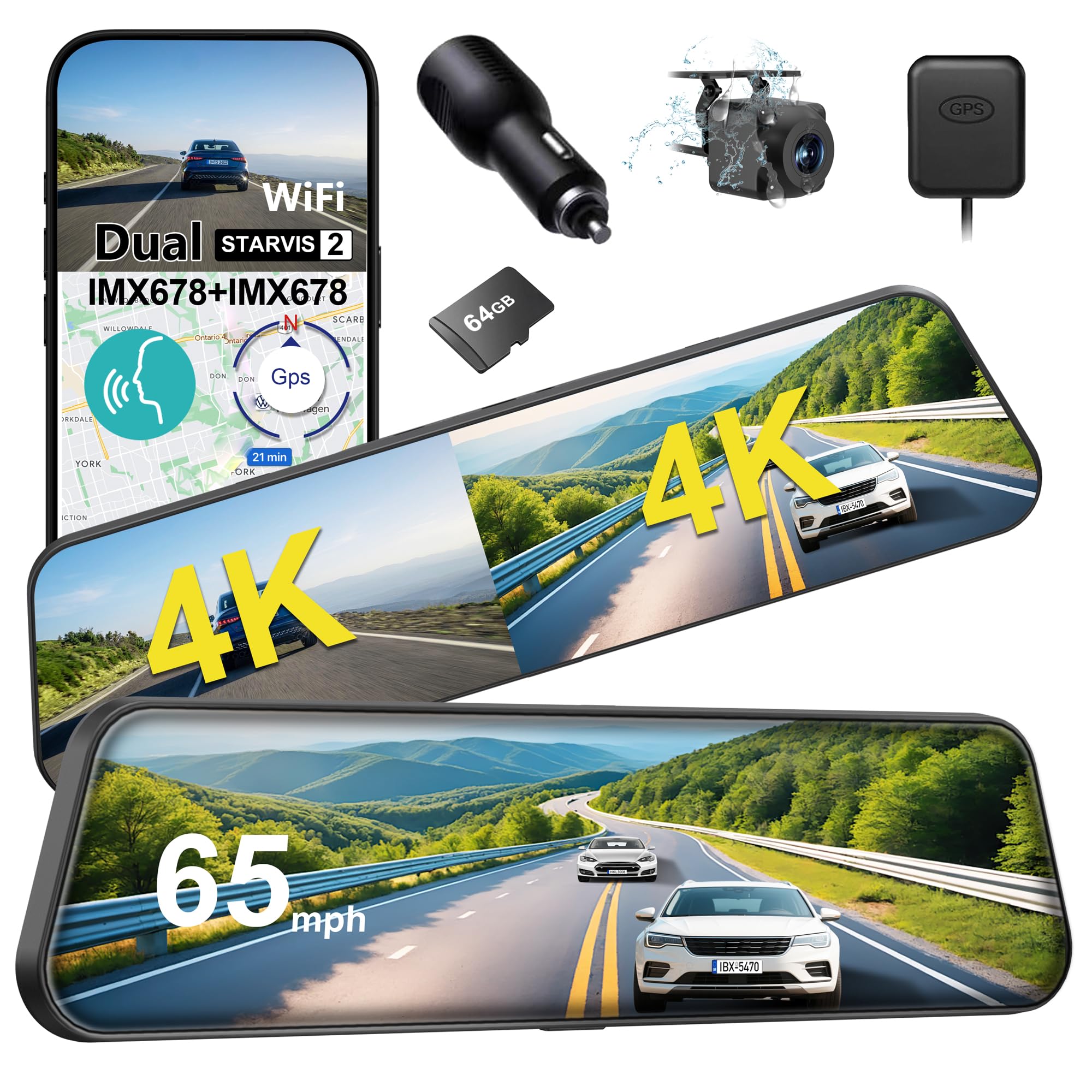
This is the Swiss Army knife of the list—a full dash cam, a rearview mirror, and a blind spot system all in one 12-inch anti-glare touchscreen. Dual Sony STARVIS 2 IMX678 sensors capture true 4K resolution at 3840x2160P and 30fps on both front and rear cameras simultaneously. With 170-degree ultra-wide lenses, you cover up to six lanes and catch license plates and road signs with zero distortion.
The blind spot piece here is digital ADAS, which uses AI to give real-time voice alerts for forward collisions, lane departures, and approaching vehicles in your blind spots. It is not a radar system, so it works through the cameras rather than sensors, but it still warns you visually and audibly during lane changes. It ships with a 64GB microSD card and supports up to 256GB, plus built-in GPS for speed and route logging.
The mirror replaces your factory one and uses the included 18-foot rear camera cable, with a 24-hour parking mode if you add a hardwire kit. The picture quality is the star—owners say the rear cam beats a popular rival brand. The weakness is glare at night; headlights from cars behind can wash out the mirror display, and an occasional unit has had reliability trouble, so support responsiveness matters here.
4K Clarity: the Sony STARVIS 2 sensors deliver exceptional low-light footage that reads plates at night, according to owners.
The Trade-Off: as a mirror, it is vulnerable to glare from following headlights, which can limit its usefulness after dark on highways.
Pick this for: drivers who want dash cam recording, GPS, and blind spot warnings without installing separate systems.
Reconsider if: you do most of your driving at night on highways where mirror glare would bother you.
6. BlueDex BSD 24GHz Lane Change Warning Kit

A budget-friendly radar kit that delivers reliable, repeatable warnings every single time.
This is the radar system for the budget-conscious who still want genuine sensor-based detection, not just a camera. It uses dual 24GHz millimeter-wave radar sensors that detect moving vehicles in your blind spot up to 32.8 feet (0.3–10 m) away. When a car approaches, the LED warning indicator lights up automatically, so you get a heads-up before you even check your mirror.
The alert logic is smart and matches your driving. With the turn signal off, the LED stays lit when something is in the blind spot. With the turn signal on, the LED flashes and the buzzer sounds three warning beeps to stop you changing lanes. With hazard lights on, it flashes continuously with three more beeps for extra awareness. It works in low-visibility conditions like night, rain, snow, or fog.
Installation is where this kit splits opinions. It comes with a manual and a radar angle alignment tool, and some owners get it done in a DIY afternoon using fuse taps and tape inside the bumper. Others—including professional mechanics—find it too complex. One shop owner who installs these daily called it fantastic, saying it works as described every single time, unlike other brands. The occasional false beep can happen on cars where brake and blinker share a wire, though that is a vehicle-specific quirk, not a system flaw.
Reliable Detection
- Consistent 24GHz radar performance owners trust repeatedly
- Three distinct alert modes for turn signal, off, and hazard
- Detects blind spot before your mirror view reveals the car
Install Reality
- Radar sensors cannot penetrate metal surfaces, so bumper material matters
- Manual and alignment tool included, but setup is still technical
- Wiring quirks possible on some cars with shared brake/blinker circuits
Best for: hands-on owners who want solid radar protection on a budget and can follow a detailed manual.
Not for: anyone who expects a true plug-and-play install—this needs patience or a professional.
7. EASYGUARD EBS001 Blind Spot Monitor System

An entry-level radar system that fills the blind spot gap for a fraction of factory cost.
This kit is the value play for adding radar-based blind spot monitoring without the premium price tag. Its two 24GHz microwave sensors probe the rear sides of your vehicle for moving objects within a 6-12 meter range, flashing the LED when something enters the blind area. That is a longer reach than the BlueDex kit, though it requires a speed gap of over 0.5 m/second to trigger, so it is tuned for moving traffic.
It operates in a lane-change assistant mode—when your turn signal is on, the LED flashes rapidly and the buzzer beeps three times to warn you. Owners find it easy to install, especially with trim tools, and several replaced failed factory sensors for a fraction of the OEM repair cost. It is built for most DC12V sedans, compacts, SUVs, and MPVs with plastic bumpers.
The honest limitations are real. Sensor performance gets the most discussion, and opinions split—some say it works great while others report intermittent detection on one side. A few owners had to swap the left and right radar connections, and the included tape can be weak, so expect to adjust the mounting angle yourself. It also warns about cars approaching from behind, not when you are passing stationary vehicles.
Value Alert: the easy install and low cost make this a smart way to add basic radar protection, with many owners calling it worth the money.
Consistency Check: sensor performance is the most-discussed point, and it is split—some units work flawlessly while others need angle or wiring tweaks.
Choose this if: you want the cheapest route to radar detection and are comfortable troubleshooting the setup.
Pass if: you need guaranteed reliability from the start—the intermittent sensor reports make it a bit of a lottery.
Understanding the Specs
Radar Frequency and Range
Radar systems use sensors that bounce signals off moving vehicles to detect them. The frequency—24GHz in budget kits, 76-77GHz in premium ones—affects precision, with higher frequencies giving better accuracy. Range tells you how far back the system watches: a 32.8 ft reach is plenty for a lane change, while a 50 m range can track traffic far behind you.
Camera Field of View
For camera systems, the field of view is the angle the lens captures. A 120-degree lens covers the immediate side of your vehicle, while a 170-degree ultra-wide lens catches multiple lanes and your rear quarters. Wider is better for eliminating blind spots, but it introduces fish-eye distortion that can make judging distance harder.
FAQ
Will a blind spot radar system work on my truck with a metal bumper?
Can I install an aftermarket blind spot system myself?
What is the difference between 24GHz and 77GHz radar?
Why does my blind spot radar beep when I am stopped at a light?
Do camera blind spot systems work at night?
Is a blind spot camera system better than a radar system?
How far behind my vehicle will the radar detect approaching cars?
Will an aftermarket system work on a motorcycle or RV?
Final Thoughts: The Verdict
For most drivers, the strongest aftermarket blind spot system is the PDZGZ 6.25″ system because its camera view and night vision give you complete visibility rather than just a warning. If you want hands-off radar protection and can handle a serious install, the Brandmotion RDBS-1600 delivers factory-like performance. And for riders, the INNOVV ThirdEYE is the standout choice with its long-range multi-target tracking.
How We Picked
We do not accept paid placement. Every pick is matched to a real buyer and a real use-case; we do not hands-on test units.
Sources & Methodology
Specifications: manufacturer listings and product documentation. Review insights: verified customer reviews, as of August 2026. Pricing: not shown on this page (it changes often); check the current price via the retailer link.
As an Amazon Associate, Gadgets Feed earns from qualifying purchases. This does not affect which products we feature.