
An aggressive climbing shoe is defined by its down-turned, curved last, which positions the toes into a hook-like point, transferring maximum power directly onto small edges and pockets. This design is purpose-built for steep overhangs and technical bouldering, where precision edging and powerful heel hooks are non-negotiable. The trade-off, however, is a significantly more restrictive fit that prioritizes performance over all-day comfort.
I’m Min — the co-founder and writer behind Gadgets Feed. This guide is the result of many hours spent analyzing technical specifications, cross-referencing user feedback on fit and durability, and mapping the performance trade-offs across the most competitive models in this specialized footwear category.
The core challenge for any buyer is finding a shoe that matches their foot shape and climbing style. This detailed review of the best aggressive climbing shoes breaks down the fit, rubber, and last of nine top contenders to help you make an informed decision.
How To Choose The Best Aggressive Climbing Shoes
Aggressive shoes are not one-size-fits-all. The most critical factor is how the shoe’s specific last matches your foot shape—particularly the toe box width, heel volume, and arch height. A poorly matched shoe will cause pressure points or sloppy heel hooks, negating any performance benefit.
Toe Box Volume: Wide vs. Narrow
La Sportiva shoes like the Skwama are known for accommodating wider forefeet and duck-foot shapes, while Tenaya and Scarpa models tend to favor narrower feet. If you have a wide toe box, the Skwama or Solution offer more room, whereas the Scarpa Drago and Instinct VS let narrow feet sit deeper into the downturn for maximum precision.
Heel Cup Depth and Tension
For steep heel hooks, a deep, structured heel cup is vital. The La Sportiva Solution employs a patented P3 platform and a prominent heel tab that locks the foot in place. The Scarpa Instinct VS uses a tensioned heel rand that eliminates dead space. A shallow heel cup, as found on the Tenaya Iati, may require extra caution on aggressive heel placements.
Rubber Thickness and Compound
Thicker rubber (4mm+) provides durability for repeated edging on sharp rock but reduces sensitivity on slopers and smears. Thinner rubber (3.5mm) like the Vibram XS Grip on the Tenaya Iati and Scarpa Drago offers superior tactile feedback for technical slab and volume climbing, at the cost of faster wear.
Closure System: Velcro vs. Lace
Nearly all aggressive shoes use dual or single Velcro straps for quick on/off and fine-tuned fit adjustments. A single strap (Scarpa Drago) simplifies the system, while dual straps (La Sportiva Skwama) allow separate tightening of the forefoot and heel. Laces are rare in this category as they add complexity when needed for quick adjustments between attempts.
Quick Comparison
On smaller screens, swipe sideways to see the full table.
| Model | Category | Best For | Key Spec | Amazon |
|---|---|---|---|---|
| La Sportiva Solution | Premium | Steep Overhangs & Heel Hooks | P3 Platform | Amazon |
| Scarpa Drago | Premium | Sensitivity & Smearing | 3.5mm Vibram XS Grip | Amazon |
| La Sportiva Skwama | Premium | Wide Toe Box & Pockets | P3 Platform + S-Heel | Amazon |
| Scarpa Instinct VS | Mid-Range | Edging & Heel Hooking | 4mm Vibram XS Edge | Amazon |
| Tenaya Iati | Premium | Narrow Feet & Precision | Dual Midsole TST 150 | Amazon |
| Evolv Kronos | Mid-Range | Intermediate All-Around | 4.2mm TRAX Rubber | Amazon |
| Evolv Defy | Budget | Entry-Level Gym Climbing | 4.2mm TRAX Rubber | Amazon |
| Black Diamond Momentum | Budget | Beginner All-Day Wear | 4.3mm Rubber Outsole | Amazon |
| Ocun Striker QC | Budget | Comfort & Flat Terrain | Non-Aggressive Last | Amazon |
In‑Depth Reviews
1. La Sportiva Solution
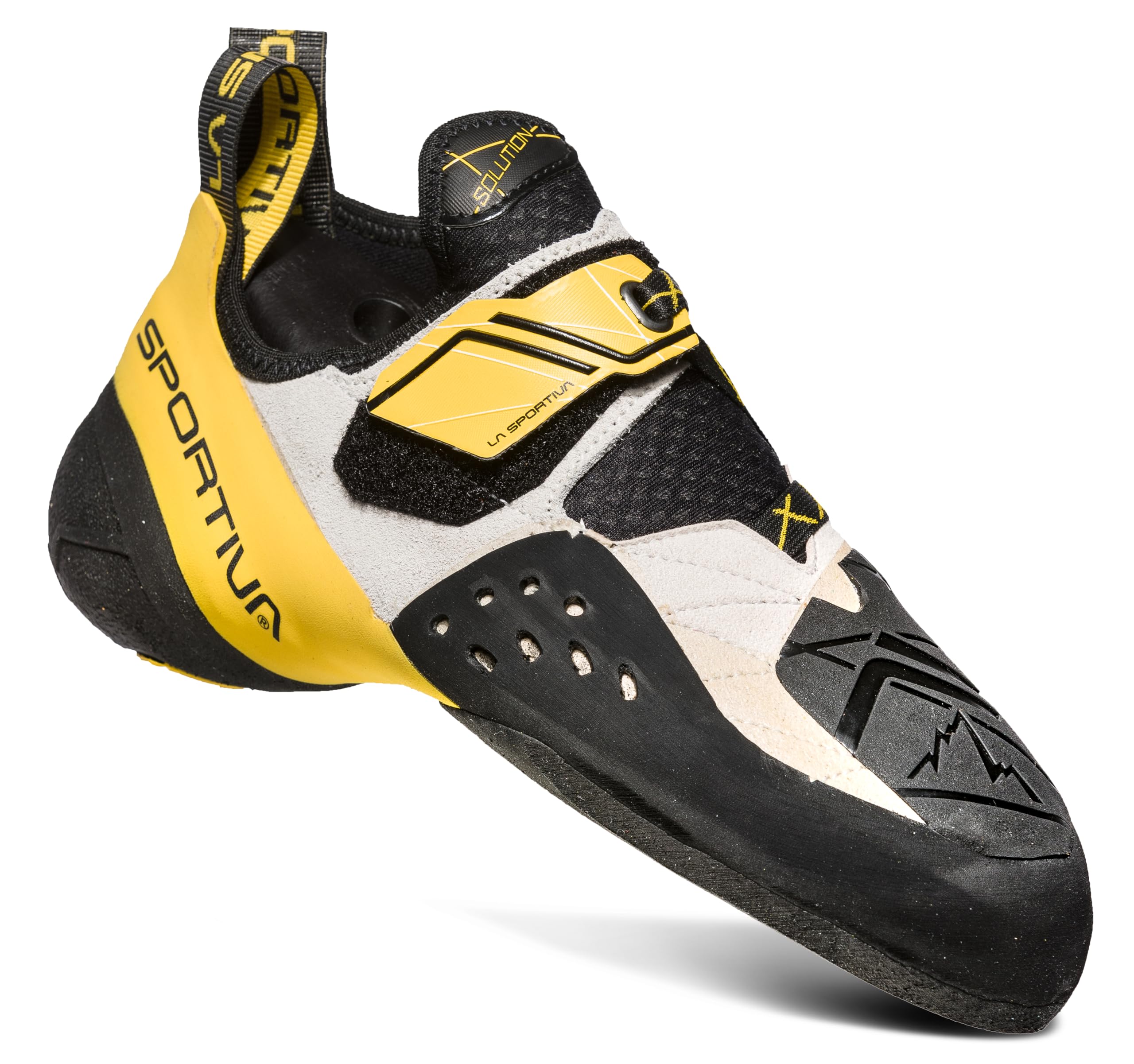
The La Sportiva Solution remains the benchmark for aggressive bouldering shoes due to its patented P3 (Permanent Power Platform) system, which maintains the down-turned shape even after repeated resoling. The heel cup is deep and structured, making it one of the most secure options for powerful heel hooks on steep overhangs. The rubber is a proprietary Vibram XS Grip compound that offers excellent friction on both edges and volumes.
This shoe is not designed for beginners—its severe downturn and rigid midsole demand a high level of foot strength to maximize precision. The toe box is relatively narrow, favoring climbers with Greek or Egyptian foot shapes. Reviewers consistently note that sizing down by a half to a full size is necessary for a performance fit, especially for indoor competition and moonboard training.
The Solution excels on vertical and slightly overhung terrain but can feel less sensitive on low-angle slabs due to its stiffer construction. The heel tab is large and can dig into the Achilles for some users during extended wear. For experienced climbers seeking a dedicated redpoint shoe for steep projects, this is the gold standard.
Why it’s great
- Secure, deep heel cup for aggressive heel hooks
- P3 Platform maintains downturn over time
- Outstanding edging precision on small holds
Good to know
- Not suitable for beginners or flat-footed climbers
- Heel tab can cause discomfort for some
- Poor breathability during long sessions
2. Scarpa Drago

The Scarpa Drago is engineered for maximum sensitivity, featuring a 3.5mm Vibram XS Grip sole and a soft, pliable midsole that allows the foot to articulate like a second skin. This design makes it the top choice for gym bouldering, slab climbing on volumes, and technical problems requiring precise smearing. The asymmetric, down-turned last is aggressive without being overly stiff.
The Drago’s heel is shallow and narrow, which works well for climbers with slim heels but can feel loose for those with wider calcaneus. The single Velcro strap keeps the system simple and low-profile, reducing bulk around the ankle. Reviewers report that the shoe breaks in quickly, with the leather upper conforming to the foot after just a few sessions.
Durability is the main trade-off—the thin rubber and soft midsole wear faster than more robust models like the Instinct VS or Solution. It is also not ideal for classic edging on sharp, coarse rock, where the lack of support can lead to foot fatigue. For climbers who prioritize feel and feedback over longevity, the Drago is unmatched.
Why it’s great
- Exceptional ground feel for smearing and volumes
- Quick break-in with pliable leather upper
- Lightweight and minimal design
Good to know
- Rubber wears quickly on rough surfaces
- Heel pocket is narrow; not for wide heels
- Not ideal for sustained edging on sharp rock
3. La Sportiva Skwama

The La Sportiva Skwama is built around a wide, asymmetrical toe box that accommodates duck-footed and splay-footed climbers without sacrificing precision on small holds. The toe patch on the upper rubber facilitates aggressive toe hooking, while the S-Heel design provides a locked-in fit for the Achilles area. The dual Velcro straps allow independent adjustment of forefoot tension and heel security.
Reviewers highlight the Skwama’s versatility—it is stiff enough for edging on steep terrain yet soft enough for decent smearing on gym volumes. The break-in period is notably painful due to the rigid midsole and snug fit, but the leather stretches up to half a size over time. The elastic lip around the heel can sometimes reduce tension, but the strap compensates effectively.
This shoe performs exceptionally well on pockets and small edges, making it a strong choice for outdoor sport climbing. The P3 platform helps maintain the downturn across multiple resoles. Some users find the heel cup too shallow for very aggressive heel hooks, but for most, the Skwama strikes an excellent balance between performance and comfort for a wide range of foot shapes.
Why it’s great
- Roomy toe box suitable for wide forefeet
- Excellent toe hooking patch
- Versatile performance on steep and slab
Good to know
- Painful break-in period
- Heel cup can feel shallow for some
- Stiff sole requires foot strength
4. Scarpa Instinct VS

The Scarpa Instinct VS is a classic, purpose-built aggressive shoe that excels at edging on tiny footholds. Its 4mm Vibram XS Edge rubber is thicker and stiffer than the XS Grip compound, providing a stable platform for standing on dime-edge holds on steep limestone. The down-turned last is pronounced, and the tensioned heel rand creates a seamless, dead-space-free heel cup that feels like a vacuum seal.
This shoe is particularly effective for heel hooking due to the prominent rubber wrapping over the heel. The toebox is asymmetrical and favors a predominant big toe, giving excellent precision on pockets and edges. Reviewers warn that the rubber is less sticky for smearing compared to softer compounds, making it less ideal for slab climbing where friction is paramount.
The fit is snug even without aggressive downsizing, and the shoe is known for being comfortable for its level of aggression. The midsole is stiff enough to support sustained edging but flexible enough for reasonable sensitivity. It is a strong all-around performer for sport climbing and bouldering on steep, technical terrain where edge and hook performance is prioritized over smearing.
Why it’s great
- Superior edging stability on small holds
- Excellent, tensioned heel cup for hooks
- Durable rubber suitable for outdoor use
Good to know
- Less sticky on slopers and volumes
- Poor breathability
- Sizing can be inconsistent across batches
5. Tenaya Iati

The Tenaya Iati uses a dual-midsole construction—a GI 1.8 fiberglass insert combined with a TST 150 torsion bar—to create a shoe that is both sensitive and supportive. The Vibram XS Grip 3.5mm outsole delivers excellent stickiness on a variety of surfaces, while the down-turned last ensures precision on pockets and edges. The upper blends natural leather and microfiber for a comfortable, breathable fit.
This shoe is best suited for climbers with narrow to medium-width feet, as the toebox is tapered and low-volume. The Draxtor PAT technology in the closure system uses a single strap attached to the middle of the shoe, providing a clean, low-profile fit without pressure points. Reviewers note that the Iati requires minimal downsizing—often just half a size from street shoe—for a performance fit.
The Iati is incredibly comfortable for an aggressive shoe, with many users reporting they can wear it for entire sessions without needing to remove it between attempts. The heel cup is moderate in depth, which can be a limitation for very aggressive heel hooks compared to the Solution or Instinct VS. For technical face climbing and moderate overhangs where precision and comfort are both priorities, the Iati is a standout.
Why it’s great
- Comfortable enough for extended wear
- Highly sensitive with a supportive midsole
- Minimal downsizing required
Good to know
- Heel hook performance is average
- Strap can be difficult to adjust precisely
- Narrow toebox not suitable for wide feet
6. Evolv Kronos

The Evolv Kronos is a well-rounded intermediate shoe designed for climbers transitioning from rental shoes who want a balance of performance and comfort. Its 4.2mm TRAX rubber provides good grip on most surfaces, and the non-aggressive, slightly downturned last offers a more forgiving fit for all-day use. The uppers are made from a synthetic material that resists stretching over time.
This shoe is particularly effective on vertical and slab terrain, where the flat-to-moderate profile allows for balanced smearing and edging. The heel cup is moderately tensioned, making it serviceable for heel hooks but not as secure as the Instinct VS. Reviewers praise its durability and value, noting that it holds up well against tough rock over several months of frequent use.
The Kronos is not an aggressive shoe in the true sense—its downturn is milder, so it is less effective on steep overhangs compared to the Solution or Skwama. The sizing is notoriously inconsistent, with many users needing to size up 1-2 full sizes from their street shoe. For gym climbers and outdoor beginners who want a reliable upgrade from rentals without committing to a painful downturn, the Kronos is a solid choice.
Why it’s great
- Comfortable for all-day climbing sessions
- Durable synthetic upper and rubber sole
- Good value for intermediate climbers
Good to know
- Not aggressive enough for steep bouldering
- Inconsistent sizing requiring returns
- Heel tension is moderate, not locked-in
7. Evolv Defy
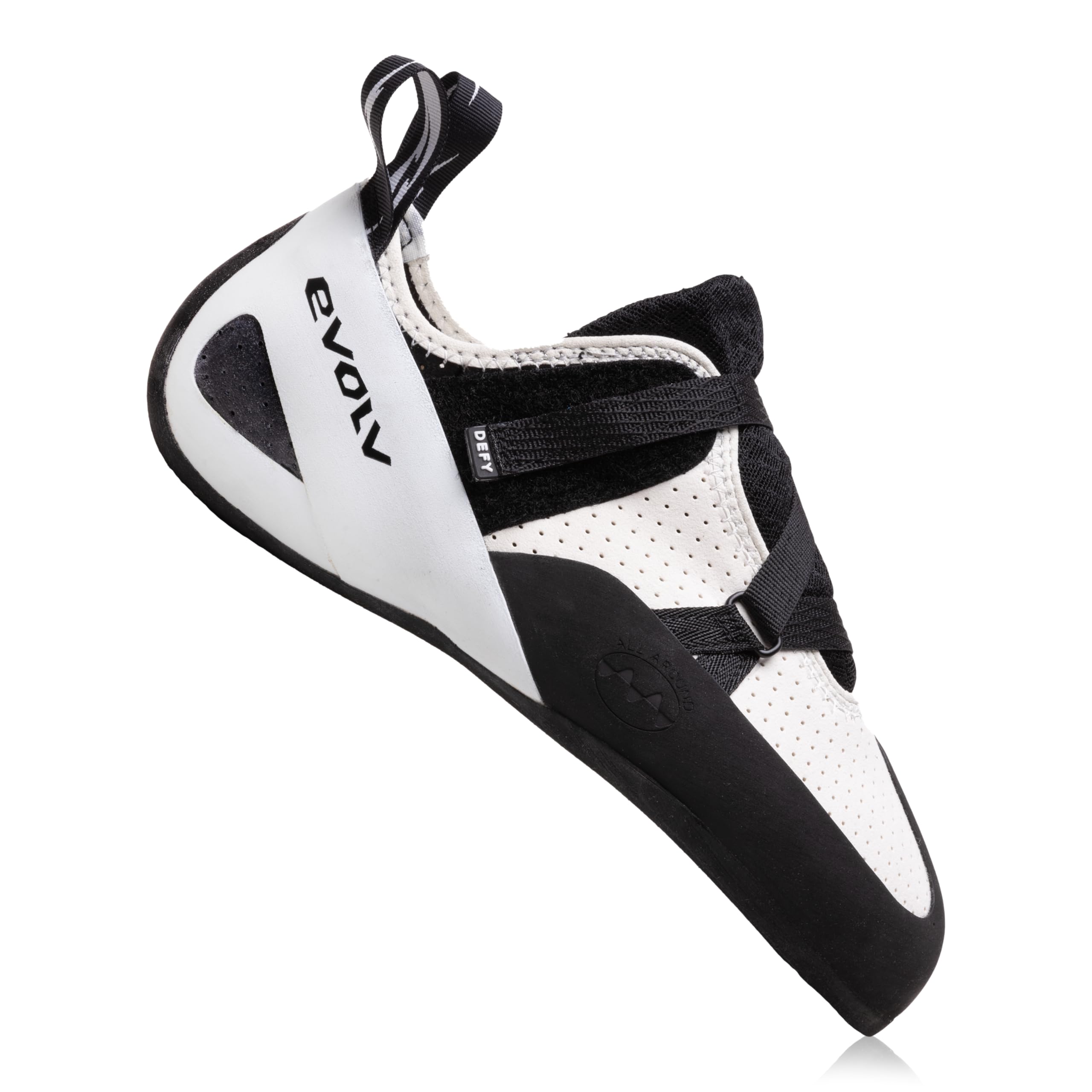
The Evolv Defy is a flat-lasted, entry-level climbing shoe designed primarily for gym use and outdoor beginners. Its 4.2mm TRAX rubber is durable but less sticky than premium compounds, and the flat profile offers no downturn, making it comfortable for extended wear but weak for steep terrain. The hook-and-loop closure allows easy on/off between routes.
This shoe is built for comfort rather than performance. The toebox is relatively wide, accommodating feet that would otherwise feel cramped in aggressive shoes. Many reviewers note that the sizing runs extremely small—often needing to size up two full sizes from street shoes—and that the shoe is noticeably shorter and wider than competitors.
The Defy is a solid choice for someone who has never owned climbing shoes and wants a forgiving, affordable option to learn footwork on vertical walls. However, for any climber attempting overhangs or seeking precision, the lack of downturn and soft midsole will be a significant limitation. It is best seen as a comfortable introduction, not a performance tool.
Why it’s great
- Very comfortable for all-day gym wear
- Affordable entry into climbing shoes
- Durable rubber for beginners
Good to know
- No downturn; poor performance on overhangs
- Sizing is inconsistent; upsize significantly
- Soft sole provides minimal edging support
8. Black Diamond Momentum

The Black Diamond Momentum is a flat-lasted, budget-friendly shoe designed for maximum comfort during long gym sessions. Its engineered knit upper is highly breathable, reducing sweat buildup inside the shoe, while the 4.3mm rubber outsole provides adequate grip for vertical and slab climbing. The hook-and-loop closure is simple and effective for quick adjustments.
This shoe is not aggressive at all—it lacks any downturn, making it unsuitable for steep terrain or precise edging. The fit is relatively wide and forgiving, which is a plus for beginners or those with wider feet. Reviewers consistently mention that the shoe stretches over time, so sizing down by at least one full size from your street shoe is recommended.
The Momentum is a capable first shoe for someone learning to climb in a gym environment. It will not help with overhangs or technical bouldering, but for learning footwork and building endurance on vertical walls, it is a comfortable and affordable option. Its main strength is comfort; its main weakness is its complete lack of aggression or precision.
Why it’s great
- Extremely breathable engineered knit upper
- Comfortable for all-day wear
- Good entry-level value
Good to know
- Flat last offers zero aggression
- Poor performance on overhangs
- Stretches significantly; size down
9. Ocun Striker QC

The Ocun Striker QC is a non-aggressive, budget-oriented climbing shoe that prioritizes comfort and affordability over performance. Its flat last and soft fabric upper make it extremely forgiving for beginners, while the grippy rubber provides decent traction on gym holds. The hook-and-loop closure is secure and easy to use.
This shoe is designed for climbers who are just starting and want a comfortable, low-pressure option. The fit is true to size for most users, which is unusual for this price range. Reviewers appreciate the lack of painful pressure points and the secure Velcro system. However, the shoe lacks any downturn, making it ineffective for any kind of steep or overhung climbing.
The Striker QC is best suited for gym climbing on vertical walls and slab. It is not suitable for bouldering or sport climbing that involves pockets, edges, or aggressive heel hooks. For the budget-conscious beginner who wants a shoe that does not hurt and will not break the bank, the Striker QC is a practical choice, but it will quickly become a limitation as skills progress.
Why it’s great
- Very comfortable with no break-in pain
- True-to-size fit for most feet
- Secure and simple Velcro closure
Good to know
- Zero aggression; unsuitable for steep routes
- Soft fabric upper lacks precision
- Quickly outgrown by progressing climbers
FAQ
What is the difference between an aggressive and a moderate climbing shoe?
How should aggressive climbing shoes fit?
Are aggressive climbing shoes good for beginners?
How long do aggressive climbing shoes last?
Can I use aggressive climbing shoes for slab climbing?
Final Thoughts: The Verdict
For most climbers seeking maximum performance on steep terrain, the best aggressive climbing shoes winner is the La Sportiva Solution because its P3 platform, deep heel cup, and stiff midsole deliver unmatched precision and heel security on overhangs. If you prioritize sensitivity and smearing on volumes, grab the Scarpa Drago for its incredible ground feel. And for a versatile, wide-toe solution that balances comfort with aggression, nothing beats the La Sportiva Skwama.