
Nothing kills a gardening afternoon faster than a cheap hoe that bends on the first rock or a handle that splinters mid-swing. Whether you are clearing a vegetable patch, breaking up compacted clay, or grubbing out deep-rooted weeds, the difference between a productive day and a frustrating one comes down to the quality of the steel, the ergonomics of the shaft, and the precision of the blade geometry. The market is flooded with flimsy cast-aluminum heads and hollow handles that promise durability but deliver sore shoulders and broken tools.
I’m Rikta — the co-founder and writer behind Gadgets Feed. I spend my time digging through steel gauges, handle materials, and blade designs to separate the tools that will outlast a decade of abuse from those that belong in the recycling bin. (And Homer 🐱 sat on the fiberglass handle and refused to move, claiming it as his personal lounger.)
This guide focuses on the models that earn their keep in real soil, from premium forged-eye heads to heavy-duty disc-blade cultivators. We have evaluated seven contenders to identify the most capable agricultural hoe tool for every type of ground, garden size, and budget tier.
How To Choose The Best Agricultural Hoe Tool
A hoe is a simple machine — a blade on a stick — but the nuances in steel thickness, head attachment, handle length, and blade angle determine whether the tool works with your body or against it. Understanding three critical factors will steer you toward the right pick.
Steel Gauge and Blade Retention
The most important metric is steel thickness. A 12-gauge head (about 2.7mm) is the industry benchmark for heavy-duty use; it resists bending when you hit rocks or roots and holds a sharp edge longer than thinner 14-gauge or stamped alternatives. Forged or cast steel heads are superior to stamped steel because the metal grain structure remains continuous, preventing stress fractures at the blade-to-socket weld.
Handle Length and Material
Handle length directly affects leverage and back strain. A 54-inch to 64-inch handle allows you to work upright without hunching, transferring power from your core rather than your arms. Fiberglass handles are lighter than ash, resist moisture rot, and dampen vibration — ideal for sandy or rocky soil. Ash handles offer a classic flex that some users prefer for chopping motions, but they require seasonal oiling and should never be left in the rain.
Blade Geometry and Intended Use
Draw hoes (paddle-shaped) excel at chopping weeds below the soil line and shaping furrows. Scuffle hoes (stirrup or V-shaped) slice weeds at the surface on both push and pull strokes, making them faster for maintenance weeding in loose soil. Warren hoes have a pointed, triangular blade for digging narrow furrows and cultivating tight rows. Match the blade to your primary task — a scuffle hoe will frustrate you in clay, and a draw hoe is overkill for light surface weeding.
Quick Comparison
On smaller screens, swipe sideways to see the full table.
| Model | Category | Best For | Key Spec | Amazon |
|---|---|---|---|---|
| Rogue 70F60 | Premium Cultivator | Sod breaking & root chopping | 7-inch recycled disc blade | Amazon |
| Rogue 70G60 | Premium All-Purpose | Multi-edge slicing & edging | 3 sharp edges, 7-inch head | Amazon |
| Truper 33119 | Professional Eye Hoe | Heavy clay & thick weed chopping | 7-inch forged eye hoe head | Amazon |
| Bully Tools Warren Hoe | Commercial Warren | Precision furrows & close cultivation | 12-ga steel, 6.25-inch warren head | Amazon |
| Bully Tools Draw Hoe | Mid-Range Draw Hoe | General weeding & soil turning | 12-ga steel, 5.25×6.25-inch paddle | Amazon |
| Xtreme Weeder | Scuffle Hoe | Surface weeding in loose soil & gravel | Stainless V-Blade, 54-inch handle | Amazon |
| Walensee Weed Puller | Budget 2-in-1 | Deep-root weed removal & light hoeing | 3.5mm cast steel, 64-inch adjustable | Amazon |
In‑Depth Reviews
1. Rogue Hoe 7 Inch Wide Blade Heavy Duty Garden Cultivator Field Cotton Hoe Tool

The Rogue 70F60 is built from recycled agricultural disc blades — the same steel that cuts through compacted farm soil season after season. The 7-inch wide cutting edge measures a full 6.5 inches from tip to tang, and the blade is welded directly to the socket rather than relying on a thin ferrule. This construction gives it the heft (4.09 pounds) to break up sod and chop through saplings up to one inch in diameter without the blade flexing or the weld failing.
Out of the box, the blade arrives sharp enough to require careful handling. Users report that a few passes with a file restore the razor edge after heavy use, and the flat profile allows soil to slide over the blade rather than clogging the head. The long handle enables an upright swing, transferring power from the hips and reducing lower-back fatigue during extended sessions.
The trade-off is weight — at over four pounds, this is not a tool for light surface weeding or for gardeners who prefer a nimble, quick-strike hoe. It excels in heavy clay, rocky ground, and overgrown plots where raw cutting power matters more than speed. For serious land clearing and deep cultivation, this is the benchmark.
Why it’s great
- Recycled disc-blade steel holds an edge far longer than stamped alternatives
- Welded socket-to-blade connection eliminates head separation under heavy impact
- 7-inch width covers ground quickly, cutting sod and roots in a single swing
Good to know
- At 4.09 pounds, it is significantly heavier than most hoes, tiring for petite users
- Blade requires periodic filing to maintain its razor edge through rocky soil
2. Rogue Heavy Duty Hoe 70G

The Rogue 70G refines the disc-blade concept with three sharpened edges on a 7-inch head, making it effective on both the push and pull stroke. The hardened steel blade stays sharp through extended sessions, and the 54-inch ash handle provides a balanced swing weight of 2.99 pounds — noticeably lighter than the 70F60 while retaining the same 7-inch cutting footprint. This weight reduction makes it easier to control for precision edging and close-quarters cultivation.
Users consistently praise the blade geometry: the flat profile allows soil to flow over the top rather than bunching up, and the three sharp edges mean you can slice weeds below the surface, chop at ground level, or scrape along paths without repositioning the tool. The ash handle offers a traditional flex that absorbs shock without transmitting vibration to the hands, and it responds well to annual linseed oil treatment to prevent checking.
A small number of users report that the factory grind angle causes the blade to skip on very hard, dry ground, requiring a steeper handle angle to engage the soil. This is a minor ergonomic adjustment rather than a design flaw, but it is worth noting if your primary soil type is sun-baked clay. For most gardeners, the 70G strikes the best balance between cutting power, weight, and versatility.
Why it’s great
- Three sharpened edges provide cutting action on every stroke direction
- Ash handle offers classic shock absorption with a comfortable swing weight
- Flat blade profile prevents soil clogging during continuous use
Good to know
- Factory grind angle may skip on extremely hard, compacted clay
- Ash handle requires seasonal oiling and should be stored indoors
3. Truper 33119 Tru Pro Forged Eye Hoe, 7-Inch Head, Ash Handle

The Truper 33119 represents traditional forged-eye construction, where the steel head is formed around the handle socket in a single continuous piece rather than welded. This process eliminates the weak point found in welded hoes — the joint between blade and socket — and produces a head that can withstand years of prying, chopping, and levering against rocks without loosening. The 7-inch eye hoe head is made from solid forged steel that easily pierces heavy damp clay without dulling.
The 54-inch premium North American white ash handle is selected for its optimal ratio of strength to flexibility. Ash bends under load rather than snapping, which reduces shock transmission to the user’s hands and shoulders. The handle is thicker than fiberglass alternatives, providing a secure grip surface, though it lacks a rubber overmold for extra vibration damping. At 2.77 pounds, the tool is heavy enough to bite into hard soil but light enough for sustained swinging.
Several long-term users report that the ash handle will splinter if left outdoors exposed to rain and sun, which is standard for any wood-handled tool. A coat of boiled linseed oil twice per year prevents this. The head does not come factory-sharpened to a razor edge — it arrives with a moderate working edge that improves with a few minutes of filing. For traditionalists who value a single-piece forged head over welded construction, this is the definitive choice.
Why it’s great
- Forged eye construction eliminates the socket-weld failure point
- White ash handle provides natural flex and excellent shock absorption
- 7-inch forged head bites into clay without bending or dulling quickly
Good to know
- Ash handle will splinter if left in rain; requires seasonal oiling
- Blade arrives with a working edge, not razor-sharp; filing recommended
4. Bully Tools Warren Hoe Professional 12-Gauge, 6.25-Inch
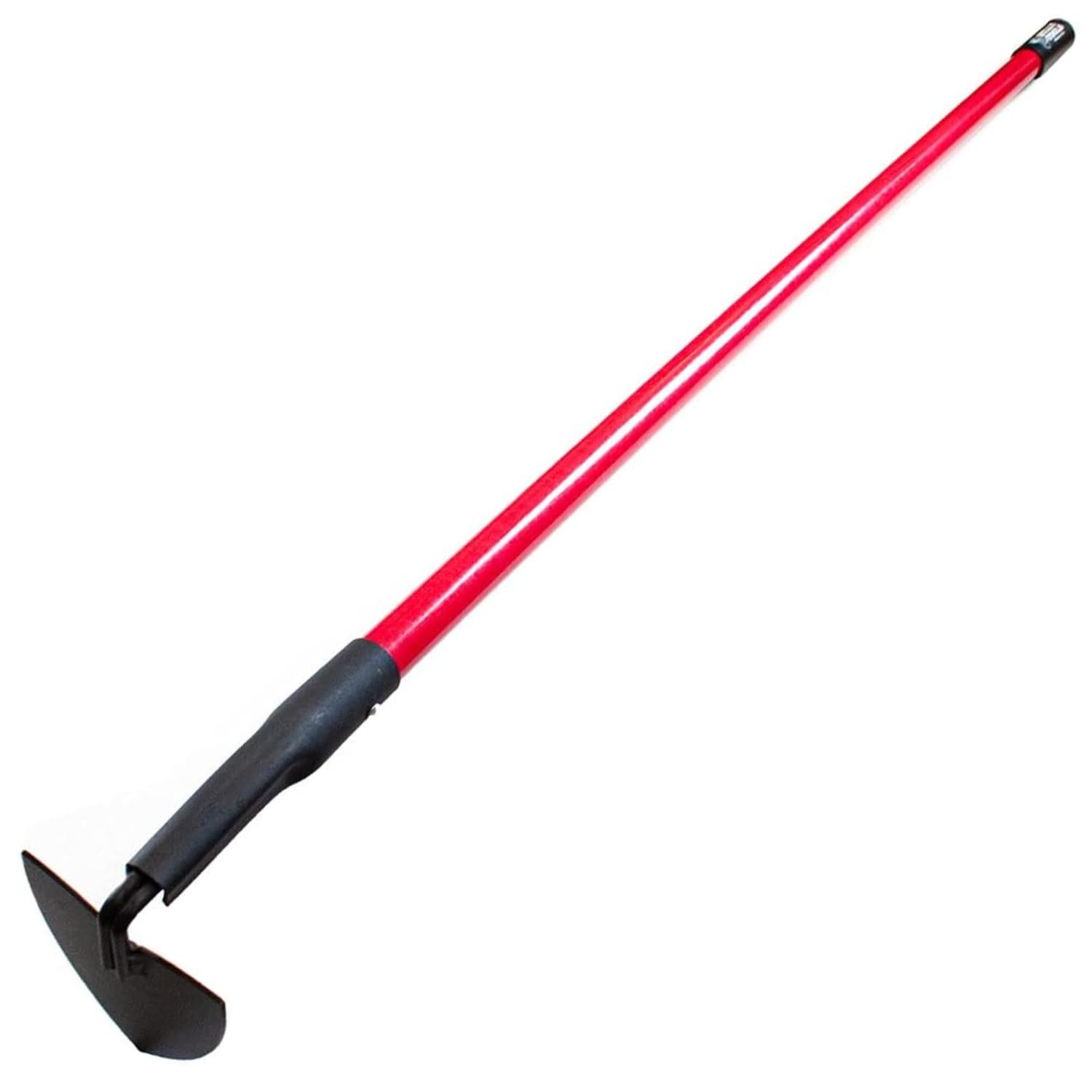
Bully Tools has built a reputation for American-made garden tools that hold up to commercial abuse, and the Warren Hoe (model 92354) exemplifies that ethos. The 12-gauge steel head (approximately 2.7mm thick) is over-welded to an extended steel ferrule that reinforces the connection point — the most common failure zone on cheaper hoes. The 6.25-inch warren-style blade is pointed and triangular, designed for digging narrow furrows, cultivating tight rows, and cutting weeds close to the soil surface with precision.
The all-fiberglass handle features triple-wall construction with a polyester veil coating that resists moisture, UV degradation, and splintering. At 3.07 pounds, the tool has a solid, planted feel during use without being exhausting to swing. The fiberglass dampens vibration significantly better than ash, making it a strong choice for users who work in rocky or root-filled soil where impact shock is constant. Users report the head holds its edge well and can be touched up with a flat file in under a minute.
The warren hoe shape is more specialized than a paddle draw hoe — it excels at creating seed furrows and weeding between closely spaced plants but is less effective for broad-scale soil turning or heavy chopping. If your primary tasks are row-crop cultivation and precision weeding, this is the most capable tool in its tier. The limited lifetime warranty and hassle-free replacement policy add confidence for long-term ownership.
Why it’s great
- 12-gauge steel head with extended ferrule resists bending and weld failure
- Triple-wall fiberglass handle eliminates splintering and resists moisture
- Warren blade design is ideal for precise furrow digging and close-row weeding
Good to know
- Specialized warren shape is less effective for broad chopping or soil turning
- Some users report the fiberglass handle is slightly slippery when wet
5. Bully Tools 12-Gauge Garden Hoe, 58″ Fiberglass Handle

The standard Bully Tools draw hoe (model 92353) shares the same 12-gauge American-made steel construction as the warren variant but uses a wider paddle-shaped blade measuring 5.25 inches by 6.25 inches. This paddle geometry is the classic draw hoe shape — designed for chopping weeds below the soil line, pulling soil into mounds, and breaking up compacted clods. The blade is over-welded to a steel-encased neck, and the 58-inch fiberglass handle provides generous reach for upright working posture.
The rubber grip on the handle reduces hand fatigue during extended sessions, and the polyester veil coating on the fiberglass prevents splintering better than any wood handle on the market. At 3.2 pounds, the tool has enough mass to drive the blade into hard soil without requiring excessive downward force from the user. The powder-coat finish resists rust, though a few users noted surface rust developing after six weeks in humid storage — a light oil wipe prevents this entirely.
The blade arrives moderately sharp from the factory but benefits from a quick file sharpen to reach the cutting performance of premium options like the Rogue. For the price point, this is the most durable general-purpose draw hoe available, backed by a family-owned American company that has been producing tools since 1994. The trade-off is a slightly heavier feel than fiberglass competitor models, which some users find reassuring and others find tiring.
Why it’s great
- 12-gauge steel construction provides excellent durability for heavy clay and rocky soil
- Rubber grip reduces hand fatigue during prolonged weeding sessions
- 58-inch fiberglass handle allows upright posture to protect the lower back
Good to know
- Blade requires initial sharpening to reach optimal cutting performance
- Powder-coat finish can develop surface rust in humid conditions without oiling
6. Xtreme Weeder Scuffle Hoe Cultivator, 54″ Fiberglass Handle
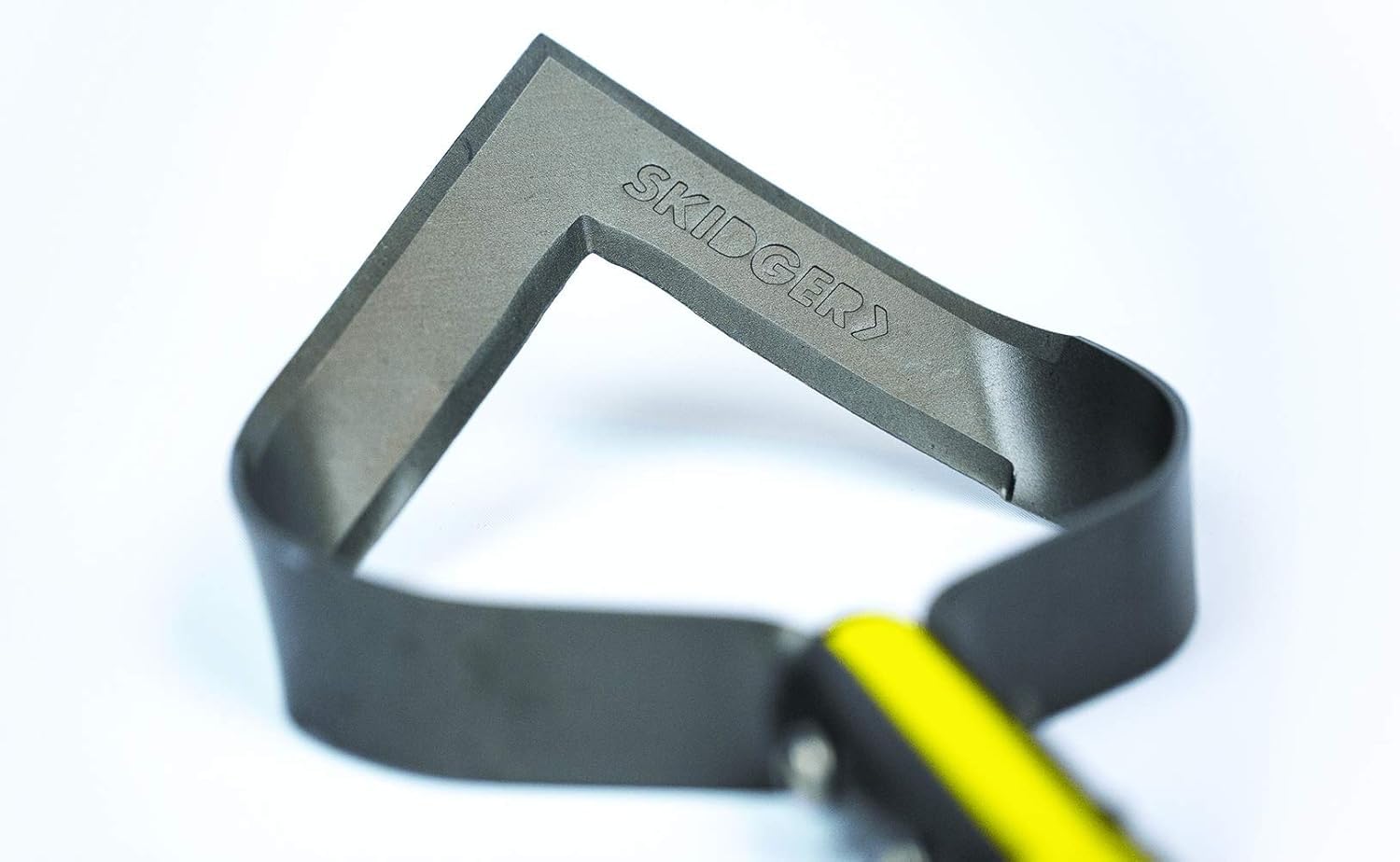
The Xtreme Weeder is a scuffle hoe (also called a hoop hoe or stirrup hoe) that uses a sharp V-shaped stainless steel blade to cut weeds just below the soil surface on both the push and pull stroke. At 1.8 pounds, it is the lightest tool in this guide, making it ideal for quick maintenance weeding in flower beds, vegetable rows, and gravel pathways. The open blade design allows soil, bark, and loose material to pass through without clogging, and the pointed tip reaches between closely spaced plants and around drip irrigation lines.
The 54-inch fiberglass handle with rubber grip provides the reach needed to clear large areas without bending. The blade curvature is designed so the user can see exactly where the cutting edge is working, reducing accidental damage to desirable plants. Users with limited mobility or post-surgery recovery find the light weight and push-pull efficiency significantly less taxing than traditional draw hoes. The stainless steel blade resists rust and holds its edge well, though it can be touched up with a fine file.
The scuffle hoe design has a fundamental limitation: it slices weeds at the surface rather than digging them out by the root. Deep-rooted perennials like dandelions or thistles will regrow from the root crown, requiring either repeated passes or a separate weeding tool. The Xtreme Weeder also arrived poorly packaged in some shipments, with the blade tip chipped during transit. For surface weed maintenance in loose, well-tilled soil, it is the most efficient option available.
Why it’s great
- Ultra-light 1.8-pound design reduces fatigue during long weeding sessions
- Stainless V-blade cuts on push and pull for faster surface weed removal
- Open blade design works cleanly in soil, gravel, and bark mulch
Good to know
- Surface-cutting action does not remove deep taproots; weeds may regrow
- Packaging is insufficient; blade tip can chip during shipping
7. Walensee Weed Puller Tool with 64″ Adjustable Handle
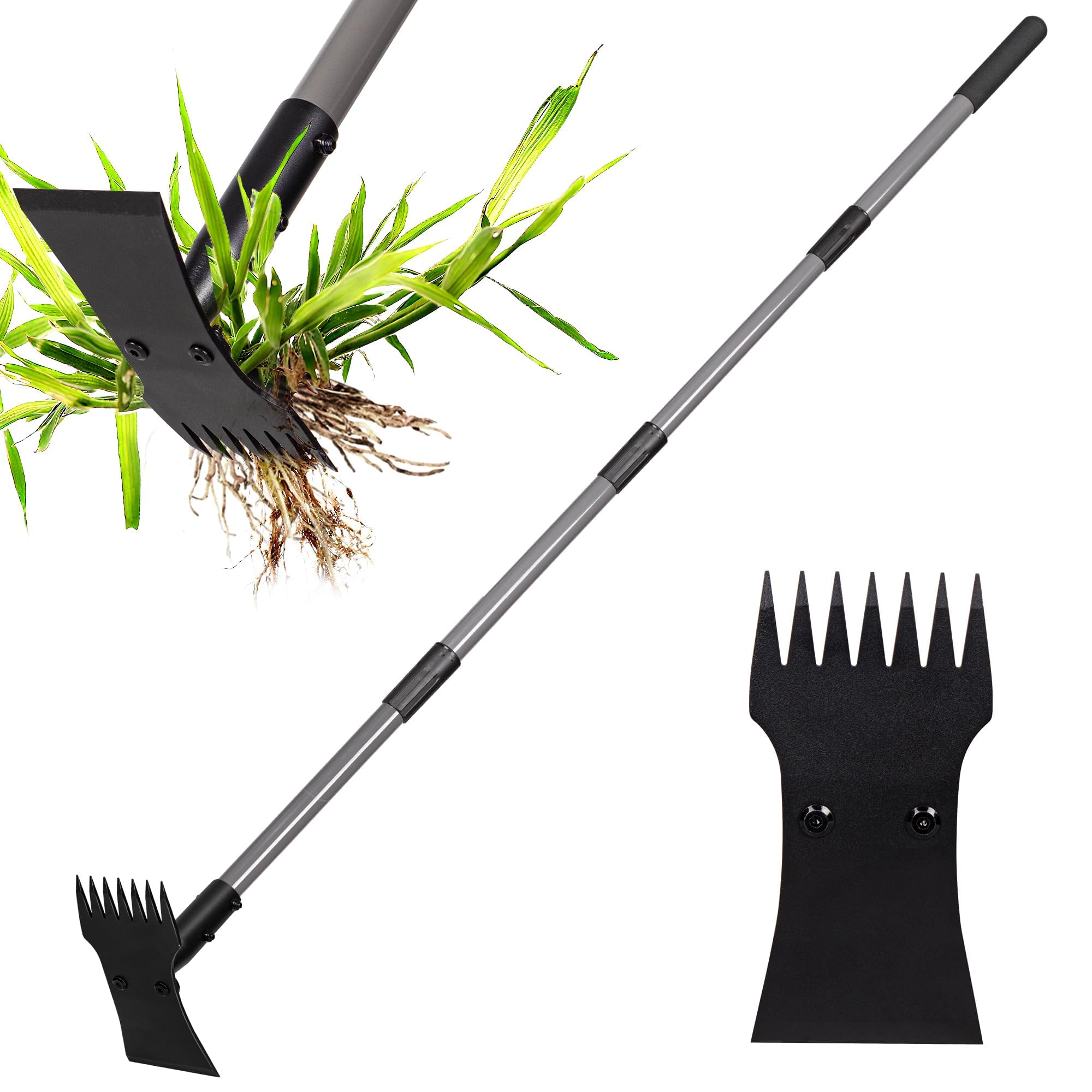
The Walensee Weed Puller takes a multi-tool approach, combining a 7-tine weed rake with a 3.5-inch garden hoe blade in a single head. The 3.5mm thick cast steel construction is noticeably thicker than the budget stamped-steel alternatives, and the 28mm stainless steel handle segments provide a rigid connection without wobble. The adjustable extension system offers four working lengths — 19, 34, 49, and 64 inches — allowing the user to switch between close-up hand weeding and standing reach without changing tools.
The sharp tines penetrate deep soil to extract dandelions and crabgrass by the root, while the integrated hoe blade loosens compacted surface soil and levels flower beds. At 3.39 pounds, the tool is heavier than a dedicated scuffle hoe but still manageable for most users. Assembly is straightforward with the included wrench, though some users report that the threaded connections can loosen during vigorous use and require periodic retightening.
The 2-in-1 design inevitably compromises both functions slightly — the hoe blade is narrower than a dedicated draw hoe, and the tine rake is less effective than a full-sized weeder for very deep taproots. For a homeowner who wants one tool for general garden maintenance and light weeding, the Walensee offers exceptional versatility at a budget-friendly price point. It is not a professional-grade tool, but it outperforms its price tier in steel thickness and adjustability.
Why it’s great
- 3.5mm cast steel head is thicker than most budget options, resisting deformation
- Adjustable handle system offers four working lengths for different tasks
- 2-in-1 design combines weeding rake and hoe blade in one tool
Good to know
- Threaded handle sections can loosen during use and need retightening
- Hoe blade is narrower than dedicated draw hoes, limiting soil-moving capacity
FAQ
What is the difference between a draw hoe and a scuffle hoe?
Should I choose a fiberglass or ash wood handle?
What does the 12-gauge rating mean for a hoe blade?
Can a hoe be sharpened, and how often is needed?
Final Thoughts: The Verdict
For most users, the agricultural hoe tool winner is the Rogue 70F60 because its recycled disc-blade construction delivers unmatched durability and cutting power for heavy soil and overgrown plots. If you want the best balance of weight, versatility, and three-edge cutting action, grab the Rogue 70G. And for precision row cultivation and close-quarters weeding, nothing beats the American-made Bully Tools Warren Hoe.