
The line between a good photo and a great one is no longer just about the lens—it’s about how much intelligence is packed behind it. An AI Camera Phone doesn’t just capture light; it analyzes the scene, predicts motion, optimizes settings in real-time, and even removes distractions after you’ve pressed the shutter. This isn’t about gimmicky filters; it’s about computational photography that makes every frame look like it was professionally lit and composed.
I’m Min — the co-founder and writer behind Gadgets Feed. I’ve spent countless hours dissecting camera modules, AI processing pipelines, and real-world sample shots to understand exactly how these chips turn raw data into gallery-worthy photos.
The sheer variety of options from pocket-friendly mid-rangers to flagship foldables can be overwhelming. That’s exactly why this deep-dive guide exists, helping you find the best ai camera phone for your specific needs, whether that’s vlogging in 4K or capturing crisp moon shots with a periscope lens.
How To Choose The Best AI Camera Phone
Choosing the right AI-enhanced phone requires looking past the marketing hype. The real value lies in understanding how the hardware and software work together to solve common photography problems. Focus on the processing engine, the camera hardware configuration, and the specific AI features that align with your shooting style.
The AI Processing Engine is the Brain
The chipset is the most critical component in an AI Camera Phone. Look for a dedicated Neural Processing Unit (NPU) or AI Engine—like Google’s Tensor G5, Samsung’s Snapdragon 8 Elite, or MediaTek’s Dimensity with APU. This hardware accelerates tasks like scene recognition, multi-frame noise reduction, and real-time bokeh simulation without draining your battery. A powerful NPU is what enables features like Instant Slow-Mo, Audio Eraser, and seamless Object Tracking in video.
Sensor Size and Aperture Matter
Don’t just count megapixels. A larger sensor (like a 1-inch CMOS in some high-end options) captures more light, which reduces noise in low-light conditions. A wide aperture (like f/1.7 or f/1.6) also helps gather light. AI steps in to combine multiple exposures—this is where computational HDR and Night Mode shine. A 50MP sensor with 4-in-1 pixel binning often outperforms a 108MP sensor with small pixels, because the binned pixel size (often 2.0µm or larger) captures better dynamic range and color accuracy, which the AI can then refine further.
Core AI Features: What Actually Helps
Look beyond basic scene detection. Serious AI features include: Auto Framing (hardware+gimbal tracking), Motion Capture Mode (AI predicts movement for sharp action shots), AI Eraser/Object Remover (removes photobombers), and Audio Zoom (AI isolates sound based on visual focus). For creators, a phone with AI-powered stabilization that works in 4K 60fps is a non-negotiable feature.
Quick Comparison
On smaller screens, swipe sideways to see the full table.
| Model | Category | Best For | Key Spec | Amazon |
|---|---|---|---|---|
| Samsung Galaxy S25 Ultra | Premium | Night Mode & Audio Eraser | 200MP + AI Night Mode | Amazon |
| Google Pixel 10 | Premium | AI Editing & Telephoto | Tensor G5 + 5x Telephoto | Amazon |
| Nothing Phone (3) | Premium | Unique Design & AI Tool | Snapdragon 8s Gen4 + 50MP Quad | Amazon |
| Samsung Galaxy Z Fold7 | Premium | Large Screen & Pro Visual Engine | 200MP + Snapdragon 8 Elite | Amazon |
| Honor Magic V5 | Premium | Foldable Periscope Zoom | 50+50+64MP Periscope | Amazon |
| Ulefone Armor 29 Pro Thermal | Premium | Thermal Imaging & Rugged Use | 640×512 Thermal + 21,200mAh | Amazon |
| Google Pixel 10a | Mid-Range | Best Camera Value | Tensor AI + Camera Coach | Amazon |
| DJI Osmo Pocket 3 | Mid-Range | Vlogging & Stabilization | 1″ CMOS + 3-Axis Gimbal | Amazon |
| Xiaomi Poco X7 Pro | Mid-Range | Gaming & AI Motion Capture | Dimensity 8400-Ultra + 50MP OIS | Amazon |
| Xiaomi Redmi Note 14 Pro+ | Mid-Range | High MP Count & AI Tools | 200MP OIS + 120W Charging | Amazon |
| Insta360 X4 Air | Mid-Range | AI 360 Video Editing | 8K 360° + AI Reframing | Amazon |
In‑Depth Reviews
1. Samsung Galaxy S25 Ultra

The Samsung Galaxy S25 Ultra sets the benchmark for what an AI Camera Phone can achieve. The 200MP sensor is underpinned by the Snapdragon 8 Elite processor, which powers the ProVisual Engine for real-time image processing. This translates to incredibly detailed photos in broad daylight and surprisingly clean, noise-free shots in near-darkness thanks to its advanced AI Night Mode.
The Audio Eraser feature is a standout for video creators, using AI to isolate and remove wind, traffic, or crowd noise after recording. The multi-task AI assistant can handle complex requests, like searching for a specific restaurant and texting the address, entirely hands-free. The built-in S Pen adds a layer of precision for editing photos on the go.
The 5000mAh battery easily lasts a full day of heavy camera and AI feature use. The titanium frame and Corning Gorilla Glass Armor make it exceptionally durable, though it is a larger device. For photographers who need the highest level of detail and post-processing control, this is the powerhouse pick.
Why it’s great
- Best-in-class 200MP sensor for maximum detail
- AI Audio Eraser cleans up video sound perfectly
- Fast and intuitive AI assistant for multitasking
Good to know
- Large and heavy design may not suit all users
- Premium pricing reflects the top-tier hardware
2. Google Pixel 10

Google’s Pixel 10 is the embodiment of computational photography excellence. Powered by the Tensor G5 chip, it uses AI not just to enhance images but to intelligently compose them. The Camera Coach feature provides real-time guidance on framing and lighting, practically guaranteeing a professional-looking portrait every time, even for beginners.
The 5x telephoto lens with Super Res Zoom up to 20x is a pure AI achievement—it uses machine learning to fill in detail, resulting in surprisingly sharp zoomed-in shots that outclass many competitors with higher megapixel counts. The AI-powered “Add Me” feature lets you splice yourself into group photos seamlessly, a trick that feels like magic until you see it works.
The 6.3-inch Actua display hits a 3000-nit peak brightness, making it easy to frame shots in harsh sunlight. With 7 years of Pixel Drops, the camera AI will only get smarter over time. It lacks the raw battery capacity of some rivals but charges fast and efficiently manages power thanks to the Tensor chip’s optimizations.
Why it’s great
- Best computational photography with Tensor AI
- Excellent 5x telephoto with AI-enhanced zoom
- Long-term software support with 7 years of updates
Good to know
- No wall adapter included in the box
- Does not use a physical SIM card slot
3. Nothing Phone (3)

The Nothing Phone (3) proves that an AI Camera Phone can be both powerful and artistically distinct. Its Snapdragon 8s Gen4 chip drives a revolutionary 50MP quad-camera system, including a periscope lens, which delivers exceptional color science and sharpness. The AI engine refines images through Auto Tone and Portrait Optimiser, making every social media post look editorially curated.
The Glyph Interface turns notifications into an interactive light show, but it also serves a practical purpose for photography—it can function as a unique fill light for close-up shots. The Essential Key and Essential Space provide a powerful AI-powered organization tool for capturing and sorting ideas, screenshots, and voice notes directly related to your visual workflow.
The 6.67-inch AMOLED display with a 120Hz refresh rate and 4500 nits peak brightness is stunning for previewing photos. The IP68 rating ensures durability. While finding cases can be a challenge, the phone’s unique transparent back and lighting system make it a conversation starter that delivers serious AI camera performance.
Why it’s great
- Unique Glyph Interface with practical photography use
- Powerful 50MP quad camera with periscope zoom
- Clean, bloatware-free Android experience
Good to know
- Limited case and accessory availability
- Top speaker can produce hissing at high volume
4. Samsung Galaxy Z Fold7
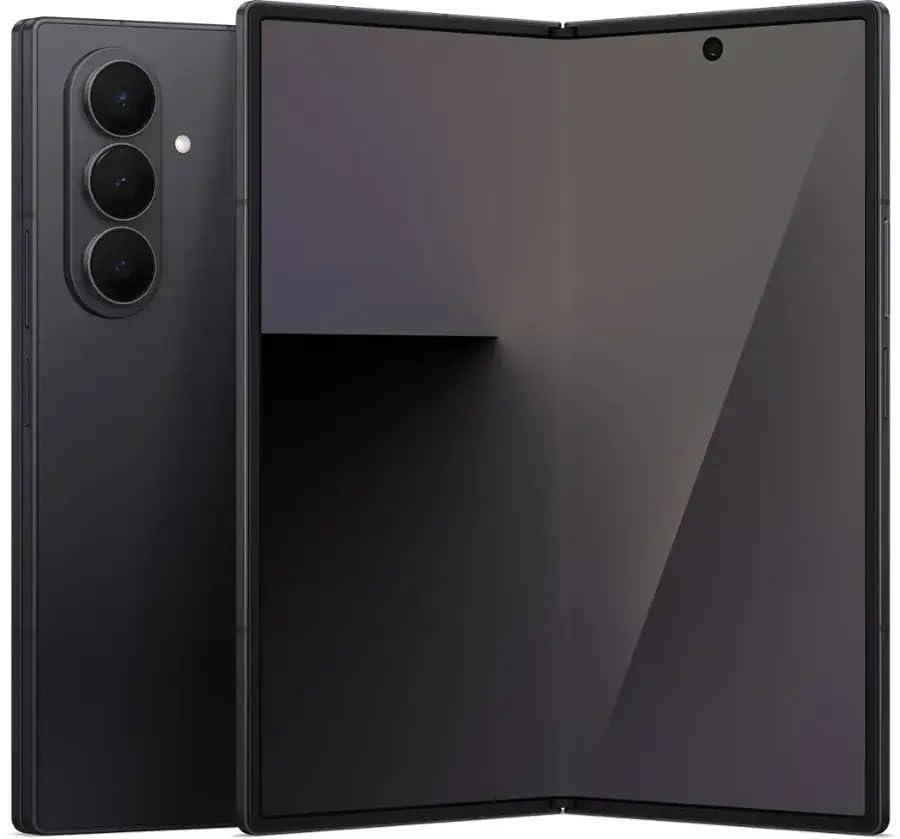
The Samsung Galaxy Z Fold7 combines the versatility of a foldable display with a 200MP camera system, a first for the Fold series. The ProVisual Engine uses AI to process data from the main sensor, making this the best camera on a foldable yet. The 8-inch internal screen is a fantastic canvas for editing high-res photos or reviewing footage in real-time while using the cover screen as a viewfinder.
The AI-powered “Go Live with Google Gemini” feature allows you to screenshare directly from the camera viewfinder for real-time assistance—perfect for complex projects or live tutorials. Despite the massive internal display, the phone is slimmer and lighter than previous generations, making it more pocketable. The battery handles up to 11 hours of screen time, which is respectable for a device with such a large display.
The Armor Aluminum frame and Gorilla Glass Ceramic 2 make it robust for daily use, although the book-style form factor still requires careful handling. For professionals who want a tablet-like editing experience in a phone form factor with top-tier AI camera features, the Z Fold7 is unquestionably the leader.
Why it’s great
- 200MP camera on a foldable is a major achievement
- Massive 8-inch screen for photo editing
- AI-powered live assistance for creative work
Good to know
- Very high price point for consumers
- Hinge durability still requires caution
5. Honor Magic V5
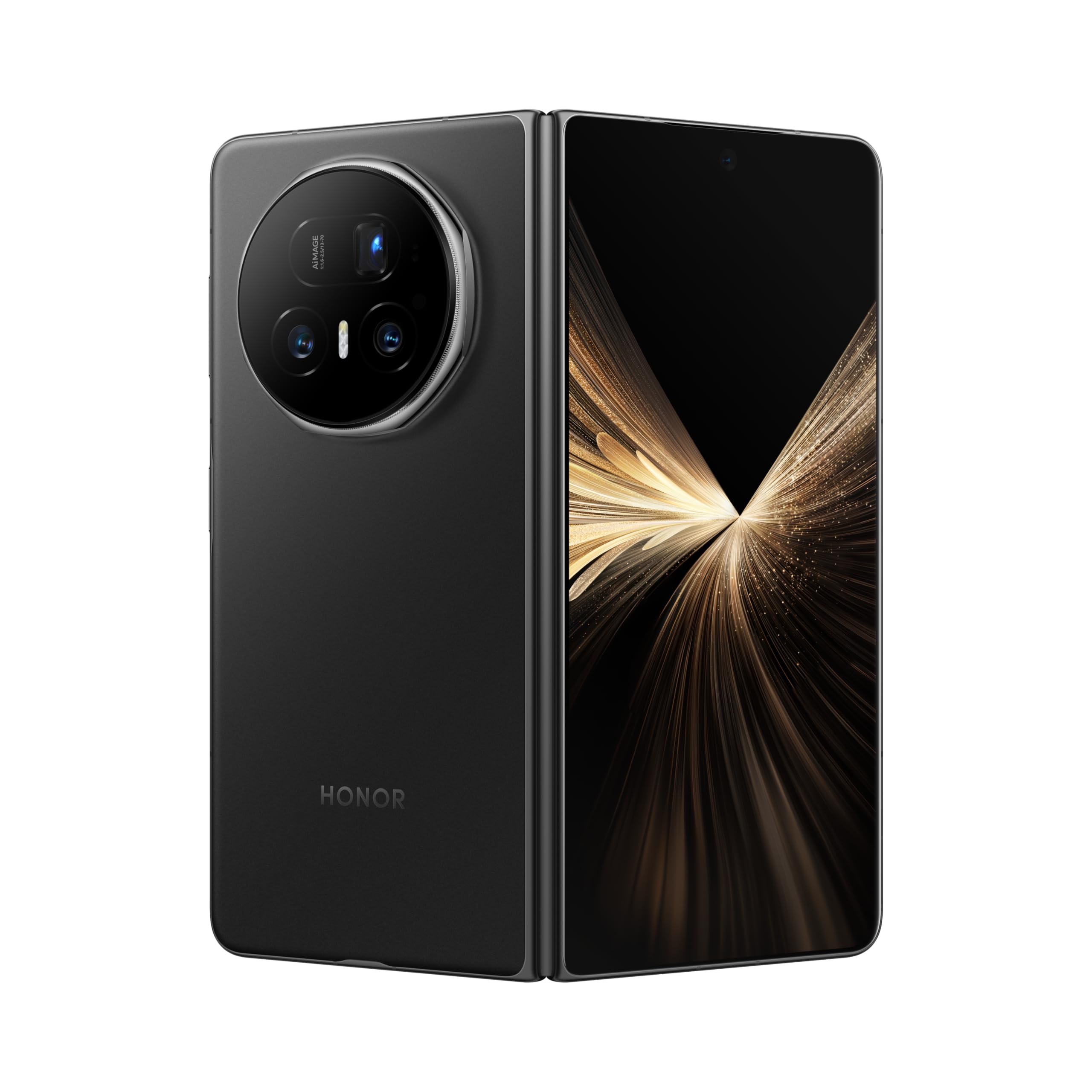
For those who prioritize long-distance photography, the Honor Magic V5 is a standout AI Camera Phone. Its triple rear camera system, featuring a 50MP main, 50MP ultrawide, and a 64MP periscope telephoto, delivers exceptional zoom capabilities. The AI refines the periscope output with intelligent denoising and detail reconstruction, making 100x digital zoom surprisingly usable for capturing distant subjects like wildlife or moon details.
The foldable design is impressively thin, making it one of the most pocket-friendly large-screen devices. The 7.95-inch inner screen is perfect for reviewing and editing high-resolution zoomed images. The Snapdragon 8 Elite processor ensures that the AI processing pipeline handles the massive data from the high-megapixel sensors without lag.
It is important to note that this is an international version, optimized for GSM carriers like T-Mobile, and is not compatible with Verizon or Sprint. The 5820mAh battery is excellent for a foldable, easily lasting a day of intensive shooting. If maximum optical reach is your primary goal, this is a top contender.
Why it’s great
- Outstanding 64MP periscope zoom with AI enhancement
- Extremely thin and light foldable design
- Large battery capacity for a foldable phone
Good to know
- Limited carrier support in the US
- Curved screen makes finding a good tempered glass protector difficult
6. Ulefone Armor 29 Pro Thermal
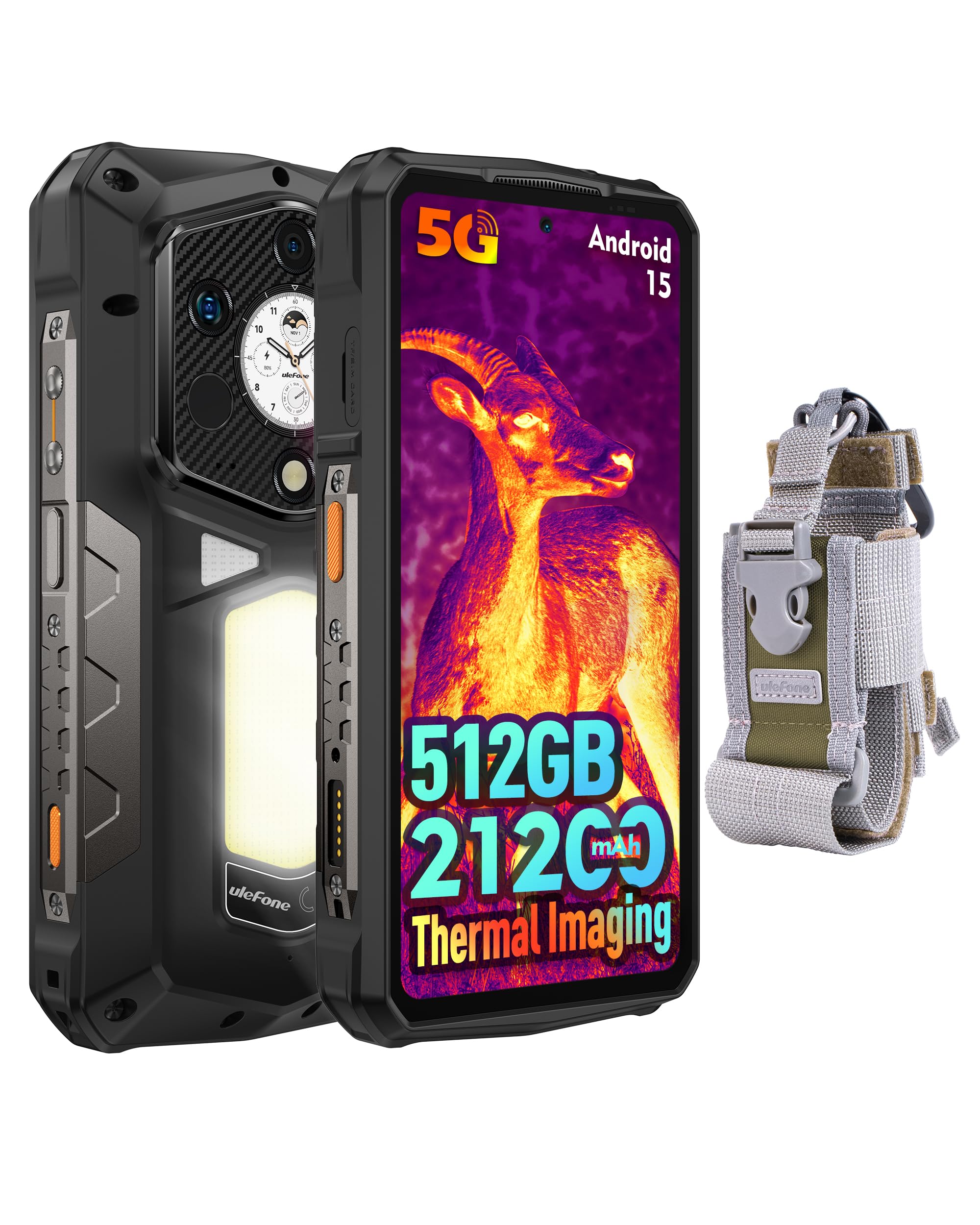
The Ulefone Armor 29 Pro Thermal is unlike any other phone on this list—it integrates a professional-grade thermal imager alongside its standard cameras. Powered by a ThermoVue T2 chip and an AI-driven SharpenAl algorithm, it offers a 640×512 thermal resolution at a 25Hz refresh rate, perfect for industrial inspections, outdoor survival, or creative thermal photography. This isn’t a gimmick; the 2°C accuracy and AI dual-spectrum fusion make it a legitimate tool.
Beyond thermal imaging, the 64MP night vision camera with NightElf 3.0 and 4 infrared LEDs can see in pitch black. The 5-watt, 1000-lumen LED light doubles as an emergency beacon with red/blue warning patterns. The 21,200mAh battery is absolutely colossal, providing several days of heavy use or a week of moderate use, with 120W fast charging to top it up quickly.
It’s a heavy device (688 grams) and built to survive drops and submersion with IP68/IP69K and MIL-STD-810H ratings. The Dimensity 7400 chip handles AI tasks competently. For those who work in construction, emergency services, or extreme outdoor exploration, this is an irreplaceable tool, not just a phone.
Why it’s great
- Integrated high-resolution thermal imaging camera
- Massive 21,200mAh battery lasts for days
- Exceptionally durable with IP68/IP69K certification
Good to know
- Very heavy at 688g, not for everyday casual use
- Not compatible with AT&T or Cricket networks
7. Google Pixel 10a

The Google Pixel 10a proves that you don’t need to spend flagship money to get a top-tier AI camera experience. It inherits Google’s legendary computational photography DNA, including the Camera Coach feature that provides live composition tips—a massive help for improving your photography skills. The AI-driven “Add Me” and “Best Take” features work flawlessly, ensuring group photos have everyone looking their best.
The 30-hour battery life is excellent for a mid-range device, and the IP68 water and dust resistance is a premium feature at this level. The Actua display with 3000-nit peak brightness is bright enough for clear outdoor use. The phone is powered by a capable tensor chip that handles all the AI magic, from spam call screening to real-time photo enhancements.
With 7 years of software and security updates promised, the Pixel 10a is a long-term investment. It lacks the telephoto lens of its bigger sibling, but the main sensor’s AI processing is so advanced that it often outperforms phones with more lenses. For practical, everyday AI photography without breaking the bank, this is the champion.
Why it’s great
- Incredible AI camera features at a budget-friendly price
- Long battery life with fast charging support
- 7 years of software updates for long-term value
Good to know
- No dedicated telephoto lens
- 128GB base storage may be limiting for heavy users
8. DJI Osmo Pocket 3

The DJI Osmo Pocket 3 is a dedicated AI-powered camera that excels where phone cameras still struggle: physical stabilization. Its 3-axis mechanical gimbal provides perfectly smooth footage, even when running or cycling. The 1-inch CMOS sensor captures 4K video at 120fps with professional-grade cinematic quality, while the AI-driven ActiveTrack 6.0 locks onto subjects, keeping them perfectly centered as you move.
The 2-inch rotatable touchscreen is brilliant for vloggers, flipping from landscape to portrait in a snap for TikTok and Instagram content. The Creator Combo includes the DJI Mic 2, which provides crystal-clear wireless audio that connects directly to the camera via DJI OsmoAudio, eliminating the need for syncing in post-production.
It supports D-Log M color profile for advanced grading, capturing over a billion colors. The Invisible Selfie Stick effect (with compatible stick) creates drone-like third-person perspectives. While not a phone, it’s the ultimate AI camera companion for mobile content creators who prioritize stabilization and professional audio quality over phone convenience.
Why it’s great
- Professional-grade 3-axis mechanical stabilization
- Excellent 1-inch sensor for low-light video
- AI-powered object tracking for solo creators
Good to know
- Not a phone, requires separate device for calls
- Gimbal is delicate and should be handled with care
9. Xiaomi Poco X7 Pro

The Xiaomi Poco X7 Pro delivers flagship-level speed for an AI Camera Phone at a mid-range price. The Dimensity 8400-Ultra processor is a beast for gaming and AI tasks, with a dedicated NPU that accelerates scene detection and AI beautification. The 50MP main camera with OIS captures sharp, detailed photos, while the AI Motion Capture Mode freezes fast-moving subjects with excellent clarity.
The 6.67-inch 120Hz AMOLED display with a 3200-nit peak brightness is incredibly smooth for browsing and photo preview. The 6000mAh battery is one of the largest in its class, easily providing two days of moderate use, and the 90W charger refills it very quickly. The phone also handles 4K video recording at 60fps, which is rare at this price point.
The software experience requires some getting used to, but the raw hardware performance is undeniable. It shines for gamers who also want a capable camera, offering a smooth 120Hz refresh rate and responsive touch controls. For those who prioritize raw processing power and battery life over software polish, this is a phenomenal choice.
Why it’s great
- Blazing fast Dimensity 8400-Ultra performance
- Massive 6000mAh battery with 90W charging
- Smooth 120Hz AMOLED display
Good to know
- Software UI has a learning curve
- Limited US carrier compatibility
10. Xiaomi Redmi Note 14 Pro+

The Xiaomi Redmi Note 14 Pro+ offers an incredible 200MP main camera with OIS at a value-focused price, making high-resolution photography accessible. The Snapdragon 7s Gen3 chip handles the AI processing, enabling features like AI Film, AI Image Editing, and Circle to Search with Google. The 16-in-1 pixel binning technology creates large 2.24μm pixels for excellent low-light performance.
The 6.67-inch 1.5K AMOLED display with a 120Hz refresh rate and 3000-nit peak brightness is stunning, protected by Gorilla Glass Victus 2. The 5110mAh battery is solid, and the 120W HyperCharge is astonishingly fast—filling the battery in under 20 minutes. The phone also includes a suite of AI tools like AI Interpreter and AI Notes, making it a productivity powerhouse.
The main camera’s detail in good light is impressive, though software processing can occasionally oversmooth textures. For a budget-friendly AI Camera Phone that packs features found in much more expensive devices—like Dolby Vision support and a 200MP sensor—the Redmi Note 14 Pro+ is a standout. It is a strong contender for feature chasers on a tighter budget.
Why it’s great
- Excellent 200MP OIS camera for the price
- Blazing fast 120W wired charging
- Bright 1.5K AMOLED display with Dolby Vision
Good to know
- Software processing can sometimes over-smooth details
- Limited network compatibility (T-Mobile/Mint/Tello)
11. Insta360 X4 Air
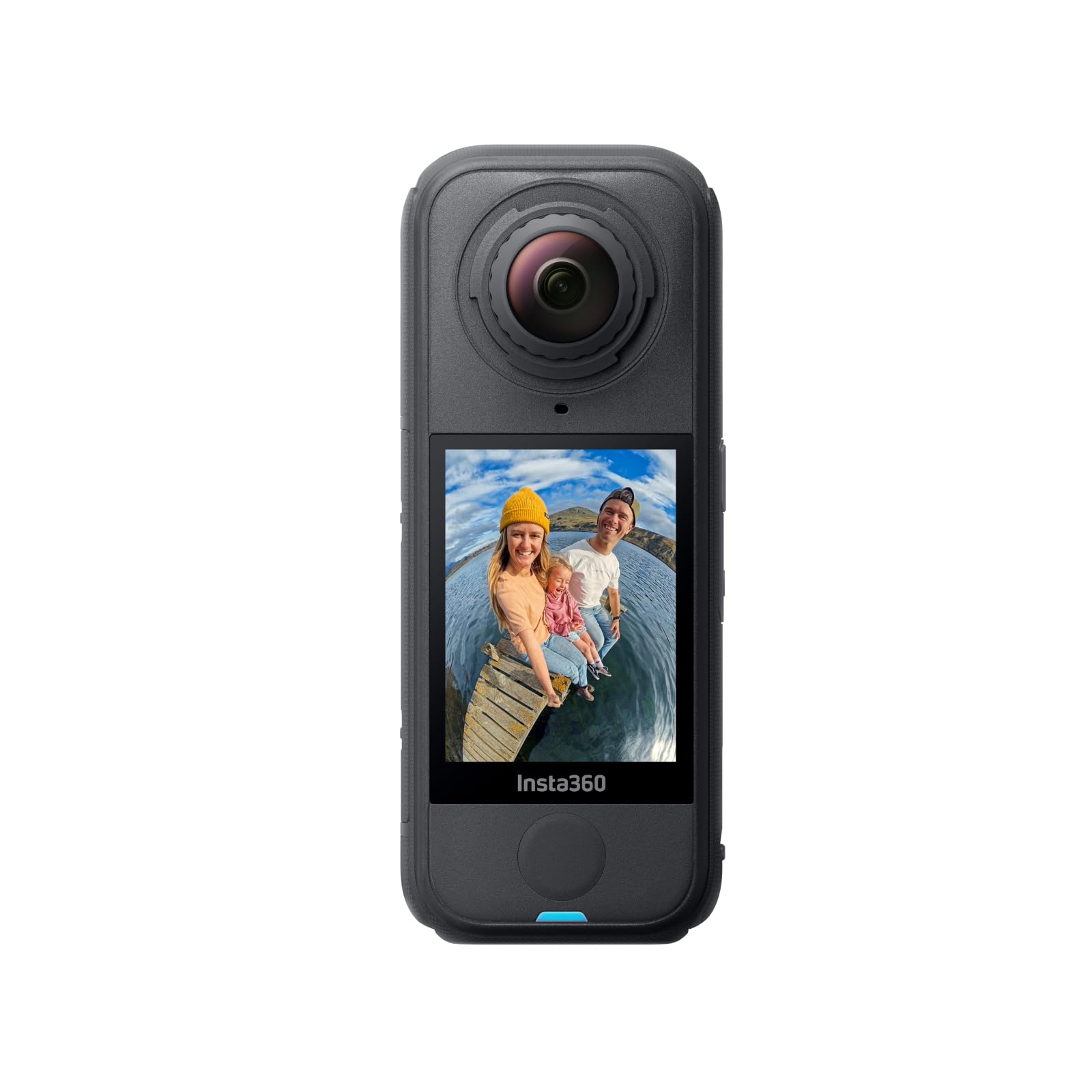
The Insta360 X4 Air is a dedicated 360-degree AI camera that redefines how you capture moments. Instead of aiming, you simply record in 8K 360, then use the AI-powered app to reframe your video later, picking the best angle. This eliminates the fear of missing the shot. The Invisible Selfie Stick effect creates stunning third-person drone-like perspectives.
Weighing only 165 grams, it’s incredibly light and portable. The FlowState Stabilization and 360° Horizon Lock ensure footage is perfectly level, even when the camera is tumbling. The AI-powered editing tools in the app offer one-tap templates and effects that make editing 360 footage as simple as editing a standard video.
The replaceable lenses are a practical touch, making accidental damage less catastrophic. The Insta360+ cloud service provides automatic backup and cloud editing. While it is not a phone, it is the ultimate AI-powered companion for capturing immersive, creative content that no standard phone camera can replicate.
Why it’s great
- Unique 8K 360-degree capture with AI reframing
- Incredibly lightweight and portable design
- Powerful AI-driven stabilization and editing tools
Good to know
- Not a phone, serves as a dedicated camera
- Requires compatible selfie stick for invisible effect
FAQ
How does AI improve low-light photography on a phone?
Do I need a powerful NPU for AI camera features?
Final Thoughts: The Verdict
For most users, the best ai camera phone winner is the Samsung Galaxy S25 Ultra because it combines a top-tier 200MP sensor with the industry’s most advanced AI processing and exceptional battery life. If you want the best computational photography and value for money, grab the Google Pixel 10a. And for creating professional video content with unmatched stabilization, nothing beats the DJI Osmo Pocket 3.