
The line between reality and the digital layer is dissolving. You walk into a meeting with a live transcript floating in your periphery, watch a cinema-sized movie on a cross-country flight, or see turn-by-navigation arrows painted directly on the street ahead — all without holding a single device. That is the promise of AI glasses with a display, a category that has finally moved past bulky prototypes to deliver genuine utility in a frame that looks like normal eyewear.
I’m Min — the co-founder and writer behind Gadgets Feed. I’ve spent years dissecting the optical engines, chipset architectures, and display technologies that separate a gimmick from a daily driver in this fast-moving wearable display space..
These devices now pack Micro-OLED panels with 120Hz refresh rates, AI-powered upscaling, and native 3DoF tracking into frames that weigh less than 80 grams. This guide cuts through the noise to help you find the very best ai glasses with display for your specific use case, whether that is portable cinema, hands-free productivity, or real-time spatial computing.
How To Choose The Best AI Glasses With Display
Not all display glasses are created equal. Some serve as private monitors that mirror your phone’s screen, while others offer spatial anchoring that pins a virtual display to a fixed point in your room. Your choice hinges on four critical factors that define the real-world experience.
Display Technology and Brightness
The heart of these glasses is the Micro-OLED panel. Standard models offer 1080p resolution per eye at 120Hz, while premium units push to 1200p or even 1500 nits peak brightness. Higher nits matter most if you plan to use them outdoors or in brightly lit rooms. Look for HDR10 support and a high contrast ratio (200,000:1 or better) for vivid colors and deep blacks that make movies and games pop.
Field of View (FOV) and Screen Size
FOV determines how immersive the virtual screen feels. Entry-level units hover around 46 degrees, delivering a 201-inch virtual display at 6 meters. Premium options stretch to 52 or 57 degrees, pushing that virtual screen to 500 inches. A wider FOV fills more of your peripheral vision, but also increases the demand for precise IPD (interpupillary distance) adjustment to avoid blurred edges.
Spatial Tracking: 0DoF vs. 3DoF vs. 6DoF
0DoF means the screen follows your head like a fixed monitor strapped to your face. 3DoF (three degrees of freedom) anchors the screen in space so it stays put as you turn your head — critical for reading text without motion sickness. 6DoF adds positional tracking so you can walk around the virtual screen. For most buyers, native 3DoF is the sweet spot, offering stability without the complexity of external sensors.
Connectivity and Ecosystem
Nearly all models rely on USB-C with DisplayPort Alt Mode, meaning they plug directly into modern iPhones, Android flagships, Steam Decks, and laptops. No batteries, no Bluetooth pairing — just instant video. However, if you own an iPhone 14 or older, or need passthrough charging while using the glasses, you will need an adapter. Some brands, like VITURE and XREAL, offer proprietary neckbands or Beam accessories that add wireless streaming and app stores.
Quick Comparison
On smaller screens, swipe sideways to see the full table.
| Model | Category | Best For | Key Spec | Amazon |
|---|---|---|---|---|
| VITURE Luma Ultra | Premium AR | 6DoF spatial computing & gaming | 1500 nits, 52° FOV, 1200p | Amazon |
| XREAL One Pro | Premium AR | Immersive 57° FOV & Bose audio | 57° FOV, X1 Chip, 120Hz | Amazon |
| XREAL 1S | Premium AR | Native 3DoF & REAL 3D | 52° FOV, 500-inch virtual screen | Amazon |
| Meta Oakley Vanguard | Sports AI | Cycling & athletic performance | 122° camera FOV, IP67 | Amazon |
| VITURE Luma Pro | Premium Monitor | Sharpest 1200p display & myopia adjust | 1200p, 52° FOV, Harman audio | Amazon |
| Meta Ray-Ban (Gen 2) | Lifestyle AI | Hands-free capture & Meta AI | 12 MP camera, 8-hour battery | Amazon |
| RayNeo Air 3s Pro | Bright Display | Ultra-bright outdoor viewing | 1200 nits, HueView 2.0 | Amazon |
| RayNeo Air 4 Pro | Value AR | Budget-friendly HDR10 display | Vision 4000 chip, 120Hz | Amazon |
| Lenovo Legion Glasses Gen 2 | Entry Monitor | Low-cost 120Hz personal display | Micro-OLED, 65g weight | Amazon |
In‑Depth Reviews
1. VITURE Luma Ultra XR Glasses
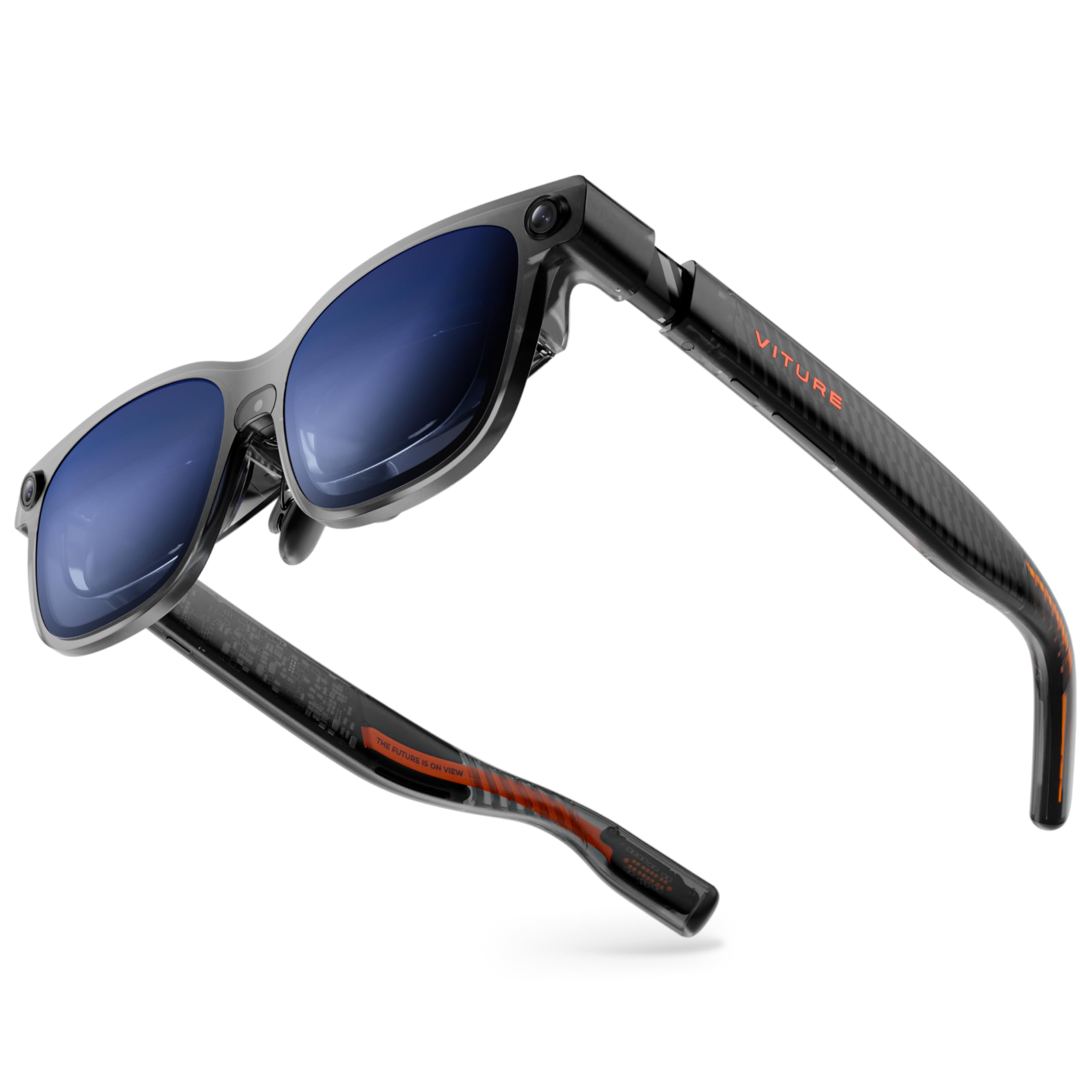
The VITURE Luma Ultra sits at the bleeding edge of what wearable displays can do, packing a triple-camera system that unlocks zero-drift 6DoF spatial computing. Its 1500-nit Micro-OLED panels deliver a stunning 152-inch virtual screen at 1200p resolution, with a 52-degree FOV that feels expansive without overwhelming your peripheral vision. The built-in myopia adjustment up to -4.0 diopters eliminates the need for prescription inserts, while the electrochromic film lets you darken the lenses instantly for total immersion.
Powered by Harman-tuned audio drivers, the Luma Ultra delivers rich spatial sound that complements the visual experience. The SpaceWalker app supports multi-screen productivity on macOS and Windows, letting you arrange up to three virtual monitors in panoramic mode. For gamers, the 2D-to-3D conversion feature breathes new depth into standard content, and compatibility with the VITURE Pro Neckband unlocks hand gesture recognition for true spatial interaction.
That said, the Luma Ultra is a first-generation product in its 6DoF implementation. Some users report that the multi-monitor setup can induce dizziness during extended use, and the image positioning can feel slightly too high for certain face shapes. It also requires the neckband accessory for full spatial features, adding to the overall investment. For buyers who want the most advanced spatial computing experience available today, this is where the future begins.
Why it’s great
- Industry-leading 1500 nits brightness for outdoor use
- True 6DoF tracking with hand gesture support via neckband
- Built-in myopia adjustment eliminates prescription inserts
Good to know
- Requires neckband accessory for full spatial features
- Multi-monitor mode may cause motion sickness for some
- Image positioning can feel high for certain face shapes
2. XREAL One Pro AR Glasses

The XREAL One Pro raises the bar for field of view, offering a best-in-class 57-degree FOV that projects a 171-inch virtual screen at 4 meters. Powered by the self-developed X1 spatial computing chip, it delivers native 3DoF tracking with an ultra-low 3ms motion-to-photon latency — far below the 20ms threshold where motion sickness sets in. The X-Prism optics provide crisp, distortion-free visuals from edge to edge, while the 120Hz refresh rate ensures buttery-smooth motion in games and fast-paced content.
Audio is co-developed with Bose, resulting in a spacious soundstage with clear mids and deep lows that rival standalone open-ear headphones. The dual IPD design (M: 57-66mm, L: 66-75mm) covers over 95% of users, and the three-stage adjustable arms with spring hinges deliver a secure, pressure-free fit for extended sessions. The electrochromic dimming lets you adjust lens tint on the fly, making the One Pro usable in bright sunlight without sacrificing clarity.
However, the One Pro has a few rough edges. The lack of physical volume and media controls on the glasses themselves means you must use your connected device for adjustments. Users who wear prescription glasses will need to purchase separate prescription inserts. The polarization interference on some Windows laptops can cause display flicker, and the plastic frame can feel warm against the skin during long sessions. For the widest FOV and most stable spatial tracking, the XREAL One Pro is a top-tier choice.
Why it’s great
- Industry-leading 57° FOV for maximum immersion
- Ultra-low 3ms latency with native 3DoF tracking
- Bose-engineered audio with rich spatial soundstage
Good to know
- No built-in volume or media controls on the glasses
- Requires prescription inserts for glasses wearers
- Polarization interference reported on some Windows laptops
3. XREAL 1S AR/XR Glasses
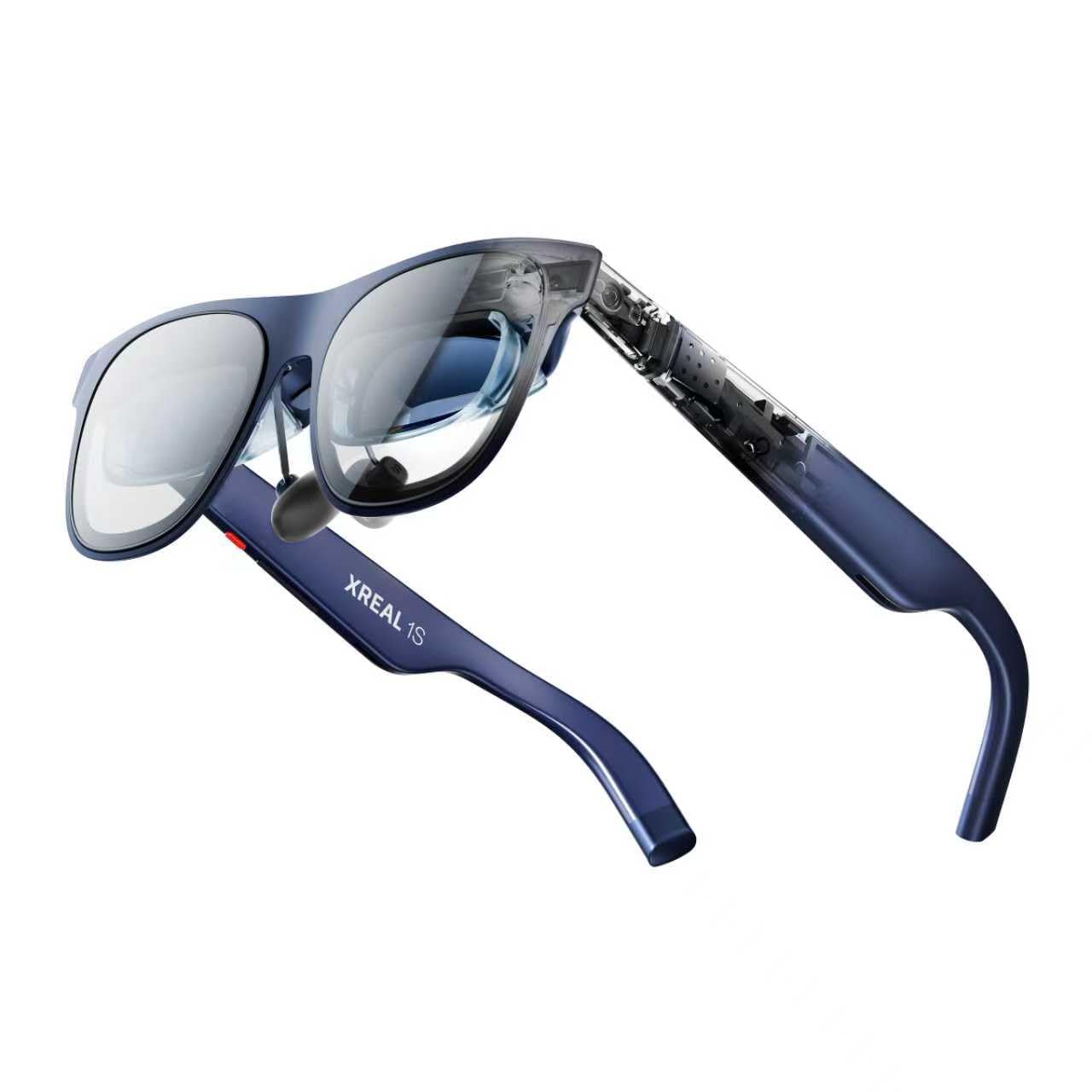
The XREAL 1S delivers a massive 500-inch virtual screen with its 52-degree FOV, making it one of the most immersive options for media consumption and gaming. The X1 chip enables native 3DoF spatial viewing without any app setup — simply plug into any USB-C DP device and the screen anchors in place. The REAL 3D feature transforms standard 2D content into true spatial depth at up to 30fps, adding a new dimension to movies and games. Every unit is individually color-tuned for precise, natural hues, and the redesigned optical engine improves edge-to-edge clarity by 9 percent.
Audio is handled by Bose-tuned drivers that deliver a spacious, balanced soundstage with exceptional vocal clarity. The 90Hz global refresh in standard mode eliminates flicker and blur, while 120Hz is available in 3DoF mode for ultra-smooth motion. The IPD range of 59.5-70.5mm accommodates roughly 95% of users, and the TÜV Rheinland certification ensures low blue light and flicker-free viewing for comfortable long sessions.
That said, the 1S has some compromises. The 52-degree FOV, while wide, can cause visual clutter from the frame edges, and the display feels dim on the clearest setting for outdoor use. The nose pads are uncomfortable for some users, and the lack of a setup wizard means you may need to consult online communities for optimal configuration. For buyers who prioritize native 3DoF stability and Bose-quality audio, the XREAL 1S remains a compelling mid-range powerhouse.
Why it’s great
- Native 3DoF spatial tracking with no app setup required
- Bose-tuned audio with rich soundstage
- 500-inch virtual screen for immersive entertainment
Good to know
- Display can feel dim in bright outdoor environments
- Nose pads are uncomfortable for extended wear
- Frame edges cause visual clutter for some users
4. Meta Oakley Vanguard AI Glasses
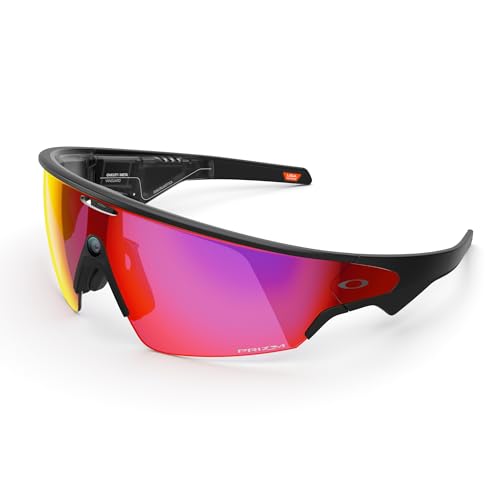
The Meta Oakley Vanguard takes a different approach — it does not project a virtual screen onto your retina, but instead acts as a hands-free AI companion designed for athletes. The centered 12 MP ultra-wide camera captures 3K video with a 122-degree field of view, perfect for recording cycling sprints, trail runs, or climbing sessions without holding a phone. The open-ear speakers deliver clear audio even in windy conditions, and the IP67 rating means sweat, dust, and rain are no match for this rugged frame.
Meta AI provides real-time workout metrics when paired with a compatible Garmin device, offering pace, distance, and heart rate data directly in your ear. The voice command system works reliably up to 25 mph, letting you start recording or make calls mid-stride. The battery lasts up to 9 hours of typical use, with the charging case adding another 36 hours. The Prizm Road lens coating enhances contrast on pavement, making it easier to spot obstacles.
However, the Vanguard is not a display-first device — it lacks the Micro-OLED screen found on other glasses in this list. Audio drains the battery faster, with music playback lasting roughly 4 hours before needing a recharge. The frame is heavier than standard Oakleys at 65 grams, and some users report the touchpad stops working when saturated with sweat during intense runs. For athletes who want voice-controlled capture and AI coaching without a display, the Vanguard is the smartest choice.
Why it’s great
- IP67 sweat and dust resistance for tough workouts
- 3K video with 122° ultra-wide POV capture
- Real-time Garmin integration for workout metrics
Good to know
- No built-in display — purely an AI capture device
- Audio drains battery to ~4 hours of music playback
- Touchpad may fail during heavy perspiration
5. VITURE Luma Pro XR Glasses
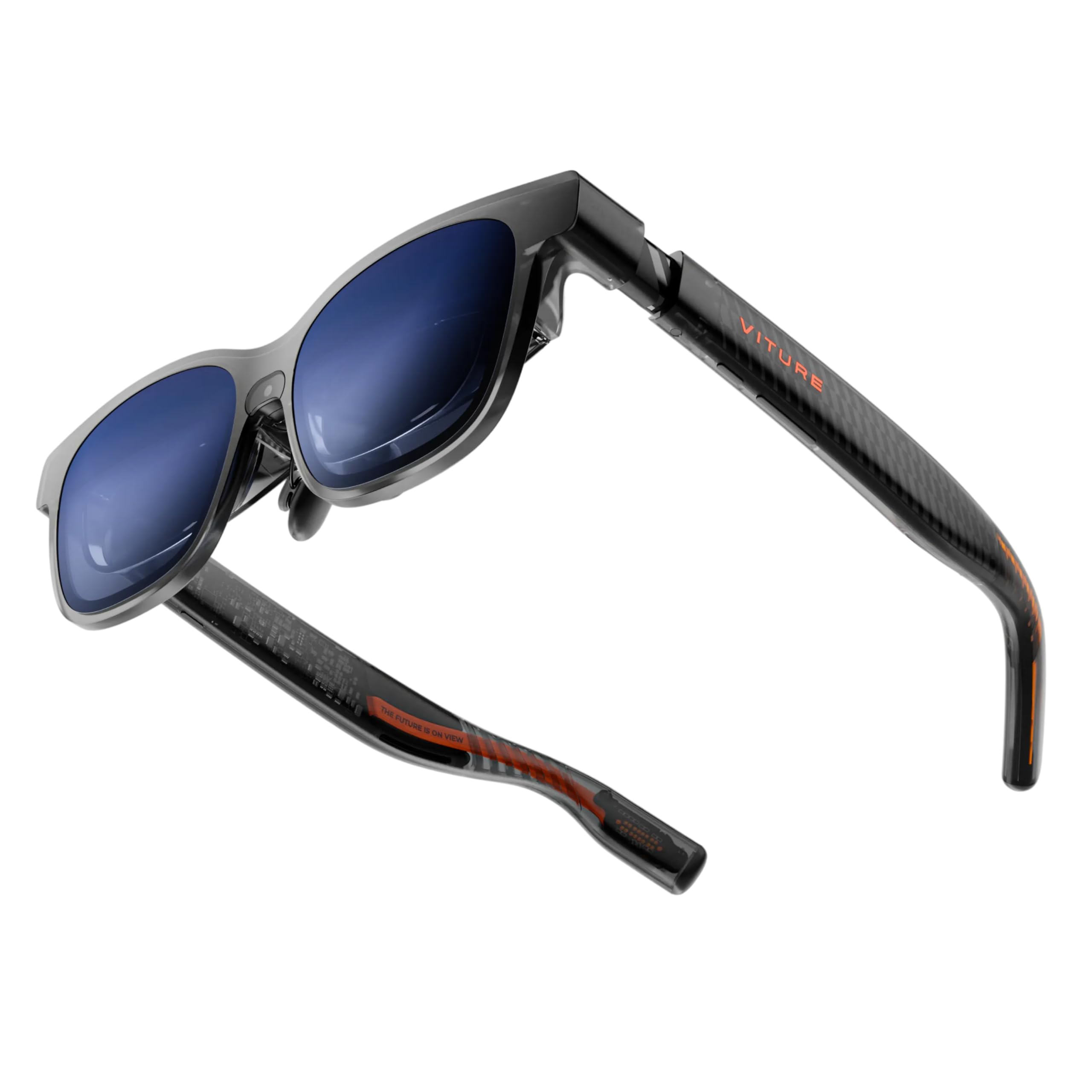
The VITURE Luma Pro delivers a 152-inch virtual screen at an ultra-sharp 1200p resolution that makes text razor-crisp and images feel closer to 4K than 1080p — a meaningful step up for productivity users who need to read code or edit documents. The 52-degree FOV provides an immersive cinema-like experience, while the 1000-nit peak brightness and Hollywood-grade DeltaE < 2 color accuracy ensure vibrant, lifelike visuals. The electrochromic film darkens the lenses with one tap, blocking ambient light for total focus.
Built-in myopia adjustment up to -4.0 diopters eliminates the need for prescription inserts, and the magnetic ergonomic nose pad with tilt-adjustable temples provides a comfortable fit for all-day use. The Harman-tuned audio delivers deeper bass and crisper highs compared to the previous generation. The SpaceWalker app supports multi-screen productivity with up to three virtual monitors, and the 2D-to-3D conversion adds depth to standard content.
The Luma Pro shares the same wired connectivity as its peers, meaning you are tethered to your source device. The myopia adjustment does not correct for astigmatism, and the 3D feature only works within the SpaceWalker ecosystem, not with streaming apps like Netflix or Hulu. For buyers who prioritize the sharpest possible display for productivity and media, the Luma Pro is the clear winner in its price tier.
Why it’s great
- 1200p resolution with text that rivals 4K clarity
- Built-in myopia adjustment up to -4.0 diopters
- Harman-tuned audio with rich, immersive sound
Good to know
- 3D feature limited to SpaceWalker app ecosystem
- Myopia adjustment does not correct for astigmatism
- Wired connection tethers you to source device
6. Meta Ray-Ban (Gen 2) Smart AI Glasses
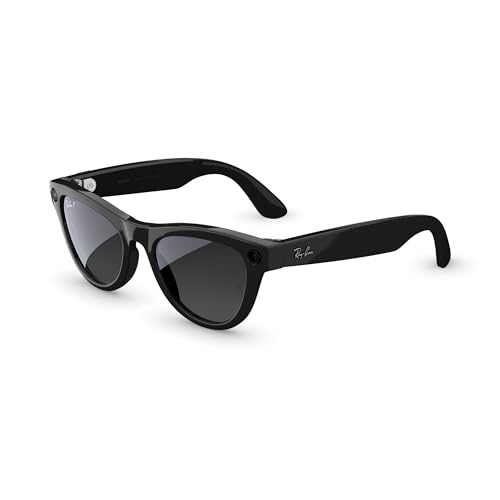
The Meta Ray-Ban Gen 2 is the runaway best-seller for a reason — it looks indistinguishable from classic Ray-Ban sunglasses while packing a 12 MP ultra-wide camera, open-ear speakers, and hands-free Meta AI integration. The 3K Ultra HD video recording captures vibrant memories without needing a phone, and the privacy LED flashing on the front ensures transparency. The second-generation model doubles the battery life to 8 hours of mixed use, with the charging case providing 48 hours of backup power on the go.
Meta AI can translate conversations between English, French, Italian, Spanish, German, and Portuguese in real time — even without a Wi-Fi connection. The open-ear speakers allow you to take calls, listen to music, or ask for directions while staying aware of your surroundings. The design is lightweight and available with prescription or polarized lenses, making them suitable for daily wear. The wind and street noise cancellation ensures clear call quality in crowded or breezy conditions.
These glasses are not a display-first product — there is no Micro-OLED screen, no spatial anchoring, and no virtual monitor. The camera is fixed at ultra-wide with no zoom, making framing tricky. The frames are heavier than standard Ray-Bans due to the integrated electronics, and the touch-sensitive temple bar can trigger accidental commands. For buyers who want a stylish, socially acceptable AI companion for daily life rather than a virtual display, the Ray-Ban Meta is the definitive choice.
Why it’s great
- Classic Ray-Ban design that looks like normal sunglasses
- 8-hour battery life with 48-hour charging case
- Real-time translation without Wi-Fi required
Good to know
- No built-in display — camera and audio only
- Camera is fixed ultra-wide with no zoom capability
- Heavier frame than standard Ray-Ban sunglasses
7. RayNeo Air 3s Pro AR/XR Glasses
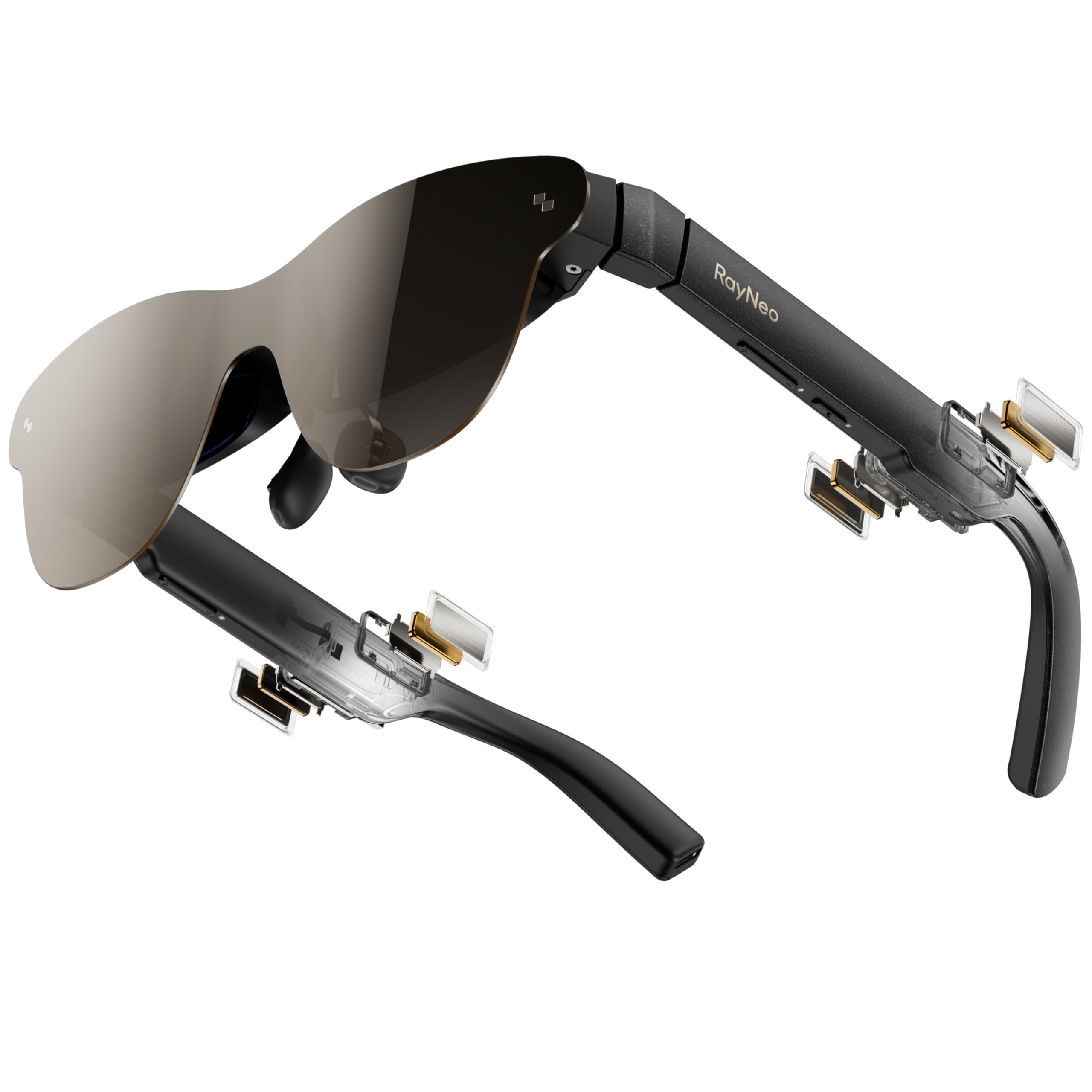
The RayNeo Air 3s Pro claims the title of the world’s brightest AR glasses with a staggering 1,200 nits of to-eye brightness — high enough to make even faint stars in a movie visible rather than crushed into black. The 5.5th-generation tandem Micro-OLED panel (HueView 2.0) delivers a 200,000:1 contrast ratio and 98% DCI-P3 color gamut, resulting in pure, lifelike visuals that rival premium OLED televisions. The 201-inch virtual display at 6 meters provides an IMAX-like viewing experience in any environment.
The Air 3s Pro is the only wearable display with TÜV SÜD Low Blue Light and Flicker-Free dual certification, with 3,840Hz high-frequency PWM dimming and 20-level brightness control. The 120Hz refresh rate ensures smooth motion for gaming and fast-paced content. The built-in binocular speakers deliver surprisingly good spatial audio, and the lightweight 76g frame with adjustable arms and nose pads provides all-day comfort. A prescription lens frame is included for users who need vision correction.
Some caveats apply. The nose pads can leave red marks after extended wear, and the stiff power cable can be cumbersome to manage. The virtual screen appears roughly 20 percent larger than a 15-inch laptop rather than the advertised IMAX proportions, which may disappoint those expecting an overwhelming display. The pocket TV app also has compatibility issues with certain streaming services like NFL. For buyers who need the brightest possible display for outdoor and well-lit environments, the Air 3s Pro delivers unmatched luminance.
Why it’s great
- World’s brightest AR display at 1,200 nits
- 5.5th-gen Micro-OLED with 200,000:1 contrast ratio
- TÜV SÜD dual certification for eye comfort
Good to know
- Nose pads can leave red marks during long sessions
- Virtual screen size feels smaller than advertised
- Stiff power cable is cumbersome to manage
8. RayNeo Air 4 Pro AR/XR Glasses
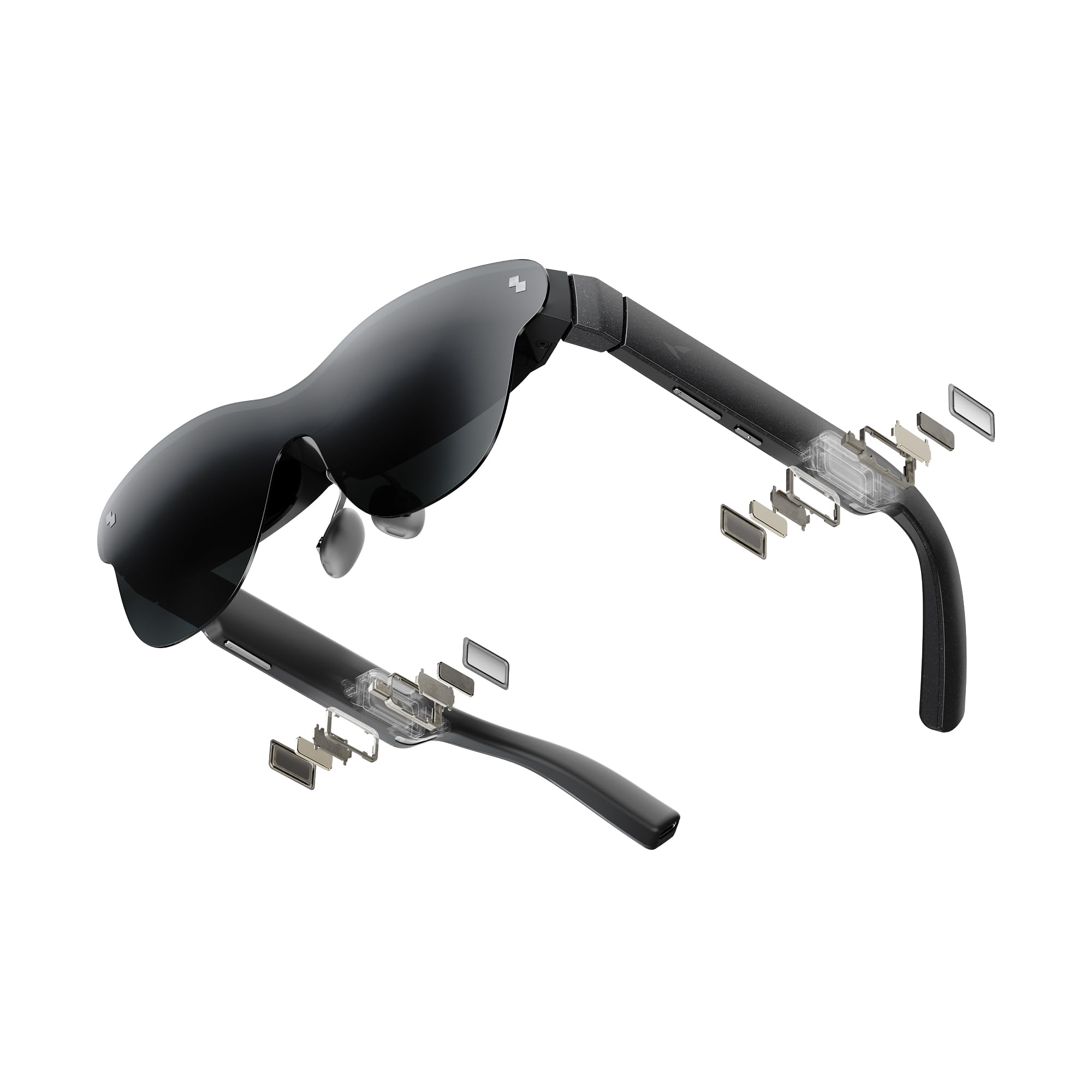
The RayNeo Air 4 Pro punches well above its price tier, offering the world’s first HDR10-capable AR display at this price point. The Vision 4000 chip, co-developed with Pixelworks, provides real-time AI SDR-to-HDR upscaling that enhances color, sharpness, and motion clarity across all content. The 201-inch virtual display at 46 degrees FOV delivers a private cinema experience with rich blacks and bright highlights. The 120Hz refresh rate ensures smooth visuals for PS5, Steam Deck, and Switch 2 gaming without motion blur.
Audio is handled by Bang & Olufsen quad speakers that deliver immersive 360-degree spatial sound. The open-ear design keeps you aware of your surroundings, while the optional sound tube directs audio into your ears for louder, clearer playback in noisy environments. The Air 4 Pro weighs just 76 grams with adjustable nose pads and flexible temples for a comfortable fit. The TÜV-certified 3,840Hz flicker-free display and low blue light filter reduce eye strain during extended sessions.
These glasses offer 0DoF fixed-screen tracking — meaning the display follows your head rather than anchoring in space. Some users report that the nose pads slide during use, requiring periodic readjustment to maintain the optimal viewing angle. The resolution is limited to 1080p per eye, which is a step down from the 1200p options above. For buyers who want HDR10 quality and premium audio features without spending premium money, the Air 4 Pro is the smartest value play.
Why it’s great
- First HDR10 AR display at an accessible price point
- Bang & Olufsen quad speakers with 360° spatial audio
- AI SDR-to-HDR upscaling via Vision 4000 chip
Good to know
- 0DoF fixed-screen tracking — no spatial anchoring
- Nose pads can slide, requiring periodic adjustment
- Limited to 1080p resolution per eye
9. Lenovo Legion Glasses Gen 2

The Lenovo Legion Glasses Gen 2 strips away the AI and spatial computing fluff to deliver a straightforward personal monitor at a budget-friendly price point. The Micro-OLED display offers a crisp FHD (1080p) experience with a smooth 120Hz refresh rate, making it an ideal companion for the Lenovo Legion Go, Steam Deck, or any USB-C device with DisplayPort Alt Mode. At just 65 grams, it is the lightest pair of display glasses on this list, ensuring minimal fatigue during long sessions.
Setup is truly plug-and-play — no software, no apps, no pairing. The high-fidelity audio drivers provide decent sound for movies and games, though they lack the spatial processing found in premium competitors. The included carrying case, cleaning cloth, light shield, and prescription lens frame make it a complete out-of-the-box solution. The adjustable nose pads help achieve the optimal viewing angle, though some users find the nose bridge bends easily and requires careful handling.
The Legion Glasses are a no-frills device. There is no spatial tracking, no AI integration, and no camera. The image quality is good but not outstanding, with some users reporting that the top and bottom of the screen are cut off if the nose pads are not perfectly adjusted. Eye strain can set in during extended use. For buyers who simply want an affordable, lightweight personal display for gaming and movies without any smart features, the Legion Glasses Gen 2 delivers exactly that — and nothing more.
Why it’s great
- Lightest display glasses at just 65 grams
- True plug-and-play setup with no software required
- 120Hz refresh rate for smooth gaming visuals
Good to know
- No spatial tracking or AI features
- Nose bridge can bend, causing screen cutoff
- Eye strain possible during extended use
FAQ
Can I use AI glasses with display while wearing my prescription eyeglasses?
Do AI display glasses work with iPhone 15 and iPhone 16 models?
How does spatial audio work on these glasses without covering my ears?
What is the difference between AI glasses with a display and standard smart glasses?
Final Thoughts: The Verdict
For most users, the best ai glasses with display winner is the XREAL One Pro because it delivers the widest 57-degree FOV, the most stable native 3DoF tracking with the X1 chip, and premium Bose audio — all at a price that balances cutting-edge features with everyday usability. If you prioritize the sharpest display for productivity and media, grab the VITURE Luma Pro with its 1200p resolution and built-in myopia adjustment. And for the most advanced spatial computing experience with 6DoF tracking and hand gesture support, nothing beats the VITURE Luma Ultra.