
The promise of a pair of glasses that can record your every moment, translate foreign languages in real time, or project a massive virtual screen onto your retina is no longer science fiction. Choosing the right pair, however, means navigating a complex landscape where camera resolution, AI model integration, audio quality, and display technology all compete for your attention.
I’m Min — the co-founder and writer behind Gadgets Feed. I’ve spent countless hours analyzing the specifications, real-world user experiences, and market positioning of the latest wearables to find the truly exceptional examples of this niche.
After digging through hundreds of customer reviews and spec sheets, I’ve found the products that genuinely deliver on their promises. This guide details the most compelling options available today for anyone searching for the best ai glasses to buy right now.
How To Choose The Best AI Glasses
Navigating the world of AI-powered eyewear requires clear priorities. You need to decide whether you are buying a hands-free camera, a virtual monitor, or a smart audio assistant. Each path leads to a different set of key specifications you cannot ignore.
Camera Resolution and Stabilization
The camera is the core of many AI glasses. The quality of your footage is defined by the sensor’s megapixel count and the presence of Electronic Image Stabilization (EIS). A 12MP sensor with EIS will produce far more usable video than a high-megapixel sensor without it, especially during activities like walking or cycling. Look for a Sony IMX sensor class for a proven baseline, and test the field of view to ensure it captures your intended perspective.
AI Model Integration and Voice Control
The “AI” in AI glasses is only as good as the model embedded inside. Some units rely on a generic voice assistant, while others integrate specific large language models like ChatGPT, Gemini, or a proprietary Meta AI. The accuracy of real-time translation, the speed of object recognition, and the quality of contextual answers all depend on this core. Ensure the model supports the languages and use cases you need, both online and offline.
Display Technology and Brightness
For those seeking a heads-up display or a private theater, the display technology is paramount. Micro-OLED panels with high brightness (measured in nits) are essential for visibility in daylight. A refresh rate of 120Hz is critical for smooth gaming and video, while a high contrast ratio like 200,000:1 produces deep blacks. The field of view (FOV) dictates the perceived screen size, so consider whether 46 to 52 degrees is enough for your desired application.
Battery Capacity and Charging Case
Battery life is the silent killer of the wearable experience. A built-in battery measured in mAh (between 210mAh and 410mAh for most camera models) determines your session length. For all-day use, a charging case that offers multiple full recharges is more important than the glasses’ own internal battery. Look for numbers like 8 hours of typical use or 48 hours of total charge from the case to avoid ending up with dead tech halfway through your day.
Quick Comparison
On smaller screens, swipe sideways to see the full table.
| Model | Category | Best For | Key Spec | Amazon |
|---|---|---|---|---|
| EGQINR 4K Camera Smart Glasses | Camera/Audio | Travel & Vlog | 300mAh Battery | Amazon |
| EarlySincere 4K Smart Glasses | Camera/Audio | All-Day Wear | 410mAh Battery | Amazon |
| Ray-Ban Meta (Gen 1) | Camera/Audio | Style & Social | 12MP Camera | Amazon |
| RayNeo Air 3s Pro | Display Glasses | Portable Cinema | 1200 Nits Brightness | Amazon |
| RayNeo Air 4 Pro | Display Glasses | Gaming & Movies | 120Hz Refresh Rate | Amazon |
| Rokid AI Glasses Style | Camera/Audio | Comfort & Portability | 38.5g Weight | Amazon |
| Meta Ray-Ban (Gen 2) | Camera/Audio | Best Overall Features | 8 Hours Battery Life | Amazon |
| XREAL 1S | Display Glasses | Spatial Computing | 52° FOV | Amazon |
| Meta Oakley Vanguard | Camera/Audio | Sports & Outdoors | Prizm Lens Technology | Amazon |
In‑Depth Reviews
1. Meta Ray-Ban (Gen 2)
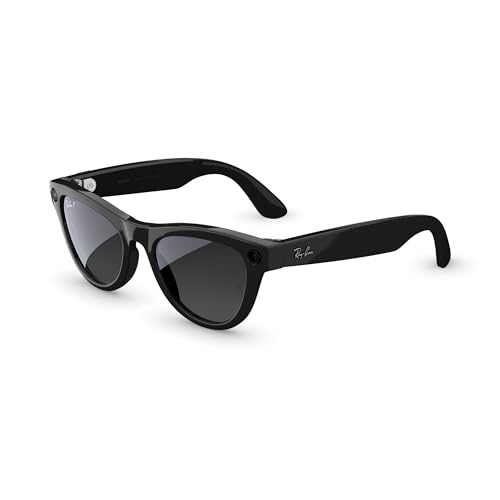
The second-generation Meta Ray-Ban represents the most complete package of style, camera quality, and AI integration currently available. The 12MP ultra-wide sensor delivers 3K Ultra HD video that looks sharp and vibrantly colored, and the five-microphone array captures audio with impressive clarity. The open-ear speakers are loud enough for outdoor use while maintaining situational awareness, a critical safety feature.
Battery life is where this generation truly separates itself, offering up to 8 hours of moderate use. The included charging case provides a total of 48 hours of charge, making it the only pair that genuinely supports all-day wear without anxiety. The Meta AI assistant handles real-time translation and queries smoothly, though certain features remain region-locked as some users have noted.
The form factor is undeniably stylish, looking like standard Ray-Bans. The frames are noticeably heavier due to the tech inside, which can cause them to slide down on some faces. The touchpad on the temple is also quite sensitive, leading to accidental activation. However, for the sheer breadth of features and polished execution, this is the benchmark for camera-toting AI glasses.
Why it’s great
- Industry-leading camera and audio quality.
- Battery life that matches a full day of use.
- Strong AI features and real-time translation.
Good to know
- Heavier frame can feel unbalanced.
- Touchpad may be overly sensitive.
- Premium price point.
2. XREAL 1S
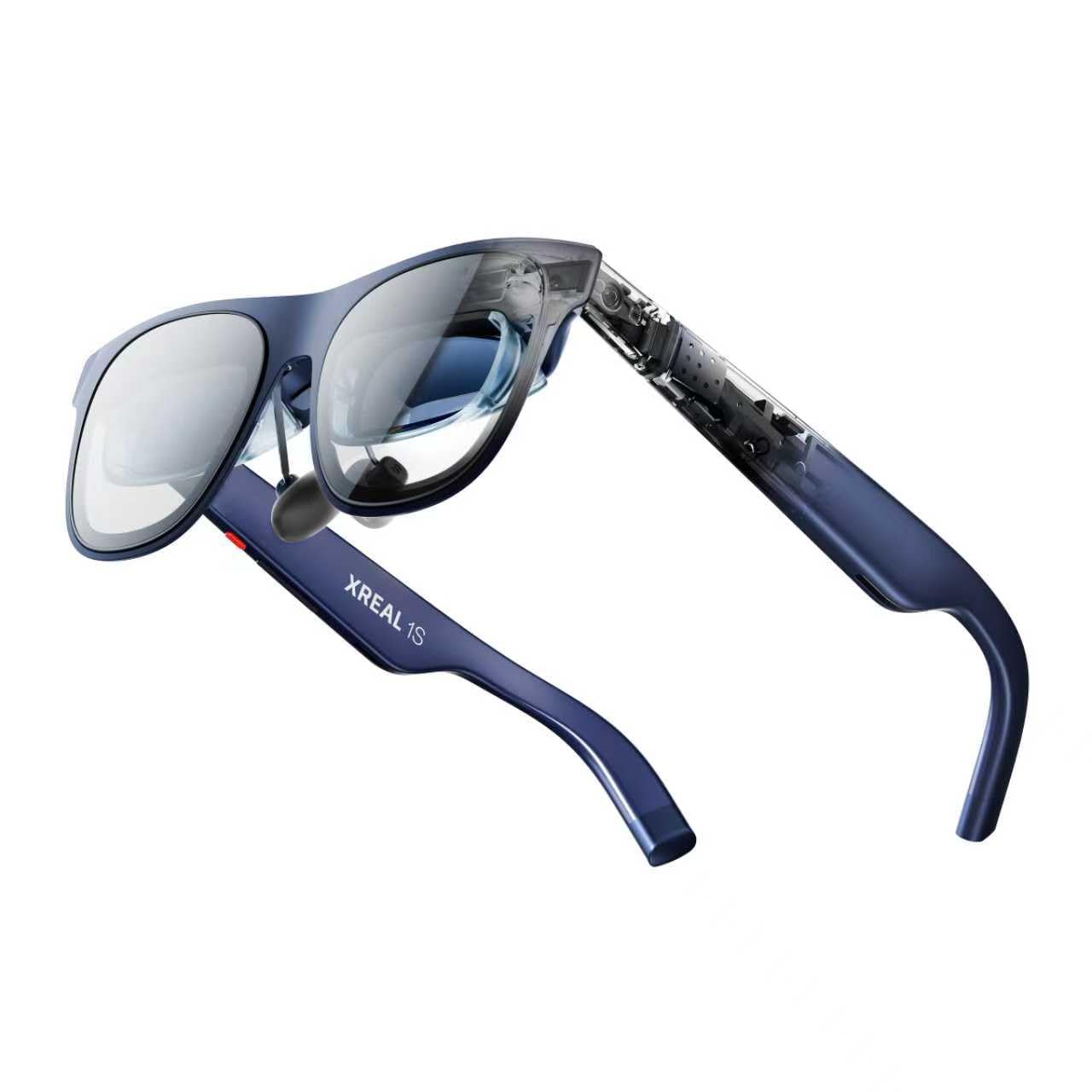
The XREAL 1S is the gold standard for AR display quality, leveraging the custom X1 chip to deliver a native 3DoF spatial experience. You simply plug in any USB-C DP device, and a rock-steady virtual screen up to 500 inches appears. The 120Hz refresh rate in 3DoF mode makes for butter-smooth motion, and the 52-degree field of view is the widest available, creating an immersive theater-like experience.
Sound has been meticulously tuned by Bose, resulting in a spacious and clear open-ear audio stage that outpaces every other pair in the display category. The REAL 3D feature instantly converts any content into spatial depth, a unique party trick. The glasses are lightweight at 80 grams, and the optical clarity from edge to edge is exceptional, as each unit is individually color-tuned.
The main drawbacks are the price and the need for a USB-C DP source. The nose pads can be uncomfortable for some users, and the tinted lenses block your view of the surroundings. The 3DoF screen anchor mode is brilliant but can drift slightly over time, a minor annoyance. For anyone wanting a virtual monitor for their laptop, Steam Deck, or phone, this is the most capable device on the market.
Why it’s great
- Best-in-class native 3DoF spatial screen.
- Superior Bose audio and 52° FOV.
- Individual color tuning for edge-to-edge clarity.
Good to know
- Requires USB-C DP source device.
- Nose pads may need third-party replacement.
- Premium price for the full feature set.
3. Meta Oakley Vanguard
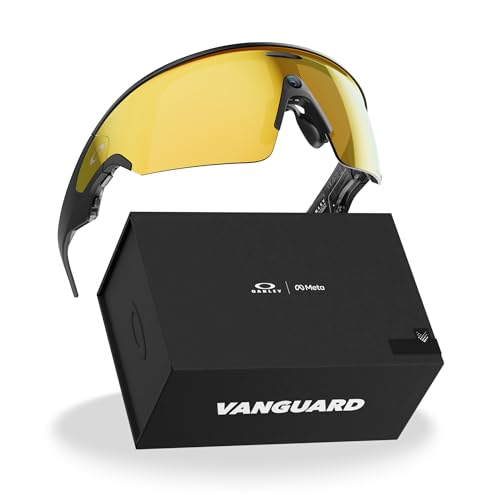
The Meta Oakley collaboration brings the proven camera and AI tech from the Ray-Ban Meta line into a rugged, sport-focused package. The 12MP camera captures the same excellent 3K video, and the open-ear audio allows you to hear your environment while listening to music or taking calls. The standout feature here is the Prizm lens technology, which enhances contrast and color for outdoor sports.
The integration with Garmin and Strava is a game-changer for athletes, allowing you to overlay performance metrics onto your footage. The battery life matches the Gen 2 Meta Ray-Ban at up to 8 hours, and the charging case provides the same 48-hour total charge. Its design is more secure on the face than the Skyler frame, making it a better choice for active users.
The price is high, and the privacy concerns tied to Meta’s app permissions are a real issue for some users. The frames can feel tight after a few hours of wear. This is not a general-purpose daily driver but a specialized tool for the active user who wants hands-free capture and AI assistance during workouts, hikes, or sports.
Why it’s great
- Rugged sport design with Prizm lenses.
- Garmin and Strava activity integration.
- Strong 8-hour battery life with charging case.
Good to know
- Higher price point than standard Ray-Ban Meta.
- Requires full Meta app permissions.
- Can feel tight with prolonged wear.
4. RayNeo Air 4 Pro
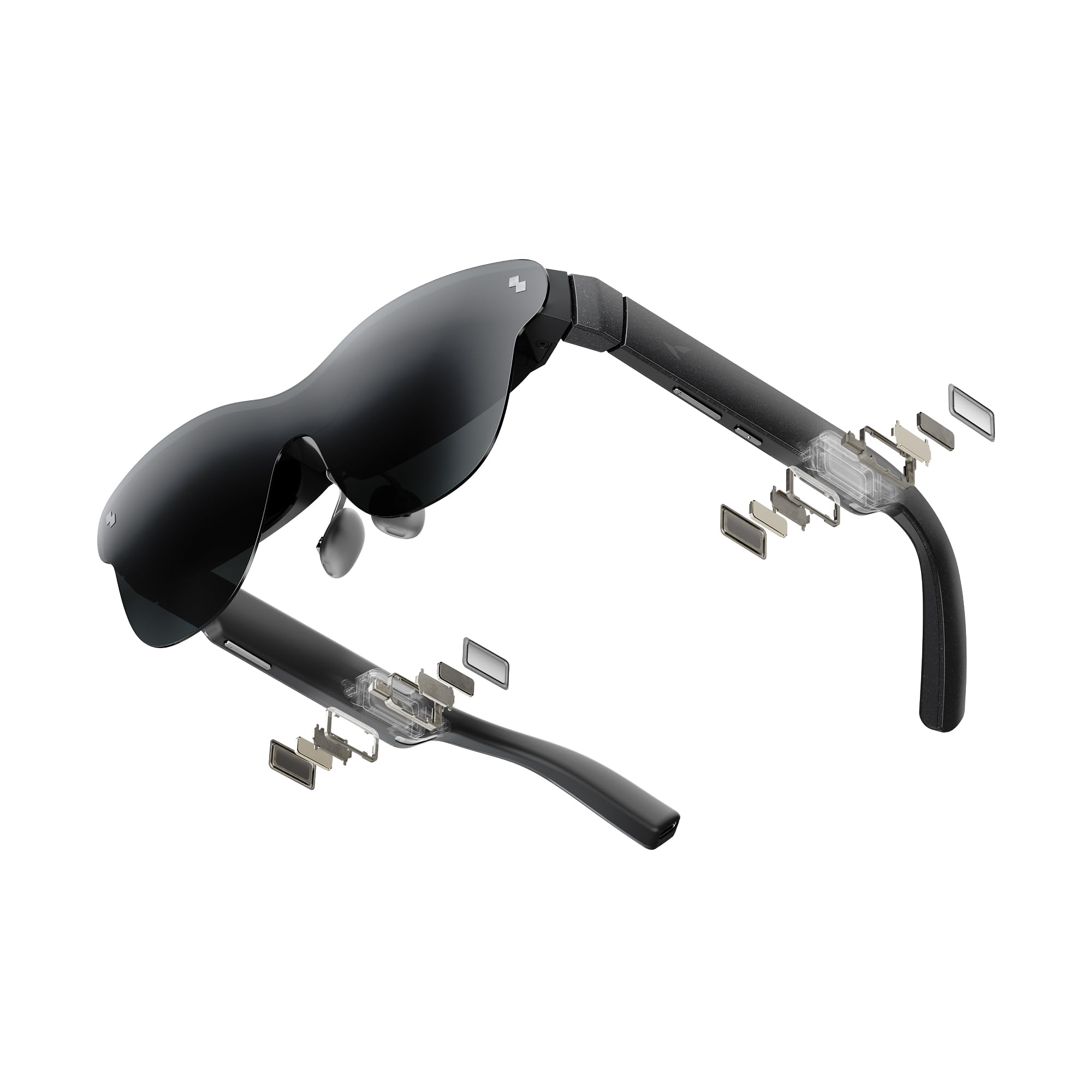
The RayNeo Air 4 Pro offers the best display quality in the mid-range space, boasting a world-first HDR10 AR display. The Vision 4000 chip provides AI-driven SDR-to-HDR upscaling, which dramatically improves the color and contrast of standard video content. The 120Hz refresh rate is excellent for gaming, and the 1200 nits brightness ensures visibility even in moderately lit rooms.
The audio is co-engineered with Bang & Olufsen, providing a level of spatial fidelity that surprises for a pair of open-ear glasses. The 3D movie conversion feature works reasonably well for a software-based solution. The frame is lightweight at 76 grams, and the TÜV certification for low blue light and flicker-free viewing is a genuine comfort benefit for long sessions.
The field of view at 46 degrees is slightly narrower than the XREAL 1S, making the virtual screen feel slightly smaller. There is no internal battery, meaning it must be tethered to a power source via USB-C. The included nose pads are limited, and some users struggle to find a comfortable fit that also provides a clear view of the entire display.
Why it’s great
- Best-in-class HDR10 Micro-OLED display.
- Superb Bang & Olufsen open-ear audio.
- 120Hz refresh rate for smooth gaming.
Good to know
- No internal battery, tethered to device.
- Limited nose pad options for fit.
- 46° FOV feels less immersive than the XREAL 1S.
5. RayNeo Air 3s Pro
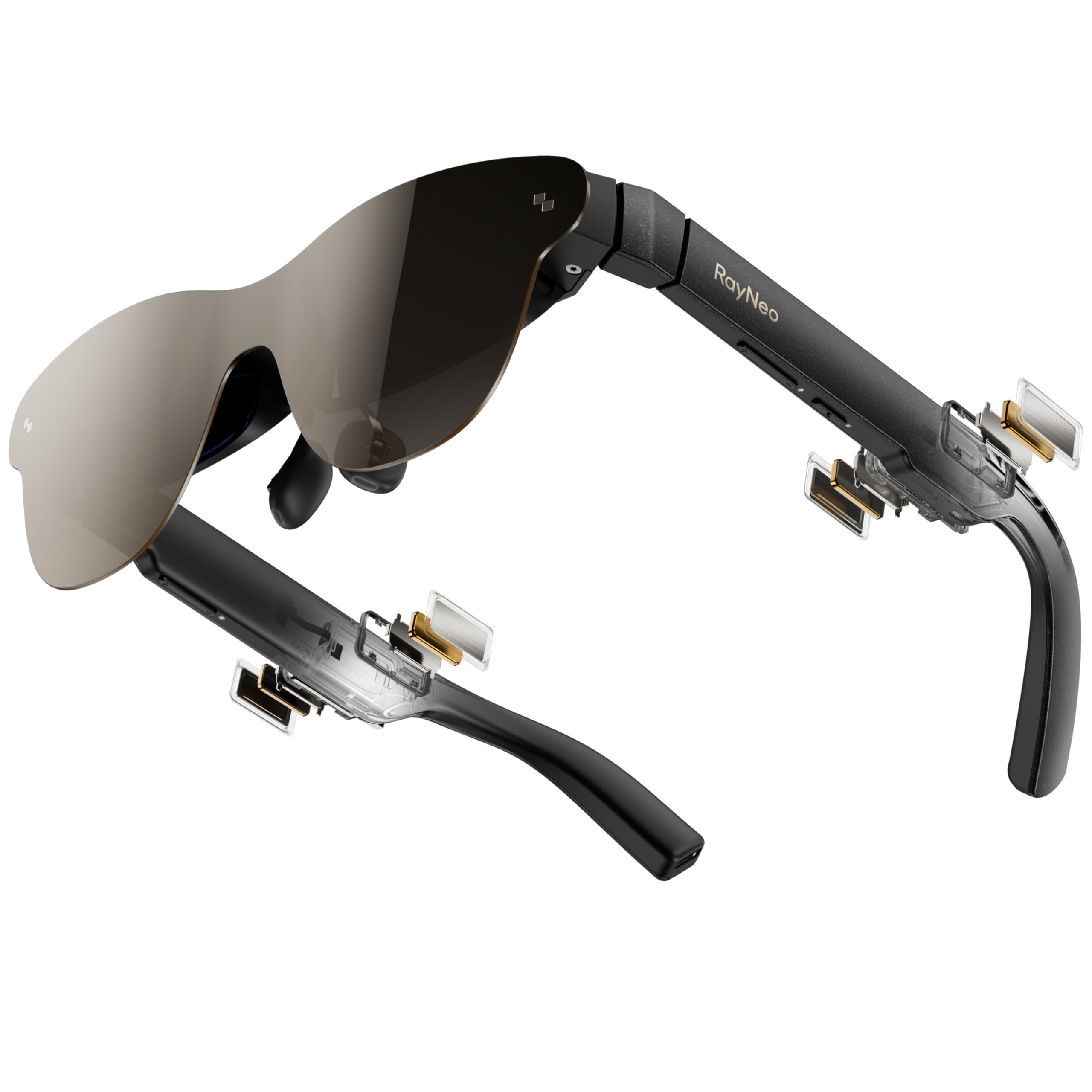
The RayNeo Air 3s Pro brings many of the high-end display features of the 4 Pro to a more accessible price point. It still offers the world’s brightest AR display at 1200 nits and uses the HueView 2.0 Micro-OLED panel for a 200,000:1 contrast ratio. This makes it an excellent choice for watching movies in bed or on a plane, where the deep blacks and vibrant colors create a convincing personal theater experience.
The eye comfort features are robust, with TÜV SÜD certification for low blue light and flicker-free performance. The 3840Hz PWM dimming is exceptionally smooth and prevents eye strain during extended viewing. It retains the same 201-inch virtual screen size and universal USB-C compatibility as its pricier sibling, making it easy to plug into any modern device.
The main trade-off is the lack of the Vision 4000 upscaling chip and the 3D conversion features found in the 4 Pro. The audio, while decent, is not co-tuned by a premium brand like Bang & Olufsen. The design is also slightly heavier and the included cable is stiff. For the pure display experience at this price point, it is an unbeatable value proposition.
Why it’s great
- Incredibly bright 1200-nit display.
- TÜV certified for exceptional eye comfort.
- Excellent value for a premium viewing experience.
Good to know
- No HDR10 or upscaling chip.
- Audio is not premium-branded.
- Slightly heavier and stiffer cable than the 4 Pro.
6. Rokid AI Glasses Style
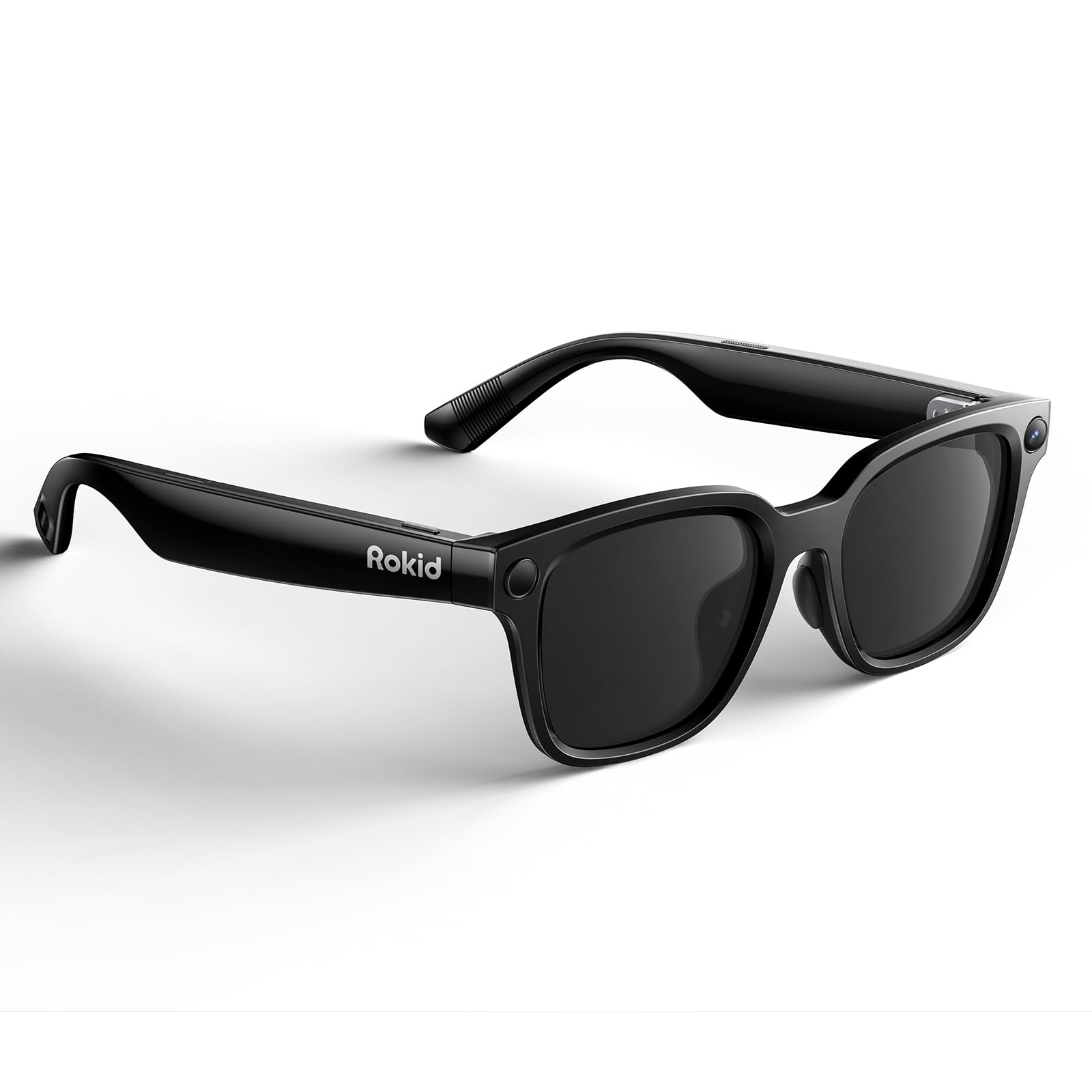
The Rokid AI Glasses Style is designed for those who want the AI assistant and camera features without the bulk. At just 38.5 grams, it is one of the lightest models available. The Sony IMX681 sensor captures good 12MP photos and 3K video with EIS, and the dual AI assistant integration (ChatGPT and Gemini) provides powerful, context-aware responses to your questions about objects you see.
Real-time translation is handled by Microsoft Translator for 89 languages, with offline support for 6 major languages, making it a solid travel companion. The open-ear audio uses dual directional AAC speakers for decent privacy. The gesture and voice controls, including nodding to answer a call, feel intuitive and futuristic. The TR90 polymer titanium frame is flexible and durable.
The 210mAh battery is a limiting factor, offering around 6 hours of music and only 45 minutes of video recording. The optional charging case is sold separately, which is a major omission for a premium-priced product. The AI, while powerful, can sometimes be intrusive, as some users have reported it answering un-prompted questions.
Why it’s great
- Ultra-lightweight design for all-day comfort.
- Advanced dual AI assistant integration.
- Good Sony IMX681 camera sensor.
Good to know
- Small battery limits video recording time.
- Charging case sold separately.
- AI can be overly responsive at times.
7. EarlySincere 4K AI Smart Glasses
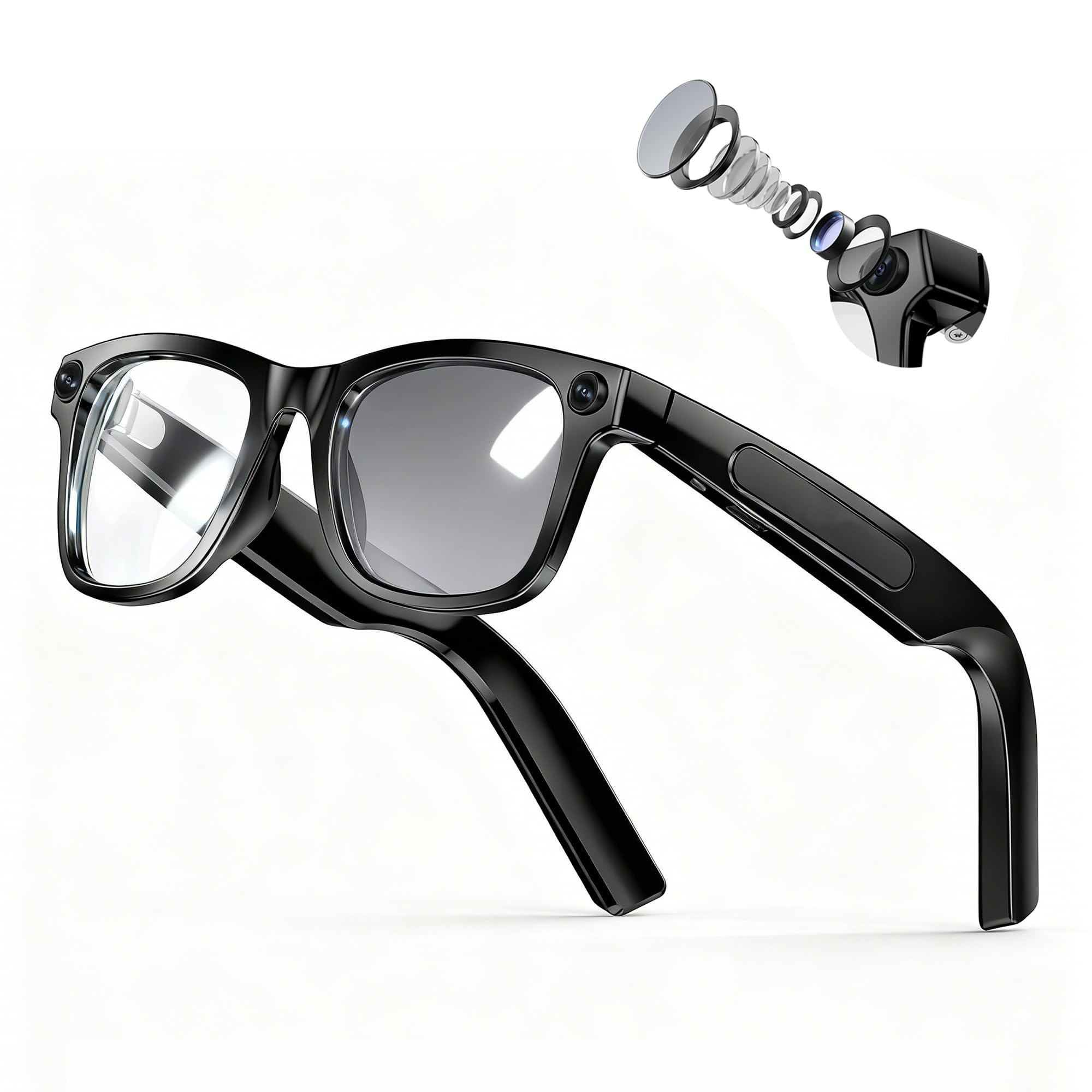
The EarlySincere model packs the largest internal battery in this guide at 410mAh, promising up to 15 hours of music playback and a 10-day standby time. This makes it the clear choice for anyone who hates charging their devices. The 4K video with EIS is quite good for the price, and the AI voice assistant offers real-time translation in 0.1 seconds. The Bluetooth 5.4 chip ensures a stable connection.
The photochromic lenses that automatically adjust to UV light are a fantastic feature, eliminating the need to carry a separate pair of sunglasses. The TR90 frame is durable and the flexible temples have a 30° adjustment range for a better fit. The aluminum alloy heat dissipation channels are a thoughtful engineering touch that keeps the glasses from getting too warm during extended use.
The AI assistant, while fast, has been reported to be inconsistent, sometimes activating without a prompt. The off-center placement of the camera can make framing a shot tricky. The app translation features are free for life, which is a nice value-add. It is not as stylish as the Meta Ray-Ban, but its sheer battery life and useful lens feature set make it a strong contender.
Why it’s great
- Exceptional 410mAh battery for long sessions.
- Convenient automatic photochromic lenses.
- Effective heat dissipation for stable performance.
Good to know
- AI assistant can be inconsistent.
- Camera placement makes framing difficult.
- Less brand recognition than Meta-line glasses.
8. Ray-Ban Meta (Gen 1)
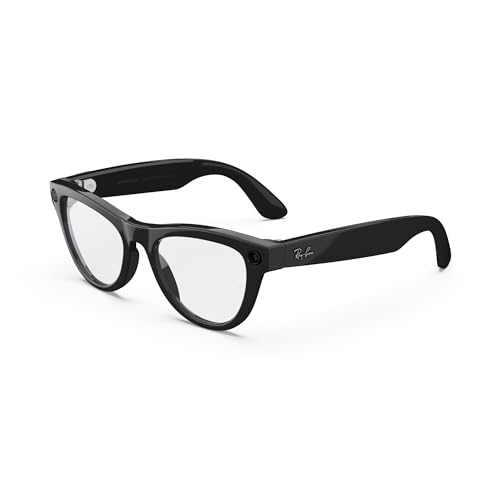
The first-generation Ray-Ban Meta remains a fantastic entry point into the world of smart glasses. It offers the core experience of the Gen 2 model at a lower price, including the same 12MP ultra-wide camera, five-microphone audio system, and reliable Meta AI assistant. The open-ear speakers deliver good sound quality without isolating you from your environment.
The main difference is the battery life, which is about half of the Gen 2 model. You will need to rely on the charging case more frequently. The video resolution maxes out at standard HD, which is still excellent for social media clips. For many users, this trade-off is acceptable given the cost savings. It also looks identical to a standard Ray-Ban, a major plus for style-conscious buyers.
The AI features, including real-time translation and object recognition, require an active internet connection for most functions and are region-locked to certain countries. The lack of water resistance is a real concern. However, for the best balance of brand, style, and a polished smart glasses experience at this price point, the Gen 1 is hard to beat.
Why it’s great
- Iconic style that looks like regular glasses.
- Polished Meta AI with live translation.
- Good value for the core smart glasses experience.
Good to know
- Shorter battery life than Gen 2.
- No water resistance rating.
- Some AI features are region-locked.
9. EGQINR 4K Camera Smart Glasses
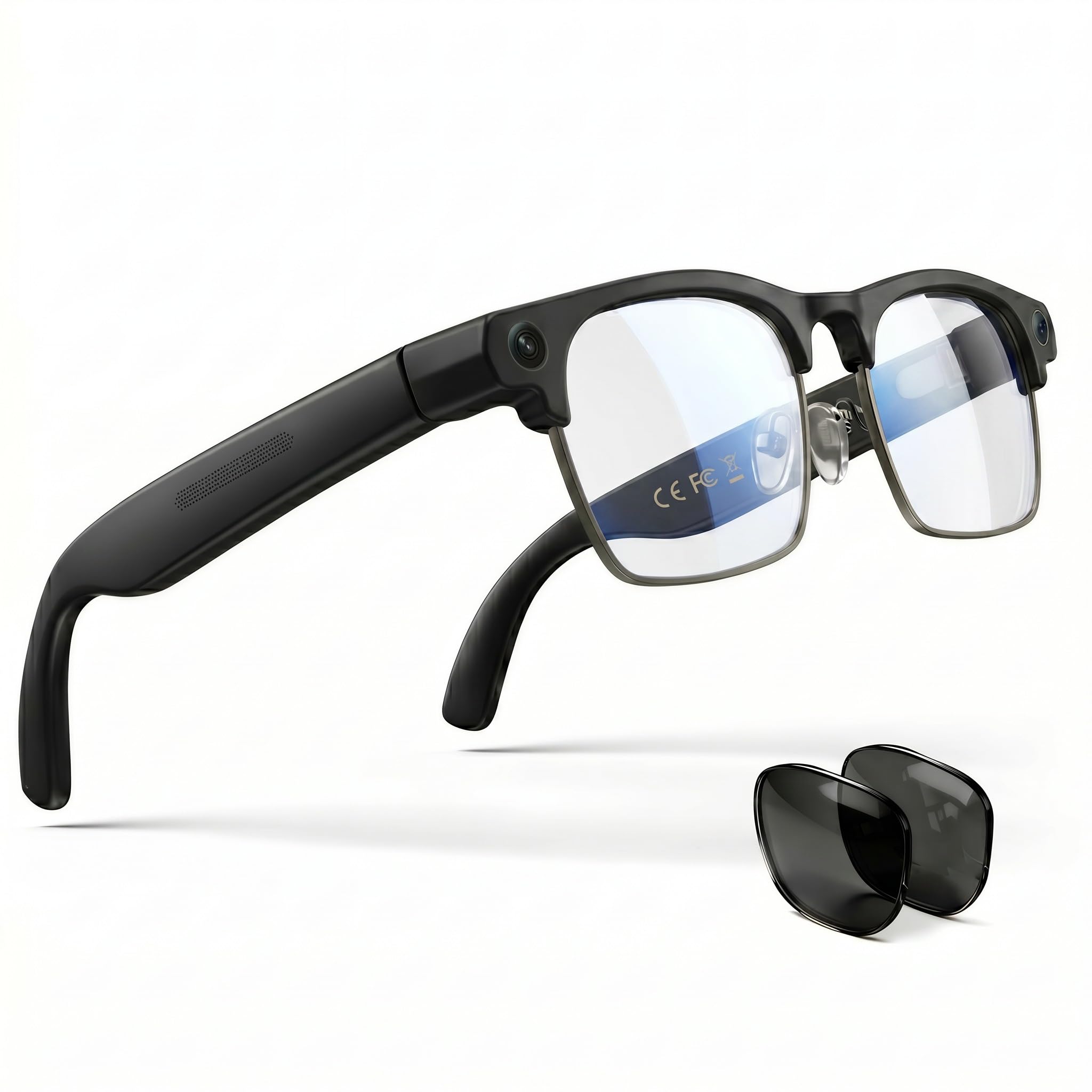
The EGQINR 4K Camera Smart Glasses offer an impressive feature set for a price that undercuts nearly every other pair on this list. It includes a dedicated 8MP camera with 4GB of built-in storage, real-time translation in over 130 languages, open-ear audio, and a 300mAh battery. The IP65 water resistance rating is a rarity in this category and adds significant durability.
The AI voice assistant can be activated with a “Hey Cyan” wake word and has a dedicated physical button for image recognition. The touch zone on the temple for volume control is responsive. It also comes with both blue-light blocking and sunglass lenses, which adds value. The wear detection sensor that pauses music when you take them off is a nice quality-of-life feature.
Build quality concerns have been raised, with some users reporting the frame feels fragile and flexes too much. The 8MP camera is good but not great in low light. The AI assistant, while functional, is not as deeply integrated as the Meta or Rokid models. For a budget entry into the world of camera AI glasses, it is a solid choice, but you are getting what you pay for in terms of fit and finish.
Why it’s great
- Very accessible price point for the feature set.
- IP65 dust and water resistance.
- Includes both blue-light and sunglass lenses.
Good to know
- Flimsy frame feels vulnerable to breakage.
- Camera quality drops in low-light conditions.
- AI assistant is less sophisticated than premium models.
FAQ
Can I wear AI glasses with prescription lenses?
Is the AI on these glasses always listening?
How does real-time translation work on these devices?
Final Thoughts: The Verdict
For most users, the best ai glasses winner is the Meta Ray-Ban (Gen 2) because it perfectly balances style, a top-tier camera, and all-day battery life with its clever charging case. If you want the most expansive virtual screen for gaming and spatial computing, grab the XREAL 1S. And for a rugged sports companion that integrates with your fitness data, nothing beats the Meta Oakley Vanguard.