
Our readers keep the lights on and my morning glass full of iced black tea. As an Amazon Associate, I earn from qualifying purchases.
The leap from a simple programmable vacuum to a true AI home robot is measured in intelligence, not just suction. Today’s best models don’t just follow a pre-set path—they see objects, recognize your face, learn your routines, and decide how to clean based on what they detect. The category has split into two distinct lanes: personal companion robots that live on your desk and converse, and advanced floor-cleaning machines that navigate with LiDAR, edge-sensing, and camera-based object recognition. Both demand a serious look at processor capability, sensor arrays, memory, and autonomous decision-making chops, not just motor power.
I’m Min — the co-founder and writer behind Gadgets Feed. For this guide, I spent long hours cross-referencing Vision-Language model capabilities against real-world navigation accuracy and mapping performance across over a dozen competing platforms in the AI home robot space.
Whether you want a desk buddy that remembers your name and charges your phone or a floor runner that won’t strangle itself on a charging cable, you need to know which specs actually matter. This guide evaluates every critical feature to help you find the absolute best ai home robot for your living space.
How To Choose The Best AI Home Robot
The market divides neatly into personal desktop companions and autonomous floor-cleaning robots. Your first decision is which type fits your pain point: lonely desk hours or manual floor scrubbing. Once that’s clear, three specs separate excellent from mediocre.
Vision & Sensor Stack
Desktop companions rely on a Vision-Language Model (VLM) to recognize objects and faces. Floor cleaners use LiDAR plus an RGB camera for obstacle avoidance. If a robot can’t tell a croissant from a baguette or a pet bowl from a toy, it’s just an expensive remote-control toy. For floor bots, dToF LiDAR beats spinning laser towers for accuracy under 3 ft of furniture.
Memory & Learning
Long-term memory means the robot remembers your name, your pet’s location, and which areas need extra passes. Short-term memory lets it follow a conversation without repeating itself. Without both, a companion feels like a broken chatbot and a floor bot keeps remapping your home every cycle.
Autonomy & Self-Maintenance
The best robots empty their own dust bins, wash and dry their mops, and refill water tanks. Desktop companions need wireless charging built into their base. If you must manually empty, wash, or dock every day, you’ve bought a chore, not freedom.
Quick Comparison
On smaller screens, swipe sideways to see the full table.
| Model | Category | Best For | Key Spec | Amazon |
|---|---|---|---|---|
| Roborock Qrevo Edge 2 | Floor Cleaner | Ultra-slim homes with AI object recognition | 25,000 Pa suction + dToF LDS | Amazon |
| MOVA V50 Ultra Complete | Floor Cleaner | High thresholds and pet hair tangles | 24,000 Pa + 2.28 in obstacle climbing | Amazon |
| DREAME L40s Ultra AE | Floor Cleaner | 19,000 Pa deep cleaning with all-in-one dock | 19,000 Pa suction + TriCut anti-tangle | Amazon |
| eufy E25 | Floor Cleaner | 20,000 Pa with extendable side brush | 20,000 Pa + HydroJet self-clean mop | Amazon |
| eufy C28 2026 New | Floor Cleaner | 15,000 Pa for multi-pet households | 15,000 Pa + HydroJet roller mop | Amazon |
| Roborock Qrevo S | Floor Cleaner | 7,000 Pa with advanced self-drying dock | 7,000 Pa + 200 RPM spinning mops | Amazon |
| Uninell D15S MAX | Floor Cleaner | 10,000 Pa for large open floor plans | 10,000 Pa + dToF navigation | Amazon |
| Uninell Budget Plus | Floor Cleaner | 7,000 Pa with 90-day self-empty | 7,000 Pa + LiDAR 360° mapping | Amazon |
| TangibleFuture LOOI | Desktop Companion | Conversational AI with face tracking | VLM vision + ChatGPT voice + wireless charging | Amazon |
In‑Depth Reviews
1. Roborock Qrevo Edge 2
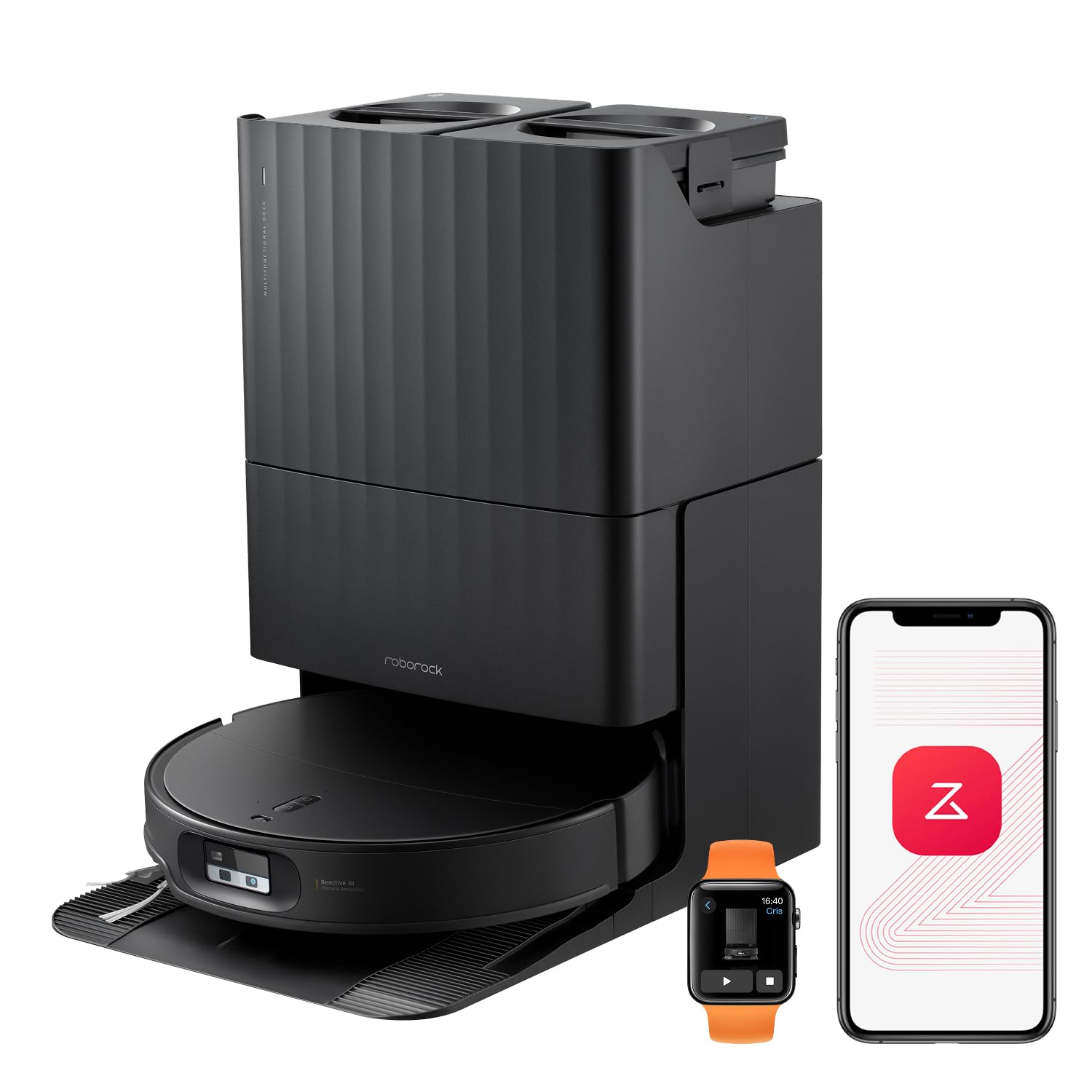
The Qrevo Edge 2 pairs a staggering 25,000 Pa of suction with a RetractSense navigation system that drops its LDS pillar when entering low clearance spaces. At just 3.14 in tall, it can roll under most sofas and beds without losing positioning thanks to a 100° vision module that keeps mapping accurate even in darkness. The FlexiArm Arc Side Brush extends its reach around walls and corners down to 0.98 in, solving the typical edge-cleaning blind spot most robots ignore. Reactive AI with an RGB camera and structured light recognizes over 280 object types, so it stops before tangling in cables rather than after.
Its dock handles 176°F hot water mop washing with a soaking mode, 131°F warm air drying, and 65-day auto dust emptying. Mop lift reaches 10.8 mm for carpet transitions, and the 8N downward pressure on the pads tackles dried coffee splatters without soaking the floor. Battery runtime clocks in at 188 minutes, enough for a 2,000 sq ft home on a single charge. SmartPlan 3.0 learns your traffic patterns and boosts suction in high-zone areas automatically. It also features curtain and gap cleaning logic, so it doesn’t get stuck on floor-length drapes.
The tradeoff is that its 27.1 lb body is heavy, and the 2.4 GHz Wi-Fi requirement can be annoying if your router is set to 5 GHz only. Some users note that the mop leaves faint streaks on polished concrete until the pad breaks in after a few cycles. Overall, this is the most intelligent floor cleaner on the market today.
Why it’s great
- RetractSense LDS allows cleaning under 3.1 in furniture
- AI recognizes 280 object types for collision-free runs
- 25,000 Pa pulls deeply embedded pet hair from medium pile
Good to know
- 27.1 lb heavy; harder to carry between floors
- 2.4 GHz Wi-Fi only; no 5 GHz support
- Mop can streak on first few runs
2. MOVA V50 Ultra Complete
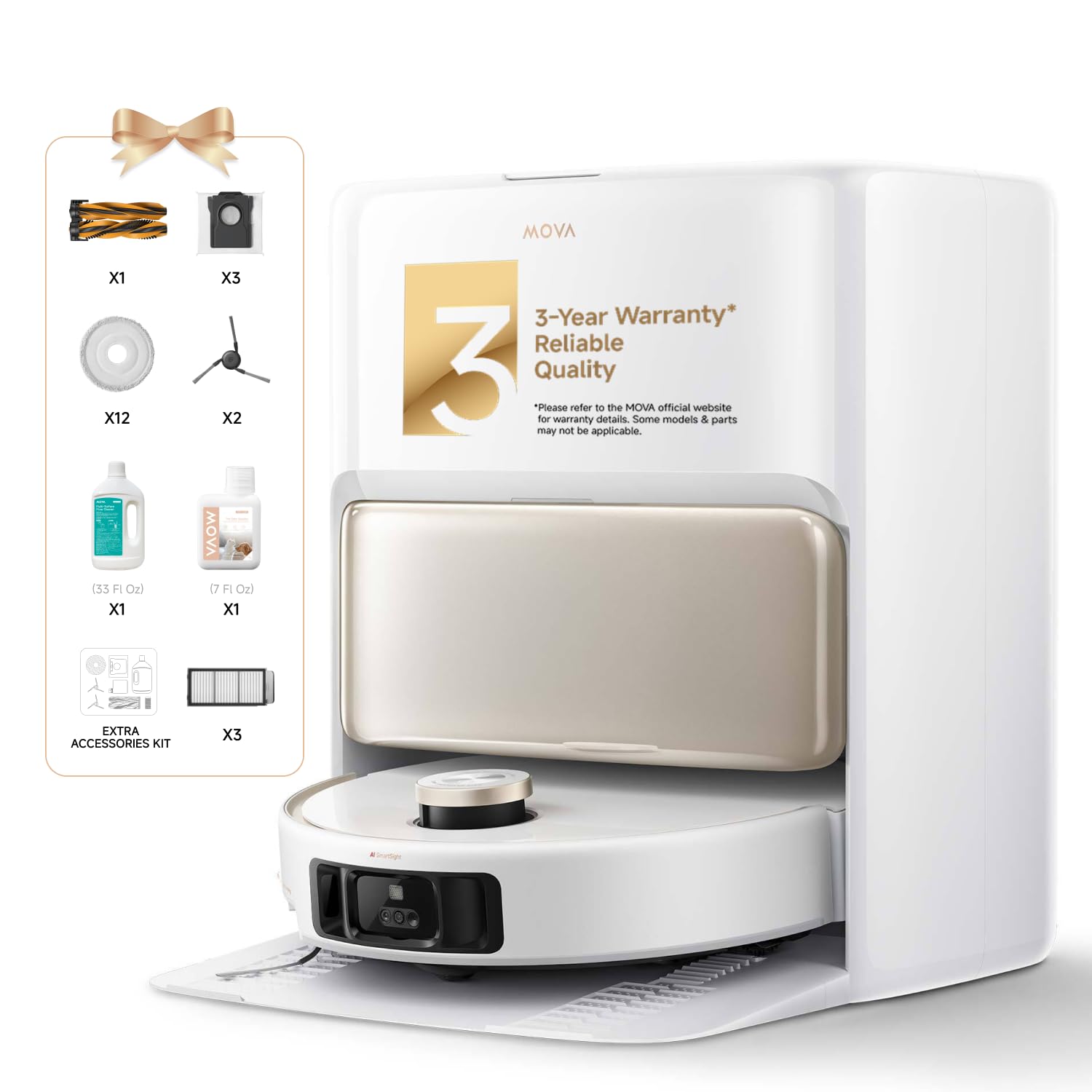
The V50 Ultra leans into obstacle supremacy with a StepMaster system that lifts the whole body to clear thresholds up to 2.36 in tall. Its 24,000 Pa motor pairs with a TroboWave DuoBrush that actively spins hair into a central chamber instead of wrapping around the roller. The FlexiRise navigation system retracts the LDS sensor when it detects low entry points, shrinking the robot’s profile by almost 2 in to reach under sofa skirts and bed frames. In open areas, the LDS extends back up for full-cone 360° mapping precision. The DuoSolution system lets you choose between a general cleaning solution or pet odor removal agent, dispensed automatically onto the mop pad at the right concentration.
The JetSpray Dryboard uses 20 spray nozzles to wet the washboard evenly, with a central filter that collects dirty water and prevents muddy residue. Hot water mop self-cleaning reaches 176°F and is followed by fast hot air drying to prevent mildew. Battery life is rated at 220 minutes, which is among the longest in this tier. The dock uses a 30-minute re-mop cycle that returns the robot to hard traffic areas after the first pass. Users report that it handles thick shag rugs without tangling and avoids dog beds reliably with its trained AI profile.
One catch: the onboard filter can clog with fur if you don’t check it weekly—there’s no in-app reminder for that. The base is also 53 lb fully loaded, so it’s a one-time placement. The 2.4 GHz Wi-Fi restriction holds here too. For homes with multiple pets and high thresholds, this is the most versatile unit today.
Why it’s great
- StepMaster system climbs 2.36 in thresholds easily
- 220 min battery covers large layouts in one charge
- Auto solution dispenser mixes pet odor remover
Good to know
- Filter needs weekly fur cleaning manually
- 53 lb dock is heavy to reposition
- 2.4 GHz Wi-Fi only
3. DREAME L40s Ultra AE

The L40s Ultra AE bridges the gap between mid-range suction and premium station automation. Its 19,000 Pa motor competes with units costing 50% more, and the TriCut brush uses three cutting edges to sever long hair before it can wrap. The MopExtend technology pushes the right mop pad outward when it detects a wall or baseboard, covering gaps that a rigid pad misses. AI obstacle avoidance uses a 3D structured light camera to classify over 120 object types—cables, pet bowls, shoes, and socks—and routes around them without touching. The PowerDock Base handles 100-day dust disposal, 149°F hot water mop washing, and hot air drying in one cycle.
The liftable rubber brush is a smart design for large debris: when the robot encounters scattered kibble or pine needles, the brush rises to scoop rather than flick. The carpet boost raises suction automatically on rugs, and the mop lifts 10.5 mm to keep carpets dry. Battery runtime hits 180 minutes, and the dock auto-refills the water tank so the robot never returns mid-session for a drink. The companion app is laid out for daily scheduling with one tap rather than buried menus. Pet owners appreciate the real-time video call feature that turns the robot into a rolling camera to check on dogs during the day.
The unit is large—18 x 17 x 26 in for the station—and it requires 2.4 GHz Wi-Fi. A few users found the mopping too wet for engineered hardwood before turning the water flow down from default. Considering the 19,000 Pa suction, the hot water self-cleaning dock, and the MopExtend coverage, this is the most compelling mid-premium option on the list.
Why it’s great
- MopExtend reaches corners other robots miss
- TriCut brush eliminates hair wrap at the source
- 100-day dust disposal with 149°F mop washing
Good to know
- Large station may not fit under cabinets
- Mop default water flow too high for sensitive wood
- 2.4 GHz Wi-Fi required
4. eufy E25 Robot Vacuum and Mop
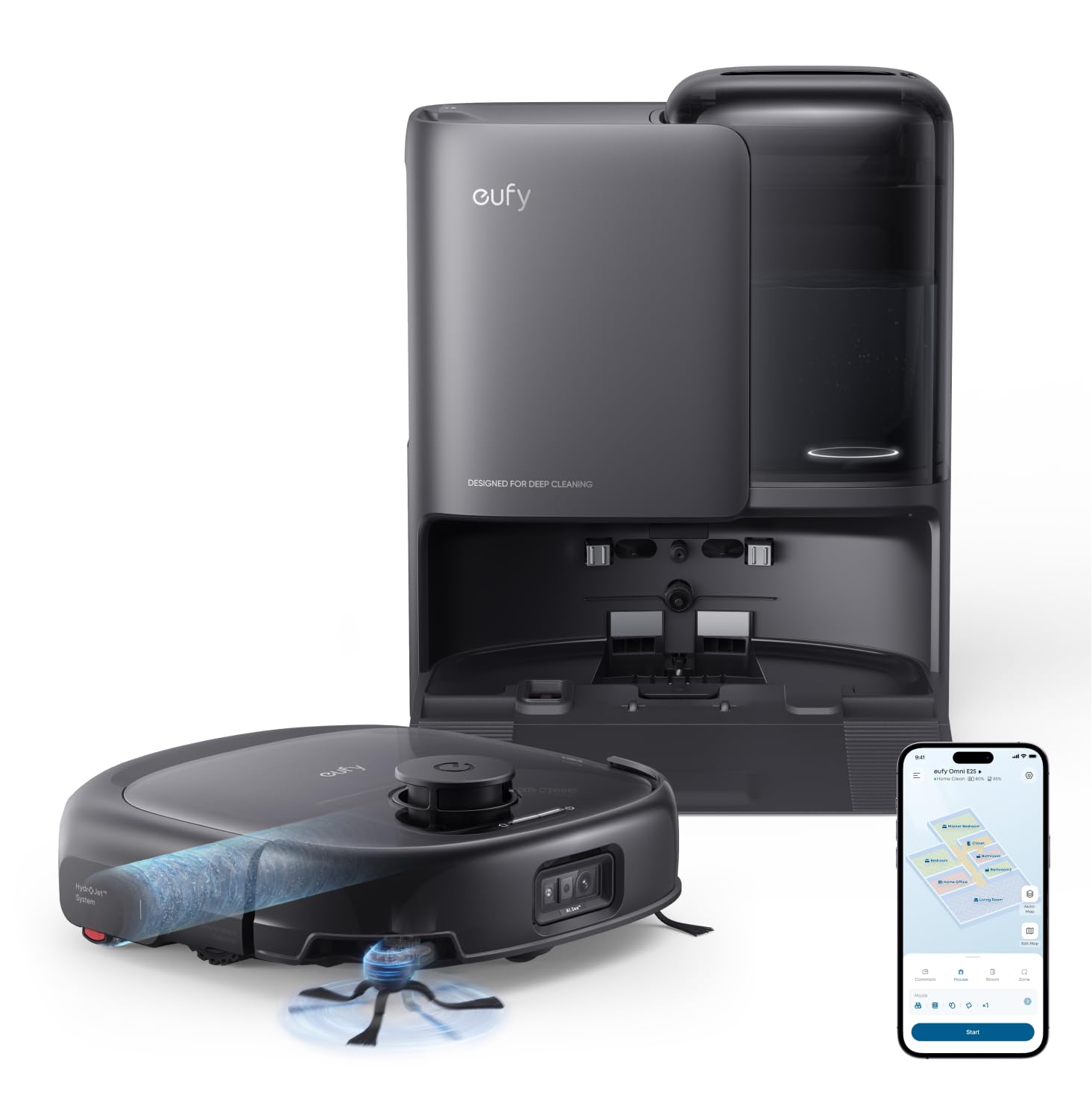
The eufy E25 scores 20,000 Pa of suction with a HydroJet system that refreshes its roller mop with clean water twice per second, preventing the dirty water smear effect common on older pads. The CornerRover Arm extends a side brush out to scrub along baseboards and furniture legs, filling the edge gap most robots leave. The DuoSpiral anti-tangle brush uses a counter-rotating helix to lift hair off the roller rather than trapping it, which works especially well for long hair up to 11.8 in. Laser-guided LiDAR remembers up to five floor plans and auto-switches floors when you move the robot between levels. The 125-minute runtime (standard mode) couples with a 3 L dust bag that lasts roughly 75 days.
The dock auto-empties dust, self-washes the mop, hot air dries at 50°C to prevent bacteria, and auto-refills water—all hands free. The mop lifts 10.8 mm on carpet detection, and the 21 mm climbing capability handles most transition strips. Connectivity works with Alexa, Google Assistant, and Siri. Setup takes about five minutes with no drilling. The 2.4 GHz Wi-Fi requirement applies here as well, but the remote control offers an offline fallback for basic scheduling.
Users note that the mop still can’t reach the absolute edge of baseboards in practice, and the auto-empty is loud enough to startle pets when it kicks in. The water tank lacks a low-level sensor, so the robot may run dry mid-mop without notifying you. For homes needing strong 20,000 Pa suction and a mop that doesn’t drag dirt, the E25 delivers flagship feel at the upper end of the mid-range.
Why it’s great
- HydroJet refreshes mop roller 2x/sec with clean water
- CornerRover Arm covers baseboard gaps
- 20,000 Pa lifts embedded dirt from low-pile carpets
Good to know
- Auto-empty sequence is loud
- Water tank has no low-level alert
- Mop still leaves a 1 in gap at absolute corners
5. eufy C28 2026 New

The eufy C28 targets multi-pet households with a 15,000 Pa motor that may not match the high-end giants but compensates with the HydroJet roller mopping system that spins at 270 RPM—about nine scrubs per second. Its 24 water ports keep the roller clean while a built-in scraper pushes dirt into a separated tank. The DuoSpiral brush handles hair up to 11.8 in without tangling, per eufy’s internal tests on Golden Retriever fur. The all-in-one station handles 75 days of dust, auto-washes the mop with clean water, and hot air dries at 50°C. Battery life sits at 140 minutes, which covers most homes under 1,800 sq ft.
LiDAR navigation avoids obstacles down to 3 x 3 x 3 cm, and the robot auto-lifts its mop 10.8 mm on carpets to keep them dry. Privacy focus is strong here: no camera used for navigation—just lasers—so there’s no image data leaving your home. The 54.89 dB operation is genuinely quiet, 3 dB quieter than most competitors at this suction level. The 3 L dust bag reduces swap frequency and separates dirty water automatically during the dock cycle.
The C28 requires 2.4 GHz Wi-Fi and uses proprietary dust bags and cleaning solution, which drives long-term cost up. Some users report the robot struggles on dark surfaces and occasionally gets stuck on thick rug tassels. Battery run time is shorter than the eufy E25, so it may need a mid-run recharge on 2,500 sq ft floors. For deep mop-focused cleaning at a mid-tier price, this is a solid choice.
Why it’s great
- HydroJet roller mop spins 270 RPM with self-cleaning
- No camera used for navigation—privacy-first
- 54.89 dB operation is very quiet
Good to know
- Proprietary bags and solution increase recurring cost
- Battery only 140 min; may need recharge on large floors
- Struggles on very dark flooring surfaces
6. Roborock Qrevo S

The Qrevo S drops suction to 7,000 Pa but packs a 200 RPM pair of spinning mops that tackle dried-on messes more aggressively than most higher-suction units. Its 10 mm auto mop lifting protects carpets, and the 30 adjustable water levels let you dial in exactly how much moisture your floors can handle. The dock handles auto mop washing with hot air drying, self-emptying up to 7 weeks, and auto-refilling from a 5 L clean water tank—enough for 4,305 sq ft of mopping. 3D mapping with PreciSense LiDAR and Reactive Tech obstacle detection ensures the robot doesn’t bash into furniture.
The app uses AI to suggest smart plans based on room type and foot traffic, and it supports multi-level maps up to four floors. The floating main brush reduces hair tangling, though it’s not as effective as dedicated cutter brushes on the DREAME or TriCut on the MOVA. Battery life is rated at 180 minutes, and the self-drying sequence significantly reduces mildew smell compared to docks that only use ambient air.
The 7,000 Pa suction struggles on high-pile rugs and may leave visible debris on deep shag. Some units have reported dust bin blockage after months of use, with Roborock support varying by region. The dust bag itself lasts only a few weeks in homes with heavy shedding. The mop heads also leave small water spots on polished concrete until the floor absorbs the moisture. This unit fits households where mopping consistency matters more than raw vacuum power.
Why it’s great
- 200 RPM spinning mops with 30 water flow levels
- Auto mop washing and hot air drying prevent mildew
- 5 L water tank covers 4,305 sq ft in one fill
Good to know
- 7,000 Pa suction is underpowered for thick carpets
- Dust bin can block after months; support consistency varies
- Mop leaves water spots on polished surfaces
7. WSUANE D15S MAX
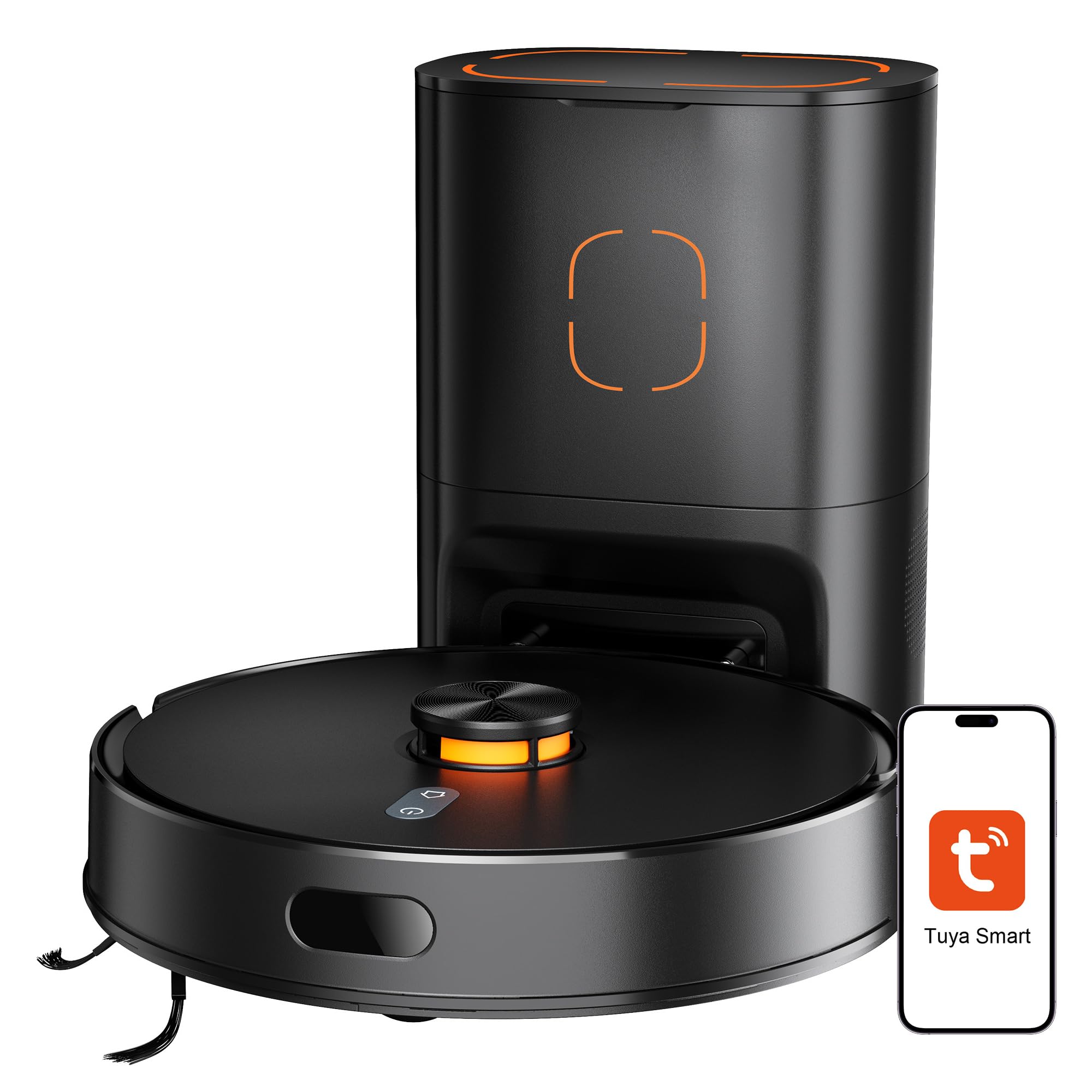
At 10,000 Pa, the D15S MAX brings premium suction to the entry-level tier. Its dToF LiDAR navigation uses pulsed time-of-flight detection for faster mapping than spinning laser towers, and the 3.5 L self-emptying bin holds up to 13 weeks of debris. The hair-cutting roller brush activates after each cleaning cycle, using a blade to snip wrapped hair before it accumulates. The 3200 mAh battery delivers up to 160 minutes on silent mode or about 70 minutes at max suction. Four suction levels (800/2,000/6,000/10,000 Pa) let you trade power for runtime depending on the surface.
The app supports multi-level maps, no-go zones, and targeted room cleaning. The combination water tank enables vacuum-and-mop in one pass, though the mopping is a simple pad drag—no spinning or self-washing. Three ground detection sensors and six anti-collision sensors prevent falls and furniture bumps. The dToF sensor extends range and reduces interference from sunlight compared to older IR-based systems.
The mopping performance is basic: it wets the pad and drags it, so tough stains may not lift without pre-treatment. The app can be slow to sync, and the robot sometimes misses edge zones on the first mapping run. Customer reviews note that the hair-cutting blade is effective but the bin still needs manual emptying monthly for optimal suction. For buyers who want strong suction and solid navigation without the high-end price, this is the top budget option.
Why it’s great
- 10,000 Pa suction at budget-tier price
- dToF LiDAR maps faster than spinning LDS
- 3.5 L self-emptying bin lasts 13 weeks
Good to know
- Mopping is basic wet-drag; no spinning or self-cleaning
- App sync can be slow on first setup
- Hair-cutting blade effective but bin needs monthly check
8. Uninell Budget Plus
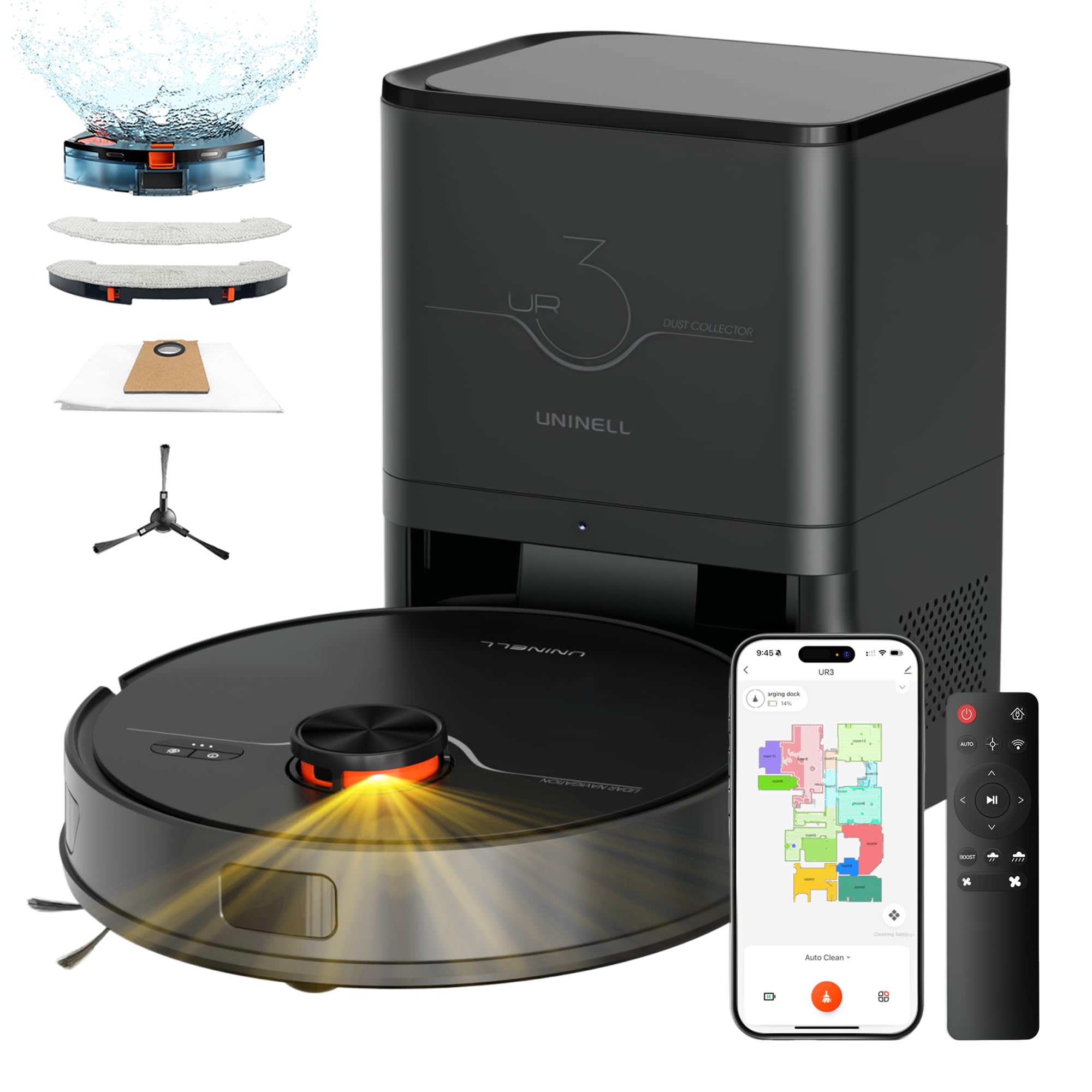
The Uninell Budget Plus brings 7,000 Pa suction and a 3.5 L self-emptying station that holds 90 days of dirt—a rare combination at this price. LiDAR 360° laser mapping creates accurate no-go zones and multi-floor maps up to five levels. The auto-carpet boost ramps suction automatically on rug detection, and the mop pad lifts when it senses carpet to avoid wetting. Battery runtime reaches 180 minutes, covering about 2,000 sq ft per charge. Voice control works with Alexa and Google Assistant, and the included remote control provides Wi-Fi-free operation for older users. The tangle-free brush design minimizes hair wrap, though it’s not as effective as cutter-based systems on long human hair.
The compact body measures 12.6 x 12.6 x 3.8 in, fitting under most furniture that has at least 4 in of clearance. The washable foam filter and sponge reduce replacement costs. The mopping function is a basic pad that drags water across the floor, similar to the WSUANE unit—effective for light maintenance but not for dried-on kitchen spills. Setup is straightforward: the app guides you through one-button mapping, and the robot returns to the dock automatically when battery drops below 20%.
Some users report the self-emptying sound is loud enough to startle children and pets, and the dust bag collects finer debris well but can miss larger clumps if the bin hasn’t been emptied manually in weeks. The mop pad leaves a damp trail on medium-pile rugs even when lifted, because the pad doesn’t retract fully. For buyers on a tight budget who want self-emptying convenience and LiDAR navigation, this is the most feature-dense entry-level robot today.
Why it’s great
- 3.5 L self-emptying station holds 90 days of debris
- LiDAR 360° mapping for accurate no-go zones
- 180 min runtime covers 2,000 sq ft per charge
Good to know
- Self-emptying sound is very loud
- Mop pad leaves damp trail on medium-pile rugs
- Basic pad mopping weak on dried stains
9. TangibleFuture LOOI Robot
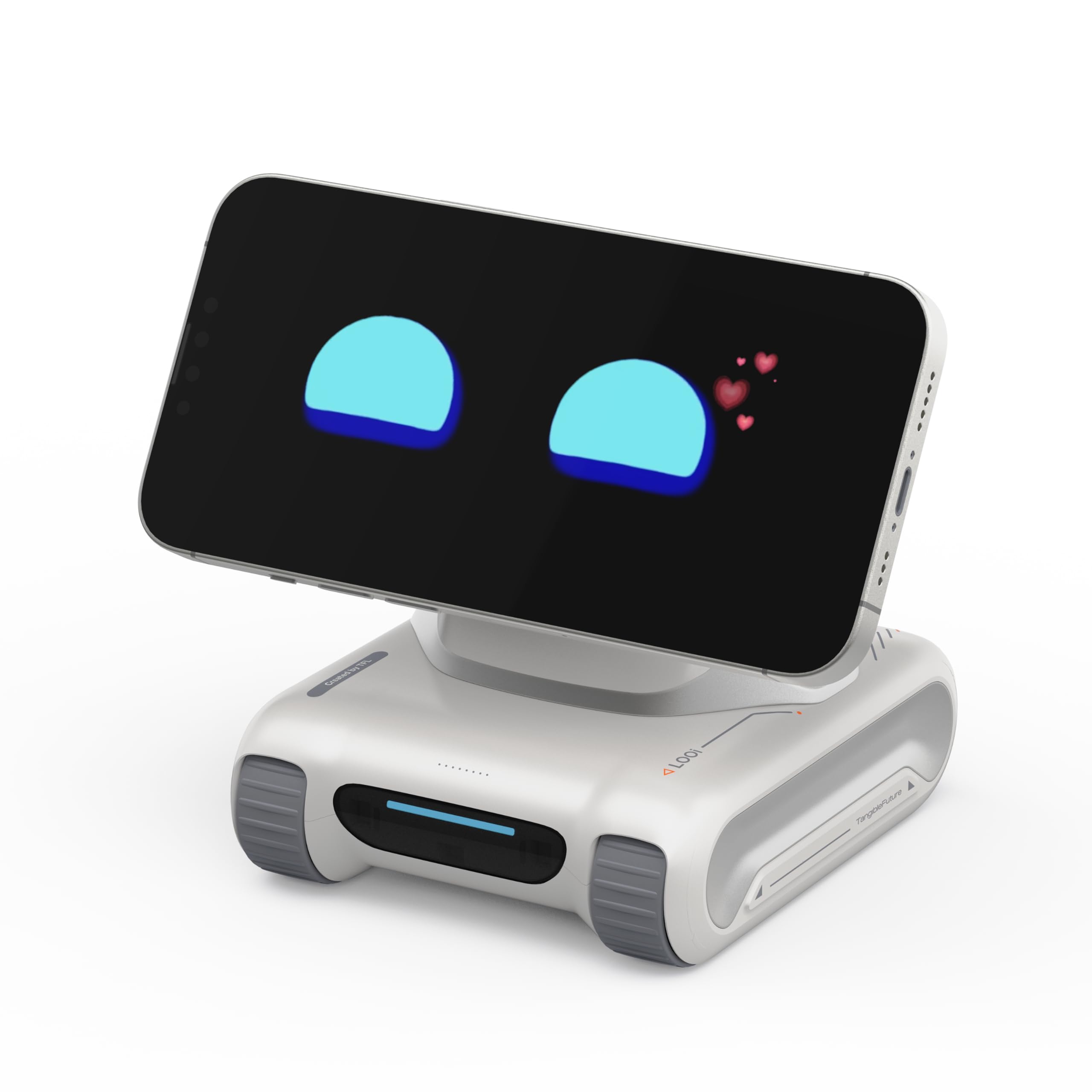
The LOOI Robot is a desktop AI companion that runs on a Vision-Language Model—it sees your desk, recognizes objects (croissant vs. baguette), identifies multiple people by their outfits and accessories, and responds with ChatGPT-powered voice that carries context across conversations. Its memory system stores both short-term conversation threads and long-term facts like family member names and preferences. The built-in 10W wireless charging pad means your phone charges while you chat. The camera includes face tracking, so LOOI turns to maintain eye contact during dialogue. Its autonomous behavior system lets it make spontaneous decisions—it may express curiosity at a new object without being commanded to inspect it.
The emotional animation engine is where LOOI shines: joy, surprise, curiosity, and mischief are expressed through body movement and screen animations that update over the air through the companion app. The robot learns new expressions and behaviors with each update, so it feels like it’s growing rather than staying static. Practical features include reminders, weather reports, games, and a standby clock. The 4.33-inch compact footprint means it fits on any desk without crowding your keyboard. It’s suited for ages 8 and up but works just as well for remote workers who want a conversational presence.
The LOOI lacks a microphone toggle—you must tap the screen sides to activate voice detection, which sometimes fails on the first tap. It also has a tendency to drive itself off the edge of dark-colored desks during explore mode, and the voice currently only supports English. Some units mispronounce names with a Dutch accent, and the memory system can lose context if the robot is restarted. For a desktop companion that truly feels alive, the LOOI is the most advanced option today, but it’s not a floor cleaner—buy it for conversation, not cleaning.
Why it’s great
- VLM vision recognizes objects, people, and gestures in real time
- ChatGPT voice with long-term and short-term memory
- 10W wireless charging built into the base
Good to know
- English voice only; Dutch accent on some names
- Microphone activation can be unreliable on first tap
- May drive off dark desks during explore mode
FAQ
Can an AI home robot learn my daily schedule without manual programming?
How many objects does the VLM need to recognize for reliable pet safety?
Why do some floor robots require 2.4 GHz Wi-Fi but not 5 GHz?
What happens if the desktop companion loses power—does it remember me?
Final Thoughts: The Verdict
For most users, the ai home robot winner is the Roborock Qrevo Edge 2 because it combines the highest suction (25,000 Pa) with RetractSense navigation, the largest object recognition set (280+ types), and a fully automated hot-water mop dock. If you want a true desk companion that remembers your face and holds conversations, grab the TangibleFuture LOOI Robot. And for multi-pet homes with high thresholds, nothing beats the MOVA V50 Ultra Complete.