
Our readers keep the lights on and my morning glass full of iced black tea. As an Amazon Associate, I earn from qualifying purchases.
Specs are compiled from manufacturer listings and verified buyer reviews and can change over time — please confirm the key details on the product page before buying.
Most phones now slap “AI” on the box, but only a handful actually change how you use the thing day to day. The difference is whether the assistant can see your screen, edit a photo from a typed sentence, or translate a call while you are still talking. This guide separates the phones where AI is a real working tool from the ones where it is a sticker on the packaging.
I’m Min — the founder and writer behind Gadgets Feed. This guide is built by comparing the manufacturers’ published specifications and the patterns across verified customer reviews, so you get each pick’s real strengths and trade-offs instead of marketing spin.
Some phones here run the newest silicon (the main chip that powers the AI) and can hear you, see your camera, and rewrite your notes on command. Others are older flagships where the AI is just as useful but the price has already come down. The practical differences are laid out below, so picking the right ai mobile phones depends on your network and your daily habits, not the marketing sheet.
Our Picks at a Glance

How To Choose The Best AI Mobile Phones
The phone you buy for its AI has to run that AI on hardware that can keep up. A slow chip with a big assistant logo on the box will lag the moment you ask it to do two things at once. So start with the brain inside, then work outward to the screen, the battery, and the network.
Start with the AI processor, not the camera megapixels
The AI work happens on a chip called an NPU (neural processing unit), and a dedicated one keeps things fast without draining your battery. The Xiaomi 17T Pro pairs its MediaTek Dimensity 9500 with an NPU 990, while the Moto Edge 60 Pro lists a MediaTek NPU 780. More NPU headroom means an AI photo edit finishes in a second instead of leaving you watching a spinner.
Check your carrier before you fall in love with a model
Many international and global-ROM phones only work on specific US networks. The Xiaomi 17T Pro works on T-Mobile, Mint, and Tello but not Verizon, AT&T, or Cricket. The Moto Edge 60 Pro works on T-Mobile, Metro, Mint, Tello, and Ultra only. Read the band list before you buy — a great phone on the wrong network is a paperweight.
Decide which AI you actually use
Start with what you actually need: photo editing, live translation, or an assistant that sees your screen. Samsung’s Galaxy AI leans on Photo Assist and Now Brief. Google’s Gemini Live lets you point your camera at something and ask about it out loud. Both are useful, but they solve different problems in your day.
Quick Comparison
| Model | Best For | Battery (mAh) | Refresh Rate | Storage | Amazon |
|---|---|---|---|---|---|
| Xiaomi 17T Pro Ai 5G★ Best Overall | Best Overall | 7000 | 144Hz | 512GB | Amazon |
| Google Pixel 10 (open up)Pure Google AI | Carrier Freedom | 4970 | — | 128GB | Amazon |
| Samsung Galaxy S25Everyday Galaxy AI | Everyday Galaxy AI | 4000 | — | 128GB | Amazon |
| Samsung Galaxy S26 | Newest Galaxy AI | 4300 | — | 256GB | Amazon |
| Google Pixel 10 Pro XL (Renewed) | Pure Google AI | 5200 | — | 256GB | Amazon |
| Nothing Phone (4a) Pro | Clean Android AI | 5080 | — | 256GB | Amazon |
| Nothing Phone (3) | AI + Glyph Play | 5150 | 120Hz | 512GB | Amazon |
| Motorola Moto Edge 60 Pro | Mid-Range Value | 6000 | 120Hz | 512GB | Amazon |
| FOSSIBOT F113 5G Rugged | Outdoor Workhorse | 20000 | 120Hz | 256GB | Amazon |
| Samsung Galaxy Z Fold7 (Renewed) | Big-Screen AI | 4400 | — | 512GB | Amazon |
In‑Depth Reviews
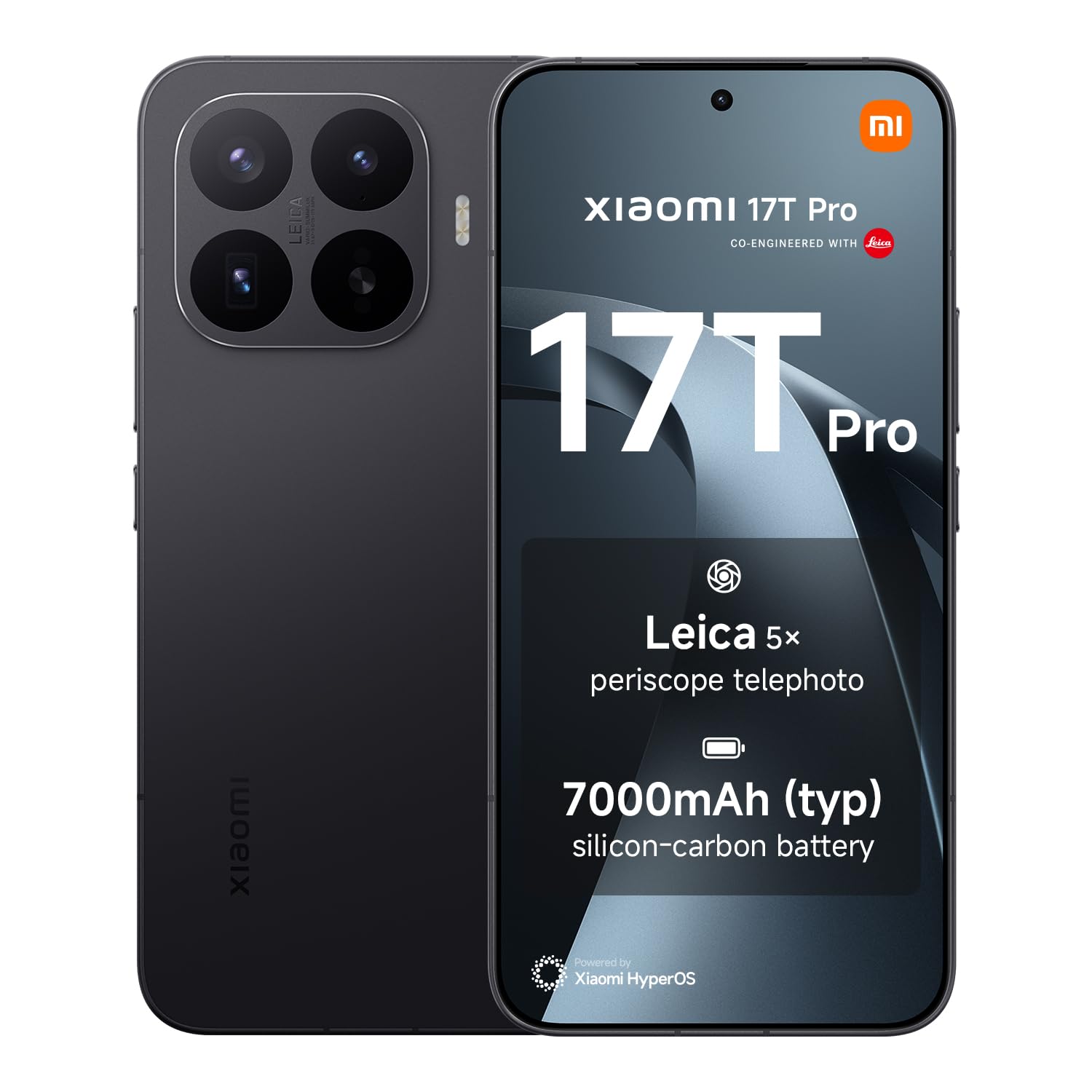
1. Xiaomi 17T Pro Ai 5G
Our pick — 4.5+★ from 300+ verified ratings; the strongest balance of quality and price.
A 7000mAh silicon-carbon battery and a 144Hz AMOLED on one phone, so on-device AI runs all day without hunting for a charger.
This is the pick where the AI actually has room to stretch. The MediaTek Dimensity 9500 runs on a 3nm process, and it carries a dedicated NPU 990 — the AI brain that handles the on-device work. That pairing is what lets the phone run Gemini, AI Interpreter, AI Notes, AI Recorder, and AI subtitles without borrowing power from the cloud every time you tap something. The 7000mAh silicon-carbon battery is why the AI tools can stay on all day without you watching the percentage drop.
What wins people over is the sheer range of features: customers mention functionality more than anything else, and the summary is blunt about the phone doing everything well. The 6.83-inch 1.5K AMOLED gives you 447 pixels per inch (PPI — how sharp the screen looks up close) and a refresh rate up to 144Hz, so scrolling and Gemini’s live responses feel immediate rather than laggy. The 50MP Leica main camera, 50MP periscope telephoto, and 12MP ultra-wide round out a real camera system, not a token one.
The catch is network compatibility. This is an international model with no US warranty, and it only works on T-Mobile, Mint, and Tello global bands — not Verizon, AT&T, Cricket, or Metro. If you are on any of those, you are looking at the wrong phone. For everyone else, 100W wired HyperCharge and 50W wireless mean the 7000mAh cell refills fast enough that you are not stranded waiting.
flagship camera speed
- 7000mAh silicon-carbon battery with 100W wired and 50W wireless charging
- Dedicated NPU 990 runs Gemini and AI editing on-device
- 6.83-inch 144Hz AMOLED with 3500-nit peak brightness
price climbs high
- T-Mobile, Mint, and Tello only — no Verizon, AT&T, or Cricket
- No micro SD support, so 512GB is your ceiling
buy for photos: you are on T-Mobile or a T-Mobile-based carrier and want the biggest battery with the most on-device AI headroom.
wait for discounts: you are locked to Verizon or AT&T — this phone will not activate on those networks.
2. Google Pixel 10 (open up)
Gemini without a single carrier string — the cleanest AI phone for anyone who switches networks.
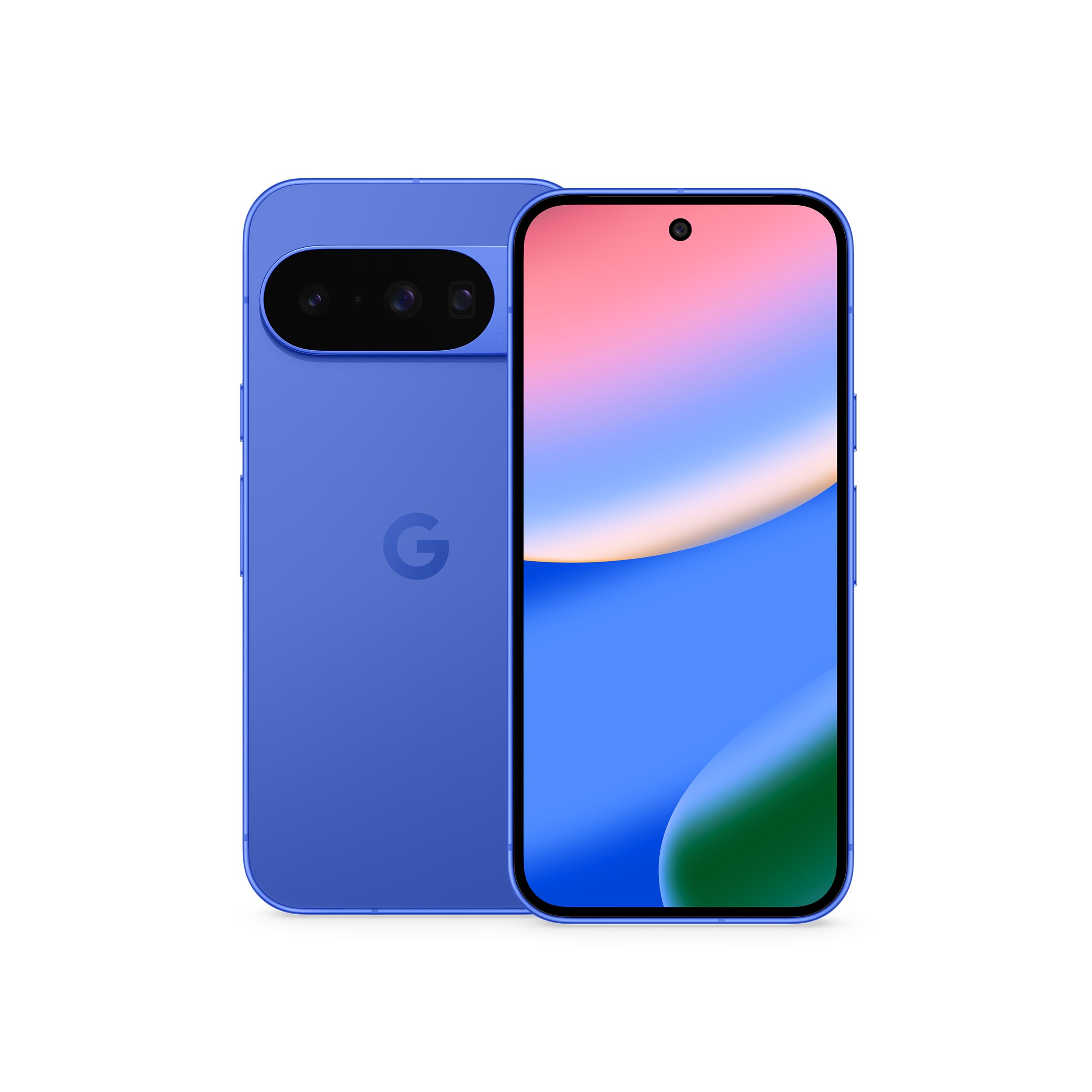
If the Xiaomi makes you nervous about bands, the Pixel 10 is the answer. It is open up and works with Google Fi, Verizon, T-Mobile, AT&T, and other major carriers, so you can swap SIMs whenever a better deal shows up. Google’s Tensor G5 chip handles the assistant, and Gemini is baked into the Android experience rather than bolted on as an app.
The camera is where the AI shows its work. A triple rear system with a 5x telephoto lens gives you up to 20x Super Res Zoom, and Night Sight pulls detail out of dim scenes. Camera Coach is the useful bit for people who take bad photos — it coaches the shot before you press the button. The 4970mAh battery carries a full day of heavy use, and the Actua display peaks at 3000 nits so it stays readable in direct sun.
The honest caveat is durability feedback. Some buyers flag the glass as needing care, and this is a phone you will want in a case. On the plus side, phone quality is the most-praised thing about it by a wide margin. Compared with the rugged FOSSIBOT down the list, this one trades armor for a lighter, more pocketable daily feel.
clean android updates: open up network freedom plus Gemini on Tensor G5 hardware makes this the easiest recommendation for people who travel between carriers.
modest battery life: no rugged rating in the listing and 128GB of storage, so heavy video shooters should look elsewhere.
pick for software: you want Google’s AI on any carrier and value Gemini integration over raw battery size.
pass for battery: you fill your phone with 4K clips and need more than 128GB from the start.
3. Samsung Galaxy S25
One spoken request can trigger a search and a text to a friend, with Now Brief surfacing what you need before you ask.
The Galaxy S25 is built around the idea that you should never have to do the same task twice. Ask it to find a pet-friendly vegan restaurant and text it to a friend, and it handles both in one ask. Now Brief feeds you the info you need before you think to search for it. That kind of cross-app AI is only possible because the Snapdragon 8 Elite processor has the headroom to run it without stuttering, and functionality is the single most-praised trait among buyers by a huge margin.
Its 4000mAh battery is the number to know here, and it is the main split in the reviews — some buyers get through a full day fine, others come up short. Charging helps: the S25 fills up in about 40 minutes per the listing, so a top-up at your desk is quick. The AI Camera with Audio Eraser cleans up background noise in video, and the portrait features adjust skin tones without making faces look plastic.
Its size is what separates it from the Pixel pick. Some owners love it for smaller hands; others think it is too small for two-handed use. That is a fit call, not a defect. It runs a 6.2-inch-class display with ProScaler (upscaling that sharpens video), backs the Samsung software stack for years, and includes a US one-year warranty — a real advantage over imported models.
grab for size: you want Galaxy AI features, a US warranty, and a phone that fits one hand.
skip for power: you are a heavy gaming or video user who will push past the 4000mAh battery before dinner.
4. Samsung Galaxy S26

Type a sentence, change a photo — Photo Assist is the AI trick you will actually use daily.
Photo Assist is the headline. You type or tap what you want — add an object, restore detail, apply a style — and the phone does it on the spot. That is a genuinely different workflow from swapping between an editing app and your camera roll. Now Nudge adds a second layer: Galaxy AI surfaces suggestions exactly when they are relevant, so you stay in the moment instead of digging through menus.
Its 4300mAh battery is larger than the S25’s 4000mAh, and it sits behind an AMOLED display that the brand describes as vibrant for video. The wider front camera captures more of the scene for group selfies, and Hi-Res Audio support pairs with Galaxy Buds4 Pro if you want the sound side covered too. Durability is a clear strength here — quality is what buyers praise most, and the phone is reported to last all day.
Camera quality comes in for mixed feedback, with some finding it short of expectations, so do not buy this purely as a shutterbug tool. The 256GB of storage is the bigger step up over the S25’s 128GB if you shoot a lot of video. And the price tier is higher, which is the trade you are making for the newest Galaxy AI and the extra storage.
newer ai tricks: Photo Assist and Now Nudge are the two most concrete, time-saving additions in Samsung’s current lineup.
marginal upgrades: camera performance divides opinion, so test the shots that matter to you before committing.
choose for ai: you edit photos constantly and want the newest Samsung AI tools with 256GB of storage.
avoid if upgrading: you want the best camera first and AI second — the Pixel 10 Pro XL does more on that front.
5. Samsung Galaxy Z Fold7 (Renewed)

An 8-inch inner display that gives Photo Assist room to zoom, erase, and compare edits without pinching.
Editing AI on a normal phone screen is cramped. On the Fold7’s 8-inch inner display, zooming in to remove a stranger from the background with Photo Assist is comfortable, and Best Face has room to show you every option in a group selfie. It is the first foldable here with a 200MP camera using ProVisual Engine, so the shots going into the AI editor start sharp. The 6.5-inch cover display works like a standard phone, so you do not have to unfold just to reply to a text.
The Snapdragon 8 Elite processor built for Galaxy keeps up when you are running three windows at once — editing on one side while a video plays on the other. Gemini Live on this phone can analyze what you point the camera at and answer on the fly, which is a different experience when the screen is this large. The 4400mAh battery is the trade-off for all that glass, and it has to feed two screens where the S26’s 4300mAh feeds one.
Buying renewed is the other honest point. This is a renewed unit through Boost Mobile, so confirm the carrier works for you and check what the renewal process covers. Performance feedback is mixed — some report no issues, others hit problems — so weigh that against the unique big-screen AI experience. No other phone in this group offers this much screen for AI photo editing.
big inner screen
- 8-inch inner and 6.5-inch cover displays for real multitasking
- 200MP main camera with ProVisual Engine feeds better shots into AI editing
refurb condition risk
- Renewed unit on Boost Mobile — verify your carrier first
- Mixed performance feedback in the reviews
worth for multitasking: you edit photos and juggle apps constantly, and the big screen is the whole point.
skip for durability: you want a simple, sealed new phone with no carrier or renewal questions.
6. Google Pixel 10 Pro XL (Renewed)

100x Pro Res Zoom pulls detail out of distance and low light, and Gemini Live lets you point the camera and ask out loud.
Where the standard Pixel 10 uses AI to save you time, the Pro XL uses it to save your photos. A 50MP pro camera system with 8K super-steady video and 100x Pro Res Zoom means the AI has real data to work with — it is pulling detail out of distance and low light, not inventing it. The Google Tensor G5 chip carries the load, and Gemini Live lets you point the camera at something and hold a natural conversation about it. That is a genuinely different way to use a phone.
Gemini Live is the standout feature. Instead of typing, you have a free-flowing conversation, point the camera at what you are curious about, or ask Gemini to brainstorm across your apps. The 6.8-inch Super Actua display peaks at 3300 nits, so it stays readable in direct sun, and the aluminum-plus-Gorilla-Glass-Victus-2 build is meant for scratch and drop resistance. The 5200mAh battery is bigger than the standard Pixel 10’s 4970mAh.
The catch is carrier lock. This is Verizon-locked, and that is the biggest complaint in the reviews — if you are not on Verizon, this phone is not for you. Buying renewed means condition is the next question, though buyers consistently describe the phones as looking brand new. Weigh the carrier constraint carefully before you commit to the Pro XL’s camera.
right for streaming: you are on Verizon and want the best camera-plus-AI combination Google makes, even as a renewed unit.
wrong for warranty: you are on any carrier other than Verizon — the lock will block activation.
7. Nothing Phone (4a) Pro

Nothing OS 4.1 on Android 16 ships without carrier bloatware, and the 137-LED Glyph Matrix doubles as a notification display.
Nothing’s pitch is a clean operating system, and that matters for AI. Nothing OS 4.1 on Android 16 has no carrier bloatware, so the AI-enhanced photo tools get the resources instead of preloaded apps. The triple camera system pairs a 50MP Sony main sensor with OIS (optical image stabilization — it steadies the shot) with a 50MP periscope telephoto that reaches 3.5x optical up to 140x ultra zoom. The AI-enhanced imaging is doing the heavy lifting on the long-range shots.
The Glyph Matrix is the part people remember. It is 137 individually controllable mini-LEDs on the back that act as a second display for notifications, timers, and battery status. The phone is a slim 7.9mm aluminum unibody with a transparent camera module, and it carries an IP65 dust and water rating. A 5080mAh battery with 50W fast charging reaches 60% in 30 minutes per the listing — helpful if you are topping up between meetings.
The honest note is on network support. AT&T and T-Mobile are supported, but Verizon is not recommended — you would need to call customer service and add the IMEI before it works at all. Within that band set, the phone is a solid mid-to-premium pick for people who value a bloatware-free AI experience and a distinctive design over a carrier-agnostic one.
glyph light design: the Glyph Matrix and clean Android 16 build offer a design and software combination nobody else in this list offers.
carrier band gaps: Verizon takes a manual IMEI whitelist call before this phone will work.
made for style: you are on AT&T or T-Mobile and want AI photo tools in a phone that does not look like every other slab.
not for rural: you need Verizon plug-and-play without calling customer service first.
8. Nothing Phone (3)

The Essential Key captures screens and voice notes, and Essential Space sorts them into organized suggestions.
Nothing’s Essential Key is the AI hook. Press once to capture your screen, long-press to record a voice note, double-press to open Essential Space — where the phone’s AI organizes your captures and generates suggestions for you. It is a catch-all for the small ideas and screenshots that normally vanish into your camera roll. The Snapdragon 8s Gen 4 chip on a 4nm process has a full-core 3.2GHz CPU and a dedicated AI engine driving it.
Four 50MP cameras is the other headline — a main, a periscope, an ultra-wide, and an ultra-clear front camera all at 50MP. Ultra XDR 4K video and AI-enhanced modes like Portrait Optimiser and Night Mode make it a capable shooter for content creators. The 6.67-inch 1.5K AMOLED display runs a 120Hz adaptive refresh with 1.07 billion colors, and the phone carries an IP68 rating for water and dust. The 5150mAh battery supports wireless charging and talk time listed at 33.43 hours.
Performance is the split in the reviews — most say it handles everything, a few report it stops working. That is a real reliability question worth weighing, and the Glyph Matrix on this model is more of an interactive gimmick than a productivity tool. If you want the AI organization without paying the premium tier, this is the more affordable entry into Nothing’s ecosystem.
fit for design: you want a genuinely different AI workflow in a phone with four 50MP cameras and 512GB of storage.
pause for camera: you need rock-solid reliability above all else and want a longer track record behind the model.
9. Motorola Moto Edge 60 Pro 5G Ai

A 6000mAh battery, a 4500-nit 120Hz pOLED, and a 50MP front camera at a mid-range price.
The Moto Edge 60 Pro is the value play in this group. Its 6000mAh battery is a big step up from the Pixel 10’s 4970mAh, and it powers a 6.7-inch pOLED display that peaks at 4500 nits with 120Hz refresh. That means bright, smooth scrolling in direct sunlight without sacrificing battery life to get there. The MediaTek Dimensity 8350 on a 4nm-class process carries the AI work on a MediaTek NPU 780.
The camera is where it punches above its tier. A 50MP main sensor with f/1.4 aperture and optical image stabilization, a 13MP ultra-wide with 120-degree field of view, and a 10MP telephoto with 3x optical zoom give you real zoom range. The front camera is 50MP, which is a genuine jump for video calls and selfies. Phone quality is the most-praised trait in the reviews, and buyers report the 90-watt charging capability in the listing.
The trade-off is the network. This is a Latin American stock version that works worldwide but on T-Mobile, Metro, Mint, Tello, and Ultra only in the US. If you are on one of those, the six thousand milliamp-hour battery and Pantone-validated color display make it an easy mid-range pick. It also carries IP68 and IP69 dust and water protection plus MIL-STD-810H certification.
long battery endurance: a 6000mAh battery, 50MP front camera, and 120Hz pOLED display at a mid-tier price point.
limited us bands: T-Mobile and its partner networks only in the US — check before you buy.
take for battery: you are on T-Mobile’s network and want the biggest battery-plus-camera combo at a mid-range tier.
look past for travel: you need broad US carrier support including Verizon or AT&T.
10. FOSSIBOT F113 5G Rugged Phone

A 20000mAh battery that doubles as an 18W power bank, plus a 64MP night-vision camera that shoots up to 50 meters in the dark.
This is the outlier on the list, and that is on purpose. The 20000mAh battery is the largest here by a wide margin — the F113 holds up to 2,000 hours of standby time and 175 hours of talk time per the maker. More importantly, its 18W OTG functionality lets it act as a power bank and charge small devices like smartwatches. If you work outdoors or travel off-grid, this is the phone that keeps everything else alive.
The AI side is real but specialized. A 50MP AI main camera and a 64MP laser night vision camera capture clear images at distances up to 50 meters in complete darkness, with 4x HD zoom for long-range shots. A 50-meter high-brightness spotlight flashlight rounds out the outdoor toolkit. The MediaTek Dimensity 7050 on 6nm keeps things smooth, and the phone runs Android 15 for permission management.
The trade-off is weight, and the reviews are honest about it. Some buyers describe it as a little heavy, and any phone with a 20000mAh cell and a 6.78-inch display will be. FOSSIBOT includes a custom matching hand strap to solve that. There is also a carrier limit: it is tune for T-Mobile networks and not compatible with AT&T or Cricket. It carries IP68, IP69K, and MIL-STD-810H ratings plus a two-year official warranty.
built for outdoors: outdoor workers, campers, and anyone who wants a phone that doubles as a power bank and night-vision camera.
not for pockets: anyone who wants a slim pocket phone or needs AT&T or Cricket service.
Understanding the Specs
NPU (Neural Processing Unit)
The NPU is the chip that runs AI tasks on the phone itself, without sending your data to a server. A dedicated NPU — like the NPU 990 in the Xiaomi or the MediaTek NPU 780 in the Moto — is what makes live translation, AI photo edits, and voice assistants respond quickly. Without one, those features either lag or lean on the cloud and drain your battery. When you compare AI phones, the NPU and the processor it sits with are the first specs to check.
Battery Capacity in mAh
Milliamp-hours (mAh) measure how much charge a battery holds — higher numbers mean more screen-on time between charges. AI features are power-hungry, so a phone running an always-on assistant drains faster than a basic one. A 7000mAh cell like the Xiaomi’s gives you more hours of AI use than a 4000mAh cell like the S25’s. Charging speed matters too: 100W wired charging refills a big battery fast, while 33W is slower but still workable.
Refresh Rate in Hz
Refresh rate is how many times per second the screen redraws, measured in hertz (Hz). A 120Hz display updates 120 times a second, so scrolling and animations look smooth rather than choppy. The Xiaomi’s 144Hz panel goes further and reaches 480Hz touch sampling, which means taps register faster. For AI features that respond live on screen, a higher refresh rate makes the whole experience feel immediate.
5G Band Compatibility
5G bands are the radio frequencies a phone can use, and not every phone supports every carrier’s bands. An international or global-ROM phone like the Nothing Phone (3) may work on AT&T and T-Mobile but require a Verizon IMEI whitelist call before it activates. Before you buy any imported phone, cross-check its 5G band list against your carrier’s supported bands. A phone that does not match your network is a phone that will not make calls.
FAQ
Will the Xiaomi 17T Pro work on Verizon or AT&T?
Which AI mobile phone has the biggest battery?
What is the difference between Gemini and Galaxy AI?
Can I use AI features on a renewed phone?
How fast does the Nothing Phone (4a) Pro charge?
Is the Pixel 10 Pro XL locked to Verizon forever?
Does the Samsung Galaxy S25 have a US warranty?
Can the FOSSIBOT F113 charge my other devices?
Which phone is best for AI photo editing?
Do these phones need a case?
Final Thoughts: The Verdict
For most people ready to buy among these ai mobile phones, the winner is the Xiaomi 17T Pro — a 7000mAh battery, an NPU 990 (a chip built to run AI tasks), and a 144Hz AMOLED screen (refreshes 144 times a second for smooth scrolling) that make the AI tools feel fast all day. If you want the AI with the broadest carrier freedom, grab the Google Pixel 10, which runs Gemini on Tensor G5 (Google’s own chip) and works on all the major networks. And for the best camera-AI pairing on Verizon, the Google Pixel 10 Pro XL is the one to reach for.
How We Picked
We do not accept paid placement. Every pick is matched to a real buyer and a real use-case; we do not hands-on test units.
Sources & Methodology
Specifications: manufacturer listings and product documentation. Review insights: verified customer reviews, as of November 2026. Pricing: not shown on this page (it changes often); check the current price via the retailer link.
As an Amazon Associate, Gadgets Feed earns from qualifying purchases. This does not affect which products we feature.