
Forget what you think wearable health tracking looks like. A smart ring swaps the bulky screen for a discreet, lightweight titanium band that fits around your finger and feeds you a non-stop stream of biometric data — heart rate variability, sleep stages, SpO2, stress load, and recovery readiness — without screaming “I’m a gadget.” The fight between watches and rings is over the second you realize that the best sensor for optical heart rate monitoring is actually the finger’s dense vascular network, not the wrist.
I’m Min — the co-founder and writer behind Gadgets Feed. I’ve spent hundreds of hours dissecting the technical battle between sensor architectures, battery chemistries, and subscription paywalls across the current smart ring landscape to give you a no-nonsense pick.
Whether you’re optimizing deep sleep, tracking HRV trends, or dodging monthly fees, this guide delivers exactly the best ai-powered smart ring for your specific needs without burying you in marketing fluff.
How To Choose The Best AI-Powered Smart Ring
Smart rings are defined by three interlocking factors: sensor accuracy, fit, and the cost of access. A ring with top-tier sensors is useless if it doesn’t fit snugly enough to block ambient light, and a perfect fit means nothing if the manufacturer gates your sleep data behind a monthly paywall. Here are the specific specs and models you need to navigate.
Subscription vs. No Subscription: The True Cost of Ownership
This is the first fork in the road. Oura requires a /month membership (first month free) to access your readiness score, sleep stages, and HRV data. Without it, the ring is a glorified step counter. In contrast, RingConn Gen 2 Air, RingConn Gen 3, CUDIS 002, and QALO give you the full health dashboard — sleep stages, SpO2, stress, HRV, activity — for life with zero recurring fees. If you balk at a Netflix subscription for your biometrics, the no-subscription camp saves you roughly annually.
Sensor Architecture and Accuracy
PPG (photoplethysmography) sensors are the heart of every smart ring. The sensor’s quality and the number of LEDs (green, red, infrared) determine how well it tracks heart rate during movement and SpO2 at night. Rings like the Oura Ring 4 and RingConn Gen 3 use multi-wavelength LED arrays with deeper light penetration. The RingConn Gen 3 goes a step further, adding a dedicated vascular load analysis feature that looks at arterial stiffness trends — a metric usually reserved for clinical-grade wearables. CUDIS 002 also throws in a biological age tracker based on your resting vitals.
Battery Life and Charging Convenience
Because a smart ring’s value comes from 24/7 wear, battery life is a usability dealbreaker. The WHOOP 5.0 technically lasts 14+ days, but it’s a band, not a ring (it uses a form factor that wraps around your wrist). Among actual finger-worn rings, the RingConn Gen 3 leads with up to 14 days on EcoPower Tech 2.0, followed by the RingConn Gen 2 Air at 10 days, and the Oura Ring 4 at 5-8 days depending on size and feature usage (SpO2 polling drains faster). The QALO lands at 7 days. Charging method matters too — a dock (RingConn, Oura) is more reliable than pogo-pin chargers that can fail after repeated cycles (reported on the QALO).
Water Resistance and Build Material
You’re paying for a ring you never take off. Aerospace-grade titanium is the standard across most mid-to-premium rings (Oura 4, RingConn Gen 3, CUDIS 002) because it’s light, hypoallergenic, and scratch-resistant. The body is coated in a PVD finish (gold, silver, black) that can chip over time, but titanium itself does not corrode. Water resistance ratings vary: RingConn Gen 2 Air boasts IP68 tested to 100 meters, RingConn Gen 3 is IP68 for swimming, and the Oura Ring 4 is 100-meter water resistant (suitable for swimming, not scuba). The CUDIS 002 has 5ATM (50 meters). If you swim daily, prioritize IP68 over 5ATM.
Quick Comparison
On smaller screens, swipe sideways to see the full table.
| Model | Category | Best For | Key Spec | Amazon |
|---|---|---|---|---|
| Oura Ring 4 (Gold) | Premium | Deep Sleep & HRV Accuracy | Smart Sensing multi-LED PPG | Amazon |
| RingConn Gen 3 (Royal Gold) | Premium | Vascular Load & Haptic Alerts | 14-day battery + vibration motor | Amazon |
| Oura Ring Gen3 Heritage | Premium | Established Ecosystem Integration | Research-grade multi-sensor array | Amazon |
| CUDIS 002 | Mid-Range | Biological Age Gamification | AI wellness coach + rewards | Amazon |
| RingConn Gen 2 Air | Mid-Range | Ultra-Thin Daily Wear | 2mm profile / 2.5g weight | Amazon |
| Oura Ring 4 (Silver) | Premium | Women’s Health & Cycle Tracking | Smart Sensing + AI Advisor | Amazon |
| WHOOP 5.0 | Premium | Strain & Recovery Analytics | 14-day battery / 12-month membership | Amazon |
| QALO Smart Ring | Budget | Basic Tracking Without Subscriptions | Titanium / 7-day battery / 21.5 mAh | Amazon |
In‑Depth Reviews
1. Oura Ring 4 (Gold)

The Oura Ring 4 is the benchmark for sensor quality and sleep staging granularity. Its Smart Sensing technology uses a multi-LED array that self-calibrates by adjusting light intensity and channel selection based on your skin tone and finger movement, giving you a cleaner HRV signal overnight than any Oura before it. Users consistently report that the sleep staging matches polysomnography lab data for detecting awake windows, REM onset, and deep sleep duration — a level of precision that fewer Oura competitors match.
Battery life hovers around four to six days in real-world use when SpO2 and nighttime HRV logging is active, charging from zero in about 80 minutes via USB-C dock. The gold PVD finish is elegant but does show micro-scratches over time, which the titanium body hides well. The app’s AI Advisor interprets your biometric trends into natural language suggestions — for instance, flagging that a late dinner correlated with lower HRV — making it the most intuitive coaching engine in this list.
The recurring /month subscription (free first month) is the only asterisk. If you want lifetime access to readiness scores and sleep stages without paying monthly, the no-subscription alternatives further down this list win the value argument. But if you want the most clinically validated sleep-tracking algorithm and the deepest third-party app integration (Natural Cycles, Strava, Apple Health, Google Health Connect), this is the ring to beat.
Why it’s great
- Multi-LED Smart Sensing delivers industry-leading HRV and sleep stage accuracy
- AI Advisor provides contextual daily coaching based on your metrics
- Integrates with over 40 apps (Natural Cycles, Strava, Apple Health)
Good to know
- Full features require a /mo subscription after the first month
- Battery life reliably falls to 4 days with continuous SpO2 polling
- Sizing is unique — must use Oura Sizing Kit before purchase
2. RingConn Gen 3 (Royal Gold)
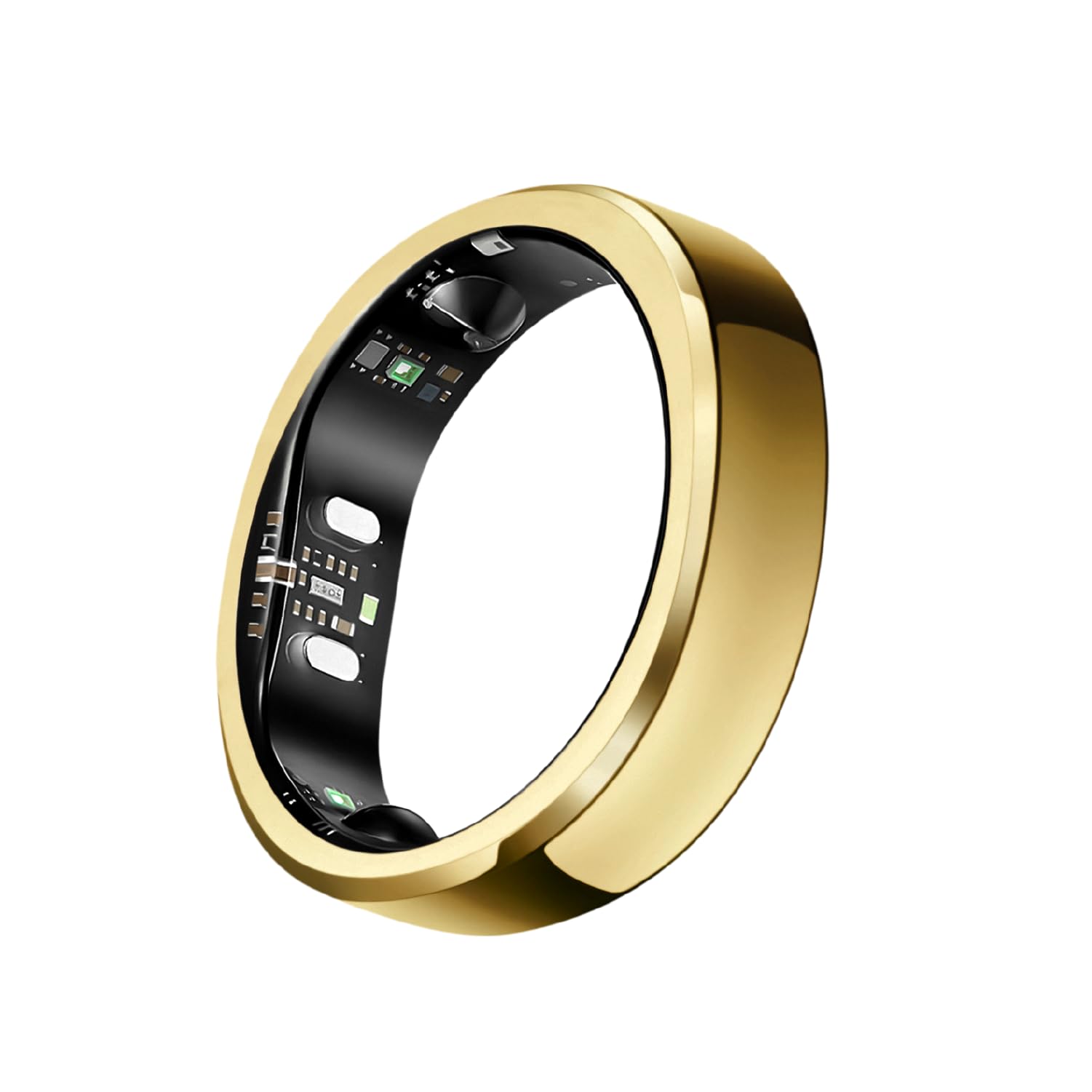
The RingConn Gen 3 is a spec-first device that introduces a category-first biometric: vascular load trends. After a one-time calibration, the ring uses multi-wavelength PPG signals to track changes in arterial stiffness and vascular resistance over days and weeks — a direct window into how sleep debt and chronic stress physically tax your cardiovascular system. This is the kind of data typically found on medical-grade wearables, and it ships without a subscription fee.
EcoPower Tech 2.0 delivers a genuine 12 to 14 days of run time on a 90-minute charge, which is the longest endurance in the smart ring category. The integrated haptic motor provides on-finger vibration alerts for inactivity reminders, low battery, and even a subtle alarm that won’t wake your partner. The charging case (USB-C) doubles as a storage and travel dock, though the case itself must be plugged in; it doesn’t have its own internal battery.
The app interface is clean, presenting data as trend graphs rather than raw numbers, and it allows free export to Apple Health. Build quality is aerospace titanium with a polished PVD finish that shows fewer fingerprint smudges than Oura’s matte options. The only trade-off is workout mode variety — there are fewer automatic exercise detection options compared to Oura, so you may want to pair it with a fitness band for activity logging.
Why it’s great
- World’s first smart ring with vascular load trend analysis
- No subscription fee — full access to all health metrics
- 14-day battery life is the longest in the ring category
Good to know
- Fewer auto-detect workout modes than competitors
- Charging case has no internal battery (must be plugged in)
- Sleep stage breakdown can be slightly less granular than Oura
3. RingConn Gen 2 Air

At 2mm thick and 2.5 grams, the RingConn Gen 2 Air is the most wearable smart ring on the market right now. It sits as low-profile as a standard wedding band, which matters when you’re typing, lifting weights, or sleeping on your side — no digging into adjacent fingers. Despite the thin build, it packs 22 mAh of battery that lasts a full nine to ten days, including continuous heart rate and sleep stage tracking.
IP68 water resistance tested to 100 meters means you can take it swimming, diving, and surfing without worrying about the pressure seal. The Galaxy Silver finish resists micro-scratches well. The companion app provides AI-powered personalized reports, stress trend graphs, and automatic activity detection (walking, running, cycling) with manual workout tagging for less common movements. There are no advertising banners or upsells inside the app — all data is free to access from day one.
The big differentiator versus the Gen 3 is the absence of haptic alerts and vascular trend analysis. You don’t get vibration alarms or arterial stiffness tracking. But for buyers who prioritize an invisible wearing feel, long battery, and zero subscription overhead, the Gen 2 Air is the smartest value purchase in the mid-range tier.
Why it’s great
- Ultra-thin 2mm profile makes it the most comfortable ring for all-day/night wear
- 10-day battery life with 90-minute charge
- No subscription fee for complete health tracking features
Good to know
- No haptic vibration alerts (Gen 3 has them)
- No vascular load trend tracking
- Sizing is non-standard — must buy sizing kit first
4. Oura Ring Gen3 Heritage (Black)
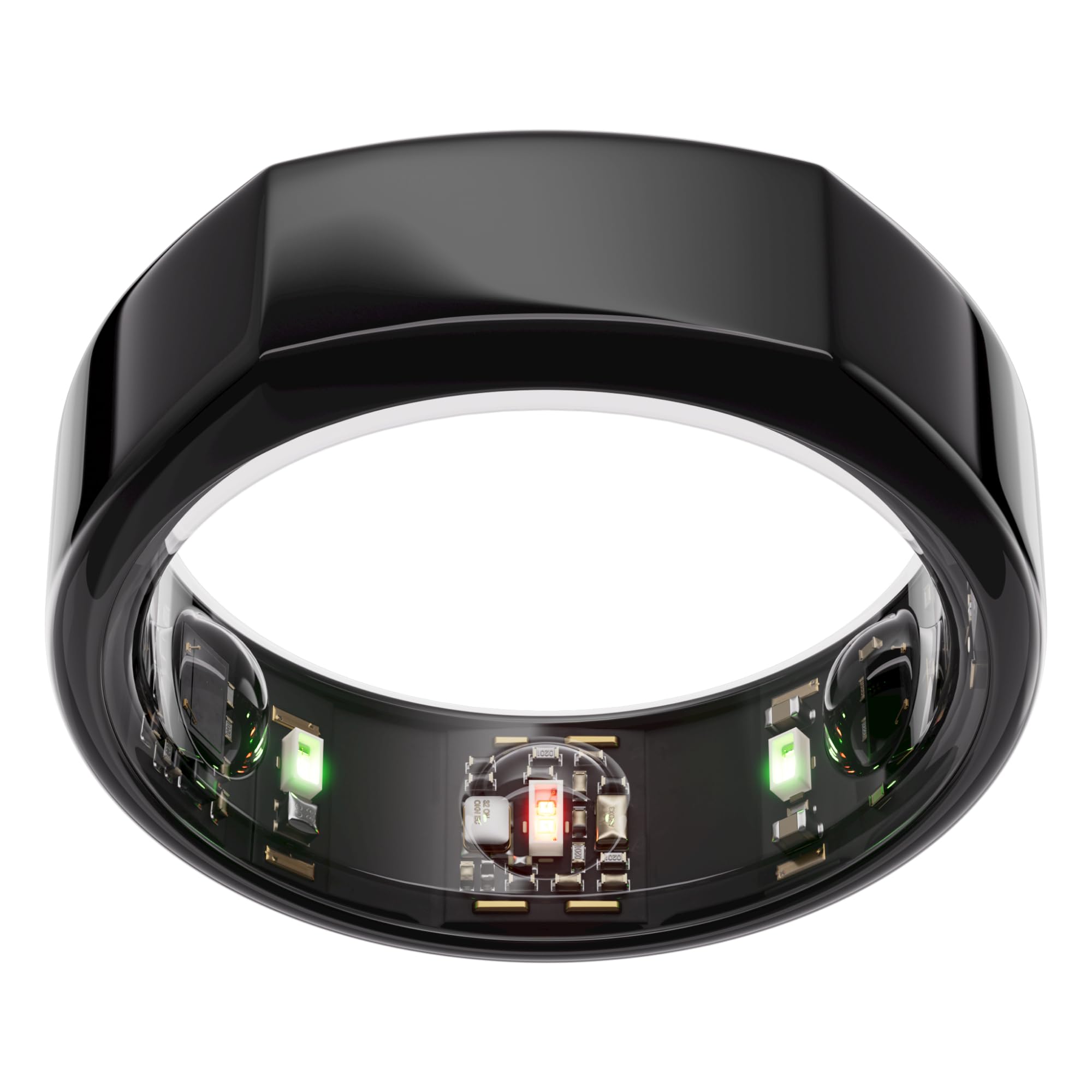
Oura’s Gen3 Heritage is the proven workhorse. The research-grade sensor array — three infrared LEDs, red and green photodiodes — was validated in dozens of independent sleep studies, and it shows in the data. The ring nails awake-time detection better than wrist-based wearables because the finger’s pulse wave is cleaner. It detects illness onset by looking at combinations of raised resting heart rate, elevated temperature, and lower HRV — and users consistently report getting the “Are you feeling okay?” notification before symptoms hit.
The Heritage design uses a softer matte black finish and a titanium-and-polycarbonate construction that feels slightly lighter than the Ring 4. Battery life is the only notable regression: expect three to four days of continuous use with all-day SpO2 polling, and roughly five days with conservative settings. The charging cradle uses pogo pins (USB-A), which is fine until the contacts need cleaning.
The subscription is the same /month as the Ring 4, which is the single biggest pain point for budget-conscious buyers. On the plus side, integration with Apple Health, Strava, Natural Cycles, and 40+ other platforms remains the deepest in the ecosystem. If you want a smart ring that’s been through the ringer of longitudinal health studies and still performs, the Gen3 Heritage is a safe, proven bet.
Why it’s great
- Extensively validated research-grade sensor algorithm for sleep and readiness
- Detects illness onset by analyzing resting HR + temperature + HRV patterns
- Integrates with 40+ health and fitness apps
Good to know
- Battery life is limited to 3-4 days with full sensing enabled
- /month subscription required for detailed insights
- Uses Gen3 sizing kit — different from RingConn and Oura Ring 4
5. WHOOP 5.0
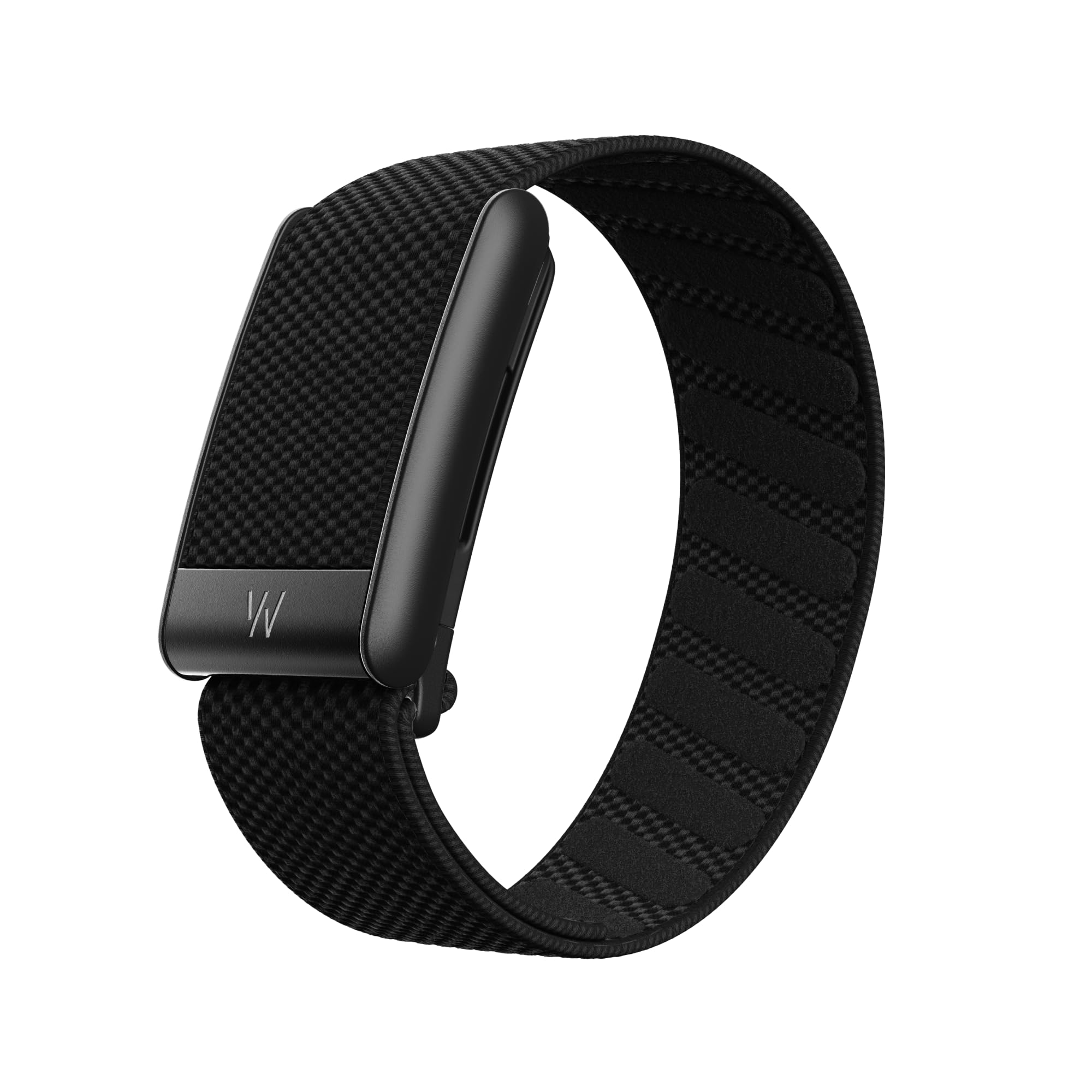
Strictly speaking, the WHOOP 5.0 is a band, not a ring — but it competes directly with rings for the same buyer: someone who wants distraction-free 24/7 biometric tracking without a screen. The differentiating metric here is WHOOP’s Strain and Recovery algorithm, which translates heart rate data into a daily target number (Strain) and a morning readiness percentage (Recovery). It is calibrated by monitoring HRV and resting heart rate during the last five minutes of deep sleep, a methodology nobody else in this list replicates with the same fidelity.
The 14+ day battery life blows every ring out of the water, and the waterproof Wireless PowerPack allows you to charge while wearing it — meaning zero downtime in data collection. The SuperKnit band is washable, comfortable, and available in dozens of color combinations. WHOOP AI analyzes over 140 daily behaviors from your journal entries and correlates them with recovery scores, producing personalized suggestions like “your alcohol consumption reduced HRV by 7% for two days.”
The catch is the mandatory membership: the box includes a 12-month membership upfront, and after that it’s /month (or /month with a 24-month commitment). Over three years, that runs far more than any single ring purchase. WHOOP is for the performance optimization crowd who want the deepest recovery analytics and don’t mind a subscription — but it’s not a one-time hardware purchase.
Why it’s great
- Best-in-class Strain and Recovery scoring methodology
- 14+ day battery with on-body wireless charging capability
- Screenless, distraction-free design with washable bands
Good to know
- Requires ongoing subscription (-/mo) after initial 12 months
- Not a ring form factor — worn as a band on the wrist
- Some users report heart rate inaccuracy during high-intensity interval training
6. CUDIS 002

The CUDIS 002 brings a unique proposition to the ring market: a biological age estimator paired with a web3 rewards system. After about ten days of wear, the ring calculates your biological age by analyzing resting heart rate, HRV, and sleep recovery trends against a reference database. It gamifies health improvement by awarding “Health Points” that you can redeem through a connected CUDIS Store (think discounts on supplements, gear, or charitable donations). This is a differentiator nobody else offers.
The hardware is a solid mid-range performer: aerospace-grade titanium at just 3 grams, 5ATM water resistance (swim-proof), and a 7-day battery that recharges in 60 minutes. The app includes an AI agent coach that delivers real-time feedback, such as “your stress load is elevated — try a 10-minute walk to modulate HRV.” It tracks sleep stages, heart rate, SpO2, HRV, stress, women’s health cycles, and physical activity without a subscription.
The app interface is newer and slightly cluttered compared to Oura or RingConn. Users report that the step counter can read 25% higher than wrist-based wearables, and the lack of GPS means workout distance data is missing. The charging case has a flimsy hinge and must be plugged into USB-C to function — there’s no internal battery backup. But for early adopters who want to see their “biological age” drop and earn rewards for it, the 002 is a compelling and creative entry.
Why it’s great
- Unique biological age estimation and Health Points rewards system
- No subscription fee — full data access for life
- Light (3g) aerospace titanium build with 5ATM water resistance
Good to know
- Step count can read 25% higher than wrist-based trackers
- Charging case has a flimsy hinge and needs to be plugged in
- App interface feels busy and beta-like compared to market leaders
7. Oura Ring 4 (Silver)

The silver variant of the Oura Ring 4 shares the same internal hardware and Smart Sensing technology as the gold version — multi-LED PPG with adaptive channel selection — but in a more understated, scratch-hiding finish. The silver PVD coating over titanium makes micro-scratches far less visible than on the gold finish, which is a meaningful practical advantage for a device worn 24/7 through gym sessions, dishwashing, and rock climbing.
Oura’s best-in-class AI Advisor delivers contextual nudges that feel genuinely tailored: after a poor sleep night, it might suggest a 30-minute earlier bedtime rather than a generic “sleep more” command. The women’s health tracking is the most mature in the smart ring space, integrating with Natural Cycles (FDA-cleared as a contraceptive) and feeding cycle-phase predictions directly into the readiness score. Period tracking, ovulation windows, and cycle-length trends are treated as core biometrics, not secondary features.
The /month subscription remains the barrier, but Oura’s ecosystem breadth — over 40 third-party app links, hospital integration through Oura for Healthcare, and peer-reviewed studies validating the sensor — justifies the recurring cost for users who want a device that’s part of a clinical network rather than a consumer toy.
Why it’s great
- Smart Sensing provides industry-leading sleep staging and HRV accuracy
- Best-in-class women’s health tracking with Natural Cycles integration
- Silver finish hides daily wear and tear better than gold
Good to know
- Full feature set locked behind /mo subscription
- Battery life is lower than RingConn Gen 3 (4-6 days vs 14 days)
- Rings can lose significant battery capacity after 10-12 months
8. QALO Smart Ring
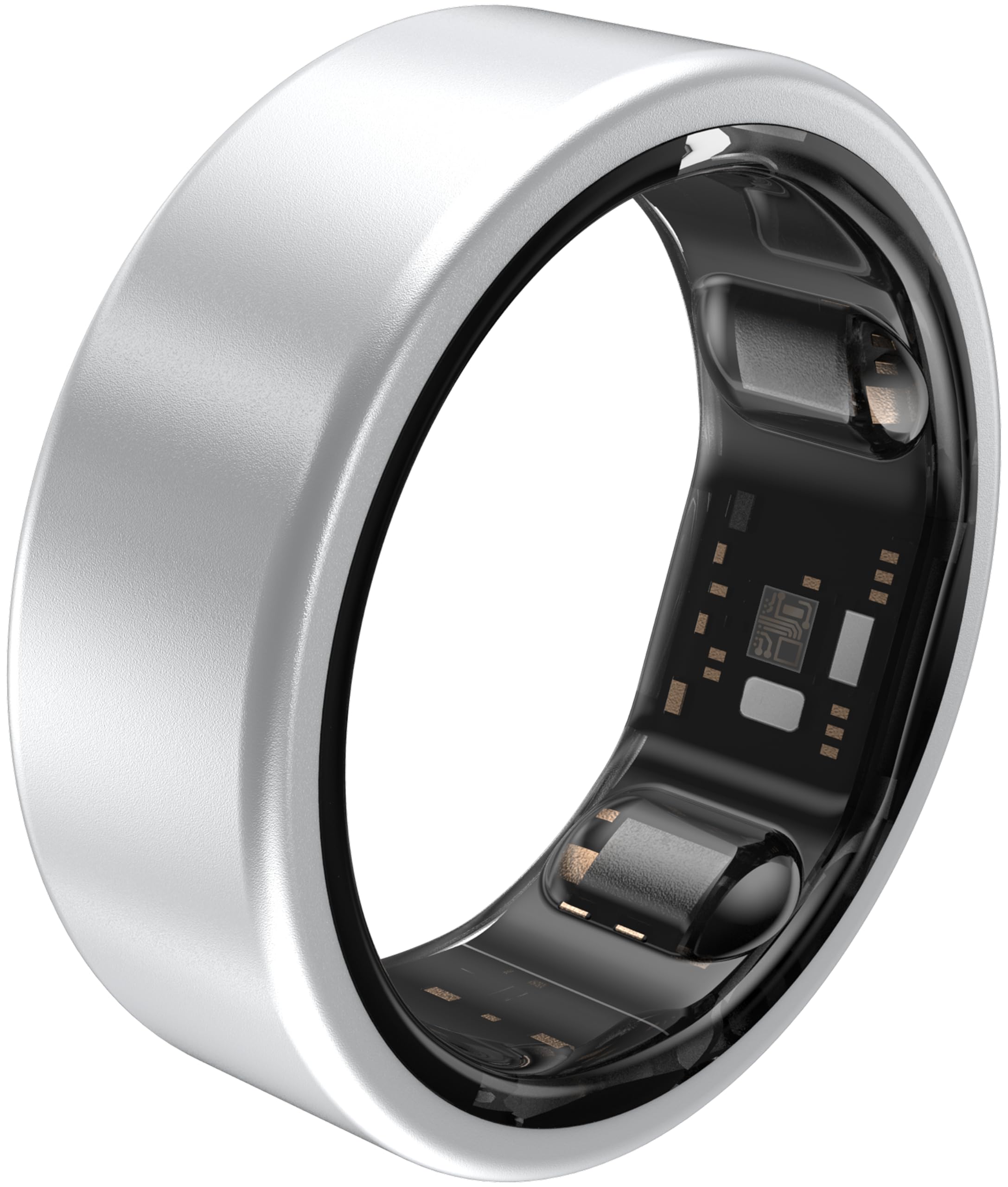
QALO’s original smart ring is the no-frills entry point into the category. At the budget end of the spectrum, it still delivers a titanium alloy body, a 7-day rated battery (21.5 mAh), and tracking for sleep stages, heart rate, HRV, SpO2, stress, and temperature trends — all accessible in the free QALO app with zero subscription. Women’s health tracking covers all four cycle phases. For someone dipping a toe into wearable biometrics without wanting to commit to a subscription plan, this is the lowest-risk ring.
The fit is snug by design, with raised interior sensors that need direct skin contact (QALO explicitly recommends sizing up one step from your normal ring size). The included two silicone covers protect the outer chassis during workouts. Battery charges in about two hours via a wireless charging case. HSA/FSA eligibility means you can pay with pre-tax health savings dollars, lowering the effective cost.
The trade-offs are real. Multiple user reviews report charging cradle failures after several months, where the pogo-pin connection becomes intermittent and fails to charge. Customer support responsiveness is inconsistent according to reports. Sleep tracking is decent but not as granular as Oura’s algorithm, and the app interface is more basic. If you can live with those caveats, you get solid core tracking for a fraction of the price of competitors.
Why it’s great
- Lowest entry price in the smart ring category with no subscription
- Titanium build quality for the price point is excellent
- HSA/FSA eligible, making it an effective zero-pocket-cost health purchase
Good to know
- Pogo-pin charger has reported reliability issues (intermittent charging)
- Must size up due to raised internal sensors — sizing kit recommended
- Customer support response can be slow per user reports
FAQ
Why do smart rings require a proprietary sizing kit and not standard ring sizes?
How accurate is SpO2 and HRV tracking on a smart ring compared to a chest strap or pulse oximeter?
Can I wear a smart ring while lifting weights, rock climbing, or contact sports?
What happens to my data if I cancel the subscription or if the company goes out of business?
Final Thoughts: The Verdict
For most users, the best ai-powered smart ring overall is the Oura Ring 4 because its Smart Sensing algorithm, deep sleep staging, and women’s health integration remain the category’s gold standard, even with the monthly subscription. If you want zero recurring fees and category-leading battery life, grab the RingConn Gen 3 — it’s the only ring with vascular trend analysis a close second. And for a budget-friendly introduction to the world of finger-worn health tracking, nothing beats the QALO Smart Ring.