
Getting consistently fluffy, never-mushy rice used to require a dedicated stovetop ritual and a watchful eye. The newest generation of smart cookers changes that entirely, using fuzzy logic and induction heating to replicate a chef’s intuition inside a sealed pot. You can now cook sushi-grade short-grain, nutty brown rice, steel-cut oats, and even quinoa without adjusting a single flame.
I’m Min — the co-founder and writer behind Gadgets Feed. I spent weeks analyzing the technical specifications, comparing fuzzy logic algorithms, induction power curves, and pressure configurations to understand exactly what separates a good rice cooker from a truly great one.
This guide breaks down the top contenders — from premium induction models with dual-pressure cooking to mid-range fuzzy logic units that deliver nearly identical results for a fraction of the real-world cost. Read on for a no-fluff comparison of the best ai rice cooker for every kitchen.
How To Choose The Best AI Rice Cooker
Not every cooker labeled “fuzzy logic” performs equally. The heating method, pressure capability, and bowl material directly influence whether your rice comes out perfectly separated or stuck to the bottom. Focus on these three factors to narrow your search.
Induction vs. Conventional Heating
Induction heating surrounds the inner pot with a magnetic field, heating the bowl directly rather than through a hot plate. This eliminates hot spots and allows for rapid, precise temperature adjustments within a single-degree window. Conventional heating — even fuzzy logic models with a hot plate — creates thermal lag that can scorch the bottom layer while the top remains undercooked. For anyone cooking sensitive grains like GABA brown rice or jasmine, induction is the clear performance differentiator.
Pressure Cooking Capabilities
Dual-pressure cookers — like some Cuckoo twin pressure models — can switch between high pressure (for sticky, glutinous short-grain) and non-pressure (for fluffy, separated long-grain varieties like basmati). Pressure forces moisture deeper into the grain kernel, reducing cooking time by roughly 20 percent while producing a firmer, chewier texture. Non-pressure models still deliver excellent results, but they cannot replicate the bite of pressure-cooked rice for dishes like sushi or bibimbap.
Bowl Material and Coating Durability
The inner bowl is the most stressed component. Ceramic-coated bowls resist scratches better than standard non-stick, but they are heavier and require gentle hand-washing. Thicker bowls — 3.1mm or above — distribute heat more evenly and retain warmth longer after cooking ends. Some brands now use PFOA/PFAS-free ceramic coatings, a critical consideration for health-conscious buyers who worry about chemical leaching into starches at high temperatures.
Quick Comparison
On smaller screens, swipe sideways to see the full table.
| Model | Category | Best For | Key Spec | Amazon |
|---|---|---|---|---|
| Zojirushi NW-QAC10 | Induction | Premium all-grain cooking | 5.5-cup induction, double nonstick coating | Amazon |
| Toshiba Induction Heating | Induction | Low-carb rice, induction precision | 5.5-cup induction, low-carb basket | Amazon |
| KitchenAid Grain & Rice | Smart | Set-and-forget with auto water | 8-cup, integrated scale and water tank | Amazon |
| Cuckoo CRP-MHTR0309F | Dual Pressure | Pressure-cooked sticky rice | 3-cup, twin pressure induction | Amazon |
| Cosori 10-Cup | Mid Fuzzy | Family-size batch cooking | 10-cup, 18 functions, 1000W quick cook | Amazon |
| Toshiba OriginTaste | Mid Fuzzy | Versatile 15-in-1, ceramic pot | 5.5-cup, 3D heating, 24H timer | Amazon |
| Yum Asia Kumo | Entry Fuzzy | Budget-friendly ceramic, YumCarb | 5.5-cup, fuzzy logic, ceramic-coated bowl | Amazon |
In‑Depth Reviews
1. Zojirushi NW-QAC10 5.5-Cup Induction Cooker

The Zojirushi NW-QAC10 delivers induction precision with a flat-top design that eliminates the hot-plate bottleneck. Its double non-stick coating on a thick inner pan prevents grain adhesion even after multiple keep-warm cycles, and the adjustable steam function with a BPA-free tray lets you cook vegetables or dumplings alongside your rice without cross-contamination.
Cooking performance is exceptional across all 13 menu options, including GABA brown rice, sushi/sweet, Jasmine, congee, and steel-cut oatmeal. The high-heat induction generates even thermal distribution across every grain, so the bottom and top layers cook at the same rate — a real advantage for batch cooking 5.5 cups of mixed wild rice or quinoa.
The unit is heavier than most at 10.75 pounds, reflecting the quality of the stainless-steel lid and ceramic components. The only minor trade-off is a louder internal fan compared to previous Zojirushi generations, and the detachable cord — while safer — prevents an ultra-sleek cordless countertop look.
Why it’s great
- Induction heating delivers flawless, even cooking for every rice type
- Double nonstick coating stays scratch-free and is easy to clean
- 72-hour keep-warm function without scorching or drying
Good to know
- Heavy construction at 10.75 pounds; not ideal for frequent moving
- Active fan is noticeably louder than older Zojirushi models
- Backup battery resets if unplugged, losing timer presets
2. Toshiba Induction Heating Rice Cooker (TRSH01)
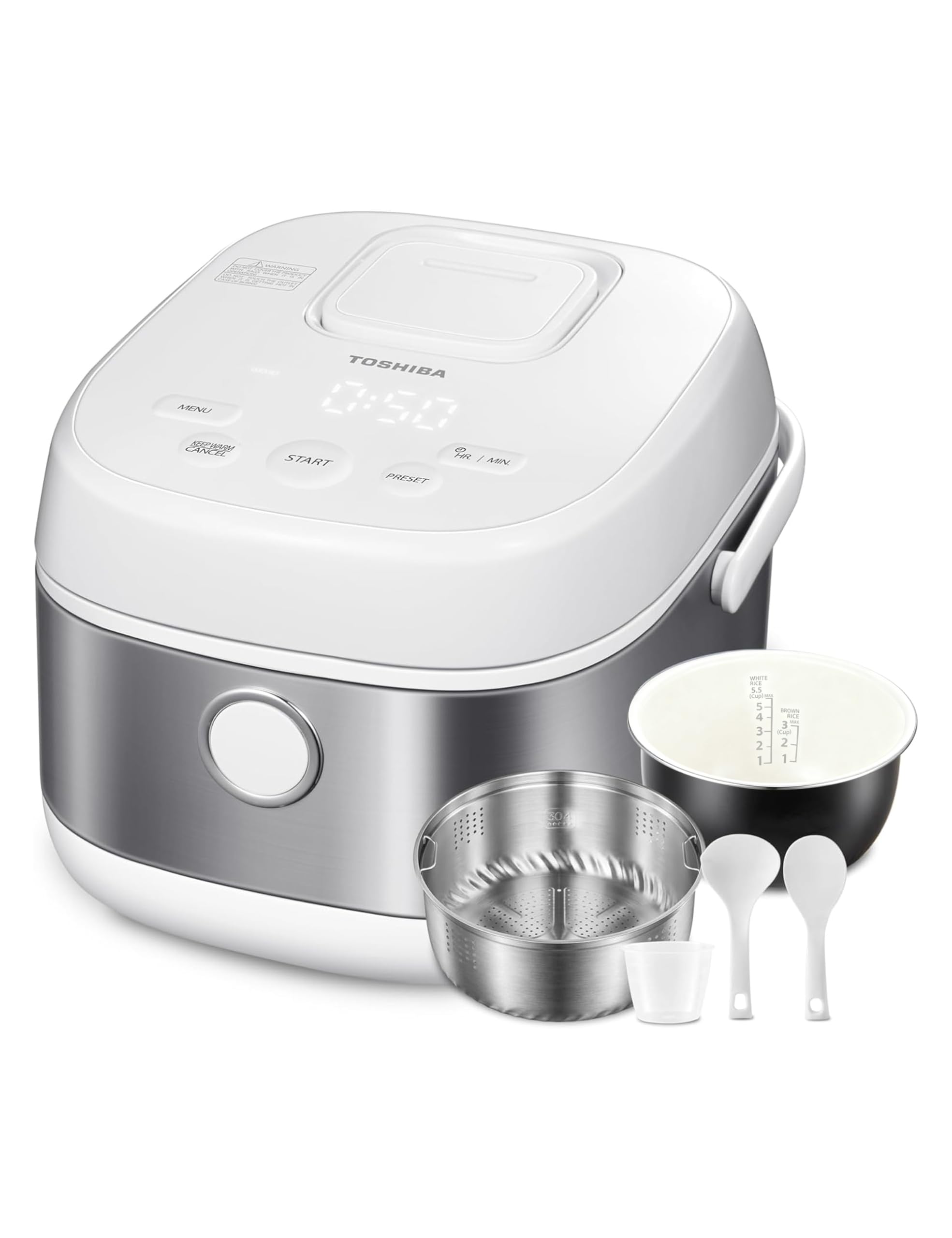
The Toshiba TRSH01 brings induction heating and fuzzy logic into a more accessible segment without cutting corners on core performance. Its low-carb function uses a removable perforated basket that separates starch-laden water from the grain during cooking, which real-world tests confirmed reduces digestive starch by up to 37 percent while increasing resistant starch — a meaningful benefit for anyone monitoring blood glucose.
Beyond the low-carb feature, this unit handles all eight standard cooking functions with precision: white, quick, brown, mixed grain, quinoa, steel-cut oats, steam, and oatmeal. The induction coil heats the inner titanium pan directly rather than through an intermediate plate, meaning temperature transitions happen in seconds rather than minutes. The non-stick inner pot is dishwasher safe for hand-washing only.
Some users reported minor scratching on the inner titanium pan from the low-carb basket’s rim, which lacks a silicone buffer. This is a design oversight, but it does not affect cooking performance as long as you handle the basket carefully. Overall, this is a strong induction option that undercuts most competition by a wide margin.
Why it’s great
- Induction heating at a mid-range price point with excellent temperature control
- Low-carb function effectively reduces starch content for diabetic-friendly meals
- Compact footprint fits easily under standard upper cabinets
Good to know
- Low-carb basket lacks silicone edge; can scratch inner pan over time
- Warm function runs slightly drier than Zojirushi’s, drying rice after several hours
- Limited to 5.5 cups uncooked; not ideal for large families
3. KitchenAid Grain and Rice Cooker (KGC3155)

The KitchenAid KGC3155 eliminates the most common rice-cooking failure — incorrect water ratios — by embedding a 0.1-gram precision scale directly into the cooking platform. Pour any amount of rice into the bowl, and the internal sensor calculates the exact water volume, then delivers that water from the attached reservoir. You never measure water again.
It supports 21 preset programs covering everything from basmati and jasmine to farro, barley, couscous, and dried beans. The touchscreen interface is intuitive, with a tare function that accommodates incremental ingredient additions. The non-stick ceramic pot is removable and hand-wash only, and the included steamer basket allows for simultaneous vegetable cooking above the grain.
The main limitation is capacity: 8 cups cooked (roughly 4 cups uncooked) is smaller than most dedicated rice cookers at this price. The delayed cook feature requires manual hour calculation since there is no real-time clock, and the steamer basket cannot run simultaneously with the grain cycle — you choose one function at a time.
Why it’s great
- Built-in scale and auto-water dispenser remove all guesswork from ratios
- Covers 21 grains and legumes, far more than typical rice-only cookers
- Touchscreen interface is clean, responsive, and easy to navigate
Good to know
- Smaller cooked capacity at 8 cups; not ideal for large batch cooking
- Cannot steam and cook rice simultaneously despite steamer basket
- Expensive for the capacity; delayed cook lacks a real-time clock display
4. Cuckoo CRP-MHTR0309F Twin Pressure Rice Cooker
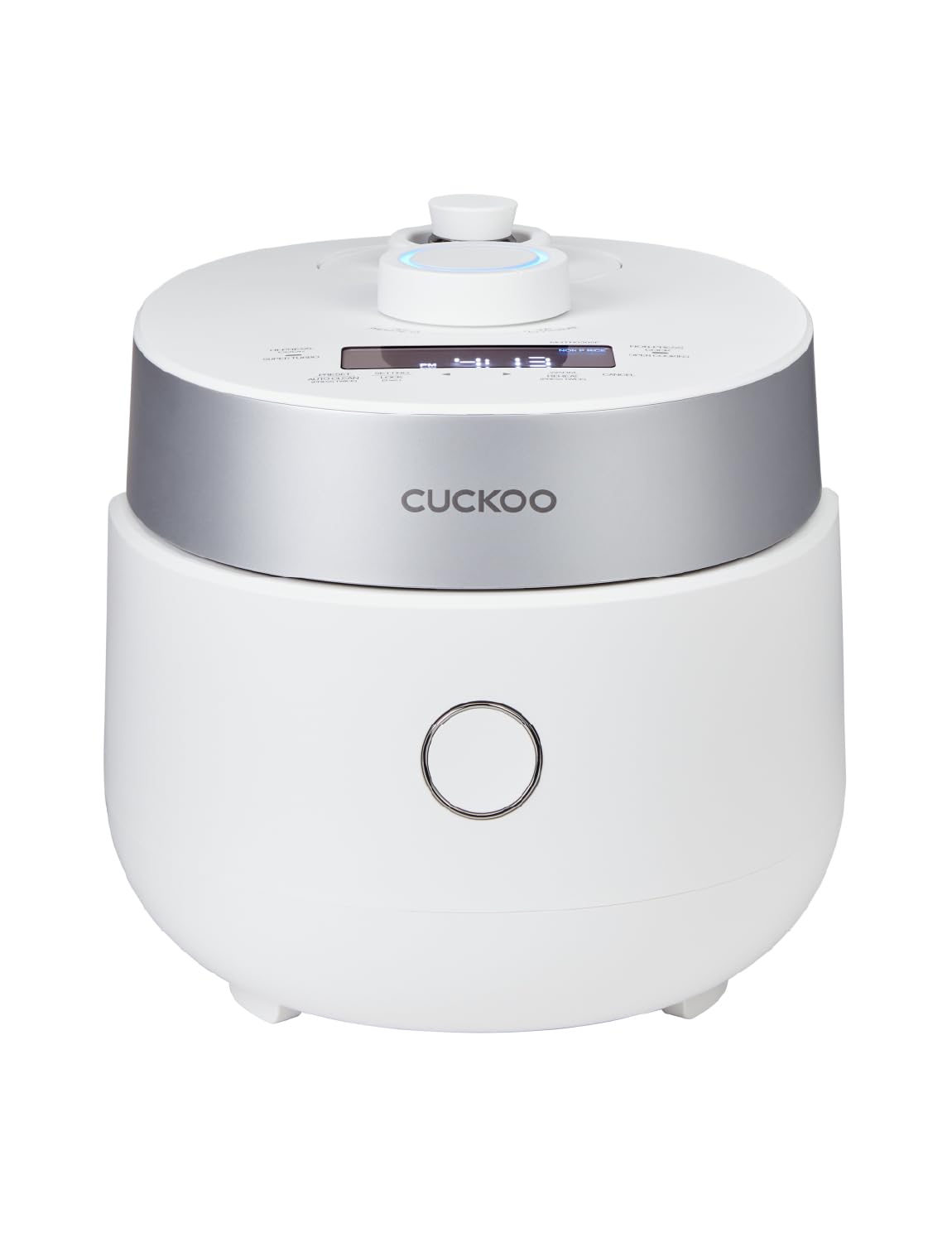
The Cuckoo CRP-MHTR0309F uses twin pressure technology combined with induction heating — a rare combination that lets you toggle between high pressure (1.8 atm) for sticky glutinous rice and non-pressure for fluffy long-grain. The result is a tangible texture difference: pressure-cooked short-grain rice develops a firmer, chewier bite that holds together perfectly for sushi or Korean multigrain rice.
It offers 15 menu options covering GABA brown rice, scorched rice (nurungji), high-pressure steam, and stored rice reheating — functions most competitors omit entirely. The induction coil surrounds the 3-cup (6-cup cooked) pot entirely, minimizing heat loss and reducing cooking time by roughly 20 percent compared to conventional fuzzy logic models. The stainless steel lid and outer shell give it a dense, premium feel at 12 pounds.
Setup is not plug-and-play. The control panel uses a poorly translated manual with ambiguous terms like “Preset” for the timer, and the first-time user will need to reference the manual closely. Some early units experienced pressurization issues that users resolved by adding weight to the lid — an indication that build quality consistency varies.
Why it’s great
- Dual-pressure cooking creates distinct textures unavailable in single-pressure models
- Induction heating is fast and thermally efficient
- Unique scorched rice and GABA brown rice programs
Good to know
- Small 3-cup uncooked capacity; not for large households
- Poorly translated manual and confusing button labels increase learning time
- Build quality consistency reported as mixed, with occasional pressure faults
5. Cosori 10-Cup Rice Cooker (CRC-R501-KUS)

The Cosori CRC-R501-KUS packs 18 cooking functions into a 10-cup capacity unit at a price that undercuts most mid-range competitors by a significant margin. Its fuzzy logic algorithm monitors a seven-step cooking process — soak, heat, boil, simmer, steam, rest, and warm — and adjusts temperature and timing based on the real-time moisture level inside the pot.
The 1000W power output makes the Quick Rice setting genuinely fast, cooking a full batch of white rice in about 20 minutes without sacrificing final texture. The non-stick ceramic inner pot is dishwasher-safe, as is the removable lid, making cleanup noticeably easier than models that require careful hand-washing. A stainless-steel steamer basket is included for vegetables or fish.
The main omission is an on/off switch — you must unplug the unit to turn it off completely. Some users noted that the keep-warm function runs quite hot, which can dry out rice left for more than six hours. But for families cooking 4–6 cups of rice regularly across white, brown, and multiple grain types, the Cosori offers unmatched functional density for the money.
Why it’s great
- 18 functions including steam, slow cook, and sauté for all-in-one versatility
- 1000W quick cook mode delivers fast results without texture loss
- Dishwasher-safe ceramic pot and lid for easy cleaning
Good to know
- No physical on/off switch; must unplug to power down
- Keep-warm function tends to run hot, potentially drying rice over 6+ hours
- Large footprint at 12.3 x 10.6 x 9.2 inches, requires dedicated counter space
6. Toshiba OriginTaste Rice Cooker (RC-10DRUNA(W))
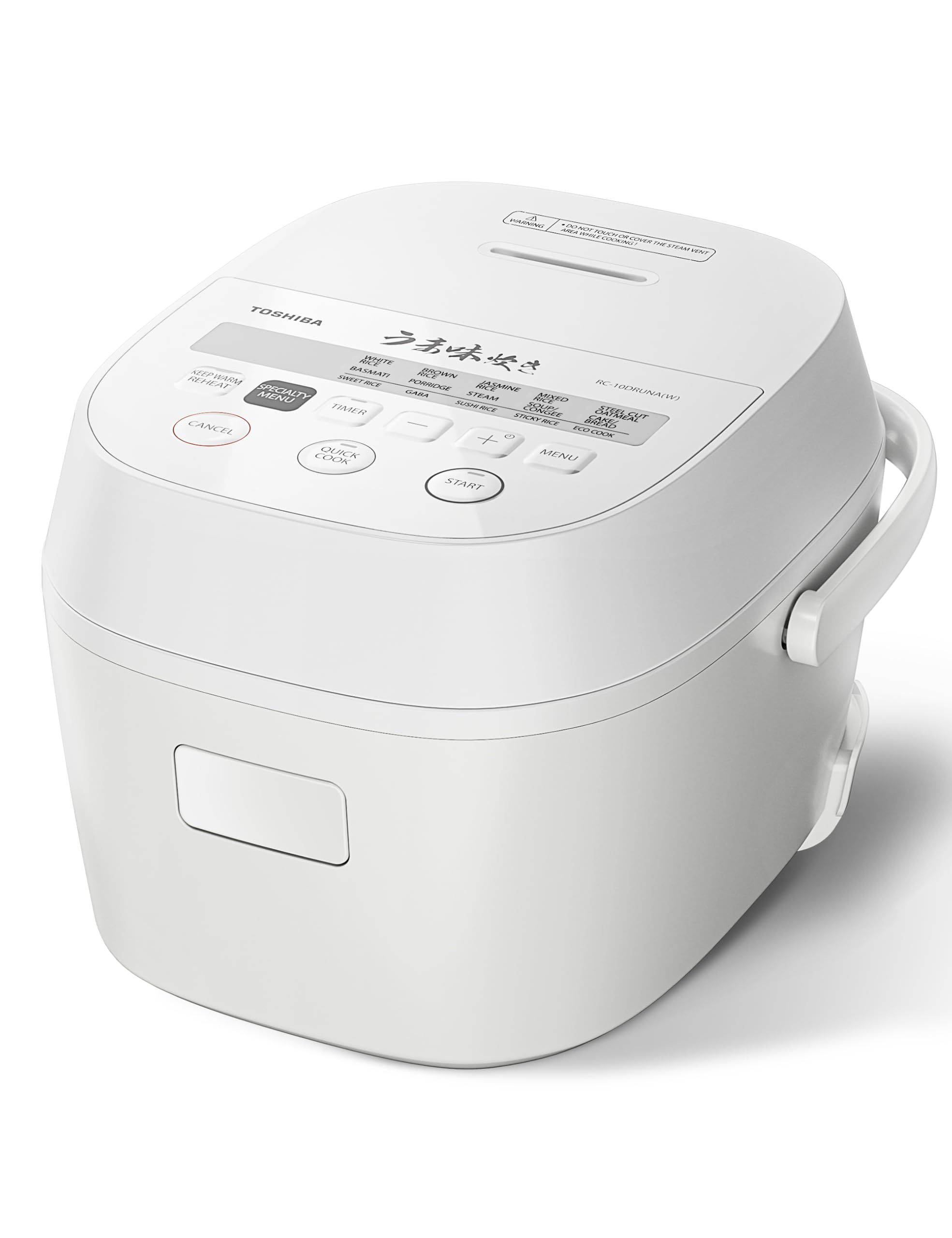
The Toshiba OriginTaste RC-10DRUNA(W) employs 3D heating technology — heat emanating from the bottom, sides, and lid — to achieve the uniform thermal distribution typically associated with induction models, but using a conventional hot-plate base. This design reduces the temperature gradient between the center and edges of the pot, preventing burnt crust formation on the bottom layer.
Its 15 cooking functions include specialty programs for Jasmine, Basmati, GABA Brown, Mixed Grain, and even Steel-Cut Oats — covering a wider range than many cookers at this level. The inner pot is 3.1mm thick with a PFOA/PFAS-free ceramic coating, which is both chemically safe and durable. The 24-hour delay timer and auto keep-warm make meal timing completely hands-off.
One thoughtful omission is the lack of a spoon holder, which means the included spatula needs to rest on a separate dish. The plastic lid, while lightweight, does not have the same premium feel as the stainless-steel lids found on higher-end units. Still, the OriginTaste delivers impressive cooking consistency for its price tier.
Why it’s great
- 3D heating mimics induction-level uniformity without the higher cost
- Thick 3.1mm ceramic-coated pot with PFOA/PFAS-free safety
- Wide 15-function menu includes niche programs like Steel-Cut Oats
Good to know
- Plastic lid feels less durable than stainless-steel alternatives
- No spoon holder; spatula must sit on a separate surface
- Warm function lacks extended duration display beyond 12 hours
7. Yum Asia Kumo YumCarb Rice Cooker

The Yum Asia Kumo proves that entry-level fuzzy logic can still produce restaurant-quality results. Its 5-layer, 2mm-thick Ninja ceramic-coated bowl provides a nonstick surface free of PFOA and PTFE, and the YumCarb feature reduces starch content by separating water during the cooking cycle — similar in concept to the Toshiba low-carb function but at a significantly lower cost.
The advanced fuzzy logic algorithm auto-adjusts temperature and timing across five rice-specific programs (white, long-grain, short-grain/sushi, brown, and YumCarb low-carb) plus three multicooker functions for porridge, steam, and slow cook. The 3D surround heating system wraps the pot with heat from all sides, minimizing the risk of a burnt bottom even when cooking multiple cups.
Some users reported that brown rice can emerge slightly crunchy at the standard setting, requiring an extra 30–40 minutes of cooking time. The keep-warm feature is effective but gradually dries out rice beyond the 12-hour mark. For its combination of ceramic health safety, YumCarb starch reduction, and overall cooking reliability, the Kumo is the strongest entry-level choice.
Why it’s great
- Affordable access to fuzzy logic and 3D surround heating
- YumCarb low-carb function reduces starch at a budget-friendly price
- Ceramic-coated bowl is healthy, non-toxic, and easy to clean
Good to know
- Brown rice setting may need extra manual time for fully tender texture
- Keep-warm function dries out rice if left active beyond 12 hours
- Buttons initially confusing; requires studying the quick-start guide
FAQ
What is the real difference between fuzzy logic and induction cooking in a rice cooker?
Is a low-carb or YumCarb function actually effective for reducing starch?
Does a heavier inner pot always mean better cooking?
Can I cook quinoa, steel-cut oats, or beans in an AI rice cooker?
Final Thoughts: The Verdict
For most users, the best ai rice cooker winner is the Zojirushi NW-QAC10 because induction heating, a double nonstick coating, and 13 dedicated grain programs deliver flawless results on every batch without requiring guesswork. If you want built-in starch reduction and a lower cost of entry for induction, grab the Toshiba TRSH01. And for set-and-forget ease with an auto-water tank and integrated scale, nothing beats the KitchenAid KGC3155.