
The modern smartwatch has evolved far beyond simple step counting. Today’s devices integrate machine learning directly into their core functions—analyzing your sleep patterns, predicting your energy levels, coaching your runs, and even managing your text responses using onboard AI. For anyone serious about fitness, productivity, or health monitoring, finding the right device means understanding which AI features actually deliver meaningful insights and which are just marketing buzzwords.
I’m Min — the co-founder and writer behind Gadgets Feed. I’ve spent countless hours dissecting the technical specifications, analyzing user feedback, and comparing the AI-driven features of the latest models to separate genuine innovation from clever gimmicks.
Whether you need a rugged companion for ultra-endurance events or a sleek health tracker for daily wear, this guide cuts through the noise to help you find the best ai smartwatch that truly fits your life and objectives.
How To Choose The Best AI Smartwatch
Selecting the right AI-powered smartwatch requires looking past the shiny screen and understanding how the artificial intelligence inside it works for you. The core value lies in the algorithms that process your biometric data and turn it into actionable advice.
AI Coaching and Training Readiness
The most useful AI on a smartwatch isn’t a chatbot—it’s a coach that understands your body’s recovery. Look for watches that calculate a daily Training Readiness or Energy Score by combining sleep quality, heart rate variability (HRV), and recent training load. These metrics allow the watch to tell you when to push harder and when to rest, preventing overtraining and injury.
Battery Life and Charging Speed
AI-driven health monitoring requires continuous sensor data. A watch that dies every night cannot provide overnight sleep analysis or morning readiness scores. A battery life of at least 7 days under typical use is the baseline for effective 24/7 tracking. Faster charging (under 2 hours for a full charge) is also crucial to minimize downtime.
GPS Accuracy and On-Device Processing
For runners, cyclists, and hikers, dual-band multi-GNSS GPS is non-negotiable for accurate pace and distance data without your phone. Additionally, consider how much AI processing happens on the watch versus in the cloud. On-device analysis is faster and more private, while cloud features can offer deeper, longer-term trend analysis through a companion app.
Quick Comparison
On smaller screens, swipe sideways to see the full table.
| Model | Category | Best For | Key Spec | Amazon |
|---|---|---|---|---|
| Garmin Forerunner 970 | Premium | Serious Runners & Triathletes | 26hr GPS Battery / AMOLED | Amazon |
| Garmin fēnix 8 51mm | Premium | Adventurers & Multisport Athletes | 84hr GPS / 29 Days Smartwatch | Amazon |
| Apple Watch Ultra 3 | Premium | iPhone Ecosystem Power Users | 42hr Battery / Cellular+SMS | Amazon |
| Garmin Enduro 3 | Premium | Ultra-Endurance Athletes | 320hr GPS Solar / 63g | Amazon |
| Amazfit T-Rex Ultra 2 | Mid-Range | Outdoor Adventurers on a Budget | 30 Days Battery / Titanium | Amazon |
| Samsung Galaxy Watch 8 Classic | Mid-Range | Android Users Wanting Style & AI | 3000 nit Display / Rotating Bezel | Amazon |
| Amazfit Balance 2 | Mid-Range | Value-Conscious Performance Seekers | 658 mAh Battery / Zepp AI | Amazon |
| WITHINGS Scanwatch Nova Brilliant | Mid-Range | Medical-Grade Health & Classic Style | 30 Day Battery / Temp Sensing | Amazon |
| CARBINOX Edge Smart Watch | Budget | Tough Worksites & Glove-Friendly Use | IP69K / 500 mAh / 25 Days | Amazon |
In‑Depth Reviews
1. Garmin Forerunner 970

The Garmin Forerunner 970 is a precision instrument for athletes who demand real-time, actionable data. Its bright 1.4-inch AMOLED display is complemented by a lightweight titanium bezel and scratch-resistant sapphire lens, making it durable enough for daily training. The built-in LED flashlight is a practical addition for early morning or late-night runs, enhancing safety without adding bulk.
Garmin’s AI shines through the Training Readiness score, which synthesizes sleep quality, HRV, and recovery status to tell you exactly when to push hard and when to hold back. The multi-band GPS ensures accurate tracking even in challenging urban canyons, while the running economy metrics (cadence, stride length, ground contact time) provide a level of detail previously reserved for lab analysis. The battery life is a strong point, offering up to 15 days in smartwatch mode and 26 hours in GPS mode.
The companion Garmin Coach feature creates personalized running and triathlon plans that adapt to your performance and recovery, using AI to adjust workouts dynamically. While the initial learning curve is steep due to the dense menu system, the payoff for serious athletes is immense. The ECG app adds an extra layer of health monitoring for those over 22.
Why it’s great
- Industry-leading training metrics and AI coaching
- Excellent AMOLED screen with sapphire durability
- Long battery life meets serious running needs
Good to know
- Requires separate HRM-Pro monitor for running dynamics
- Steep learning curve for non-technical users
2. Garmin fēnix 8 51mm

The Garmin fēnix 8 is the ultimate do-everything multisport watch, built for athletes and adventurers who refuse to compromise. The 1.4-inch AMOLED display is stunningly bright, and the scratch-resistant sapphire lens over a titanium bezel makes it equally at home in a boardroom or on a mountain. The built-in LED flashlight is surprisingly useful for navigating a dark trail or finding your keys at night.
AI-powered features like Training Readiness and real-time Stamina tracking use your HRV, sleep data, and training load to provide nuanced recommendations. The multi-band GPS with SatIQ technology automatically adjusts satellite usage to balance accuracy and battery life, a smart AI optimization. Battery performance is stellar: up to 29 days in smartwatch mode and 84 hours in GPS mode, which is exceptional for an AMOLED watch. The 40-meter dive rating and leakproof metal buttons make it a true tool for scuba and apnea diving.
The off-grid voice command feature is a unique AI capability that allows you to control watch functions without a phone connection—a real advantage for backcountry treks. While the 51mm case is large and heavy, it feels robust and purposeful. The Garmin OS is dense but customizable, and the integration with Garmin Explore for route planning is top-tier.
Why it’s great
- Unmatched battery life for a premium AMOLED sports watch
- Premium build with titanium bezel and sapphire crystal
- Dive-rated to 40M with advanced AI training metrics
Good to know
- Very large case (51mm) not suitable for small wrists
- Occasional GPS accuracy issues reported in rare cases
3. Apple Watch Ultra 3
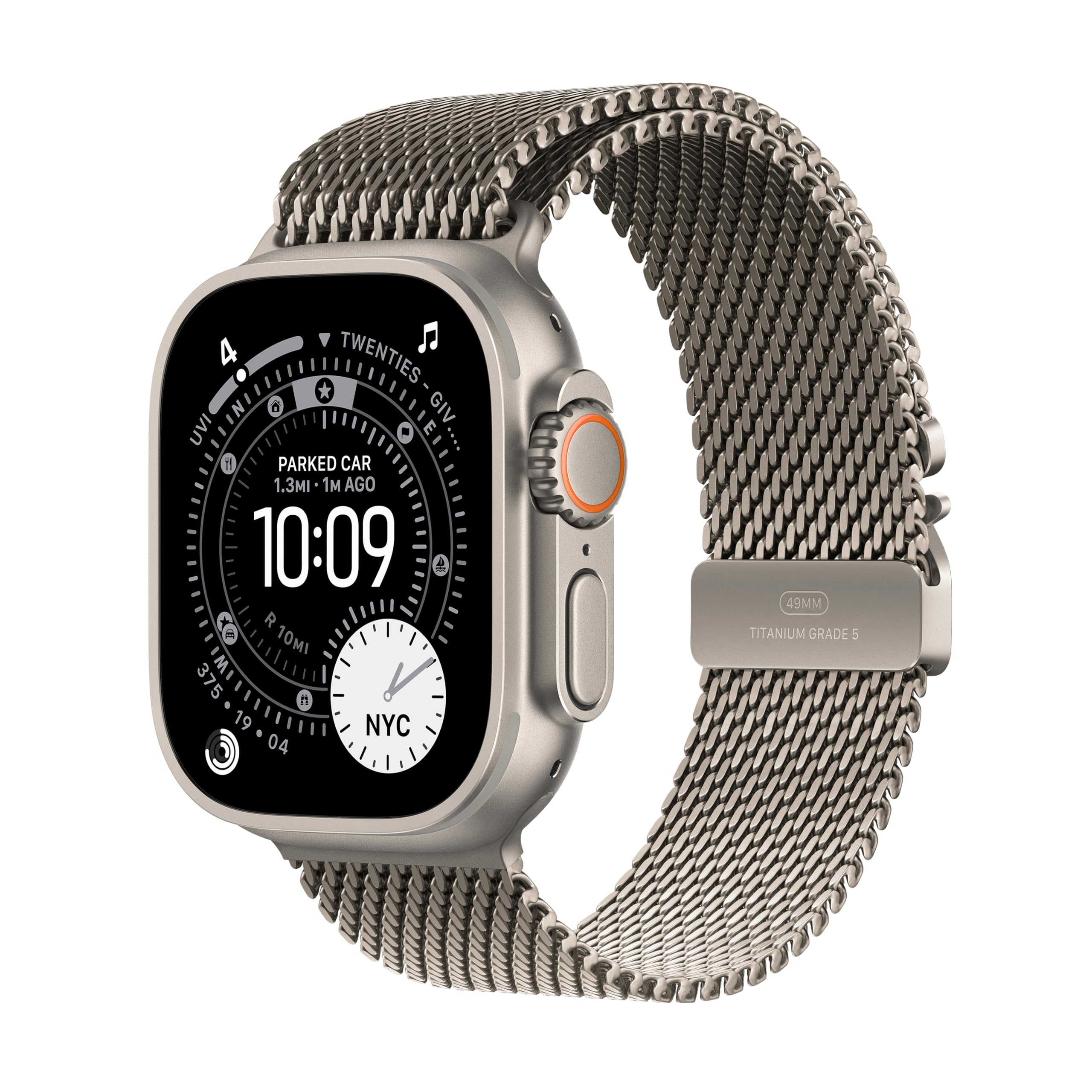
The Apple Watch Ultra 3 remains the gold standard for iPhone users who demand a rugged, feature-rich smartwatch. Its 49mm titanium case and sapphire crystal display are built to survive falls, water immersion up to 100 meters, and high-speed water sports. The dual-frequency GPS delivers exceptional accuracy for runners and swimmers alike.
Apple Intelligence powers a new generation of AI features on the Ultra 3. The Vitals app uses machine learning to track your daily health status and detect irregularities like hypertension or sleep apnea. Workout Buddy, powered by AI from your nearby iPhone, provides real-time coaching and motivation during runs. Safety features are also AI-driven, with fall detection, car crash detection, and satellite SOS providing peace of mind in emergencies.
Battery life is a strong improvement over previous models, offering up to 42 hours of normal use and 72 hours in Low Power Mode. The customizable Action Button is a tactile shortcut for starting workouts or activating the flashlight. The main limitation is the ecosystem lock-in—the watch is nearly useless without an iPhone. However, for those embedded in the Apple ecosystem, the Ultra 3 is the most capable and best-supported AI smartwatch available.
Why it’s great
- Best-in-class ecosystem integration and app support
- Advanced AI health monitoring and satellite safety features
- Rugged build with excellent water resistance (100m)
Good to know
- Requires iPhone for full functionality
- Battery life still requires 2-day charging cycle for heavy users
4. Garmin Enduro 3

The Garmin Enduro 3 is the definitive choice for ultra-endurance athletes who prioritize battery life above all else. Weighing just 63 grams with a titanium bezel and sapphire lens, it is incredibly light for a 51mm watch. Its MIP (memory-in-pixel) display, while not as vibrant as AMOLED, is perfectly readable in direct sunlight and sips power, allowing for up to 90 days of smartwatch use with solar charging.
The AI here is focused on performance endurance. Real-time Stamina tracking shows the remaining energy in your body, while sport-specific strength training plans and adaptive workouts tailor themselves to your recovery status. Preloaded TopoActive maps with dynamic round-trip routing ensure you never get lost, even on long, unsupported treks. The built-in LED flashlight is a welcome safety feature.
This watch deliberately omits a speaker and microphone to maximize battery life, meaning no voice calls or voice assistant from the wrist. It also lacks an AMOLED display, which some users may find dated. But for anyone spending weeks on a trail or in a race, the Enduro 3’s solar battery—320 hours in GPS mode—is simply unmatched. It is a tool of extreme focus.
Why it’s great
- Best-in-class solar battery life for multi-week expeditions
- Lightweight titanium build with sapphire crystal
- Advanced stamina and endurance AI tracking
Good to know
- MIP display lacks AMOLED vibrancy
- No speaker/mic for voice features to save battery
5. Amazfit T-Rex Ultra 2
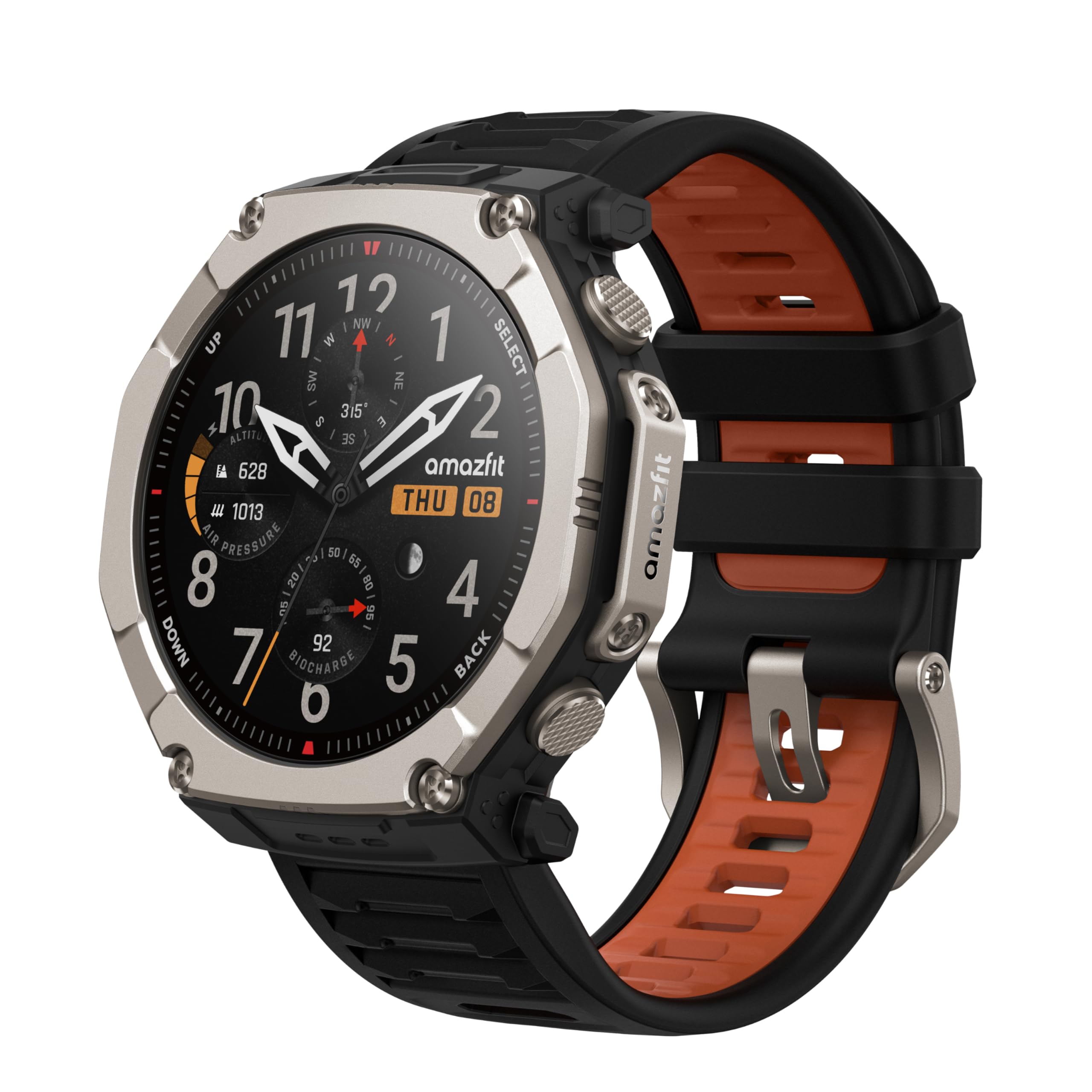
The Amazfit T-Rex Ultra 2 offers grade 5 titanium construction and a 1.5-inch sapphire AMOLED display at a fraction of the cost of a Garmin Fenix. It is a rugged outdoor watch that doesn’t cut corners on build quality, with a 10 ATM water resistance rating and dual diving certification for recreational scuba. The built-in two-color flashlight (white and red) is a thoughtful design touch for night adventures.
Zepp OS provides the AI backbone with features like Zepp Flow voice assistant, which handles calls, text replies on Android, and training prompts. The T-Rex Ultra 2 includes preloaded base maps and on-watch route planning with automatic rerouting—a feature usually reserved for premium Garmin models. Battery life is exceptional at up to 30 days under typical use, and even with heavy GPS usage, it lasts well over a week.
The trade-offs are in smartwatch integration and ecosystem depth. The Zepp app is functional but less polished than Garmin Connect or Apple Health. Some users have reported inaccuracies in sleep tracking and a lack of auto-detect for treadmill workouts. However, for the price, you get a titanium outdoor watch with solid AI features and a fantastic battery that directly challenges watches costing three times as much.
Why it’s great
- Premium titanium and sapphire build at an affordable price
- Excellent 30-day battery life with versatile GPS modes
- Advanced mapping and route planning on the wrist
Good to know
- Sleep and fitness tracking accuracy can be inconsistent
- Smart features and app ecosystem are less refined than competitors
6. Samsung Galaxy Watch 8 Classic
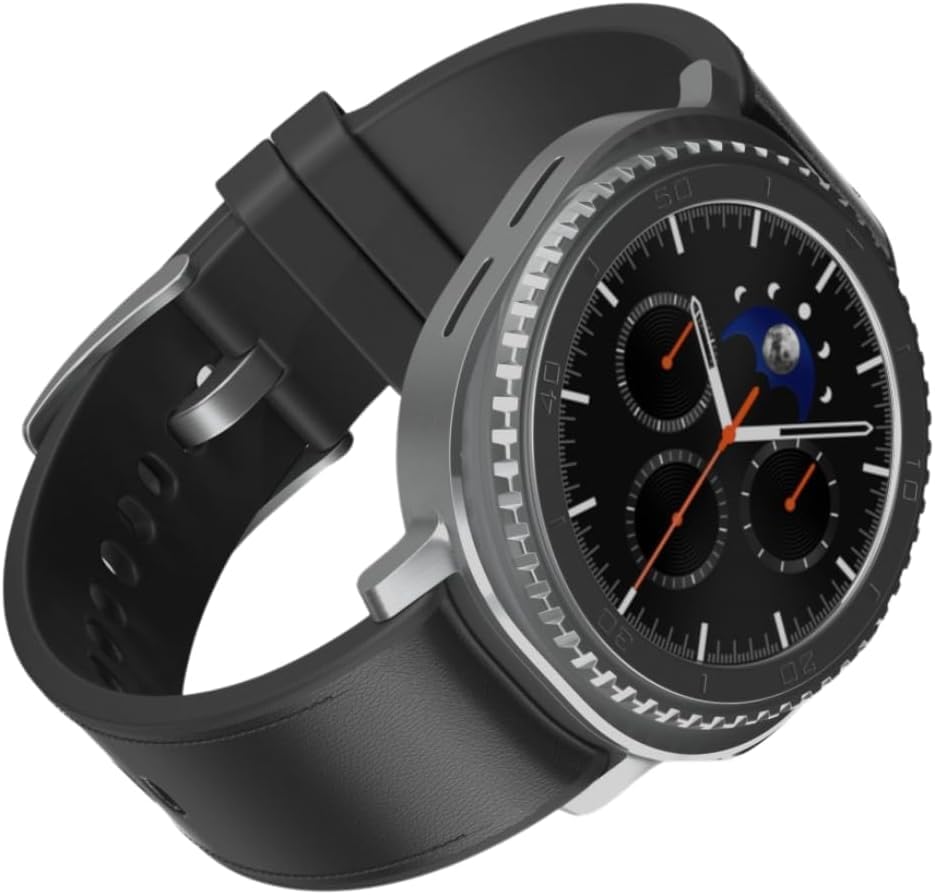
The Samsung Galaxy Watch 8 Classic is a compelling AI smartwatch for Android users who value a traditional watch aesthetic combined with modern technology. The 46mm squircle-shaped stainless steel case features the iconic rotating bezel, which offers tactile, precise navigation. The Super AMOLED display reaches an impressive 3,000 nits, making it one of the brightest and most legible screens in direct sunlight.
Galaxy AI integrates deeply into the Wear OS 6 experience. The AI-powered Running Coach generates personalized plans based on a short fitness test, and the Energy Score helps you balance physical and mental performance. Vascular Load and Bedtime Guidance are proactive health features that use your biometric data to suggest recovery strategies. The Exynos W1000 processor with 2 GB of RAM ensures smooth, lag-free performance.
Battery life is a notable weak point. The 445 mAh battery delivers only about 30 hours with Always On Display, so you will need to charge it daily. It also lacks the on-device AI depth of a Garmin or Apple Watch. For Android users who want a smart, stylish watch with good AI coaching features and don’t mind charging overnight, this is a solid choice.
Why it’s great
- Excellent Super AMOLED display with 3,000 nit brightness
- Tactile rotating bezel for intuitive navigation
- Strong integration with Galaxy AI and Wear OS apps
Good to know
- Battery life is average at best (daily charging needed)
- AI features are less training-focused than Garmin’s
7. Amazfit Balance 2

The Amazfit Balance 2 is designed to offer 90% of the Garmin Fenix experience at about 30% of the price, and it largely succeeds. The sleek aluminum body with 1.5-inch sapphire crystal display provides a premium feel that belies its mid-range price. The 658 mAh battery is a standout, delivering up to 21 days of typical use and around two weeks with regular training and notifications.
Zepp Flow voice assistant is the primary AI interface, allowing you to start activities, check stats, and reply to Android messages hands-free. It includes industry-first official HYROX competition modes and golf course maps for 40,000 courses, which is impressive for the price. Health monitoring covers heart rate, sleep quality, SpO2, stress, and HRV, and the Zepp app provides good trend analysis.
Some compromises exist. GPS lock can be slow, and step counting occasionally has a delay. The AI food tracking feature is uneditable and not practical for nutrition tracking. For most fitness enthusiasts who want solid performance, excellent battery life, and a premium build without the premium price, the Balance 2 is a fantastic choice.
Why it’s great
- Exceptional value—premium sapphire build at a low price
- Outstanding 21-day battery life with heavy use
- Versatile AI voice assistant and extensive sport modes
Good to know
- GPS lock can be inconsistent
- AI features are less reliable for nutrition tracking
8. WITHINGS Scanwatch Nova Brilliant
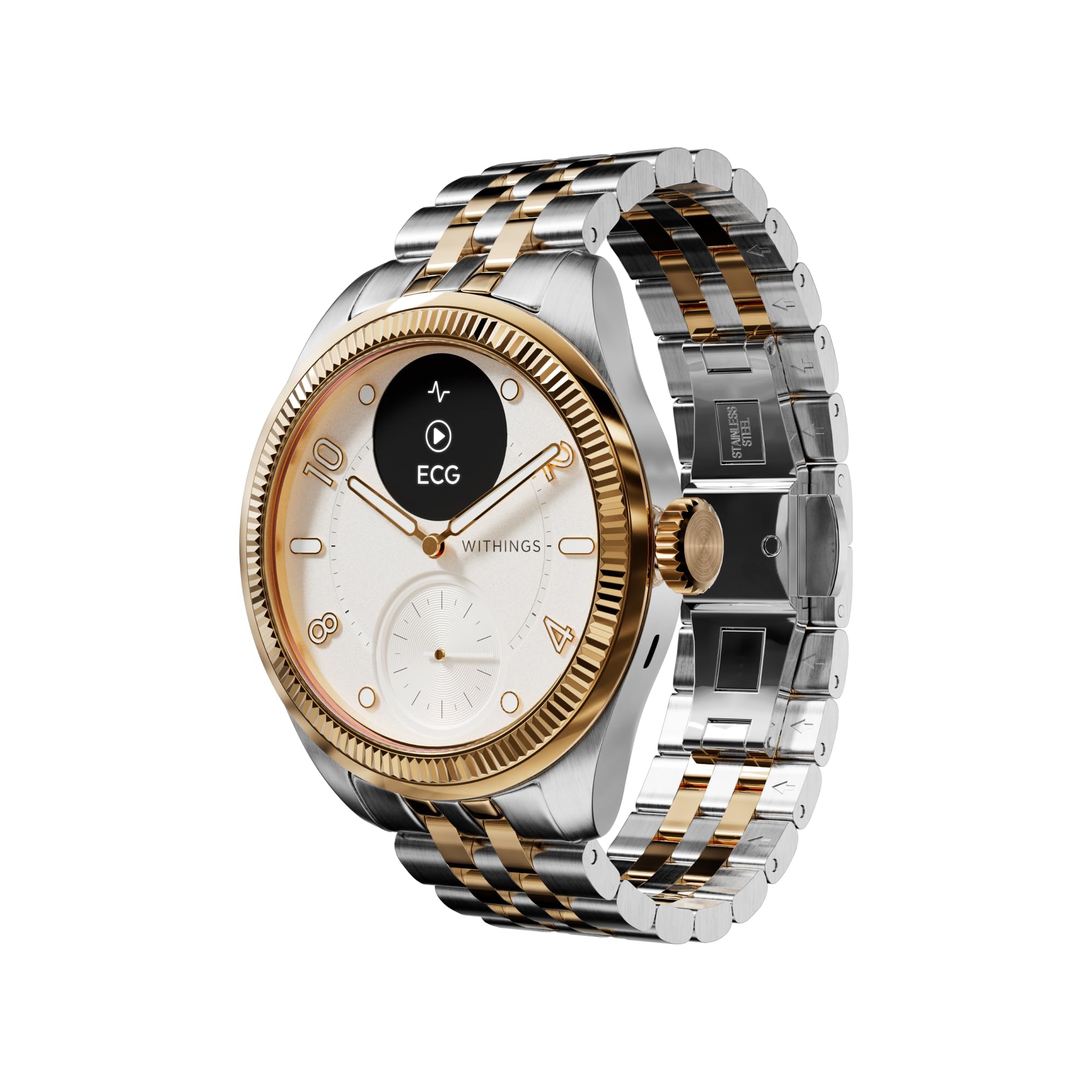
The WITHINGS Scanwatch Nova Brilliant occupies a unique niche as a hybrid smartwatch that looks like a traditional luxury timepiece while packing powerful health-tracking AI. Its stainless steel case, analog hands, and sapphire glass hide sophisticated sensors for 24/7 heart rate, SpO2, and continuous temperature monitoring via the TempTech24/7 module. The 30-day battery life is a major advantage over full-screen smartwatches, preserving the classic aesthetic without daily charging.
The AI intelligence is focused on preventive health. It notifies you if your heart rate is high or low, measures overnight HRV for heart health trends, and tracks body temperature fluctuations that may indicate illness onset. The Sleep Quality Score and breathing disturbance detection are clinically oriented, making this a strong tool for those monitoring chronic conditions or overall wellness. Connected GPS tracks outdoor workouts without draining the battery.
The hybrid nature has limitations. The small digital display is not meant for rich interactions—you cannot reply to messages or use advanced apps. The companion app, while deep in health data, feels less polished than Apple or Garmin equivalents. This watch is for someone who refuses to sacrifice style for health AI and prioritizes long-term biometric trends over on-wrist interactivity.
Why it’s great
- Beautiful, timeless analog design with smart health AI
- Excellent 30-day battery with continuous health sensors
- Clinical-grade temperature and heart rhythm monitoring
Good to know
- No on-watch message reply or app ecosystem
- Sleep tracking can be less accurate than full-screen watches
9. CARBINOX Edge Smart Watch
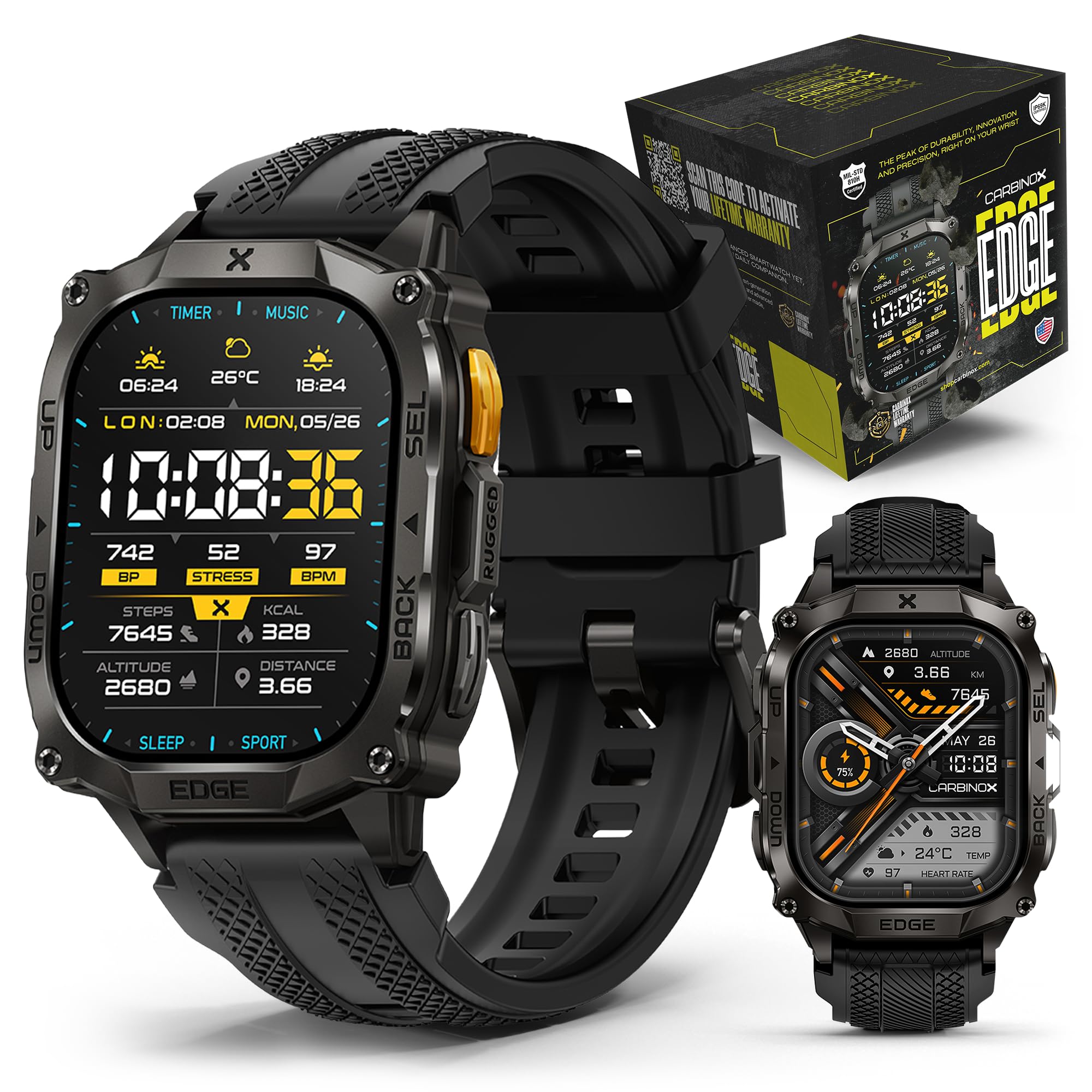
The CARBINOX Edge Smart Watch proves that robust AI features can be found at a budget-friendly price point. With a 1.96-inch AMOLED display protected by Gorilla Glass inside a stainless steel chassis, it feels far more premium than its price suggests. The standout feature is its IP69K rating—meaning it can withstand high-pressure, high-temperature water jets—making it ideal for demanding worksites, industrial environments, or serious outdoor adventures.
AI voice texting is a key feature, allowing you to send and read SMS hands-free even while wearing gloves. The watch uses the Carbinox Max app to provide AI-driven insights from its pro sensors: altimeter, barometer, heart rate, SpO2, sleep, and stress. The 500 mAh battery delivers up to 25 days per charge, and the dual-band GNSS GPS with 6 satellite systems ensures accurate tracking away from your phone.
The main risk is reliability. Several user reports mention units failing after a few months, which is a significant concern for a tool intended for rugged use. The smart features also feel less polished than more expensive alternatives. If you need a tough, affordable smartwatch with basic AI voice functionality and long battery life, the Carbinox Edge is a strong contender, but buy with awareness of the potential reliability issues.
Why it’s great
- Extremely rugged IP69K build at a low price
- Good 25-day battery life with solid AMOLED screen
- Hands-free voice texting useful for worksites
Good to know
- Reported reliability issues with multiple units failing
- Smart features and app quality lag behind established brands
FAQ
How does an AI smartwatch improve my running performance over a standard one?
Do I need a separate heart rate strap for accurate AI coaching?
Can an AI smartwatch help me sleep better?
What happens to my AI data if I change phones or operating systems?
Final Thoughts: The Verdict
For most users, the ai smartwatch winner is the Garmin Forerunner 970 because it offers a perfect balance of advanced AI coaching metrics, a brilliant AMOLED display, and robust durability at a more accessible price than the Fenix line. If you are an iPhone user who wants the deepest ecosystem integration and satellite safety features, grab the Apple Watch Ultra 3. And for pure, unadulterated battery life on multi-week expeditions, nothing beats the Garmin Enduro 3.