
Nothing kills the focus of a pre-flight check or a monitoring session on the flight line like a handheld aviation radio that delivers garbled audio, drops signals over the runway, or leaves you guessing on battery life before the next fix. The airband spectrum — 118.000 MHz to 136.975 MHz — demands a receiver that locks onto transmissions cleanly, cuts through alternator whine, and survives the bumps inside a flight bag or a ground crew pouch.
I’m Min — the co-founder and writer behind Gadgets Feed. My research for this guide involved cross-referencing technical datasheets, parsing customer field reports for real-world range and audio clarity, and comparing the core receiver sensitivity specs that separate a usable airband radio from a frustrating one.
Whether you are a student pilot looking for a backup comms radio or a seasoned aviator wanting a ground monitoring unit with strong noise rejection, this list breaks down the best options currently available. After hours of careful analysis, I can help you find the right best air band aviation radio for your specific needs and budget.
How To Choose The Best Air Band Aviation Radio
Choosing the right airband radio hinges on understanding the difference between a dedicated transceiver meant for two-way cockpit or ramp communication and a receiver-only scanner used for monitoring. Your main decision points will revolve around frequency coverage, channel spacing, audio clarity features, and the power source that fits your routine.
Receiver Sensitivity and Selectivity
For airband reception, sensitivity is typically listed in microvolts (µV), with a lower value meaning the radio can pick up weaker signals. A receiver rated at 0.5 µV or better in the 118–137 MHz range will generally outperform a less sensitive unit when listening to distant towers or aircraft. Selectivity, often measured by adjacent channel rejection in dB, prevents a strong signal on a nearby frequency from bleeding into your target channel.
8.33 kHz Narrowband Compatibility
European and many international airspace sectors now mandate 8.33 kHz channel spacing instead of the older 25 kHz standard. If you plan to operate or monitor outside of North America, or if you value future-proofing your purchase, ensure the radio explicitly supports this narrowband mode. Without it, you will miss traffic on many small regional and en-route frequencies.
Battery Type and Runtime
Handheld airband radios run on proprietary Li-ion packs, standard AA batteries, or a combination of both. A dedicated Li-ion pack offers higher capacity and consistent power delivery, but a radio that also accepts an AA battery tray provides an immediate fallback when you are away from a charging cradle for extended periods. Look for a minimum of 8–10 hours of typical monitoring runtime on a full charge.
Quick Comparison
On smaller screens, swipe sideways to see the full table.
| Model | Category | Best For | Key Spec | Amazon |
|---|---|---|---|---|
| BTECH UV-PRO | Mid-Range | Aviation RX + APRS | Aviation RX / IP67 | Amazon |
| Yaesu FTA-250L | Mid-Range | Pilot Backup Comm | 5W TX / 8.33 kHz | Amazon |
| Yaesu FTA550 | Mid-Range | NAV/COM with ILS/VOR | NAV/COM / AA Tray | Amazon |
| BTECH DA-7X2 | Premium | Multi-Band + DMR | AM Airband RX / DMR | Amazon |
| Icom IC-A16 | Premium | Durable Aviation Transceiver | 2400mAh / Side Tone | Amazon |
| Icom A25C | Premium | Premium Aviation Radio | Bluetooth Ready / Flip-Flop | Amazon |
| Uniden Atlantis 275 | Budget | Marine + VHF Monitoring | 6W TX / IPX8 Float | Amazon |
| Malahit tr usdx | Budget | QRP Amateur Transceiver | QRP / Multi-Band | Amazon |
In‑Depth Reviews
1. BTECH UV-PRO (TAN)
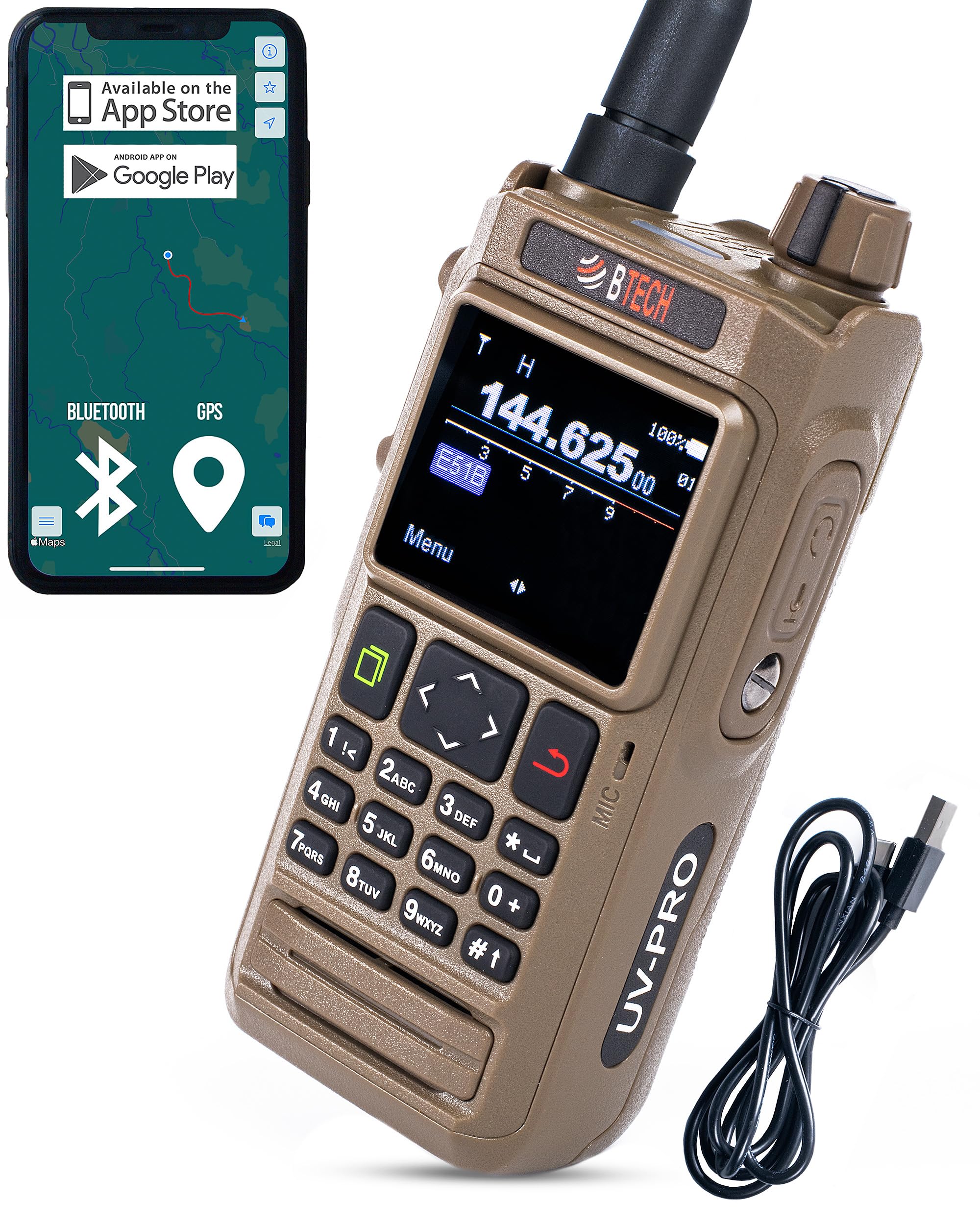
The BTECH UV-PRO earns the top spot because it delivers a remarkably clean aviation band receiver alongside a full suite of modern features like APRS, built-in GPS, and Bluetooth connectivity — all in a rugged IP67-rated chassis. Its ability to receive the 108–137 MHz airband spectrum is not an afterthought; the receiver sensitivity on aircraft frequencies is strong enough to pick up tower transmissions from several miles out, making it a serious tool for aviation enthusiasts, ground crew, and pilots wanting a secondary monitor.
Beyond pure airband reception, the UV-PRO shines with its smartphone app programming interface, which eliminates the tedious manual frequency entry common on older radios. The Frequency Sync Rapid Scanning feature automatically locates active frequencies in your area, a practical time-saver when you arrive at an unfamiliar airport. Bluetooth audio support also lets you listen to air traffic through a wireless headset, which adds convenience during long monitoring sessions on the ramp.
The dual-band VHF/UHF amateur transmit capability requires the appropriate license, but for receive-only use, the UV-PRO is an exceptional value. Its IP67 sealing gives you confidence when the weather turns, and the 180-channel memory is sufficient for logging all the local towers, approach, and center frequencies you might need. The rugged tan housing also helps it blend into field or outdoor work environments.
Why it’s great
- Excellent airband receiver with rapid scanning
- IP67 dust/water protection for tough environments
- Bluetooth audio and smartphone app programming
- APRS and GPS for position reporting and tracking
Good to know
- Aviation band is receive-only
- Bluetooth headset reliability can vary
- Requires amateur license for transmit on ham bands
2. Yaesu FTA-250L
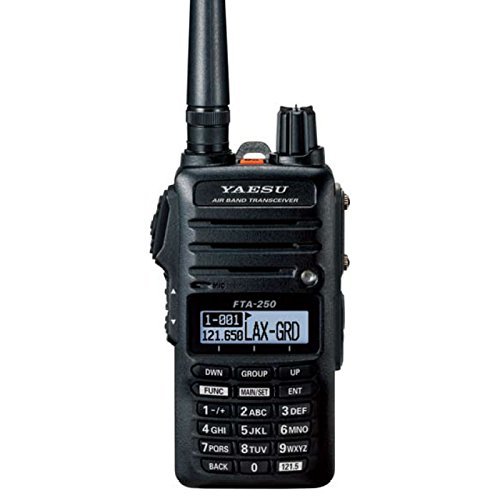
For pilots who need a dedicated backup transceiver that can both receive and transmit on airband frequencies, the Yaesu FTA-250L is the smartest mid-range choice available. It delivers 5 watts of transmit power on the 118.000–136.975 MHz range, which is enough for reliable communication with towers up to 5 miles out in normal conditions. The inclusion of 8.33 kHz narrowband compatibility ensures it works in European airspace and other regions adopting the tighter spacing standard.
The FTA-250L is impressively compact at just over 4 inches tall, making it an easy fit in a flight bag side pocket or a kneeboard pouch. Its digital squelch system is notably cleaner than older analog designs, reducing the background noise that can fatigue your ears during a busy approach phase. The 250 memory channels provide ample room to store frequencies for your regular routes, and the IPX5 waterproof rating protects against light rain or cockpit spills.
The radio ships with a high-capacity 1950 mAh Li-ion battery, a drop-in charging cradle, and an aviation headset adapter. The 700 mW audio output is loud enough to be heard in a noisy cockpit environment, and the large, backlit LCD is readable in direct sunlight. For pilots looking for a simple, purpose-built backup radio without unnecessary frills, this Yaesu delivers focused performance.
Why it’s great
- Compact and lightweight for flight bag portability
- 8.33 kHz narrowband compatible for international use
- Digital squelch reduces cockpit noise fatigue
- Comes with aviation headset adapter and charging cradle
Good to know
- Only charges via included cradle, not USB-C
- Speaker can sound treble-heavy at high volume
- No VOR or ILS navigation functions
3. Yaesu FTA550

The Yaesu FTA550 is unique among the mid-range options because it integrates full NAV/COM functionality, including ILS and VOR navigation receivers. This means it can not only transmit and receive on airband frequencies but also help you identify your position relative to a VOR station or track a localizer and glideslope during an approach — a genuine emergency backup for lost communications scenarios when flying IFR.
Instead of a proprietary Li-ion pack, the FTA550 uses an AA battery tray exclusively. This design decision is a double-edged sword: you lose the simplicity of a rechargeable pack, but you gain the ability to source fresh alkaline or Ni-MH batteries anywhere in the world, which is a compelling advantage for long cross-country trips or remote operations. With good Ni-MH cells, users report over 8 hours of typical monitoring and intermittent transmission time.
The receiver covers 108 to 136.975 MHz, pulling in both the navigation band (108–118 MHz for VOR/ILS) and the communication band. Audio clarity on receive is reported as clear and loud, and the VOR indicator display, while basic, provides the relative bearing information needed for a situational check. The trade-off is that the menu system feels dated, and programming without a computer is less intuitive than with the BTECH UV-PRO.
Why it’s great
- Integrated VOR/ILS navigation for emergency IFR backup
- AA battery tray offers global battery sourcing flexibility
- Clear and loud receive audio quality
Good to know
- No included rechargeable battery or charging cradle
- Menu system feels outdated and clunky
- Heavy when loaded with AA batteries
4. BTECH DA-7X2
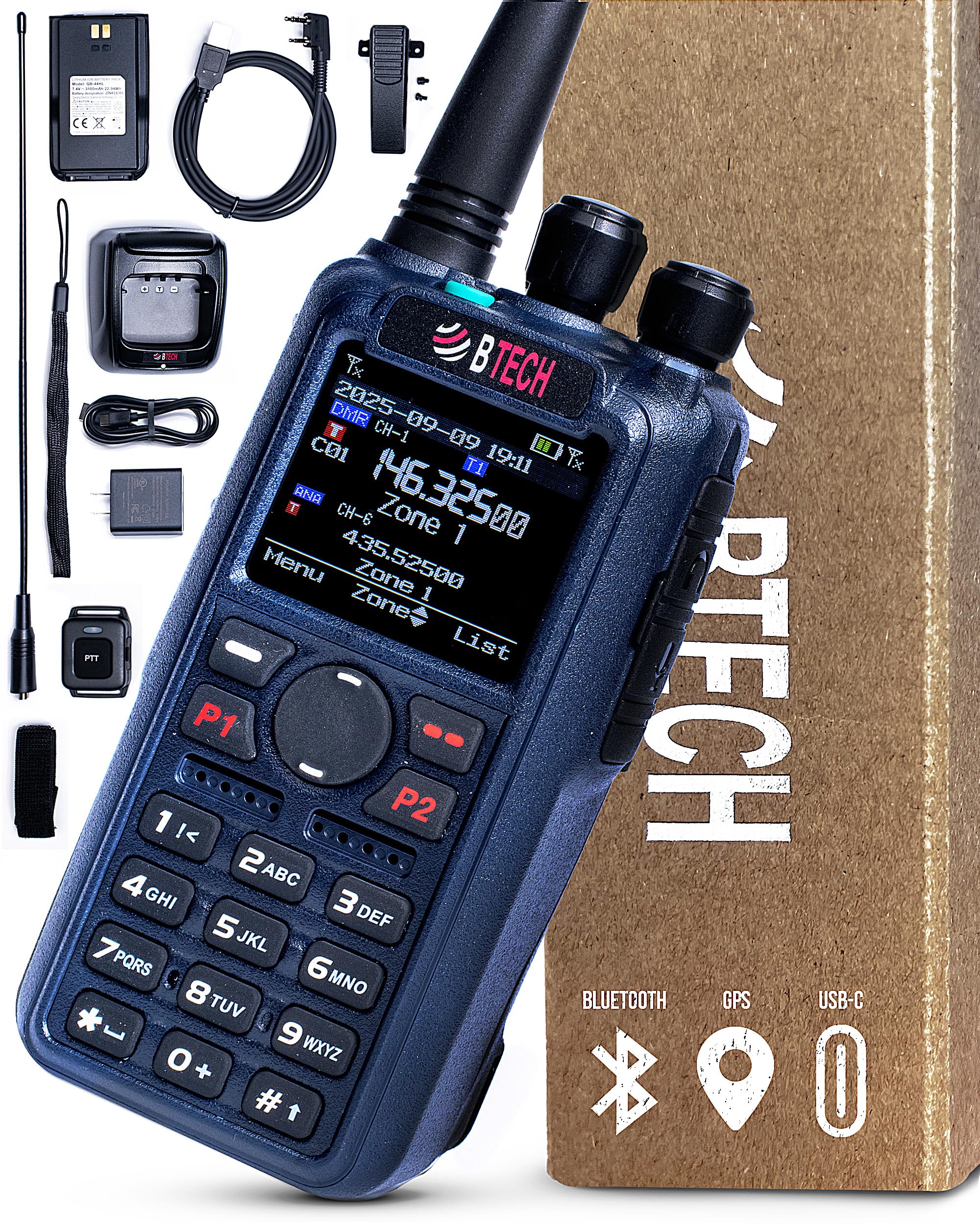
The BTECH DA-7X2 is a power-user radio that combines analog FM, DMR digital, and AM airband reception (108–136 MHz) into a single, feature-dense package. For aviation enthusiasts who also operate on amateur repeaters or professional DMR networks, this radio eliminates the need to carry multiple devices. The true dual-receive capability means you can monitor a UHF DMR talkgroup on the main channel while simultaneously scanning the airband for tower traffic on the sub-channel.
The DA-7X2’s aviation reception quality is solid for a multi-mode radio, and its AM demodulation handles the typical airband signal variations well. The radio also includes a built-in Bluetooth module for wireless PTT control and supports GPS/GNSS for location-based functions. The 4000-channel memory capacity is extreme, but for active users, it provides room for massive frequency databases covering both aviation and land mobile use.
One important caveat is that the DA-7X2 is not a beginner’s radio. It requires understanding of DMR codeplugs, color codes, and talkgroup management to unlock its full potential. The packaging includes two antennas (a short dual-band and a high-gain long antenna), a 3100 mAh battery, and a Bluetooth PTT switch. The belt clip is reported as a weak point, so using the included lanyard as a backup is recommended.
Why it’s great
- Covers AM airband + DMR + analog in one radio
- True dual receive for simultaneous monitoring
- Built-in Bluetooth for wireless PTT operation
- Extensive memory capacity for large frequency databases
Good to know
- Advanced radio not suitable for beginners
- Belt clip can fail; use lanyard as backup
- May require software to unlock amateur transmit mode
5. Icom IC-A16

The Icom IC-A16 is a premium-grade VHF COM handheld designed for the rigorous demands of professional aviation use. Its transmit frequency range covers 118.000–136.99166 MHz, while the receiver extends down to 108 MHz to include the VOR/ILS navigation band. The inclusion of a side tone function allows the user to hear their own transmitted voice through a connected aviation headset, a critical feature for ensuring transmission quality without relying on a second radio.
Build quality is where the IC-A16 distinguishes itself from the mid-range competitors. The chassis feels dense and solid, and the dedicated 121.5 MHz emergency key provides instant access to the international distress frequency without scrolling through menus. The included BP-280 Li-ion battery pack provides a robust 2400 mAh capacity, which users report lasts through an 8-hour maintenance or ramp shift with a mix of receive and transmit. The noise reduction system is effective at filtering out background engine noise on the ground.
The IC-A16 does not include a VOR/ILS indicator display like the Yaesu FTA550, and programming the radio requires some patience, as the interface is less intuitive than the professional-grade Icom A25C. However, for its price point, the IC-A16 offers the best balance of Icom durability, clear audio, and straightforward operation for pilots who need a secondary comm radio they can trust in a pinch.
Why it’s great
- Solid Icom build quality for professional environments
- Side tone function via aviation headset
- Dedicated 121.5 MHz emergency button
- Long 2400mAh battery life
Good to know
- No built-in VOR/ILS navigation display
- Programming is more complex than earlier Icom radios
- USB cable for PC programming is expensive and separate
6. Icom A25C

The Icom A25C represents the pinnacle of dedicated airband handheld transceivers, combining exceptional receiver sensitivity with a well-thought-out user interface. The radio covers 118–137 MHz for transmit and receive, and its front-end filtering is among the best in class, allowing it to pick up weak aircraft transmissions even in high-RF environments near airports. The flip-flop channel recall feature is a practical tool for quickly toggling between two active frequencies, such as clearance delivery and ground control.
Icom includes a comprehensive accessories bundle with the A25C: the BP-288 Li-ion battery pack, a BP-289 AA battery case for backup power, the BC-224 rapid charger, a headset adapter, and a belt clip. The ability to switch between the slim Li-ion pack and the AA battery case without tools gives pilots unmatched flexibility for extended trips. The radio also includes a weather channel receiver and a priority watch function that periodically checks a user-set frequency without interrupting current scanning.
An important distinction to note is that the A25C model does not include Bluetooth, despite some early confusion in the product descriptions. The A25N model adds Bluetooth connectivity. The A25C remains an incredible radio for sheer reception and transmission quality, but if Bluetooth integration for wireless headsets or flight bag connectivity is critical, the N model is the correct choice. The display is sharp and easy to read, and the control layout is intuitive enough for quick frequency input even while wearing gloves.
Why it’s great
- Exceptional receiver sensitivity and selectivity
- Flip-flop frequency recall for rapid changes
- Includes both Li-ion pack and AA battery case
- Intuitive interface with sharp, clear display
Good to know
- Bluetooth is not available on the A25C model
- High price compared to mid-range options
- Battery capacity may show minor degradation over time
7. Uniden Atlantis 275

The Uniden Atlantis 275 is a VHF marine radio optimized for the 156–174 MHz frequency range, but its practical use case for the aviation crowd lies in its rugged construction and exceptionally loud speaker. While it cannot transmit on airband frequencies, its receiver can be used to monitor nearby marine VHF frequencies that sometimes relay aviation weather or emergency broadcasts. More importantly, its IPX8 floatable rating and 6-watt transmit power make it an ultra-durable backup for general VHF monitoring in wet environments.
The key advantage of the Atlantis 275 is its price point. For less than half the cost of a dedicated airband transceiver, you get a drop-proof, floatable, submersible radio with a large dual-color LCD screen (25mm x 40mm) that switches between a paper-white backlight for daytime and a red backlight for night vision preservation. The speaker self-clears water after submersion, which is an impressive engineering detail. The emergency strobe light and built-in flashlight add utility during night operations or emergencies.
Battery life is reported as strong, with users noting a couple of days of continuous use on a single charge. The belt clip lacks a positive retaining mechanism, which is a common complaint, but the radio’s floating design means you won’t lose it overboard if the clip fails. For ground crews working near water or in extremely wet conditions who need a durable two-way radio, the Atlantis 275 offers unbeatable value, but it is not a replacement for an actual airband transceiver for aviation communication.
Why it’s great
- Floats and is IPX8 submersible rated
- Large, clear dual-color LCD screen
- Built-in emergency strobe and flashlight
- Excellent loud speaker volume
Good to know
- Marine VHF only; does not transmit on airband
- Belt clip lacks retaining mechanism
- Spare batteries may be hard to source later
8. Malahit tr usdx
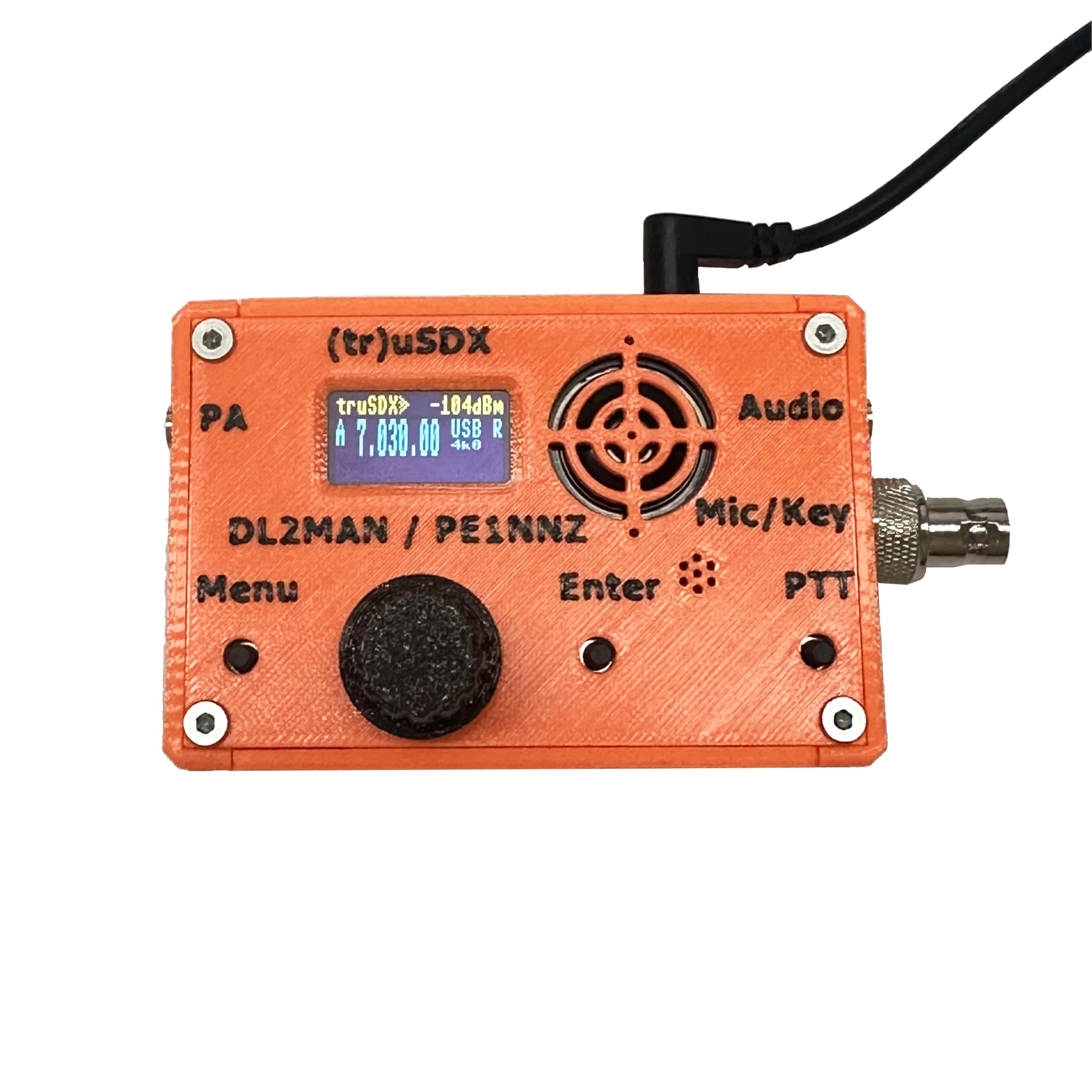
The Malahit tr usdx is a tiny, software-defined, QRP (low-power) transceiver covering the 80/60/40/30/20 meter ham bands. It is not a device for the dedicated airband listener, but it appears in this list because it offers a gateway into understanding SDR technology and multi-mode operations like CW and FT8 that share principles with modern aviation radios. The assembled version with a 3D-printed orange case is ready to run out of the box for an experimenter.
The tr usdx features a sensitive receiver and a built-in keyer and Morse decoder, making it a fun and efficient portable unit for Parks On The Air (POTA) activations or casual CW operation on the go. Its power output is around 4 watts on the lower bands, and it can be powered via USB-C. The internal speaker is weak, but using an external earphone dramatically improves audio clarity. The firmware supports two versions: an official one without spectrum display and a beta version with spectrum display but slightly fewer menu functions.
This radio demands a significant amount of technical expertise from its user. The menu system is entirely based on deep diving through settings, and the instruction manual is basic. SSB operation requires an excellent antenna and possibly an amplifier. For the aviation buyer, the tr usdx serves best as a learning tool for RF fundamentals and SDR technology, not as a primary airband monitoring device. It is a niche, hobbyist product for the technically inclined.
Why it’s great
- Incredibly compact and pocket-sized
- Multi-band SDR with CW and FT8 capability
- Built-in keyer and Morse decoder
- USB-C powered for easy field charging
Good to know
- Does not receive or transmit on airband frequencies
- Audio from internal speaker is poor
- Requires significant technical knowledge to operate
- SSB performance requires excellent antenna and amp
FAQ
Can I use a marine radio to monitor aviation frequencies?
What does the 8.33 kHz narrowband capability mean for a handheld airband radio?
Do I need a license to own and listen to an airband radio?
Final Thoughts: The Verdict
For most users, the best air band aviation radio winner is the BTECH UV-PRO because it combines a genuinely sensitive aviation band receiver with modern features like Bluetooth, GPS, and APRS inside a rugged IP67 package at a fair mid-range price. If you want a dedicated pilot’s backup transceiver with 8.33 kHz narrowband support, grab the Yaesu FTA-250L. And for uncompromised receiver quality and Icom build reliability, nothing beats the Icom A25C.