
Our readers keep the lights on and my morning glass full of iced black tea. As an Amazon Associate, I earn from qualifying purchases.
Specs are compiled from manufacturer listings and verified buyer reviews and can change over time — please confirm the key details on the product page before buying.
The moment your compressor motor kicks on unexpectedly, or the tank bleeds down overnight, the culprit is almost always a worn check valve. This small brass fitting is the one-way gate that keeps compressed air locked in the tank when the pump stops. Picking the right replacement means matching thread sizes, port count, and pressure rating — and this guide walks through the seven most reliable options across different brands and budgets so you know exactly which one fits your rig.
I’m Min — the founder and writer behind Gadgets Feed. This guide is built by comparing the manufacturers’ published specifications and the patterns across verified customer reviews, so you get each pick’s real strengths and trade-offs instead of marketing spin.
This hands-on breakdown of the air compressor check valve replacement market helps you pinpoint the exact thread type, port configuration, and maximum pressure rating your compressor needs to seal tight and run reliably for years.
Our Picks at a Glance


How To Choose The Best Air Compressor Check Valve Replacement
To avoid a leaky or non-fitting valve, check three things on your compressor before you buy: the thread size and type where the valve screws into the tank, whether your old valve had an unloader port (a small side opening that releases pressure), and the maximum pressure your system runs. Get these right and the swap takes ten minutes. Get them wrong and the valve won’t thread on or it’ll leak immediately.
Thread Size and Type
The most common tank port is a 1/2″ male NPT (National Pipe Taper) thread. Some smaller compressors use 3/8″ NPT, and some older models use compression fittings — a smooth tube with a ferrule instead of tapered threads. Measure the old valve’s tank-side connection with calipers or compare it to a known fitting. Ordering the wrong thread is the number one mistake buyers report.
Unloader Port
Many compressors route a tiny line — usually 1/8″ NPT — from the pressure switch to the check valve. This “unloader” line bleeds off head pressure when the motor stops, so the pump can restart without lugging against full tank pressure. If your old valve has a side port for this line, your replacement needs one too. If it didn’t have that line, a valve without the unloader port is simpler and cheaper.
Maximum Pressure Rating
Every check valve in this list is rated for at least 450 PSI — more than enough for consumer and pro-sumer compressors that cut out at 135-175 PSI. The real durability differentiator is the valve material and internal spring quality. Brass-bodied valves resist corrosion from tank condensation far better than pot metal or steel.
Quick Comparison
| Model | Best For | Max Pressure | Thread Connection | Unloader Port | Amazon |
|---|---|---|---|---|---|
| Chiloskit 3-Port Brass★ Best Overall | California Air Tools specific | Not listed | G1/8, G3/8, G1/2 | N/A (3-port design) | $11.99Amazon |
| R Conrader 3/4″ x 3/4″Also Great | Heavy-duty 3/4″ tank ports | 450 PSI | 3/4″ NPT | 1/8″ NPT | $17.95Amazon |
| Milton S-1092-1 | Serviceable / cleanable design | 450 PSI | 1/2″ NPT | 1/8″ NPT | $20.77Amazon |
| CAC-437-2 | Vintage / oddball compressors | Not listed | 1/2″ MPT & 1/2″ CFPC | No | $15.99Amazon |
| Industrial Air Power 85582229 | Ingersoll Rand replacements | 135 PSI | 5/8″ Flare x 3/4″ NPT | No | $21.95Amazon |
| Craftsman A19712 | Craftsman / DeVilbiss models | Not listed | 1/2″ Compression x 3/4″ Compression | No | $23.90Amazon |
| Conrader 1/2″ C5050T | Standard 1/2″ NPT tanks | 450 PSI | 1/2″ Compression x 1/2″ MPT | 1/8″ NPT | $12.45Amazon |
In‑Depth Reviews
1. Chiloskit 3-Port Brass Male Threaded Air Compressor Check Valve Central Pneumatic
Our pick — 4.5★ from 450+ verified ratings; the strongest balance of quality and price.
The three-port brass valve.
The 3-port design here is unusual in the check valve world. Instead of a straight-through pipe, this valve has three male threaded ports (G1/8, G3/8, and G1/2) — one for the tube connection, one for the air tank, and one for the compressor pump. The primary audience is owners of California Air Tools compressors like the 4620AC and 10020AC, where the OEM part number #01A490 is notoriously fragile. Reviewers confirm it as a “perfect replacement for California Air Tools #01A490 check valve”. The solid brass body (cast and machined, not pot metal) resists the impact damage that disintegrates the OEM plastic or pot-metal parts. One buyer specifically noted replacing a “brittle pot metal part (disintegrated on impact) with genuine brass.”
The caveat: this valve lasts about one year before the internal seat begins leaking, according to a repeat buyer who is now on their third valve in three years. They reported that when the valve fails, “leaks back, locks motor, trips breaker” — a scenario where the pump tries to restart against full tank pressure because the valve did not seal. That same buyer is planning to switch to an industrial design. The metric threads (G1/8, G3/8, G1/2 — British Standard Pipe Parallel) are not the same as NPT, so if your compressor uses NPT threads, this valve will not seal correctly without a thread converter. For CAT owners, G-threads are the correct match, but for any other brand, measure carefully.
Chiloskit recommends using gap-filling thread sealant (not PTFE tape) because some compressor tanks have rough threading that tape cannot bridge. At 0.01 kilograms it is the lightest valve in this list, which makes sense given the compact three-port body.
Real strengths
- All-brass construction eliminates the impact-failure problem of pot metal valves
- Three-port design integrates pump, tank, and discharge line in a single fitting
Genuine trade-offs
- Seal life averages ~1 year based on long-term buyer reports; faster replacement cycle than industrial valves
- G-threads are not compatible with standard NPT fittings — CAT owners only, really
Best for: California Air Tools 4620AC or 10020AC owners who want a brass replacement at a fraction of OEM cost. The material upgrade alone solves the brittle-pot-metal problem that plagues the factory part.
Not for: anyone with a compressor using NPT threads or anyone who wants a 5-year+ service interval. The Conrader C5050T or Milton S-1092-1 offer longer lifespans in NPT applications.
2. R Conrader New 3/4″ X 3/4″ Air Compressor In Tank Check Valve Brass
The heavy-duty brass gate that big-tank compressors can depend on year after year.
This is the valve for compressors with a 3/4″ NPT tank port — the kind found on larger shop and industrial units. It uses a 3/4″ female NPT top inlet and a 3/4″ male NPT outlet to the tank, with a 1/8″ NPT unloader port on the side. The brass body withstands up to 450 PSI and moves 30 SCFM (standard cubic feet per minute), which comfortably handles the output of a 5 HP or larger pump. Owners mention that the first one they installed “still seals tight as a drum & cuts in/out like a swiss watch,” a level of consistency that suggests Conrader’s machine work is tighter than most generic valves. At 0.06 kilograms it is the heaviest valve in this roundup, reflecting the thicker brass walls and the 3/4″ porting.
One reviewer used this valve to install an aftercooler (a device that cools compressed air) on a Quincy QT5, noting that the NPT threads (a standard tapered pipe thread) made the job simpler than the OEM compression fitting. The width of this valve — 3.25 x 1.5 x 1.5 inches — means it protrudes a bit farther from the tank than a 1/2″ valve, so check for clearance if your tank nipple is close to a shroud or wheel.
The trade-off: if your compressor uses a 1/2″ tank port, this valve simply won’t thread on. This is a 3/4″ specialty piece that earns its spot for the specific buyers who need that larger bore.
Why it competes at the top
- 30 SCFM flow rating handles high-output pumps without restriction
- Consistent machining leads to leak-free seal, as multiple repeat buyers confirm
- 450 PSI max pressure leaves safety margin far beyond typical consumer cut-off points
The one catch
- Only suits compressors with a 3/4″ NPT tank port — not universal
- Heavier build adds leverage on the tank nipple; support with a second wrench
Reach for this if: your compressor has a 3/4″ NPT bung and you want a valve that does not leak for years. The machining and brass quality consistently outlast cheaper alternatives.
Look elsewhere if: your tank port is 1/2″ NPT or your compressor does not use an unloader line. The smaller Conrader C5050T is a better fit for 1/2″ ports.
3. Milton S-1092-1 1/2″ NPT Compressor Tank Check Valve
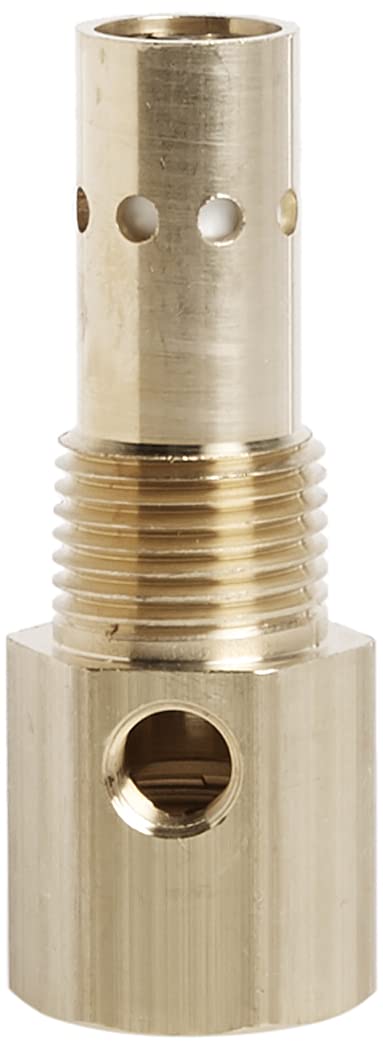
The only valve in this list you can open up and clean instead of tossing.
Milton takes a different approach here — instead of a sealed brass casting, the S-1092-1 is machined from hex stock (not cast) and uses a snap-ring to hold the internals together. That snap-ring lets you disassemble the valve, clean out sludge, and replace the sealing disc. For anyone running a compressor in a dusty shop or humid garage, this is the difference between a 2-year lifespan and a 10-year lifespan. The valve threads in with a 1/2″ male NPT to the tank and a 1/2″ female NPT on top, plus a 1/8″ female NPT side port for the unloader line.
Earlier in the list, the Conrader 3/4″ model is a sealed unit — when it fails you replace it wholesale. The Milton’s serviceable design directly addresses the complaint one reviewer raised about sludge buildup in permanently sealed valves. Buyers specifically mention that the valve is “machined from hex stock, not cast” and praise the snap-ring for “easy disassembly and cleaning.” This matters because condensation in the tank carries rust particles that grind down the sealing surface over time.
The 450 PSI rating and 20 SCFM flow are identical to the standard Conrader valves, so you do not trade performance for serviceability. At 107 ratings and a 4.6 average, it holds a stronger reputation than the budget options. The catch: the snap-ring design means you need a small pick or snap-ring pliers to open it — not difficult, but an extra step compared to a throwaway valve.
what separates it
- Snap-ring disassembly allows cleaning and seal replacement — extends usable life
- Machined from hex stock brass rather than cast, offering denser thread engagement
- Milton brand name carries decades of pneumatic accessory manufacturing history since 1943
One limitation
- Requires snap-ring pliers to service — not a tool every homeowner has on hand
- At 4 x 2 x 2 inches, it is physically bulkier than the 1/2″ valves
Get this for: a compressor in a dirty or high-humidity environment where you plan to service the valve annually. The cleanable design pays off fast.
skip it if: you prefer a sealed valve that you never have to think about. The Conrader C5050T is simpler and cheaper for the same 1/2″ NPT fit.
4. CAC-437-2 Brass Air Compressor Check Valve, 1/2 NPT & 1/2 CFPC
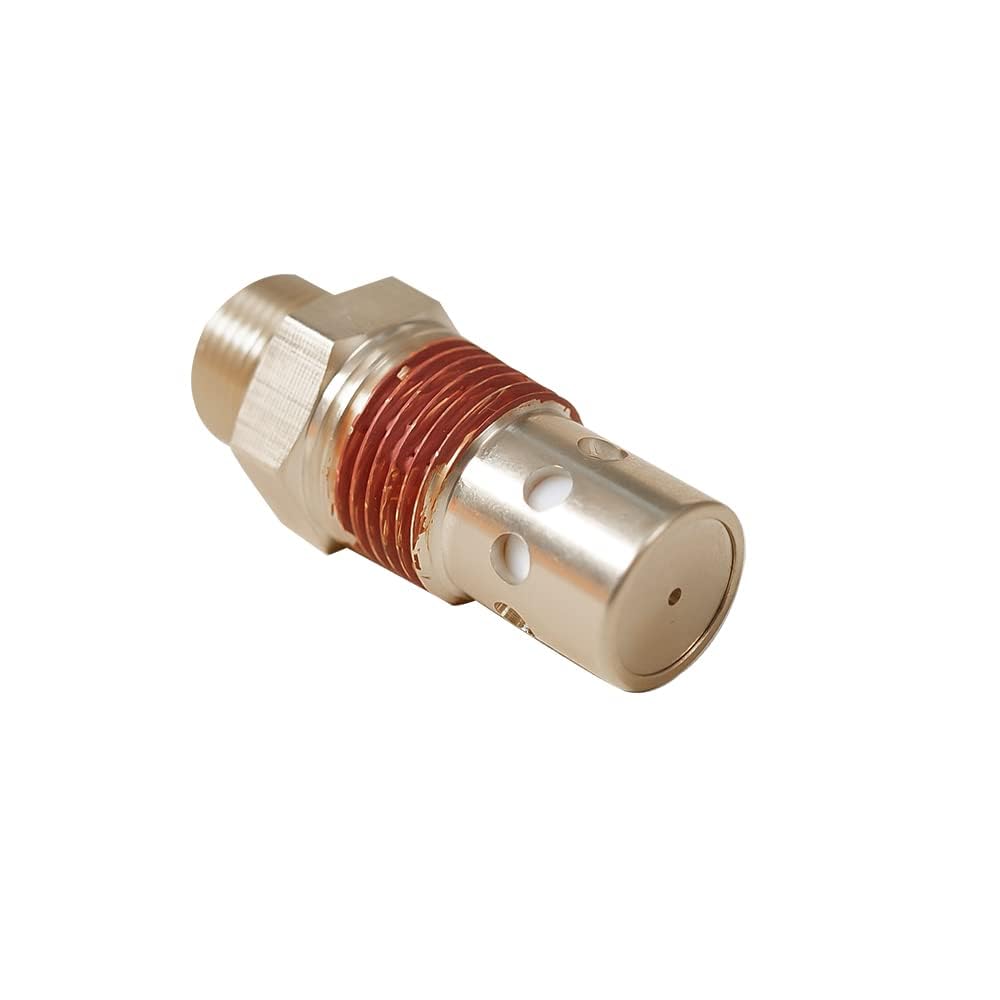
The valve that keeps 1970s compressors running like they just left the factory floor.
This CAC-437-2 is an oddball-friendly valve built to replace check valves on vintage and obscure models — specifically the IR/L6560V and 5E60VAD, but also older Campbell Hausfeld, Sandborn, and DeVilbiss units. It uses a 1/2″ male pipe thread (MPT) to screw into the tank and a 1/2″ compression female copper (CFPC) fitting on the pump side. If your compressor uses a flared copper tube instead of a threaded pipe between the pump and check valve, this is the one you need. The brass body is small at 0.75 x 0.52 x 2.13 inches, and it weighs 0.06 kilograms — noticeably heavier than the 0.01 kg Chiloskit, meaning it uses thicker brass.
One buyer who replaced a 26-year-old valve says it fixed the issue immediately and the tank holds pressure. Another went further: “I filled the tank to 100psi, it has been about 24 hours and the tank pressure needle has hardly moved.” That level of seal integrity is exactly what you want when you walk into the shop and find the compressor empty. The lack of an unloader port simplifies installation if your pressure switch routes the unloader line elsewhere, but it also means this valve cannot bleed head pressure — confirm your system handles that upstream.
The 4.7 average rating across 136 reviews is the highest in this roundup, driven by buyers who were able to save compressors that local repair shops had written off. The downside: CFPC (compression) fittings are less common than NPT, so if you ever need to swap the pump or change the line, you are locked into a compression connection. Still, for the specific compressors it targets, nothing else here fits as precisely.
What earns its spot
- Direct replacement for IRL6560V, 5E60VAD, and multiple Craftsman/DeVilbiss 919-series models
- Buyers confirm it holds tank pressure with minimal drop over 24 hours
- Small footprint fits tight spaces near the tank bung
What to check first
- No unloader port — confirm your compressor does not need a bleed line on the valve
- Compression fitting style may not match compressors with all-threaded lines
Ideal for: bringing an old Craftsman or Campbell Hausfeld back to life, especially if the original valve used copper compression tubing. The seal quality across reviews is exceptional for the price tier.
Not for: compressors that use standard NPT-threaded lines on both sides or those with an unloader line running to the check valve.
5. Industrial Air Power 85582229 Brass Check Valve Replacement for Ingersoll Rand Compressors

The exact aftermarket drop-in for Ingersoll Rand’s SS5L5 T30 and Type-30 pumps.
If you own an Ingersoll Rand compressor — especially the classic T30 or the consumer SS5L5 — the OEM part number 85582229 is what you search for. This aftermarket replacement from Industrial Air Power uses a 5/8″ inverted flare connection on the pump side and a 3/4″ NPT male thread into the tank. Customers note it is an “exact OEM match” and that it fixed their T30 compressor with no modifications. The brass construction and American manufacturing are the main selling points: at 0.34 pounds, it is built denser than the cheaper generic options.
One review specifically warns that “two models exist for the 60-gallon compressor,” so check which one your tank uses before ordering. The maximum pressure rating is 135 PSI — notably lower than the 450 PSI of the Conrader and Milton valves. That is not a mistake: Ingersoll Rand’s consumer and pro-level T30 compressors typically cut out around 135-175 PSI, so the valve is specced to the machine, not to a universal safety margin. If you are using this on a non-Ingersoll compressor that runs higher pressure, you may exceed the valve’s rating.
Use a 1-1/4″ socket and a breaker bar for removal (as one reviewer describes), and use thread sealer — not PTFE tape — to avoid tape shreds clogging the flared seat. This valve has no unloader port, so confirm your unloader is plumbed between the pressure switch and the pump head, not to the check valve.
Strengths
- Exact aftermarket match for Ingersoll Rand #85582229 and #SS5L5 compressors
- American-made brass build with dense threading
- Verified to fix T30 compressors by multiple buyers
Limitations
- 135 PSI max rating limits it strictly to Ingersoll Rand spec — not for high-pressure systems
- Flare connection requires a compatible copper line; not a universal thread
Choose this for: a direct Ingersoll Rand T30 or SS5L5 replacement where you want OEM fit without the OEM price tag.
Avoid if: your compressor requires a unloader port on the valve or runs at pressures above 135 PSI. The Milton S-1092-1 is a safer universal pick for higher-pressure systems.
6. Conrader New In Tank Check Valve 1/2″ Comp x 1/2″ MPT

The go-to fix when your 33-gallon Craftsman keeps bleeding air overnight.
This Conrader C5050T is the standard-bearer for mid-sized home-shop compressors. It connects with a 1/2″ compression top inlet and a 1/2″ male NPT thread into the tank — exactly the configuration that Craftsman, Sanborn, and many 25-to-60 gallon units use. With a 450 PSI max pressure and 20 SCFM flow, it handles anything a 5-7 HP pump can throw at it. The brass body weighs 2.4 ounces and includes the 1/8″ NPT unloader port that most modern pressure switches require. Reviewers point out it “fixed 33-gallon Craftsman compressor check valve issue (air leaking back when motor off)” with one minor quirk: the top threaded section was slightly longer, requiring the discharge pipe to be shortened by 1/8″.
among the most interesting reviews on this valve came from a buyer who replaced the check valve on a Sanborn 5HP compressor and reported it “holds pressure better overnight and noticeably quieter (less metal clatter).” The clatter reduction makes sense — a worn check valve flaps open and shut under vibration, and a fresh spring-and-seal assembly quiets that noise. At 472 ratings with a 4.3 average, this is among the most-reviewed check valves in the category. The one consistent note across reviews: the valve you receive may look different from the Amazon listing photo. Buyers confirm it still functions fine, but the cosmetic mismatch bothers some.
For an investment that restores a compressor, the value equation is tough to top.
Why it sells
- Fits the most common 1/2″ compression + NPT tank configuration on home-shop compressors
- 450 PSI and 20 SCFM exceed the demands of typical 5-7 HP residential pumps
- Unloader port included — works with standard pressure switch plumbing
Small quirks
- Top compression fitting may be slightly longer than OEM — may need 1/8″ pipe trim
- Appearance may differ from listing photo; function remains identical
Great for: the weekend warrior fixing a leaky Craftsman, Sanborn, or similar 1/2″ compression compressor. The 450 PSI rating means you never worry about exceeding its limit.
Not great for: compressors with NPT fittings on both sides — the top inlet is compression, not threaded. The Milton S-1092-1 uses NPT on both ends if that is what your setup needs.
7. Craftsman A19712 Check Valve for 919.167342 Air Compressors

The exact factory part for a dozen different Craftsman 919-series compressor models.
If your compressor’s model number starts with 919 (Craftsman’s designation for DeVilbiss and Ingersoll Rand-built units), the A19712 is the part number you need. This check valve uses compression fittings on both the tank side and the pump side — the top compression fitting has a 1/2″ diameter, and the check valve body itself has a 3/4″ diameter. The metal construction is listed as stainless steel (unusual for this category — most are brass), which offers excellent corrosion resistance but means the threads are harder than brass. That hardness can be a double-edged sword: it survives aggressive over-torquing less forgivingly than brass, so use a torque wrench or tighten by feel.
Buyers confirm it fits compressors as old as 20-year-old DeVilbiss units and as recent as the Craftsman 919.167342. One reviewer noted, “This part was the whole solution to my air compressor. Now working like a charm.” The compatibility list covers over 18 specific 919-model numbers, making it the broadest Craftsman-specific replacement on this list. The lack of an unloader port is the main point to verify before buying — many Craftsman 919-series models route the unloader line through the pressure switch itself rather than through the check valve, so this omission is intentional.
The 4.5 average across 265 reviews places it among the most trusted options for Craftsman owners, but the compression-only connections mean you cannot swap to NPT plumbing later without an adapter. About 1/8 of the reviews mention a minor length difference compared to the original part, so check clearance at the pump tube before forcing the connection.
Why it is trusted
- OEM-level compatibility with 18+ Craftsman 919-series compressor model numbers
- Stainless steel construction resists rust from tank condensation longer than brass
- Simple compression-on-both-ends design; no threading into the tank
Check before buying
- Compression fitting only — not compatible with NPT-threaded lines without adapters
- No unloader port; confirm your Craftsman model does not require one on the valve
Pick this for: any Craftsman 919-series compressor that uses compression fittings. This is the simplest path to restoring tank pressure retention without modifying the plumbing.
Skip if: your compressor uses NPT threads on the pump or tank side. The Conrader C5050T or the Milton S-1092-1 will fit better with threaded connections.
Understanding the Specs
Thread Types: NPT vs Compression vs G-Thread
The thread type is the single most important spec because it determines whether the valve physically connects to your compressor. NPT (National Pipe Taper) is a tapered thread that seals by wedging the threads together — you use PTFE tape or pipe dope on these. Compression fittings use a smooth tube with a ferrule that squishes down as you tighten the nut; they are common on Craftsman and DeVilbiss compressors but rare on industrial rigs. G-threads (British Standard Pipe Parallel) are straight, not tapered, and rely on an O-ring or sealing washer. NPT and G-threads do not interchange — if the valve uses G3/8 and your tank uses 3/8 NPT, it will leak. Measure your old valve’s threads or match the model number before buying.
Unloader Port: Why You Might Need It
The unloader port is a small side fitting — almost always 1/8″ NPT — that connects to your compressor’s pressure switch. When the motor stops, the pressure switch opens this port to bleed off the compressed air sitting between the pump head and the check valve. Without that bleed, the pump restarts under full tank pressure, which strains the motor, trips breakers, or burns the start capacitor. If the old valve had a small brass line or a nylon tube running to the pressure switch, your new valve needs that unloader port. If your compressor uses a mechanical unloader built into the pressure switch, you can use a valve without the port.
FAQ
How do I know if my air compressor check valve is bad?
Can I replace an air compressor check valve myself?
What is the difference between a 2-port and a 3-port check valve?
Will a 1/2 NPT check valve fit my compressor that uses 3/8 fittings?
How long does an air compressor check valve typically last?
Do I need PTFE tape or thread sealant on the check valve threads?
Can I use a check valve with a higher PSI rating than my compressor?
What does the SCFM rating mean on a check valve?
Why does my new check valve still leak after installation?
Is a brass check valve better than stainless steel or pot metal?
Final Thoughts: The Verdict
For most buyers, the best air compressor check valve replacement is the R Conrader 3/4″ x 3/4″ Brass Check Valve because it pairs the highest flow rate (30 SCFM) with proven long-term sealing and a 450 PSI safety margin — a combination that large-tank compressors need for consistent performance. If you want a valve you can clean and rebuild instead of replace, grab the Milton S-1092-1, whose snap-ring design adds years of serviceable life. And for California Air Tools owners looking to ditch the fragile OEM part for solid brass at a fraction of the cost, the standout is the Chiloskit 3-Port Valve.
How We Picked
We do not accept paid placement. Every pick is matched to a real buyer and a real use-case; we do not hands-on test units.
Sources & Methodology
Specifications: manufacturer listings and product documentation. Review insights: verified customer reviews, as of July 2026. Pricing: not shown on this page (it changes often); check the current price via the retailer link.
As an Amazon Associate, Gadgets Feed earns from qualifying purchases. This does not affect which products we feature.
Related Guides
Product prices and availability are accurate as of the date/time indicated and are subject to change. Any price and availability information displayed on Amazon at the time of purchase will apply to the purchase of this product. As an Amazon Associate I earn from qualifying purchases.
CERTAIN CONTENT THAT APPEARS ON THIS SITE COMES FROM AMAZON. THIS CONTENT IS PROVIDED "AS IS" AND IS SUBJECT TO CHANGE OR REMOVAL AT ANY TIME.
Amazon and the Amazon logo are trademarks of Amazon.com, Inc. or its affiliates.