
Choosing a compressor lubricant isn’t just about grabbing any container off the shelf labeled “oil.” The wrong viscosity or additive package can leave carbon varnish inside your pump, overheat the valves, and shorten the service interval by hundreds of hours. Dedicated air compressor oils are formulated to resist oxidation under constant high heat, separate from water on startup, and protect the cylinder walls without leaving sticky residue.
I’m Min — the co-founder and writer behind Gadgets Feed. I’ve spent countless hours cross-referencing API viscosity ratings, flash points, and real-world thermal breakdown data to separate the lubricants that actually protect your pump from the ones that merely wet the internals.
Whether you maintain a small workshop tank or a commercial-grade screw compressor, this guide breaks down the best air compressor oils by real-world performance, not marketing promises.
How To Choose The Best Air Compressor Oil
Using motor oil or hydraulic fluid in your compressor pump is a fast track to carbon deposits and seal degradation. Air compressor oils are formulated with specific anti-oxidation and anti-foam packages that cope with the constant heat and pressure cycling inside a pump. The wrong choice accelerates wear and forces earlier rebuilds.
Viscosity Grade (ISO vs. SAE)
The most critical spec is the viscosity at operating temperature. Reciprocating piston compressors typically require ISO 100 (roughly SAE 30), while rotary screw units often use ISO 46 (SAE 20). Colder climates may call for a multi-viscosity synthetic that flows at -20°F without thinning out at 200°F.
Detergent vs. Non-Detergent
Air compressor pumps must use non-detergent oil. Detergent additives found in automotive motor oils keep contaminants suspended so a filter can catch them, but compressors have no oil filter. Suspended particles recirculate and accelerate ring and valve wear. Non-detergent oils let debris settle in the sump where it stays.
Synthetic vs. Conventional Base
Conventional petroleum oils meet OEM specs at a lower cost per quart but break down faster under sustained 200°F+ discharge temperatures. Full synthetics resist thermal breakdown 3x to 4x longer, maintain viscosity across a wider temperature range, and leave less carbon varnish. If you run the compressor daily, synthetic pays for itself in longer service intervals.
Quick Comparison
On smaller screens, swipe sideways to see the full table.
| Model | Category | Best For | Key Spec | Amazon |
|---|---|---|---|---|
| Triax Kompressor ISO 46 | Full Synthetic | Severe-duty / extreme temps | Flash Point 220°C | Amazon |
| Ingersoll Rand All Season Select | Synthetic Blend | Reciprocating / OEM spec | 4x longer life vs. mineral | Amazon |
| DEWALT D55001 | Full Synthetic | Quiet operation / cold start | SAE 30 (ISO 100) | Amazon |
| Mag 1 Air Compressor Oil | Conventional | Budget gallon / fleet use | Flash Point 446°F | Amazon |
| Milton 1002 | Conventional | Fleet / plant maintenance | 1 Gallon / ISO 100 | Amazon |
| Royal Purple 01030 | Synthetic Blend | Small engines / value | SAE 30 / 1 Quart | Amazon |
| Mobil Rarus 427 | Synthetic | Entry-level synthetic / reliable | Flash Point 480°F | Amazon |
In‑Depth Reviews
1. Triax Kompressor ISO 46 Full Synthetic

The Triax Kompressor MV is a true multi-viscosity synthetic that stays fluid at -49°F yet maintains film strength at 140°F+. Its high-temp bearing protection claims a 1000% higher load capacity than conventional oils, which matches the real-world experiences of users running Craftsman and MI-T-M reciprocating pumps without carbon issues.
The non-detergent formulation is OEM-recommended for rotary vane, screw, and reciprocating compressors from Ingersoll Rand, Atlas Copco, Quincy, and Dewalt. With a 220°C flash point, it resists burnoff and odor even under continuous high-discharge cycles, and actively repels water to prevent emulsion sludge.
At 20,000+ hours of projected service life, this is the oil to buy if you run a compressor daily in a workshop. The only real compromise is that the transparent fluid is hard to read in a sight glass — keep a dipstick or mark your fill line.
Why it’s great
- Wide viscosity range (-49°F to 140°F+)
- 20,000+ hour service life
- Runs 30% cooler than mineral oils
Good to know
- Hard to see level in clear sight glass
- Premium price per quart
2. Ingersoll Rand All Season Select Synthetic

Ingersoll Rand’s All Season Select is the OEM-recommended synthetic blend for any reciprocating compressor they’ve ever built. It performs four times longer than petroleum-based lubricants and actively prevents carbon build-up on valves and rings — a common failure point in older pumps that run hot.
Real-world testing on a vintage compressor showed a 20°F reduction in head temperature after just five pressure cycles from 0 to 130 PSI when switching from a generic ISO 100 mineral oil. The synthetic base also stays nearly clear through the break-in period, which tells you it isn’t washing metal particulates into the sump.
The 1-liter bottle is enough for two oil changes on most 60-gallon single-stage units. It’s not the cheapest per quart, but the reduction in valve wear and frequency of changes makes it a smart investment for anyone who wants their compressor to last a decade.
Why it’s great
- OEM spec for Ingersoll Rand
- Reduces head temperature measurably
- Prevents carbon varnish buildup
Good to know
- Higher upfront cost than mineral oils
- Limited to 1-liter bottle size
3. DEWALT D55001 Compressor Oil

DEWALT’s D55001 is a full-synthetic SAE 30 (ISO 100) that stands out for its noise reduction. Users report compressors running “whisper-quiet” after switching from conventional 20W or 40W oils to this 30-weight synthetic. The lower pour point also helps in cold climates — no struggling to start a pump in Minnesota winter temps.
One long-term review noted that after 8 months of heavy use (2.5 hours continuous), the oil still looked new, with no metal flakes or discoloration. That oxidation resistance is exactly what protects the valves and rings from carbon varnish that causes pumps to labor and overheat.
It works with most reciprocating piston compressors that call for non-detergent SAE 30, including Craftsman, Makita, and Chicago Pneumatic. The blue tint makes it easy to spot in the sight glass.
Why it’s great
- Noticeably quieter pump operation
- Excellent cold-weather flow
- Blue tint for easy level checks
Good to know
- Higher cost per quart than mineral oil
- Best for piston-type, not all screw compressors
4. Mag 1 Air Compressor Oil

Mag 1 is a conventional, highly refined petroleum oil with an anti-foam additive package that keeps it stable under load. With a flash point of 446°F, it handles continuous-run conditions without breaking down into sludge as fast as generic mineral oils. Users who maintain multiple compressors appreciate the gallon size.
The formulation is non-detergent, making it safe for reciprocating pumps that specify SAE 30 or ISO 100. One user ran it across three different compressors and noted one unit actually ran cooler after the change. That suggests the anti-foam additives are doing real work reducing friction at high RPM.
It won’t match the longevity of a synthetic like the Triax or Ingersoll Rand options, but for budget-conscious fleet maintenance or seasonal use, the price per gallon is hard to beat. Expect to change it more frequently than a synthetic — roughly every 500 hours vs. 2,000.
Why it’s great
- Competent additive package for the price
- Gallon size covers multiple changes
- Good flash point for conventional oil
Good to know
- Shorter service life than synthetics
- Petroleum base, not full synthetic
5. Milton 1002 High Performance Conventional Oil

Milton’s 1002 is a petroleum-based, non-detergent compressor lubricant built for fleet and plant maintenance. The 1-gallon jug offers a very low cost-per-ounce for those who burn through oil on multiple compressors. Users at industrial facilities have trusted this oil for years, and the feedback confirms consistent performance with no surprise breakdowns.
It meets the ISO 100 (SAE 30) spec that covers most reciprocating compressors. One user noted lower operating temperatures after switching, which is a strong indicator that the base oil and its additive package handle friction better than generic alternatives. The lack of detergents prevents varnish from circulating.
The trade-off is the same as with any conventional oil: shorter intervals between changes. If you run a compressor daily for eight hours, you’ll need to schedule changes every 3-6 months rather than every year. But at this price point, the math still works in your favor.
Why it’s great
- Excellent value per gallon for fleet use
- Proven track record in industrial settings
- Non-detergent formulation protected valves
Good to know
- Conventional base requires more frequent changes
- Not ideal for extreme cold climates
6. Royal Purple 01030 SAE 30 Synthetic Blend
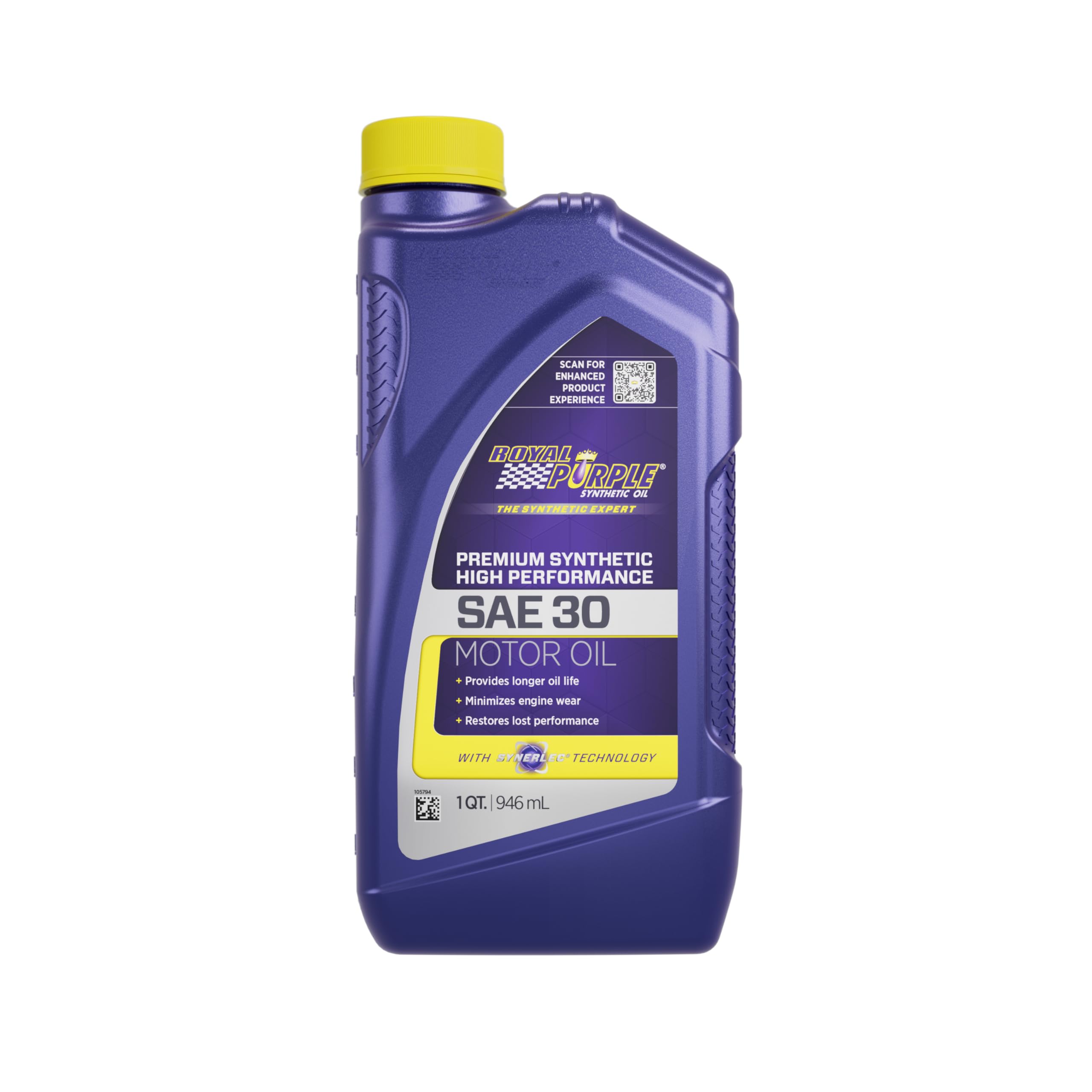
Royal Purple’s SAE 30 is marketed as a high-performance motor oil, but its synthetic blend and non-detergent profile make it a viable compressor lubricant — especially for small engines and portable compressors that only need a quart. Users report 16+ years of use in chippers, shredders, and mowers with zero internal damage.
One critical review noted the oil survived water contamination in the crankcase without causing wear, which speaks to the additive package’s corrosion protection. The flash point of 232°C is solid for a synthetic blend and will resist burnoff better than cheap mineral oil in a pump that cycles frequently.
It’s not a dedicated compressor oil, so double-check your pump’s manual before using it long-term.
Why it’s great
- Very affordable per quart
- Proven corrosion and wear protection
- Works across small engines and compressors
Good to know
- Not an OEM-specified compressor oil
- Best for intermittent, not continuous duty
7. Mobil Rarus 427 Compressor Oil

Mobil Rarus 427 is a dedicated synthetic compressor oil with a very high flash point of 480°F. That thermal stability means it won’t smoke or break down even when your pump runs hot enough to make the discharge line too hot to touch. Users running multiple compressors report consistent, drama-free performance.
The 32-ounce bottle is the perfect size for a single change on most portable compressors, and the clear, clean appearance on initial pour matches what you expect from a premium synthetic. One reviewer noted it took exactly 1 quart to fill their tank, and the oil stayed clear through the first season of use.
It’s a straight synthetic, not a blend, so you get the thermal and oxidative stability that the Mobil name is known for. The only downside is the smaller bottle size — if you have a large stationary compressor, you’ll need multiple bottles.
Why it’s great
- Very high 480°F flash point
- Dedicated compressor oil, not auto oil
- Excellent oxidation resistance
Good to know
- 32 oz bottle may not suffice for large units
- Price adds up across multiple bottles
FAQ
Can I use regular motor oil in my air compressor?
How often should I change the oil in a reciprocating compressor?
What’s the difference between ISO 46 and ISO 100 compressor oil?
Does synthetic compressor oil really last longer than conventional?
Final Thoughts: The Verdict
For most users, the air compressor oils winner is the Triax Kompressor ISO 46 because its multi-viscosity synthetic handles extreme cold and heat while lasting over 20,000 hours. If you want OEM-level carbon control for a reciprocating pump, grab the Ingersoll Rand All Season Select. And for budget-conscious fleet maintenance on a conventional gallon, nothing beats the Mag 1 Air Compressor Oil.