
Our readers keep the lights on and my morning glass full of iced black tea. As an Amazon Associate, I earn from qualifying purchases.
Specs are compiled from manufacturer listings and verified buyer reviews and can change over time — please confirm the key details on the product page before buying.
That little brass fitting on your air compressor tank is the only thing standing between a harmless hiss and a dangerous rupture. It’s called a pressure relief valve (PRV), and when it fails, it usually fails in one of two ways: it leaks constantly, or worse, it sticks shut and lets the tank over-pressurize. Replacing one is a five-minute job, and every pick here is a verified PRV, not a regulator or a gauge.
I’m Min — the founder and writer behind Gadgets Feed. This guide is built by comparing the manufacturers’ published specifications and the patterns across verified customer reviews, so you get each pick’s real strengths and trade-offs instead of marketing spin.
To pick the right air compressor prv, you need to match three things to your tank: the thread size, the PSI rating, and the flow capacity. Grabbing the cheapest brass fitting won’t cut it.
Our Picks at a Glance


How To Choose The Best Air Compressor PRV
A PRV is a fail-safe, but it only protects you if it’s rated for your exact setup. Before you buy, you need to know three things about your compressor: the tank’s maximum pressure, the thread size of the port, and how much air your system can move.
Match the PSI to Your Tank’s Limit
The valve’s pop-off pressure should be equal to or slightly below your tank’s maximum rated pressure. If you install a 250 PSI valve on a tank rated for 150 PSI, the tank could be in danger before the valve ever trips. The data shows valves ranging from 140 PSI up to 250 PSI, so pick the one that matches your compressor’s spec sheet.
Thread Size is Non-Negotiable
Most home compressors use a 1/4″ male NPT (National Pipe Tapered) fitting, but bigger units may use 3/8″. The thread size must match your tank port exactly — a 3/8″ valve won’t fit a 1/4″ port without an adapter, and forcing it will strip the threads. Every product below lists its inlet connection size, so check that number before you order.
Flow Capacity and Certification
The flow rating, measured in SCFM or CFM (cubic feet per minute), tells you how fast the valve can release air. A higher flow means the valve can relieve pressure quickly in an emergency. Also look for ASME certification — it means the valve meets industry safety standards and pops off at a pressure accurate within a small tolerance, usually plus or minus 3%.
Quick Comparison
| Model | Best For | Max Pressure | Inlet Size | Flow Rate | Amazon |
|---|---|---|---|---|---|
| Milton S-1090-200★ Best Overall | Pop-off accuracy | 200 psi | 1/4″ NPT | 170 CFM | Amazon |
| Bonuci 4-Piece 150 PSIBest Value | Multi-pack value | 150 psi | 1/4″ NPT | 178 CFM | Amazon |
| Conrader 3/8″ ASMELarge Port Pick | Large port tanks | 150 psi | 3/8″ NPT | 132 SCFM | Amazon |
| VIAIR 92250 | High-temp systems | 250 psi | 1/4″ NPT | — | Amazon |
| Hromee 5-Piece Kit | Full tank rebuild | 140 psi | 1/4″ NPT | 55 SCFM | Amazon |
| Bonuci 4-Piece 200 PSI | Spare parts stash | 200 psi | 1/4″ NPT | 178 CFM | Amazon |
| Conrader Pilot Unloader | Adjustable unloader | 200 psi | 1/4″ MPT | — | Amazon |
| Rolair 131B Unloader | OEM replacement | 150 psi | — | — | Amazon |
In‑Depth Reviews
1. Milton S-1090-200 1/4″ MNPT ASME Safety Valve
Our pick — over 4.5★ from 100+ verified ratings; the strongest balance of quality and price.
The gold standard that trips exactly when it should, every single time.
Milton has been making air accessories since 1943, and this valve shows that pedigree. It’s a 1/4″ male NPT fitting rated to pop off at 200 PSI, and it’s bubble tight to 10% of that pop-off pressure — meaning it won’t weep air before it’s supposed to open. This precision prevents slow overnight pressure bleed-down.
The flow capacity is a hefty 170 CFM, so when it does open, it relieves pressure fast. It’s all brass construction, weighs just 2.4 ounces, and the buyers report it plainly: “Replaced old safety valve that was leaking. It works great.” Even the creative uses show up — someone converted a beer keg regulator into a soda key regulator with this exact valve.
Compared to the budget multi-packs below, this one costs more per valve, but you’re paying for American manufacturing and the confidence that the pop-off pressure is accurate. The 4.7-star rating confirms it’s the go-to when the old valve fails at a critical moment.
Why it wins: A 200 PSI pop-off with 170 CFM flow and bubble-tight sealing to 10% of set pressure — the complete safety package.
Reach for this if: you want a single, trustworthy replacement from a brand with decades of air-accessory history.
Look elsewhere if: you need multiple spares at once — this is a single-valve purchase.
2. Bonuci 4 Pcs 1/4″ Male 150 Psi Npt Pressure Relief Valve
A four-pack of brass pop-offs so you never get caught flat-footed again.
Buyers praise its functionality, machining, and value. You get four 1/4″ NPT valves rated at 150 PSI with a flow of 178 CFM, which is actually a higher flow than the Milton above despite the lower pressure rating. Each one includes seal thread locks, so you have what you need to install them properly.
The temperature range is wide, from -65°F to +250°F, so it handles both freezing garages and hot compressor heads without issue. Owners mention installing these on air pressure tanks and finding no leaks after applying sealant — the exact outcome you want from a replacement part. One owner’s story captures the value perfectly: the valve went bad the one time the compressor was needed, and the 4-pack meant no reorder was necessary.
At just 4.48 ounces for the whole set, it’s barely heavier than a single Milton valve, and it costs less. The trade-off is that 150 PSI is the ceiling here, so this won’t work for high-pressure systems that need 200 PSI or more. For a standard home or shop compressor, though, it’s the smart buy.
What the four-pack gets you
- Four valves with thread locks for immediate and future replacements
- 178 CFM flow — releases pressure quickly when it trips
- Survives -65°F to +250°F environments
Where it falls short
- 150 PSI max pressure won’t suit high-pressure tanks
- No ASME certification listed, unlike some competitors
Best for the home tinkerer: who wants spares on hand and doesn’t need more than 150 PSI.
Think twice if: your compressor tank is rated at 175 PSI or higher — you need the 200 PSI version.
3. New 3/8″ ASME Brass Safety Relief Valve 150 PSI
The big-thread valve for old workhorses that refuse to retire.
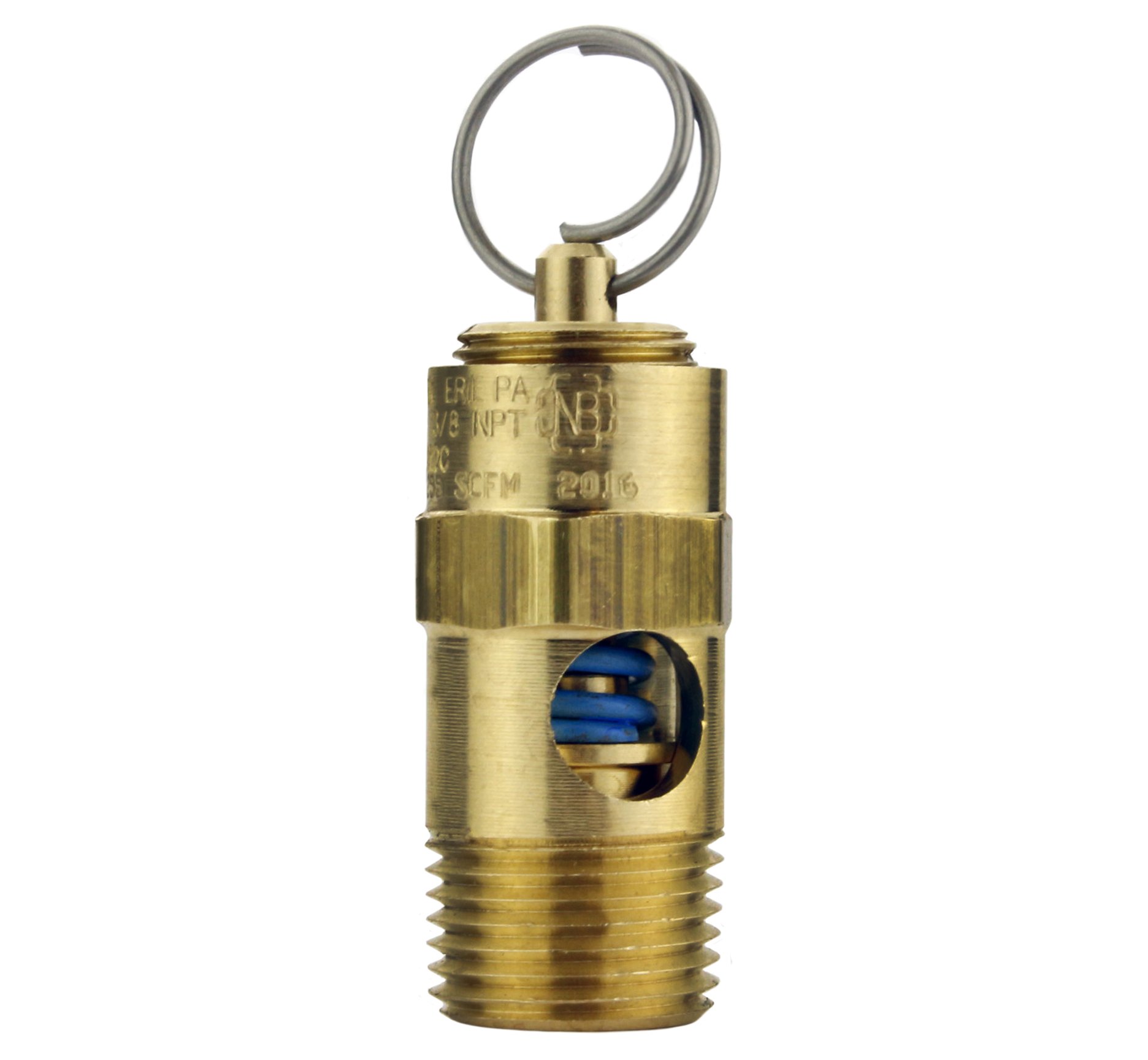
This one stands out for two reasons: it’s a 3/8″ male NPT fitting, not the standard 1/4″, and it’s UV/NB certified with relief pressure accurate within plus or minus 3% of the set pressure. That certification matters because it means the valve has been independently tested to trip at 150 PSI, not just stamped with a number. The inlet connection size is 0.38 inches, which is 52% larger than the 1/4″ (0.25 inch) fittings on most of the other picks here — so it’s the one you need for larger tank ports.
This Conrader valve, made in the USA, handles 132 SCFM of airflow and temperatures up to 250°F, so it won’t fail on a heavy-duty service station rig. The total valve length is 1-3/4 inches with an 11/16-inch wrench size, making installation straightforward. Customers note it as a perfect replacement for a 70+ year old service station air compressor, noting it appears to be all brass and stating it “works at rated level to open & not below as the old worn out unit.”
The trade-off: it’s a single valve with no spares, and the 3/8″ thread won’t fit 1/4″ ports without an adapter. But for larger tanks or vintage equipment, this is the precise, certified option.
Grab it for: 3/8″ port tanks, especially vintage compressors where accuracy and certified construction matter.
skip it if: your tank uses the more common 1/4″ port — you’d need an adapter.
4. Viair 92250 1/4″ Male NPT 250 PSI Hi-Temp Safety Valve

The 250 PSI heavy hitter that also lets you vent by hand.
Most consumer PRVs top out at 150 or 200 PSI, but this VIAIR is rated for a full 250 PSI of maximum pressure. That’s 79% more capacity than the 140 PSI Hromee kit on this list, making it the right call for high-pressure tanks or systems running accessories that need serious headroom. It’s ASME safety coded, so the pop-off is certified to industry standards.
The defining feature here is the manual pull ring included on the valve body. That means you can trip the valve by hand to vent the tank for maintenance, rather than waiting for it to hit the pop-off pressure. It also uses a heavy-duty Viton seal — a high-performance rubber that holds up in high-temperature environments where standard seals degrade. The gold finish is brass underneath, and it’s a 1/4″ male NPT fitting.
Buyers are satisfied; the reviews sum it up: “Not much to say. It’s a Safety valve and it works.” Expect a One Year Manufacturer Defect Warranty from VIAIR. The catch is the 15-owner sample size is small, but the 5.0 score is a clean sweep. If you need 250 PSI protection, this is the one.
Choose this when: your system runs at 200+ PSI and you want the headroom plus a manual vent ring.
Pass if: you have a standard 150 PSI tank — you’d be paying for capacity you can’t use.
5. Hromee 5 Piece 1/4 Inch Compressor Air Tank Port Fittings Drain Valve Kit

Everything your tank port needs in one box, from drain cocks to plugs.
This isn’t just a PRV — it’s a full tank-port rebuild kit. You get the 140 PSI safety valve with a brass body and stainless steel spring and pull ring, plus a winged-style drain cock, a twist-style petcock, and two hex-head plugs. If you’re converting an old compressor into a storage tank or sealing up unused openings, this kit covers the whole job in one order.
The safety valve flows at 55 SCFM, which is lower than the standalone valves above, but adequate for a 140 PSI residential tank. The winged drain cock handle is steel-plated zinc with a 12 LBS maximum twist force, and the twist petcock is o-ring sealed for easy moisture drainage that extends tank longevity. Reviewers point out everything fit perfectly and that it’s a quality product at a good price, with one owner noting it was exactly what was needed to plug up unused openings during a tank conversion.
The trade-off is the 140 PSI ceiling — the lowest on this list. If your tank is rated higher than that, this safety valve won’t protect it properly. But for standard home compressors, the completeness of this kit is a genuine convenience win.
Best as a starter kit: for anyone who needs a safety valve and drain cocks together, with solid quality and an exact fit.
Reach for it: when you’re doing a full tank refresh and want every fitting in one shipment.
Be careful if: your compressor exceeds 140 PSI — this valve is the low-pressure option here.
6. 4 Pcs 1/4 Inch Npt(M) Air Compressor Check Valve Pressure Relief Valve
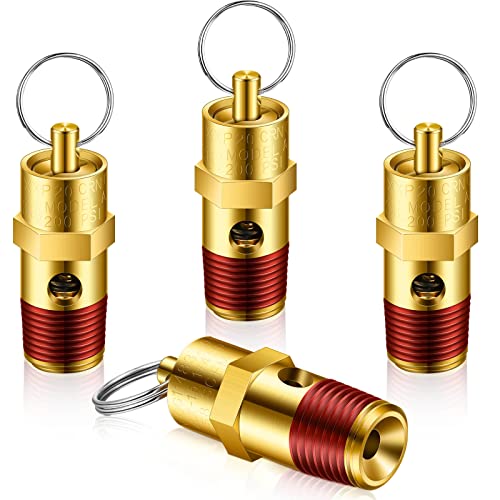
A 200 PSI four-pack that’s perfect for air-ride and shop tanks alike.
This is the 200 PSI sibling to the Bonuci 150 PSI pack, and it fills a specific gap: it gives you four valves for high-pressure systems without the per-unit cost of a premium single valve. Each 1/4″ NPT brass fitting flows at 178 CFM and handles the same -65°F to +250°F temperature range as the lower-pressure version. It’s ideal for air-ride suspension tanks rated at 200 PSI or shop compressors running at the higher end.
Shoppers say it trips at the correct pressure and is well-made and durable, with one owner noting it should last for years given the build quality. Another installed it on an air-ride setup and appreciated having a set of four, since the tank was rated at 200 PSI and these fit the bill.
Quality is mixed: one valve leaked around the plunger, and another popped at 185-190 PSI despite a 200 PSI stamp. That’s why the four-pack is the saving grace — you have backups when one isn’t perfect. It’s a solid value, just not a precision instrument like the Milton.
Why the four-pack wins
- 200 PSI rating suits air-ride and high-pressure tanks
- 178 CFM flow releases air fast
- Four valves cover immediate and future needs
The quality reality check
- One owner found a valve popping early at 185-190 PSI
- Another had a leak around the plunger on the first unit
Best for air-ride owners: who need 200 PSI protection and want spares for the inevitable wear.
Consider the Milton instead: if one perfectly calibrated valve matters more than having four backups.
7. New Pilot Unloader Valve for Air Compressor 1/4″ MPT – 140-175 PSI

Not a fixed pop-off — a tunable pilot unloader that lets you dial in the trip point.
This is a different animal from the safety valves above. It’s a pilot unloader valve, meaning it’s adjustable — you can set the cut-in and cut-out pressures to match your compressor. The range is 145-175 PSI for the operating range, with a 1/4″ male NPT inlet and a 1/8″ FNPT discharge outlet. The operating pressure max is 250 PSI, and it handles temperatures from -15°F to 400°F, making it the most heat-tolerant valve on this list.
Buyers describe the adjustment process clearly: screw the small threads out for less pressure and in for more, and use the big thread to change the pressure range. One owner called it “just what I needed,” and another confirmed it worked for its intended purpose. The 8-ounce weight and brass and stainless steel construction speak to a durable part.
Reliability is the catch. One reviewer noted rapid cut-in/out cycling, a valve that stuck closed, and misadjusted set points causing it to “hammer” between open and closed at 175 PSI. This is a part that rewards careful setup — it’s adjustable, but that adjustability introduces complexity. For someone who understands the tuning process, it’s a versatile tool; for a quick swap, a fixed valve is simpler.
Versatile when tuned right: the adjustable range covers 145-175 PSI, but setup mistakes can cause cycling issues.
Pick this if: you need to fine-tune cut-in/cut-out pressures and know how to set them.
Avoid if: you want a set-and-forget safety valve — the fixed pop-off types above are simpler.
8. Air compressor pilot unloader valve with muffler Vent Rolair 131B 125-150 psi
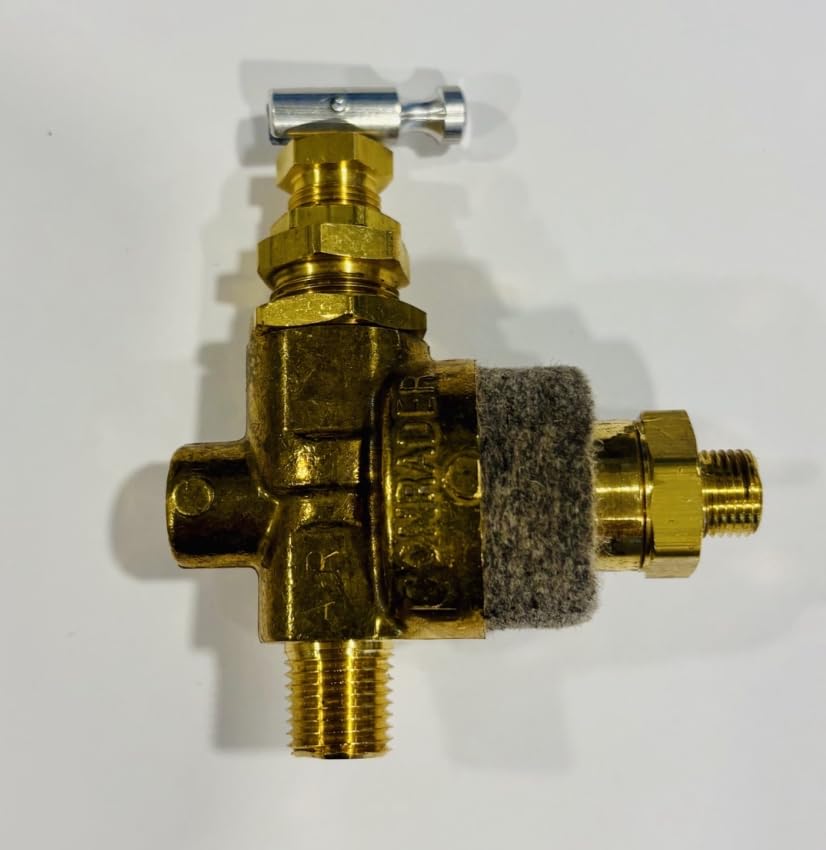
The drop-in Rolair replacement that brings the vent noise down too.
This BG-Valve 131B is a factory-setting pilot unloader valve for compressors, built as a direct replacement for the Rolair, Jenny, and Emglo OEM parts. It’s pressure adjustable with a factory setting of 125-150 PSI, and it comes with a muffler to dampen the venting hiss — a detail the bare-metal valves on this list don’t offer. The noise rating is 40 db, which gives you a concrete sense of how quiet the discharge is.
Buyers report it works just as well as the OEM part but cheaper, with simple and straightforward installation. One owner with a North Star gas compressor had been losing air mid-jobs until swapping in this valve, and a second with an old unloader that was worn beyond rebuild called this one “working wonderfully.” The 16-ounce weight and 150 PSI max pressure fit mid-range compressors well.
The trade-off: it’s the priciest pick here, and it’s a specialized part. If you don’t have a Rolair, Jenny, or Emglo compressor, the 131B designation may not match your setup. It’s also corded electric and recommended for air brushing, drilling, nailing, and spraying — so it’s aimed at serious shop use, not casual hobbyists.
The OEM advantages
- Direct replacement for Rolair, Jenny, and Emglo compressors
- Built-in muffler keeps venting noise to 40 db
- Adjustable pressure from 125-150 PSI
Before you commit
- Premium price for a specialized OEM-fit part
- Only suits compressors compatible with the 131B design
Worth it for Rolair owners: who want an exact OEM match with quieter venting and a proven track record.
Not your part if: you have a generic compressor — you’d be paying for compatibility you don’t need.
Understanding the Specs
Pop-Off Pressure (PSI)
The PSI rating is the pressure at which the valve automatically opens to release air. This must match your tank’s maximum rated pressure — never install a valve rated higher than your tank, or the tank could be in danger before the valve trips. Valves here range from 140 PSI to 250 PSI, so check your compressor’s spec plate first.
Thread Size and Type (NPT)
NPT stands for National Pipe Tapered, the standard threading on most compressor tanks. The most common size is 1/4″ male NPT, but larger tanks may use 3/8″. The thread size must match your tank port exactly — a 3/8″ valve won’t fit a 1/4″ port without an adapter, and forcing it will damage the threads.
Flow Capacity (CFM/SCFM)
The flow rating, measured in CFM or SCFM (cubic feet per minute), tells you how fast the valve can release air when it opens. A higher flow means the valve relieves pressure quickly in an emergency. The valves here range from 55 SCFM up to 178 CFM, with higher flow generally being better for large tanks.
ASME Certification
ASME certification means the valve has been independently tested to meet safety standards, with relief pressure accurate within a small tolerance — typically plus or minus 3% of the set pressure. This certification is a mark of quality, but it’s not essential for every home compressor. Some budget valves skip the certification to save cost.
FAQ
What does PRV stand for on an air compressor?
How do I know which PSI rating my PRV needs?
Will a 3/8 inch valve fit my 1/4 inch tank port?
What is the difference between a safety valve and a pilot unloader valve?
How often should I replace my air compressor PRV?
Why does my PRV leak air even when the compressor is off?
What does ASME certification mean for a safety valve?
Can I use a higher flow valve than my compressor needs?
Is the pull ring on a PRV meant for manual testing?
Final Thoughts: The Verdict
For most buyers, the best air compressor prv is the Milton S-1090-200 because it delivers bubble-tight sealing with a 200 PSI pop-off and a proven American pedigree. If you want spares and value, grab the Bonuci 150 PSI four-pack. And for high-pressure systems over 200 PSI, the VIAIR 92250 with its 250 PSI rating and manual pull ring is the one to reach for. Whichever you choose, match the thread size and PSI rating to your tank — that’s the difference between a working safety device and a decoration.
How We Picked
We do not accept paid placement. Every pick is matched to a real buyer and a real use-case; we do not hands-on test units.
Sources & Methodology
Specifications: manufacturer listings and product documentation. Review insights: verified customer reviews, as of August 2026. Pricing: not shown on this page (it changes often); check the current price via the retailer link.
As an Amazon Associate, Gadgets Feed earns from qualifying purchases. This does not affect which products we feature.