
Uninsulated air conditioning ducts turn your cooling system into a heater, forcing your AC to run longer while the attic or crawlspace bakes the air traveling through the sheet metal. A proper wrap stops that thermal bleed, keeps delivered air at setpoint, and shaves measurable load off the compressor.
I’m Min — the co-founder and writer behind Gadgets Feed. I’ve spent hundreds of hours cross-referencing ASTM fire ratings, R-value claims, and real-world temperature drop tests from verified buyers to separate insulation that actually works from rolls that barely beat an open window.
Whether you are wrapping the main trunk line, sealing a portable AC hose, or blocking solar gain through a window, the right material makes the difference between a system that struggles and one that delivers. This guide compares the top options to help you choose the best air conditioning duct insulation for your specific setup.
How To Choose The Best Air Conditioning Duct Insulation
Duct insulation fights two enemies: conductive heat gain through the hose wall and radiant heat from the surrounding environment. Your choice depends on where the duct runs, how much space you have, and whether you need a vapor barrier to stop condensation.
Material Type — Bubble Wrap vs. Foam Core vs. Fiberglass
Double-bubble reflective foil uses air pockets trapped between two layers of aluminum to block radiant transfer without adding bulk. EPE foam core combines a closed-cell foam layer between foil facings for higher R-value per thickness and better puncture resistance. Fiberglass flex duct gives you a traditional solution but generates irritating dust during installation and loses R-value if compressed.
Thickness and R-Value
Bubble wraps typically measure 3 to 7 millimeters and deliver an R-value between R-8 and R-24 when installed with the required air gap. Foam core barriers hit about R-17 at 5 millimeters. The higher the number, the more thermal resistance you get — but only if you maintain the gap between the reflective surface and the duct.
Fire Rating and Safety
Attic and crawlspace installations usually require a Class A / Class 1 fire rating per ASTM E84. Polyethylene-based bubble wraps and foam cores can achieve this with a clear coating that resists flame spread. Check the manufacturer’s spec sheet before you install any material near electrical or in a unconditioned space.
Quick Comparison
On smaller screens, swipe sideways to see the full table.
| Model | Category | Best For | Key Spec | Amazon |
|---|---|---|---|---|
| SmartSHIELD -5mm R17 | Premium | Attic hatch & duct wrap | 5mm thickness, R-17, Class A fire | Amazon |
| US Energy 48″ x 100′ Double Bubble | Premium | Large attic floor coverage | 6.5mm, R-24, 400 sq ft coverage | Amazon |
| VEVOR Double Reflective Roll | Mid-Range | Garage doors & large windows | 3.2mm EPE foam, 48″x50ft | Amazon |
| Rubber-Cal HVAC Insulated-Flex | Mid-Range | Permanent duct runs | 4″x25ft fiberglass flex duct | Amazon |
| winemana Window Insulation Roll | Value | RV & window blocking | 48″x20ft double-sided foil bubble | Amazon |
| Portable AC Hose Insulation Sleeve 2-Pack | Value | Portable AC exhaust hose | 59″x21″ sleeve, 5-5.9″ diameter | Amazon |
| fowong Reflective Window Insulation | Budget | Small windows & privacy | 3mm bubble, 36″x10ft | Amazon |
In‑Depth Reviews
1. SmartSHIELD -5mm 48”X25ft R17 Reflective Insulation Roll
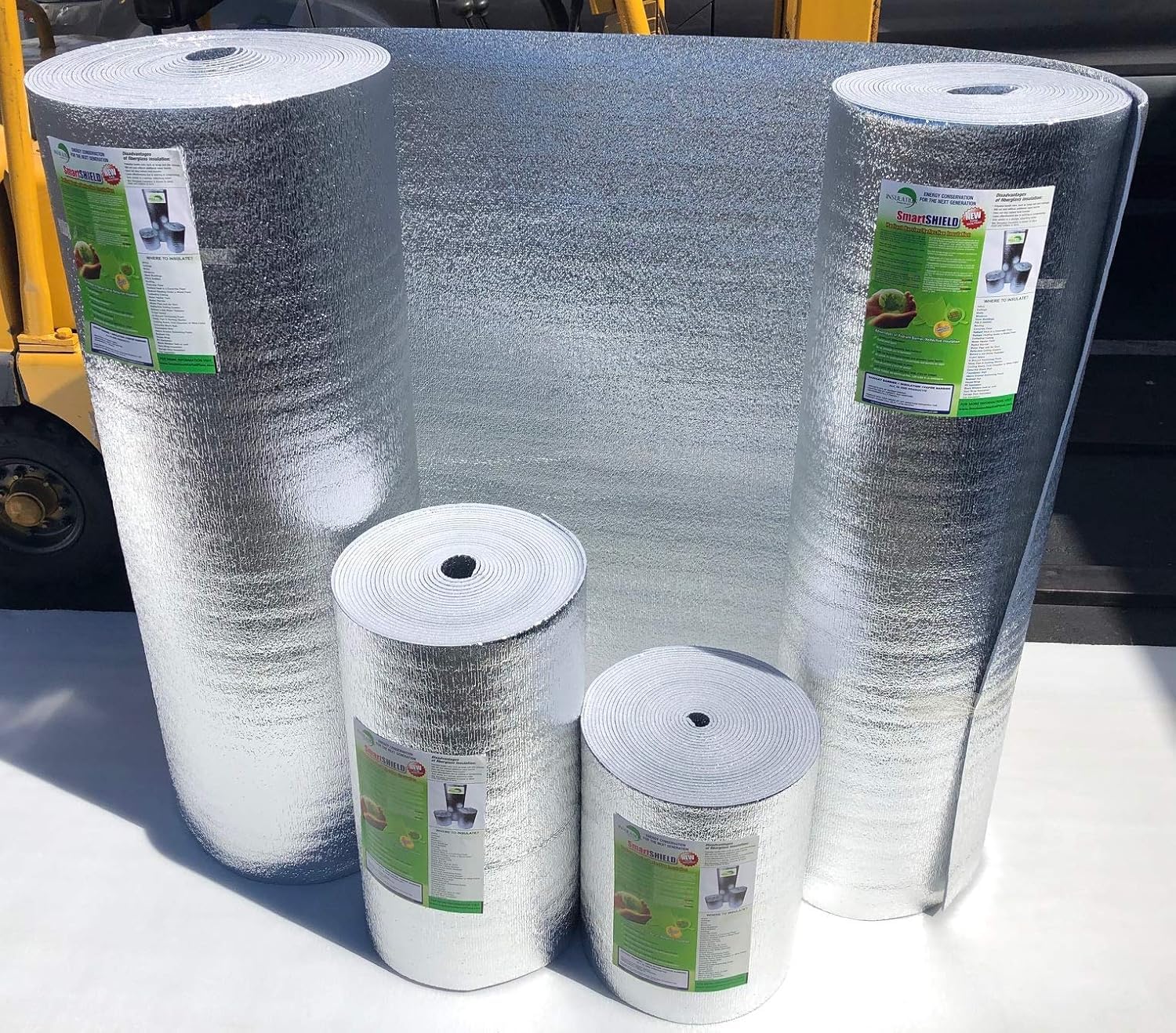
The SmartSHIELD delivers a 5 mm closed-cell foam core between reflective foil layers, achieving an R-17 rating with a Class A fire rating per ASTM C1313 standards. One verified buyer reported sealing an attic hatch with this material stopped the hot air flow from an uninsulated attic completely, confirming the barrier’s effectiveness in a 100°F environment. The proprietary clear coating on the foil also passes corrosion resistance testing, which matters in unconditioned spaces where moisture is present.
Cutting the roll requires only utility scissors, and the material is puncture-resistant enough to survive staple installation without tearing. Another user in an RV used a double layer inside large windows and noted the interior temperature rose from 78°F to 82°F as outside temps dropped to 35°F, meaning the insulation held heat inside while a 1500W heater ran less. The 25-foot length covers standard attic chases and duct trunks without needing a second roll.
The foam core adds rigidity over bubble alternatives, making it easier to cut clean straight lines for square duct sections. Some users found the 5 mm thickness slightly less flexible than bubble wrap when wrapping odd-shaped junctions, but the superior R-value per millimeter makes up for that trade-off in most permanent installations.
Why it’s great
- R-17 rating from only 5mm foam core — high thermal resistance in a thin profile
- Class A fire rated and corrosion resistant, safe for attic and crawlspace use
- Easy to cut with scissors and holds up to staple or tape installation
Good to know
- Less flexible around tight curves compared to thin bubble wrap
- Price per square foot is higher than basic double-bubble options
2. US Energy Products 48″ x 100′ Double Bubble Reflective Foil Insulation R24

This double-bubble wrap measures 6.5 mm thick and reflects 99.7 percent of radiant heat with only 3 percent emissivity, giving it an R-24 rating when installed with the required air gap on both sides. A verified buyer in the Southern California desert saw attic temperature drop from 114°F to 82°F on a mid-90s day after laying this material across the attic floor — a 32°F reduction that directly reduces the load on the AC unit below. The 100-foot roll covers 400 square feet, which is enough for most single-car garage doors plus some leftover for window panels.
Made in the USA from polyethylene (PE) with a Class 1 / Class A fire rating, the material passes ASTM E84 standards and is non-toxic. The double-bubble structure also acts as a vapor barrier when the seams are taped, preventing condensation on cold ducts in summer. The user who insulated a 23-foot travel trailer with this roll and aluminum tape reported that it prevented frozen pipes even during winter, adding roughly 10°F under the trailer chassis.
The trade-off for this size is weight — at 25 pounds per roll, handling the 100-foot length alone is awkward. You will need a second person or a cutting station to unroll it cleanly without tearing. The metallic surface is slick enough that adhesive tape footprints can peel if the surface isn’t wiped first.
Why it’s great
- Reflects 99.7% of radiant heat with 3% emissivity — top-tier thermal performance
- 400 sq ft per roll covers large attic areas or full garage doors in one purchase
- Class A fire rated and acts as a vapor barrier when taped
Good to know
- Heavy and cumbersome to handle solo due to the 100-ft length
- Prep work needed for adhesion; slick foil reduces tape grip if surface is dusty
3. VEVOR Double Reflective Insulation Roll, Foam Core Radiant Barrier, 3.2 mm 48 in x 50 ft
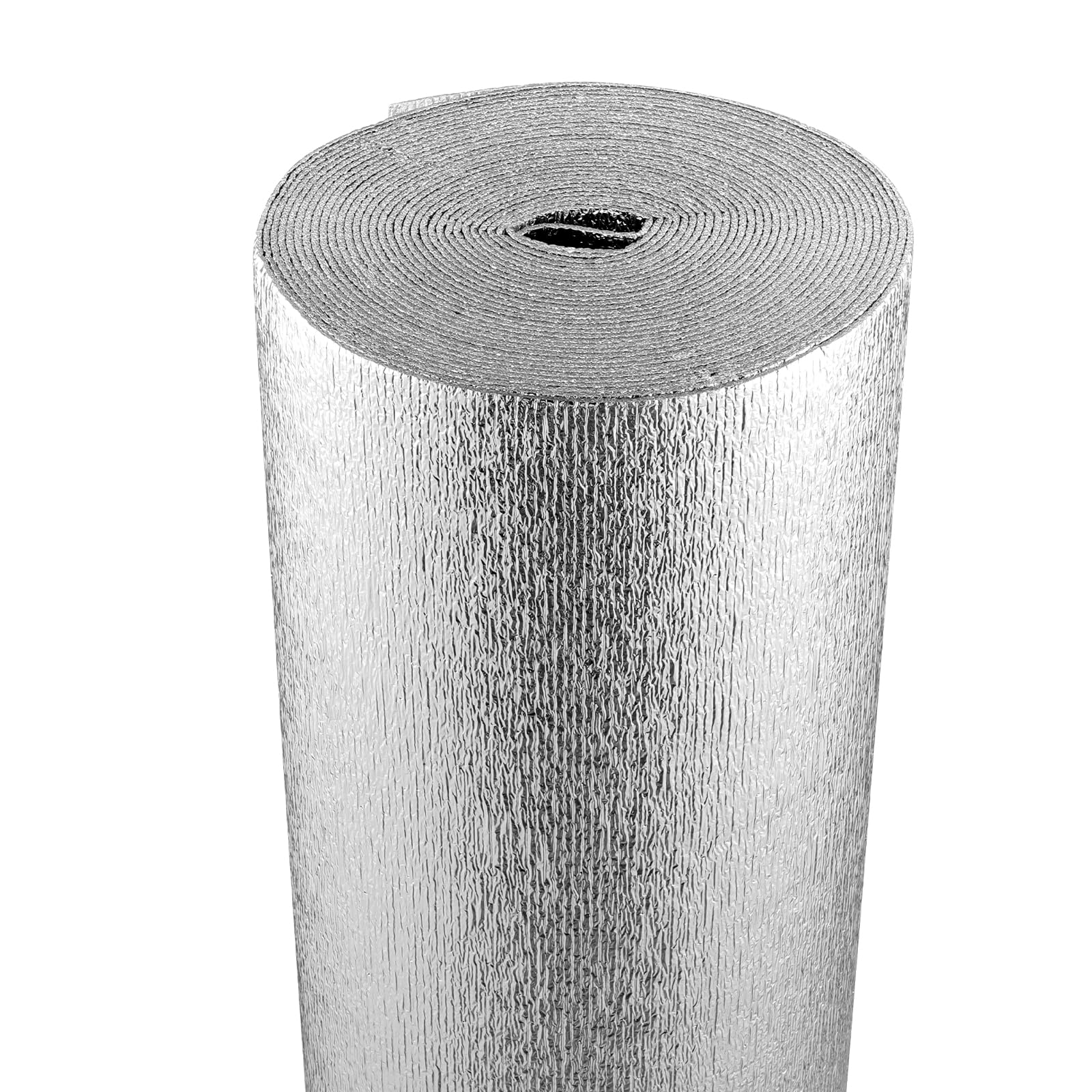
VEVOR’s 3.2 mm EPE foam core with double-sided aluminum foil reflects more than 95 percent of radiant heat, and the 3-in-1 design combines radiant barrier, insulation, and vapor control in a single roll. A verified buyer installed two layers of this material on a 16-foot garage door using double-sided tape and foil tape, reporting an air gap reduction of 30°F to 35°F in direct Florida sunlight compared to bare steel. That kind of delta directly stiffens the temperature gradient in the garage space and reduces the load on any adjacent living area.
The 50-foot by 48-inch roll provides 200 square feet of coverage, and the material cuts cleanly with scissors without shedding or fraying. The EPE foam core gives it more structure than simple bubble wrap, which helps it lie flat on vertical surfaces. Another user placed this on the underside of rafters from soffit to ridge vent and saw a measurable difference in keeping a house with a dark-colored metal roof cooler in a southern state, confirming it blocks the downward radiant gain before it reaches the roof deck.
At 3.2 mm, the thickness is noticeably slimmer than 5 mm options, so the absolute R-value is lower per layer. You may need to double up for duct runs in extreme climates. The aluminum surface also dims work lights less than thicker alternatives if you use the garage as a shop.
Why it’s great
- Low price point for a foam core radiant barrier that cuts garage door temp by 30°F
- 3-in-1 design eliminates need for separate vapor barrier in most applications
- Easy to cut and install on vertical surfaces without sagging
Good to know
- 3.2mm thickness yields lower per-layer R-value compared to thicker competitors
- May need double layering for extreme attic or crawlspace conditions
4. Rubber-Cal HVAC Insulated-Flex Ducting Ventilation Duct Hose, 4-Inch by 25-Feet

Rubber-Cal’s Insulated-Flex is a traditional fiberglass flex duct with a 4-inch diameter and 25-foot length, jacketed in an aluminum foil outer layer that resists tears and reflects radiant heat. Multiple verified buyers report that the hose compresses easily for storage and fits standard 4-inch connectors without fighting the material. The three-year manufacturer warranty from Rubber-Cal adds assurance for permanent installations in walls or crawlspaces.
The fiberglass insulation inside provides both thermal and acoustical damping, reducing the sound of air moving through long runs. Buyers noted that the 4-inch version fits portable AC exhaust adapters and HVAC supply branches equally well. The aluminum jacket rolls back to expose the insulation if you need to attach a connector, though the rolling action releases fiberglass dust into the air, so gloves and a respirator are required for safe handling.
The main drawback is the itchy fiberglass insulation. Multiple reviews describe the yellow insulation as brittle and the dust as irritating. A few buyers wished the R-value were printed on the jacket for code compliance, so verify with the seller if your local inspector requires documentation. It also lacks a vapor barrier layer, so condensation on cold supply ducts in humid climates could be an issue without separate wrapping.
Why it’s great
- Classic fiberglass flex duct with aluminum jacket — proven thermal and acoustic performance
- Compressible for tight attic or crawlspace runs without kinking
- Backed by a three-year manufacturer warranty
Good to know
- Fiberglass insulation is brittle and releases irritant dust during handling
- No embedded vapor barrier; condensation can form in humid environments if not sealed
5. winemana Window Insulation Roll, 48IN x 20FT Reflective Heat Shield Bubble Film
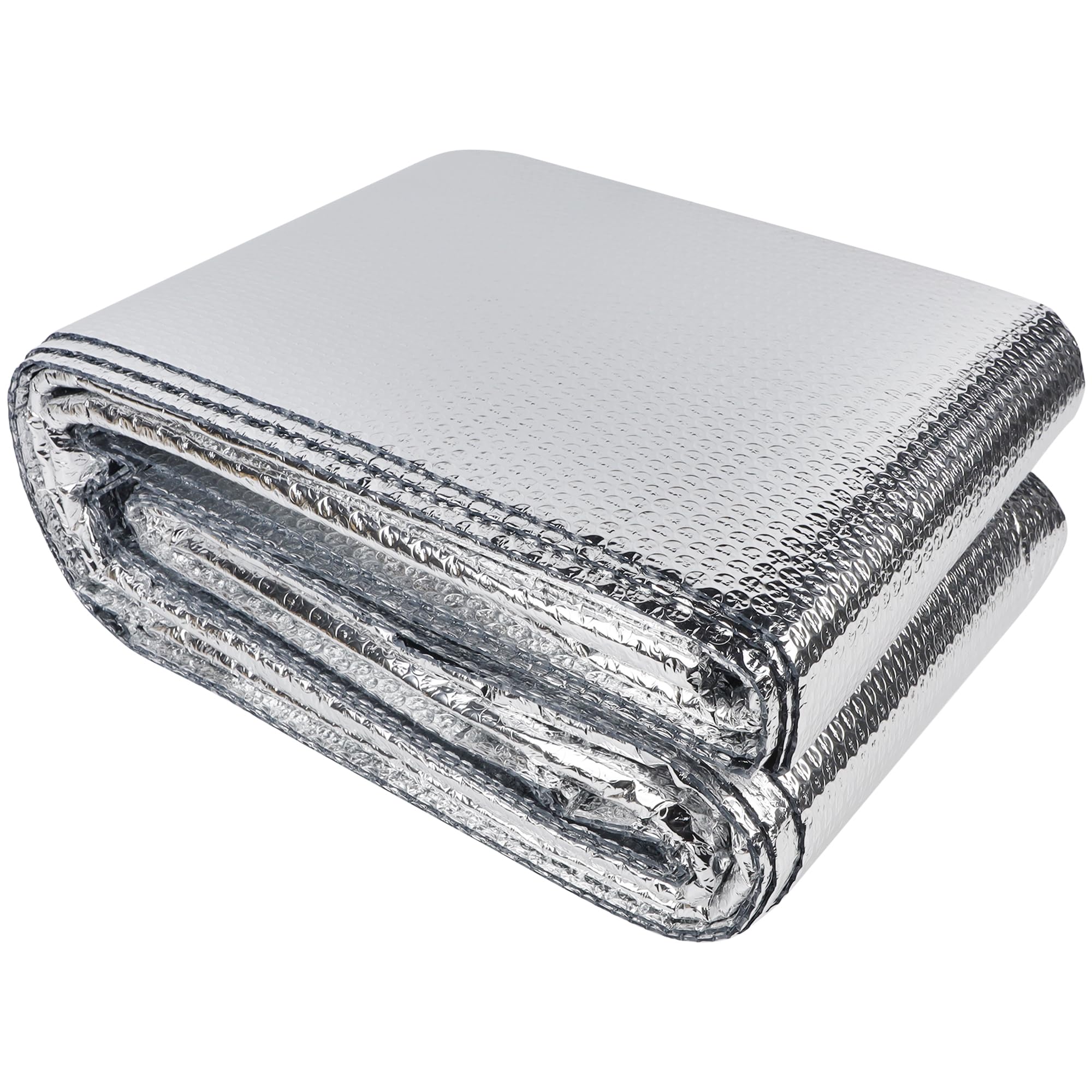
The winemana roll uses multi-layer reflective aluminum over a bubble core to block up to 90 percent of solar radiation, making it a straightforward solution for window-mounted AC units, RV windows, and basement sashes. A verified buyer in 104°F weather cut custom pieces for RV windows and reported immediate relief inside the cabin, confirming the material’s effectiveness at rejecting direct solar gain. The 48-inch width is wide enough to cover a standard house window in one piece without seams.
The material is tear-resistant — buyers describe it as durable enough to take repeated cutting and repositioning without peeling or fraying at the edges. One user paired it with blackout curtains and noted the room temperature dropped almost immediately, while another working in winter said it provided solid extra insulation for RV living in cold conditions. The foil surface also blocks light fully, making it a good choice for sleep-shift workers or nurseries.
The 20-foot length covers 80 square feet, so large attic windows or patio door panels will consume the roll quickly. The bubble layer is thinner than dedicated duct insulation, so standalone R-values are lower if you are planning to wrap ductwork rather than block windows. A few users wish the included tape were stronger, so plan to buy separate aluminum foil tape for permanent installations.
Why it’s great
- Blocks 90% of solar radiation — immediate temperature drop in window applications
- 48-inch width covers standard windows in single continuous sheet
- Tear-resistant construction withstands repeated handling and cutting
Good to know
- 20ft roll runs out fast when covering large windows or patio doors
- Included tape is weak; buy separate foil tape for permanent attachment
6. Portable AC Hose Insulation Sleeve Set of 2, 5″ & 5.9″ Diameter
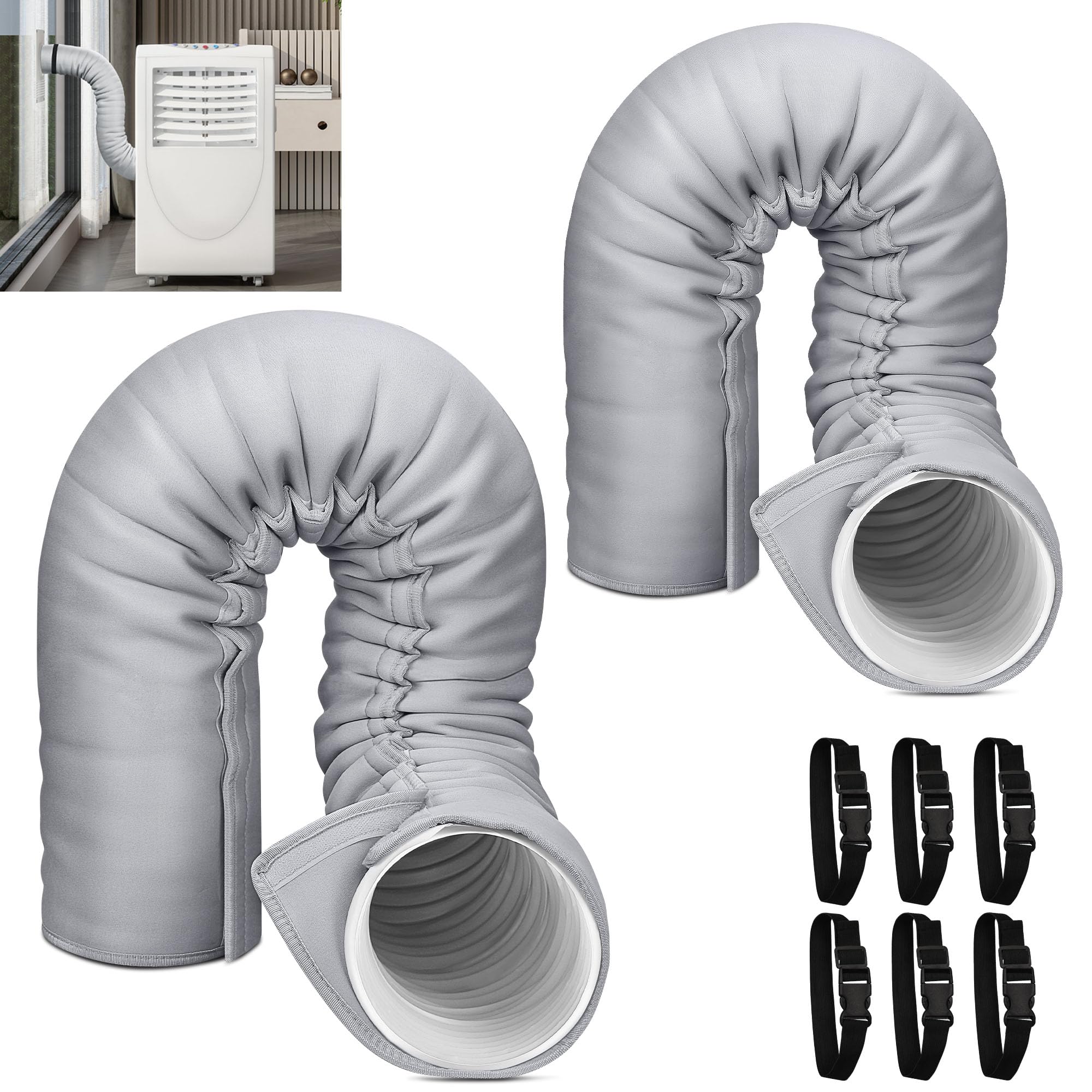
This sleeve is purpose-built for the most common pain point of portable ACs: the exhaust hose radiating heat back into the room. The three-layer construction fits hoses with diameters between 5 and 5.9 inches, which covers virtually every single-hose portable unit on the market. A verified buyer measured the hose surface temp drop from 110°F to the low 90s after wrapping, and the room’s AC reached setpoint faster and switched to low mode — a direct improvement in energy efficiency and comfort.
The sleeve comes in a 2-pack with six adjustable elastic buckle straps and full-length velcro, making installation a five-minute job without tools. The light gray fabric is sunlight-resistant, protecting the underlying hose from UV degradation. Some users folded the excess length at the end and secured it with straps instead of cutting, preserving the option to re-roll for a different unit. The material also dampens road noise through the hose, which is a bonus for city apartments.
A few users noted a slight rubber odor from the sleeve material when new, but airing it outside for 24 hours eliminated the smell. The light gray color shows dirt and dust more readily than black alternatives, so it may look dirty faster in a high-traffic home office or garage setup. It is not designed for permanent duct runs — it is strictly a wrap for the portable AC exhaust hose.
Why it’s great
- Measurably drops exhaust hose temp from over 110°F to the low 90s
- Tool-free install with full-length velcro and 6 elastic straps
- Sunlight-resistant fabric extends hose life vs. bare plastic
Good to know
- Slight chemical odor that requires outdoor airing before indoor use
- Light gray exterior shows dust and dirt accumulation quickly
7. fowong Reflective Window Insulation Roll, 36″ x 10 Ft, 3mm

The fowong roll is a 3 mm double-sided aluminum foil bubble wrap cut to 36 inches wide and 10 feet long, making it a budget-friendly entry point for small window AC units, RV windows, or single-glass pane doors. A verified buyer in an apartment without AC used it on west-facing windows and measured a drop from a stifling 91°F to a temperature that was livable without running the unit, confirming the reflective foil does reduce radiative gains even at this lower thickness. The 3 mm profile is noticeably thinner than the 6.5 mm double-bubble options, so the overall insulation value is lower, but the cost per linear foot is correspondingly low.
The double-sided reflective coating works on both sides, so orientation does not matter during installation. Another buyer used it in a greenhouse ceiling and saw summer temps drop from 113°F while also experiencing reflected heat back into the building during winter, reducing heater runtime. The material cuts easily with standard scissors and ships with hook-and-loop tape for attachment, though the adhesive on the tape is basic and may not hold on textured surfaces long-term.
Because the roll is shipped folded, there are crease lines that may not fully flatten out. Most buyers confirm the creases do not affect thermal performance, but they are visible if aesthetics matter for a window you look through regularly. The 10-foot length covers only 30 square feet, so it works for one or two windows but runs out fast if you plan to wrap a large slider or a full door panel.
Why it’s great
- Low entry cost makes it easy to try duct insulation for small window AC or RV
- Double-sided reflective coating works regardless of which side faces the sun
- Simple to cut and install with included hook-and-loop tape
Good to know
- 3mm bubble is thin — lower R-value compared to 5mm+ options
- Folded shipping creates creases that remain visible after installation
- 10ft roll covers only about 30 sq ft, limiting use to one or two windows
FAQ
Can I use reflective bubble wrap directly on metal duct without an air gap?
What is the difference between double-bubble and foam core insulation for ducts?
Final Thoughts: The Verdict
For most users, the air conditioning duct insulation winner is the SmartSHIELD -5mm R17 because it combines a high-density foam core, Class A fire rating, and easy cutting into a single roll that fits both attic duct runs and window AC applications. If you want the ultimate large-area coverage for a garage or full attic floor, grab the US Energy Products Double Bubble R24 for its 400 sq ft roll and 99.7% radiant reflectivity. And for wrapping a portable AC exhaust hose in under five minutes, nothing beats the Portable AC Hose Insulation Sleeve 2-Pack.