
Leaky ductwork silently destroys your home’s efficiency, forcing your HVAC system to work harder and driving up monthly energy costs. The solution isn’t a quick patch of standard tape that peels within a season—it requires a purpose-engineered sealant that bonds with metal, flex duct, and insulation while withstanding extreme temperature swings. Choosing the right material, whether a mastic paste or a high-performance foil tape, is the difference between a permanent fix and a recurring headache.
I’m Min — the co-founder and writer behind Gadgets Feed. After analyzing dozens of product specs, customer test data, and professional HVAC installation protocols, I’ve narrowed the market down to the most reliable duct sealants that deliver genuine, measurable results.
This guide breaks down the top formulations and adhesive technologies so you can confidently find the best air conditioning duct sealant for your specific repair job, attic environment, and budget.
How To Choose The Best Air Conditioning Duct Sealant
Duct sealants fall into three main categories: acrylic latex mastics, heavy-duty foil tapes, and specialty putties. Each has a specific role depending on whether you are sealing a tiny pinhole, bridging a wide gap at a boot connection, or protecting components during brazing. Your choice must factor in the material of your ductwork, the temperature extremes your attic or crawlspace experiences, and whether the joint is under positive or negative pressure.
Assessing the Joint Type and Pressure
For metal-to-metal slip joints and seams, a brush-on mastic like acrylic latex formulations provides a flexible, non-hardening seal that moves with thermal expansion. For connections between flex duct and metal takeoff boots, a thick mastic tape with a reinforced scrim offers a structural bond that foil-only tapes cannot match. On the return side of an HVAC system (negative pressure), a poor seal can actually suck unfiltered attic air into the living space, making airtight closure essential.
Evaluating Adhesion and Temperature Range
Standard duct tapes fail because their adhesive dries out or melts under extreme temperatures. A proper HVAC-rated sealant should handle at least 200°F without degrading. Foil tapes with a low-temperature floor of -20°F ensure the bond remains flexible during winter operation. Thickness also matters: a 6-mil foil tape is decent, but a 17-mil reinforced mastic tape provides a far more rigid barrier against puncture and tear propagation.
Quick Comparison
On smaller screens, swipe sideways to see the full table.
| Model | Category | Best For | Key Spec | Amazon |
|---|---|---|---|---|
| Red Devil 0841DS | Acrylic Latex Mastic | Permanent seal on metal joints | 1/2-gallon, non-flammable, flexible cure | Amazon |
| Hardcast 304099 Foil-Grip 1402 | Mastic Tape Roll | Instant grip on duct board & flex | 17 mil thick, 2″x100′, waterproof | Amazon |
| Hardcast Rolled Mastic Foils | Reinforced Mastic Tape | Sharp-edged metal ductwork | 3″x100′, extremely sticky | Amazon |
| BlueTex Insulation Foil Tape | Aluminum Foil Tape | Moisture & vapor barrier sealing | 6 mil, reinforced scrim, UV resistant | Amazon |
| Gardner Bender DS-530 | Putty Compound | Sealing pipe & wire penetrations | 5 lb block, pliable, smoothable | Amazon |
| Henry 314 Premixed Mastic | Premixed Mastic Adhesive | Small repair projects | 1 quart, ready-set, quick drying | Amazon |
| Refrigeration Technologies RT400P | Heat Blocking Putty | Protecting valves during brazing | 12 oz, reusable, non-mess formula | Amazon |
In‑Depth Reviews
1. Red Devil 0841DS Acrylic Latex Duct Sealant

This acrylic latex mastic is the workhorse of professional HVAC sealing. Its paste-like consistency brushes on thick over taped joints and metal connections, curing overnight into a permanently flexible barrier that won’t crack or yellow under UV exposure. Users report applying it over aluminum foil tape to create a two-stage seal that passes even strict municipal inspection requirements for ductwork.
At a half-gallon size, this tub covers a substantial number of joints—enough to seal an entire home’s trunk line and branch runs. The material is water-based, so cleanup requires only soap and water, but you should work in a well-ventilated area and wear gloves due to the strong initial odor. The low odor level during the drying process is a major plus for enclosed attic spaces.
Some customers received units with damaged lids and spillage during shipping, a packaging issue worth noting if you order online. For in-person buyers at home centers, this is not a concern. Overall, this mastic offers the best combination of coverage, flexibility, and adhesion for anyone serious about eliminating duct leakage at the source.
Why it’s great
- Permanently flexible cure resists cracking from thermal expansion
- Non-flammable formula safe for enclosed attic use
- Meets pressure and sealing class standards for professional work
Good to know
- Container packaging can arrive damaged with lid issues
- Strong odor requires gloves and mask during application
2. Hardcast 304099 Foil-Grip 1402 Mastic Duct Sealant

Hardcast’s Foil-Grip 1402 is not ordinary foil tape. At 17 mils thick, it is nearly three times the thickness of standard consumer-grade duct tape, and its pressure-sensitive mastic layer provides an instant, aggressive bond to sheet metal, duct board, and even PVC-coated duct. The 40-year cycle rating means this is designed for the life of the HVAC system, not a temporary patch.
Professionals favor this tape for sealing seams without waiting for mastic to dry—you can apply it and turn the AC back on immediately, which is critical in hot attics. Users note that regular foil tape in the same application fails under repeated hot-cold cycling, but Foil-Grip maintains its hold even across gaps up to half an inch.
The waterproof construction and suitability for sub-grade applications make it incredibly versatile. The only minor hassle is that the release liner requires careful starting—a small nick with a razor makes peeling much easier. For the price, this is the most durable tape-based solution on the market.
Why it’s great
- Extremely thick 17-mil construction resists puncture and tear
- Instant adhesion allows immediate HVAC system operation
- 40-year cycle rated for long-term durability
Good to know
- Release liner can be tricky to start without a razor notch
- Premium price point compared to standard foil tapes
3. Hardcast Rolled Mastic Duct Sealants Foils 3″ x 100′

This 3-inch wide mastic tape from Hardcast is the wide-body sibling of the Foil-Grip line, purpose-built for covering larger seams and wrapping around takeoff boots. The increase in width from two to three inches provides greater overlap on duct board connections, reducing the risk of air bypass at the vulnerable corner joints.
The adhesive is phenomenally aggressive—several users have reported that if the tape accidentally folds onto itself, it becomes impossible to separate. This stickiness translates directly to airtight performance; one user verified zero detectable air leakage around a microwave exhaust fan duct after application. The tape molds over sharp metal edges rather than lifting, a critical feature for long metal duct runs.
The 100-foot roll offers excellent value for whole-house projects, but the release liner requires the same careful handling as the 2-inch version. For best results, clean the metal surface with acetone or lacquer thinner before application and use a stiff squeegee to force out any air bubbles.
Why it’s great
- 3-inch width provides better coverage for duct board and boots
- Extremely sticky adhesive forms an immediate airtight bond
- Molds over sharp edges without lifting or tearing
Good to know
- Release liner can be frustrating to peel on long strips
- Surface must be cleaned thoroughly for optimum adhesion
4. BlueTex Insulation Aluminum Foil Tape 3″ x 150′
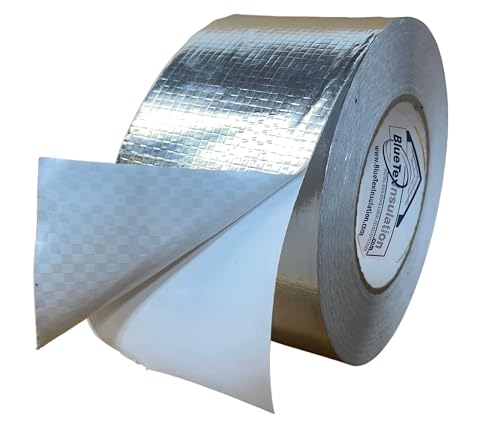
BlueTex’s aluminum foil tape offers an impressive 150 feet of length per roll at a price that undercuts most competitors. The inclusion of a reinforced scrim fabric makes this tape genuinely tear-proof—you cannot rip it with your hands, which is a stark contrast to thin, flimsy foil tapes that disintegrate under tension. The UV-resistant coating allows outdoor use on rooftop ductwork or dryer vents.
The temperature tolerance spans from -20°F to 250°F, making it suitable for both freezing winter supply runs and summer heat waves in unconditioned attics. Users confirm that adhesion to metal surfaces is excellent, with the tape holding tight even when applied to slightly dusty ductwork. It works well for sealing insulation seams and vapor barriers as well as duct joints.
The main downside reported by some users is that the outer foil layer is relatively thin—about half the thickness of a human hair—and can detach if another piece of tape touches it. For standard duct sealing, this is rarely an issue, but for high-abrasion areas, the thicker Hardcast products are preferable. Despite this, the sheer length and stickiness make BlueTex a strong budget-friendly option.
Why it’s great
- 150-foot roll provides exceptional coverage for the price
- Reinforced scrim makes it impossible to tear by hand
- UV and moisture resistant for indoor/outdoor use
Good to know
- Foil layer is thin and can separate if contacted by other tape
- Requires scissors or knife to cut cleanly
5. Gardner Bender DS-530 Duct Seal Putty
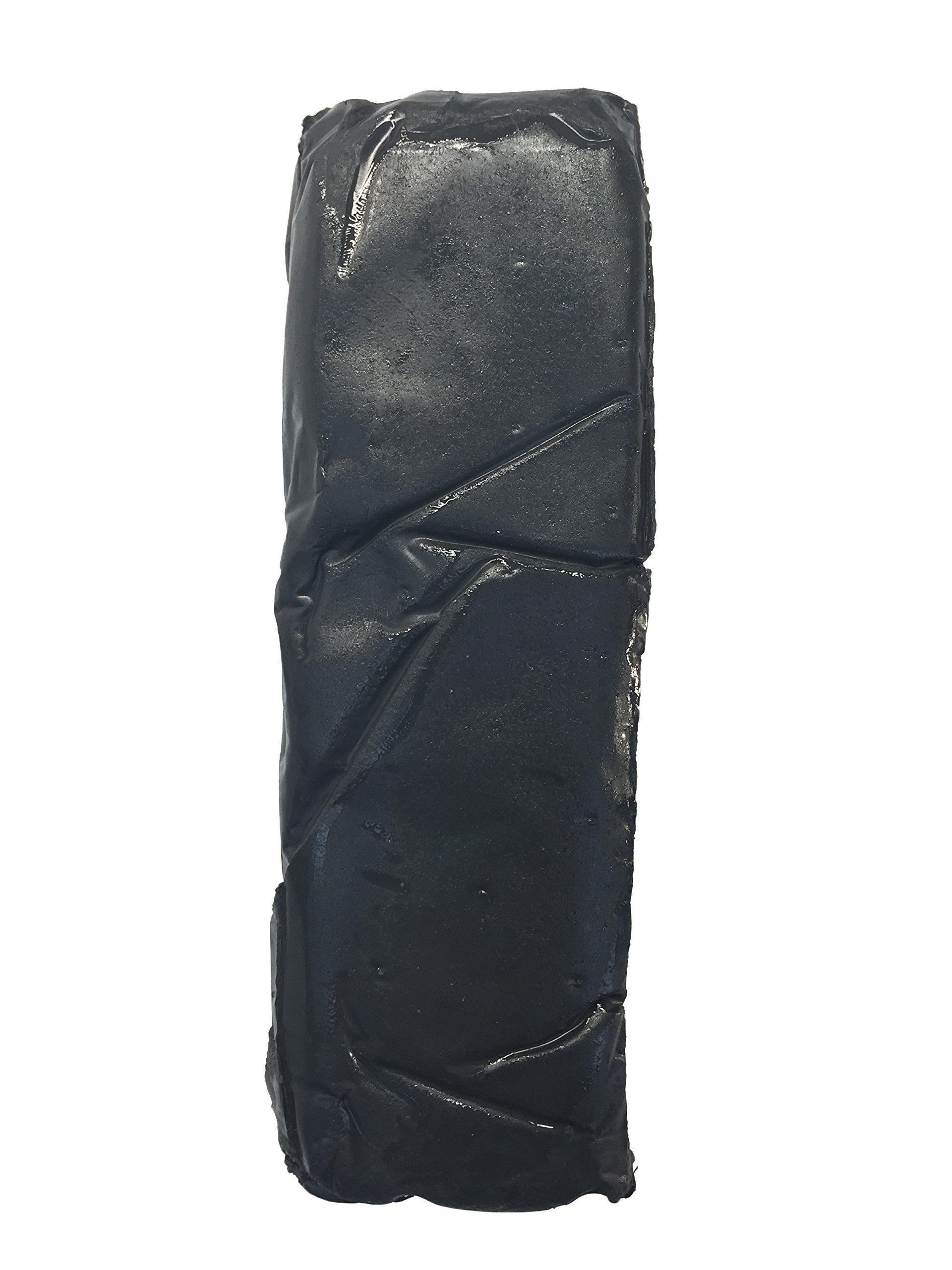
This is not a tape or a brush-on mastic—it is a 5-pound block of pliable putty compound designed primarily for sealing openings around pipes, electrical conduits, and plumbing penetrations. While it works on HVAC ducting, its strength lies in its ability to conform to irregular shapes and fill gaps that tape cannot bridge.
Users have found it excellent for sealing around the hole where refrigerant lines and condensate drains pass through the wall or floor. The putty can be smoothed with water to create a clean finish that blends with gray ductwork. It also deadens switch gear panel noise, a useful property if your air handler unit is in a living space.
The compound is not intended for outdoor exposure despite being weather-resistant, and it remains permanently pliable rather than curing hard. For wide gaps around duct boots or holes in the duct wall, this putty works best as a backing filler before applying mastic or foil tape over the top.
Why it’s great
- Conforms perfectly to irregular gaps and pipe penetrations
- 5-pound block is economical for multiple sealing points
- Can be smoothed with water for a clean finish
Good to know
- Not designed for outdoor use per manufacturer
- Remains pliable and should be covered for a permanent seal
6. Henry 314 Premixed Mastic Adhesive 1 QT

The Henry 314 is a quart-sized premixed mastic intended for small-scale repair work. It is ready to use straight from the pail with no stirring required, making it convenient for addressing a few leaking joints or sealing the base of a metal plant stand repurposed as a duct cover. The consistency is liquid enough to brush on but dries quickly, so you must work fast.
Multiple user reviews note that the drying speed is a double-edged sword—while it means you can move on to the next project quickly, hesitation results in clumping and crumbling. The adhesive strength is solid for small areas, and the low price point makes it approachable for DIYers who do not want to invest in a half-gallon tub.
Packaging quality is a known issue with this product, as several customers received units with cracked lids or dried top layers due to shipping damage. If you can buy this in a store where you can inspect the seal, it is a perfectly capable entry-level mastic. For larger jobs or attic-wide sealing, a larger container of Red Devil is a more efficient choice.
Why it’s great
- Premixed and ready to use with no stirring required
- Quart size is ideal for small repairs and one-off jobs
- Low cost makes it accessible for DIY beginners
Good to know
- Dries quickly, leaving little margin for working time
- Shipping damage is common with cracked lids and dried product
7. Refrigeration Technologies RT400P Viper Wetrag Heat Blocking Putty
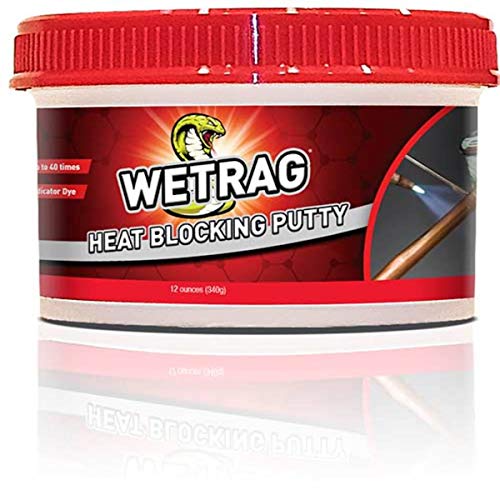
The RT400P is a niche product designed for HVAC technicians who need to protect sensitive components—like expansion valves and filter driers—from heat damage during brazing. While not a traditional duct sealant for gaps and seams, it serves a critical role in the installation and repair of ducted systems. The putty blocks both direct and conductive heat transfer, keeping nearby surfaces safe during soldering.
Users who perform brazing on a regular basis praise its reusability; you can pack it on, peel it off after the weld, and return it to the jar for the next job. It is far less messy than wet rags and does not produce steam. However, experienced users note that the material becomes less pliable after multiple heat cycles, and the burned outer layer can be difficult to separate from the usable core.
If you are simply sealing duct leaks, this product does not replace mastic or foil tape. But if you are installing or modifying ductwork that involves copper refrigerant lines—which is common in central air conditioning systems—this putty is a must-have. It prevents the very kind of heat damage that can lead to system failure after a repair.
Why it’s great
- Blocks direct and conductive heat to protect sensitive valves
- Reusable formula reduces waste and cost per use
- Less messy than wet rags with no steam generation
Good to know
- Not a gap-filling sealant for duct joints
- Becomes harder to reform after repeated heat exposure
FAQ
Is duct tape acceptable for sealing HVAC air ducts?
Can I apply foam sealant to leaking HVAC ducts?
Final Thoughts: The Verdict
For most users, the air conditioning duct sealant winner is the Red Devil 0841DS because its acrylic latex formula provides the perfect balance of flexibility, adhesion, and coverage for both metal and flex duct joints. If you want an immediate, no-dry-time seal that handles sharp edges and hot attics, grab the Hardcast Foil-Grip 1402. And for a budget-friendly DIY roll that covers 150 feet of seams, nothing beats the BlueTex Insulation Aluminum Foil Tape.