
Our readers keep the lights on and my morning glass full of iced black tea. As an Amazon Associate, I earn from qualifying purchases.
Specs are compiled from manufacturer listings and verified buyer reviews and can change over time — please confirm the key details on the product page before buying.
Your car’s AC blowing warm air at a red light is rarely the compressor itself — more often, a failed air conditioning pressure sensor is the culprit that silently shuts the whole system down. This small switch tells your car’s computer whether the refrigerant pressure is safe; when it dies, the computer refuses to turn on the compressor to prevent damage. This guide breaks down seven pressure sensors by their real fitment, accuracy specs, and measuring range so you can find the exact swap for your vehicle without chasing ghost problems.
I’m Min — the founder and writer behind Gadgets Feed. This guide is built by comparing the manufacturers’ published specifications and the patterns across verified customer reviews, so you get each pick’s real strengths and trade-offs instead of marketing spin.
Here is a hands-on breakdown of the best air conditioning pressure sensor options for GM, Ford, Toyota, Kia, Hyundai, Lexus, Scion, and Volvo models — ranked by fitment coverage, measurement accuracy, and build quality from genuine OE parts to solid aftermarket swaps.
Our Picks at a Glance
How To Choose The Best Air Conditioning Pressure Sensor
Pick the wrong sensor and your AC either stays off or cycles erratically, turning a cheap fix into a diagnostic headache. Focus on three things: vehicle compatibility, the sensor’s psi measuring range, and whether it matches your connector type.
Match the Measuring Range to Your System
Every AC system runs within a specific refrigerant pressure window. A sensor with a 150 – 350 psi range fits high-pressure R-134a systems in Ford trucks and SUVs, while a 25 – 75 psi unit works on low-pressure sensing ports found on some GM engines. Installing a sensor with the wrong range can cause the compressor to short-cycle or refuse to engage entirely — so check your vehicle’s service spec before buying.
Count Your Pins and Check the Connector
Most modern sensors use a 3-pin or 2-pin blade connector. The terminal gender (male or female) and the connector shape must match your car’s wiring harness exactly. A 3-pin sensor designed for a Ford harness won’t plug into a Toyota harness even if the thread size is the same — verify with a visual check before you order.
OE vs Aftermarket: Accuracy and Build
Genuine GM, ACDelco, and Dorman parts typically list a measurement accuracy spec — like ±2% or ±3% — meaning the sensor reads within that percentage of the true pressure. Tighter accuracy helps the system maintain consistent cooling. Aftermarket budget sensors often omit this spec, which does not guarantee failure but leaves a wider tolerance you cannot confirm.
Quick Comparison
| Model | Best For | Measuring Range | Accuracy | Weight | Amazon |
|---|---|---|---|---|---|
| GM Genuine 15-51343★ Best Overall | Low-pressure GM port | 25 – 75 psi | — | — | $44.78Amazon |
| GM Genuine 15-51342Also Great | Exact GM replacement | 34.5 – 51.7 psi | ±2% | 1.12 oz | $42.93Amazon |
| Dorman 904-7699 | Volvo models | — | ±3% | — | $70.78$84.21Limited time dealAmazon |
| A-Premium 3-Pin Ford | Ford / Lincoln trucks & SUVs | 150 – 350 psi | — | 2.46 oz | $26.99Amazon |
| ACDelco 15-51289 | Mid-range GM | 135 – 230 psi | — | — | $40.63Amazon |
| A-Premium 3-Pin Toyota | Toyota / Lexus / Scion | — | — | 2.46 oz | $26.99Amazon |
| YCUPONE 977213K000 | Hyundai / Kia budget fix | — | — | — | $25.99Amazon |
In‑Depth Reviews
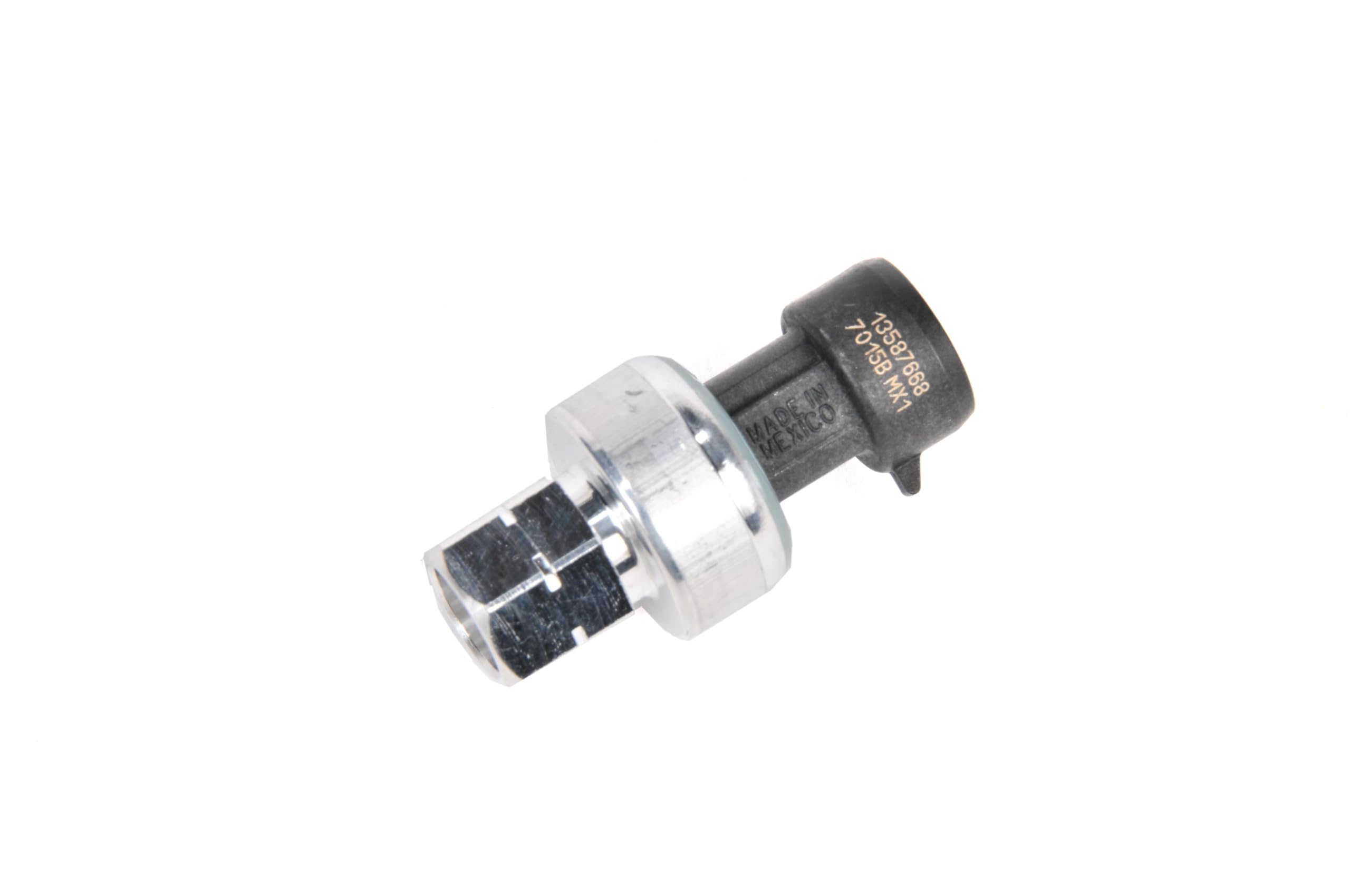
1. GM Genuine Parts 15-51343 (13587668)
Our pick — over 4.5★ from 500+ verified ratings; the strongest balance of quality and price.
The highest-reviewed sensor in the list — 504 buyers gave it a 4.6 average.
The GM Genuine Parts 15-51343 uses a 25 – 75 psi measuring range, which is 6.0x narrower than the A-Premium Ford unit’s band, and that is by design: it is meant for the low-pressure service port on specific GM car and truck models. Made from metal with a flange mount, it comes in dimensions of 2.4 x 1.4 x 1 inches — a compact footprint compared to the larger 4.72 x 4.72 x 0.47-inch YCUPONE Hyundai sensor, a 2.4x gap in one plane.
It carries a GM OE specification for fit, form, and function and is manufactured in the United States, unlike the China-sourced ACDelco 15-51289. With 504 ratings it dwarfs every other product here in buyer feedback — the next closest is the ACDelco at 131. That volume alone tells you this is a high-swap part that plenty of DIYers have installed without returning.
Proven Volume
- 504 ratings — the most verified buyer feedback in the entire roundup
- Made in the USA with GM Genuine Parts branding
- Metal construction with compact 2.4 x 1.4 x 1-inch dimensions
Low Band
- 25 – 75 psi range — will not work on high-pressure systems found in Ford trucks or many Toyota models
- No measurement accuracy spec published, unlike the GM 15-51342
Get this if: you drive a GM car or truck that uses a low-pressure sensor and you want the part with the largest buyer confidence base (504 ratings, 4.6 stars).
Avoid it for: any system that needs a 100+ psi range — this sensor is purpose-built for the low band only.
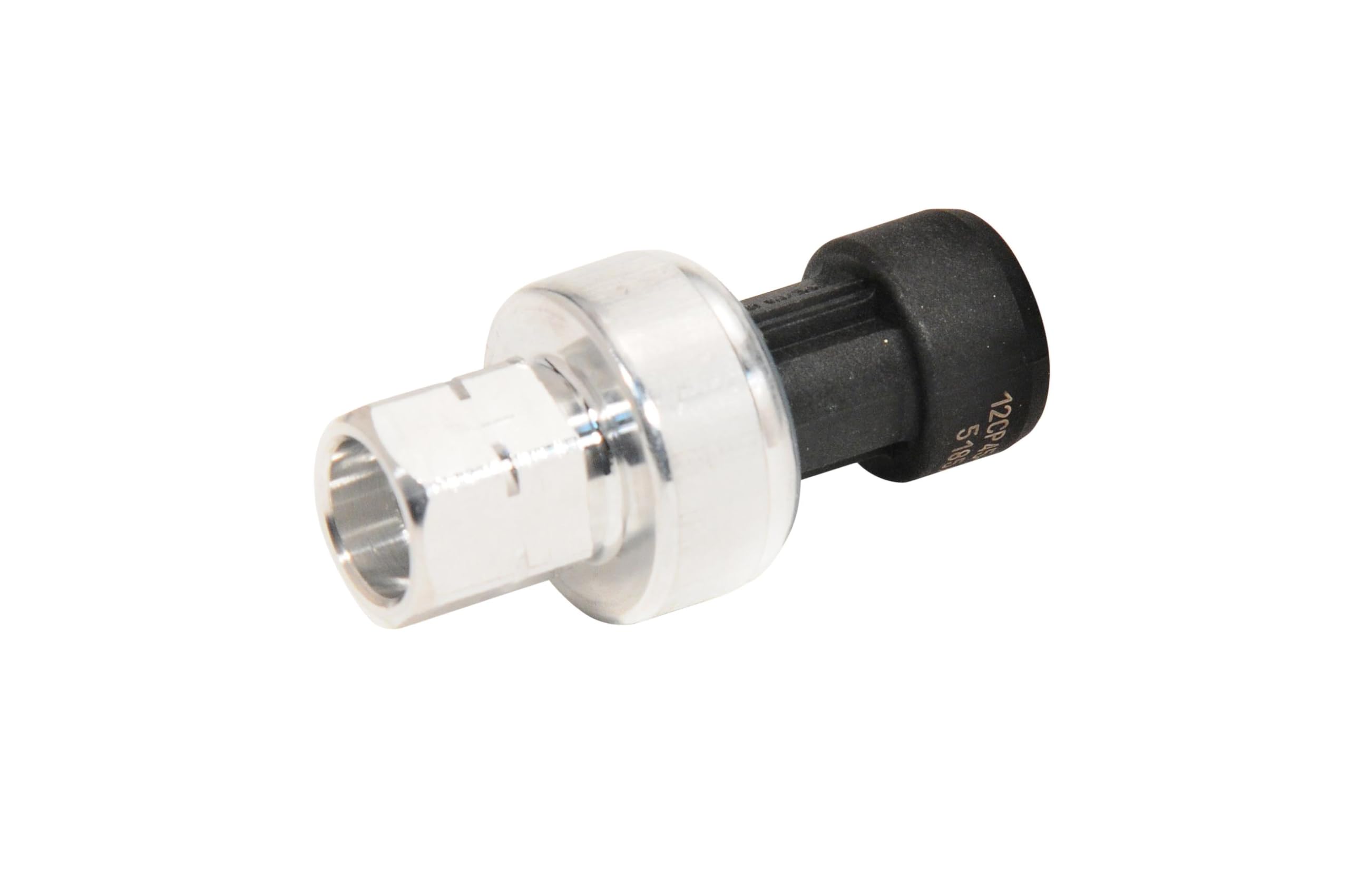
2. GM Genuine Parts 15-51342 (13587697)
The tightest accuracy spec in this roundup, borrowed straight from GM’s own assembly line.
An AC pressure sensor that hits its mark within ±2% of the true reading means the compressor engages at exactly the right moment — not too early and not at the ragged edge of shutdown. That is exactly what the GM Genuine Parts 15-51342 delivers, with a measuring range of 34.5 – 51.7 psi specifically tuned for the low-pressure port on many GM engines.
Weighing only 1.12 ounces, this sensor is noticeably lighter than the 2.46-ounce A-Premium Ford unit — half the weight, yet built from metal with a flange mount that matches the factory fit. It is an analog output sensor (meaning the signal varies continuously with pressure), which is what GM designed the system around. With a 4.8 out of 5 rating from 56 buyers, it holds the highest customer score in this whole list.
Factory Familiarity
- Measurement accuracy of ±2% — tighter than the Dorman 904-7699 at ±3%, a 50% improvement in precision
- Metal construction with GM-certified OE specification
- Lightweight at 1.12 ounces — less mass hanging off the AC line
Narrow Lane
- Very limited measuring range (34.5 – 51.7 psi) — not for high-pressure systems on many Ford trucks
- Sold from abroad in some cases — check origin listing for domestic vs international stock
Reach for this if: you own a GM car or truck that uses a low-pressure sensor; you want the tightest ±2% accuracy and factory-fit confidence.
Look elsewhere if: your vehicle needs a high-range sensor above 100 psi — this one stops at 51.7 psi.
3. Dorman 904-7699 A/C Refrigerant Pressure Sensor

Built to replace a failed Volvo sensor without splicing or adapters.
Dorman engineered the 904-7699 specifically for select Volvo models — not a generic one-size-fits-all unit. It uses a push-pull output type and a flange mount, matching the original part’s dimensions at 2 x 2.76 x 3.15 inches. That shape is about 2.4 times larger in one dimension than the smaller 4.72 x 4.72 x 0.47-inch YCUPONE Hyundai unit, so be sure your Volvo’s mounting bracket has the room.
Measurement accuracy sits at ±3%, which is a step looser than the GM Genuine 15-51342’s ±2% but still within acceptable range for most HVAC control modules. The sensor is made from metal or durable plastic, a hybrid construction Dorman says handles fatigue from repeated electrical cycling. Buyers with 15 ratings give it a 4.4 out of 5 — solid, but the lowest count in this lineup, reflecting its narrower fitment.
Part-Matched Precision: Dorman backs this with a team of product experts in the United States and more than a century of automotive experience — you are not buying from a no-name supplier.
The Measurement Trade-Off: At ±3% accuracy it is less precise than the GM 15-51342’s ±2%, but for a Volvo-specific replacement that is often the only plug-and-play option outside a dealer.
Ideal for: Volvo owners who want a sensor that drops in without harness modification — use the garage tool to confirm your exact trim level.
skip it if: you drive anything other than a compatible Volvo — this sensor has no cross-brand application.
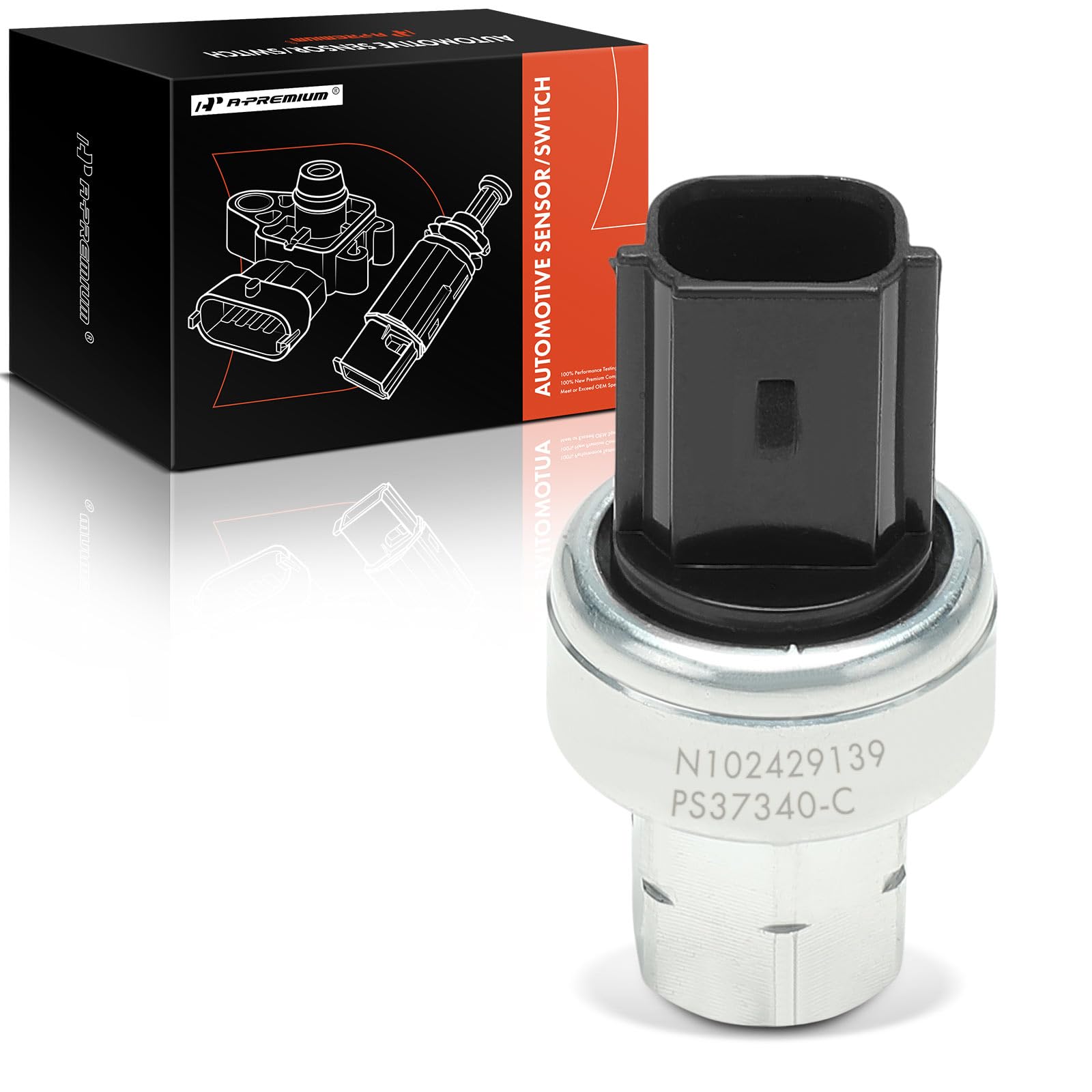
4. A-Premium A/C Pressure Sensor Switch 3-Pin (Ford/Lincoln)
Covers the widest pressure swing of any sensor here — 150 to 350 psi.
That 150 – 350 psi measuring range is a massive 6.0x wider than the GM Genuine 15-51343’s 25 – 75 psi band, and it matches exactly what Ford’s high-pressure R-134a systems need on everything from a 2011 F-150 to a 2024 Mustang. The A-Premium Ford sensor uses a 3-pin blade connector with male terminals and a female housing, so it plugs straight into the factory harness on dozens of Ford, Lincoln, and even some Bronco and Transit models.
It is made from a metal, ceramic, and polymer combination — a mixed-material approach that resists corrosion better than plain plastic housings in engine-bay heat. At 2.46 ounces it is heavier than the 1.12-ounce GM 15-51342, a 2.2x gap that suggests denser internal components. A-Premium offers a one-year unlimited-mileage guarantee, though buyers report the lack of a published accuracy spec leaves some guesswork for DIYers who want a ± percentage.
Broad Coverage
- 150 – 350 psi measuring range — handles both idle and high-load AC conditions in full-size trucks
- Fits F-150 Lightning, Super Duty, Bronco, Explorer, Edge, and Lincoln MKZ/MKX/MKC — dozens of models
- Three-material construction (metal, ceramic, polymer) for thermal stability
Unverified Tolerance
- No measurement accuracy spec listed — unlike the ±2% on the GM Genuine 15-51342
- Only 44 ratings — lower buyer volume than the ACDelco 15-51289
Best suited for: Ford and Lincoln owners who need a high-range sensor that covers 2011-2024 model years — especially F-150 and Super Duty trucks where pressure peaks are higher.
Not for: cars that require a low-pressure sensor (under 100 psi) — this switch starts well above that band.
5. ACDelco 15-51289 GM Original Equipment

A GM-recommended sensor that splits the difference between high and low pressure ranges.
With a measuring range of 135 – 230 psi, the ACDelco 15-51289 sits squarely between the low-range 25 – 75 psi GM Genuine 15-51343 and the high-range 150 – 350 psi A-Premium Ford unit. That makes it a versatile pick for many GM cars and SUVs that run moderate-pressure R-134a systems — not the tiny low-port sensor, not a heavy-truck part.
It is a flange-mount sensor made from metal and plastic, and it comes in a compact 4 x 2 x 2-inch package. Made in China, the 15-51289 still carries ACDelco’s GM OE specification for fit, form, and function. With 131 ratings and a 4.5 out of 5 score, it has the second-highest review volume in this list — only the GM Genuine 15-51343 has more feedback at 504 ratings. Buyers consistently mention that it matched the factory part exactly, with no adapter needed.
Balanced Range: 135 – 230 psi covers most GM applications that are not the specialized low-pressure port — a good middle-ground pick for a Silverado, Tahoe, or Malibu.
No Accuracy Spec: Unlike the GM Genuine 15-51342’s ±2% rating, this ACDelco unit does not list a measurement accuracy figure — fine for most, but not for purists who want to know the tolerance.
Choose this for: a broad-range GM replacement with strong review volume (131 ratings) and a 4.5 average.
Pass on it if: your vehicle’s service manual calls for a low-pressure sensor under 100 psi — this one starts at 135 psi.
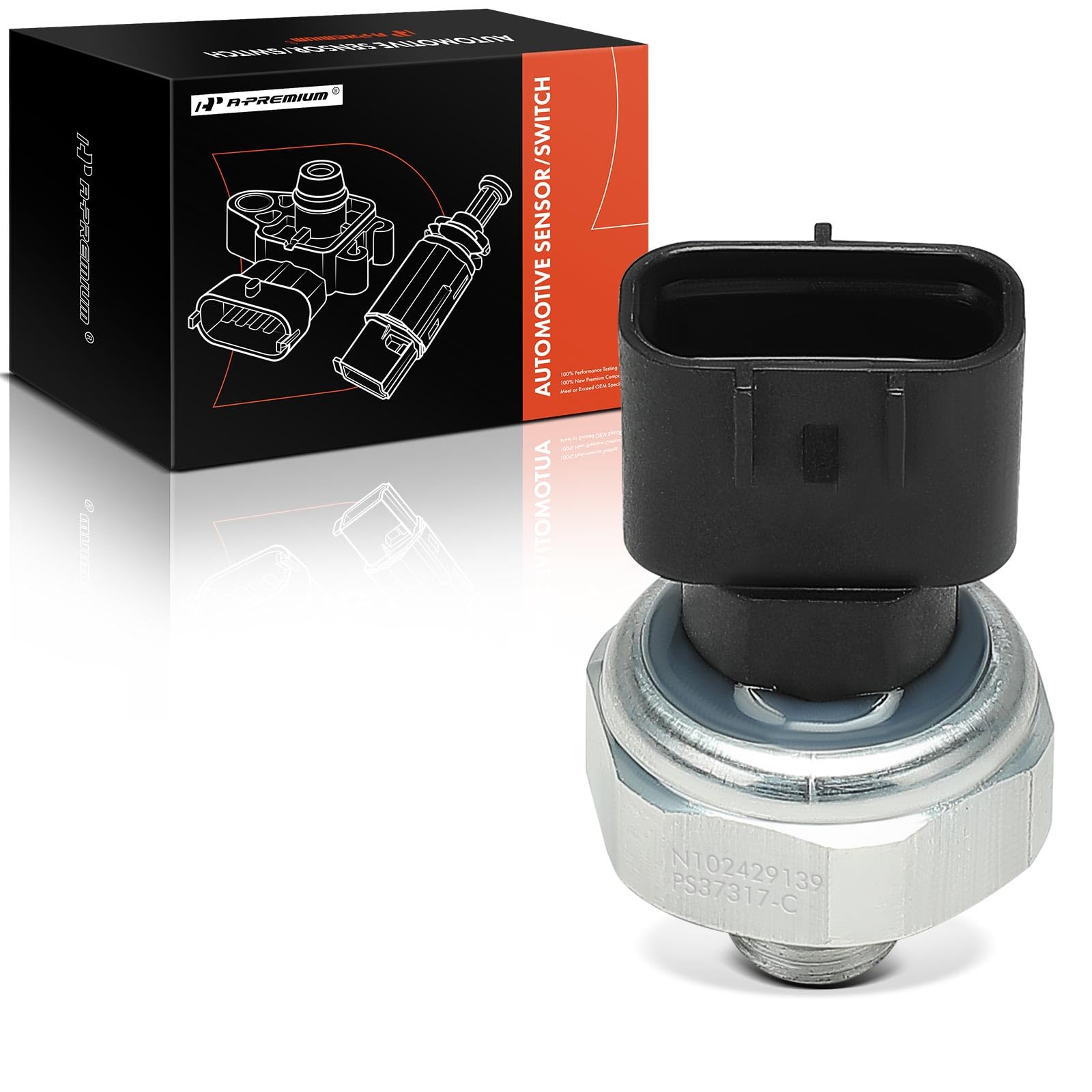
6. A-Premium A/C Pressure Sensor 3-Pin (Toyota/Lexus/Scion)
Covers the widest cross-brand fitment of any sensor here — Toyota, Lexus, and Scion.
The A-Premium 3-pin sensor for Toyota-family vehicles lists compatibility across Avalon, Camry, Corolla, Highlander, Prius, RAV4, Sienna, Venza, and even the Land Cruiser, plus the entire Lexus lineup from the CT200h to the LX570 and Scion models from the iQ to the xB. At 2.46 ounces it weighs the same as the A-Premium Ford unit, and it uses the same 3-pin blade terminal design with male pins and a female connector housing.
One thing that stands out: the sensor’s packaging dimensions are 3.35 x 3.23 x 3.23 inches — a nearly cubic shape that is quite different from the taller 2 x 2.76 x 3.15-inch Dorman Volvo sensor. No measuring range is published in the specs, which means you need to know that your Toyota or Lexus uses a standard 3-pin AC pressure switch — not one with a unique pinout. With a 4.7 out of 5 from 19 ratings, early owners mention a smooth swap.
Massive Compatibility Matrix: From a 2005 Avalon to a 2023 GX460 — this sensor covers decades of Toyota platform vehicles, including hybrids like the Prius and Highlander Hybrid.
The Range Unknown: No psi measuring range is listed in the technical specs; you need to verify your vehicle’s expected pressure band independently before buying.
Best for: Toyota, Lexus, or Scion owners who want a single 3-pin replacement that fits dozens of models across three brands.
Not ideal if: you need a specific psi range confirmed on paper — this sensor’s spec sheet does not provide it.
7. YCUPONE AC Refrigerant Pressure Sensor 977213K000
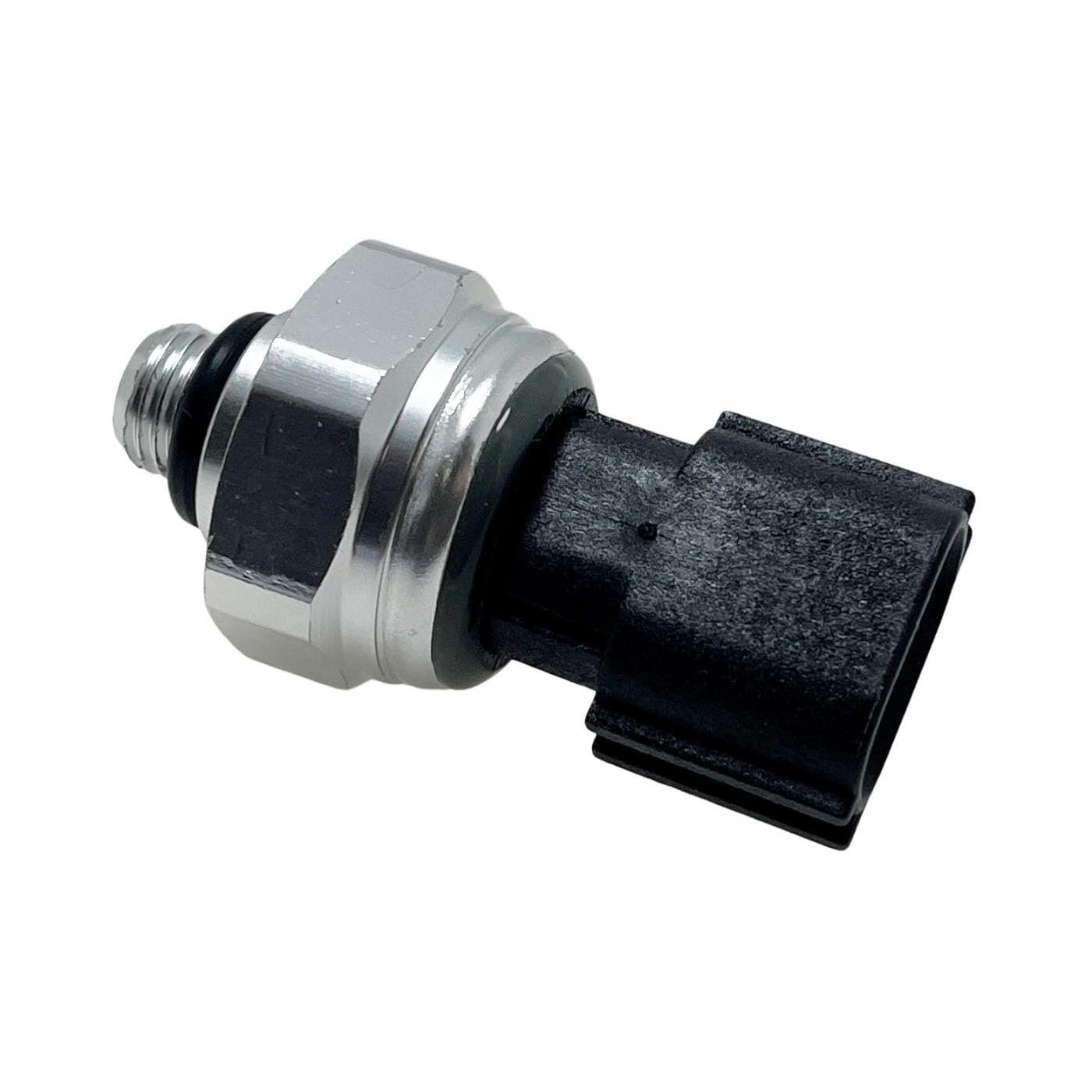
An entry-level sensor for Hyundai and Kia models with a perfect 4.7 out of 5 rating so far.
The YCUPONE 977213K000 covers a huge range of Hyundai and Kia vehicles: Accent, Azera, Elantra, Santa Fe, Sonata, Tucson, Optima, Rio, Sorento, Soul, Sportage, and more — spanning model years from 2005 to 2018. It uses a 1-way circuit type with a normally open contact and a female connector that accepts a male blade harness plug. Its dimensions are 4.72 x 4.72 x 0.47 inches, making it a wide, flat sensor compared to the more compact 2.4 x 1.4 x 1-inch GM Genuine 15-51343, a 2.4x gap in overall size.
The contact material is copper, and the current rating is 1 amp — typical for a simple on/off pressure switch. With only 16 ratings the buyer count is small, but the 4.7 average is the joint-highest in the list (tied with the A-Premium Toyota sensor). No measuring range or accuracy spec is published, so this is a best-fit option for plug-and-play replacement on vehicles that already use the 977213K000 or 977211G000 part number.
Wide Korean Coverage
- Fits Accent, Azera, Elantra, Sonata, Tucson, Optima, Rio, Sorento, Soul, Sportage, and more
- 4.7 out of 5 rating — early buyers are satisfied with the swap
- Direct replacement part number cross-reference (977211G000, 97721D2000, etc.)
Thin Track Record
- Only 16 ratings — far fewer than the 504 on the GM Genuine 15-51343
- No published measuring range or accuracy spec — best used when you already know the correct range for your model
Grab this for: a Hyundai or Kia where the original sensor has the same 977213K000 cross-reference — it is a low-risk, well-reviewed swap at a budget-friendly price point.
Hold off if: you are not sure about the psi range your system needs — the missing spec may cause a mismatch on non-standard AC systems.
Understanding the Specs
Measuring Range (psi)
This is the band of refrigerant pressure the sensor can read and signal to your car’s ECU. A low-range sensor like 25 – 75 psi works on a specific low-pressure service port — stick a high-range sensor on that port and the ECU may never see a valid closed signal, leaving the compressor off. Always match the sensor’s range to your vehicle’s AC system specs.
Measurement Accuracy
Listed as a percentage like ±2% or ±3%, this spec tells you how close the sensor’s reading is to the true pressure. A ±2% sensor on a 50 psi line reads between 49 and 51 psi. Tighter accuracy (±2% vs ±3%) gives the ECU a cleaner signal so the compressor cycles more consistently, which translates to steadier cabin temperatures.
FAQ
Will any AC pressure sensor fit my car?
What happens if I use the wrong measuring range?
How do I know if my AC pressure sensor is bad?
Can I install an AC pressure sensor myself?
What is the difference between a 2-pin and a 3-pin sensor?
Do all AC pressure sensors need calibration?
What does ±2% accuracy mean in real driving?
Why do some sensors list no measuring range?
Can a bad pressure sensor cause the AC to freeze up?
How long does an AC pressure sensor last?
Final Thoughts: The Verdict
For most people, the best air conditioning pressure sensor is the GM Genuine Parts 15-51342 because it offers the tightest ±2% accuracy in a factory-fit metal casing that weighs just 1.12 ounces. If you drive a Ford or Lincoln truck and need high-range coverage up to 350 psi, grab the A-Premium 3-Pin Ford sensor. And for a wide Toyota, Lexus, or Scion application with early buyer confidence, the A-Premium 3-Pin Toyota unit is the one to pick.
How We Picked
We do not accept paid placement. Every pick is matched to a real buyer and a real use-case; we do not hands-on test units.
Sources & Methodology
Specifications: manufacturer listings and product documentation. Review insights: verified customer reviews, as of July 2026. Pricing: not shown on this page (it changes often); check the current price via the retailer link.
As an Amazon Associate, Gadgets Feed earns from qualifying purchases. This does not affect which products we feature.
Related Guides
Product prices and availability are accurate as of the date/time indicated and are subject to change. Any price and availability information displayed on Amazon at the time of purchase will apply to the purchase of this product. As an Amazon Associate I earn from qualifying purchases.
CERTAIN CONTENT THAT APPEARS ON THIS SITE COMES FROM AMAZON. THIS CONTENT IS PROVIDED "AS IS" AND IS SUBJECT TO CHANGE OR REMOVAL AT ANY TIME.
Amazon and the Amazon logo are trademarks of Amazon.com, Inc. or its affiliates.