
Our readers keep the lights on and my morning glass full of iced black tea. As an Amazon Associate, I earn from qualifying purchases.
Specs are compiled from manufacturer listings and verified buyer reviews and can change over time — please confirm the key details on the product page before buying.
A clogged air filter for car is the silent killer of engine performance and cabin comfort. It robs you of throttle response, lets dust and pollen pour through your vents, and makes that A/C smell like an old gym sock. The good news: swapping it is often a 5-minute, no-tools job that saves you a dealership bill. This guide cuts through the part-number confusion to tell you exactly which filter fits your car and your driving habits.
I’m Min — the founder and writer behind Gadgets Feed. This guide is built by comparing the manufacturers’ published specifications and the patterns across verified customer reviews, so you get each pick’s real strengths and trade-offs instead of marketing spin.
Your car has two kinds of air filters, and picking the right one means fresher cabin air or a stronger engine pull from the first mile. The air filter for car you choose depends on if you want to clean the air you breathe or the air your engine burns.
Our Picks at a Glance
How To Choose The Best Air Filter For Car
Every car has two filters doing two different jobs. The one under the hood feeds your engine, and the one behind the glovebox cleans the air you breathe.
Engine Filter vs Cabin Filter — Know Which You Need
The engine air filter sits in a rectangular plastic box near the engine and keeps dirt out of the combustion chamber. The cabin filter slides out from behind or under the glovebox and traps pollen, dust, and odors before they hit your vents. If your engine feels sluggish, change the first one. If your A/C smells musty, change the second.
Fit and Compatibility Come First
Filters are not one-size-fits-all. The shape, the length, the width, and the thickness all have to match your exact model year. Use a filter that specifically lists your car’s make, model, and year, and always double-check the fitment tool before you buy.
Replacement Interval and Your Driving Habits
Most standard filters are built for a 12,000-mile service life. If you drive on gravel roads or in heavy city traffic, swap it sooner. Some premium filters stretch that to 18,000 miles, and washable versions can go 75,000 miles between cleanings, which changes the math on long-term cost.
Quick Comparison
| Model | Best For | Filter Type | Service Life | Key Feature | Amazon |
|---|---|---|---|---|---|
| EPAuto GP399★ Best Overall | Easy Honda/OEM match | Engine air | 12,000 miles | Tool-free fit | Amazon |
| ECOGARD XC11714Cabin Comfort | Kia/Hyundai cabins | Cabin air | Per manufacturer | 99.5% particle capture | Amazon |
| GF61 Cabin Filter | Mazda 3/CX-30 owners | Cabin air | 12,000 miles | Exact OEM size | Amazon |
| Reilauto Tesla HEPA | Tesla Model 3/Y | Cabin air | 12,000-15,000 miles | 4-layer HEPA + carbon | Amazon |
| K&N KNA-2385 | Ford/Lincoln trucks, SUVs | Engine air | 18,000 miles | 50% longer life | Amazon |
| Mann C 17 013 | Audi and VW 2.0T engines | Engine air | Per manufacturer | Flame-retardant media | Amazon |
| K&N 33-5056 | Subaru/Toyota sports coupes | Engine air (washable) | 75,000 miles per clean | Lifetime warranty | Amazon |
In-Depth Reviews
1. EPAuto GP399 (CA11399) Engine Air Filter
Our pick — over 4.5★ from 800+ verified ratings; the strongest balance of quality and price.
The five-minute Honda refresh that dealers hate selling you.
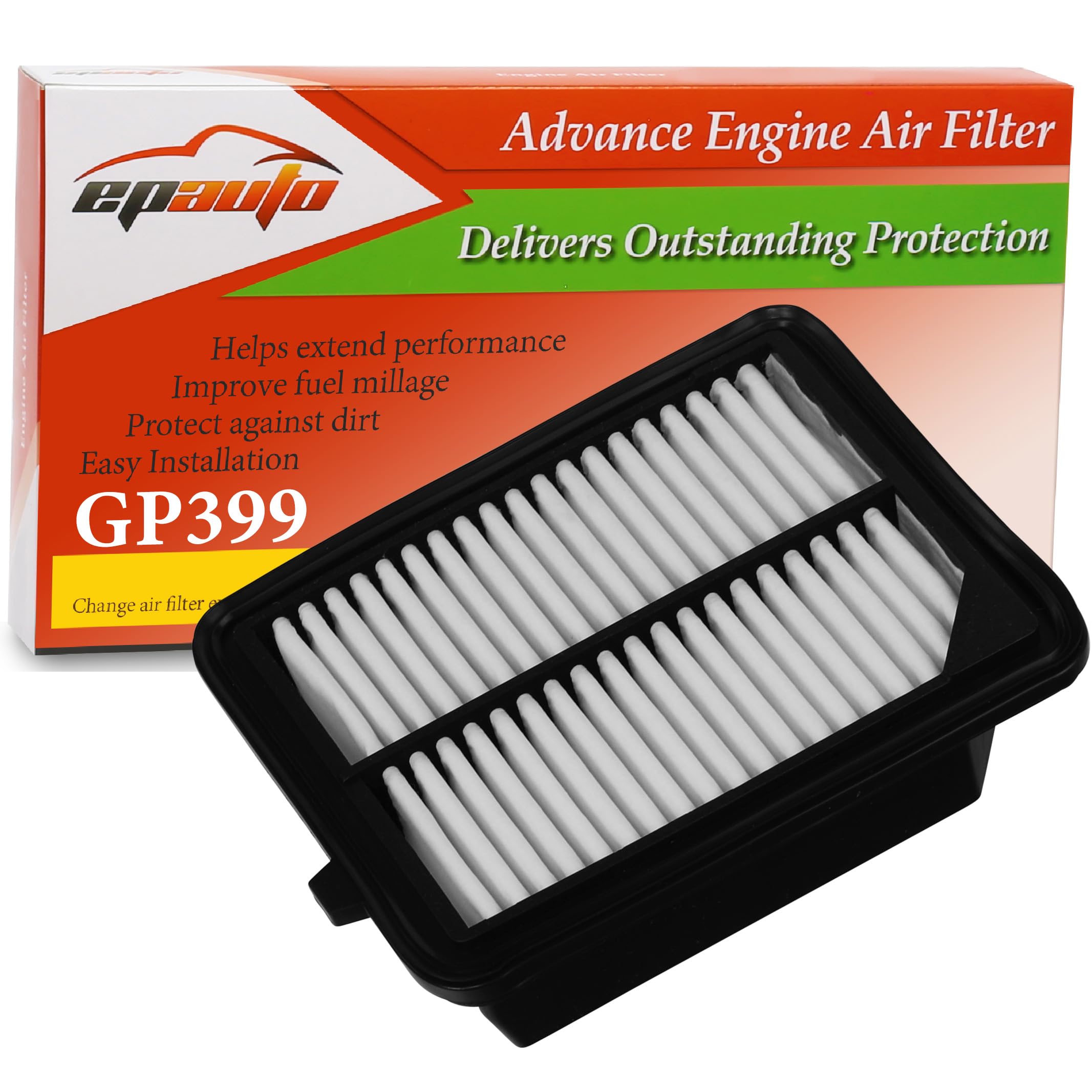
The thing that wins people over here is fit — the single most-mentioned praise in the owner data, beating out every other category by a wide margin. Buyers on the 2021 Honda Accord Hybrid and the 2021 CR-V Hybrid both report it drops in with zero fuss, which makes sense given it’s built to match the Honda Genuine part 17220-5K0-A00 and the FRAM CA11399. It’s roughly 7.17 inches long, 5.59 inches wide, and 2.01 inches thick, sized to fill the OEM airbox exactly.
Installation is the second thing owners rave about, and for good reason: it takes about five minutes with no tools at all. That easy swap is a real money-saver, as buyers put it: “Takes like 5 minutes to install.” and they note it looks and feels exactly like the factory piece they pulled out. The brand claims it helps extend performance, protects against dirt, and improves fuel mileage, with a recommended replacement every 12,000 miles.
The only real decision you face is pairing it with the matching cabin filter, since the listing suggests doing both at once. This is a replacement part, rectangular in shape, and built for a specific list of Honda hybrids and plug-ins from 2014 through 2022, so it is not a universal fit. For a Honda owner who wants OEM quality without the OEM bill, this is the crowd favorite — 4.8 stars across 800+ ratings.
Why Honda Owners Smile
- Perfect drop-in fit for 2021 Honda CR-V Hybrid and Accord Hybrid models
- Tool-free installation that buyers finish in about five minutes
- Looks and feels identical to the OEM filter it replaces
What To Check First
- Fit list covers Honda hybrids and plug-ins, not every Honda model
- You will still need to buy the cabin filter separately for full refresh
Reach for this if: you drive a compatible Honda hybrid and want a filter that feels identical to the factory part at a fraction of the dealer price.
Look elsewhere if: your car is not in the listed compatibility range — this is vehicle-specific, not universal.
2. ECOGARD XC11714 Premium Cabin Air Filter
Traps 99.5% of the dust and pollen before it reaches your vents.
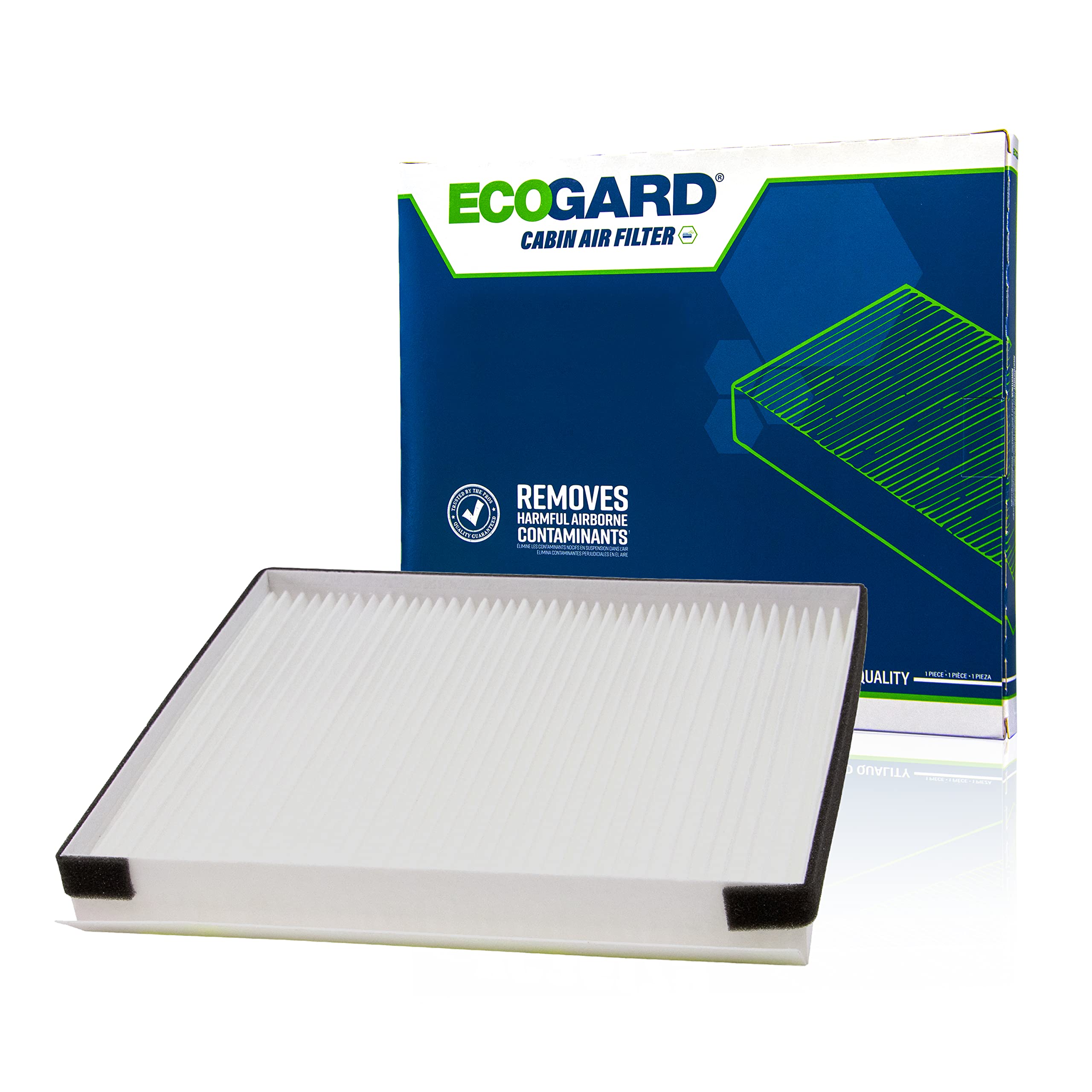
Grab this cabin filter when you want fresher air inside a Kia Telluride, Hyundai Santa Fe, or Genesis. It captures up to 99.5% of dust, pollen, air pollution particles, pet dander, and other airborne junk from outside air before it hits the cabin. The pleated paper design measures 10 inches by 9 inches by 1 inch thick, which is a notably larger footprint than the Mazda filter below — 43% more gap to fill — and it holds steady airflow to reduce strain on your blower motor.
Quality is what owners single out most here, and the install follows close behind. Buyers on a 2020 Santa Fe note it goes in with an easy 5-10 minute DIY job and fits well with no added noise or air leaking past the filter. Even when dimensions are not exactly the OEM’s, they report a snug, quiet seal. The brand says to replace it per your vehicle manufacturer’s recommendations or whenever you notice airflow dropping.
The honest catch, flagged across the reviews, is fitment confusion: the fit is the most-discussed point, and it is genuinely mixed. Plenty of owners get a perfect drop-in, but several report it is not the correct size for a Hyundai Palisade 2020 — the manufacturer’s own list covers Genesis G70, Santa Fe, Kia Stinger, and Telluride, not Palisade. The lesson: verify your exact model against the fitment lookup before ordering.
Fresh-air verdict: a high-capture cabin filter for Kia, Hyundai, and Genesis owners who prioritize clean, pollen-free cabin air — just confirm your model year in the compatibility list first.
3. GF61 Cabin Air Filter for Mazda 3 / CX-30 / CX-50

The Mazda swap so easy a busy mom did it mid-drive.
Fit is the single thing Mazda owners praise most about this filter, and the numbers back it up — it’s the top aspect by a clear margin, with quality right behind it. It’s built as an exact size match for the OEM cabin filter, measuring 7 inches by 7 inches by 2 inches thick, and it’s a straight replacement for the BDTS61J6X and MP111BDGF part numbers. The recommended service interval is every 12 months or 12,000 miles.
The stories from owners here are genuinely funny. Buyers report installing it while driving down the road, and one busy mom in Lubbock, Texas ran it through dust storms and says it kept the air clean. That ease comes from the pleated cloth design and the simple glovebox access on the Mazda 3, CX-30, and CX-50. It also does more than trap dust — owners note it removes odors and noticeably improves airflow from the vents.
The one thing to respect is the airflow arrow printed on the side; installing it upside down kills the filtration. The brand also flags that this is a lightly used product grade, so if you are picky about “new in box,” that is worth knowing. For a Mazda driver who wants a clean cabin for roughly the same money as a dealership charge for labor alone, this is a strong value at 4.8 stars across 200+ ratings.
Mazda Owners’ Favorite Bits
- Exact OEM size match for a perfect drop-in fit
- Removes odors and boosts vent airflow, per owner reports
- Widely described as a 5-8 minute no-hassle install
Mind These Notes
- Airflow arrow must face the right way or filtration suffers
- Listed as lightly used product grade, not factory-fresh packaging
Best for: Mazda 3, CX-30, and CX-50 drivers who want OEM-level fit minus the dealer markup.
skip it if: your car is not a Mazda in the 2019-2025 range — this is a snug vehicle-specific shape.
4. Reilauto Tesla Model 3 / Model Y HEPA Cabin Air Filter
Kills the sour Tesla A/C smell with a 4-layer HEPA stack.
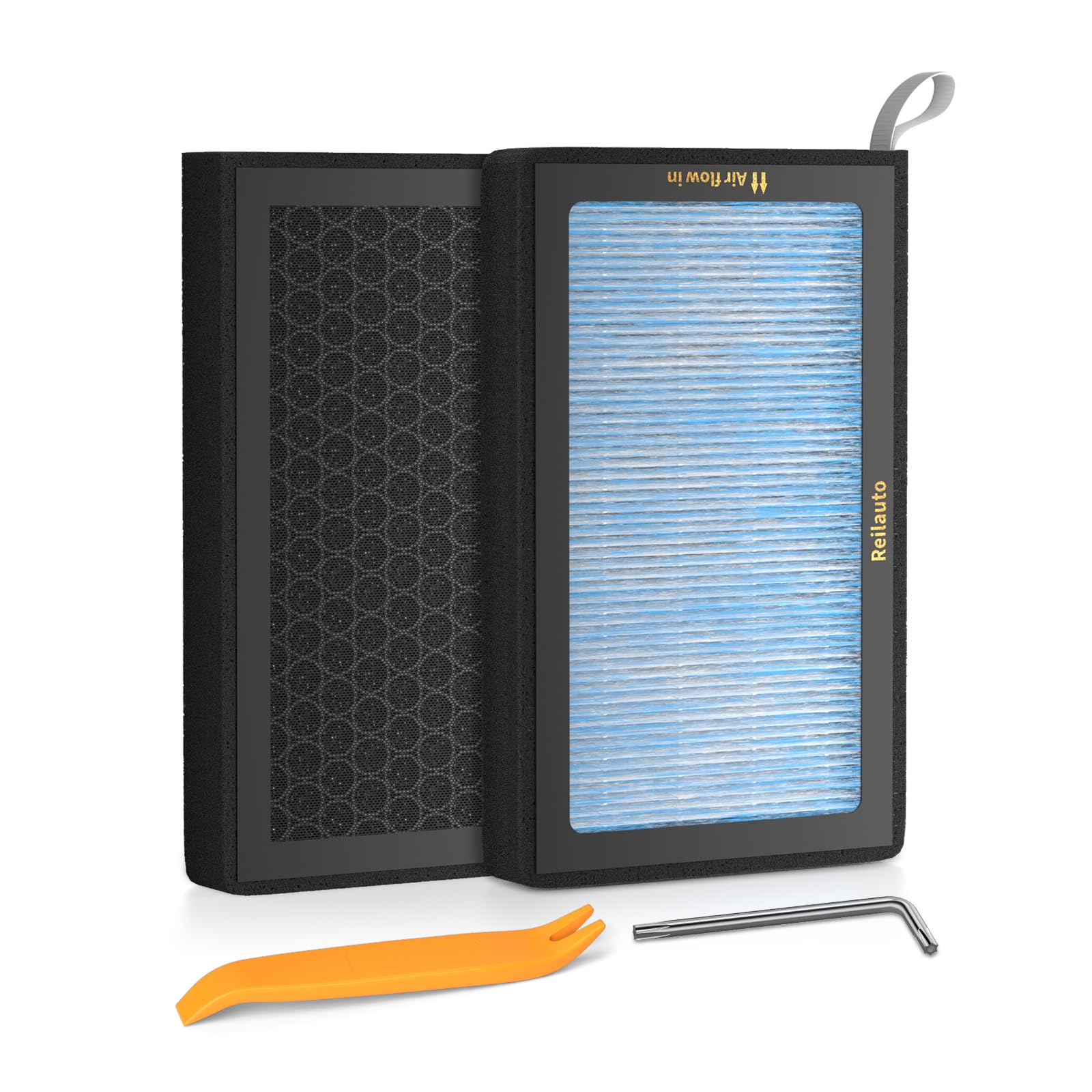
Tesla owners buy this filter for one specific reason: the musty, sour smell that creeps out of the air conditioning vents. The 4-layer construction — melt-blown electrostatic layer, HEPA filter layer, activated carbon beans, and a fiber layer on a sturdy sponge frame — achieves 99.5% filtration of external air pollutants. The activated carbon layer is what absorbs those odor gases that make a Tesla cabin feel stale.
Fit and installation are the two things owners praise equally, with the included tools getting its own round of applause. The 2-piece kit comes with a removal tool, and owners mention the whole job takes about 20 to 30 minutes on a Model 3 or Model Y with no extra tools needed. The package includes two cabin air filters, the removal tool, and an instruction manual, so it is a complete refresh kit rather than a single part.
The honest trade-off here is airflow. Fit and install get rave reviews, but a meaningful share of customers note noticeably reduced airflow, with some describing it as cut by half. Rigidity is also mixed — some find the frame very rigid, others say it is weak and shifts within a day. The brand recommends replacing every 8-12 months or 12,000 to 15,000 miles, and pairs it with a moisture-resistant design so it holds up in humid climates.
Odor-free verdict: the go-to for Tesla 3/Y owners battling AC stink — its HEPA and carbon layers kill smells, but expect a possible airflow trade-off versus stock.
5. K&N KNA-2385 Advantage Plus Engine Air Filter

One filter, 18,000 miles, and a perfect Raptor drop-in.
This is the Ford and Lincoln truck special — the K&N Advantage Plus line gives you 50% longer life than a standard 12,000-mile filter. The premium filter media delivers up to 99% filtration efficiency, and the dry, no-oil design means no messy re-oiling like older K&N filters. Owners call it a 1-minute swap on an F-150 Raptor, with the fit praised as perfect on the 2024 F-150 and the 2021 F-150 3.5 EcoBoost.
Quality is the single most-mentioned praise here, with fit close behind, and buyers describe it as visibly higher quality than the old filter they pulled out. Even better, it is a straight drop-in replacement with no modification, so you keep the factory airbox. The brand backs it with a 1-year limited warranty, and reviewers point out it even nudged their mileage up a bit.
The catch: this is a disposable filter, not a washable one, so at 18,000 miles you replace it rather than clean it. The listed compatibility spans the 2002-2026 Ford and Lincoln trucks and SUVs, from the F-150 and Raptor up through the Expedition, Navigator, and the heavy-duty F-250 through F-650. For truck owners who want a longer interval without switching to a washable system, this lands at 4.8 stars across 500+ ratings.
Long-Interval Strengths
- 50% longer life than standard filters — 18,000 miles vs 12,000
- Dry, no-oil media gives up to 99% engine protection
- Perfect fit reported on F-150 Raptor and 2024 F-150
Know Before You Buy
- Disposable design means no cleaning and reusing
- Compatibility is limited to Ford and Lincoln trucks and SUVs
Who it beats: every standard disposable filter on the shelf, purely on the 18,000-mile service stretch.
Who it does not beat: anyone driving a non-Ford — check the fitment list before adding to cart.
6. Mann Filter C 17 013 Engine Air Filter
The exact OEM-grade Audi filter with glue-string pleat tech.
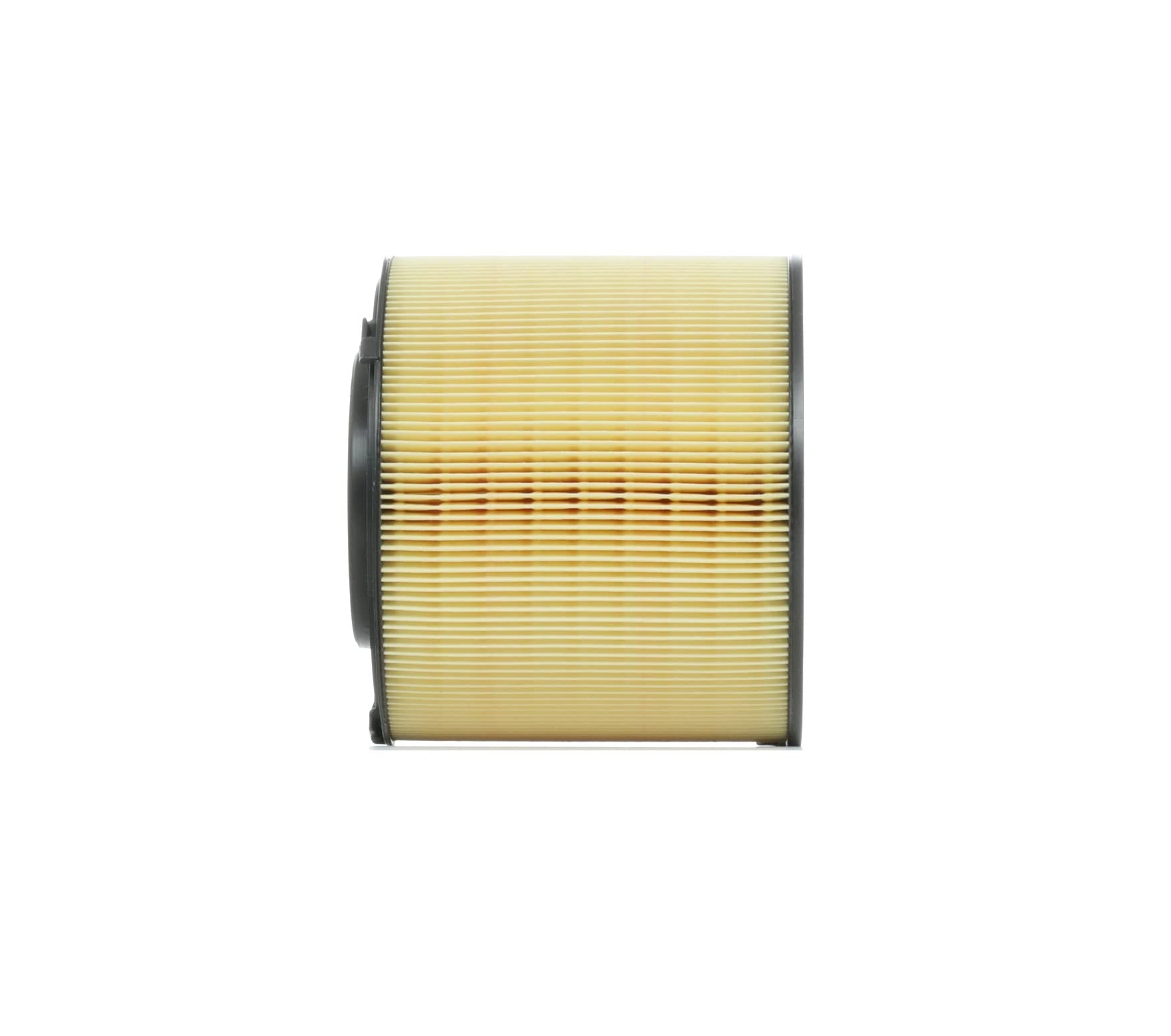
For Audi owners, this is the closest thing to a factory part without the factory price. Mann is the original engine filter provider for Audi, and owner reviews across the 2017 A4 Quattro, 2018 A5, 2018 Q5, 2024 A4, and even a 2025 Q5 all confirm perfect fitment. The filter uses a flame-retardant, water-resistant media with high dirt separation efficiency, plus a special embossing for strength and stability under pressure.
Fit is the aspect owners praise most, with quality second, and the install is genuinely straightforward. Buyers on the 2018 A5 say it takes about 10 minutes with a YouTube tutorial, and the notes mention you will want a T25 screwdriver and a 7mm ratchet to loosen the air pipe clamp. The Glue String Technology holds the pleats evenly spaced so they do not bunch under high airflow at speed.
The honest upside of a Mann filter is confidence: every unit has the optimum housing profile for an OE-fit gasket that creates a tight, efficient seal. The compatible list spans select Audi A4, A5, Q5, SQ5, S5, S6, S7, and RS5 vehicles, including various Quattro, Allroad, and Sportback trims. For European-car owners who want the exact OEM replacement without dealer markup, this is the one, rated 4.6 stars across 400+ ratings.
Precision verdict: the pick for Audi and VW 2.0T owners who want factory-grade filtration and a guaranteed seal — expect to spend about 10 minutes on install with a T25 bit.
7. K&N 33-5056 High-Flow Lifetime Engine Air Filter

The washable filter that pays for itself and never hits the trash.
This is the lifetime play: a washable, reusable filter with a no-hassle limited warranty covering up to 1,000,000 miles. The 4-layer cotton gauze design — multiple layers of premium cotton treated with a tacking agent — creates an intricate mesh that traps harmful contaminants while keeping airflow high. Shoppers say a 1-2 MPG fuel efficiency gain and improved mid-to-upper range power and torque.
Clean it once every 75,000 miles and you are done, which is the single biggest cost saver here. The brand says it lasts longer than 10 or more disposable filters, and owners confirm the math — one buyer on a 2019 Chevy Traverse RS noted roughly in savings from not buying replacements. It is pre-treated and ready to drop into your factory airbox with no tools for the install itself.
The trade-off is the upfront cost, which sits at the premium end of this list. Fuel efficiency is the second-most-praised aspect after quality, and throttle response gets strong owner support, but you do pay more on day one to save over the life of the car. Compatibility covers the 2017-2026 Subaru BRZ, Toyota 86, and GR86, and it is proudly made in the USA.
Lifetime Advantages
- Wash every 75,000 miles, not replace every 12,000
- Buyers report a 1-2 MPG fuel efficiency gain
- Warranty backs it for up to 1,000,000 miles
Premium Reality Check
- Highest upfront price in this lineup
- Fit list limited to Subaru BRZ, Toyota 86, and GR86
Standout-spec mic drop: 75,000 miles between cleanings on a 1,000,000-mile warranty — that is the last engine filter you buy.
The single caveat: you must own a 2017-2026 Subaru BRZ, Toyota 86, or GR86 to use it.
Understanding the Specs
Pleated Media and Particle Capture
The pleats fold the filter material into a zigzag that multiplies the surface area, so the filter catches more dirt without choking off airflow. Look for the particle capture percentage — for example, 99.5% — as a plain measure of how much dust and pollen it stops. The taller and denser the pleats, the more junk it holds before it needs swapping.
Service Life and Washable vs Disposable
Service life is how many miles a filter runs before it is done. Standard filters are built for around 12,000 miles, though K&N’s Advantage Plus stretches that to 18,000. Washable filters like the K&N 33-5056 flip the model entirely — you clean them every 75,000 miles instead of throwing them away, which changes the long-term cost equation completely.
FAQ
How often should I replace the air filter in my car?
What is the difference between an engine air filter and a cabin air filter?
Will a car air filter improve my gas mileage?
How do I know which air filter fits my car?
Is a washable car air filter worth the extra money?
Can a cabin air filter remove odors from my car?
What happens if I install a cabin air filter upside down?
Why is my car’s airflow weaker after installing a new filter?
Final Thoughts: The Verdict
If you want one dependable pick, the best air filter for car is the EPAuto GP399 because it nails the two things that matter most — a perfect OEM-grade fit and a five-minute, no-tools install that saves you a dealership bill. If you want fresher cabin air and drive a Kia, Hyundai, or Genesis, grab the ECOGARD XC11714 for its 99.5% particle capture. And if you plan to keep your Subaru BRZ or Toyota 86 for the long haul, the K&N 33-5056 washable filter is the one to reach for — its 75,000-mile cleaning interval makes it the last engine filter you buy.
How We Picked
We do not accept paid placement. Every pick is matched to a real buyer and a real use-case; we do not hands-on test units.
Sources & Methodology
Specifications: manufacturer listings and product documentation. Review insights: verified customer reviews, as of August 2026. Pricing: not shown on this page (it changes often); check the current price via the retailer link.
As an Amazon Associate, Gadgets Feed earns from qualifying purchases. This does not affect which products we feature.