
Mold spores are invisible, airborne, and relentless. Unlike dust or pollen, mold spores are living organisms that, once inhaled, can colonize damp areas of your respiratory system and trigger chronic allergies, asthma attacks, and even long-term sinus infections. A standard box fan with a furnace filter won’t stop them.
I’m Min — the co-founder and writer behind Gadgets Feed. I’ve spent hundreds of hours cross-referencing CADR ratings, filter micron ratings, and real-world user reports to identify which purifiers actually trap and remove mold spores rather than just recirculating them.
In this guide, I’ve analyzed the filtration stages, sealed designs, and long-term maintenance costs to help you choose the most effective air filter for mold spores that will protect your home’s air quality for years.
How To Choose The Best Air Filter For Mold Spores
Selecting a purifier for mold spore removal requires more than just checking for a HEPA sticker. Mold spores range from 1 to 30 microns, and many units claiming HEPA filtration leak unfiltered air around the filter frame. You need a machine with a sealed design, a high CADR for particle removal, and sufficient activated carbon to handle the musty VOCs that accompany mold growth.
Filter Micron Rating and Sealed Construction
True HEPA captures 99.97% of particles at 0.3 microns — the most penetrating particle size. Mold spores, at 1 micron and larger, are easier to catch, but only if every bit of incoming air passes through the filter media. Look for models with gasketed filter frames or a fully sealed internal pathway. The UltraHEPA standard found in premium models captures particles as small as 0.003 microns, which is overkill for mold but ensures zero bypass.
CADR and Room Coverage
Clean Air Delivery Rate (CADR) tells you how quickly the unit removes smoke, dust, and pollen particles from a specific room size. For mold spores, prioritize a smoke CADR of at least 200 CFM for rooms up to 300 square feet. Higher CADR values mean the air cycles more times per hour, reducing the concentration of airborne spores faster and preventing them from settling into surfaces.
Activated Carbon for Musty Odors
Mold produces microbial volatile organic compounds (mVOCs) — the musty smell you associate with damp basements. A HEPA-only unit will capture the spores but leave the smell circulating. A thick, pleated activated carbon filter (not a thin mesh coated with carbon) is essential for adsorbing these gaseous odors. Look for at least 0.5 pounds of carbon media, or a separate carbon cartridge like the Winix AOC filter.
Quick Comparison
On smaller screens, swipe sideways to see the full table.
| Model | Category | Best For | Key Spec | Amazon |
|---|---|---|---|---|
| AirDoctor AD3500 | Premium | Hospital-grade spore capture | UltraHEPA 0.003 microns | Amazon |
| Coway Airmega 250 | Premium | Large room whole-home coverage | 1,860 sq ft / 1 hour | Amazon |
| Nuwave Forever | Premium | Zero replacement filter costs | Washable 7-stage system | Amazon |
| Homedics 5-in-1 UV-C | Mid-Range | UV light + aroma therapy | UV-C + HEPA-type filter | Amazon |
| PuroAir 240 | Mid-Range | Sensor-driven auto mode | 1,000 sq ft coverage | Amazon |
| Winix 5520 | Mid-Range | Smart app + air quality display | CADR 392 sq ft certified | Amazon |
| Whirlpool WPT80B | Mid-Range | Anti-bacterial filter coating | Whishield anti-bacteria | Amazon |
| GermGuardian AC4825W | Mid-Range | UV-C light for additional kill | True HEPA 0.1 microns | Amazon |
| Levoit Core 300-P | Budget | Compact bedrooms on a budget | 143 CFM smoke CADR | Amazon |
In‑Depth Reviews
1. AirDoctor AD3500
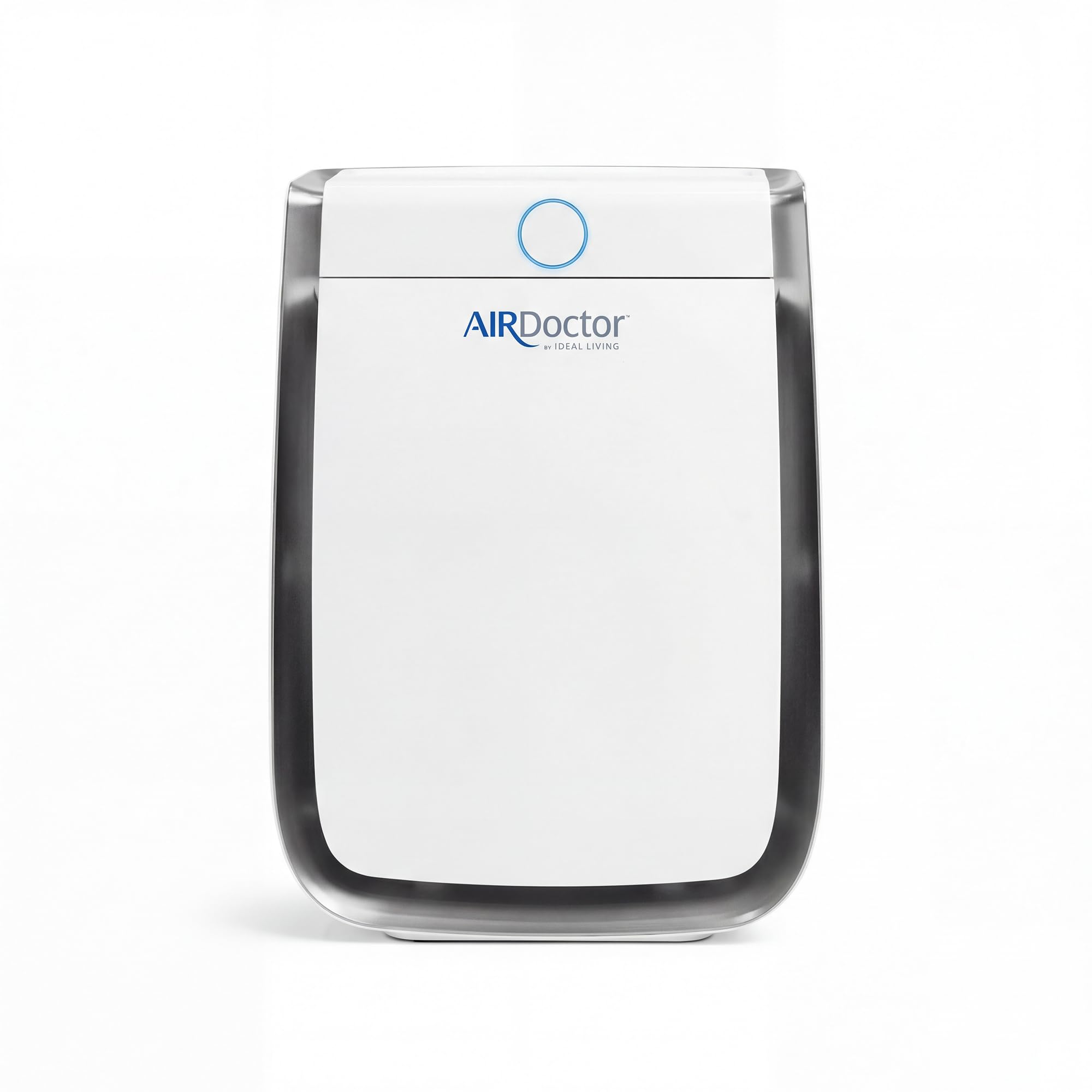
The AirDoctor AD3500 is the gold standard for mold spore removal because its UltraHEPA media captures 99.99% of particles at 0.003 microns — 100 times smaller than the HEPA standard. Mold spores, which typically measure 1–10 microns, are fully arrested by this filter with zero chance of bypass. The 24-pound unit features a sealed, gasket-locked filter frame that prevents unfiltered air from leaking around the media, a common failure in lower-end purifiers.
Its premium activated carbon filter is impregnated with potassium permanganate, a chemical oxidizer that breaks down mold-produced mVOCs and musty odors rather than merely adsorbing them. The PM2.5 sensor and auto mode adjust fan speed in real-time, ramping up to Boost mode when the sensor detects spore spikes from activities like opening a basement door. Four fan speeds and a sleep mode that dims all lights make it livable in a bedroom.
The trade-off is size and filter cost. At over 27 inches tall and 24 pounds, it occupies significant floor space, and genuine replacement filters — UltraHEPA at /year plus carbon at /six months — add up. But if you are dealing with a known mold problem, the AD3500’s third-party lab certification and hospital-grade design make it the most medically serious option on this list.
Why it’s great
- UltraHEPA captures spores down to 0.003 microns
- Potassium permanganate carbon filter neutralizes musty mVOCs
- Real-time PM2.5 sensor with auto Boost mode
- Sealed filter frame prevents air bypass
Good to know
- Heavy and bulky at 24 pounds
- Replacement filter costs are high annually
- Carbon filter needs replacement every 6 months
2. Coway Airmega 250

The Coway Airmega 250 uses the HyperCaptive filtration system — a washable pre-filter that traps large dust and hair, a dense activated carbon filter that adsorbs mold-related odors, and a true HEPA filter that captures 99.97% of 0.3-micron particles including all common mold spore types. The 20.5-pound unit has a dual-intake design that pulls air from both sides, effectively doubling the filtration speed for rooms up to 930 square feet in 30 minutes.
Its smart mode uses a 24/7 air quality monitor with a four-color LED indicator (blue = good, red = poor). In my research, users in humid climates reported that the auto mode caught cooking smoke and bathroom steam within minutes. The rapid mode activates when the sensor detects a sharp spike in particulate matter, which is useful after vacuuming or opening a moldy crawlspace. The washable pre-filter can be rinsed monthly, extending HEPA filter life to a full year.
On the downside, the unit lacks Wi-Fi connectivity, which some smart-home users may miss. The carbon filter is thin compared to standalone carbon canisters, so heavy mVOC loads from severe mold may require pairing with a separate carbon unit. But for whole-home coverage against mold spores, the Airmega 250’s fan speed, sensor accuracy, and low annual filter cost (~) make it the smartest investment for most households.
Why it’s great
- Dual-intake design doubles air turnover rate
- Washable pre-filter saves on replacement costs
- Auto mode with real-time color-coded AQI
- Rapid mode responds instantly to spore spikes
Good to know
- No Wi-Fi or app connectivity
- Carbon layer is relatively thin for heavy odors
- Bulky footprint at 18.5 inches wide
3. Nuwave Forever Smart Air Purifier

The Nuwave Forever positions itself as the anti-consumable purifier — its 7-stage filtration system uses washable and reusable filters that never need replacing. The first two stages are stainless-steel pre-filters that capture large particles, followed by Bio-Guard 360 filters and ozone removal filters that trap mold spores and break down harmful chemicals. The unit is Intertek-certified to capture 100% of particles down to 0.1 microns, covering the entire mold spore size range.
For mold-prone homes, the biggest advantage is the elimination of ongoing filter costs. A standard HEPA filter that clogs from mold spores every 6–8 months costs – per replacement; the Nuwave’s washable media, when rinsed and dried for 24 hours, restores to near-original efficiency. The smart sensor with auto mode adjusts fan speed based on air quality, and the Wi-Fi app lets you monitor PM2.5 levels remotely. Users with four large dogs reported it eliminated damp pet smells and visible dust in the air within days.
The main compromise is noise above fan level 3 — users describe it as comparable to a stove vent. At 21.85 pounds and 22.8 inches tall, it is also one of the heavier units. The electrostatic Bio-Guard filters require careful handling during washing. But for anyone facing a chronic mold issue who wants to avoid the recurring expense of disposable filters, the Forever is a genuinely unique long-term solution.
Why it’s great
- Zero replacement filter costs ever
- Captures 100% of particles down to 0.1 microns
- Wi-Fi app with real-time air quality monitoring
- Auto mode and smart sensor adjust fan speed
Good to know
- Noisy at fan speeds above level 3
- Heavy unit at nearly 22 pounds
- Electrostatic filters need careful hand washing
4. Homedics 5-in-1 UV-C Air Purifier

The Homedics 5-in-1 stacks five filtration technologies into a single 25-inch tower: a pre-filter for large debris, a HEPA-type filter for 99.97% particle capture, a carbon odor filter for VOCs, an ionizer to charge and clump remaining particles, and a UV-C light that neutralizes captured microorganisms including mold spores on the filter surface. Combined, these layers cover both spore capture and biological deactivation, which is a meaningful extra safeguard against mold proliferation inside the unit.
It also includes three essential oil pads and a tray for aromatherapy — a feature that may seam odd for a mold-focused purifier but helps mask residual mustiness while the carbon filter works. The five-speed settings and 12-hour timer give flexibility for bedroom use, and the included remote control makes adjustments without walking over. Users reported a noticeable reduction in settled dust on furniture within 10 days of continuous use.
However, this unit uses a HEPA-type filter rather than a certified true HEPA, meaning it hasn’t been tested to the 99.97% standard at 0.3 microns by an independent lab. The UV-C bulb requires replacement every 12 months, adding a small ongoing cost. The ionizer produces a small amount of ozone, which may be a concern for people with severe respiratory conditions. It remains a strong option for general air cleaning and mold odor reduction in larger spaces.
Why it’s great
- UV-C light neutralizes captured mold on filter
- Five speed settings plus 12-hour timer
- Aromatherapy tray helps mask musty odors
- Remote control for convenient adjustments
Good to know
- HEPA-type filter not true HEPA certified
- UV-C bulb requires yearly replacement
- Ionizer produces trace ozone
5. PuroAir 240
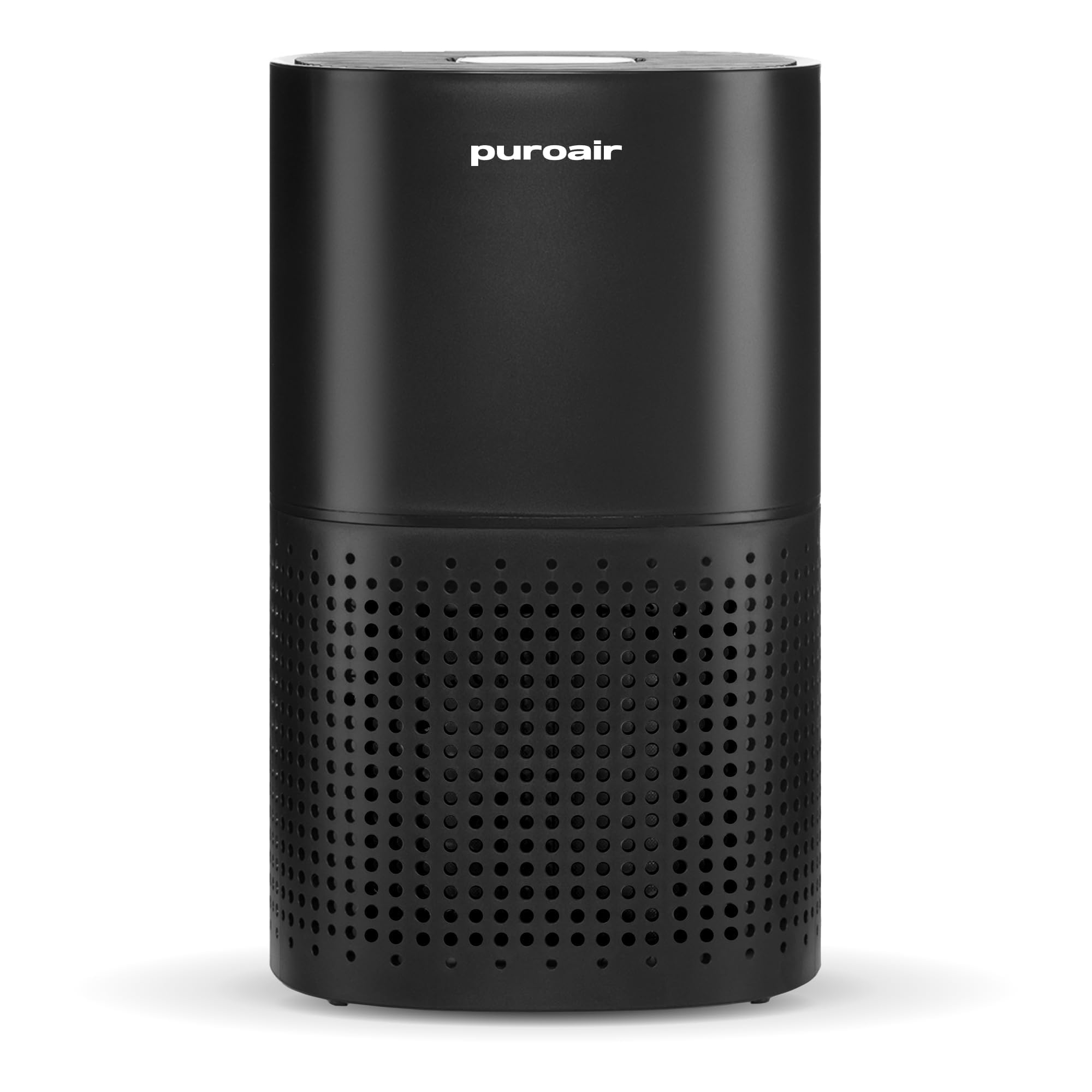
The PuroAir 240 uses a patented CarbonTech filter that sandwiches activated carbon directly into the HEPA media, increasing carbon mass by up to 500 times compared to thin carbon-coated pre-filters. This design is particularly effective for mold applications because it adsorbs mVOCs — the musty smell that signals active spore release — while simultaneously trapping the spores themselves. The 3-stage system includes a pre-filter, the combined CarbonTech HEPA, and a final carbon layer.
The built-in smart particle sensor continuously measures air quality and displays it via a color-coded halo ring (green = clean, amber = moderate, red = poor). Auto mode gradually ramps fan speed in response to changing conditions, and sleep mode reduces noise to a whisper-quiet level. Users with persistent mold allergies reported that their runny nose, itchy eyes, and congestion resolved after three weeks of 24/7 use in both bedroom and living areas. The unit covers up to 1,000 square feet in one hour per ISO 17025 lab testing.
The primary downside is noise at higher speeds — several users note that the fan on level 4 is loud enough to disrupt sleep, though the sleep mode is genuinely quiet. The CarbonTech filter lasts 6–12 months depending on usage and costs roughly to replace. At 28 inches tall, it has a slender footprint but may look imposing in a small bedroom. For the price, the PuroAir 240 offers an effective balance of spore capture and odor control.
Why it’s great
- CarbonTech filter combines carbon and HEPA
- Smart sensor with color-coded air quality halo
- Lab tested to cover 1,000 sq ft
- Effective at resolving mold allergy symptoms
Good to know
- Loud at highest fan speed
- Replacement filters cost around
- Tall design may feel large in small rooms
6. Winix 5520
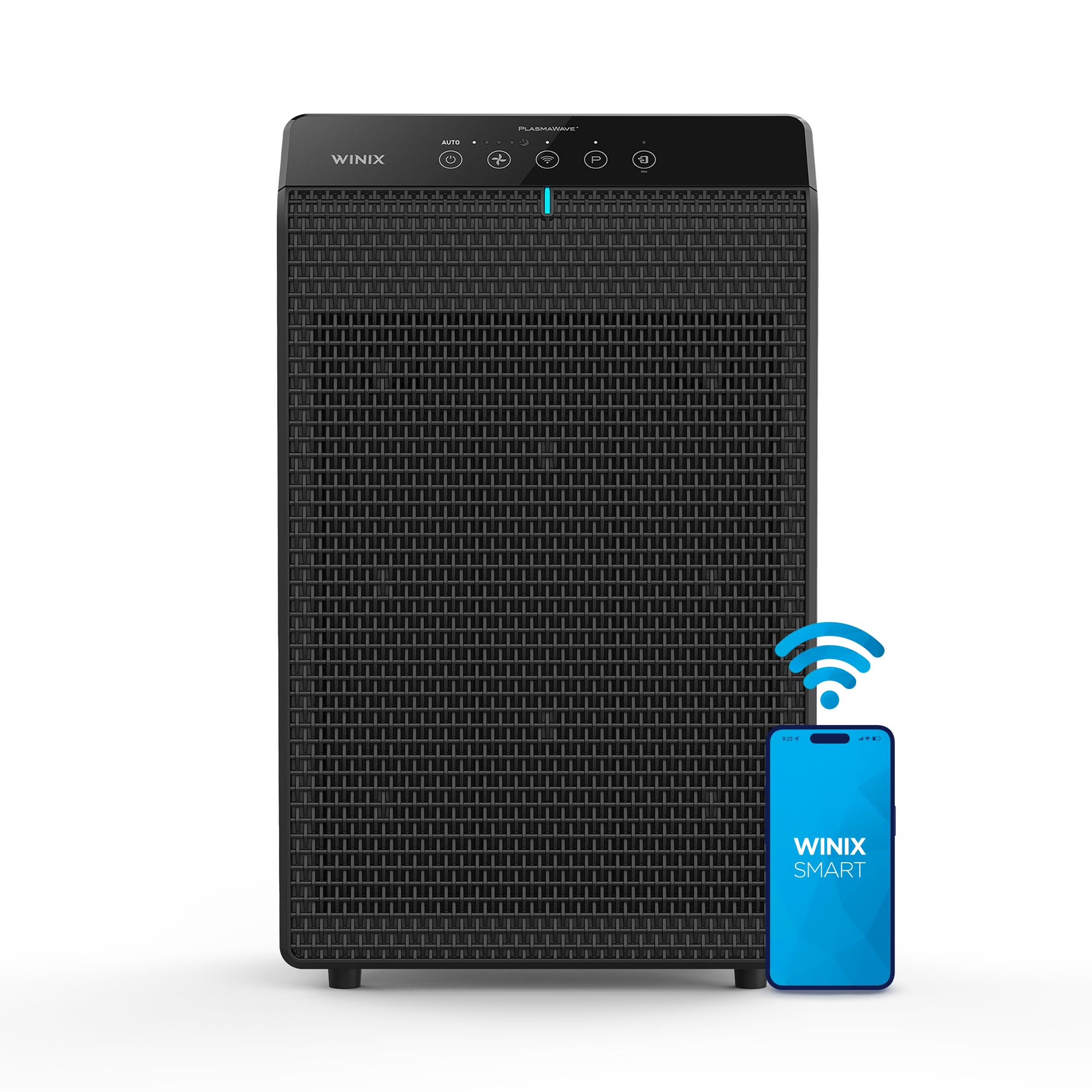
The Winix 5520 brings smart-home connectivity to mold spore filtration with its built-in Wi-Fi and Winix Smart App, allowing remote monitoring and fan speed adjustment. The 4-stage system starts with a washable fine mesh pre-filter, then passes air through an advanced odor control (AOC) carbon filter filled with activated carbon pellets — not just a coated mesh — followed by a true HEPA filter that captures 99.99% of particles as small as 0.01 microns. The final Plasmawave stage uses ionization to neutralize viruses and bacteria without producing harmful ozone.
The AQI indicator uses blue, orange, and red LED colors to display real-time air quality. The light-automated sleep mode senses when the room darkens and automatically reduces fan speed to near-silent operation (23.5 dB on lowest speed) and turns off all indicator lights. In user reports, the unit completely eliminated the “carpety smell” in a 340-square-foot room within two days. The washable pre-filter and AOC carbon filter extend HEPA life significantly, keeping annual filter costs around .
However, Alexa integration is not true voice control — the Winix app is needed for full functionality, and some users found the sensor overly sensitive to air fresheners and mouthwash vapors. The 13.6-inch width makes it wider than most compact purifiers, which may matter in tight corners. For its combination of smart features, low running costs, and verified AHAM performance at 392 square feet, the Winix 5520 is a strong mid-range contender.
Why it’s great
- Wi-Fi app control with real-time monitoring
- AOC carbon filter uses pelletized carbon
- Light-automated sleep mode (23.5 dB)
- Low annual filter cost (~)
Good to know
- Alexa integration is limited
- Sensor can be overly sensitive to household smells
- Wider chassis than many mid-range units
7. Whirlpool WPT80B Whispure

The Whirlpool WPT80B stands out for its proprietary Whishield technology — an anti-bacterial coating on the filter media that eliminates 99.99% of bacteria that may grow on the filter surface. This is directly relevant to mold spore capture because mold can colonize a damp filter; the Whishield treatment prevents that biological buildup, keeping the filter fresher longer and preventing secondary contamination. The true HEPA filter captures 99.97% of particles at 0.3 microns, and the activated carbon layer reduces mold-related odors.
Independent lab testing gives this unit a CADR of 142 CFM for smoke, 152 CFM for dust, and 164 CFM for pollen, making it effective for rooms up to 220 square feet. The large front-facing intake and top-mounted exhaust create a strong upward airflow pattern that circulates room air efficiently. Users reported that placing the unit near a litter box eliminated cat-related ammonia smells almost completely, and it significantly reduced dog dander and cooking odors. The sound profile is a consistent white noise at higher speeds and virtually silent on low.
It lacks an air quality sensor or auto mode, so you must manually adjust the fan speed. There is no digital display or air quality indicator. The 220-square-foot room size rating means it is best suited for smaller bedrooms or offices rather than open-concept basement areas. For a targeted, anti-bacterial approach in a contained space, the Whirlpool Whispure is a reliable workhorse from a trusted appliance brand with a 5-year limited warranty.
Why it’s great
- Whishield anti-bacterial coating prevents mold growth on filter
- CADR ratings verified for smoke, dust, pollen
- Quiet operation on low setting
- 5-year limited warranty from Whirlpool
Good to know
- No air quality sensor or auto mode
- Best for rooms around 220 sq ft
- No digital display or AQI indicator
8. GermGuardian AC4825W

The GermGuardian AC4825W is a 22-inch tower purifier that combines true HEPA filtration with a UV-C light designed to reduce airborne bacteria and viruses. For mold spore control, the true HEPA filter captures 99.97% of particles as small as 0.1 microns — smaller than the 0.3-micron standard — which gives it a safety margin for the smallest mold fragments. The optional UV-C light provides an added layer of biological deactivation for spores trapped on the filter media.
The 3-speed dial control is simple and intuitive, with a separate button for the UV-C light. The washable pre-filter extends HEPA life by capturing larger dust and pet hair particles before they reach the main filter. User reviews from asthmatic households report that the unit significantly reduced stuffy noses and dust accumulation, and one user noted it helped avoid a pneumonia episode from a visitor carrying airborne pathogens. The tower design is space-efficient at 6.75 inches deep.
Noise is a common point of contention: on high speed the unit produces noticeable fan noise that some users find disruptive for a bedroom. The medium speed provides a pleasant white noise, while low is virtually silent. The replacement HEPA filter B costs around – and lasts 6–8 months. For the price, the AC4825W offers proven HEPA and UV-C in an uncomplicated package that has been a consistent top seller since its release in 2018.
Why it’s great
- True HEPA captures particles at 0.1 microns
- Optional UV-C light for biological deactivation
- Washable pre-filter extends main filter life
- Space-saving tower design
Good to know
- Noticeable fan noise on high speed
- No auto mode or air quality sensor
- Filter replacement every 6–8 months
9. Levoit Core 300-P

The Levoit Core 300-P is the most budget-friendly option that still delivers genuine HEPA-grade filtration for mold spore capture. Its 56-watt high-torque motor moves air at 143 CFM CADR for smoke, earning AHAM Verifide certification. The 3-in-1 filter system uses a pre-filter, a true HEPA filter that captures 99.97% of 0.1–0.3 micron particles, and an activated carbon layer that reduces VOCs and odors. For a 222-square-foot room, it cycles the air 4.8 times per hour.
The 7.9-pound, 8.7-inch cylindrical body is compact and modern, fitting easily on a desk or nightstand. QuietKEAP technology drops noise to 24 dB in Sleep Mode — barely audible. The touch controls include a 2/4/6/8-hour timer and a display-off option for light-free sleeping. The unit is CARB compliant, ETL listed, and FCC certified. Users report immediate improvements in air freshness, with noticeable reduction in dust and allergens within a few days of use.
The limitation is room coverage — the Core 300 is designed for small to medium rooms, not open floor plans. The activated carbon layer is thin compared to larger units, so heavy mold odors may not be fully eliminated. Genuine Levoit replacement filters cost – and last 6–8 months. For a targeted, affordable solution for a single bedroom or small office with a mold concern, the Levoit Core 300-P punches well above its price class.
Why it’s great
- AHAM Verifide with 143 CFM smoke CADR
- QuietKEAP technology at 24 dB in sleep mode
- Compact 8.7-inch diameter fits small spaces
- Timer and display-off for undisturbed sleep
Good to know
- Best for rooms under 222 sq ft
- Activated carbon layer is thin
- Replacement filters cost – every 6 months
FAQ
Can an air purifier alone solve a mold problem?
What micron size do mold spores typically range from?
Should I choose a unit with UV-C for mold spore control?
How often should I replace the HEPA filter in a mold-prone home?
Final Thoughts: The Verdict
For most users, the air filter for mold spores winner is the Coway Airmega 250 because it balances large-room coverage, low annual filter costs, and proven real-world effectiveness against spore spikes. If you want hospital-grade capture down to 0.003 microns, grab the AirDoctor AD3500. And for a truly zero-maintenance system that eliminates recurring filter purchases, nothing beats the Nuwave Forever.