
Our readers keep the lights on and my morning glass full of iced black tea. As an Amazon Associate, I earn from qualifying purchases.
Specs are compiled from manufacturer listings and verified buyer reviews and can change over time — please confirm the key details on the product page before buying.
An air flow switch solves a simple but annoying problem: you want a booster fan, UV light, or humidifier to run exactly when your HVAC blower pushes air, and shut off the moment it stops. Get the sensing method wrong and you will fight false triggers, stuck relays, or a fan that never turns on. This guide breaks down the five main ways to sense airflow, what each is actually good for, and which one fits your setup without guesswork.
I’m Min — the founder and writer behind Gadgets Feed. This guide is built by comparing the manufacturers’ published specifications and the patterns across verified customer reviews, so you get each pick’s real strengths and trade-offs instead of marketing spin.
Choosing the right air flow switch starts with knowing your setup: a sail switch (a physical paddle that moves when air blows) suits a return duct, while a pressure switch (which senses air pressure differences) fits a dryer booster. Pick based on what your HVAC blower, duct fan, or vent system needs to trigger.
Our Picks at a Glance


How To Choose The Best Air Flow Switch
Pick the sensing style that matches your duct. A sail switch hangs a physical flap into the airstream — great for round or rectangular ducts with consistent blower air. A pressure switch samples air from a small tube and works better in tight spots where you cannot mount a sail.
Match the switch to your load
Check what the switch will power before anything else. If it directly runs a fan motor, the switch’s current rating must handle the motor’s draw. If it only triggers a relay or a low-voltage solenoid, a lower rating is fine. Overloading a switch is the fastest route to a failed part.
Understand adjustable vs fixed set points
Adjustable models let you dial in the exact pressure that trips the switch, which helps on systems with variable fan speeds. Fixed models are simpler and often cheaper, but they assume your airflow is strong and steady enough to trip them every time.
Think about mounting and wiring
Most of these sense pressure differences, so orientation matters. A bladder-style switch can be picky about its tilt angle, and a sail switch needs a removable spring to balance it for vertical or horizontal ducts. Plan your install spot before you buy.
Quick Comparison
| Model | Best For | Sensing Type | Current Rating | Weight | Amazon |
|---|---|---|---|---|---|
| Tjernlund PS1503P★ Best Overall | Plug-in booster fan control | Pressure bladder | 2 A | — | Amazon |
| Cleveland Controls Air Sensing SwitchAdjustable Pick | Dehumidifier interlock | Adjustable pressure | — | — | Amazon |
| Honeywell S688A1007 | HVAC return duct remote fan | Sail vane | — | 12 ounces | Amazon |
| TPI RH3A Series | Industrial air handling | Adjustable differential | 3 A | 1.6 ounces | Amazon |
| Fantech DB 10 Pressure Switch Kit | Dryer booster with delay | Pressure with delay | 11 A | — | Amazon |
In-Depth Reviews
1. Tjernlund PS1503P Plug-in Air Pressure Activation Switch
Our pick — over 4★ from 200+ verified ratings; the strongest balance of quality and price.
The plug-and-play pick that spares you from opening the furnace wiring panel.
If the thought of splicing wires into your HVAC control board makes you nervous, this is the model to start with. The PS1503P is the plug-in version, so you simply plug the switch into an outlet, plug your duct fan or air cleaner into it, and let a small internal bladder sense when the blower pushes air. No circuit boards to miswire — the maker calls it fool-proof tech, just a bladder that fills and lets power flow through to your device.
The 2 A current rating means it is built for lighter accessories like duct boosters, air cleaners, and humidifiers rather than big motors. Most owners use it to run a booster fan whenever the furnace or AC kicks on, and the wiring is about as simple as it gets: black to black, white to white. It can control any brand of duct fan, so you are not locked into one ecosystem.
Buyers report the switch does exactly its one job — turning on with airflow and off without it. The recurring note is that it can be position-sensitive: one owner’s unit surged and rapidly cycled after two weeks until they tilted it back about 10 degrees, and it has behaved since. Mount it where strong air passes over the sensing port and it should outlast the fan motor it controls.
Why owners pick it
- True plug-in design means no hardwiring into the system
- Solid construction that held up through a 10-minute install
- Works with any duct fan brand, not just Tjernlund
Watch out for
- Not adjustable, so it needs strong steady airflow to trip
- Can surge or cycle if mounted at the wrong angle
- 2 A limit rules out heavier direct-drive motors
Reach for it if: you want booster-fan automation without touching high-voltage wiring.
Look elsewhere if: your fan draws more than 2 A or your duct airflow is weak and intermittent.
2. Cleveland Controls Air Sensing Switch, Adjustable
A tiny adjustable pressure switch for interlocking dehumidifiers and humidifiers to the blower.
This Cleveland Controls unit exists for one popular job: making sure your dehumidifier or humidifier only runs while the HVAC fan is actually moving air. Owners describe installing it so a dehumidifier shuts down every time the blower stops, and the screw-terminal connections make it a straightforward add-on for anyone comfortable with low-voltage control wiring.
The defining trait here is adjustability — you can set the exact air pressure that trips the switch, which matters when your system runs at different fan speeds. At just over an ounce of parts, the packaging dwarfs the switch itself: the listed shipping dimensions run 19.6 x 19.4 x 14 inches even though the working device is far smaller. Phosphor bronze contacts resist corrosion inside a dusty air handler.
The honest catch is setup. Owners mention the switch works backward until you tension the spring to overcome the switch’s own internal spring, and the instructions do not make that clear the first time. Once you understand the spring setup, it performs reliably — owners use it to trigger an RV light on airflow or to interlock a second dehumidifier the same way as the first.
Spring-schooling required: expect a short learning curve on the adjustment spring before the switch behaves as intended.
Buyer caveat: some units ship directly from Grainger rather than Amazon, so delivery timing can vary.
Best for: pairing a dehumidifier or humidifier with your HVAC fan using screw-terminal wiring.
Think twice if: you want a ready-to-go plug-in with zero adjustment learning curve.
3. Honeywell S688A1007 Sail Switch

The 12-ounce sail switch that has run flawlessly for owners four years straight.
Where a bladder switch samples air pressure through a tube, this Honeywell hangs an actual polyester film sail into the airstream. Moving air pushes the sail, which trips a micro snap switch — a mechanical approach that needs no electronics and no spring calibration. The sail is mounted on a snap-action micro switch and the whole unit weighs 12 ounces, making it a substantial, confident piece of hardware compared to featherweight pressure switches.
The standout spec is its response range. It makes contact at just 250 feet per minute of airflow and breaks contact at 75 fpm, so it reacts to relatively gentle air movement. A removable spring counterbalance lets you mount it in vertical ducts (up or down) or horizontal ones, which covers nearly any HVAC return or supply run. Its low-velocity sensitivity is why owners trust it to trigger a remote duct fan from the return side of the system.
You get proven longevity here: one buyer reports a unit in an HVAC return still working at the four-year mark, with only two dust cleanings of the sail and no disruption from an AC replacement. A newer owner has only a week of use, so long-term durability is unproven for them, but the multi-year reports line up. Note it is rated for lighter loads, so if your device draws heavy current, you will need an external relay (a separate switch that handles the higher power).
Set-and-forget sensing: the mechanical sail gives years of service with just the occasional dust wipe.
Load limit: best paired with a relay if your controlled device pulls serious current.
Choose this for: a remote duct fan or solenoid triggered reliably by blower airflow, year after year.
skip it if: your duct is too shallow to fit a physical sail in the airstream.
4. TPI RH3A Series RH Adjustable Air Flow/Differential Pressure Switch
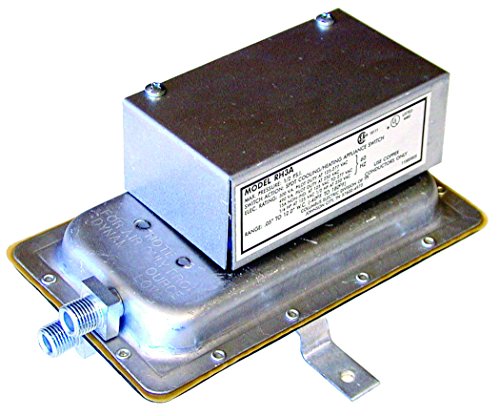
The featherweight aluminum unit that out-specs the plug-in at just 1.6 ounces.
That combination makes it the strongest choice among the compact pressure switches for directly controlling moderate loads. It adjusts across a wide sensing range from 0.05 to 12 inches of water column, so you can fine-tune the trip point to match your system’s exact airflow.
The IP54 rating means it is protected against limited dust ingress and water splashes, which suits industrial air-handling environments where the maker, TPI Corporation, focuses its heating and cooling products. Copper contacts and a compression connector for the sensing tube round out a build meant to resist wear, corrosion, and mechanical stress in demanding spots.
Expect a trade-off based on buyer feedback. Owners confirm it works as a direct replacement, and the adjustment dial lets you set your trigger point precisely. However, two separate reports describe the switch sticking in the on position over time—sometimes after about a week, sometimes intermittently—until you tap the device. Also, the low-pressure connections lack clear markings, so customers note struggling to make the right connection at first.
Spec highlights
- 3 A rating handles more load than comparably sized switches
- Adjustable 0.05″ – 12″ WC sensing range
- IP54 rating shrugs off dust and splashes
Reliability notes
- Occasional sticking in the on position reported
- Low-pressure ports are poorly labeled
- Compression connection needs care to seat properly
Grab it for: an industrial air handler where adjustability and a 3 A rating matter more than plug-in ease.
Keep monitoring: if the switch sticks, re-check the adjustment and mounting before trusting it on critical gear.
5. Fantech DB 10 Pressure Switch Kit Only with Delay
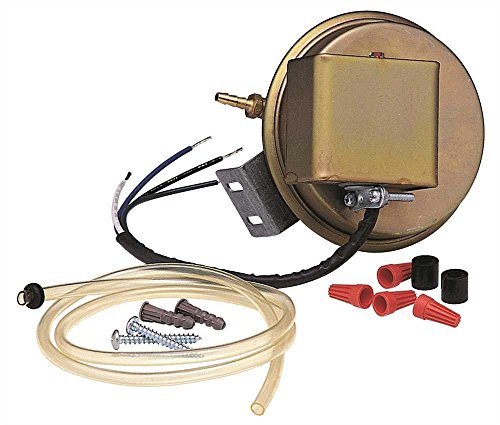
The complete kit with a built-in delay circuit for dryer booster fans.
This Fantech kit is purpose-built for a specific job: running a dryer booster fan only while the dryer actually exhausts air. The integrated delay keeps the fan spinning for a set period after airflow stops, which clears lingering moisture from the duct — something a plain on-off switch cannot do. It ships as a full kit with a pressure switch, 3 feet of NPT tubing, a grommet, four wire nuts, and switch mounting hardware, so you are not hunting for parts.
The current rating jumps to 11 A, far above the 2 A and 3 A switches here, meaning it can comfortably switch a real fan motor without an intermediate relay. Owners pair it with Fantech’s own exterior wall-mount centrifugal duct fans and backdraft dampers, and the combination switches on and off correctly in time with the dryer. One owner skipped the dryer use case entirely and ran a whole-house duct booster off the timed cycle instead.
The honest concern is longevity. Reviewers point out the switch working perfectly at first but failing after roughly two months in one case and after about a year and a half in another, with the fan cycling on and off for no reason. The manufacturer’s response gets consistent praise — a replacement unit was sent promptly — and the stated 5-year spare-part availability backs the brand’s commitment. This is the pick to choose when the delay function is essential, knowing the warranty service is part of the deal.
Timed operation wins: the delay cycle clears duct moisture after the dryer stops, which plain switches cannot do.
Warranty matters: early failures happen, but replacement service is the consistent bright spot in owner feedback.
Select for: a dryer booster or vent system where post-run delay avoids moisture buildup.
Have a backup plan: occasional premature failures mean the warranty path is worth remembering.
Understanding the Specs
Sail switch vs pressure switch
A sail switch hangs a physical flap into the duct so moving air pushes it against a micro switch. A pressure switch instead samples air through a small tube and reacts to the pressure difference. Sail switches are simple and mechanical but need duct space; pressure switches fit tighter spots but can be picky about mounting angle.
Amperage and what you can power
The current rating, measured in amps, tells you how much electrical load the switch can safely handle. A switch rated 2 A suits lighter accessories like air cleaners, while an 11 A rating can directly switch a fan motor. Exceeding the rating risks burning out the switch contacts, so match the rating to your device’s draw.
FAQ
What is the difference between a sail switch and a pressure switch?
Will an air flow switch work with any brand of duct fan?
Why does my pressure switch stick in the on position?
Can an air flow switch control a UV light or humidifier?
What does “closes on airflow” mean?
How much airflow do I need to trip a sail switch?
Do I need a relay with these switches?
How long do air flow switches last?
Can I mount these switches in any orientation?
What does an adjustable set point let me do?
Final Thoughts: The Verdict
If you want one dependable pick, the best air flow switch is the Tjernlund PS1503P because it strips away the wiring fear with a true plug-in design. If you want a mechanical sail that reliably triggers a remote duct fan for years, grab the Honeywell S688A1007. And for a dryer booster that needs a timed delay to clear moisture, the Fantech DB 10 Kit is the one to reach for.
How We Picked
We do not accept paid placement. Every pick is matched to a real buyer and a real use-case; we do not hands-on test units.
Sources & Methodology
Specifications: manufacturer listings and product documentation. Review insights: verified customer reviews, as of September 2026. Pricing: not shown on this page (it changes often); check the current price via the retailer link.
As an Amazon Associate, Gadgets Feed earns from qualifying purchases. This does not affect which products we feature.