
Our readers keep the lights on and my morning glass full of iced black tea. As an Amazon Associate, I earn from qualifying purchases.
Specs are compiled from manufacturer listings and verified buyer reviews and can change over time — please confirm the key details on the product page before buying.
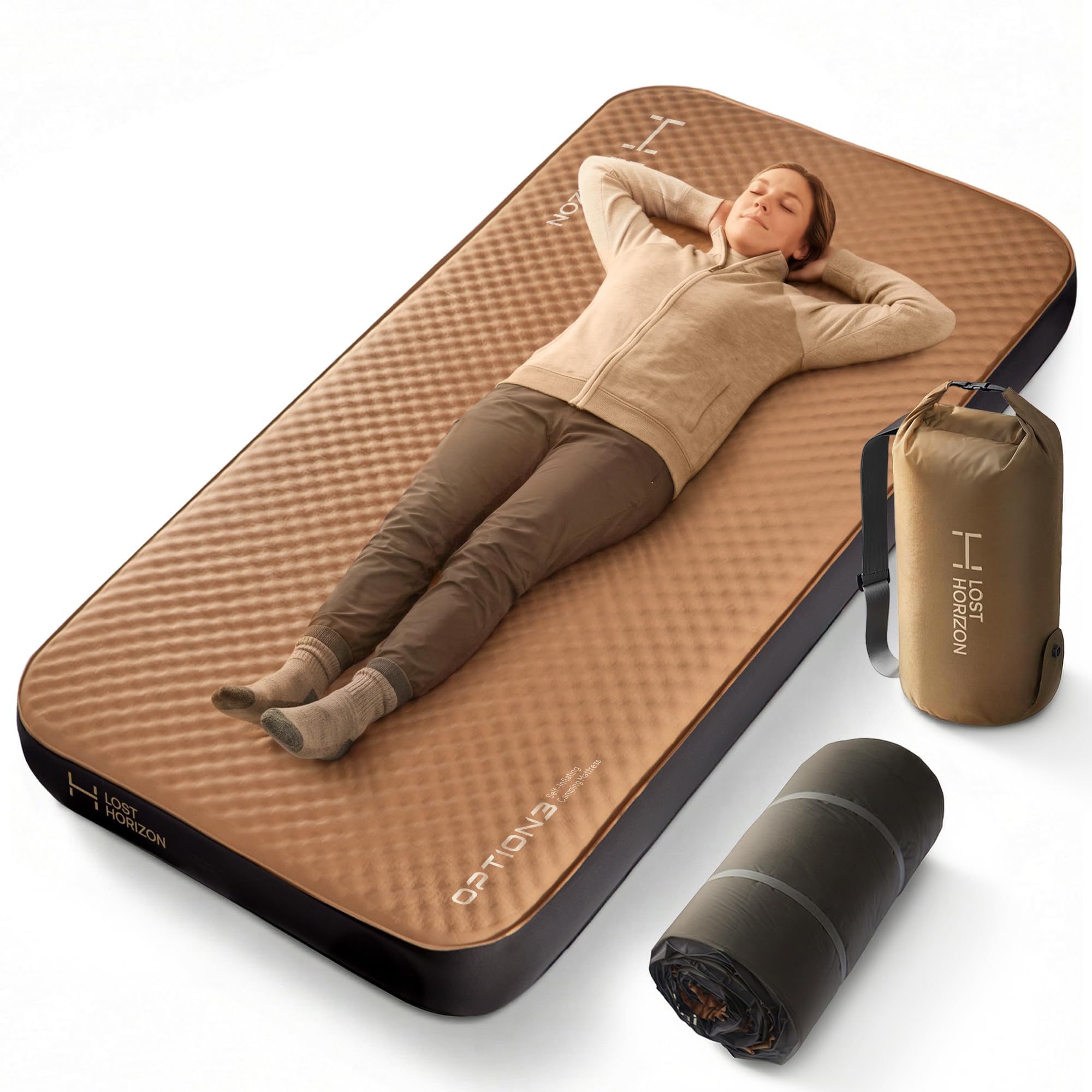
If you want the short answer: the Lost Horizon Option3 Twin is the one to beat, because its 4.5-inch foam core supports up to 300 pounds and insulates at an R-value of 13 (a rating of how well a pad blocks cold from the ground). A plain air bed barely cushions you, and a plain foam mat is a brick. An air foam mattress pumps air into a layer of actual foam, so you get a soft landing on top and real support underneath. That single combination is what makes these pads sleep closer to your bed than to a camping mat.
I’m Min — the founder and writer behind Gadgets Feed. This guide is built by comparing the manufacturers’ published specifications and the patterns across verified customer reviews, so you get each pick’s real strengths and trade-offs instead of marketing spin.
The seven picks below split cleanly into weekend backpacking pads you carry and thick car-camping beds you roll out of the trunk. Thickness, R-value and packed weight decide which group you land in. Use this list as your shortcut to the right air foam mattress without guessing which specs actually matter in a tent.
Our Picks at a Glance
How To Choose The Best Air Foam Mattress
Your first decision is not brand, it is mission. Are you carrying this pad on your back for miles, or tossing it in a car boot and rolling it out beside the tent? That answer rules out half the list before you read a single spec. A thick foam-filled pad sleeps beautifully and weighs a lot. A slim pad carries easily and asks you to accept firmer ground underneath.
Start with R-value, not with looks
R-value measures how well a pad stops cold from the ground reaching your body. A low number suits summer tent nights. A high number keeps you warm when the ground is frozen. On this list the spread runs from 4.2 on the Sea to Summit up to 13 on the Lost Horizon Option3 Twin, which tells you which pads are three-season workhorses and which are winter-capable. If you camp in shoulder seasons or sleep cold, shop upward on that number and do not compromise.
Thickness is comfort, weight is the bill
A 4.5-inch pad like the Lost Horizon Option3 cushions hips and shoulders so side sleepers do not bottom out. A 1.5-inch pad like the Sea to Summit is there for insulation and light support, not hotel softness. The trade is weight: the Lost Horizon Option3 Twin is 8.5 pounds, while the Sea to Summit is 2.4 pounds. Neither is wrong. One is a bed, one is a pack item.
How it inflates decides your campsite mood
Self-inflating pads pull air in when you open the valve, then you top them up with a few breaths. A pump sack uses the carry bag to push air in. A built-in electric pump does the work at the press of a button. Faster inflation is genuinely nicer at the end of a long day, but that electric pump is one more part to keep charged.
Quick Comparison
| Model | Best For | Thickness | R-Value | Weight / Capacity | Amazon |
|---|---|---|---|---|---|
| Lost Horizon Option3 Twin★ Best Overall | Best all-round camping bed | 4.5″ | 13 | 8.5 lb / 300 lb | Amazon |
| Sea to Summit Camp Plus SIBackpacker’s Pick | Backpacking and scouts | 1.5″ | 4.2 | 2.4 lb / 136 kg | Amazon |
| Acacia 4″ Self Inflating Pad | Side sleepers on a budget | 4.3″ | 6 | 5.3 lb / 220 lb | Amazon |
| Hikenture 4″ Self Inflating Pad | Hands-free setup | 4″ | 9.5 | 5.4 lb / — | Amazon |
| EUHAMS Double Memory Foam Pad | Couples and car camping | 2.3″ | 9.5 | — / 800 lb | Amazon |
| Elegear Air & Foam Full | Two-person comfort base | 4″ | 9.5 | — / — | Amazon |
| Lost Horizon Queen 3″ | Room for two, or sprawling | 3″ | 9.7 | 9 lb fill / 400 lb | Amazon |
In-Depth Reviews
1. Lost Horizon Option3 Self-Inflating Foam Camping Mattress, Twin, 4.5″
Our pick — 4.5+★ from 350+ verified ratings; the strongest balance of quality and price.
A twin-size four-season bed that sleeps like home and never announces your every roll.
The headline is warmth. An R-value of 13 means this pad blocks ground cold hard enough for winter camping, and very few foam-filled pads on this list reach that figure. Under your body sits 4.5 inches of thickness plus 8.5 pounds of foam filling, and the two work together so air and foam spread evenly under hips and shoulders instead of pooling in one spot. It holds up to 300 pounds of sleeper weight.
What wins people over is the comfort of the 30D stretch fabric cover over the air-and-foam core. It draws the most consistent praise of any pad here for comfort, with the soft 30D stretch fabric cover (a fine, flexible weave) and the air-and-foam mix giving you a dial for firmness rather than a fixed slab. Owners describe waking up rested, without the usual campsite aches. Because there is no plain vinyl air chamber to rub against itself, it also avoids the squeak-and-rustle routine that ruins shared tents.
Two honest notes. First, this is not a backpacking pad, and the maker says so outright — 8.5 pounds and a 75 x 38 inch twin footprint are car-camping numbers, not carry-on-your-back numbers. For scale, it weighs 8.5 pounds versus 2.4 pounds for the Sea to Summit further down, and measures 4.5 inches thick against 1.5 inches. Second, the included pump splits opinion: it works for plenty of owners but the recurring gripe is a pump that quits early. The valve inflation still does the job, so treat the pump as a bonus rather than the whole plan.
Where this pad pulls ahead
- R-value of 13 insulates through winter, ahead of every other pad here
- 4.5 inches of foam and air support 300 pounds without bottoming out
- Adjustable firmness and a quiet surface for couples in one tent
- Twist the valve and it self-inflates; the bundled pump deflates in about 50 seconds
Where it costs you
- 8.5 pounds rules out backpacking entirely
- Bundled pump reliability is the most common complaint
- Twin footprint needs a roomy tent
Reach for this if: you drive to camp, want a genuine four-season bed for two, and value quiet sleep over shaving ounces.
Pass it by if: the pad has to live in a rucksack — the weight and twin width make that a non-starter.
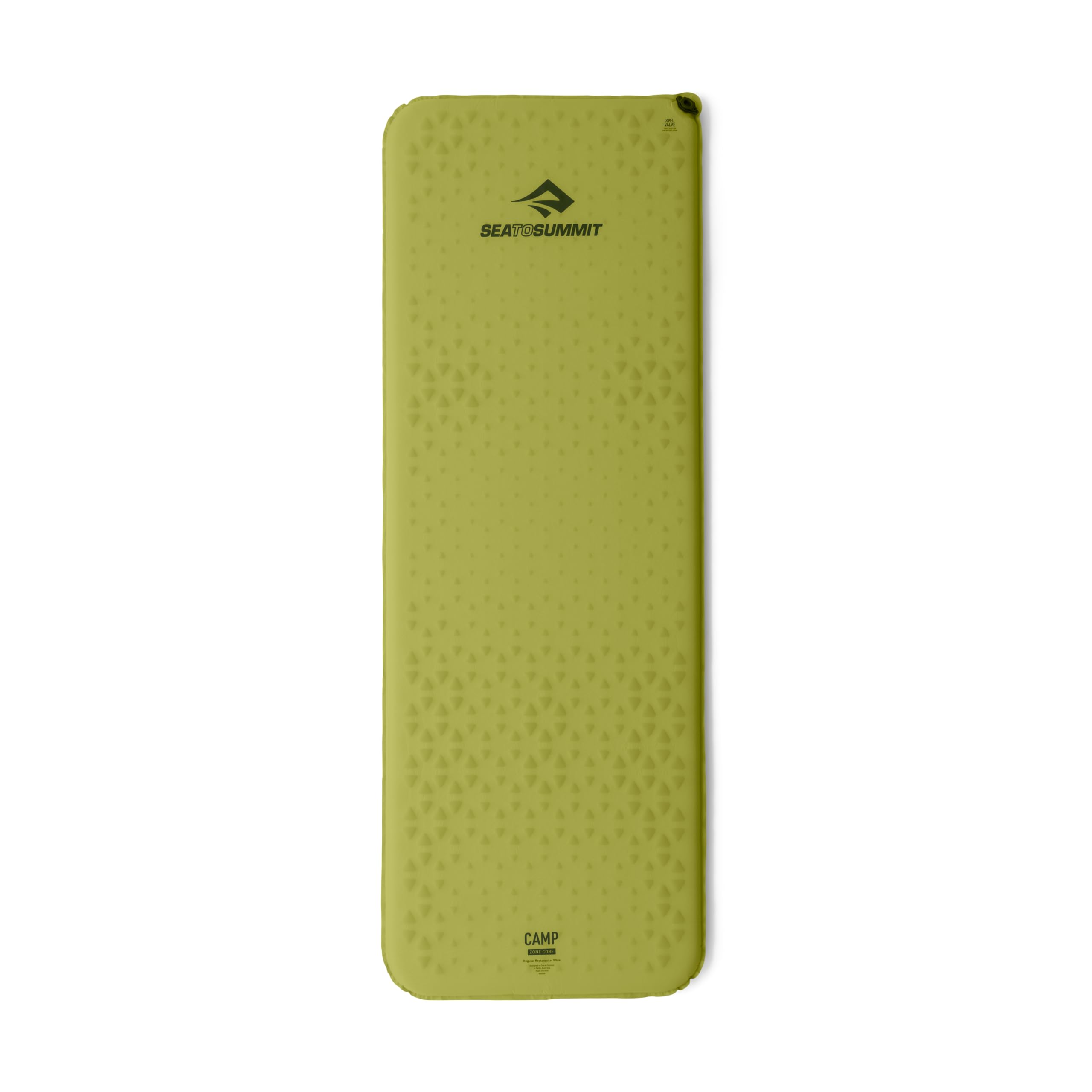
2. Sea to Summit Camp Plus SI Sleeping Mat, Rectangular/Regular
The pad that disappears into a pack at 2.4 pounds and still keeps the chill off your back.
At 2.4 pounds and 1.5 inches thick, this is a different animal from the beefy pads here — it is the one you carry. The rectangular 72 x 25.2 inch shape gives side sleepers a full flat surface instead of a tapered mummy cut. An R-value of 4.2 covers three-season camping and scouting trips, and the durable 75D polyester face fabric is certified recycled. It packs to 13.4 x 5.9 inches.
What people keep coming back to is the 2.4-pound packed weight and the reversible multi-function valve. It rolls down small, self-inflates quickly through a reversible multi-function valve, and that same valve lets you fine-tune the pressure rather than settling for all or nothing. The valve also opens one-way for fast deflation in the morning. It slips inside a mummy bag without complaint, which is exactly what you want when the bag is doing the warming and the pad is stopping the ground.
The trade-off is softness. A 1.5-inch pad is there to insulate and support, not to feel like a mattress, so if you are a heavy side sleeper chasing that sink-in feel, this will read as firm. Against the Lost Horizon Option3 it is dramatically lighter — 2.4 pounds versus 8.5 — but far thinner at 1.5 inches against 4.5. The included stuff sack, PillowLock patches and field repair kit round it out for real trail use.
The travel math: 2.4 pounds and a small packed footprint are what you are buying here. Everything else about the pad is competent; the weight and the reversible valve are the reasons it earns a place on a backpacking shortlist.
Who should think twice: couples wanting a shared bed, and anyone who needs deep cushioning for a bad hip. Slim pads are not built for that job, and buying one expecting otherwise leads to disappointment.
Built for: hikers, scouts and anyone whose pad rides in a pack and needs to weigh almost nothing.
Not for: car campers who want their bed replicated — that is the thicker picks’ territory.
3. Acacia 4″ Thick Self Inflating Sleeping Pad with Foam
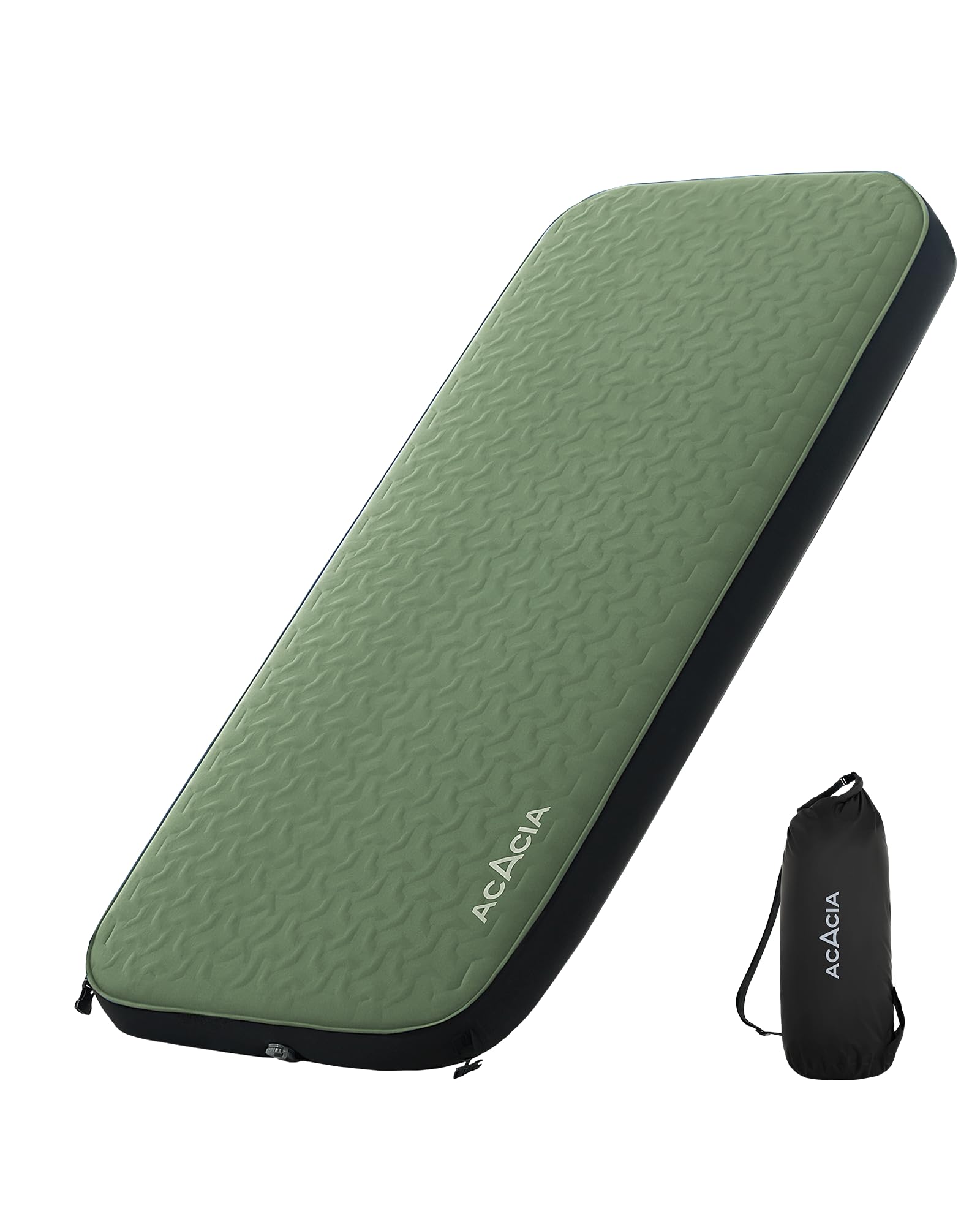
Thick enough to sleep on your side, clever enough to roll down to a seven-inch bundle.
Here is the trick that makes this pad interesting: its Y-shaped telescopic foam structure collapses inward to shrink the bulk after deflation. That is why it packs to 7 x 7 x 27 inches at 5.3 pounds, which is a rarity for something 4.3 inches thick. It supports up to 220 pounds without bottoming out and stretches to 79 x 28 inches — a longer, wider surface than the Sea to Summit’s 72 x 25.2, so taller sleepers get more room to sprawl.
The 4.3 inches of foam deliver the side-sleeper cushioning you expect at this price. The soft, noiseless polyester surface keeps side-sleeping and restless nights quiet, and the R-value of 6 covers most of the year outside deep winter. A 2-way valve handles the bulk of inflation and deflation, and you can use the included carry bag as a pump sack to top it up to your preferred firmness. Side buckles let you link two pads into a wider bed for couples.
The thing to weigh honestly is air retention. Most owners sleep fine, but a recurring strain in the feedback is air that slowly bleeds out over a few hours, leaving you lower by morning. Check the valve seating before every trip and give it a slow overnight test at home first. It is a fair trade for a pad this portable, but it is a trade.
Why it earns its place
- 4.3 inches of foam support at just 5.3 pounds
- Y-shaped foam packs down to 7 x 7 x 27 inches
- R-value of 6 covers three-plus seasons
- Pump sack and connector buckles included
What to watch
- Air retention is the recurring complaint across longer nights
- 220-pound limit is the lowest on this list
- No electric pump — expect the pump-sack routine
Pick it when: you want thick-pad comfort without the trunk-filling bulk, and you camp as a solo or pair of light sleepers.
Look elsewhere when: your weight sits near the top of the 220-pound capacity, or you need rock-solid winter insulation.
4. Hikenture 4″ Thick Self Inflating Sleeping Pad, Foam & Air Camping Mattress
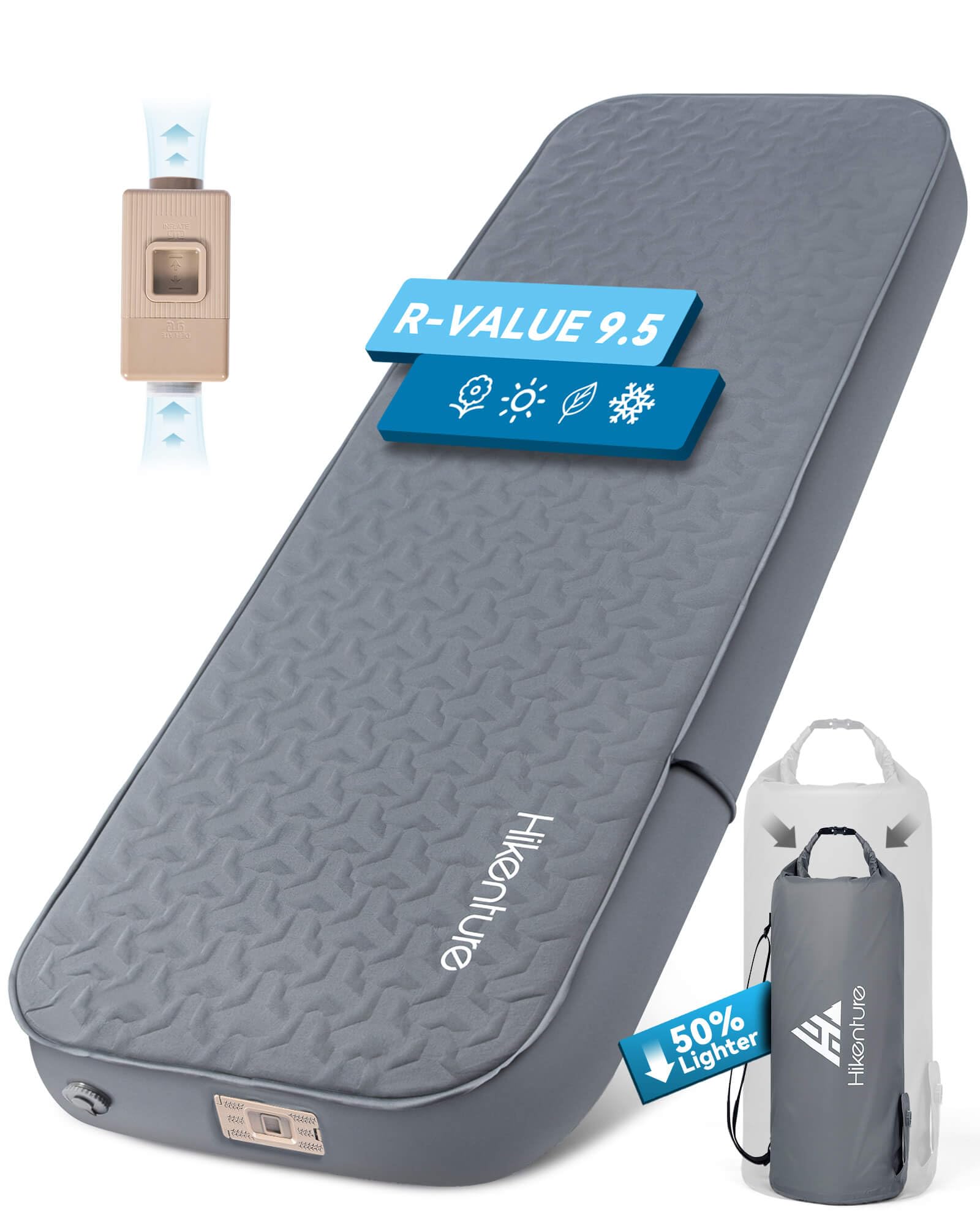
Push a button, get a firm bed in 90 seconds, then push again and watch it suck itself flat.
The built-in electric pump is the whole point. Hikenture says it inflates the pad to firm in 90 seconds, and deflation is a single button press that pulls the mattress back into a compact bundle. For anyone who has spent ten minutes huffing into a valve at the end of a tired day, that convenience is real. The pad itself is 4 inches thick and 80 x 28 inches, with stretch-knit fabric on top that stays quiet when you move.
Warmth is a strong suit here too. An R-value of 9.5 pushes this into proper cold-weather territory, well above the Acacia’s 6 and the Sea to Summit’s 4.2, and the Y-structure foam channels are designed to trap body heat while cutting bulk. The adaptive 4-inch foam cradles hips and shoulders instead of letting them drop through. Owners describe the sleep quality as genuinely bed-like, with firmness that holds up for two sleepers.
The catch worth naming: air retention and portability both come in for mixed feedback. Some pads hold firm all night, others soften toward morning, and 5.4 pounds is a car-camping weight rather than a trail weight. Charge the pump before you leave and seat the valve carefully, and it does what it promises.
The setup win: 90-second inflation and one-touch deflation are the reasons to pick this over the manual pads. Pair that with an R-value of 9.5 and you have a cold-weather pad that costs you nothing in effort.
Small print: the electric pump needs charge, and 5.4 pounds and mixed air-retention feedback mean it suits car camping better than backcountry trips.
Ideal for: campers who hate pumping, sleep cold, and roll the pad out of the boot rather than off their back.
Second-guess it if: you are hiking in, or you want a pad that stays fully firm without a valve check.
5. EUHAMS Double Self-Inflating Sleeping Pad for Camping with Memory Foam
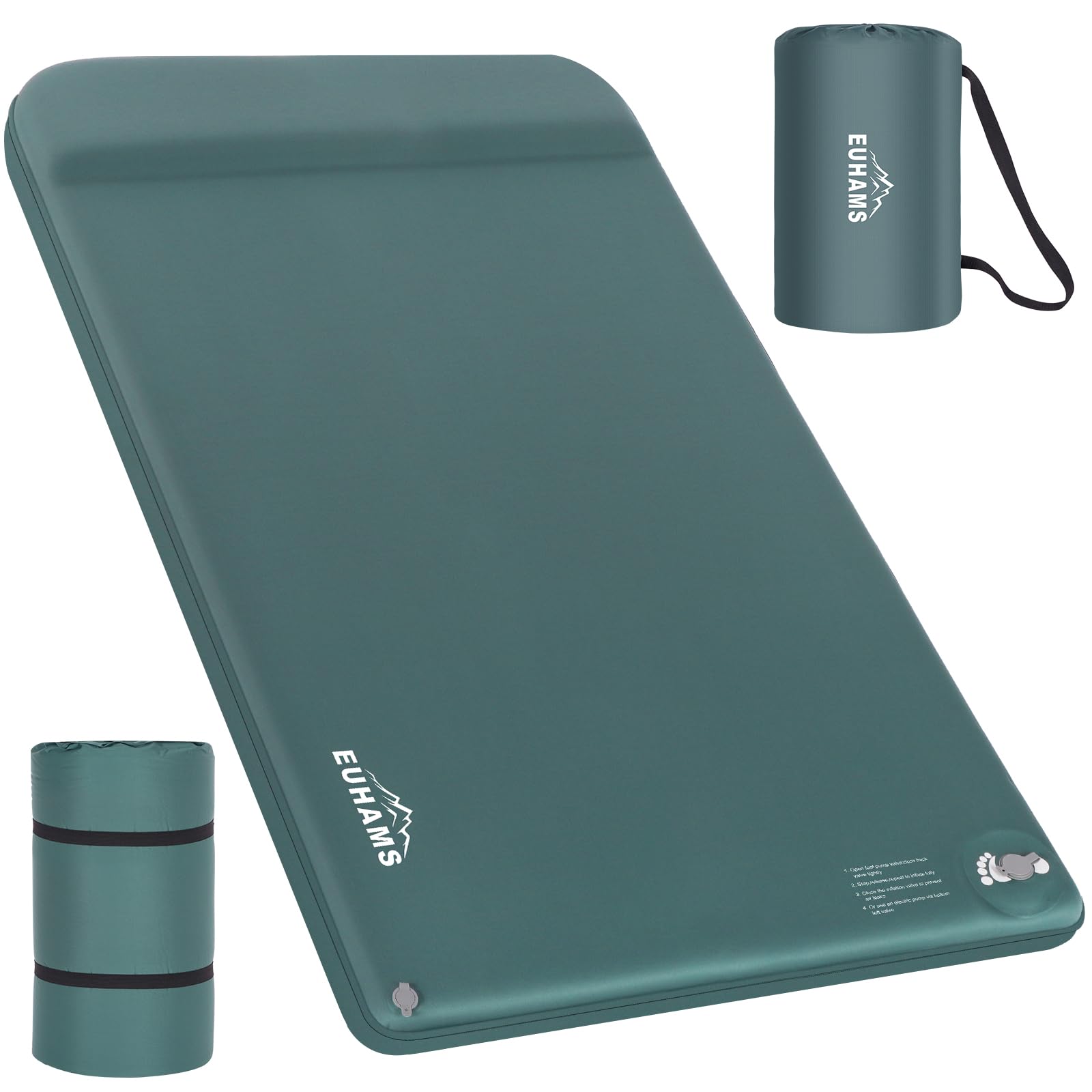
A 50.7-inch-wide double bed built from memory foam, made for two sleepers who refuse to fight for space.
Start with the dimensions, because they are the reason to buy it. At 78.7 x 50.7 inches, this pad is a genuine two-person surface, and it carries up to 800 pounds — the highest capacity on this list by a wide margin. High-density 26D memory foam fills the 2.3 inches of thickness, and that high-resilience structure spreads body weight out instead of letting hips punch through. It is the one pad here that makes the argument for two people sharing one mattress rather than pushing two singles together.
Setup suits campers who want to be done fast. A built-in foot pump inflates it in about a minute, and you can dial firmness by how long you pump. The maker notes the first inflation can take 15 to 20 minutes because the foam arrives vacuum-packed, which is worth knowing so a first-night surprise does not ruin the trip. Dual valves speed deflation, and it folds to 23.6 x 13 inches into the included bag. The 50D stretch polyester with a waterproof TPU coating handles damp ground, and the R-value of 9.5 covers four seasons.
What holds buyers’ confidence is the 50D stretch polyester with waterproof TPU coating — the most-cited strength here — along with how well the 78.7 x 50.7-inch pad fits a standard cot. One nudge: at 2.3 inches it is the thinnest of the thick pads, so heavier sleepers may prefer the 4-inch options if they want maximum cushioning.
Built around: couples, families and cot-sleepers who want one wide memory-foam surface and a foot-pump setup in about a minute.
Think twice if: you sleep alone and want maximum thickness — 2.3 inches is generous for two but shallower than the 4-inch singles.
6. Elegear Air & Foam Self Inflating Sleeping Pad with Electric Pump 4″ Full
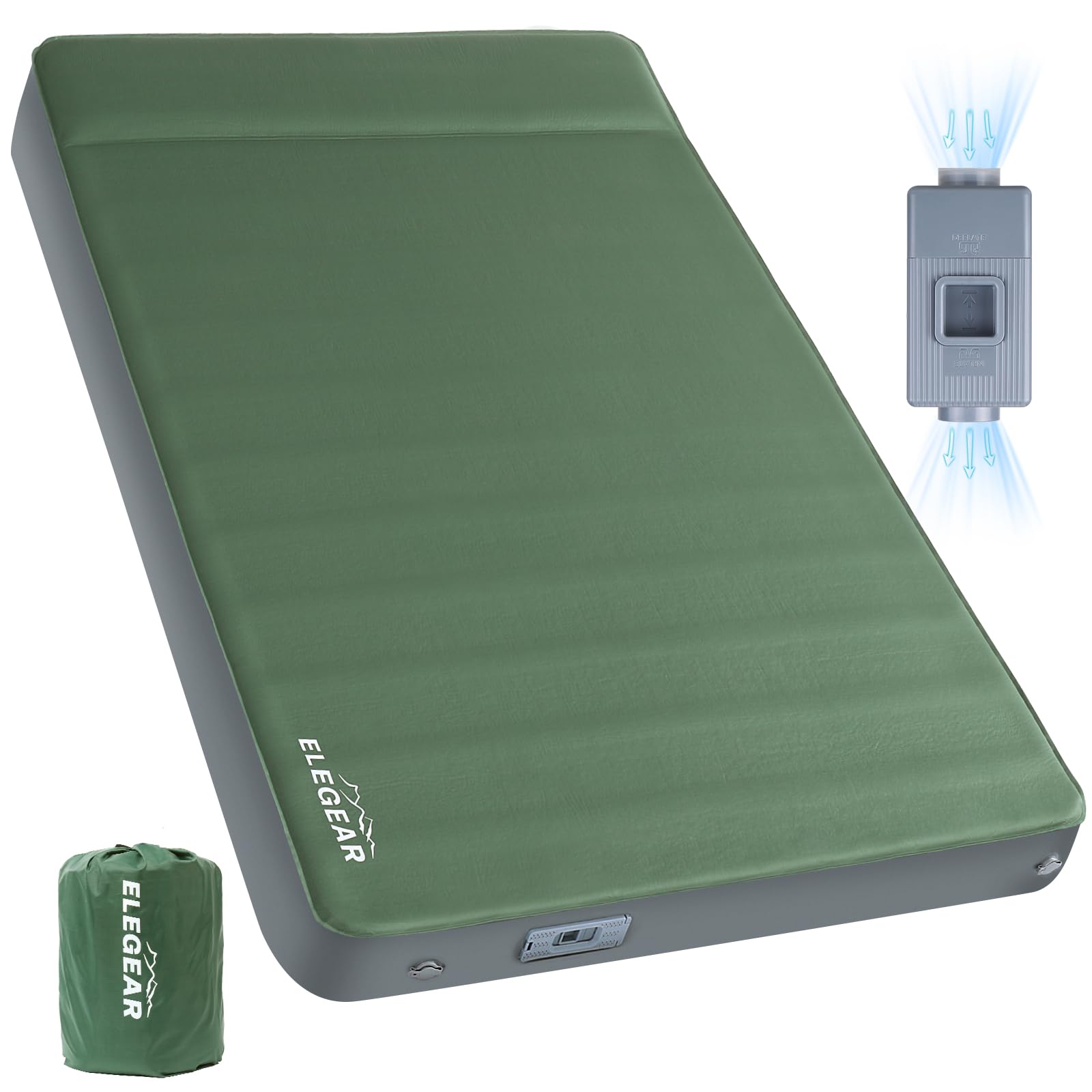
A full-size 4-inch memory foam mattress with its own pillow and an electric pump to do the work.
Picture the easiest possible setup. A built-in electric pump handles one-touch inflation and deflation, and the maker specs it at 2 minutes to inflate and 3.5 minutes to deflate. It also vacuum-compresses for storage, which is a genuine space saver for a pad this large. The pad measures 79 x 52 inches — full-size — so two people get real width, and the 4-inch thickness gives you a proper mattress profile with an integrated pillow at the head.
The foam is the story underneath. 26D hollowed memory foam adapts to your body’s curves and spreads pressure across back, side and stomach sleepers alike, with an R-value up to 9.5 for four-season insulation. A 50D knitted fabric top paired with a leak-proof TPU layer resists wear and keeps its shape, and the built-in pillow supports your neck so you can leave the camping pillow at home. Build quality is the most-praised theme in the feedback, and owners say it exceeds expectations.
Two things to keep in mind. The pump has an endurance limit — the maker says 20 minutes — so watch the charge and do not leave it running. Air retention also splits opinion, with some pads holding firm and others losing air. Run a home test before a long trip.
The big-pad argument: full 79 x 52 inch surface, a pillow built in, and a pump that finishes the job in 2 minutes. That combination is hard to match for a couple who want one shared bed.
The fine print: air retention is uneven across units, so test at home first, and keep an eye on the pump’s 20-minute limit.
Suits you if: you want a full-size, pillow-included foam bed for two and value one-touch setup over manual pumping.
skip it if: you need absolute confidence in overnight air retention without a home test first.
7. Lost Horizon Self-Inflating Foam Camping Mattress, Queen, 3″ Thick
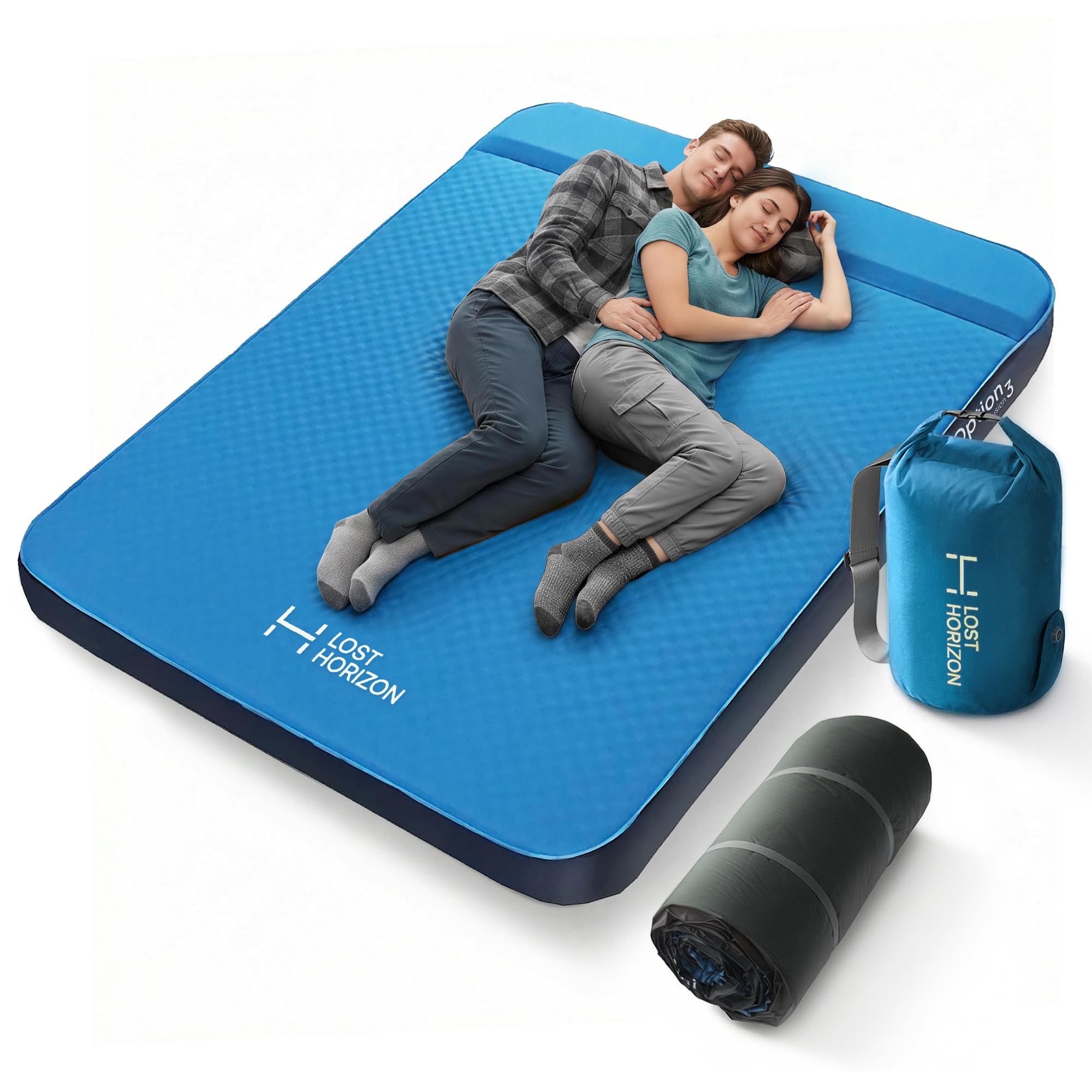
Queen-width, 9 pounds of foam, and winter-grade insulation for a base camp you can share.
This is the widest bed on the list at 80 x 59 inches, which is queen territory and the reason to look at it. A 9-pound foam fill and 3 inches of thickness support up to 400 pounds while spreading air and foam evenly for pressure relief. An R-value of 9.7 edges just above the Elegear’s 9.5 for cold-ground insulation, so this is a four-season pad built for two people with room to spare.
Comfort and build quality both earn steady praise, and the warmth holds up on genuinely cold nights — one owner compared it to an Exped Deepsleep and reported it working well through a 30°F night. It runs quiet and stable, avoiding the squeak of a plain air bed, and the air-and-foam mix lets you adjust firmness to taste. For a couple or a solo sleeper who likes sprawl, the width alone is a strong argument.
Here is the honest bill. Inflating is easy through the twist valve, but deflating and stowing a pad this bulky takes patience — Lost Horizon sells an electric pump separately for that. A few owners also find the footprint tight in smaller tents and the weight on the heavy side. Get it if you have the space and want the size; the comfort repays the effort.
Why it wins for space
- 80 x 59 inches of queen-width comfort
- R-value of 9.7 tops the list for cold-ground insulation
- 400-pound capacity with 9 pounds of foam
- Quiet air-and-foam surface, adjustable firmness
What it asks in return
- Deflating and stowing takes patience; the electric pump is sold separately
- Heavy at 9 pounds of foam, and bulky when packed
- Queen footprint needs a large tent
Buy it for: the queen-size surface and winter-grade insulation — the widest, warmest pad here for a shared base camp.
Leave it if: your tent is compact or you want a fast pack-down without an extra pump.
Understanding the Specs
R-Value and Cold Ground
R-value tells you how well a pad resists heat escaping into the ground. A low number suits warm-weather tenting; a higher number keeps you warmer when the ground is frozen. On this list the range runs from 4.2 up to 13, so match it to your season rather than picking the biggest number blindly — the R-value of 13 Lost Horizon Option3 is built for winter, while the R-value of 4.2 Sea to Summit is a three-season trail pad.
Thickness and Support
Thickness in inches is the number that decides comfort, especially for side sleepers whose hips and shoulders need room to sink without reaching the floor. A 4.5-inch pad like the Lost Horizon Option3 cushions deeply, while a 1.5-inch pad like the Sea to Summit is there for insulation and light support. More thickness usually means more foam and more weight, so thicker pads tend to be car-camping picks rather than backpacking ones.
Inflation Style
Self-inflating pads fill through a valve when the foam expands, and you top them up with a breath or a pump sack. A built-in electric or foot pump does the work faster — the Hikenture’s electric pump inflates in 90 seconds, the EUHAMS foot pump in about a minute, and the Elegear’s electric pump in 2 minutes. Faster pumps add convenience but also a component to keep charged and a limit to watch.
Weight and Packed Size
Packed weight in pounds and the rolled bundle size decide whether a pad rides in a backpack or a car boot. The 2.4-pound Sea to Summit packs down to 13.4 x 5.9 inches for trail use, while heavier foam-filled pads above 5 pounds are better suited to car camping. If you plan to carry the pad, chase low weight and a small bundle; if you drive to the site, prize thickness and support instead.
FAQ
How is an air foam mattress different from a plain air bed?
What R-value do I need for cold-weather camping?
Will a thick 4-inch pad fit in a normal two-person tent?
Do self-inflating foam pads need a pump?
Which pad packs small enough for backpacking?
How much weight can an air foam mattress support?
Why does my foam pad lose air overnight?
Is memory foam better than standard foam in a camping pad?
Can two people share one double air foam mattress?
Final Thoughts: The Verdict
For most campers, the air foam mattress winner is the Lost Horizon Option3 Twin, because its R-value of 13 and 4.5 inches of foam deliver the warmest, deepest sleep on this list for a car-camping setup. If you want hands-free setup, grab the Hikenture 4-inch with its 90-second electric pump and R-value of 9.5. And for two sleepers sharing one wide bed, the EUHAMS double is the one to reach for, with a 50.7-inch surface and 800-pound capacity. The Sea to Summit is the pick only when the pad has to travel on your back at 2.4 pounds — everything else on this list is built to be rolled out from the car.
How We Picked
We do not accept paid placement. Every pick is matched to a real buyer and a real use-case; we do not hands-on test units.
Sources & Methodology
Specifications: manufacturer listings and product documentation. Review insights: verified customer reviews, as of November 2026. Pricing: not shown on this page (it changes often); check the current price via the retailer link.
As an Amazon Associate, Gadgets Feed earns from qualifying purchases. This does not affect which products we feature.