
That one room in your house that never seems to get warm—the basement office, the far corner bedroom, the drafty bathroom—is a constant source of frustration. You don’t want a bulky space heater taking up floor space or a noisy fan blowing dry air in your face. What you need is a discreet, permanent-looking solution that mounts to the wall, blends into the room, and delivers targeted, comfortable heat exactly where you need it.
I’m Min — the co-founder and writer behind Gadgets Feed. After spending dozens of hours comparing heating coverage, wattage, thermostat accuracy, and noise levels across the most popular wall-mounted and in-wall models, I’ve sorted through the specs to find the units that actually deliver on their promises.
Whether you need a primary heater for a small room or a supplementary boost for a larger space, this guide to the best air heat wall units will help you find the right wattage, form factor, and smart features for your home.
How To Choose The Best Air Heat Wall Units
Picking the right wall heater isn’t just about grabbing the highest wattage you can find. You need to match the heater’s output to your room size, decide whether you want a surface-mounted or recessed unit, and check if the electrical circuit can handle the load. Here’s what to focus on.
Wattage, Voltage, and Room Size
The most important spec. A general rule is 10 watts per square foot of floor space. A 1,500-watt unit on a 120-volt circuit is the standard for most households, covering up to 150 square feet as a primary source. For larger rooms, 240-volt units like the Cadet models offer 2,000 watts (or more) and can handle 250+ square feet. If your room is poorly insulated, lean toward the higher end of that range.
Installation: Surface-Mount vs. Recessed
Surface-mounted units (like the Brightown and DREO) hang on the wall via brackets and plug into a standard outlet. They’re easier to install and require no structural changes, making them ideal for renters or quick setups. Recessed units (like the Cadet Com-Pak and Heat Storm) fit into a cutout in the wall between studs. They look cleaner and more permanent but require cutting into drywall, running wire, and careful framing. If you own your home and want a built-in look, recessed is the way to go.
Heating Element Type: Forced Air vs. Infrared vs. Convection
Forced air units (most Cadets and Heat Storm) use a fan to blow air over a hot element. They heat up fast and are great for quick warmth, but the fan noise (typically 30-50 dB) can be an issue in bedrooms. Infrared heaters (like the Ballu) use mica panels to radiate heat directly to objects and people. They’re silent and don’t dry out the air, but they take longer to warm a whole room. Convection heaters (some fireplace inserts) circulate air without a loud fan but work best in smaller, well-insulated spaces.
Smart Features: App Control and Voice Assistants
WiFi-enabled units like the Brightown, DREO, and Heat Storm let you set schedules and adjust temperature from your phone. This is a genuine convenience if you want to preheat a bathroom before your morning shower or turn off a heater you forgot about. Alexa and Google Assistant compatibility is standard on most smart models. The Ballu even tracks your usage to automatically adjust for energy savings. If you don’t need smart controls, the simpler Cadet units offer reliable manual thermostats at a lower cost.
Safety Certifications and Auto Shut-Off
Every wall heater should have overheat protection and a tip-over switch (for floor-standing models). Look for ETL or UL listings. The DREO and Brightown units use V-0 flame-retardant materials. IP24 waterproof ratings (like the DREO) are crucial for bathroom installation. Recessed units with metal construction (Cadet, Heat Storm) have inherent fire resistance from their enclosed steel boxes. Never use a unit on a circuit shared with other high-power appliances.
Quick Comparison
On smaller screens, swipe sideways to see the full table.
| Model | Category | Best For | Key Spec | Amazon |
|---|---|---|---|---|
| Brightown Smart Wall Heater | Smart | Smart control & fast heat | 1500W, 200 sq ft, PTC | Amazon |
| DREO Smart Wall Heater | Smart | Quiet operation & app control | 1500W, 150-750 sq ft, 28dB | Amazon |
| Cadet CS202 (heater only) | Recessed | High-power in-wall replacement | 2000W, 240V, 250 sq ft | Amazon |
| Cadet CSC101TW (complete unit) | Recessed | Compact recessed with thermostat | 1000W, 120V, 200 sq ft | Amazon |
| Cadet CSC102TW (complete unit) | Recessed | 240V recessed for medium rooms | 1000W, 240V, 150 sq ft | Amazon |
| Ballu Mica Infrared Panel Heater | Infrared | Silent, energy-saving whole-room heat | 1500W, 250+ sq ft, mica panels | Amazon |
| Heat Storm WiFi In-Wall Heater | Recessed Smart | In-wall with WiFi scheduling | 1500W, 150-750 sq ft, WiFi | Amazon |
| RODALFLAME Electric Fireplace Insert | Fireplace | Ambient flames with supplemental heat | 1500W, 400 sq ft, 33″ width | Amazon |
| Westinghouse 60″ Electric Fireplace | Fireplace Large | Large room ambience & smart control | 1500W, 5110 BTU, 60″ wide | Amazon |
In‑Depth Reviews
1. Brightown Smart Wall Heater
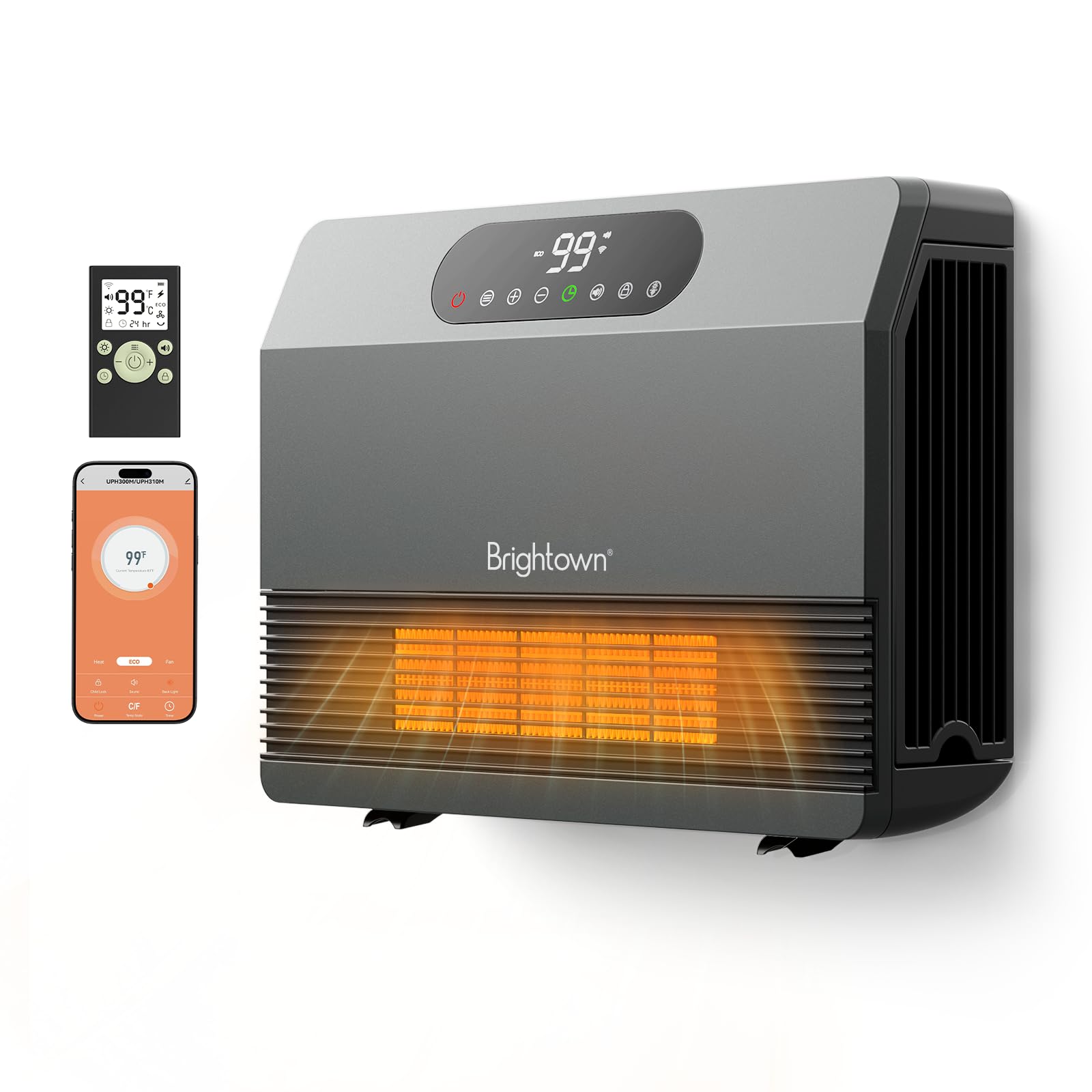
The Brightown Smart Wall Heater hits the sweet spot between feature set and price. Its 1,500-watt PTC ceramic element heats up in about two seconds, and the forced-air fan pushes warmth across a 200-square-foot room. The five operating modes—ECO, three power levels (1500W, 1000W, 600W), and a fan-only setting—give you real flexibility to dial in the exact heat output without cycling on and off constantly.
The thermostat is adjustable from 40°F to 99°F in 1-degree increments, and the built-in ECO mode auto-adjusts wattage to maintain the set temperature, which saves energy compared to a simple on/off thermostat. It connects to Alexa via the Smart Life/Tuya app, so you can set schedules and change temperature with voice commands. The 28 dB noise level is quiet enough for a bedroom — users describe it as “as quiet as a ceiling fan.”
Installation is straightforward: mount the bracket to the wall with the included hardware, hang the heater, and plug it into a standard 120V outlet. The V-0 flame-retardant materials and ETL listing provide solid safety assurance. It won’t be a primary heater for a large open space, but for a bedroom, bathroom, or home office, this is a near-perfect balance of smart features, heat output, and quiet operation.
Why it’s great
- Very fast 2-second heat-up with PTC ceramic
- App, remote, and voice control via Alexa
- Quiet operation at roughly 28 dB
- ECO mode provides energy savings
Good to know
- Coverage is best for 200 sq ft or less
- Wall anchors included, but a stud screw is more secure
- Should not share a circuit with other high-power appliances
2. DREO Smart Wall Heater

The DREO wall heater distinguishes itself with a 30-degree manual oscillation feature—rare for a wall-mounted unit—that lets you direct airflow left or right to cover a wider area. Its PTC heating system pushes an 11.5 ft/s airflow while staying at a remarkably low 28 dB, making it one of the quietest forced-air wall heaters at this power level. The heating coverage is rated for 150 square feet as a primary source, or up to 750 square feet as a supplementary heater in an insulated space.
Smart control is comprehensive: you get the DREO app, an included remote, and voice command support for Alexa. The ECO mode uses a precise thermostat with a calibration feature in the app to keep the temperature reading accurate. The IP24 waterproof rating and V-0 flame-retardant construction make it safe for bathroom installation (provided it’s mounted away from direct water spray). The 70.8-inch power cord offers flexibility in outlet placement.
Users consistently praise its quietness in bedrooms and nurseries, with several reviews noting it heats a 10×10 office quickly. The one consistent criticism is that the fan’s CFM is lower than some competitors, meaning it takes a bit longer to heat a room than a more aggressive fan-based unit. It’s an excellent choice where silence and smart features matter more than raw blast force.
Why it’s great
- 30° oscillation for broader heat distribution
- Very quiet at 28 dB
- IP24 waterproof rating for bathroom use
- App with temperature calibration
Good to know
- Lower CFM means slower room heating
- Best used as a primary heater for rooms under 150 sq ft
3. Cadet Com-Pak CS202 (Heater Only)
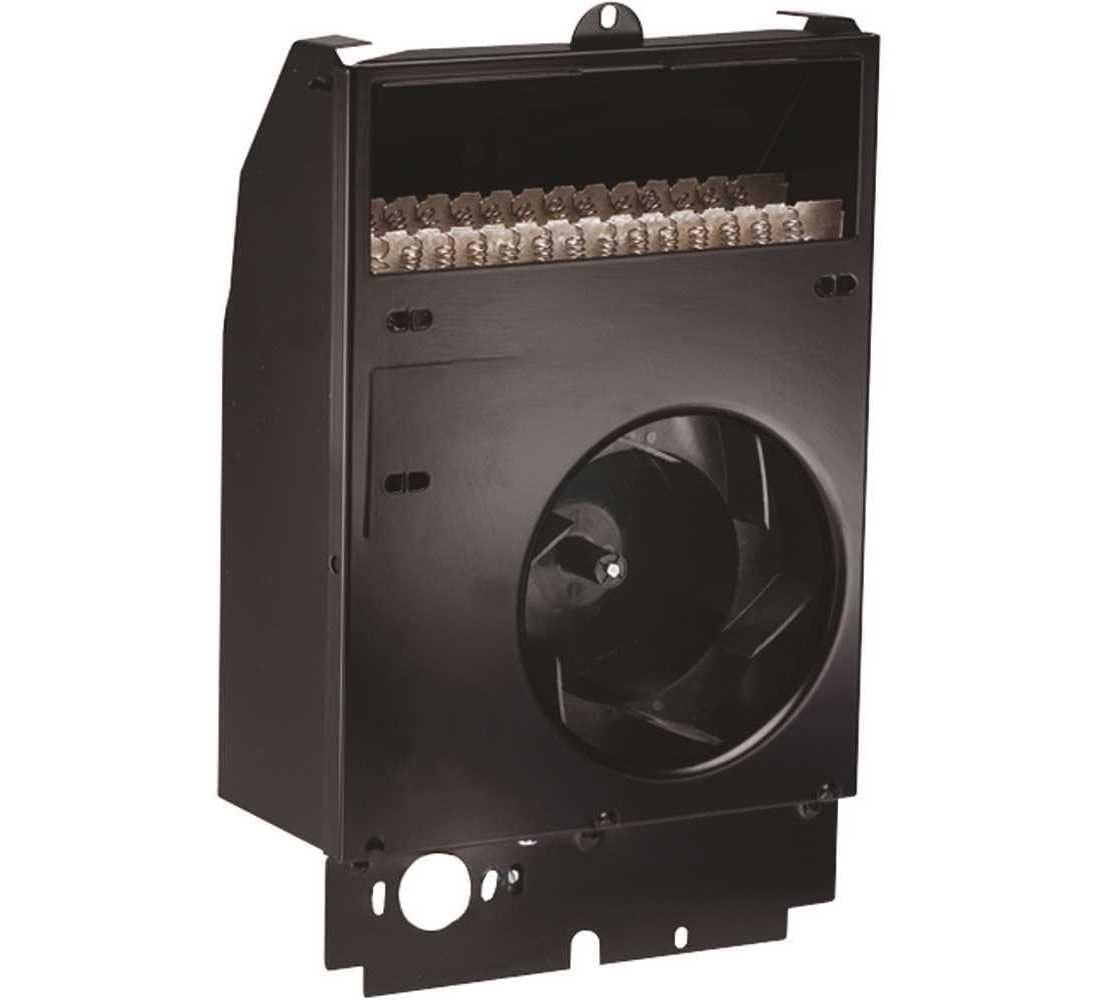
The Cadet CS202 is a workhorse replacement heater for homes that already have the wall can (the recessed box) installed. It delivers 2,000 watts at 240 volts, producing up to 6,825 BTUs—enough to heat a 250-square-foot room as a primary source. This is a step up in power from typical 1,500W models and is suitable for master bedrooms, larger home offices, or basement living areas.
This unit is the heater assembly only, meaning you need a compatible Cadet wall can (sold separately) and a separate thermostat. That’s a pro for replacements—if your existing wall can is still in good shape, you just swap the heating element for a five-minute install. It supports both horizontal and vertical mounting, offering flexibility for tight spaces. The forced-air centrifugal fan is known for being quieter than many budget fan-forced heaters, though it is not silent.
Assembled in the USA with a 5-year warranty, the build quality is a clear step above budget imports. The all-metal construction (powder-coated) is durable and fire-resistant. If you’re doing a new installation, you’ll need to source the wall can and grille separately, which adds to the total cost and complexity. But if you want a powerful, long-lasting in-wall heater, this is the standard bearer.
Why it’s great
- 2,000W output is higher than most wall units
- 5-year warranty and USA assembly
- Fits existing Cadet wall cans for easy replacement
- Horizontal or vertical mounting
Good to know
- Requires a separate 240V circuit and wall can
- No built-in thermostat included
4. Cadet Com-Pak CSC101TW (1000W)
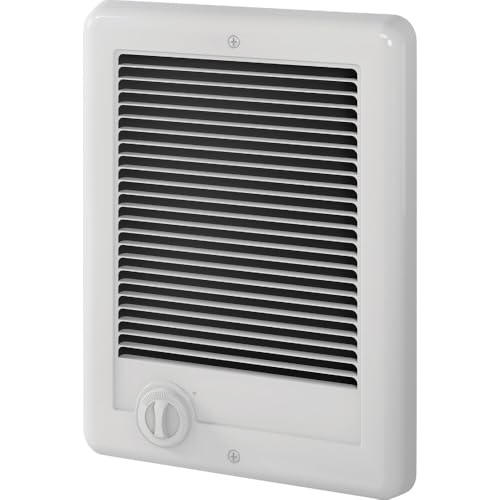
The Cadet CSC101TW is the 120-volt, 1,000-watt complete unit that includes the wall can, heater assembly, grille, and a built-in thermostat—everything you need for a new installation. At 1,000 watts, it’s suitable for small rooms up to 200 square feet, like a bathroom, laundry room, or compact bedroom. The recessed design leaves a clean, flush finish on the wall, taking up zero floor space and virtually no visual real estate.
The centrifugal fan is whisper-quiet—users consistently describe the motor as barely audible. The built-in thermostat is functional but basic; some users note that it lacks a true “off” position and recommend an external wall thermostat for more precise temperature control. The steel box is designed to fit inside a standard 2×4 stud wall, though you may need to extend the box to account for drywall thickness so the thermostat knob reaches properly.
Installation requires cutting a hole in the drywall, mounting the can between studs, and running a dedicated 120V circuit. It’s not a beginner project, but anyone comfortable with basic electrical work can handle it. For a permanent, quiet, and safe heating solution in a small room, this is a reliable choice with decades of proven design.
Why it’s great
- Complete unit includes wall can and thermostat
- Very quiet fan suitable for bedrooms
- Flush recessed look with no floor footprint
Good to know
- Installation requires cutting into drywall
- Built-in thermostat lacks a true off setting
5. Cadet Com-Pak CSC102TW (1000W 240V)

This Cadet CSC102TW is essentially the 240-volt version of the CSC101TW, delivering 1,000 watts (3,415 BTUs) at 240 volts, with an optional 750-watt setting at 208 volts for dual-voltage flexibility. The 240V connection is more efficient for longer wire runs and is common in homes with electric baseboard systems. It’s rated to heat a 150-square-foot room as a primary source, though many users report it comfortably handles larger bathrooms and small bedrooms.
The complete unit includes the wall can, heater, grille, and a built-in thermostat. Users frequently replace 20+ year old Cadet heaters—the dimensions and design haven’t changes, so it drops into existing cans. The metal construction is powder-coated for durability, and the high-temperature safety shutoff adds peace of mind. The centrifugal fan provides good airflow without excessive noise, though it’s slightly louder than the 120V 1,000W model.
One common complaint is that the heat output, while adequate for a single small room, struggles to heat adjacent spaces. It’s best for targeted use, not whole-floor heating. If you have an old Cadet can and need a 240V replacement that includes everything in one box, this is the simplest and most reliable choice available.
Why it’s great
- 240V operation for efficient power use
- Complete kit with everything needed for install
- Drop-in replacement for older Cadet units
- Safety shutoff and metal construction
Good to know
- Only 1,000W output limits room size
- Requires a dedicated 240V circuit
6. Ballu Mica Infrared Panel Heater
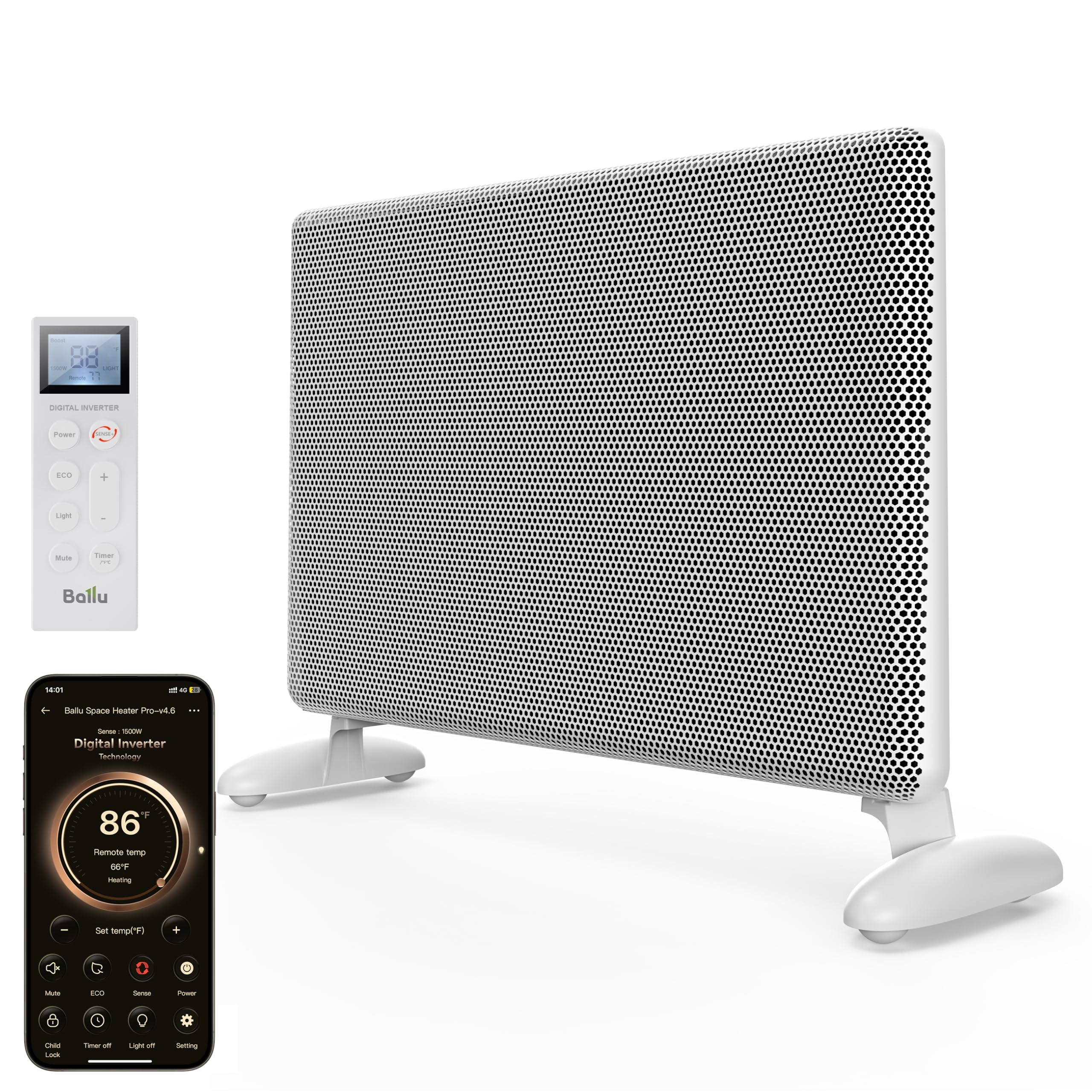
The Ballu Mica Infrared Heater is a completely different approach to wall heating. Instead of a fan blowing hot air, it uses large mica panels that emit far-infrared radiation, warming objects and people directly rather than the air. This means zero fan noise, no dust circulation, and less air dryness. It can run as a primary heater for 250 square feet or provide supplementary warmth to over 500 square feet. The 10-second heat-up time is impressive for an infrared unit.
The inverter technology is the standout feature: the heater tracks your usage patterns and room temperature changes, then automatically adjusts its output (down to 750W in Eco mode) to maintain the set temperature, claiming up to 50% energy savings. The LED remote includes a built-in temperature sensor that updates every minute for accurate feedback near your seating area. The app supports schedules, power level display, and Alexa integration.
The unit can sit on casters (included) or be wall-mounted (hardware included). The surface does get warm—one reviewer measured the floor beneath it reaching 96-100°F on casters, which could be an issue with temperature-sensitive flooring like LVP. It’s a premium product with a premium price, and it’s best suited for those who prioritize silence and even, comfortable heat over the blast of a forced-air unit.
Why it’s great
- Completely silent operation
- Inverter tech tracks usage for energy savings
- Heats objects directly without drying air
- 180° wide coverage
Good to know
- Surface gets hot enough to potentially damage some flooring
- Slower to raise air temperature than forced air
7. Heat Storm 1500W WiFi In-Wall Heater

The Heat Storm is one of the few in-wall (recessed) heaters that combines a built-in WiFi module, a digital touchscreen, and a programmable thermostat in a single package. It delivers 1,500 or 750 watts of forced-air heat from a 15×10-inch cutout, making it a compact flush-mount solution for bedrooms, living rooms, or kitchens. The wall can is included, so you get everything for a new recessed installation.
The digital thermostat has adjustable LED brightness and a child lock for safety. The WiFi allows you to set custom daily heat schedules from your phone, which is a genuine advantage for in-wall units that are otherwise hard to adjust without getting up. The heater is rated for 150 square feet as a primary source and up to 750 square feet as a supplementary source in an R24-insulated space. The included remote adds convenience.
The biggest downside is noise. Multiple users note it is loud, especially during the cool-down cycle when the metal housing pops as it contracts. This makes it best suited for utility rooms, basements, or garages rather than bedrooms. The app also lacks a detailed time-of-day schedule configuration, which some users find limiting for a smart heater at this price point.
Why it’s great
- In-wall flush mount with included wall can
- WiFi scheduling and digital touchscreen
- Child lock and adjustable LED brightness
Good to know
- Fan and cool-down metal popping are loud
- App lacks time-of-day scheduling
8. RODALFLAME 33″ Electric Fireplace Insert
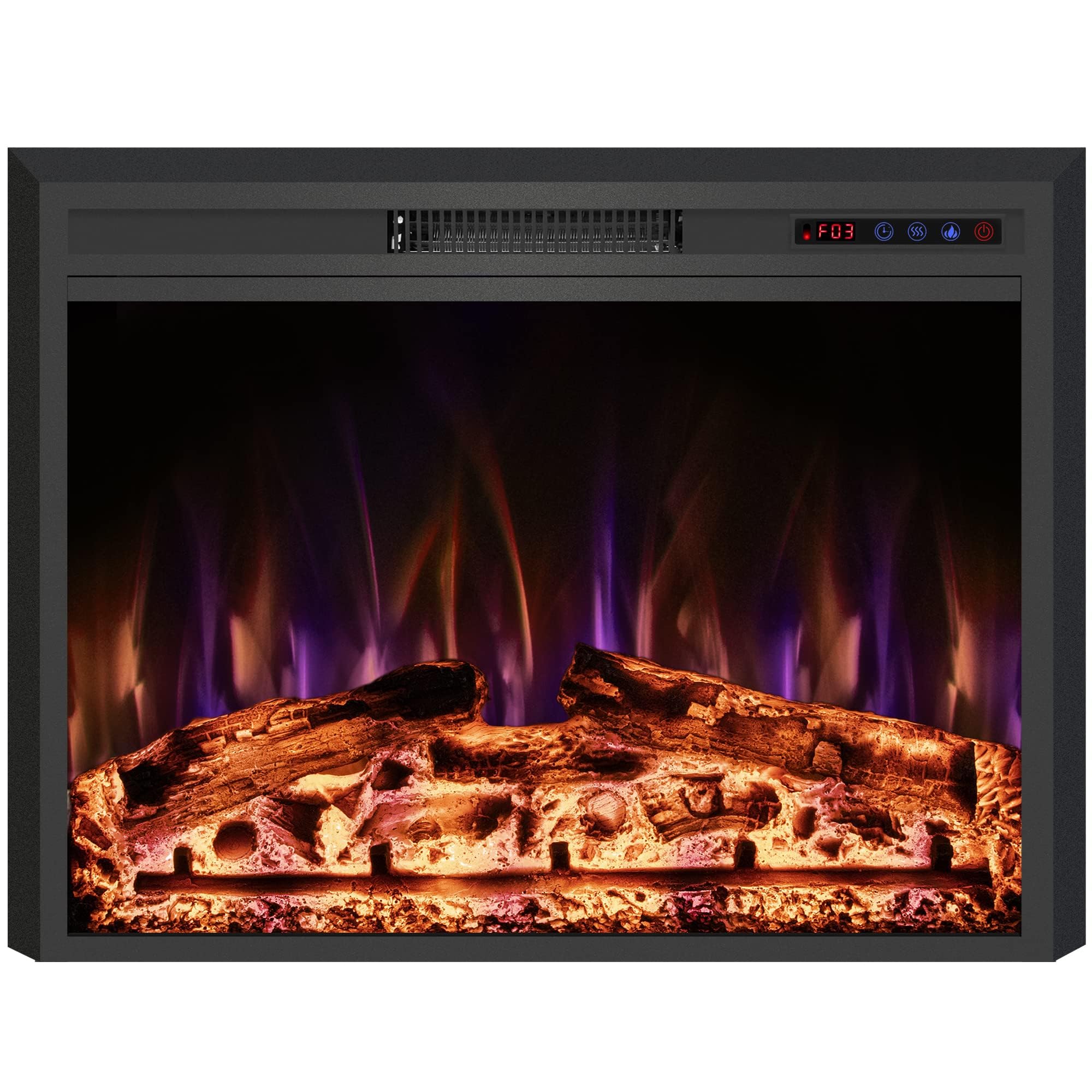
The RODALFLAME insert is a versatile 33-inch-wide unit that functions as both a heater and a decorative fireplace. It delivers 1,500 watts (5,120 BTUs) to heat up to 400 square feet, making it one of the higher-coverage units in this list. The quartz heating element is paired with a quiet fan that provides supplemental warmth, though it’s not a replacement for a primary furnace in cold climates.
The flame effects are the real draw here: three independent color options (yellow, blue, mixed), a realistic simulated charcoal bed, and the ability to run the flame effect without the heater—great for year-round ambiance. The touchscreen and remote control let you adjust all settings, including a timer from 1 to 9 hours. At just 5.3 inches deep, it fits into a standard 2×4 wall or existing fireplace opening without significant structural modification.
Users consistently praise its aesthetic value and ease of installation, particularly for converting old wood-burning fireplaces. The heater itself is described as decent but not powerful, with some noting the fan is louder on the low setting than the high setting. If you want a stylish focal point with real heat output for a small living area, this is a fantastic option—just manage expectations on heating performance in larger spaces.
Why it’s great
- Realistic three-color flame effects
- 400 sq ft heating coverage
- Touchscreen, remote, and timer
- Fits into existing fireplace openings
Good to know
- Heater is supplemental, not a furnace replacement
- Flame effect lags behind higher-end fireplace inserts
9. Westinghouse 60″ Electric Fireplace

The Westinghouse 60-inch electric fireplace is the largest and most feature-rich unit on this list, designed to be the centerpiece of a living room or master suite. It offers 144 total color combinations for flames and embers, 5 independent brightness levels, and 5 flame speeds—so you can dial in the exact visual mood. The included interchangeable faux log set and Camphor wood/crystal ember bed add genuine decor flexibility.
The heater output is a standard 1,500 watts (5,110 BTUs), which is adequate for supplemental heating up to 400 square feet but not enough to be a primary heat source for that size of room in a cold climate. The built-in thermostat is adjustable from 62°F to 82°F, and it supports Alexa, Google Home, and the Westinghouse app for voice and remote control. The unit can be either wall-mounted or recessed flush into the wall, requiring a 59″ x 15″ x 6″ opening.
Owners rave about the visual impact, with many calling it “stunning” and a great focal point. The heat output is consistently described as a nice bonus rather than the main feature—several users say the heater “doesn’t really work all that great” for warming a large room. If you want a dramatic visual upgrade with a warm glow and the ability to take the chill off a small space, this is a premium choice. For serious heating, look elsewhere in this list.
Why it’s great
- Massive 60-inch width for a dramatic focal point
- 144 flame/ember color combinations
- Interchangeable log and crystal ember sets
- Smart home compatible (Alexa, Google, app)
Good to know
- Heater output is supplemental, not primary
- Very expensive compared to standard wall heaters
- App only supports one phone at a time
FAQ
Can I install an in-wall heater myself or do I need an electrician?
Is a 1,500W wall heater enough to heat a bedroom?
What is the difference between a wall-mounted and an in-wall heater?
Are wall heaters safe to use in a bathroom?
Final Thoughts: The Verdict
For most users, the best air heat wall units winner is the Brightown Smart Wall Heater because it delivers fast PTC heat, quiet operation, and comprehensive smart control at a price that undercuts premium competitors. If you want silent, radiant heat without any fan noise, grab the Ballu Mica Infrared Heater. And for a permanent in-wall recessed solution with smart scheduling, nothing beats the Heat Storm WiFi In-Wall Heater for blending a clean look with modern convenience.