
The difference between a great backpacking trip and a miserable one often comes down to whether you slept. An inflatable sleeping pad is the single most impactful piece of gear for that equation — it isolates your body from the cold ground, cushions hips and shoulders, and packs down small enough to fit inside a 40-liter pack. This guide breaks down nine of the most compelling options on the market across every weight and warmth tier.
I’m Min — the co-founder and writer behind Gadgets Feed. I’ve spent hundreds of hours researching and cross-referencing technical specifications, ASTM test results, and real-world field reports to determine which models genuinely deliver on their claims and which ones fall short when the temperature drops or the terrain gets uneven.
Whether you are a weekend hiker, a thru-hiker counting every gram, or a cold-weather camper who needs reliable ground insulation, this deep dive into the best air mattress for backpacking will help you find the exact pad that fits your sleep style and pack weight budget.
How To Choose The Best Air Mattress For Backpacking
Choosing the right backpacking air mattress comes down to balancing three variables that pull in opposite directions: weight, warmth, and comfort. A 13-ounce pad might be amazing for your pack but terrible for your sleep posture. A 4-inch-thick pad might be blissful for side sleepers but add half a pound you didn’t account for. Below are the key specifications you need to understand before clicking “buy.”
R-Value and Insulation
The R-value measures how well the pad resists heat loss to the ground. For three-season backpacking (spring through fall), an R-value between 4.0 and 5.0 is adequate. For shoulder-season trips that dip below freezing, you want a pad with an R-value of 5.0 or higher. Anything above 6.0 is winter-grade and trades some weight for significant warmth. Always check whether the R-value is ASTM-tested — some budget pads list inflated numbers from unverified lab conditions.
Thickness and Baffle Architecture
Thickness determines whether your hips touch the ground when you sleep on your side. Pads under 3 inches thick are fine for back sleepers but usually uncomfortable for side sleepers. Pads in the 3.5 to 4-inch range offer the best balance of cushioning and packability. The internal baffle design — I-beam, Air Sprung Cell, or Spaceframe — affects stability and how much the pad “bounces” when you shift weight during the night.
Weight and Packed Size
Every ounce counts when you are carrying your shelter on your back. Ultralight pads weigh between 11 and 16 ounces and pack down to roughly the size of a 1-liter water bottle. Standard lightweight pads range from 17 to 24 ounces. If you are a gram-counter, look at the actual measured weight in customer reviews — some manufacturers underreport by an ounce or two. Also consider the packed dimensions against your pack’s internal volume.
Valve Type and Inflation Method
Most modern pads include a pump sack that inflates the pad with 2-4 sackfuls of air, keeping moisture from your breath out of the insulation. Flat valves with micro-adjustment (like the WingLock or XPRESS valve) let you fine-tune firmness. Dual-valve systems improve deflation speed. Avoid pads that rely solely on mouth inflation if you camp in cold weather — exhaled moisture can freeze inside the valve and degrade insulation over time.
Pad Width and Length
A pad that is too narrow encourages constant readjustment and can leave your arms or legs off the insulation surface. Standard width is 20 inches, but 25-inch wide pads provide noticeably better sleep quality for restless sleepers and broad-shouldered individuals. Length should match your height with a few inches to spare. Tapered pads save ounces for those who fit, while rectangular pads offer more consistent space.
Quick Comparison
On smaller screens, swipe sideways to see the full table.
| Model | Category | Best For | Key Spec | Amazon |
|---|---|---|---|---|
| Exped Ultra 6.5R | Premium Insulated | Year-round warmth without extreme weight | R-Value 6.9 / 21.9 oz | Amazon |
| Therm-a-Rest NeoAir Xlite NXT | Ultralight Standard | Gram-conscious thru-hikers and fastpackers | R-Value 4.5 / 11.5 oz | Amazon |
| NEMO Tensor All-Season | Noise-Free Insulated | Silent sleep in cold weather | R-Value 4.8 / 20.8 oz | Amazon |
| Sea to Summit Ether Light XR | Plush Comfort | Side sleepers and comfort-seekers | R-Value 4.1 / 1 lb | Amazon |
| Big Agnes Rapide SL | 3-Season Versatile | Balanced comfort and packability | R-Value 4.8 / 20 oz | Amazon |
| Big Agnes Divide Insulated | Mid-Range 3-Season | Budget-friendly dependable insulation | R-Value 4.0 / 30 oz | Amazon |
| FLEXTAILGEAR R05 | Value Insulated | Affordable 4-inch thickness | R-Value 5.6 / 19.6 oz | Amazon |
| Naturehike NKTR Air | Budget Insulated | High R-value at entry-level price | R-Value 6.5 / 19.1 oz | Amazon |
| Hikenture Camping Pad | Budget Champion | Maximum warmth for the lowest weight | R-Value 6.2 / 1.53 lb | Amazon |
In‑Depth Reviews
1. Exped Ultra 6.5R
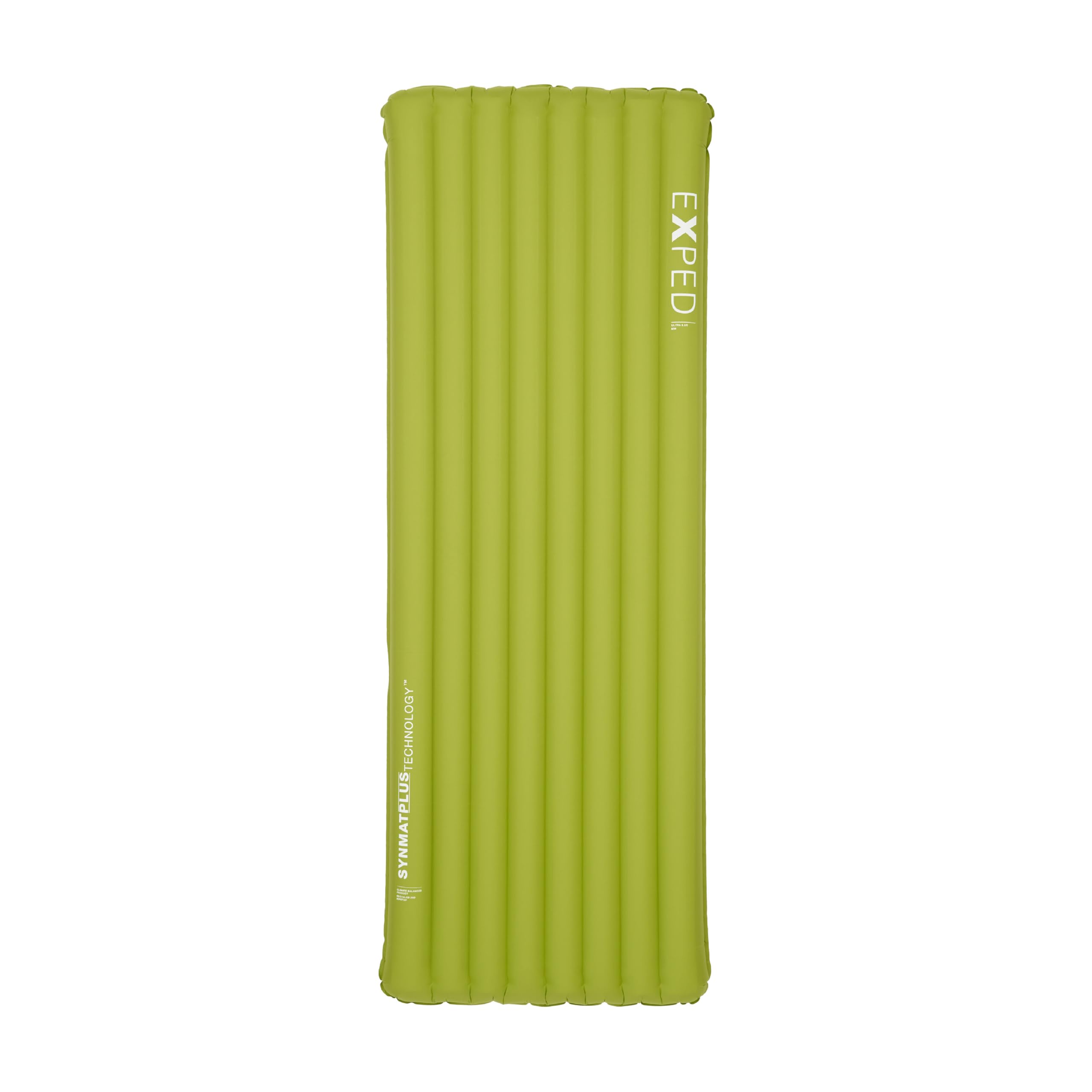
The Exped Ultra 6.5R sits at the intersection of serious warmth and manageable weight. With an ASTM-tested R-value of 6.9, it is warm enough for winter camping yet light enough — roughly 22 ounces — for a shoulder-season thru-hike. The 3.5-inch thickness paired with tapered Comfort Cradle side rails keeps you centered on the pad even on sloping campsites, and the recycled 20D ripstop polyester fabric feels soft against sleeping bag shells without feeling fragile.
The SYNMAT Plus insulation combines recycled synthetic microfiber with heat-reflective foil layers, which produces less crinkle noise than designs that rely purely on reflective film. The Schnozzel Pumpbag inflates the pad in under four sackfuls without introducing moisture, and the dual-valve system allows for rapid deflation in the morning. Side sleepers report that hips never bottom out, and the pad maintains consistent firmness through the night even when the ground temperature drops.
At roughly 22 ounces, this is not the lightest pad on the list, but it offers the best warmth-to-weight ratio for anyone camping in temperatures below freezing on a regular basis. The included repair kit handles field punctures quickly, and the Schnozzel bag doubles as a dry bag for organizing gear. If you only have room for one pad that works across three-plus seasons, this is the one to buy.
Why it’s great
- ASTM-tested R-Value of 6.9 handles sub-20°F nights
- Comfortable for side sleepers with 3.5-inch loft
- Quiet fabric with minimal crinkle noise
Good to know
- Not the lightest pad at 22 oz for its size
- Pumpbag requires a specific rolling technique
2. Therm-a-Rest NeoAir Xlite NXT

The NeoAir Xlite NXT is the gold standard for ultralight backpacking for a reason. At just 11.5 ounces for the Regular size, it packs down to roughly the volume of a 1-liter water bottle while providing a 3-inch thick sleeping surface and an R-value of 4.5. The Triangular Core Matrix construction minimizes convective heat loss, and the reflective ThermaCapture technology traps radiant heat without adding the weight of synthetic insulation or foam.
The WingLock valve is one of the best in the industry — it seals reliably, inflates quickly with the included pump sack, and opens wide for lightning-fast deflation. The surface fabric is a 30D ripstop nylon that feels reasonably durable for its weight class, though users report that sharp rocks and pet nails can still puncture it if you are not careful about campsite selection. The Regular size (20 x 66 inches) is ideal for smaller frames but may feel narrow for broader shoulders.
The biggest update in the NXT generation is the noise reduction. Earlier NeoAir models were famously crinkly; this version reduces that sound significantly to a level most users find tolerable even in quiet campsites. For thru-hikers counting every gram, this pad remains the benchmark. Just pair it with a thin closed-cell foam pad underneath for added protection on rough terrain.
Why it’s great
- Incredibly light at 11.5 oz — the lightest insulated option here
- Packs down to the size of a 1-liter bottle
- WingLock valve is fast and reliable
Good to know
- Narrow 20-inch width limits space for side sleepers
- Fabric is thin and requires careful ground selection
3. NEMO Tensor All-Season
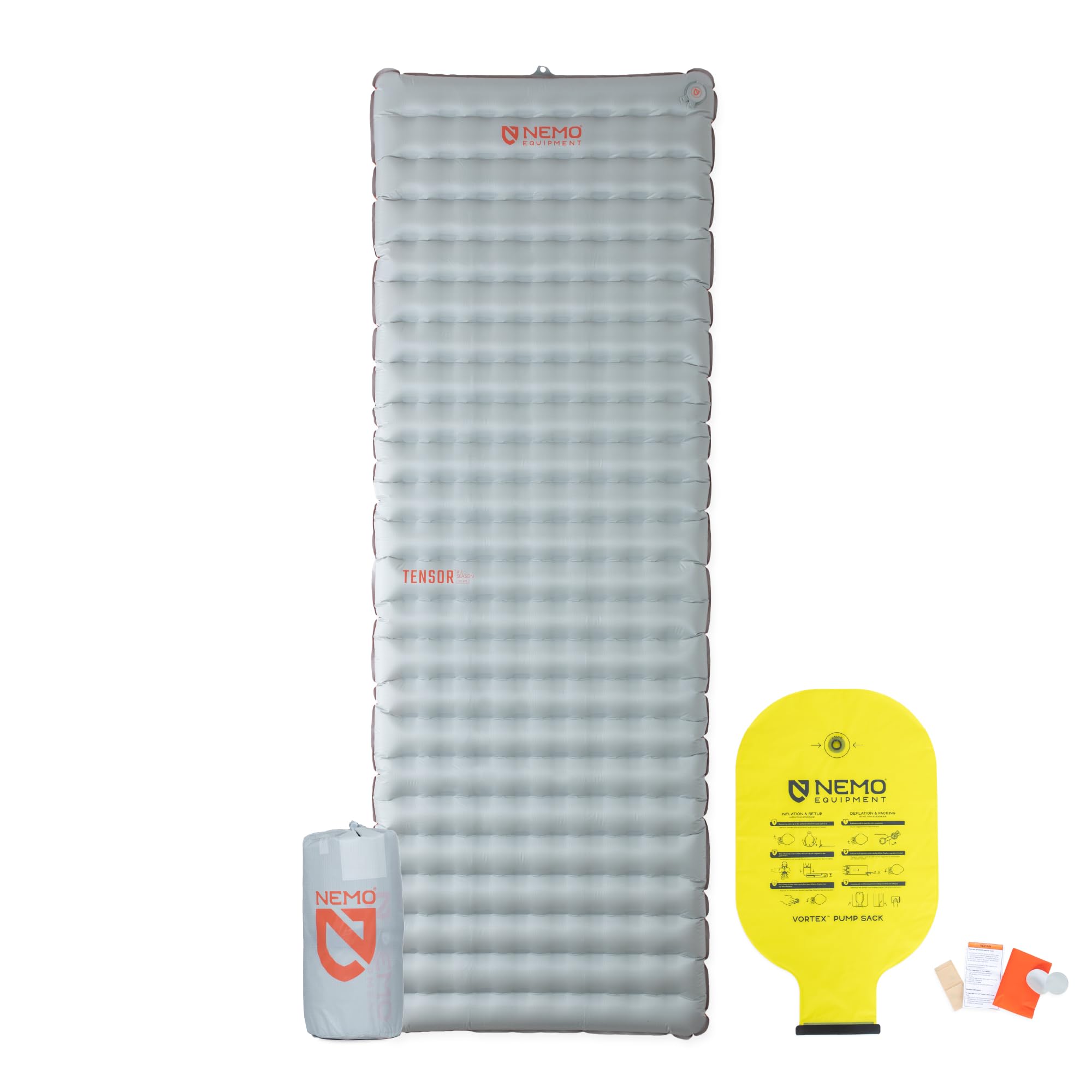
The NEMO Tensor All-Season earns its reputation as one of the quietest insulated pads on the market. The dual-layer floating Thermal Mirror film provides excellent insulation without the loud crinkle that plagues many reflective-film pads. The Spaceframe baffle design eliminates the springy trampoline effect that some users find destabilizing, distributing weight evenly across the 25-inch wide surface. The 3.5-inch loft is comfortable for both back and side sleepers.
The Vortex pump sack inflates the pad quickly, and the dry-bag-style stuff sack makes packing easy. The Regular Wide (72 x 25 inches) is the most popular size — wide enough for restless sleepers without adding significant pack volume. The fabric is a bluesign-approved premium nylon with good puncture resistance, and the included repair kit comes with patches that bond well to the TPU laminate. Users report no cold spots in temperatures around 20°F.
At roughly 20.8 ounces, it is heavier than the NeoAir Xlite NXT but offers a warmer R-value (4.8) and a much quieter sleeping experience. Side sleepers particularly appreciate the lack of noise on shift changes. For anyone who prioritizes sleep quality over shaving ounces, this pad delivers exceptional comfort without forcing you into a winter-grade weight penalty.
Why it’s great
- Near-silent surface — no crinkle noise during sleep
- 25-inch wide version provides excellent space
- Spaceframe baffles eliminate springy bounce
Good to know
- Heavier than ultralight competitors at nearly 21 oz
- Premium price point, especially for the wide model
4. Sea to Summit Ether Light XR

The Ether Light XR is designed for one thing above all else: comfort. At nearly 4 inches thick (10 cm), it is the plushest pad on this list, with Air Sprung Cell construction that uses hundreds of interconnected cells to create a stable, cushioned sleeping surface. The Tapered Regular size (72 x 21.5 inches) balances weight savings against comfort, and the ThermalCore insulation provides an R-value of 4.1, adequate for three-season conditions.
The integrated Airstream Pumpsack and high-airflow XPRESS valve make inflation fast and easy. The valve also allows precise micro-adjustment of firmness, which is critical for a pad this thick — over-inflation can make it feel hard and bouncy. The fabric is a 30D nylon that feels soft to the touch and resists punctures reasonably well, though users report that dog nails can still cause damage.
At roughly 1 pound, the Ether Light XR is not ultralight, but it is remarkably light for a pad with this level of cushioning. Side sleepers and those with hip or shoulder pain will find immediate relief because the Air Sprung Cell design conforms to the body without bottoming out. If you struggle to sleep on the ground, this pad is the closest thing to a home mattress you can pack.
Why it’s great
- 10 cm thickness rivals a home mattress for comfort
- Air Sprung Cells eliminate pressure points
- XPRESS valve enables precise firmness control
Good to know
- R-Value 4.1 is three-season only, not deep winter
- Some users report slow air leaks after extended use
5. Big Agnes Rapide SL

The Big Agnes Rapide SL sits neatly in the middle of the pack with a well-rounded spec sheet. The R-value of 4.8 provides reliable three-season warmth with headroom into early winter, and the 3.5-inch quilted top with larger outer chambers (4.25 inches at the edges) creates a cradled sleeping surface that stops you from rolling off. The proprietary offset I-Beam construction reduces weight while maintaining stability — no trampoline bounce here.
The high-volume valve with micro-adjustment accepts the included Pumphouse inflation sack, which inflates the pad in under a minute. The valve also allows precise fine-tuning so you can dial in the perfect firmness for your sleep position. The superlight double ripstop nylon with aviation-grade TPU lamination feels durable in the hand, and the Regular size (20 x 72 inches) packs down to roughly the dimensions of a Nalgene bottle.
Users consistently praise the pump sack for being easy to use in the field and the pad for holding air consistently across multiple nights. For a straightforward do-everything pad that works for most campers most of the time, this is an excellent choice.
Why it’s great
- Quilted top with raised edges prevents roll-off
- High-volume valve inflates in under a minute
- R-Value 4.8 covers three-season and early winter
Good to know
- 20-inch width can feel narrow for larger campers
- Packs slightly larger than pure ultralight options
6. Big Agnes Divide Insulated

The Big Agnes Divide Insulated is built around a straightforward premise: provide reliable three-season insulation at a more accessible price point. The THERMOLITE insulation combined with a heat-reflective film delivers an R-value of 4.0 — perfectly adequate for spring through fall camping. The vertical baffle construction creates a smooth, flat surface that works well for stomach and back sleepers who prefer not to feel individual chambers beneath them.
The I-Beam construction keeps weight reasonable at 30 ounces for the Wide Regular (25 x 72 inches), and the larger outer chambers (3.5 inches versus 3.25 inches in the center) help keep you centered on the pad. The high-volume valve with micro-adjustment is the same excellent design found on the Rapide SL, and the included pump sack inflates the pad quickly. The recycled nylon ripstop fabric with TPU lamination feels sturdy and has held up well in user reports.
The trade-off for the lower price is weight and pack size. At 30 ounces, the Divide is noticeably heavier than pads from Therm-a-Rest or NEMO, and it packs to a larger size. But for car campers, short-haul backpackers, or anyone on a tighter budget, it provides proven Big Agnes quality and a lifetime warranty at a fraction of the cost of the premium models.
Why it’s great
- Vertical baffles provide a smooth, even surface
- Lifetime warranty from a trusted brand
- Wide version offers 25 inches of comfortable space
Good to know
- Heavier and bulkier than premium competitors
- R-Value 4.0 is adequate, not exceptional for cold
7. FLEXTAILGEAR R05
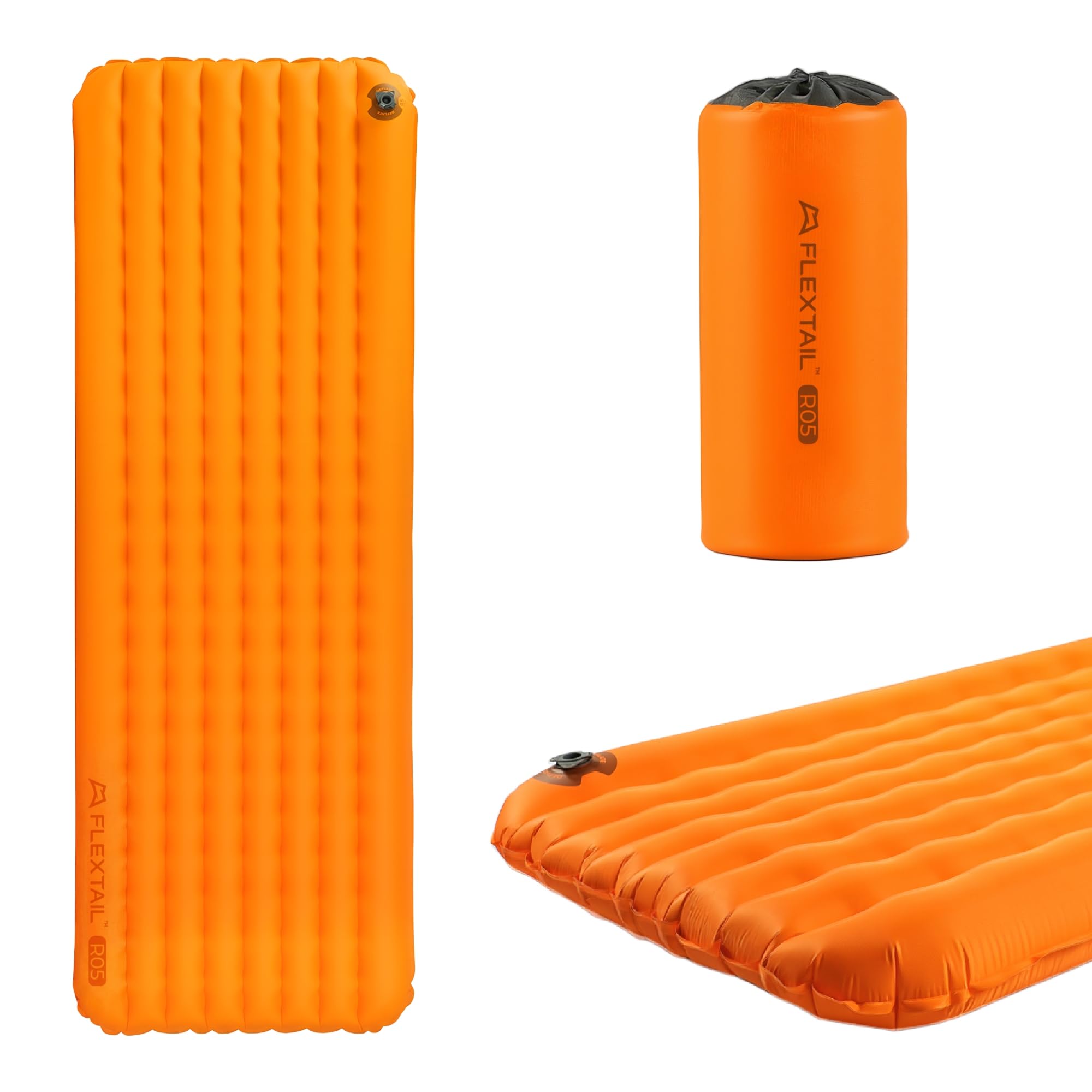
The FLEXTAILGEAR R05 punches above its price point with an ASTM-tested R-value of 5.6 that rivals pads costing twice as much. At 4 inches thick, it is one of the tallest pads on this list, providing exceptional cushioning for side sleepers who typically struggle with thinner pads. The internal chamber structure with an integrated reflective layer distributes weight evenly and reduces the risk of bottoming out.
The orange 20D nylon fabric is lightweight and tear-resistant, packing down to a reasonable size for backpacking. At roughly 19.6 ounces, it competes well with mid-range options from established brands. The included pump sack and two repair patches cover the basics. Early user reports highlight excellent comfort and durability, though a few units have shown valve issues that required replacement.
For budget-conscious backpackers who refuse to compromise on warmth, the R05 delivers. The 5.6 R-value is legitimate winter-grade warmth, and the 4-inch thickness rivals the Sea to Summit Ether Light XR in sheer comfort. The main concern is long-term durability given the lower price point, but the initial build quality and customer feedback suggest this pad will hold up for regular three-season use.
Why it’s great
- 4-inch thickness at under 20 oz is an impressive ratio
- ASTM-tested 5.6 R-value is genuine winter warmth
- Highly affordable for the specs offered
Good to know
- Some units have had valve defects
- Brand is newer with a shorter track record
8. Naturehike NKTR Air
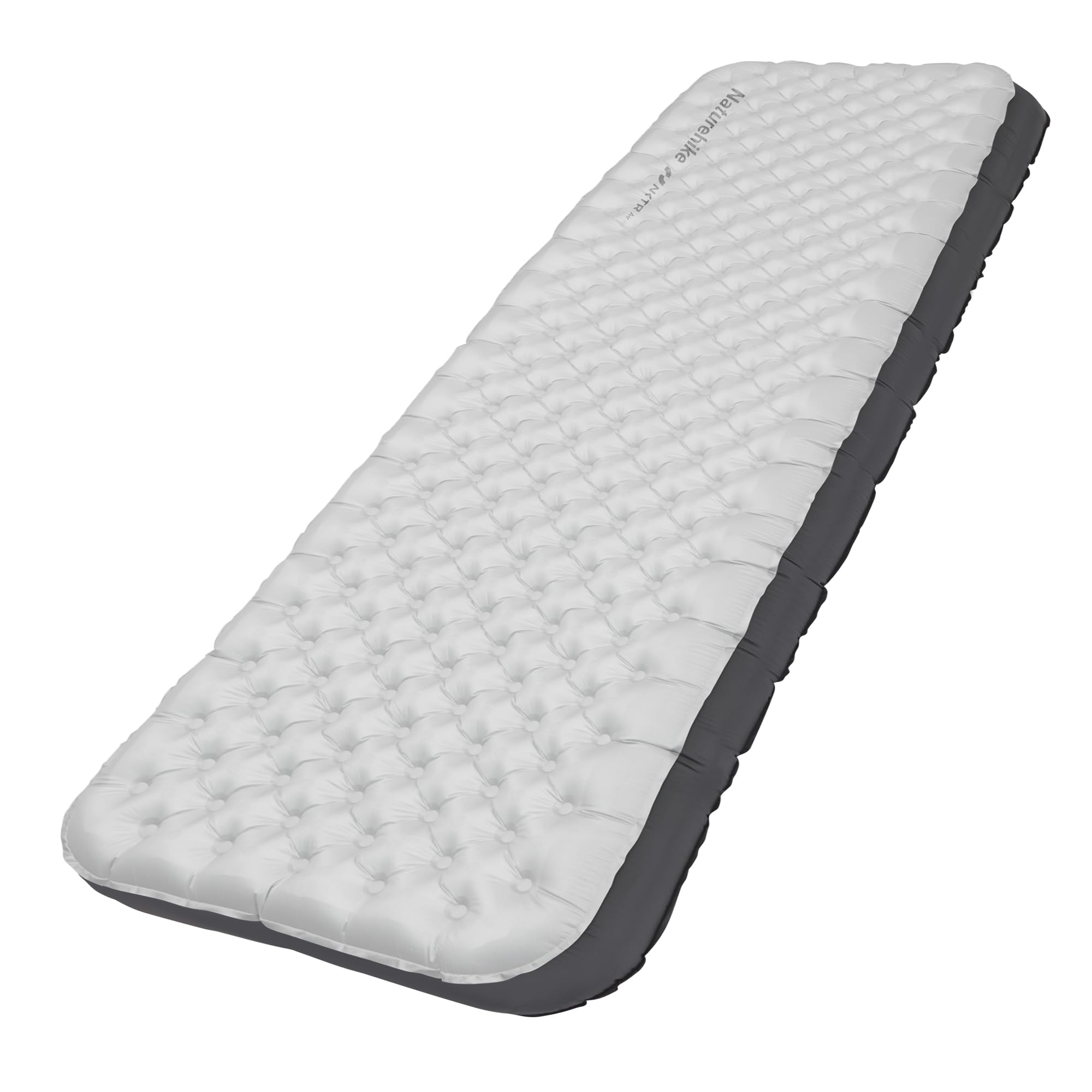
The Naturehike NKTR Air is a strong contender for anyone looking to maximize insulation on a tight budget. The 6.5 R-value, supported by an eight-layer aluminum molded 3D insulation structure, is among the highest on this list — rated for temperatures down to -13°F. The 4-inch (10 cm) thickness provides excellent ground isolation, and the dual-vent valve design allows for efficient inflation and rapid deflation.
The TPU construction with 20D nylon is both lightweight and durable, with the pad weighing just over 19 ounces. The included pump sack inflates the pad quickly, and the repair kit covers basic patching. The 77.2 x 25.2-inch size provides ample room for most sleepers, and the punch-point structure distributes pressure evenly without creating uncomfortable pressure points.
User feedback highlights excellent warmth retention and comfort, though some note that the material can be crinkly when shifting position. The brand is established in the budget camping space and offers a 1-year warranty. For winter campers on a budget, the NKTR Air delivers premium-level insulation at a fraction of the cost, making it a serious value proposition.
Why it’s great
- 6.5 R-value for serious winter insulation
- Lightweight at just over 19 oz
- 25-inch width provides generous space
Good to know
- Crinkly fabric can be noisy during the night
- Valve at foot end can be hard to reach
9. Hikenture Camping Pad
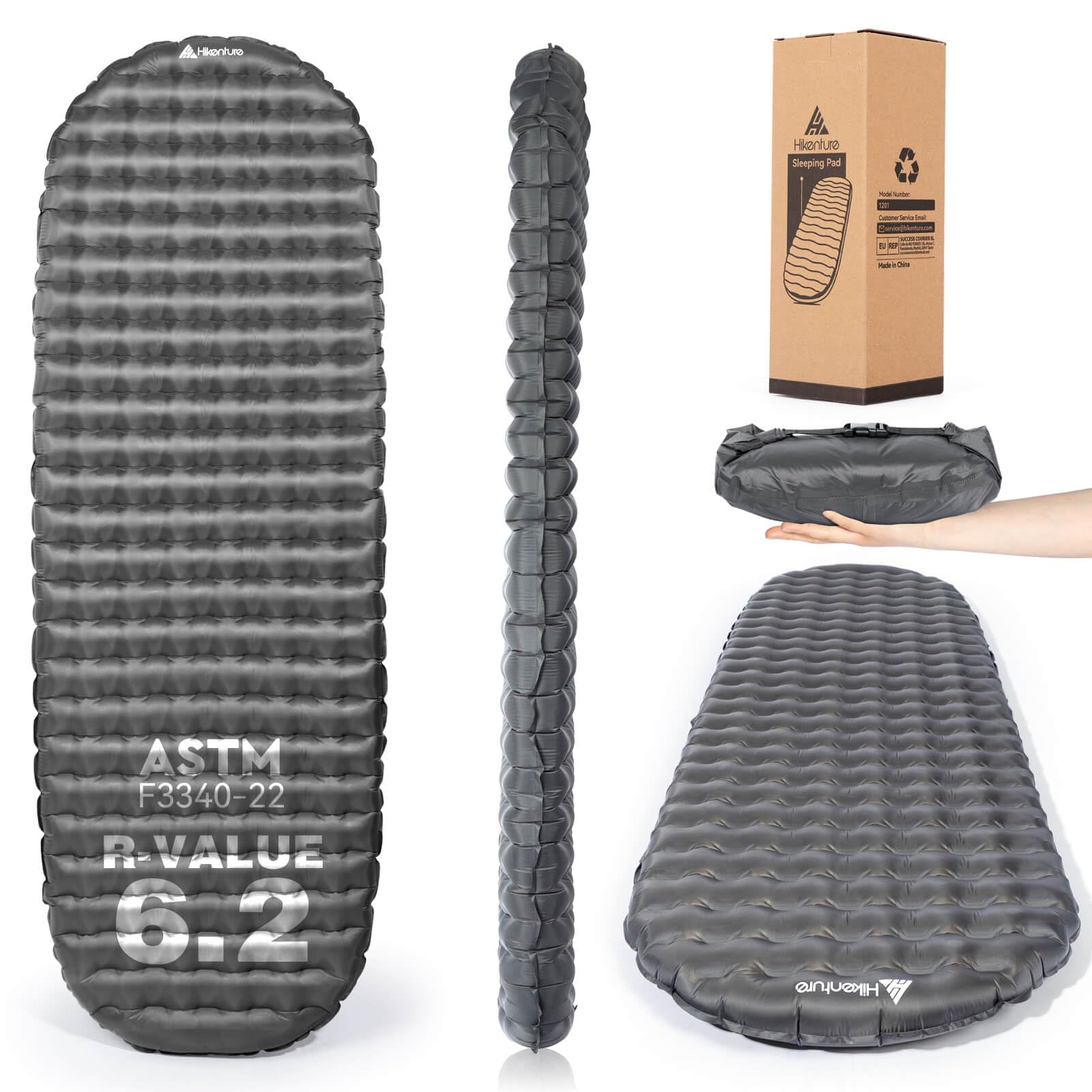
The Hikenture Camping Pad delivers genuinely impressive specs for its entry-level price point. The ASTM-tested 6.2 R-value, achieved through an aluminum film reflective layer, provides insulation that rivals premium pads costing three times as much. At 3.2 inches thick, it offers adequate cushioning for most sleeping positions, though side sleepers may find the 78 x 25-inch size necessary to avoid edge contact.
The 2-in-1 storage bag doubles as a 40L pump sack, inflating the pad in about three pumps. The TPU liner material is environmentally friendly and has demonstrated good durability in user reports — several reviews note survival against kids jumping and dog nails with only minor damage. The included repair patches handle field punctures effectively. The weight of 1.53 pounds is competitive with mid-range options.
The main drawbacks are some crinkle noise from the reflective liner and a nozzle position at the foot end that can be difficult to adjust one-handed. The pad does not have a rapid-deflate valve, so packing up takes slightly longer. For budget-focused backpackers or those gearing up for the first time, the Hikenture offers an unbeatable warmth-to-price ratio that leaves room in the budget for other essential gear.
Why it’s great
- 6.2 R-value at an accessible price point
- Durable TPU liner holds up to rough use
- Pump sack doubles as a 40L dry bag
Good to know
- Crinkle noise from reflective layer
- No rapid-deflate valve slows packing
FAQ
What R-value do I need for a three-season backpacking sleeping pad?
How thick should a backpacking sleeping pad be for side sleepers?
Is mouth inflation bad for insulated sleeping pads?
How much does a good backpacking sleeping pad weigh?
Can I use a backpacking sleeping pad on snow?
Final Thoughts: The Verdict
For most users, the best air mattress for backpacking winner is the Exped Ultra 6.5R because it delivers genuine winter-grade insulation at a weight that works for all but the strictest gram-counting thru-hikers. If you want the absolute lightest carry weight, grab the Therm-a-Rest NeoAir Xlite NXT at just 11.5 ounces. And for maximum comfort on a budget, nothing beats the Hikenture Camping Pad with its 6.2 R-value and accessible price.