
A bad night’s sleep in the backcountry doesn’t just ruin the next day’s hike — it can make you question the entire trip. The cold, uneven ground saps your energy and leaves you tossing on a mat that’s either too thin, too noisy, or leaking air by 2 AM. Choosing the right air pad for camping means balancing insulation, packed weight, thickness, and how quickly you can set it up after a long day on the trail.
I’m Min — the co-founder and writer behind Gadgets Feed. I’ve spent hundreds of hours analyzing the technical specifications, real-world test results, and user feedback across dozens of camping air pads to find the models that actually deliver on their R-value claims and durability promises.
Whether you’re car camping with the family or trying to shave ounces from a backpacking load, the right pad makes a genuine difference. This guide breaks down the most reliable air pads for camping so you can spend less time guessing and more time actually enjoying the outdoors.
How To Choose The Best Air Pads For Camping
Not all air pads are built for the same mission. A four-season mountaineer needs insulation specs that would be overkill for a summer car camper, and a thru-hiker cares more about packed weight than plush thickness. Here’s what to look at first.
R-Value: The Cold Ground Barrier
R-value measures thermal resistance — the higher the number, the better the pad insulates you from cold ground. For three-season camping (spring through fall), an R-value of 3.0 to 5.0 is usually sufficient. If you plan to camp in freezing temperatures, look for a pad with an R-value of 7.0 or higher. Beware of unverified claims — pads certified by ASTM testing protocols are more reliable than marketing figures.
Thickness and Foam Type
Pure air pads (no foam inside) can be very lightweight and pack tiny, but they are prone to heat loss and require more air to stay firm. Hybrid pads that combine foam and air offer better insulation, more stable support, and are quieter at night. For side sleepers, a thickness of at least 3 inches is recommended to prevent your hip from hitting the ground. Memory foam versions (25D to 50D density) provide superior pressure relief compared to standard open-cell foam.
Inflation System and Packed Size
Built-in foot pumps are the most common mid-range feature — they save you from carrying a separate pump and work reliably across most conditions. Premium pads now include rechargeable electric pumps that inflate and deflate at the push of a button, cutting setup time to under two minutes. Consider the deflated volume: a pad that packs to the size of a water bottle is ideal for backpacking, while car campers can afford a larger, more comfortable roll.
Quick Comparison
On smaller screens, swipe sideways to see the full table.
| Model | Category | Best For | Key Spec | Amazon |
|---|---|---|---|---|
| TREKOLOGY UL R7 | Premium | Cold-weather backpacking | 7.2 R-Value, 4″ thick | Amazon |
| Hikenture 4″ | Premium | All-season car camping | 9.5 R-Value, built-in electric pump | Amazon |
| NYECHTO Self Inflating | Mid-Range | Electric-pump convenience | 9.5 R-Value, 3.14″ memory foam | Amazon |
| Wevelel Memory Foam | Mid-Range | Supreme car-camping comfort | 9.5 R-Value, 50D foam | Amazon |
| Pretyw Double Pad | Mid-Range | Couples or two-person tents | 4″ thick, 78″x54″ | Amazon |
| MalloMe Chevron | Value | Budget-friendly tent camping | 50D fabric, built-in pillow | Amazon |
| VALEHOWL Ultralight | Value | Ultralight backpacking | 1.8 lbs, 3.0 R-Value | Amazon |
In‑Depth Reviews
1. TREKOLOGY UL R7 Sleeping Pad
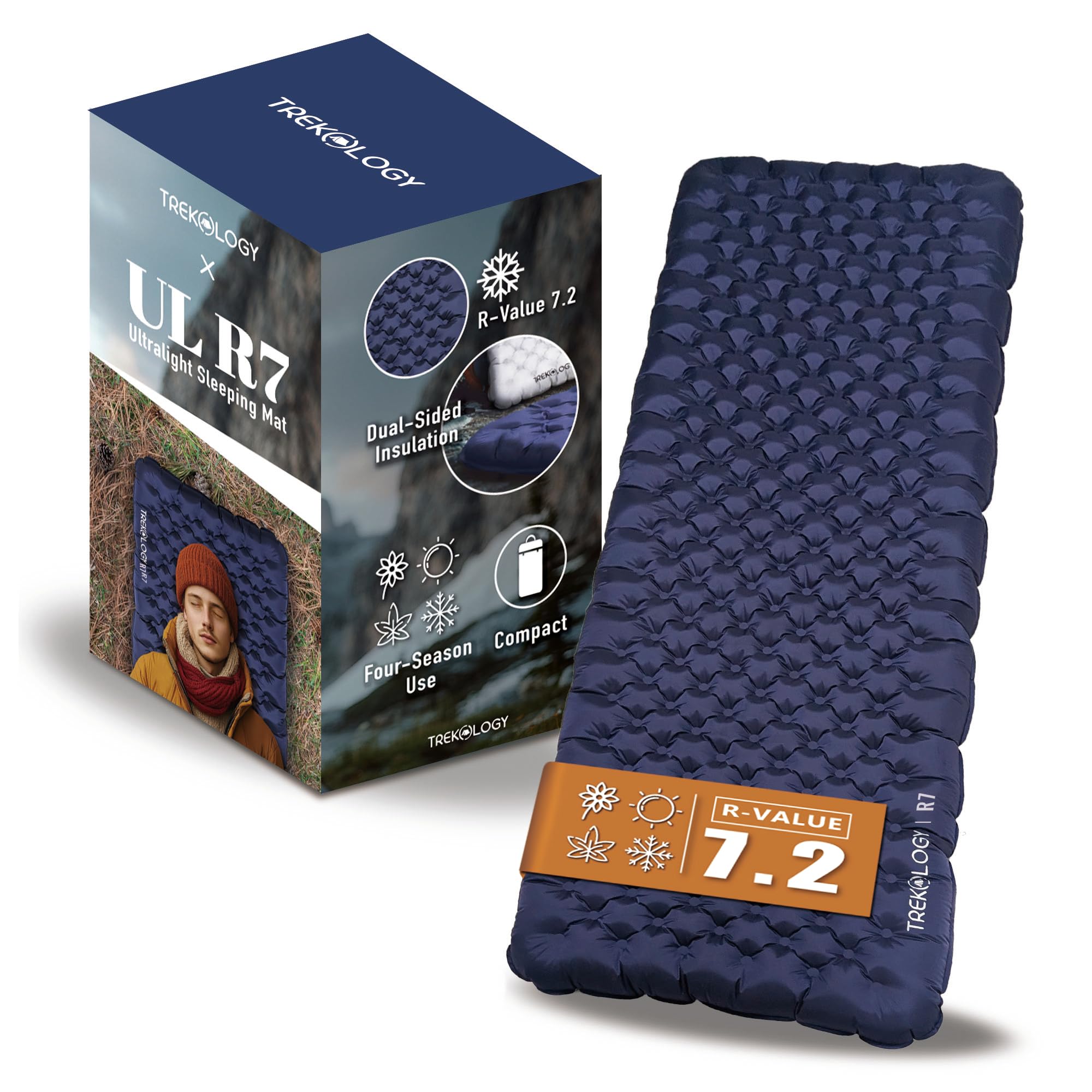
The TREKOLOGY UL R7 is a standout for anyone who camps in real cold without wanting to carry a monster pad. Its 7.2 R-value is SGS-certified, meaning the insulation claim holds up when temps drop into the 20s — verified by multiple users who slept warm in snowstorms and freezing conditions. Weighing just 2 pounds and packing smaller than a water bottle, it shaves serious weight without sacrificing the 4-inch thickness side sleepers need to avoid bottoming out.
The 40D ripstop nylon with TPU coating handles rough tent floors well, and the patented anti-leak valve prevents the slow deflation that plagues cheaper pads. At 24 inches wide, it offers enough room for average-sized adults without feeling cramped. The surface is slightly slick vinyl, which some users remedied with a non-slip shelf liner underneath their sleeping bag — a minor trade-off for the weight savings.
Inflation requires a separate pump sack or third-party electric pump since there’s no built-in pump, but the payoff is a clean, ultralight design. For three-season backpackers and four-season campers who need genuine cold-weather performance, this pad delivers where many budget options fall short.
Why it’s great
- Certified 7.2 R-value proven warm below freezing
- Remarkably small packed size for a 4-inch pad
- Ultra-light 2-pound weight for backpacking
Good to know
- Slick surface can cause sleeping bag to slide
- No built-in pump — requires separate inflator
- Only 24 inches wide; broad-shouldered users may feel tight
2. Hikenture 4″ Self Inflating Sleeping Pad
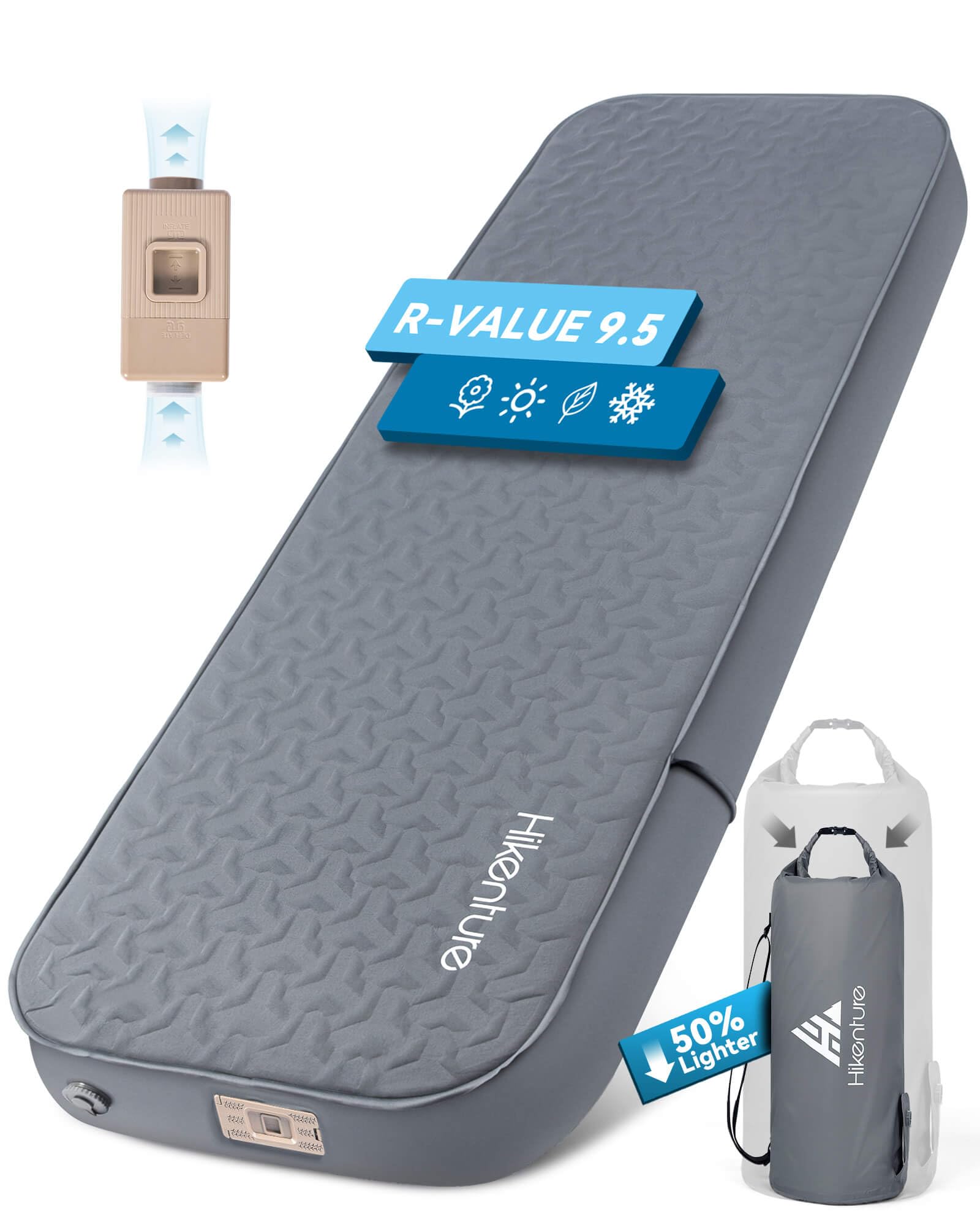
The Hikenture 4-inch pad brings hotel-level comfort to car camping without the manual labor. Its built-in electric pump inflates the foam-and-air hybrid to full thickness in about 90 seconds — faster than most people can boil camp coffee. The 9.5 R-value means you can sleep warm even on frozen ground, and the Y-structure foam channels lock heat in while cutting bulk by half compared to solid foam pads.
At 5.4 pounds, it’s not a backpacking pad, but for tent camping, RV trips, or a cot topper, the trade-off for plush support is worth it. The stretch-knit fabric surface is completely silent — no crinkling when you roll over — which matters enormously when sharing a tent with light sleepers. Multiple users confirmed it survived sub-freezing nights without losing firmness.
A few users reported durability issues with the bottom fabric when used on rough terrain or with pets, and the included patch kit is basic. Still, for those who prioritize instant setup and year-round warmth, this is one of the most convenient options at this spec level.
Why it’s great
- One-button electric pump inflates and deflates
- Excellent 9.5 R-value for true four-season use
- Quiet, noiseless fabric surface
Good to know
- Heavy compared to backpacking-specific pads
- Bottom material needs care on rough ground
- Battery pump adds charging logistics
3. NYECHTO Self Inflating Sleeping Pad with Electric Pump

The NYECHTO memory foam pad bridges the gap between a premium all-in-one system and a mid-range budget. The built-in rechargeable electric pump (with USB-C charging) inflates the 3.14-inch thick pad in under a minute and can run about seven inflation cycles per charge. The 28D memory foam core supports up to 665 pounds and provides pressure relief that rivals much more expensive pads.
With a 9.5 R-value, it performs in deep winter conditions, and users reported warm, comfortable nights in 0°F-rated bags without needing additional layers underneath. The 50D elastic knit fabric is breathable, quiet, and feels closer to bedding than typical pad nylon. The detachable pump also functions as an independent air source for other inflatables — a useful bonus for group camping.
At just under 6 pounds, it’s heavy for backpacking but ideal for car camping, truck beds, or guest use at home. The deflation function is the standout feature — press a button and the pad compresses to 0.7 inches for storage, saving the wrestling match typical of foam pads.
Why it’s great
- One-touch inflation and deflation via USB-C pump
- Very high 665-pound weight capacity
- Silent fabric and excellent insulation for winter
Good to know
- Heavy for backpacking at nearly 6 pounds
- First inflation takes longer while foam expands
- Charging pump requires planning ahead
4. Wevelel Memory Sleeping Pad

The Wevelel pad uses high-density 50D memory foam — far denser than the 19D foam found in many budget pads — which translates to a mattress-like feel that evenly distributes weight and eliminates pressure points. At 3.1 inches thick and 26.98 inches wide, it offers generous space for broader sleepers, and its 800-pound tested capacity means it won’t sag even for heavier users.
A self-inflating design with three valves allows fast setup: open the valves, let the foam expand for 10 seconds, then step on the front inlet for 20 seconds to top off. The dual-use valve system makes deflation surprisingly simple — open only the first layer so air exits without re-entering, then roll it up. The 50D stretch knit fabric is breathable, quiet, and safe for direct skin contact.
The R-value of 9.5 is ASTM-tested, so it performs in sub-freezing conditions. At 6.59 pounds, it’s strictly for car camping, and the built-in pillow is on the low side for some users. But for anyone who prioritizes a true bed-like experience in the tent, this pad delivers unmatched foam support.
Why it’s great
- Dense 50D memory foam for exceptional pressure relief
- Rated for 800 pounds — very durable construction
- Easy deflation valve prevents air re-entry
Good to know
- Heavy and bulky — car camping only
- Built-in pillow is too low for some sleepers
- Actual width is 26 inches, not the listed 30
5. Pretyw Double Sleeping Pad
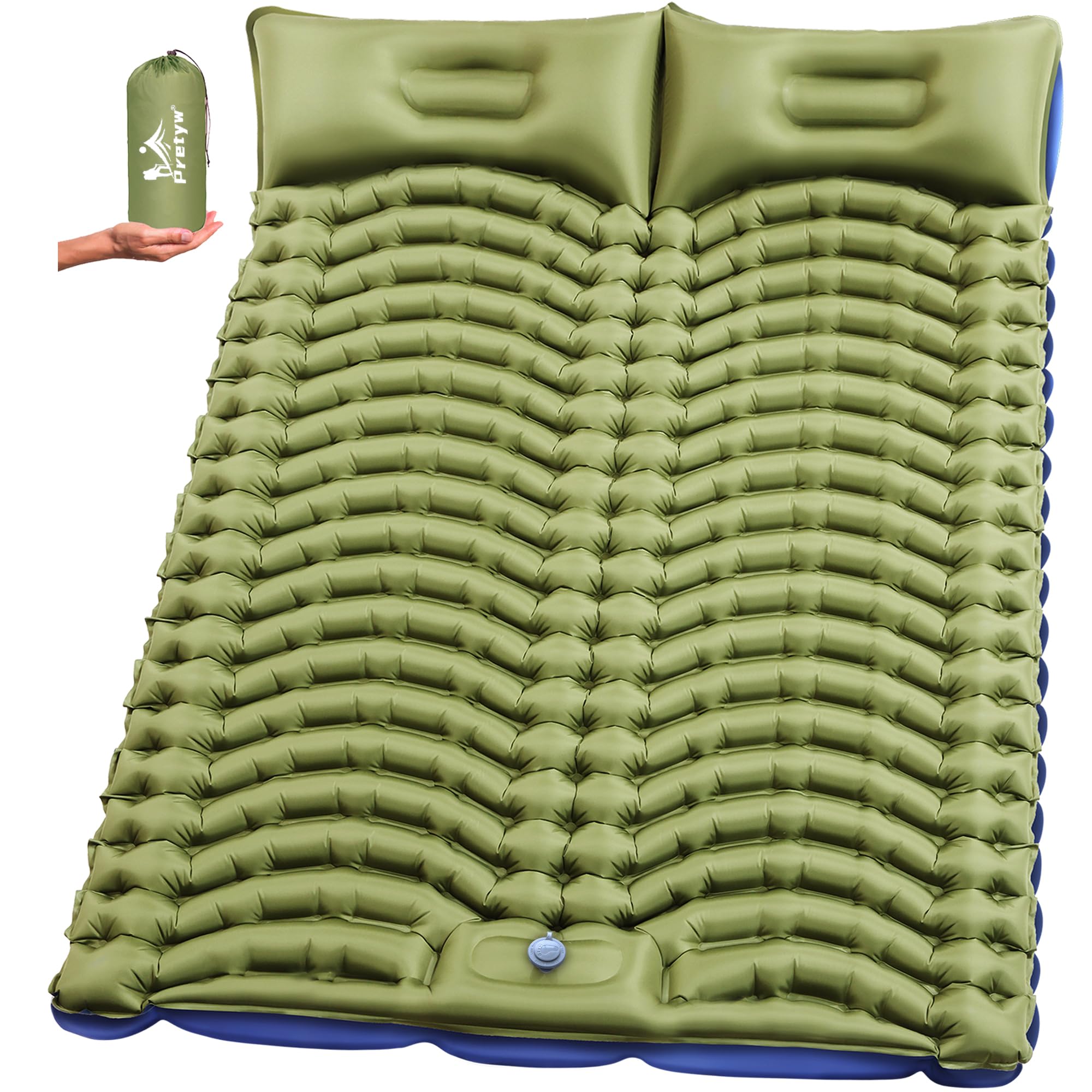
The Pretyw double pad is built specifically for two campers who want to share sleeping space without each person bottoming out. At 78 by 54 inches and 4 inches thick, it provides enough room for two average-sized adults, plus a built-in pillow at each end. The foot-pump inflation system fills the pad in one to three minutes, and the 40D nylon with multi-layer TPU coating holds air reliably all night.
The ergonomic pressure-relief wave pattern is designed to support side and back sleeping positions, and multiple users confirmed it felt comfortable for stomach sleepers too. At 3 pounds, it’s lightweight for a double pad, and it folds down to 10 by 5.9 inches for storage — manageable for car camping or even short backpack trips if split between two packs.
Some users noted the pillow valves must be fully pressed and sealed before inflation, otherwise the pad won’t hold air. The surface material feels durable but isn’t as soft as memory foam pads. Still, for couples or families who want a single surface instead of two separate pads, this is a well-priced solution with solid construction.
Why it’s great
- Spacious 78×54 inches for two people
- Fully inflates in 1-3 minutes with foot pump
- Lightweight at 3 pounds for its size
Good to know
- Pillow valves require careful sealing
- Not as plush as memory foam alternatives
- Only 4 inches thick — may not suit heavy side sleepers
6. MalloMe Chevron Sleeping Pad
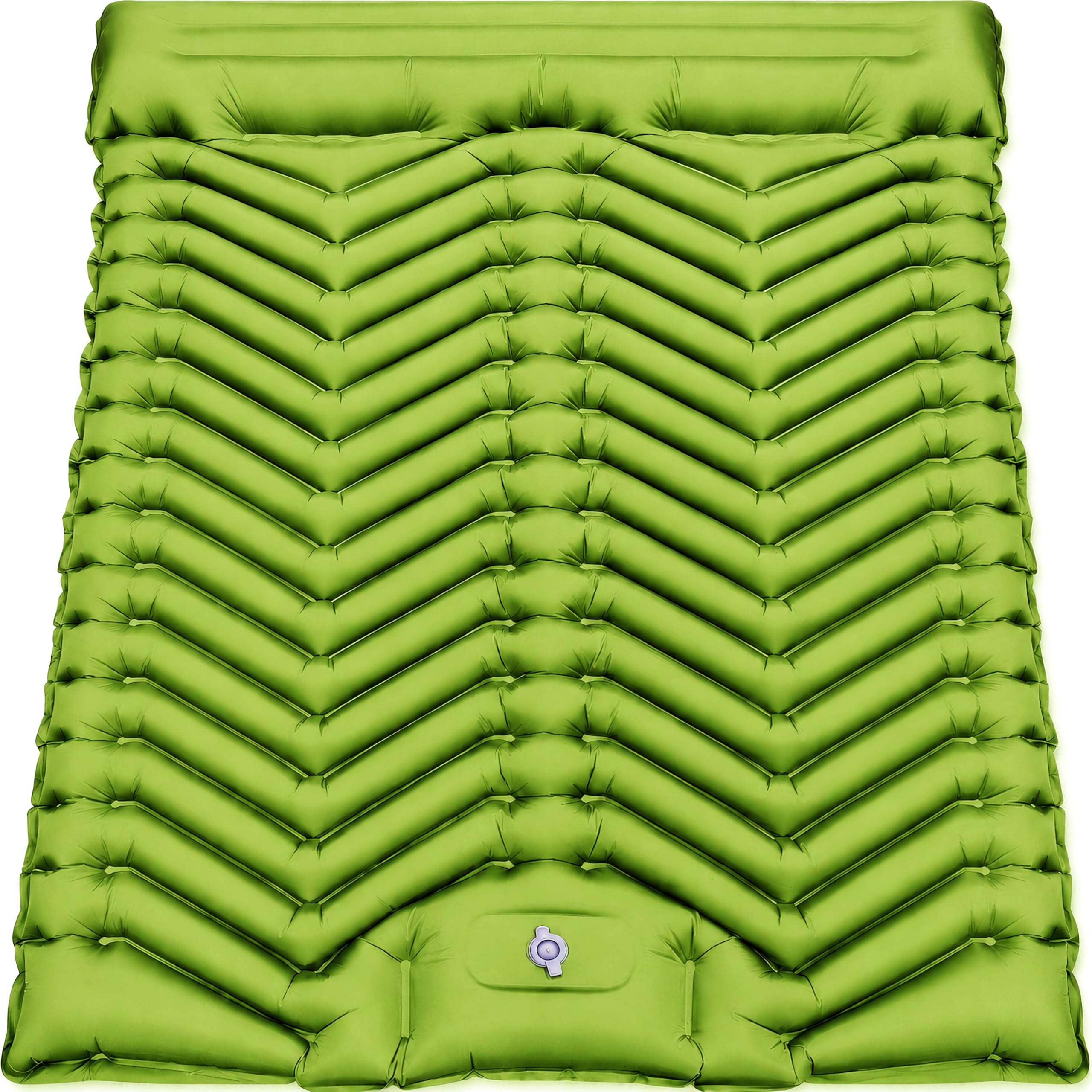
The MalloMe sleeping pad uses a patent-pending Chevron V-shape air-cell design that contours to your body and distributes weight more evenly than standard rectangular air chambers. The built-in foot pump inflates it in 60 to 90 seconds, and the 50D polyester construction is 25 percent tougher than typical 40D fabrics, making it more resistant to punctures on rough tent floors.
It’s a self-inflating pad that requires a few initial breaths to expand the foam core fully, but once set up, it provides plush support with a soft, velvety top surface. The built-in pillow is integrated into the design, and the pad rolls up compactly for storage. Users consistently rate this as a great alternative to premium brands like Therm-a-Rest at a fraction of the cost.
The main trade-off is thickness — at roughly 1.5 inches after self-inflation, side sleepers may feel the ground through the pad. It’s best for tent camping where comfort matters more than weight, but it’s not the best choice for sub-freezing conditions or rocky terrain. For mild-weather car campers on a budget, this delivers solid value.
Why it’s great
- 25% tougher 50D fabric resists punctures
- Soft plush top surface feels like bedding
- Built-in foot pump works quickly and reliably
Good to know
- Thin at 1.5 inches — not for side sleepers
- Requires initial manual breaths to expand
- Low R-value — not suitable for cold weather
7. VALEHOWL Ultralight Sleeping Pad
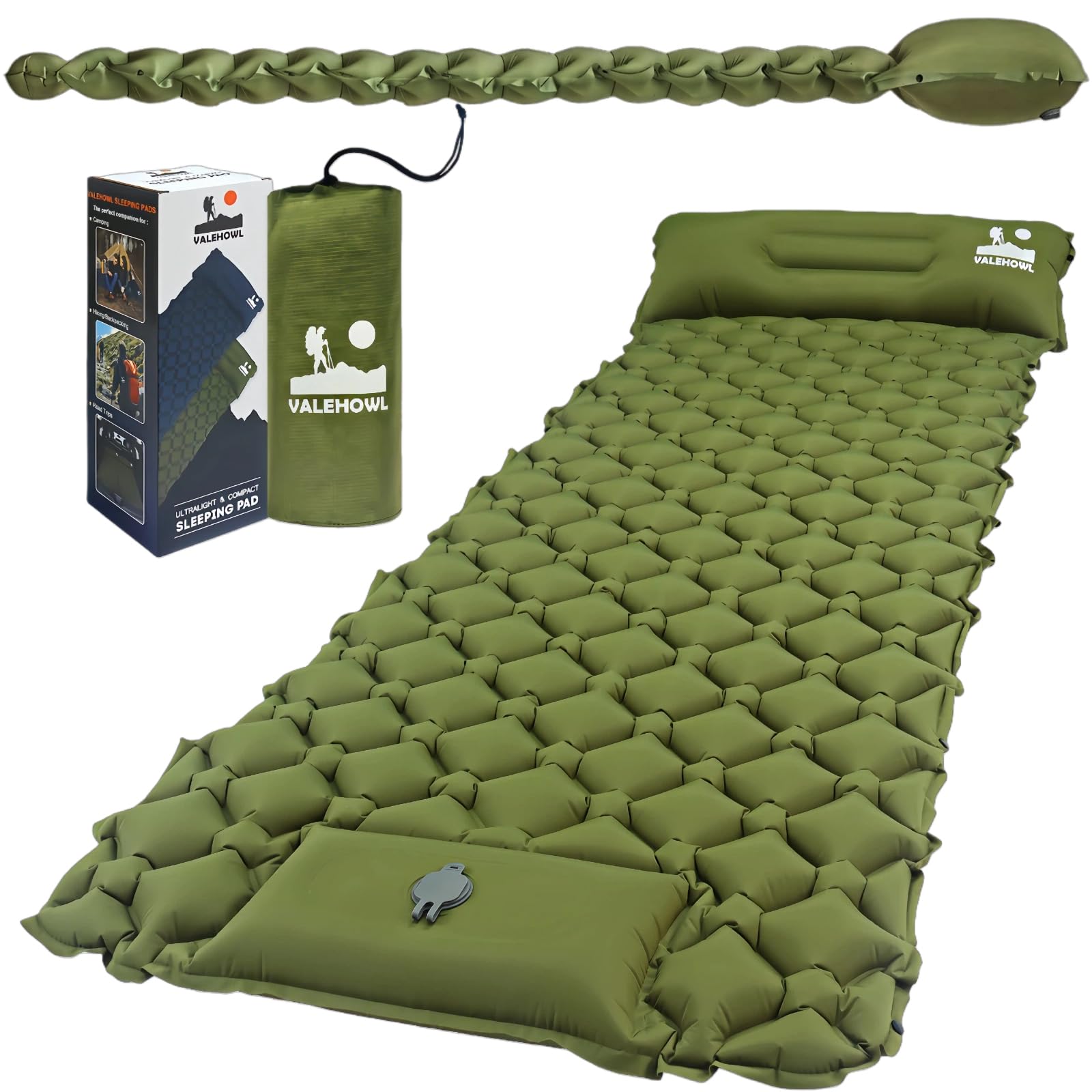
The VALEHOWL ultralight pad is designed for backpackers who count every ounce. At just 1.8 pounds and packing down to 10 by 5 inches (small enough for a pack’s side pocket), it’s one of the lightest inflatable pads at its price point. The 40-second foot pump inflation system is genuinely fast — step on it 50 times and you’re done — and the 40D nylon with TPU coating stays airtight through multiple trips.
With an R-value of 3.0, it’s best suited for three-season use in temperatures above freezing, and the 2.7-inch thickness provides decent separation from ground lumps for back sleepers. The integrated ergonomic pillow supports neck alignment, and the honeycomb air chamber design distributes pressure reasonably well. Side snap buttons let you connect two pads together, a thoughtful feature for couples.
Users note that the valve plugs require firm hand pressure to seat properly — otherwise, slow air loss can occur overnight. The thin 40D nylon, while lightweight, feels less robust than thicker alternatives, so rocky campsites demand careful placement. For weight-conscious hikers on summer trips, this pad offers an excellent weight-to-comfort ratio.
Why it’s great
- Ultra-light 1.8-pound packed weight
- 40-second foot pump inflation
- Connects to a second pad for double setups
Good to know
- Thin nylon requires careful site selection
- Valves must be double-checked to prevent air loss
- 3.0 R-value not sufficient for cold weather
FAQ
Can I use a camping air pad in freezing temperatures?
How much does the built-in pump add to the weight?
Final Thoughts: The Verdict
For most users, the air pads for camping winner is the TREKOLOGY UL R7 because it combines certified cold-weather insulation, ultralight portability, and durable construction in one balanced package. If you want electric-pump convenience and maximum warmth, grab the Hikenture 4″. And for supreme car-camping comfort with memory foam support, nothing beats the Wevelel Memory Foam pad.