
Our readers keep the lights on and my morning glass full of iced black tea. As an Amazon Associate, I earn from qualifying purchases.
Specs are compiled from manufacturer listings and verified buyer reviews and can change over time — please confirm the key details on the product page before buying.
Your HVAC system moves air through every room of your home. That means whatever grows inside your ducts — mold, bacteria, dust — gets pushed straight into your living space. An in-duct air purification system treats the air at the source, killing contaminants before they circulate.
I’m Min — the founder and writer behind Gadgets Feed. This guide is built by comparing the manufacturers’ published specifications and the patterns across verified customer reviews, so you get each pick’s real strengths and trade-offs instead of marketing spin.
Whether you are battling mold on your AC coil, persistent cooking odors, or seasonal allergies, this guide breaks down the best air purification system for hvac to match your specific home and comfort needs.
Our Picks at a Glance


How To Choose The Best Air Purification System For HVAC
Consider the Technology
UV-C systems (around 254 nanometers wavelength) are designed to prevent biological growth on your AC coil and inside the air handler. They do not trap dust — they sterilize the surface they shine on and the air passing by. Ionization systems, like needlepoint bipolar ionization, charge airborne particles so they stick to each other or to your filter. Media filters (like a 4-inch MERV 11) simply capture particles — they do not kill anything. Some whole-house systems combine UV light with an activated carbon matrix to address odors and volatile organic compounds (VOCs).
Match the Power to Your System
An underpowered unit will fail to treat air at your HVAC’s fan speed. Check the system’s voltage requirements — most in-duct systems run on 24V or 120V. Some units, like the RGF Reme Halo, specify they cannot be wired directly to the EAC terminal without damaging the unit. If you have a variable-speed furnace blower, you may need an optional air-sensing kit sold separately.
Plan for Installation and Maintenance
All systems require periodic maintenance—bulb swaps, emitter cleaning, or filter changes. UV bulbs degrade over time — most last about one year before needing replacement at a moderate cost. Ionization units may have emitter needles that need cleaning or replacement after a few years. Media filters need swapping once a year. Consider whether you are comfortable drilling into your ductwork and wiring into your furnace control board, or if you would rather have a licensed HVAC contractor do it.
Quick Comparison
| Model | Best For | Technology | Weight | Coverage / Capacity | Amazon |
|---|---|---|---|---|---|
| i-Wave-R★ Best Overall | Odor & dust reduction | Bipolar Ionization | 5 pounds | — | Amazon |
| Fresh-Aire UV 24VBudget Champion | Budget UV-C coil cleaning | UV-C (254 nm) | 1.5 pounds | — | Amazon |
| Pure UV Whole HouseSmart Combo | Mold & odor with carbon | UV-C + Activated Carbon | — | 16.75″W x 16.75″H | Amazon |
| Air Health Haven | Compact UV-C with warranty | UV-C (253.7 nm) | — | 23″ long unit | Amazon |
| Aprilaire 1610 | High-filtration media filter | MERV 11 Pleated Filter | 24 pounds | 1 micron particle retention | Amazon |
| OdorStop OS72PRO | Dual-bulb UV-C power | UV-C (254 nm), 72W total | — | 10,000 sq ft | Amazon |
| Nu-Calgon i-Wave | Self-cleaning ionization | Needlepoint Bipolar Ionization | — | Up to 6 tons (2400 CFM) | Amazon |
| RGF Reme Halo | Pro-grade ionized peroxide | Ionized Hydro-Peroxide | — | — | Amazon |
| Halo LED | Latest-gen RGF system | LED Ionized Hydro-Peroxide | — | — | Amazon |
| APCO Carbon Cell Matrix | Complete VOC & germ control | UV-C + Activated Carbon Matrix | 4.3 pounds | 16 VA, 18-32 VAC | Amazon |
| Aprilaire 5000 | Maximum particle removal | Electronic + Media Filter | — | 500 sq ft (floor area) | Amazon |
In‑Depth Reviews
1. i-Wave-R (Residential IAQ ION Generator)
Our pick — over 4.5★ from 200+ verified ratings; the strongest balance of quality and price.
The needlepoint ionization system that eats odors without needing a single bulb change.
Instead of burning a UV lamp, this unit uses a needlepoint bipolar ionization process to charge particles in your air stream. The charged particles clump together and get caught by your standard HVAC filter. What wins owners over is odor reduction — cooking smells, pet odors, and stale air all fade noticeably within days. One owner reported that cooking odors disappeared quickly after installing it over a month prior, and that his MERV 11 filter bowed under the increased airflow load.
Installation is straightforward: the unit weighs 5 pounds and attaches with mounting magnets. You wire it into your furnace control board (a 260-volt residential power source). The self-cleaning design means it requires no maintenance. The trade-off is that the technology is invisible in action — you cannot see a glowing bulb to verify it is working, and a few owners note skepticism about the hard science behind ionization versus UV-C. The crowd overwhelmingly disagrees with the skeptics, giving this a high rating across a solid number of owners. At 5 pounds, it is noticeably heavier than the Fresh-Aire UV system (which weighs just 1.5 pounds), but that heft reflects a more sturdy internal assembly.
What Owners Celebrate
- Odor reduction is the most-discussed win — cooking smells and pet odors vanish fast.
- Installation is a genuine DIY job: buyers report 10-minute setups using the included magnets and a simple connection to the 120V EAC terminal.
- No bulbs to replace, no filter to swap, no cleaning schedule.
The Honest Trade-Off
- You cannot see it working — no glowing indicator to confirm operation.
- Some buyers question whether bipolar ionization is scientifically proven vs. UV-C; the theory is that it charges particles to clump, not that it directly kills microbes.
Reach for this if: you want to reduce household odors and dust with a zero-maintenance system that installs in minutes.
Look elsewhere if: you specifically need direct microbial sterilization on your AC coil — a UV-C light is more targeted for that job.
2. Fresh-Aire UV 24V HVAC UV Light Air Purification System
The lightweight UV-C stick that keeps your AC coil mold-free while staying affordable.
This is the most popular UV light system for HVAC, and for good reason. It produces UV light at a 254 nm wavelength (the UV-C band) to prevent biological growth inside your air handler and ducts. The whole kit weighs just 1.5 pounds — 1.5 pounds versus the i-Wave-R’s 5 pounds. Owners consistently praise how easy it is to install, though you will need to drill one hole for the included peephole viewer. One buyer picked up two units to place above and below their A-coil, successfully eliminating mold growth.
The lamp operating life is 1 year, after which you swap in a standard T8 G13-base bulb. It runs on 24V with a remote power supply, so you need a nearby transformer. A few owners note that the warranty registration requires a certified HVAC technician’s license. Its performance is straightforward: it keeps the air handler clean and prevents mold growth. It does not trap dust or odors like a media filter — its job is sterilization.
Best for coil protection: A direct, low-cost UV-C solution for homeowners who just want to stop mold and bacteria from growing on their A-coil and inside the air handler.
What to know: The 24V system may require an additional transformer if your furnace transformer lacks spare current capacity — some owners recommend the 120V version for simpler wiring.
Grab this if: you have visible mold or slime on your AC coil and want a straightforward UV-C solution at an accessible price.
skip it if: you also need particle filtration or odor removal — this light targets surface sterilization only, not airborne dust or smells.
3. Pure UV Whole House PCO UV-C Light System with Activated Carbon Filter
The UV-C and carbon combo that tackles odors, mold, and VOCs in a single magnetic-mounted package.
This unit pairs a UV-C light with an activated carbon filter to capture odors and volatile organic compounds (VOCs) that UV alone cannot handle. The magnetic bracket makes it easy to install in tight spaces. Owners mention dramatic improvements: one buyer says it “resolved respiratory issues from mold spores within hours.” Another mentions that it eliminates cooking odors and stale AC smells quickly, performing as well as pricier brand-name units like APCO at a fraction of the cost.
The unit is 16.75 inches wide and tall, and it plugs into a standard 120V outlet via a corded power supply. The carbon filter helps with pet dander and pollen in addition to odors. The recurring caution is bulb lifespan — multiple customers note the bulb only lasting about 6 months, which is shorter than the typical 1-year UV lamp cycle. Quality and value for money both get mixed feedback; some owners find it worth every penny, while others feel the short bulb life undermines the savings.
Odor and germ double-duty: The activated carbon matrix absorbs odors and VOCs while the UV-C light sterilizes the coil — a true combination approach that standalone UV units cannot match.
Choose this if: you need both microbial sterilization and odor/VOC control from a single unit that installs with magnets.
Think twice if: you dislike changing bulbs more than once a year — the 6-month bulb lifespan reported by multiple owners is a real maintenance consideration.
4. Air Health Haven HVAC Air Purifier (16″ UV-C)

The compact UV-C stick that fits tight ducts and backs it with a 10-year limited warranty.
This 16-inch UV-C light produces a 253.7 nm wavelength to reduce bacteria, viruses, mold, and fungi as air circulates through your duct system. It is EPA-registered (Est. No. 59662-NC-1) and produces zero ozone, making it safe for continuous use. The unit itself is compact at 6 x 5 x 23 inches and installs in about 20 minutes with parts included for both metal and duct board. Owners consistently mention a fresh-smelling home after installation: “my house smells like fresh breeze,” one buyer reports.
The 10-year limited warranty on the unit (90 days on the lamp) gives unusual confidence for this category. One long-term owner had used a UV unit for 12 years before switching, then returned to this model after mold returned. The only practical hiccup: the included hole saw is poor quality for sheet metal; buyers recommend using your own tool. For placement, the manual recommends mounting in the supply plenum as close as possible to the A-coil, and keeping at least 6 feet from the filter (or 3 feet in a 90-degree elbow).
What Stands Out
- 10-year limited warranty on the unit is unusually generous for the category.
- Zero ozone output makes it safe for homes with continuous fan operation.
- Compact 23-inch length fits in tight plenums where larger UV fixtures will not.
What to Prepare For
- The included hole saw is not up to snuff for sheet metal — plan to use your own.
- Cannot be installed near a whole-house humidifier; must be placed before it in the supply duct.
Best for: buyers who want a compact, zero-ozone UV-C system backed by a long warranty and proven to clean AC coils.
Not ideal if: your HVAC layout has a humidifier mounted in the supply plenum, which limits placement options.
5. Aprilaire 1610 Easy Install Air Cleaner (MERV 11)

The 24-pound media filter cabinet that turns your furnace into a whole-house particle trap.
This is not a UV light or an ionizer — it is a full media filter cabinet that replaces your standard 1-inch filter slot. The 4-inch MERV 11 pleated filter traps particles down to 1 micron, including dust, pet dander, and pollen. The unit weighs 24 pounds, which gives you a sense of the build quality. Owners who switched from 1-inch pleated filters report a dramatic improvement: those thin filters often caused furnace high-limit cutoffs after just 3-4 weeks, while the MERV 11 media lasts a full year before replacement.
Installation requires duct or plenum modifications and takes 3-4 hours. The filter door is reversible for left or right plenum access. One owner with a child allergic to certain allergens found it “absolutely been a standout” — he could tell the difference throughout the house within hours of installation. The main space consideration: you need 29 inches of clearance, though you can trim the guide rails if needed.
Pure physical filtration: Uses no electricity, no bulbs, no ionization — just a large surface area of MERV 11 media that traps particles mechanically. The 4-inch thickness allows much better airflow than a 1-inch filter.
Pick this if: your priority is trapping dust, pollen, and allergens with passive filtration and you have a year-round filter replacement budget.
6. OdorStop OS72PRO UV Air Purifier (72W)

The professional-grade dual-bulb system with an airflow sensor that saves energy by running only when your HVAC does.
This unit packs two 16-inch, 36W UVC bulbs (254 nm) for a total of 72W of ultraviolet power. It covers up to 10,000 square feet, making it among the most powerful options in this lineup. The built-in airflow sensor turns the unit on only when your HVAC system is operating, saving bulb life and electricity. The housing measures 8 inches high by 8 inches wide by 3 inches deep, and it requires a duct with at least 17 inches of depth for installation.
Installation is simple using the included funnel and step-by-step instructions. The LED indicator lights verify bulb operation. However, the reliability picture is mixed: a significant number of reviewers point out bulb failures within 3-12 months, and some units completely stop working after 7 months. One buyer went through two units — the first failed after 8 months and the replacement followed the same pattern. Bulbs cost – each and the ballast is not user-serviceable, forcing a full unit replacement at around – when it fails. The brand recommends buying an Amazon protection plan.
The Power Advantage
- 72W total output is the highest in this comparison, suitable for large homes and high-CFM systems.
- Airflow sensor extends bulb and ballast life by running only during HVAC operation.
- LED status lights confirm both bulbs are working at a glance.
The Reliability Catch
- Ballast failures are common — the unit is designed to last about 3 years, with no replacement parts available for repair.
- Bulbs need cleaning every 3 months and cost – each to replace.
- Customer service is slow and may require you to return the unit before receiving a replacement.
Choose this for: high-powered UV-C coverage in a large home, especially if you are comfortable with regular bulb maintenance and potential ballast replacement every few years.
pass on it if: you want a set-and-forget system with long-term reliability — the failure rate history here is the highest in this guide.
7. Nu-Calgon 4900-20 i-Wave
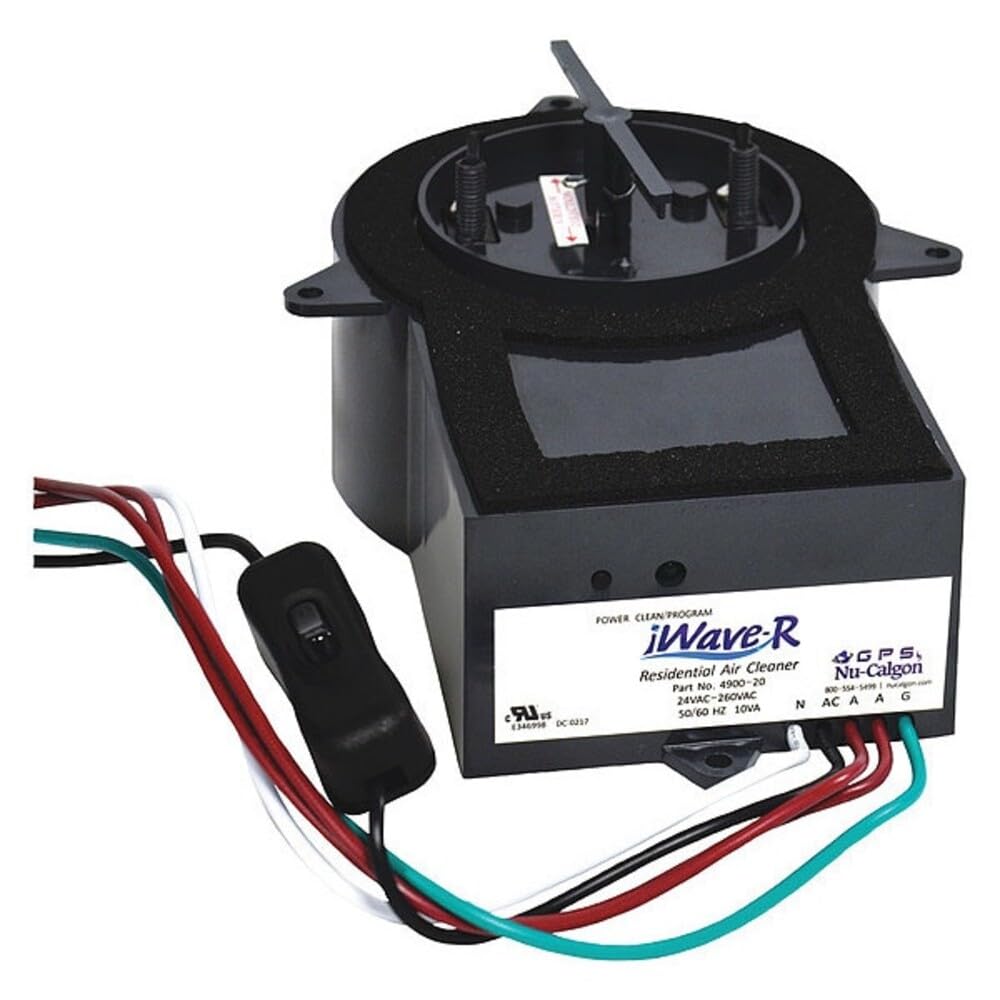
The ionization system that runs on universal voltage and covers up to 6 tons without a single bulb.
Like the i-Wave-R, this unit uses needlepoint bipolar ionization — but it handles larger systems, supporting duct systems up to 6 tons (2400 CFM). The universal voltage range (24VAC to 240VAC) means it works with virtually any HVAC system regardless of control board configuration. The self-cleaning design requires no maintenance. Shoppers say noticing fresher air within 15 minutes of installation, with noticeable improvements in dog odors and allergy symptoms.
Installation uses a simple magnetic mounting system. The unit has an auto-cleaning cycle every 3 days. One owner who had the unit for 5 years reports it worked well until an HVAC replacement — the emitter brushes got damaged by condensation when placed downstream from the coils. The critical installation tip: mount it upstream from the coils, not downstream, to avoid moisture damage. A minor quibble: the unit emits an audible squeal if you put your ear within 12 inches of it, but this is not noticeable from room distance.
Larger-system ionization: Covers up to 6 tons (2400 CFM) with universal voltage and zero maintenance — a step up in capacity from the standard i-Wave-R while keeping the same technology.
Best for: homes with larger HVAC systems (over 4 tons) where you want ionization coverage without worrying about voltage compatibility.
Watch out for: placement is critical — install upstream from the coil to prevent condensation from damaging the emitter brushes.
8. RGF Reme Halo (24 Volt) In-Duct Air Purifier
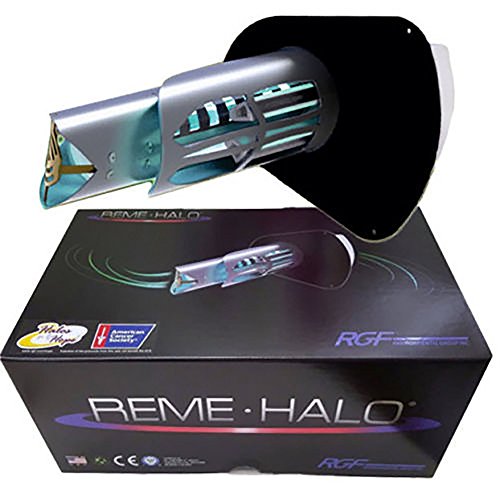
The pro-grade ionized hydro-peroxide system with adjustable output and an LCD countdown timer.
The biggest controversy: the manufacturer will not honor the warranty if the unit is bought from online resellers. Multiple buyers report that RGF classifies Amazon purchases as unauthorized resales, voiding the warranty — one buyer lost over on two units. The unit itself earns high marks for odor removal and air cleaning, but durability gets negative feedback, with some units losing effectiveness within 6 months. Installation is straightforward if you have basic electrical skills and a voltmeter, requiring a 4-inch hole saw and foil tape.
Why Owners Love It
- Effectiveness is the top praise — owners see real improvement in allergy symptoms, air quality, and odor removal.
- Adjustable ionized hydro-peroxide output lets you dial in the treatment level for your home’s size.
- Long 730-day lamp life with easy slide-out cell replacement.
The Critical Warning
- RGF explicitly does not warranty units purchased online — you lose the warranty by buying from Amazon or other third-party sellers.
- Durability gets negative feedback; some units stop producing the noticeable “clean” smell within 6 months.
Reach for this if: you want professional-grade ionization with adjustable output and do not mind risking the warranty for a lower upfront price.
Look elsewhere if: you need a manufacturer-backed warranty — this unit effectively has no warranty when bought from an online marketplace.
9. Halo LED Whole Home In-Duct Kit (with 24V Transformer)
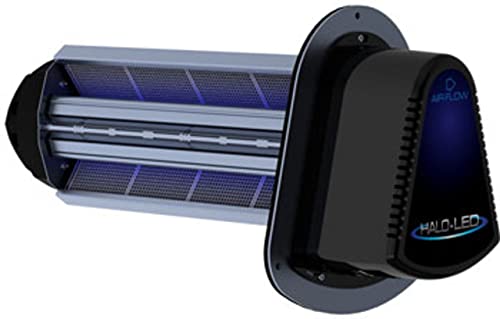
The latest-generation RGF system that uses LED technology with a crucial compatibility catch.
This is the updated Halo system using LED-based ionization instead of the traditional UV lamp. The rail-mounted design makes installation straightforward. Early owners mention that it reduces dust and noticeably improves air quality. An HVAC professional installed one and the owner was “unbelievable positive difference in our air quality and dust.”
However, this unit has significant caveats in the documentation. The Halo-LED cannot be wired directly to the EAC terminal — doing so damages the unit and voids the warranty. HVAC units with variable-speed fan motors require an optional air-sensing kit (sold separately). Furthermore, RGF does not warranty this product; you must contact your distributor for warranty support. Multiple owners received units with damaged transformers or units that appeared to be used products returned and resold. The small but vocal owner group warns of lights failing within 4 years with no manufacturer support.
LED-based ionization: Uses a modern LED emitter instead of a UV lamp, potentially lasting longer — but the no-warranty-online-buy policy and required air-sensing kit for variable-speed systems make this a higher-risk purchase than the standard Halo.
Buy this if: you are an HVAC professional sourcing an RGF unit directly from an authorized distributor and understand the EAC terminal restriction.
Avoid if: you are a DIY homeowner buying online — the lack of warranty support and frequent reports of damaged units make this a gamble.
10. APCO Carbon Cell Matrix HVAC UV Air Purifier (18-32 VAC)

The NASA-originated UV-C plus activated carbon matrix system that handles microorganisms and VOCs together.
At the heart of this system is a matrix of activated carbon cells. These cells attract and hold odors and microbes, which are then broken down by exposure to UV light. The cells are self-cleaning and the system is virtually maintenance-free. The technology was originally pioneered by NASA for space plant-growth chambers to clean indoor air. The unit weighs 4.3 pounds and includes a 1-year water-resistant shielded UV-C lamp along with a complete mounting kit.
Owners who have installed it report it “works great” for pulling germs out of the air, with one noting that “short of opening the window in a lush green forest this does the trick.” An HVAC technician reviewed it and called it the best furnace addition, noting that UV bulbs last 2+ years. The unit requires 18-32 VAC, 60 Hz, at 0.68 Amps (16 VA), and the manufacturer recommends installation by a licensed contractor. The biggest risk: one buyer lost nearly when the unit did not work and the seller was unresponsive.
what separates it
- Activated carbon matrix absorbs odors and VOCs while UV-C sterilizes — a rare combined approach in one unit.
- Self-cleaning carbon cells mean no filter replacements, just annual lamp swaps.
- NASA-originated technology with a proven track record in critical environments.
What to Watch
- Bulb replacement costs about for a compatible TUVL-115 lamp.
- Must be installed by a licensed HVAC contractor for best results and warranty support.
- Customer service from the seller may be unreliable — buy from a reputable source.
Choose this if: you want NASA-proven technology that combines UV-C sterilization with carbon-based VOC and odor absorption in a single professional-grade package.
Think twice if: you have had bad experiences with online marketplace customer service and prefer to buy direct from a distributor with a support line.
11. Aprilaire 5000 Air Cleaner
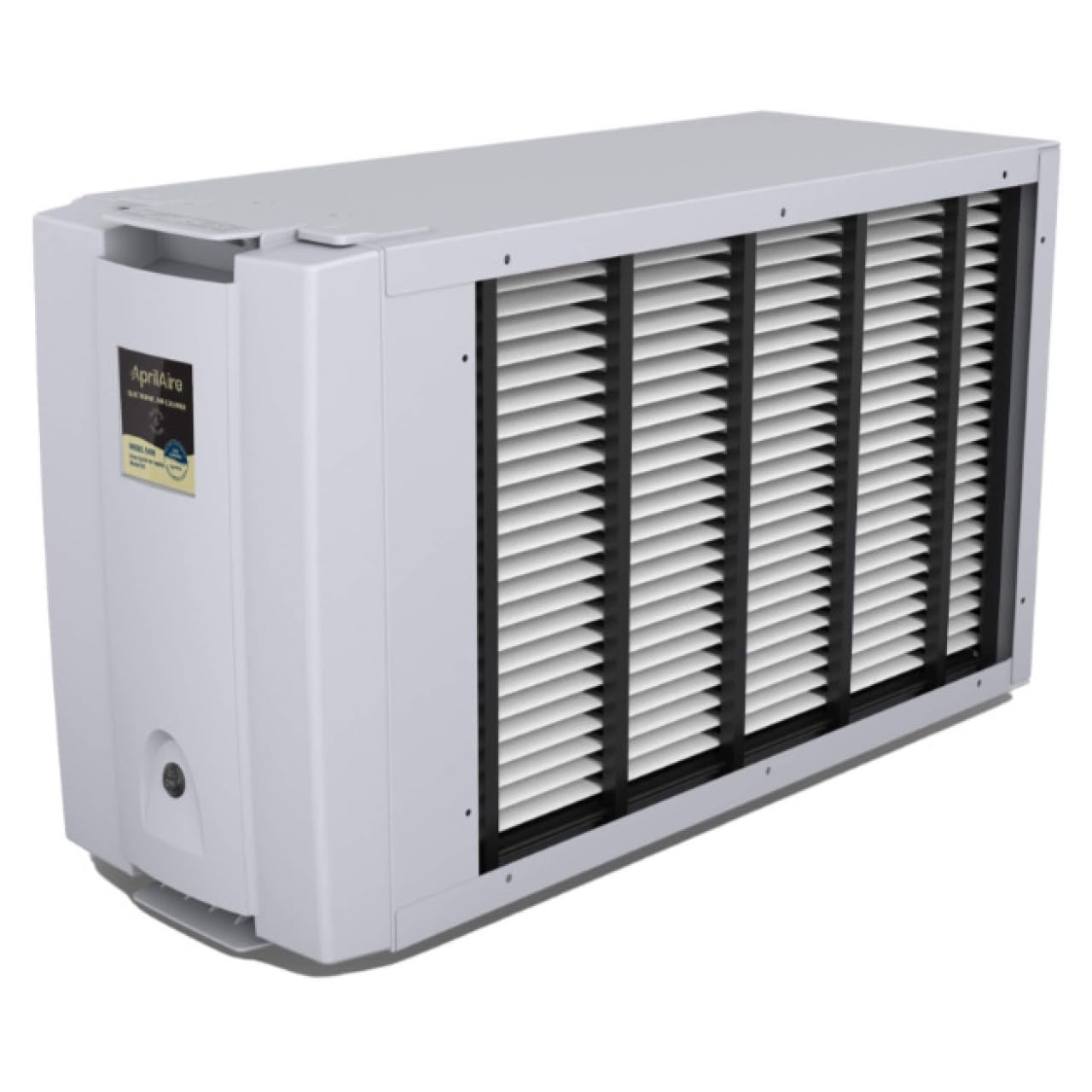
The heavy-duty electronic and media filter that removes 94% of respirable dust and 98% of airborne bacteria-sized particles.
Installation is the tricky part. The filter media has to be correctly positioned between the plastic frame’s teeth, and the directions are not always clear. Owners consistently describe a steep learning curve for the first filter change. Once installed, the system runs on a 30-minute-per-hour cycle. Allergy sufferers report symptoms clearing within an hour of power-up. The filter lasts about 10-12 months with continuous 24/7 operation, and replacement filters are expensive. But the unit itself has no other parts needing replacement — one owner reports 8 years of use with nothing else replaced.
Maximum particle removal: 94% of respirable dust and 98% of bacteria-sized particles eliminated — numbers that beat every other system in this guide for pure air cleaning.
Choose this if: you need the highest level of particle filtration available for allergies, asthma, or dust control, and you are willing to learn the filter change process.
Not for: anyone who wants simple “drill and forget” installation — the DIY setup is challenging and the filter loading takes practice to get right.
Understanding the Specs
UV-C Wavelength (254 nm vs 253.7 nm)
UV-C light falls in the 200-280 nanometer range. Most HVAC UV systems use a wavelength near 254 nm, which is the peak germicidal range for disrupting the DNA of mold, bacteria, and viruses. Tiny differences (254 nm vs 253.7 nm) do not matter in practice — both are within the effective germicidal band. What matters is whether the UV light shines directly on your AC coil or is positioned to treat the moving air stream, which depends on your installation placement.
Bipolar Ionization vs UV-C
Bipolar ionization systems (like the i-Wave units) use an electrical charge to create positive and negative ions that attach to airborne particles. These charged particles then clump together and get trapped by your regular HVAC filter. UV-C systems use ultraviolet light to directly kill microorganisms on surfaces like your AC coil. Ionization is better for reducing airborne particulates and odors throughout the home, while UV-C is more targeted for preventing biological growth on the coil itself.
MERV Rating and Filter Thickness
MERV (Minimum Efficiency Reporting Value) measures how well a filter captures particles. A MERV 11 filter traps particles down to 1 micron — including dust, pollen, and mold spores. The filter’s thickness (4-inch vs 1-inch) matters just as much as the MERV rating: thicker filters have more surface area, so they trap more particles without restricting airflow. Thin 1-inch filters with high MERV ratings can starve your furnace of air, causing overheating. A 4-inch MERV 11 filter is the balance for most homes.
Activated Carbon Matrix
An activated carbon matrix is a honeycomb-like structure coated with carbon that absorbs odors, chemicals, and volatile organic compounds (VOCs) from the passing air. In systems like the APCO, the carbon cells also trap microbes and hold them in contact with UV light long enough to be killed. This dual-action approach solves the limitation of UV-only systems, which cannot remove odors or chemical pollutants, and the limitation of carbon-only filters, which cannot sterilize living organisms.
FAQ
Will an HVAC air purification system fit in my existing ductwork?
How often do I need to replace the UV bulb?
Can I install an HVAC air purifier myself?
Will an HVAC air purifier help with my allergies?
Does an HVAC air purifier produce ozone?
Should I install the UV light upstream or downstream of the AC coil?
What size HVAC system can each air purifier handle?
Can I use an HVAC air purifier with a variable-speed furnace blower?
Will an in-duct UV system affect my energy bills?
How do I know if the UV bulb is working?
Final Thoughts: The Verdict
Across the board, the best air purification system for hvac is the i-Wave-R because it combines zero-maintenance ionization with real odor and dust reduction that owners consistently praise. If you specifically need UV-C coil sterilization on a budget, the Fresh-Aire UV offers 254 nm UV-C at a very accessible price point. And for the highest level of particle filtration for allergy sufferers, the Aprilaire 5000 removes 94% of respirable dust and 98% of bacteria-sized particles — numbers that no other system in this guide can match.
How We Picked
We do not accept paid placement. Every pick is matched to a real buyer and a real use-case; we do not hands-on test units.
Sources & Methodology
Specifications: manufacturer listings and product documentation. Review insights: verified customer reviews, as of July 2026. Pricing: not shown on this page (it changes often); check the current price via the retailer link.
As an Amazon Associate, Gadgets Feed earns from qualifying purchases. This does not affect which products we feature.