
Our readers keep the lights on and my morning glass full of iced black tea. As an Amazon Associate, I earn from qualifying purchases.
Specs are compiled from manufacturer listings and verified buyer reviews and can change over time — please confirm the key details on the product page before buying.
If you want the short answer: the Levoit Core 300-P is the pick most parents should start with, because it pairs a proven HEPA filter with a genuinely near-silent sleep mode. The rest of this list covers the compact nursery-specific units, the wide-coverage machines for open-plan rooms, and the premium options for parents who want live air readings on a screen. What matters most for a baby room is not raw power — it is how quiet the unit runs at 3 a.m., and whether the filter actually catches the fine particles that hang in a closed nursery.
I’m Min — the founder and writer behind Gadgets Feed. This guide is built by comparing the manufacturers’ published specifications and the patterns across verified customer reviews, so you get each pick’s real strengths and trade-offs instead of marketing spin.
You will see coverage numbers, decibel levels, and filter types side by side, so you can match a machine to your actual room size. Every pick below is a true HEPA purifier chosen with a sleeping baby in mind, which is the whole point of a proper air purifier for baby room setup.
Our Picks at a Glance


How To Choose The Best Air Purifier For Baby Room
A nursery purifier has one job that a living-room purifier does not: it has to disappear at night. A machine that cleans brilliantly but hums at 50 dB will get switched off by week two, and a switched-off purifier cleans nothing. So the first thing you weigh is the sleep-mode noise, and the second is whether the filter type genuinely traps fine particles rather than just moving air around.
Match the CADR to the nursery, not the whole house
CADR stands for Clean Air Delivery Rate — it is the independently measured speed at which a purifier pushes cleaned air back into the room. A nursery is usually a small, closed space, so a moderate CADR clears it fast. A unit rated at 143 CFM for smoke and 167 CFM for pollen refreshes a 222 ft² room several times per hour, which is more than a typical nursery needs. Bigger CADR numbers matter when the door stays open onto a hallway or the room is unusually large.
Understand HEPA grades before you buy
True HEPA is the baseline you want: it captures 99.97% of airborne particles down to 0.3 microns, which covers dust, pollen and pet dander. H13 is a tighter grade of the same idea, and some units now rate themselves against particles far smaller than 0.3 microns. Whatever the grade, the filter needs a carbon layer behind it if you want the purifier to also cut diaper-pail and cooking odors rather than just particles.
Decibels, night lights, and child locks
Sound is measured in decibels (dB), and the scale is not linear in the way you would expect — a jump of a few dB is a noticeable change in a silent room. Sleep modes that land in the low 20s dB are the ones parents describe as inaudible. Beyond noise, look for a dimmable or switchable display, because a bright panel lights up a dark nursery, and for lockable controls if a curious toddler will eventually share the space.
Quick Comparison
| Model | Best For | Rated Coverage | Sleep-Mode Noise | Filter Type | Amazon |
|---|---|---|---|---|---|
| Levoit Core 300-P★ Best Overall | Most nurseries | 222 ft² at 4.8 air changes/hr | 24 dB | 3-in-1 HEPA | Amazon |
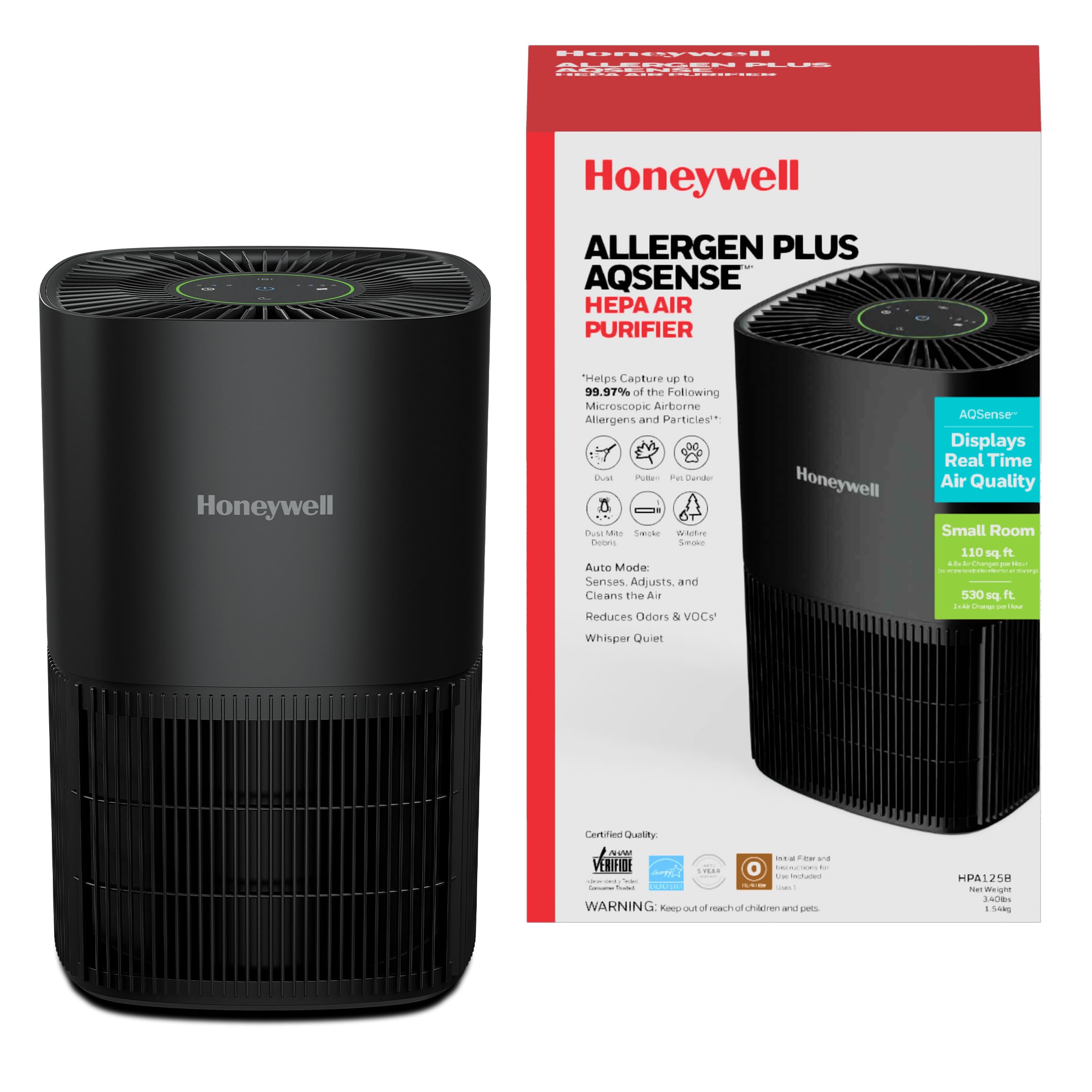
| Honeywell Allergen Plus CompactBest for Nightstands | Bedside on a nightstand | 110 ft² at 4.8 air changes/hr | 20.81 dBA | 3-in-1 HEPA | Amazon |
| Momcozy AP01Best for Night Feeds | Night feeds and diaper changes | 250 ft² nursery | 21 dB | H13 HEPA | Amazon |
| Vornadobaby Purio | Toddler-proof safety | 125 ft² at up to 6.3 air changes/hr | — | True HEPA | Amazon |
| Shark NeverChange Compact Pro | Never buying filters | 250 ft² in 1 hour | — | HEPA-exceeding | Amazon |
| Winix 5510 | Large or open-plan rooms | 1,882 ft² in 1 hour | 23.5 dB | True HEPA | Amazon |
| Levoit Sprout | Tracking nursery air quality | — | — | True HEPA | Amazon |
| LG PuriCare 360 | Whole-floor coverage | 429 ft² at 4.8 air changes/hr | — | NanoFiber True HEPA | Amazon |
| Airthings Renew | Wall or flat placement | 525 ft² | 23 dB | HEPA-13 | Amazon |
| Alen Flex | Dusty nursery rooms | 700 ft² in 30 minutes | — | H13 HEPA | Amazon |
| AIRDOCTOR 2000 Smart | Ultra-fine particle control | 305 ft² in 15 minutes | — | UltraHEPA | Amazon |
In‑Depth Reviews
1. Levoit Air Purifier for Home Pets Hair Allergens in Bedroom Quiet Purifiers
Our pick — over 4.5★ from 108,500+ verified ratings; the strongest balance of quality and price.
The quiet workhorse that clears a nursery fast and then fades to a near-silent hum.
Start with the numbers that matter in a baby room. This Levoit is AHAM Verifide (independently tested by the Association of Home Appliance Manufacturers for cleaning performance and energy use) with a CADR of 143 CFM for smoke, 153 CFM for dust, and 167 CFM for pollen — enough to refresh a 222 ft² room 4.8 times per hour. A typical nursery sits well inside that, which means the air cycles over and over while your baby sleeps.
Its 3-in-1 filter runs a pre-filter, a HEPA layer and an activated carbon stage, and the maker states 99.97% filtration efficiency for airborne particulates between 0.1 and 0.3 microns, tested by an independent lab. The 56W motor handles the airflow. When the lights go out, QuietKEAP Technology drops it to a near-silent 24dB, and the display can be switched off entirely so nothing glows in the corner. A 2, 4, 6 or 8-hour timer runs alongside a check-filter indicator.
This is the crowd favorite of the group by a wide margin — 4.7 stars across more than 100,000 ratings — and performance is what wins people over. Parents describe waking without congestion after a single night, and one reviewer in the verified reviews calls it a favorite of the three purifiers they own, running it in a daughter’s nursery. Note that the 1073 ft² figure on the listing refers to one air change per hour across an open space, not to a normal bedroom — a genuine limitation worth knowing, and the reason it is sized right rather than oversized for a nursery.
What earns the top spot
- 24dB sleep mode with switchable display lighting for a truly dark nursery.
- AHAM Verifide with 143 CFM smoke CADR and 167 CFM pollen CADR.
- Timers at 2, 4, 6 and 8 hours plus a check-filter indicator.
- Genuine replacement filters are made specifically for this unit, so fit and filtration stay consistent.
What to keep in mind
- The top fan speed registers as medium white noise — noticeable if the unit sits right beside the crib.
- Off-brand filters may fit poorly, so plan on the official ones.
Reach for this if: your nursery is a normal bedroom and you want one proven unit at the lowest risk of buyer’s remorse.
Look elsewhere if: you need coverage across a wide open-plan space — the Winix 5510 is the one rated for that.
2. Honeywell Allergen Plus Compact HEPA Small Room Air Purifiers, Black
If the purifier has to sit within arm’s reach of the crib, noise stops being a spec and becomes the whole decision. Sleep Mode here runs as low as 20.81 dBA — the quietest sleep figure on this list — and the lights dim for the dark. AQSense Auto Mode continuously reads the air and moves the fan up or down on its own, with a green, yellow or red indicator telling you what it found.
The 3-in-1 filter uses 360° filtration to capture up to 99.97% of allergens including dust, pollen and smoke, with an activated carbon layer for VOC reduction and a pre-filter that traps pet hair. According to the maker, it circulates air 4.8 times per hour in a 110 ft² room and once per hour in rooms up to 530 ft². Three cleaning levels, timer options and a filter change indicator round it out, and it needs no separate pre-filter to buy.
The pattern across owner feedback is consistent: it earns its keep as a bedside unit, and it improves air to the point where the difference is noticeable when you walk in from outside. One repeat buyer runs two of them non-stop and reports the sensors are very sensitive and effective, with barely any audible sound on auto. That said, a few owners find the high setting too loud to run through the night, so the honest guidance is to leave it in auto overnight rather than forcing it high.
Where it fits: small and medium bedrooms, dorms and offices — anywhere the unit sits close to a head. The 4.8 air changes per hour in a 110 ft² room is fast enough that you rarely need the loud setting.
The trade-off: it is a compact machine, so a large nursery with the door open will stretch it. And it is worth keeping the control panel dry — a small amount of water on the panel is the one failure mode owners describe.
Right pick when: the crib and the purifier share a wall and you want the lowest possible night noise.
Choose differently when: you are covering a big room — step up to something rated for the square footage.
3. Momcozy Air Purifier for Bedroom with Dimmable Night Light for Small Room
Built for 3 a.m.: a four-layer filter, a live air readout, and a glow you can dim to almost nothing.
This is the one designed around the nursery night routine rather than the living room. The soft-glow night light is adjustable, so you can set a low glow for sleep, brighten it for a feed or a diaper change, and then dial it back without switching on an overhead light. Sleep Mode purifies at just 21 dB. It freshens a 250 ft² nursery in about 15 minutes on the max fan setting, and the whole thing weighs 3.97 pounds, so it slides between rooms easily.
Filtration is a four-stage setup — a pre-filter and H13 HEPA to trap fine particles, pet hair and dander, an activated carbon layer for nursery and diaper-pail odors, and a performance layer with a silver ion coating. It is AHAM Verifide with independently tested CADR ratings for dust, pollen and smoke. The PM2.5 monitor (a sensor that reads the concentration of fine particles in the air) shows a live number plus a three-color status ring, and Auto Mode moves the fan speed to match what it reads.
The thing that wins owners over is how quietly it works while still visibly doing its job — the display makes the cleaning obvious instead of invisible. Parents describe it as quiet like a sound machine and compact enough for a nursery shelf, and it was bought as a gift for a granddaughter’s room and kept for the cleaner, less stale air. Note that higher fan speeds do get louder, which is normal, and the front display is bright enough that some parents cover it even with the nightlight off.
Why parents keep it in the nursery
- 21 dB sleep mode paired with a four-layer H13 HEPA and carbon filter.
- Adjustable night light that doubles as a feeding light.
- Live PM2.5 numeric readout and a three-color status ring.
- Compact 3.97-pound body that moves between rooms.
The honest caveats
- Max fan speed is noticeably louder than the low settings.
- The front display stays bright even when the nightlight is off.
Ideal for: parents doing night feeds who want a light source, a white-noise-like hum and clean air from one box.
Less ideal if: you need one machine to cover an entire open floor.
4. Vornadobaby Purio Nursery Air Purifier with True HEPA Filter, Safety Features, and Soothing Glow, White

The one built like a nursery appliance first and an air purifier second.
Most purifiers assume no one will ever touch them. This one assumes a toddler will. It has no pinch points, sits on an extra-wide topple-resistant base, stows its cord inside the base, and lets you lock both the controls and the filter cover so the settings stay exactly as you left them. A “sleepy time” setting automatically drops to the lowest fan speed when the room goes dark.
Filtration is three-stage: a permanent washable pre-filter, a True HEPA filter that captures 99.97% of airborne particles as small as 0.3 microns including pet dander, and an activated carbon filter for gases and odors. Coverage is 125 ft² with a CADR of up to 6.3 air changes per hour, and three electronic speeds let you pick between quiet running and a stronger rush of air that can work as white noise. The recessed glow light dims and brightens when a filter change is due.
Owners tend to keep these for years — one reports a first Purio lasting six years of continuous use before the second was bought, and another runs one in a one-bedroom apartment to kill cigarette smoke drifting in from below. Be aware that a plastic and rubber smell can take a few weeks to fade out of a new unit, and the higher fan settings are loud by design.
Standout detail: 125 ft² of coverage with a CADR of up to 6.3 air changes per hour, which is faster cycling than its room size suggests.
Worth knowing: the raw plastic odor on arrival is the recurring gripe, and higher speeds are genuinely loud — the low setting is the one you will actually sleep with.
Buy this when: safety features and lockable settings outrank everything else on your list.
Pass when: you want the purifier to vanish into the background — this one is designed to be seen and touched.
5. Shark NeverChange Compact Pro Air Purifier, HP071BRN, Winter Fog
The purifier with a washable pre-screen, so the pricey filter lasts longer.
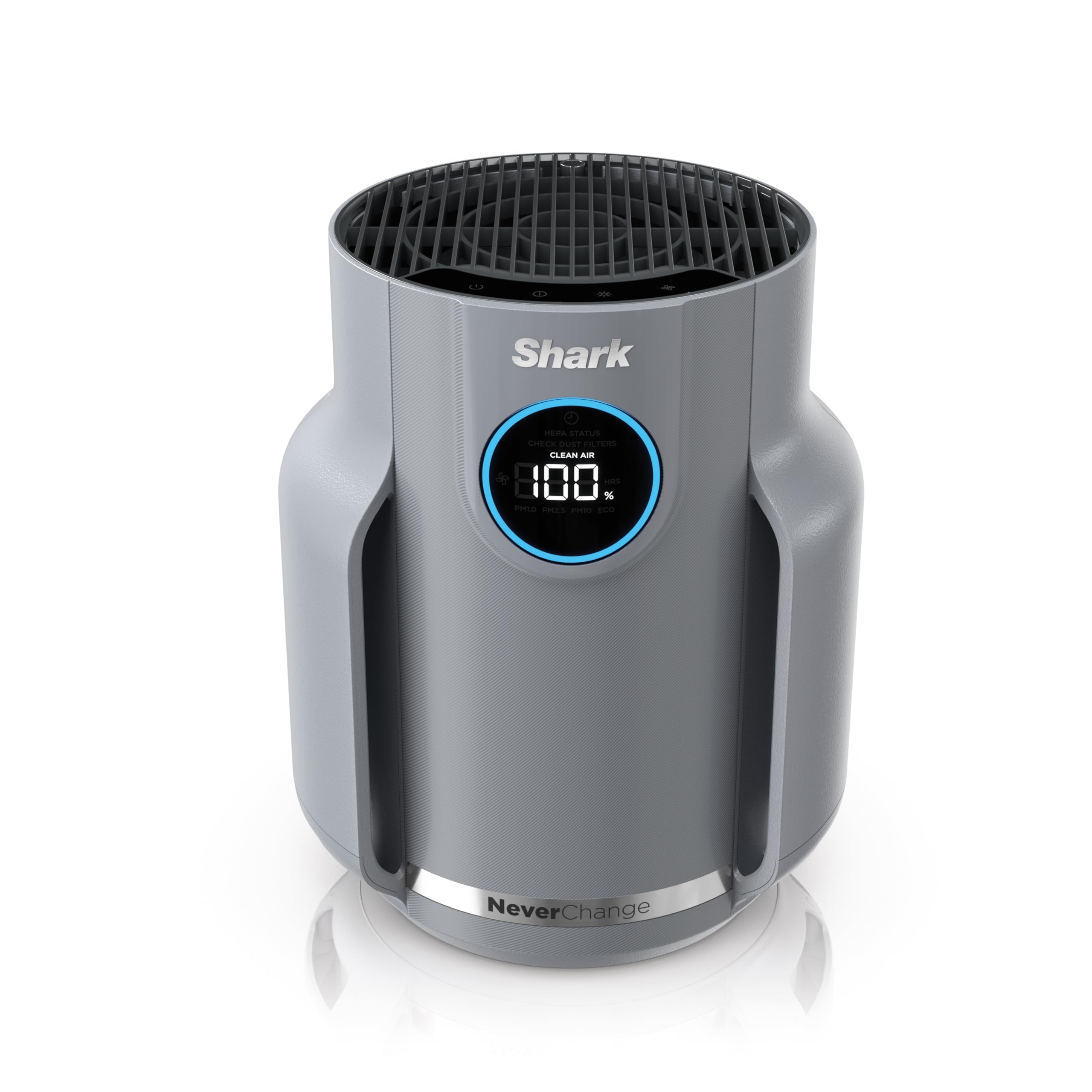
The pitch here is not about cleaning speed at all — it is about how often you have to buy filters. A Debris Defense washable screen grabs hair, dust and dander before it reaches the HEPA layer, and you just rinse, wipe or vacuum it clean in seconds. Shark claims the washable screen cuts replacement-filter spending over the first five years. The main filter itself is rated to exceed HEPA standards, trapping 99.98% of large, small and micro-sized particles per the IEST-RP-CC007 standard.
Coverage runs to 250 square feet in one hour, which suits a nursery or a home office. CleanSense IQ shows your air quality improving on the display in real time, and the machine is light at 4.4 pounds with dimmable lights and a control panel showing air quality, filter life, fan speed and Eco mode. An Odor Neutralizer cartridge guards against smells while releasing a scent.
What keeps it honest is the filter-life conversation. The thing owners rave about is the air quality and the quiet, particularly in Eco mode, and multiple households report running two units to knock down cigarette and pet odor without the chore of filter swaps. But filter life is the most-criticized aspect of this model, and value for money splits both ways — some call it worth it, others do not. Treat the never-change promise as a filter-cost play, not a guarantee.
The core argument: 250 ft² of coverage and a washable screen mean the recurring cost drops, and the 4.4-pound body is easy to move between rooms.
The counterpoint: filter life is the complaint that shows up most often in owner feedback, so factor that into the long-term math.
Worth it for: anyone who hates filter shopping and wants a light, portable unit with a live air-quality display.
Think twice if: you want the absolute lowest upfront cost — the savings only stack up over years of use.
6. WINIX 5510 Air Purifier (New Generation of 5500-2 with App Support) for Home Large Room Up to 1881 Ft² in 1 Hr, True HEPA, High Deodorization Carbon Filter and Auto Mode, Captures Pet Allergies, Smoke

The one you buy when the nursery door never really closes.
If your baby’s room opens onto a hallway or shares air with the rest of the house, a compact unit will spend all night chasing particles that keep flowing in. This one is rated to clean up to 1,882 square feet in one hour — 941 square feet in 30 minutes, 627 in 20, 470 in 15 — and it is AHAM Verifide at 392 square feet. Against the compact Honeywell’s 110 ft² at 4.8 air changes per hour, that is a different class of machine entirely.
The Winix True HEPA filter captures 99.99% of airborne allergens including pollen, dust, smoke and pet dander, backed by an advanced odor-control carbon filter that tackles VOCs and cooking, pet and smoke smells. It is nearly silent on its slowest speed at 23.5dB. A light-automated sleep mode turns itself on when the room darkens and hands control back to auto when light returns, and the Winix Smart App lets you check and control it remotely.
Owners describe pulling real smoke out of a room while barely hearing the machine — one verified buyer notes the auto sensor picks up dust and cooking odors, and that the unit stays quiet on Auto. The recurring gripe is the app: it can lag, and setup is 2.4GHz Wi-Fi only, which several households found fiddly. Durability is called mixed in the review data, though long-term buyers report the unit still running after years of constant use.
The headline: 1,882 ft² in one hour with True HEPA and a carbon filter, at 23.5dB on the slowest speed.
The friction: the app is the weak link — laggy controls and a 2.4GHz-only connection make setup more annoying than it should be.
Made for: open-plan layouts or nurseries that share air with the rest of the house.
Overkill when: you are purifying a single closed small room — the size of this unit will outweigh the benefit.
7. LEVOIT Smart Air Purifier for Home Bedroom, Quiet for a Nursery, Sprout
A nursery purifier that reports back: five sensors, seven air factors, one warm night light.
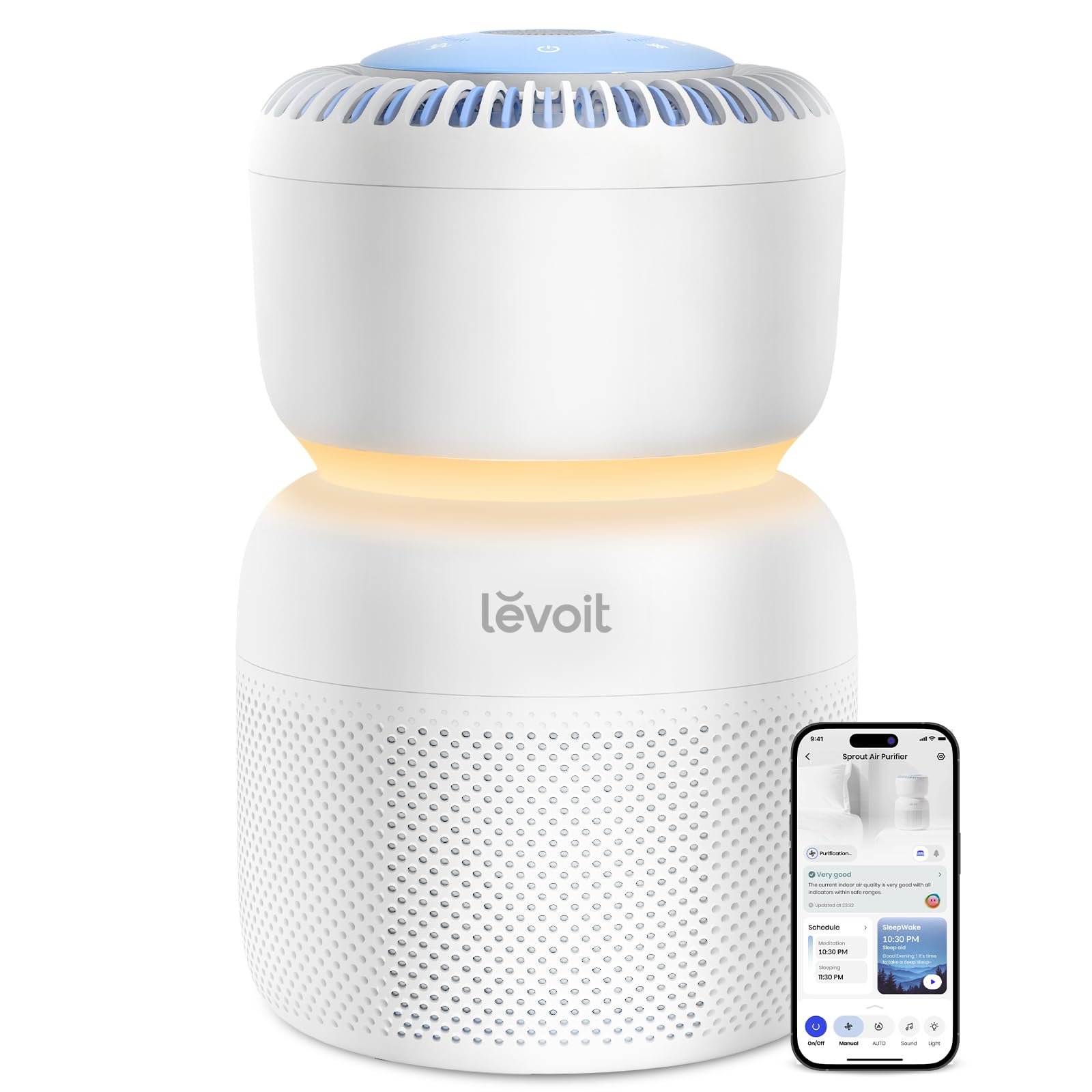
Where the Core 300-P tells you nothing and just works, the Sprout tells you everything. Five advanced sensors track seven air quality factors — PM1.0, PM2.5, PM10, TVOC, CO2, temperature and humidity — so you can see the nursery’s environment changing rather than guessing. The night light is blue light-free, which keeps the warm glow from disrupting sleep, and ambient sounds round out the bedtime setup.
Filtration runs through a true HEPA filter that captures 99.9% of particles as small as 0.3 microns, including dust, pollen and smoke. It is AHAM Verifide, so the cleaning performance and energy efficiency have been independently tested. It weighs 6.4 pounds, which is light enough to move between the nursery and a family room.
Owners lean on the measurements here more than on any other feature. Multiple households report watching PM2.5 readings fall from hazardous levels within an hour of switching it on, and allergic family members report sneezing less. It is also a genuine upgrade path — one long-time Levoit owner replaced a loud older model with this one for the quieter operation, higher airflow and the ability to switch the lights off. The most common reservation is value for money, which splits both directions in owner feedback.
Where the Sprout earns its place
- Five sensors tracking seven air quality factors, including CO2 and humidity.
- Blue light-free night light paired with ambient sounds.
- True HEPA rated for particles as small as 0.3 microns.
- AHAM Verifide for tested cleaning performance.
Where it asks for more
- Owner opinion on value splits both ways.
- Some units need a firmware update and extra app permissions before the sensor settles.
Pick this if: you want to see the numbers change and you like controlling things from a phone.
Skip this if: you would rather set it once and never open an app — the simpler Core 300-P does the same cleaning job.
8. LG PuriCare 360 Air Purifiers for Home, Large and Small Room, Bedroom, Up to 2,059 ft² in 1 Hr with NanoFiber True HEPA Filter, 360 Degrees of Filtration, WiFi, Air Quality Monitor, Low Noise
Draws air from every direction, so placement in the nursery matters far less.
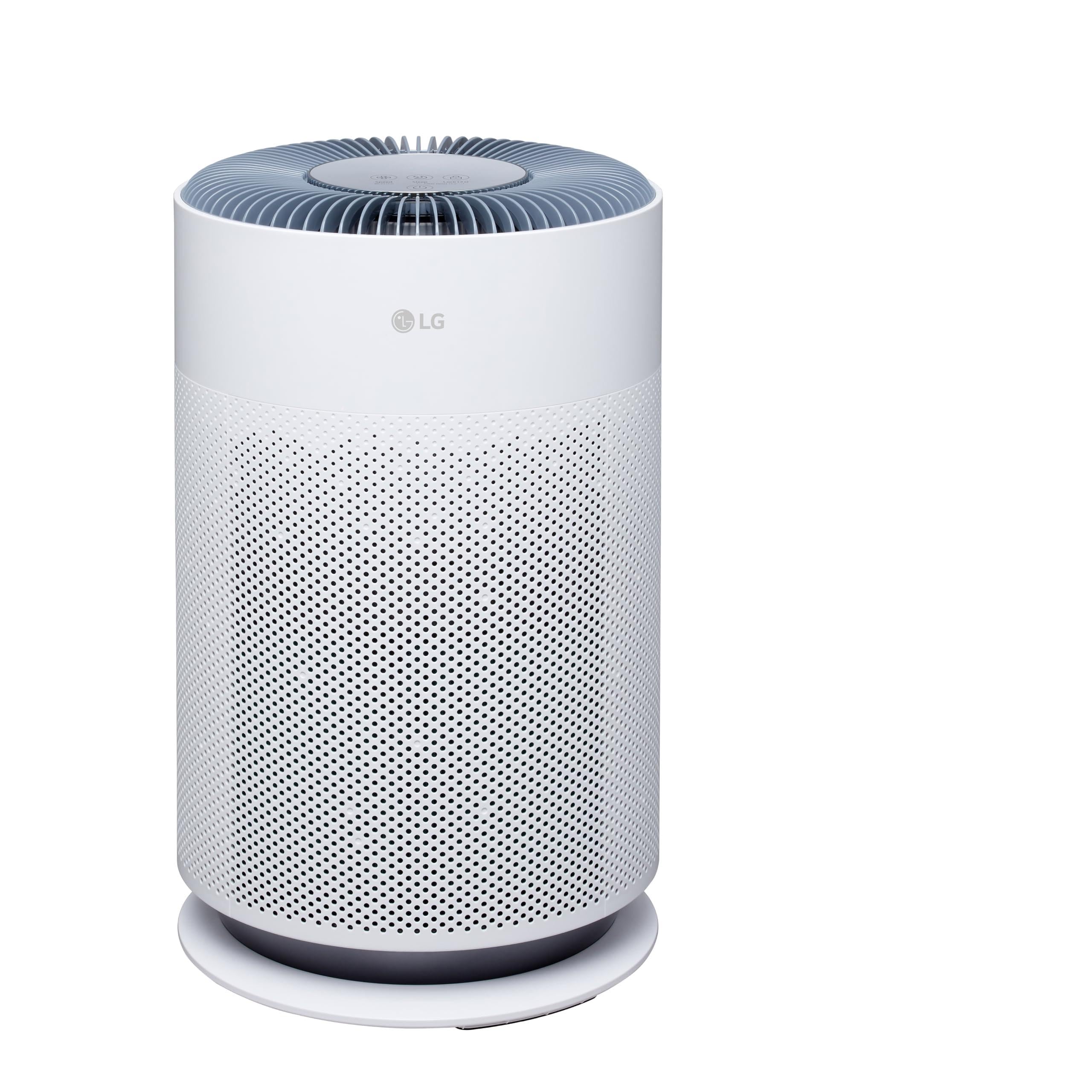
Most purifiers pull from one face, which means you spend an afternoon deciding which way it should point. The PuriCare 360 pulls from all sides instead, and the maker rates it to run 4.8 air changes per hour in a 429 ft² room or one air change per hour up to 2,059 ft². Compare that with the compact Momcozy’s 250 ft² nursery and it is clearly built for bigger footprints — a family room, a master bedroom, or a nursery in an open layout.
Three filters work in sequence: a removable pre-filter for larger particles, a NanoFiber True HEPA layer that traps an average of 99.97% of particles 0.3 microns in size, and an activated carbon filter for freshness. A PM 1.0 sensor detects particles as small as one micron, and an LED indicator cycles from red to orange to yellow to green as the air improves. Everything is controllable through the app.
The sensor is the part owners actually talk about. Households report it picks up air quality changes instantly and clears cooking smells, and one buyer keeps it between the kitchen and the family room because it is quiet while still removing kitchen odors. Turbo mode is noticeably loud, though on high it stays TV-watchable. For a closed nursery, this is more machine than you need.
Where it leads: coverage — 4.8 air changes per hour in 429 ft² and 360° intake so corners get cleaned too.
What to weigh: turbo mode is loud enough to notice, and the footprint at 14.9 pounds is not a nightstand appliance.
Good match for: a nursery that shares open space with the rest of the house, or a parent who hates guessing which way the intake should face.
Not the one for: a tight crib-side placement — this unit wants floor space.
9. Airthings Renew – smart air purifier ideal for bedroom and baby room with HEPA-13 & charcoal filters – Portable with PM sensor and filters for allergies, dust removal, pet hair, smoke

The rare purifier you can stand up, lay flat, or hang on a wall.
Placement is the design story here. Most purifiers give you one orientation and hope you like it; the Renew is built to sit upright, lie flat, or mount on a wall with a silicone cover for the cord. Silent mode runs at just 23 dB, and there is a child lock — a combination that makes it genuinely suited to a baby room. Coverage reaches a room up to 525 square feet.
Cleaning is a four-stage stack: two washable pre-filters handle dust, pet hair and larger particles, then the HEPA-13 filter traps 99.97% of what remains, and an active charcoal filter finishes with chemicals and odors. A high-precision laser-based PM2.5 sensor watches air quality and moves the fan speed automatically in Auto Mode. The whole unit weighs 11.9 pounds.
That sensor is also where the caveat lives. Owner feedback splits: some describe the app delivering good air quality tracking and improved sleep, with one noting VOC and CO2 readings trending down steadily against a separate measuring device. But the most detailed criticism on record describes two units whose Auto Mode sensors never raised the fan above minimum. It is a real risk worth knowing before you buy — and it is why the flexibility of placement, not the sensor, is the strongest reason to pick this.
Its advantage: HEPA-13 plus charcoal filtration, 525 ft² coverage, and upright, flat or wall-mounted placement.
Its risk: mixed owner experience with the automatic sensor means you may prefer to run it manually.
Best suited to: awkward nursery layouts where a normal floor unit will not fit.
Weigh carefully if: hands-off auto sensing is the feature you care about most.
10. Alen Flex Hepa Air Purifier, Pure Filter, Covers 1,400 Sq Ft
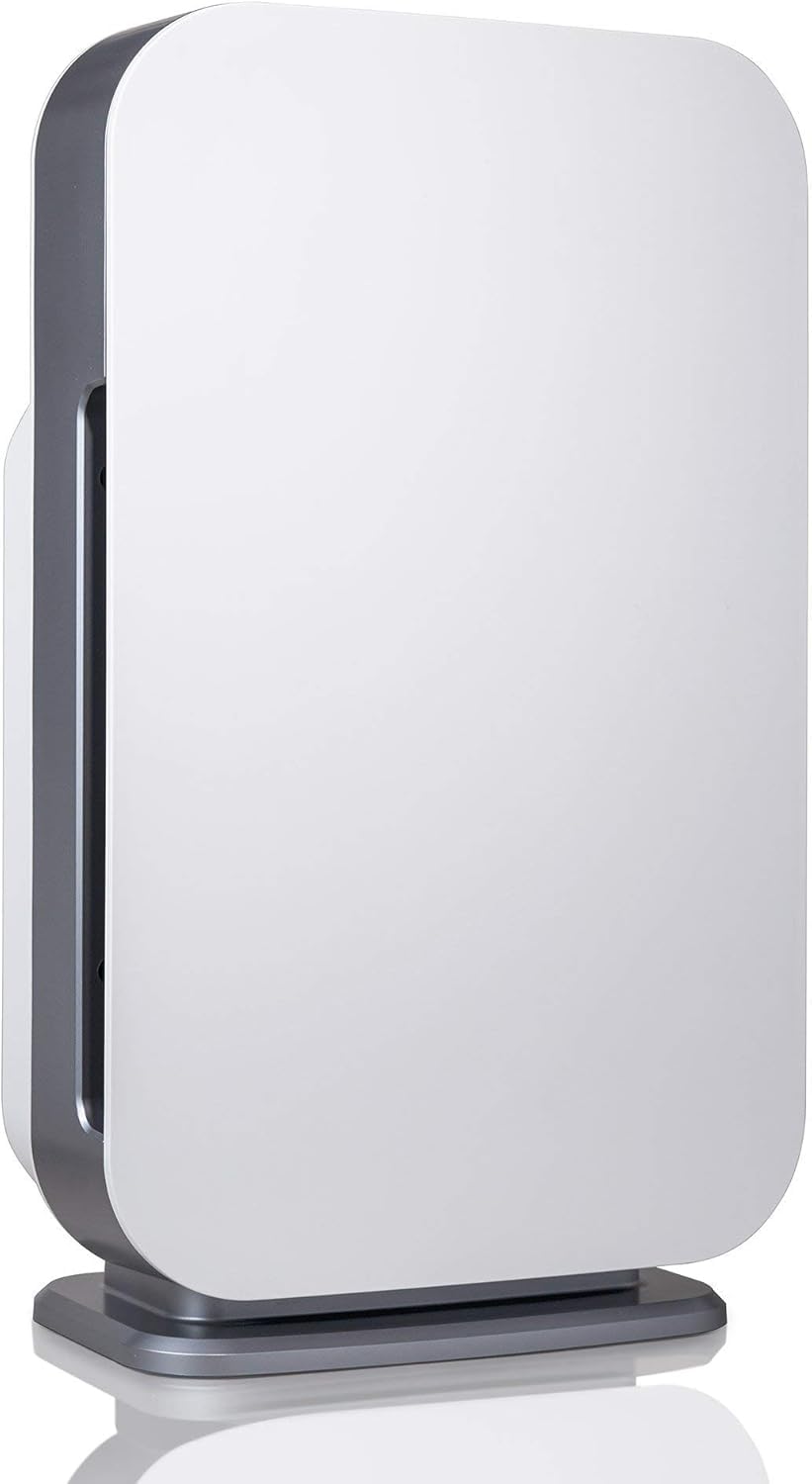
A big-room dust eater with an H13 filter and a lifetime assurance behind it.
If the nursery shares a wall with a dusty hallway or a home renovation, this is the pick that swallows the debris. The H13 HEPA filter eliminates 99.9% of particles as small as 0.3 micron, and the unit covers 700 square feet in 30 minutes and up to 1,400 square feet every hour. That is more than double the compact Honeywell’s 110 ft² 4.8-pass rating, and it is the kind of headroom a whole-floor setup needs.
Alen states the Flex runs 24/7 at a total energy cost of only a few cents per day, with a quiet motor behind a powerful fan. Alen’s lifetime assurance covers the unit indefinitely once you enroll in a filter subscription, fixing or replacing any issues at no cost. It weighs 15 pounds and measures 25 inches tall, so it sits on the floor rather than a shelf.
Dust is the complaint that gets solved here. Households in dusty areas report the purifier capturing so much of it that daily dusting is no longer necessary, and one buyer keeps a 700 ft² unit running in a fifth-wheel trailer with less dust and fewer allergy symptoms. Among nursing parents specifically, one reports it reduces feathers, cat hair and dust and helps with a baby’s stuffy nose. Value for money is the one genuinely mixed thread in owner feedback.
Why it earns a premium spot
- H13 HEPA rated down to 0.3 micron particles.
- 700 ft² cleaned in 30 minutes, 1,400 ft² per hour.
- A filter subscription keeps the lifetime assurance active.
Points to weigh
- You must buy filters through the subscription to keep that assurance active.
- Owner opinion on value for money splits both ways.
The right call for: dusty homes, renovation periods, and parents who want one unit to cover a floor rather than a room.
Not the first choice if: you only need a crib-side unit and want something small.
11. AIRDOCTOR 2000 Smart for Small & Medium Rooms and Bedrooms. 3 Stage Filtration with UltraHEPA
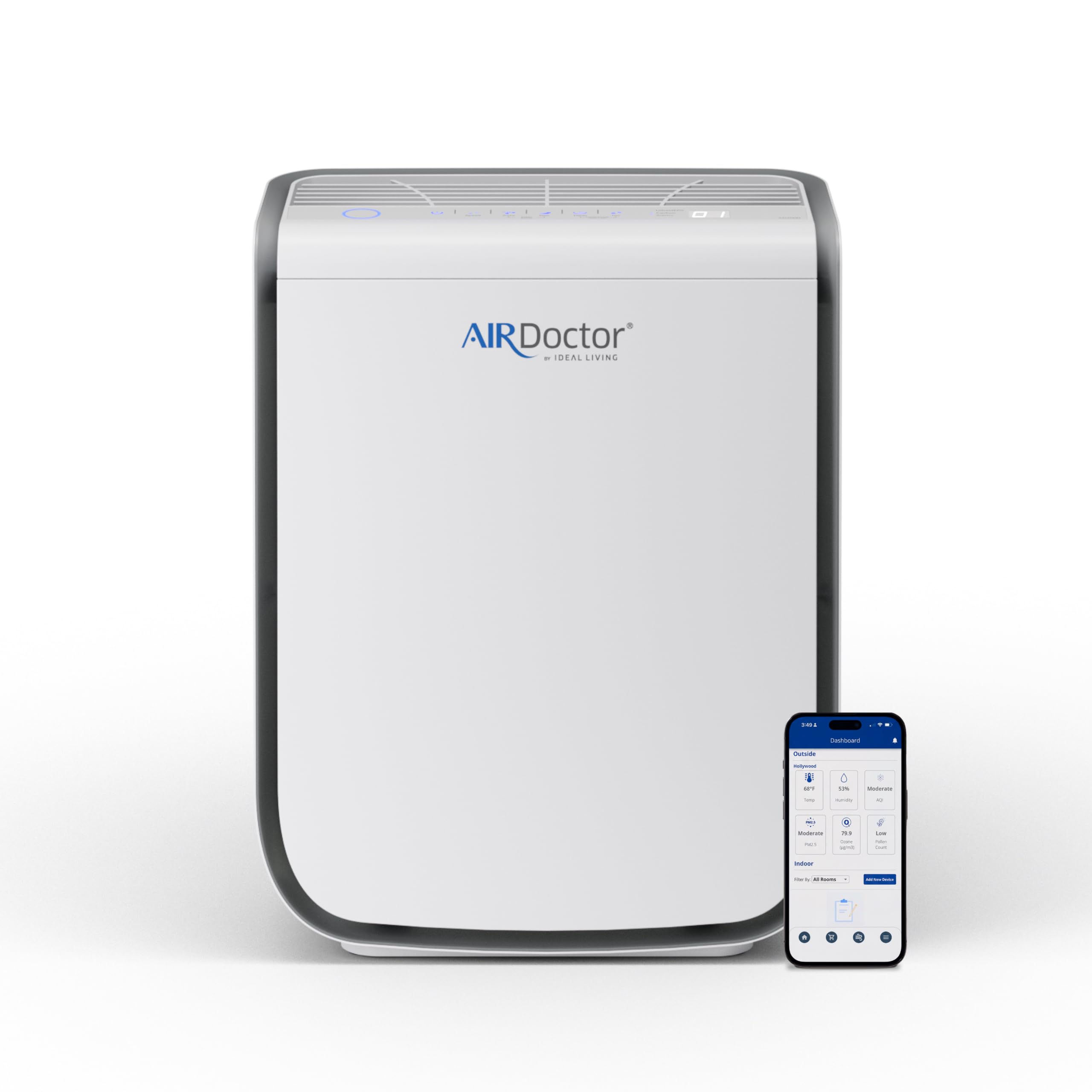
Filters down to particles far smaller than standard HEPA, and does it from a bedroom-sized box.
Standard HEPA stops at 0.3 microns; this machine is built around a tighter target. Its UltraHEPA filtration captures 99.99% of airborne particles at 0.003 microns, and the UltraHEPA filters are made in Japan. Allergens, dust, smoke, mold spores, pet dander, bacteria and viruses are all named on the removal list. It cleans 305 ft² in 15 minutes and up to 1,220 ft² in an hour — faster cycling than the Alen Flex’s 700 ft² in 30 minutes, though narrower on the very largest rooms.
Three stages sit inside: a pre-filter, a premium activated carbon filter made with activated carbon and potassium permanganate to absorb and break down gases, and the UltraHEPA layer. The Halo display shows color-coded air quality from PM2.5 sensors, and Auto Mode adjusts fan speed and triggers Boost when needed. You get a timer, a filter indicator and four fan speeds. Replacement guidance is carbon every six months and UltraHEPA every 12 months.
The most consistent theme in owner feedback is how effective the unit is in a bedroom, and one buyer placed a second unit in a sick relative’s room and reports they noticed the difference right away, calling the size perfect for a bedroom. A note of caution that appears in the review pages: an early unit had sensor trouble and stayed blue despite smoke, but the replacement worked immediately with the sensor detecting smoke and boosting the fan. Indicator lights draw mixed feedback, and price is the main objection.
The fine-print advantage
- UltraHEPA rated to 99.99% at 0.003 microns.
- 3-stage filtration including a potassium permanganate carbon layer.
- HaloPM2.5 display with Auto Mode and Boost.
- 305 ft² cleaned in 15 minutes with four fan speeds.
Where buyers hesitate
- Cost is the recurring objection in owner feedback.
- Indicator lights get mixed feedback, and one reported unit needed replacing before the sensor behaved.
The premium pick if: you want the smallest particles targeted and a live air-quality readout in the nursery.
Consider the value end if: standard true HEPA already covers your concerns — you will pay a premium for the tighter filtration grade.
Understanding the Specs
CADR and Room Coverage
CADR, or Clean Air Delivery Rate, is the independently measured speed at which a purifier pushes cleaned air into a room, given in CFM (cubic feet per minute). Higher numbers mean faster cleaning. A CADR of 143 CFM for smoke and 167 CFM for pollen is enough to refresh a 222 ft² room 4.8 times per hour, which is faster than a nursery needs. The coverage figure on a box is often stated at one air change per hour, which sounds impressive because it measures an empty, open space — a 1,073 ft² rating at one air change per hour is not the same as 1,073 ft² of nursery.
Decibels and Sleep
Decibels (dB) measure sound pressure, and the scale is logarithmic — meaning a rise of a few dB is a noticeably louder room, not a small step. Purifier sleep modes typically land in the low 20s dB, which is the range owners describe as inaudible at night. Anything above that starts to register as noticeable background noise when the house is otherwise silent. If the unit must sit beside the crib, prioritize the sleep-mode decibel number over every other spec, because you will be the one deciding at 3 a.m. whether to switch it off.
HEPA Grades Explained
True HEPA filters capture 99.97% of airborne particles down to 0.3 microns, covering the dust, pollen and pet dander that bother a nursery most. H13 is a tighter grade of the same standard. UltraHEPA goes further still, with one unit on this list rated to capture 99.99% of particles at 0.003 microns. Finer filtration costs more, so decide whether standard true HEPA covers your concern or whether you specifically need the tighter grade.
Filter Maintenance and Cost
Most units here use a replaceable HEPA cartridge with a carbon layer and a pre-filter that traps larger debris. A washable pre-filter extends the life of the expensive HEPA layer and cuts how often you replace it. Some units are rated to run a carbon filter for six months and a HEPA layer for twelve. Replacement pricing varies widely between models, so factor that into the real cost of owning one.
FAQ
What size air purifier does a baby room need?
How quiet should a nursery air purifier be at night?
Is true HEPA enough for a baby room or do I need H13?
Does an air purifier need a carbon filter for diaper smells?
Can I use an air purifier with a newborn in the room?
How often do I need to replace the filter?
Do nursery air purifiers use a lot of electricity?
Should I run the air purifier all night in the nursery?
Can I place the purifier on a nightstand next to the crib?
Does a smaller nursery purifier clean less air than a large one?
Final Thoughts: The Verdict
For most nurseries, the air purifier for baby room winner is the Levoit Core 300-P because it pairs AHAM-verified HEPA filtration with a 24dB sleep mode and a display you can switch off — the two things that decide whether a purifier actually stays on overnight. The Momcozy AP01 is the pick if you want a dimmable night light and a live PM2.5 readout built for night feeds, and the Winix 5510 is the one to reach for if the nursery door stays open onto the rest of the house.
If quiet is your only real worry, the Honeywell Allergen Plus Compact drops to 20.81 dBA — the lowest sleep figure here. And if safety around a mobile toddler tops your list, the lockable Vornadobaby Purio was built for that from the base up.
How We Picked
We do not accept paid placement. Every pick is matched to a real buyer and a real use-case; we do not hands-on test units.
Sources & Methodology
Specifications: manufacturer listings and product documentation. Review insights: verified customer reviews, as of September 2026. Pricing: not shown on this page (it changes often); check the current price via the retailer link.
As an Amazon Associate, Gadgets Feed earns from qualifying purchases. This does not affect which products we feature.