
A basement is a unique environment: cool, often damp, and prone to trapping odors, mold spores, and volatile organic compounds that standard living-room purifiers simply aren’t built to handle. The wrong unit will cycle stale air without making a dent, wasting electricity and floor space. What you actually need is a machine with the static pressure to push air through a denser filter pack, a generous carbon mass for chemical absorption, and a coverage rating that accounts for the entire cubic volume—not just the square footage of your rec room.
I’m Min — the co-founder and writer behind Gadgets Feed. I’ve spent many hours dissecting CADR numbers, filter layer compositions, and real-world customer feedback specifically for below-grade spaces, where humidity, concrete off-gassing, and limited airflow make purification a fundamentally different challenge than it is upstairs.
This guide focuses on the specific filtration and airflow requirements for below-grade living spaces, helping you find the best air purifier for basement that handles moisture-accelerated particle loads and persistent odors without breaking a sweat or your budget.
How To Choose The Best Air Purifier For Basement
A basement air purifier must work harder than any unit you’d place in a bedroom. The air is cooler, often more humid, and laden with unique contaminants like concrete dust, mold spores, and VOCs from stored chemicals or building materials. Choosing the right machine means prioritizing three specific areas: airflow capacity, filter composition, and odor control.
Prioritize CADR Over Square Footage Alone
Square footage claims are often based on a single air change per hour at maximum speed, which is insufficient for a basement. Look for the Clean Air Delivery Rate (CADR) — specifically the smoke CADR, since smoke particles (0.1–0.3 microns) are similar in size to mold spores and many VOCs. A smoke CADR of at least 200 CFM is a strong starting point for a standard 500-square-foot basement. The unit should be able to cycle the room’s air at least four times per hour to effectively manage the higher particle load.
Don’t Skimp on the Carbon Filter
Basement odors are stubborn. They come from damp concrete, sump pumps, stored boxes, and off-gassing furniture. A basic carbon-coated mesh won’t cut it. You need a thick, granular activated carbon filter — or better yet, a carbon filter reinforced with potassium permanganate for chemical breakdown. Look for a filter that explicitly lists odor reduction and VOC capture as a primary function, not an afterthought.
Washable Pre-Filter for Low Maintenance
Basements generate coarse particles: dust from exposed floor joists, pet hair from a cat’s litter area, and lint from a laundry zone. A washable pre-filter captures these before they reach the HEPA layer, dramatically extending the life of your main filter. Without one, you’ll be replacing expensive HEPA cartridges every two or three months. The best basement purifiers make the pre-filter easy to remove and rinse in the utility sink.
Quick Comparison
On smaller screens, swipe sideways to see the full table.
| Model | Category | Best For | Key Spec | Amazon |
|---|---|---|---|---|
| BLUEAIR Blue Pure 211i Max | Premium | Large open basements & odor removal | CADR 450 CFM smoke | Amazon |
| Shark NeverChange HP302 | Premium | Low-maintenance 5-year ownership | 5-year HEPA filter life | Amazon |
| AIRDOCTOR AD4000 | Premium | Ultra-fine particle capture | UltraHEPA 0.003 microns | Amazon |
| Winix 5520 | Mid-Range | Smart automation & app control | Smart Sensors + Auto Mode | Amazon |
| LEVOIT Vital 100 | Mid-Range | Compact spaces & energy savings | CADR 130 CFM | Amazon |
| SIESEAN AP-400 | Mid-Range | Heavy dust & VOC filtration | 235 CFM CADR | Amazon |
| Dhyala KJ03 | Mid-Range | Dual-filter value & quiet sleep | Dual H13 HEPA filters | Amazon |
| FreAire VisionAir HAP606 | Value | Real-time AQI monitoring on a budget | 20dB Sleep Mode | Amazon |
| LEVOIT Core 300-P | Value | Entry-level reliable filtration | AHAM Verifide 143 CFM | Amazon |
In‑Depth Reviews
1. BLUEAIR Blue Pure 211i Max

The Blue Pure 211i Max is an absolute powerhouse for a large, open basement. Its HEPASilent technology combines electrostatic and mechanical filtration to achieve a smoke CADR of 450 CFM — enough to cycle the air in a 674-square-foot room every 12.5 minutes. That rapid turnover is critical for basements, where particle accumulation can spike quickly from a workshop project or a running dehumidifier. The 360-degree air intake pulls from every direction, eliminating dead zones near walls or storage shelving.
The smart features are genuinely useful, not just gimmicks. Built-in air quality sensors automatically adjust the fan speed, and the Blueair mobile app lets you monitor PM2.5 levels, set schedules, and track filter life remotely. On the lowest setting, the unit is nearly silent at around 23 dB, making it unobtrusive during overnight use in a basement guest room. The minimalist Scandinavian design also means it won’t look out of place in a finished basement living area.
One notable downside is the filter replacement cost. The proprietary cartridges need changing every six months, and the hypoallergenic option is pricier than standard. Additionally, at 16 pounds and nearly two feet tall, it’s heavy and requires a roller caddy to move comfortably. Still, for raw air-moving power in a basement exceeding 1,000 square feet, this is the class leader.
Why it’s great
- Exceptional 450 CFM smoke CADR for rapid whole-basement turnover
- HEPASilent technology keeps operation quiet on lower speeds
- Smart app control with real-time air quality monitoring and scheduling
Good to know
- Filters require replacement every six months at a notable cost
- Heavy and bulky; difficult to move without a roller base
- Some users report vibration noise on the highest fan setting
2. Shark NeverChange HP302

The Shark HP302 redefines long-term value for basement owners by eliminating the single largest recurring cost: filter replacements. Its NeverChange HEPA filtration system is tested to last up to five years based on typical usage in a 300-square-foot space. For a basement, this means you set it, forget it, and avoid the annual ritual of ordering and swapping cartridges. The Debris Defense washable pre-filter catches larger particles like pet hair and concrete dust, protecting the main HEPA layer from premature clogging.
Coverage is rated at 1,400 square feet at one air change per hour, which is realistic for a medium-sized basement workshop or rec room. The CleanSense IQ display shows a real-time percentage representing air quality, and the auto mode adjusts fan speed accordingly. The Odor Neutralizer Technology — which uses a built-in scent cartridge — is less effective than a thick carbon filter for combatting musty basement smells, but the HEPA filtration itself traps 99.98% of particles down to 0.1 microns, including mold spores.
At 12.27 pounds and with a relatively compact footprint (13.2 inches square), the HP302 is one of the more portable premium units. The trade-off is that the odor neutralizer cartridge is proprietary and must be replaced separately. Additionally, the claimed 5-year filter life assumes 12 hours of daily operation on max speed, which may not match every user’s real-world habits. Still, for the owner who hates maintenance, this is a compelling choice.
Why it’s great
- HEPA filter lasts up to 5 years — zero annual replacement cost
- Washable Debris Defense pre-filter handles coarse basement dust easily
- Quiet auto mode with clear air quality percentage display
Good to know
- Built-in odor neutralizer cartridge is proprietary and less effective than dense carbon
- 5-year filter life may vary significantly with actual usage conditions
- Higher upfront investment compared to entry-level alternatives
3. AIRDOCTOR AD4000
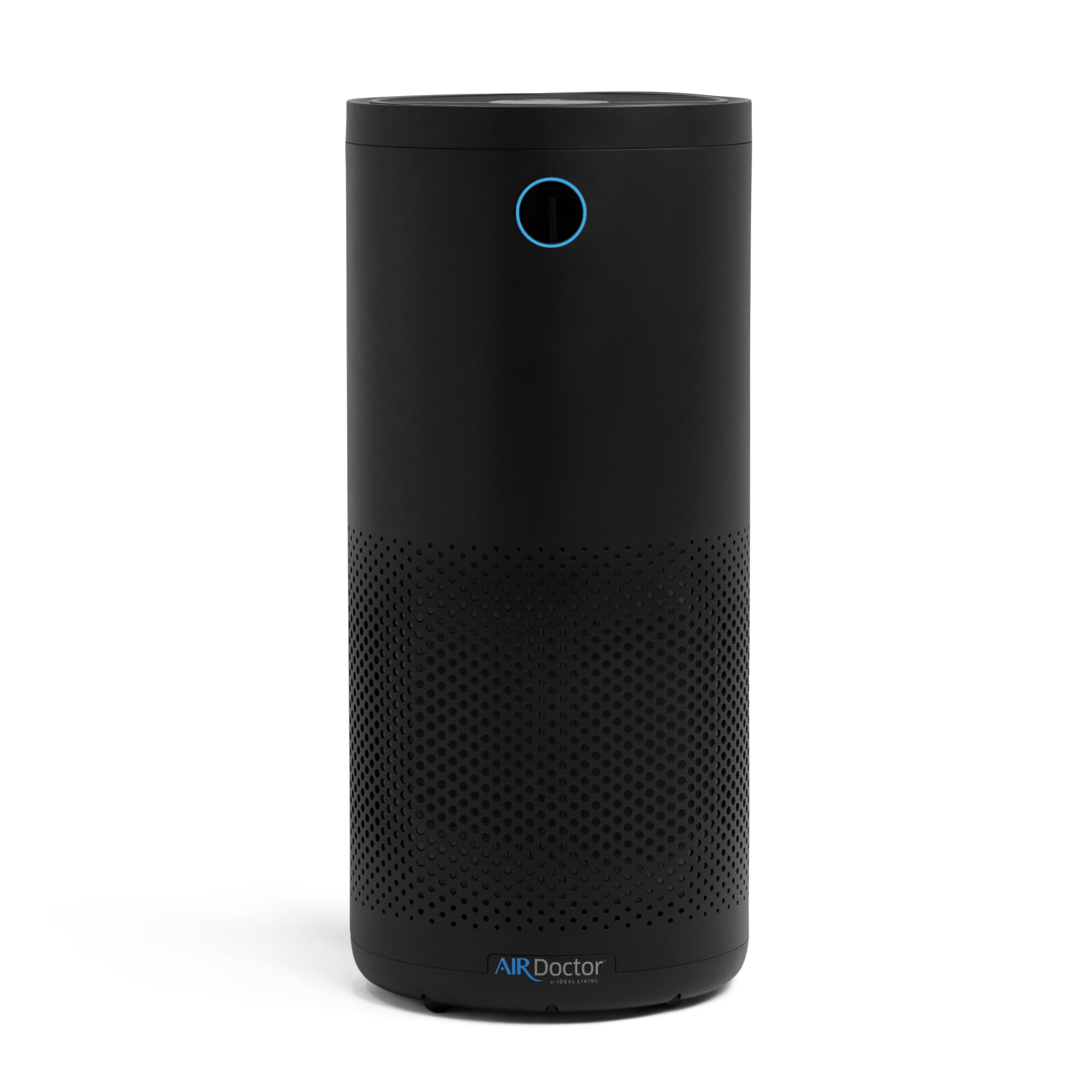
The AirDoctor AD4000 is the filtration specialist for basements with serious air quality concerns — think mold remediation, heavy off-gassing from new flooring, or a workshop generating fine particulates. Its UltraHEPA filter captures 99.99% of particles at 0.003 microns, which is 100 times smaller than the standard HEPA threshold. The three-stage filtration includes a pre-filter, a premium activated carbon and potassium permanganate layer for gases and odors, and the UltraHEPA stage. That chemical-reacting carbon layer is a standout for basements, where VOCs from paint, solvents, and concrete sealers linger.
Coverage is impressive: it cleans up to 2,776 square feet in one hour and handles a 630-square-foot room in just 15 minutes. The Halo sensor provides a color-coded real-time PM2.5 display with auto mode that ramps up fan speed when pollutant levels spike. Six manual fan speeds give granular control, and the unit is mounted on wheels — a must for a 20-pound machine that needs to be repositioned in a basement with multiple zones.
The primary drawback is the price point, which positions this firmly at the top of the market. Replacement filters are also costly, needing a swap every six months. Some users note that the unit is large — 32 inches tall — and may not fit under low basement shelving. However, for a basement that doubles as a home gym or workshop where particle loads are extreme, the AD4000’s filtration depth is unmatched in this lineup.
Why it’s great
- UltraHEPA captures particles as small as 0.003 microns — best in class
- Potassium permanganate carbon layer neutralizes VOCs and chemical odors
- Wheeled design for easy repositioning in large basements
Good to know
- Premium upfront cost and expensive filter replacements every six months
- Large footprint and 32-inch height limit placement options
- No dedicated app or WiFi connectivity for remote monitoring
4. Winix 5520
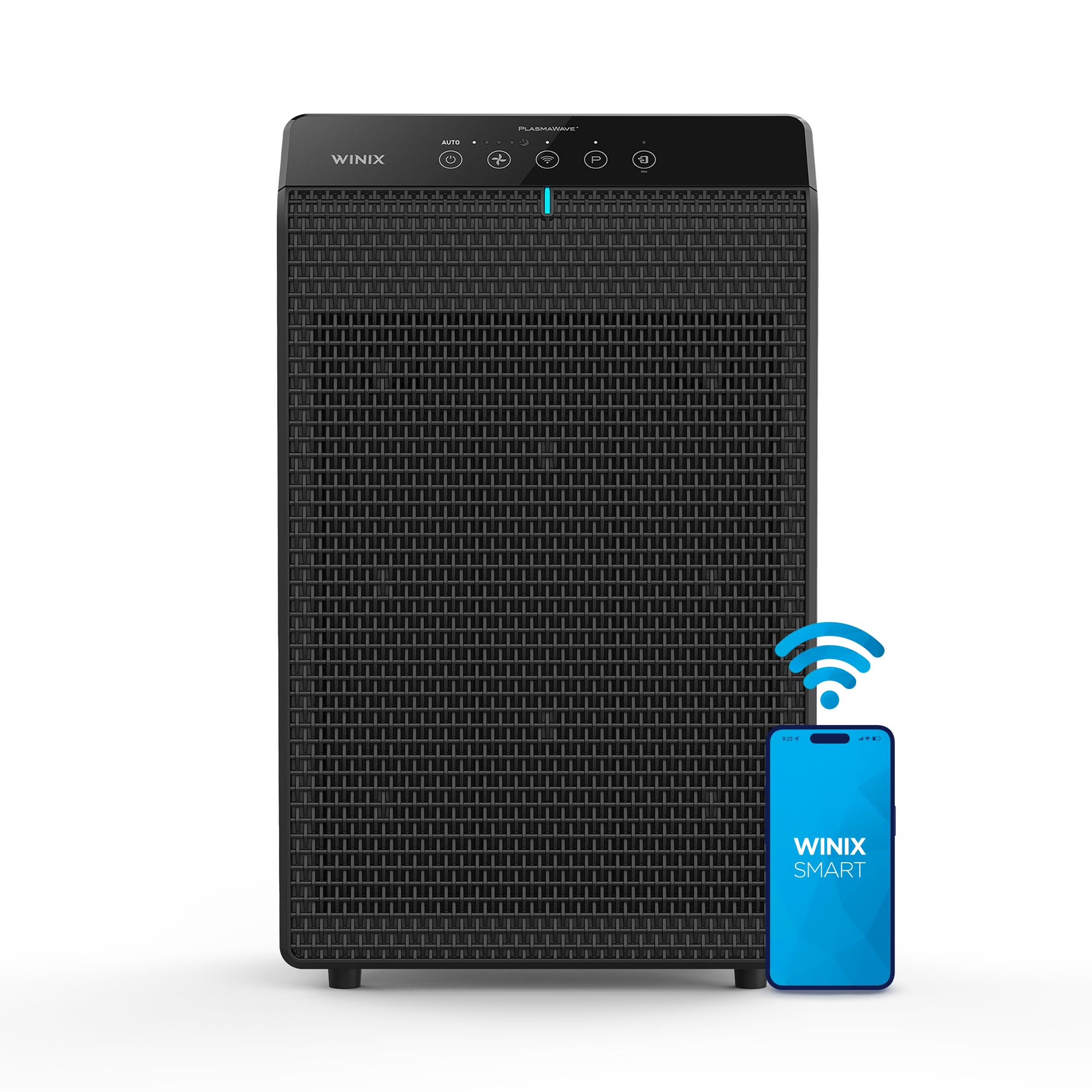
The Winix 5520 brings serious smart-home integration to basement air purification without sacrificing filtration quality. Its True HEPA filter captures 99.99% of particles as small as 0.01 microns — including mold spores and fine workshop dust — and the Advanced Odor Control Carbon filter is specifically designed to reduce VOCs and cooking odors that drift downstairs. The washable Fine Mesh Pre-Filter captures large debris and extends the life of the main HEPA pack, making it a practical choice for a space that sees pet traffic or laundry lint.
The smart features are where the 5520 separates itself. Winix Smart App compatibility allows remote control and monitoring, while Amazon Alexa and Google Assistant integration mean you can adjust settings hands-free. The built-in air quality sensor with LED indicator provides real-time feedback, and Auto Mode adjusts fan speed automatically. The Light Automated Sleep Mode dims the display and lowers fan speed when the room darkens, which is useful if the basement doubles as a guest bedroom. At 23.5 dB on the slowest speed, it’s virtually silent.
A few users report that Alexa integration requires a QR code scan rather than native discovery, which can be clunky. Additionally, the unit is on the taller side at 22.7 inches, and the black finish can show dust more readily than white alternatives. Nonetheless, the combination of strong HEPA performance, smart controls, and a reasonable filter replacement cost (~ per year) makes this a versatile mid-range option.
Why it’s great
- True HEPA captures 99.99% of 0.01-micron particles — mold-safe
- Smart app and voice control with Auto Mode for convenience
- Washable pre-filter reduces main HEPA replacement frequency
Good to know
- Alexa integration setup is not fully native and requires additional steps
- Tall design may not fit under standard basement counters
- Black finish is prone to showing dust and fingerprints
5. LEVOIT Vital 100

The LEVOIT Vital 100 is a smart choice for a smaller, partially finished basement or a dedicated laundry room where space is at a premium. Its 130 CFM CADR cleans a 300-square-foot area in about 18 minutes, and the 3-in-1 filtration system uses a pre-filter, HEPA-grade layer, and activated carbon filter to capture dust, pollen, smoke, and pet dander. The activated carbon layer does a respectable job on moderate odors, though it’s not as thick as the carbon beds found in larger units.
Noise is a real strength here — Sleep Mode drops to 23 dB, which is genuinely whisper-quiet. The timer function (2, 4, or 8 hours) and the ability to turn off display lights make it well-suited for a basement guest room where light discipline matters. Energy efficiency is another plus: the company claims it costs roughly per week to run it continuously, which is easy on the wallet for around-the-clock basement operation.
The downside is coverage. With a 130 CFM CADR, this unit is not designed for the entire basement footprint — it’s a zone purifier. It also lacks auto mode and air quality sensors, so you’ll need to manually adjust the fan speed if conditions change. For a compact, quiet, and low-power solution for a specific basement corner, the Vital 100 hits the mark without overcomplicating things.
Why it’s great
- Extremely quiet at 23 dB in Sleep Mode — ideal for a guest room
- Very energy efficient for continuous basement operation
- Compact size fits on a shelf or small table
Good to know
- Limited to ~300 sq ft; not for whole-basement coverage
- No auto mode or air quality sensor — manual speed adjustment required
- Activated carbon layer is thinner than in premium units
6. SIESEAN AP-400
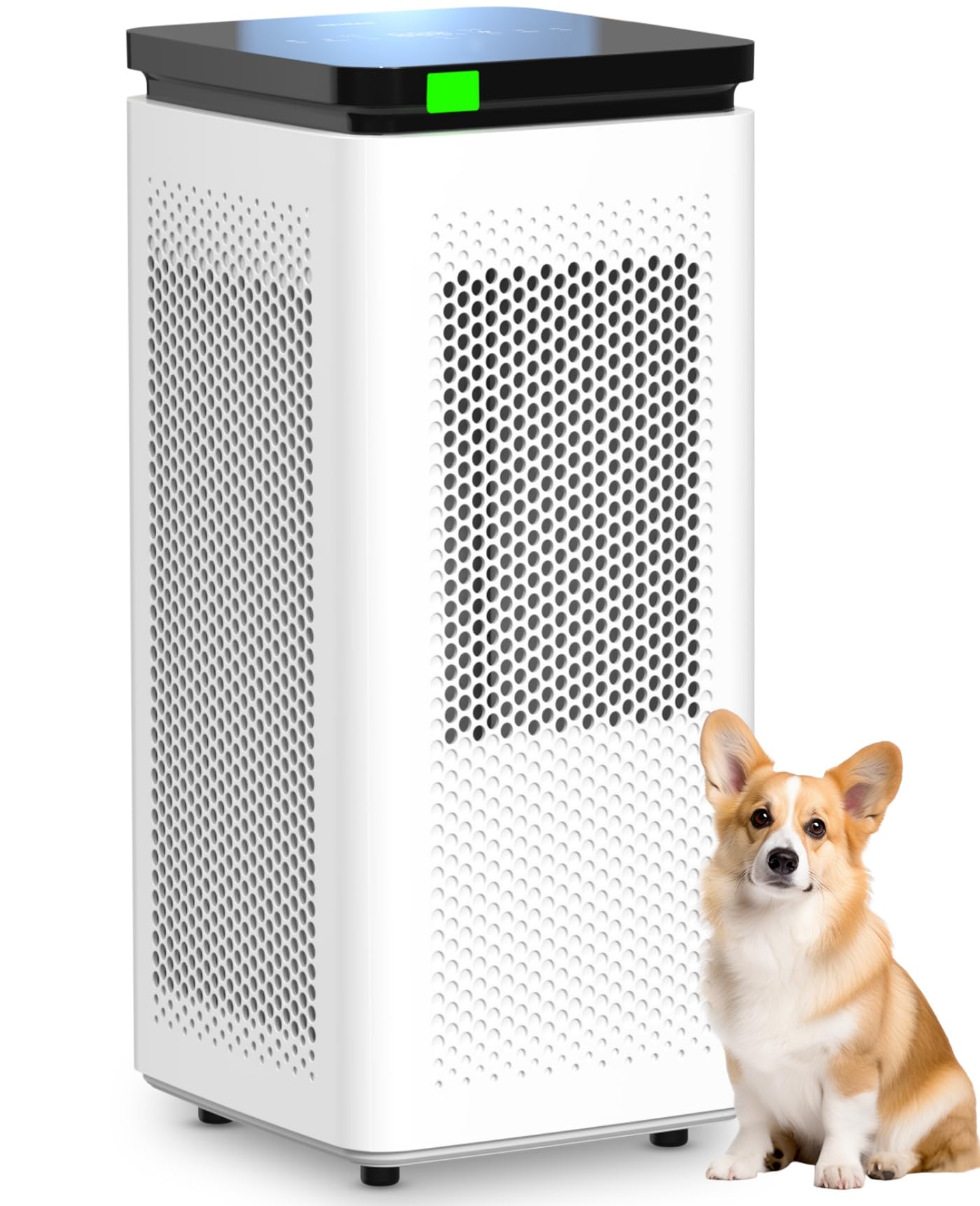
The SIESEAN AP-400 is the dark horse of this lineup, punching well above its mid-range price with specifications that rival units costing twice as much. It delivers a 235 CFM CADR with dual-sided air intake, cleaning a 500-square-foot room in just 15 minutes. The H13 True HEPA filter captures 99.97% of particles down to 0.1 microns, but the real star is the thick activated carbon filter paired with it — this is not a thin carbon-coated mesh but a substantial block designed to handle smoke, VOCs, and pet odors that accumulate in a basement.
The built-in PM2.5 display with color-coded air quality indicator provides instant feedback, and Auto Mode adjusts the fan speed to match particle loads. The 30 dB Sleep Mode with a dimmer function makes it suitable for overnight use. The child lock and anti-tilt auto shut-off are thoughtful safety additions, especially if the basement is a play area. The filters are independently tested and certified by CARB, DOE, EPA, and UL, which adds peace of mind for a unit running constantly in a below-grade space.
The AP-400 has a floor-standing design that takes up about a square foot of floor space. The filter life is rated at 3-4 months, which is shorter than some competitors — plan for more frequent replacements if you run it 24/7. However, given the low cost of the unit and the performance level, the long-term ownership cost remains very reasonable for the filtration depth you get.
Why it’s great
- Excellent 235 CFM CADR with dual-sided intake for fast whole-basement cleaning
- Thick activated carbon filter handles VOCs and persistent odors effectively
- PM2.5 display with Auto Mode and child lock for safety
Good to know
- Filters need replacement every 3-4 months under heavy use
- Floor-standing design requires dedicated floor space
- No WiFi or app connectivity for remote control
7. Dhyala KJ03
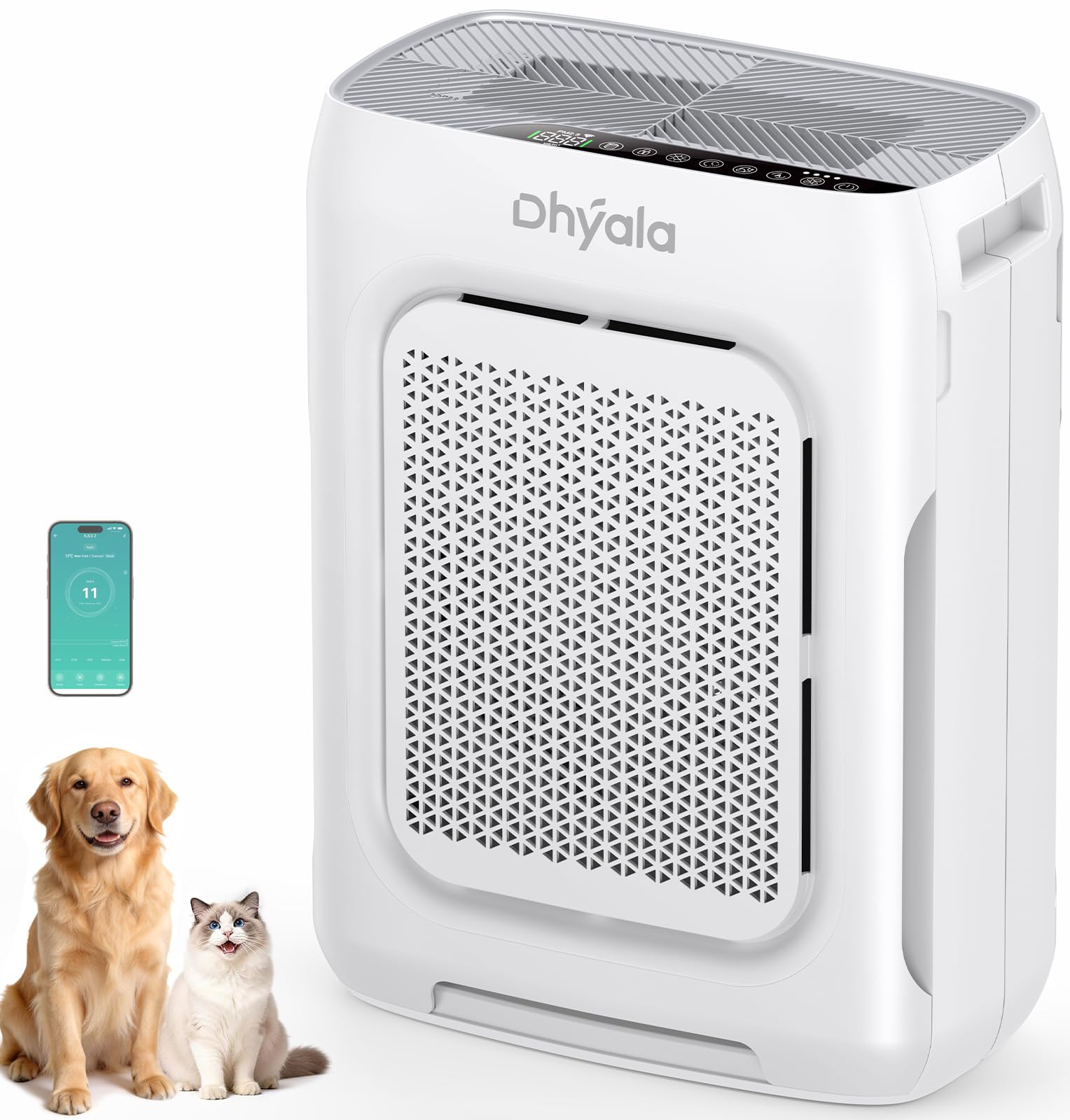
The Dhyala KJ03 addresses one of the biggest pain points of basement purification — filter longevity — by including dual H13 HEPA filters in a single unit. The front-and-back intake design doubles the surface area, allowing a CADR of up to 265 CFM and coverage for rooms up to 3,000 square feet in one hour. For a large, open-concept basement, this dual-filter approach means the unit can maintain high airflow without straining, and the washable pre-filters can be vacuumed or rinsed to extend main filter life.
Smart features are well-integrated. The built-in PM2.5 sensor automatically adjusts fan speed in Auto Mode, and the unit supports WiFi control via a mobile app, as well as voice commands through Alexa and Google Assistant. The four manual fan speeds and programmable timer (1-12 hours) provide flexibility. Sleep Mode drops to a claimed 15 dB — quieter than a page turning — making this one of the sleep-friendliest options if the basement is used as a bedroom. The added aromatherapy box with included pads is a nice bonus for those who want a subtle scent, though it’s not a core filtration feature.
The anti-chew power cord (1.83 meters) and 45-degree tilt auto shut-off are thoughtful for pet owners. That said, the unit’s relatively low weight (8.82 pounds) means it can tip more easily than heavier models if bumped. Also, the upward-only airflow direction may not circulate air as effectively in a room with very high ceilings as a 360-degree design would. For the price, the dual-filter capacity and smart features make the KJ03 a strong contender for tech-oriented basement owners.
Why it’s great
- Dual H13 HEPA filters provide high CADR and extended filter life
- WiFi, app, and voice control plus auto mode for convenience
- Exceptionally quiet 15 dB Sleep Mode for basement bedrooms
Good to know
- Upward-only airflow may not fully circulate in very tall basements
- Lightweight build is more prone to tipping if bumped
- Aromatherapy feature is a nice addition but not a filtration function
8. FreAire VisionAir HAP606
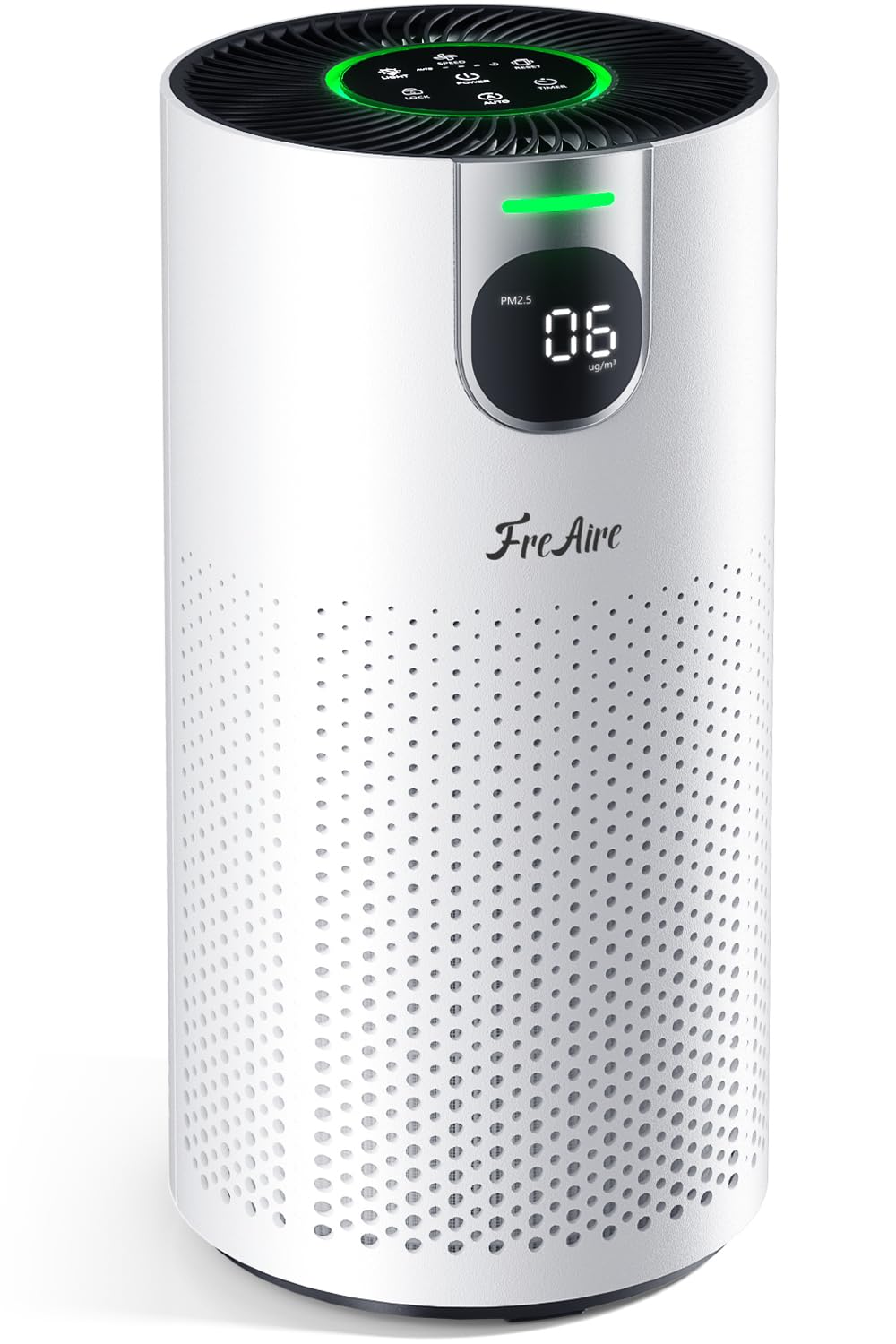
The FreAire VisionAir HAP606 is a budget-conscious choice that doesn’t skip the smart features you’d expect at a higher price. The standout is the real-time PM2.5 digital display with color-coded air quality indicator — a feature often missing from entry-level units. It accurately detects airborne pollutants instantly, giving you visual feedback that’s especially helpful in a basement where you can’t always see or smell the problem. The 360-degree air intake and efficient airflow system deliver four air changes per hour in rooms up to 1,800 square feet.
The three-layer H13 HEPA filtration captures 99.97% of particles down to 0.3 microns, including pet dander, dust, pollen, and smoke. Sleep Mode is remarkably quiet at just 20 dB — close to silent — and the unit includes a child lock and auto mode that adjusts fan speed based on the air quality reading. The timer function adds another layer of scheduling convenience. At only 3.79 pounds, it’s the lightest unit in this guide, making it easy to move from a workshop area to a storage zone as needed.
Given the low weight, the HAP606 is clearly built with a plastic chassis that may not feel as substantial as heavier metal-framed competitors. The fan on high speed is also noticeably louder than on mid-range or premium units — though this is typical for budget models. The carbon filter layer is thinner than the premium options, so heavy basement odors may require more time to neutralize. For those who want real-time air quality monitoring on a budget, the FreAire delivers impressive value.
Why it’s great
- Real-time PM2.5 display with color-coded AQI — rare at this price
- Ultra-light 3.79 pounds for easy portability around the basement
- Extremely quiet 20 dB Sleep Mode for overnight use
Good to know
- Plastic build feels less durable than heavier competitors
- High fan speed is noticeably noisy
- Thinner carbon layer less effective on stubborn basement odors
9. LEVOIT Core 300-P

The LEVOIT Core 300-P is the entry-level champion for a reason: it’s AHAM Verifide with a CADR of 143 CFM for smoke, 153 for dust, and 167 for pollen — independently tested performance that many similarly priced units cannot claim. For a smaller basement (around 200-300 square feet), it refreshes the air 4.8 times per hour, which is the minimum threshold for effective particle control. The 56-watt high-torque motor provides real static pressure, which matters when pulling air through a denser 3-in-1 filter pack.
A major advantage of the Core 300-P is the filter ecosystem. LEVOIT offers multiple official filter options: the Toxin Absorber for VOCs and smog, the Smoke Remover for wildfire and cigarette smoke, and the Pet Allergy filter for dander and odors. This means you can tailor the filtration to your specific basement’s contaminant profile. The QuietKEAP technology drops noise to 24 dB in Sleep Mode — essentially silent. The touch controls, timer (2/4/6/8 hours), and dimmable display are quality-of-life features that punch above the price.
The Core 300-P is limited in raw coverage compared to larger units. It’s not intended to handle a 1,500-square-foot basement in a single pass. Some users also note that replacement filters are not cheap relative to the unit’s initial cost, especially the specialized versions. However, for a targeted solution in a smaller basement zone — or as a secondary unit in a larger space — the Core 300-P offers proven, certified performance that’s hard to beat at the entry level.
Why it’s great
- AHAM Verifide with certified CADR ratings — proven performance
- Multiple specialized filter options for targeted basement contaminant control
- Whisper-quiet 24 dB Sleep Mode with dimmable display
Good to know
- Coverage limited to smaller basement zones (~200-300 sq ft)
- Replacement filter costs are relatively high for an entry-level unit
- No auto mode or air quality sensor — manual operation only
FAQ
What CADR do I need for a 1,000-square-foot basement?
Do I need a special filter for mold spores in a damp basement?
Can an air purifier help with radon gas in a basement?
Final Thoughts: The Verdict
For most users, the best air purifier for basement winner is the BLUEAIR Blue Pure 211i Max because it delivers the highest CADR (450 CFM smoke) with HEPASilent technology, smart features, and quiet operation — everything a large basement requires. If you want to minimize long-term filter costs and maintenance, grab the Shark NeverChange HP302. And for a basement with heavy VOCs or extreme particle loads, nothing beats the AIRDOCTOR AD4000 with its hospital-grade UltraHEPA and chemical-reacting carbon filter.