
Our readers keep the lights on and my morning glass full of iced black tea. As an Amazon Associate, I earn from qualifying purchases.
Specs are compiled from manufacturer listings and verified buyer reviews and can change over time — please confirm the key details on the product page before buying.
Mold spores and allergens float invisibly through your home, making you sneeze or cough. A good air purifier traps those particles so you breathe in fewer of them. But not every model handles both mold and allergy triggers equally well. This guide covers six effective machines and explains what each one does for your air.
I’m Min — the founder and writer behind Gadgets Feed. This guide is built by comparing the manufacturers’ published specifications and the patterns across verified customer reviews, so you get each pick’s real strengths and trade-offs instead of marketing spin.
Every model here uses a True HEPA filter (a dense mesh that catches 99.97% of tiny airborne particles), and these picks are intended for airborne particles such as mold spores, dust, and common allergens — so you can confidently choose the right air purifier for mold and allergies for your home.
Quick Picks
- COWAY Airmega Mighty2 — Best Overall
- WINIX 5520 — Top Performer
- Whirlpool WPPRO2000M Whispure — Quiet Powerhouse
- Clorox Turbo Air Purifier — Compact Starter
- Brondell O2+ Revive — Dual-Function
- Smart Air Blast MKII — Whole-House Heavy
How To Choose The Best Air Purifier For Mold And Allergies
Mold and allergy particles are tiny — mold spores range from 1 to 30 microns, and common allergens like pollen and dust mites fall in a similar range. A purifier that cannot catch those sizes won’t help you. Here is what actually matters when you shop.
True HEPA vs “HEPA-type” filters
A True HEPA filter captures a minimum of 99.97% of particles at 0.3 microns — the hardest size to trap. “HEPA-type” or “HEPA-like” filters have no certified standard and often let smaller particles slip through. For mold and allergies, always look for the words “True HEPA.” Every pick in this list meets that standard.
Room size and CADR (clean air delivery rate)
CADR tells you how many cubic feet of air the machine cleans per minute for three particle sizes — smoke, dust, and pollen. Match the CADR to your room’s square footage: a higher number means faster cleaning. A purifier that is too small for the room will never catch up, so check the manufacturer’s recommended room size and aim for 4-5 air changes per hour.
Carbon filters and odor control
Mold often comes with a musty smell, and cooking, smoke, and pet odors add to indoor air problems. An activated carbon filter traps volatile organic compounds (VOCs) and odors that a HEPA filter cannot catch. Some models have thick carbon layers; others use a thin bonded sheet. Thicker carbon usually lasts longer and handles stronger smells.
Noise levels and night-time use
You will likely run the purifier while sleeping, so the noise at low speed matters. Look for models that specify decibel (dB) ratings at their lowest setting — anything under 30 dB is generally described as whisper-quiet. A sleep mode or display-dimming feature also helps keep the bedroom dark and undisturbed.
Quick Comparison
On smaller screens, swipe sideways to see the full table.
| Model | Best For | Room Size (sq ft) | Weight | Filter Type | Amazon |
|---|---|---|---|---|---|
| Coway Airmega Mighty2 | Large rooms with smart auto mode | 1,800 sq ft | 15.2 lbs | True HEPA + Active Carbon | $269.99Amazon |
| WINIX 5520 | Large rooms with app control | 1,882 sq ft | 13.3 lbs | True HEPA + Carbon | $179.99Amazon |
| Whirlpool WPPRO2000M | Quiet room cleaning with auto sensing | 508 sq ft | 22.4 lbs | True HEPA + Activated Carbon | $344.99Amazon |
| Clorox Turbo | Small rooms and budget buyers | 613 sq ft | 4.25 lbs | True HEPA | $89.99Amazon |
| Brondell O2+ Revive | Allergy + dry air relief with humidification | 627 sq ft | 20 lbs | Dual True HEPA + Carbon | $799.00Amazon |
| Smart Air Blast MKII | Whole-house or commercial spaces | 9,000 sq ft/hr | 69 lbs | True H13 HEPA + Carbon | $1,094.00Amazon |
In‑Depth Reviews
1. COWAY Airmega Mighty2
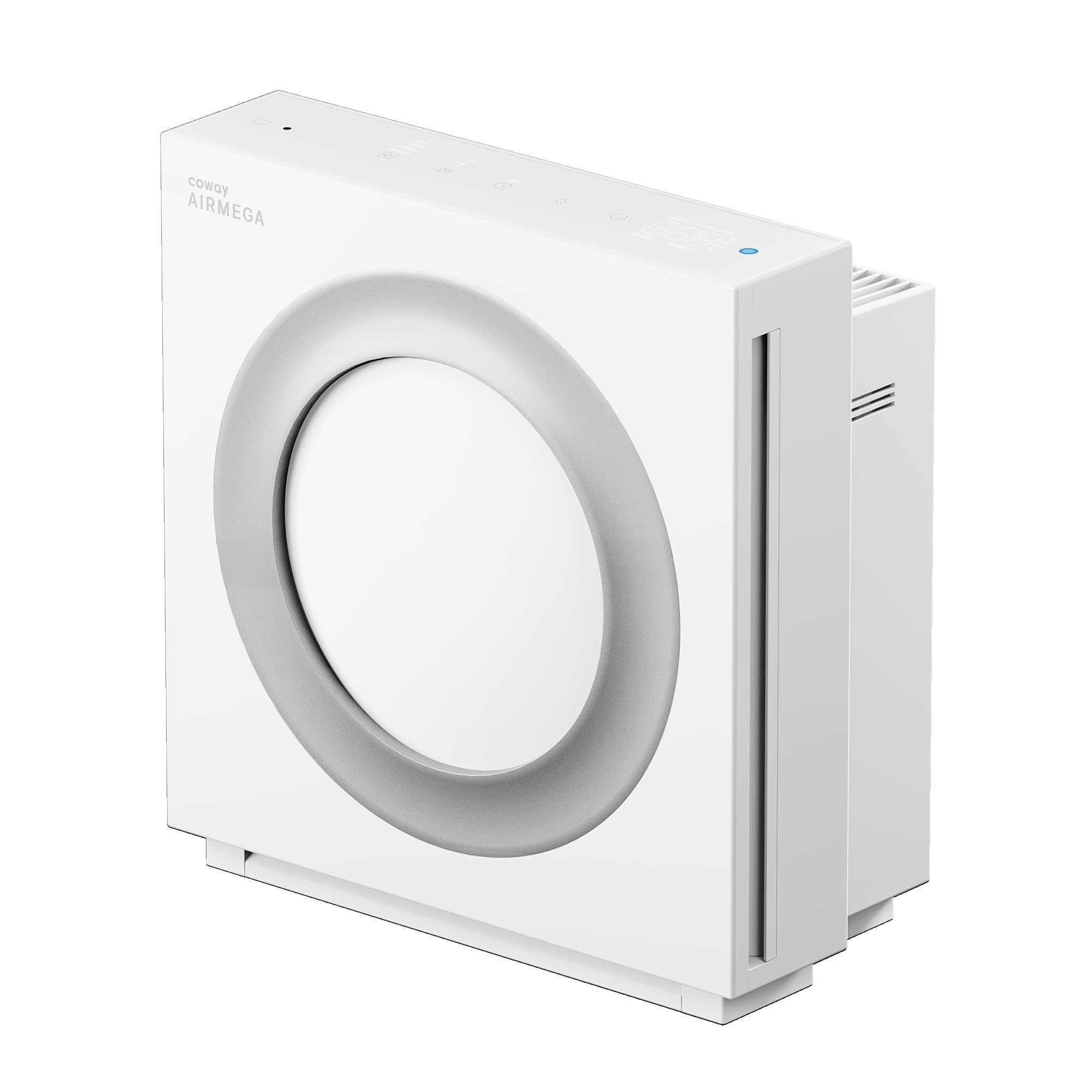
The Mighty2 upgrades the Wirecutter-favorite formula with a laser sensor and 1,800-square-foot coverage.
You get a three-stage filtration system: a washable pre-filter that catches large dust and pet hair, then a 2-in-1 True HEPA and Active Carbon Max2 filter. The IEST-RP-CC007 certified HEPA traps 99.97% of particles down to 0.3 microns — including mold spores, pollen, smoke, and pet dander. The carbon layer handles volatile organic compounds (VOCs) like fumes from paint or cleaning products.
The MegaScan Laser Sensor detects particles across three sizes (PM1, PM2.5, PM10) in real time and shows the air quality on an LED color indicator and a precise numerical display. In Smart Mode, the fan adjusts itself based on what the sensor reads. When the room goes dark, Sleep Mode drops to as low as 19 dB — quiet enough that you forget it is running. Buyers report the fan lasted four years of nightly use before failing. At 15.2 pounds, it is noticeably heavier than the 4.25-pound Clorox, but that weight comes from a larger motor and thicker filter that handle spaces up to 1,800 sq ft in 60 minutes.
What stands out
- Laser particle sensor gives you a live PM1/PM2.5/PM10 readout on the display
- Sleep mode runs at 19 dB — near-silent for uninterrupted rest
- 3-year manufacturer warranty adds long-term confidence
The trade-offs
- At 15.2 pounds it is not a machine you easily move from room to room
- The auto mode does not let you set “medium” as the default speed — some buyers wish they could
Reach for it if: you want a premium, sensor-guided purifier that quietly cleans a large open-plan home or a big bedroom and gives you a clear number for how clean the air is.
Look elsewhere if: you need a lightweight unit to carry between rooms — the Mighty2 is a stationary appliance at 15.2 pounds.
2. WINIX 5520
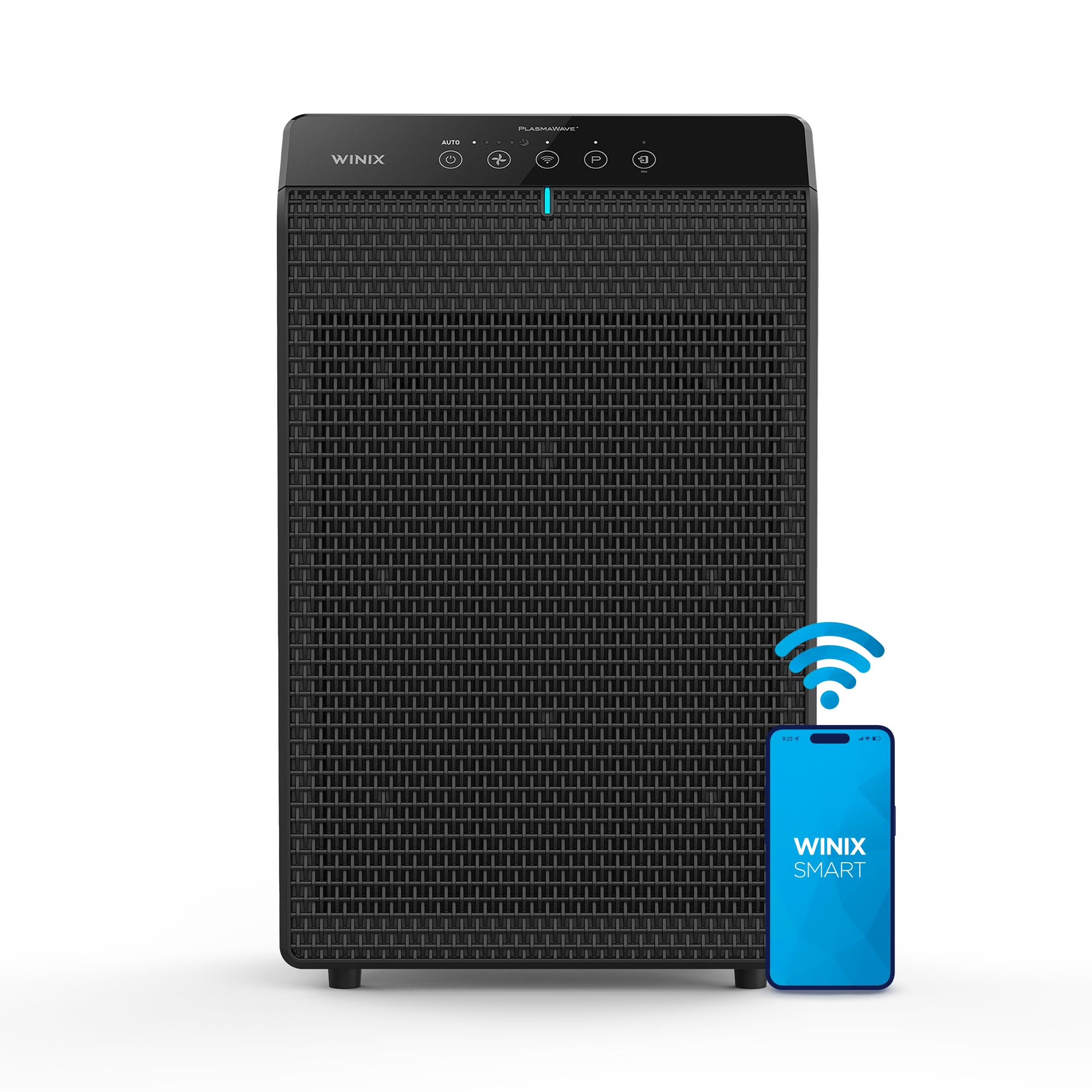
An AHAM-verified workhorse that covers 1,882 sq ft in one hour with a four-layer filtration stack.
It starts with a washable fine mesh pre-filter that catches large debris before it reaches the rest of the system, then an advanced odor control carbon filter that reduces VOCs and household smells from cooking, pets, and smoke. After that, a True HEPA filter captures the fine particles — dust, pollen, mold spores, and pet dander. The fourth layer is the Plasmawave ionizer, which some buyers choose to leave on or off depending on preference. Reviewers call it a “quiet air purifier (~60 dB) with auto mode sensing dust,” and they note the air quality indicator uses blue, amber, or red LEDs to show the room’s status at a glance.
The smart sensors measure the air and adjust the fan speed automatically in Auto Mode. You can also control the unit remotely through the Winix Smart App, and it works with Alexa and Google Home — though some owners mention the Alexa integration is not smooth. When the room goes dark, the Light Automated Sleep Mode kicks in and switches the fan to a nearly silent speed of 23.5 dB. At 13.3 pounds versus the Coway Mighty2 at 15.2 pounds, moving it between rooms is easier. The 1-inch thick HEPA and carbon filters last about 12 months.
Why it works
- AHAM Verified at 392 sq ft for smoke, dust, and pollen CADR
- Four-layer filtration with a washable pre-screen that extends HEPA life
- Smart App and voice control for remote monitoring
What to note
- Alexa voice integration is unreliable — some buyers could not get it to recognize the unit
- The Plasmawave ionizer is an optional add-on, not a core filter, so results vary by user
Best suited for: tech-savvy users who want an app-connected purifier with verified CADR ratings and a washable pre-filter that cuts down on replacement costs.
Not your pick if: you need flawless smart-home integration — the Alexa connection has known hiccups that may frustrate you.
3. Whirlpool WPPRO2000M Whispure

A 22.4-pound stationary unit that moves 328 CADR of air with a reputed whisper-quiet low speed.
Whirlpool calls this the “most powerful air purifier in its class” for a 508 sq ft space, and the numbers back it up — the CADR (clean air delivery rate) is rated at 328, meaning it pushes a high volume of cleaned air through the room quickly. The True HEPA filter captures 99.97% of particles as small as 0.3 microns, including mold spores and dust. An activated carbon layer sits behind the HEPA to reduce odors from pets, smoke, and cooking. Buyers consistently note the low and medium fan settings are very quiet, describing the sound as “rushing air” rather than a motor hum, which makes it a strong candidate for a bedroom or office.
The smart auto mode uses built-in air sensors to detect changes in the surrounding air and adjusts the fan speed without you touching any controls. Sleep Mode runs the fan at a low speed to save energy while still filtering the air. A few customers note the low-speed fan started producing a knocking noise after about one week of use. — an issue not seen on the Coway Mighty2 or the WINIX 5520. The unit stands 25 inches tall and weighs 22.4 pounds, so it is a piece of furniture you set in one spot rather than something you carry around. Whirlpool backs it with a 5-year limited warranty.
Strong points
- High CADR of 328 delivers fast air turnover for a 508 sq ft room
- Very quiet on low and medium settings — good for bedrooms and open-concept offices
- 5-year limited warranty from a major appliance brand
Weak spots
- A few reviewers point out a motor knocking noise on low speed after a week of use
- At 22.4 pounds, it is the heaviest model here besides the commercial-grade Smart Air Blast
Choose this when: quiet operation matters most and you have a single medium-to-large room (up to 508 sq ft) that needs constant, powerful filtration without a lot of noise.
skip it if: you plan to move the purifier between rooms — the 22.4-pound weight makes it a one-spot machine.
4. Clorox Turbo Air Purifier
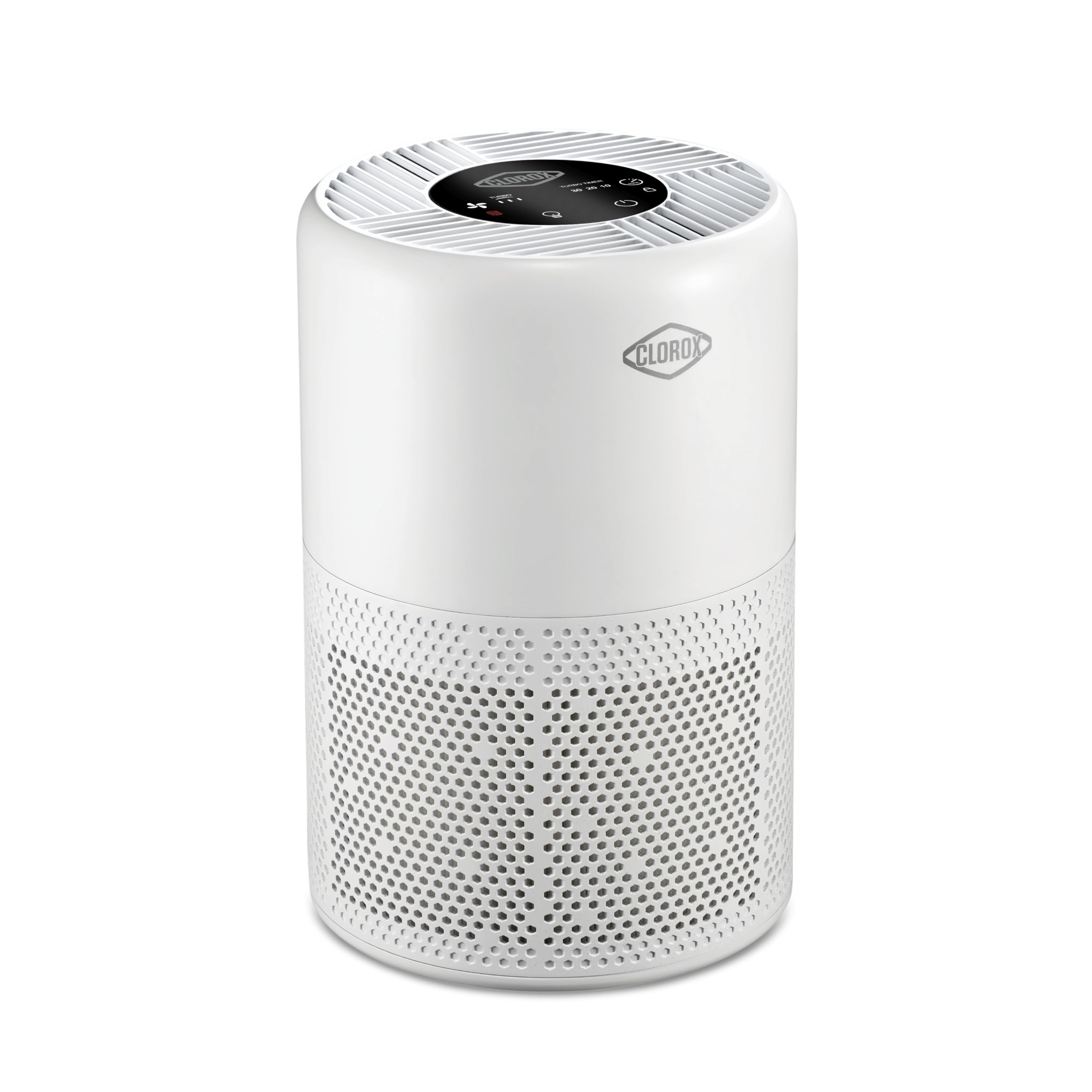
A 4.25-pound lightweight that fits on a nightstand and cleans rooms up to 613 sq ft.
The Clorox Turbo is built around a True HEPA filter that captures 99.97% of airborne particles — the same standard the larger models use. The manufacturer claims it captures 99.9% of viruses and bacteria, and shoppers say the True HEPA filter reduces airborne allergens, dust, and dander. Two additional filter layers sit outside the HEPA: one catches larger particles like pet hair, and the other targets odors. The 360-degree airflow pulls air from all directions, which helps the unit clean a 123 sq ft room about five times per hour. At 4.25 pounds and measuring just over 8 inches wide, versus the Coway Mighty2 at 15.2 pounds, it fits on a small table or desk without dominating the space.
Four fan speeds range from low (labeled “whisper quiet” by the manufacturer) up to Turbo, which moves air fast but is noticeably louder. The Turbo Timer lets you run the fan at top speed for 10, 20, or 30 minutes when you need quick odor removal after cooking. The display brightness can be set to on, dim, or off, and at night you can turn off both the display and the air quality lights. The filter needs a simple monthly wipe and replacement every 6 to 12 months. Some buyers wish it had an air quality indicator, but others consider that feature a gimmick anyway.
What works
- Weighs just 4.25 pounds — easy to move from room to room or take on trips
- 360-degree air intake cleans a small room quickly without needing a specific placement spot
- Turbo Timer gives you a fast blast of cleaning when odors are strong
What is limited
- No air quality sensor or auto mode — you have to adjust fan speed manually
- Turbo speed is loud, so you will not want it on overnight
Grab it for: a small bedroom, office, or dorm room where you want a no-fuss purifier that is light enough to move around and costs less than the big machines.
Pass if: you want a sensor that tells you the air quality in numbers or a unit that runs in automatic mode — this one needs you to choose the speed yourself.
5. Brondell O2+ Revive

A combined air purifier and evaporative humidifier that tackles both dry sinuses and airborne particles.
The Brondell Revive stands apart from every other pick here because it adds moisture to the filtered air. The dual suction system pulls air through two True HEPA filters at once — each captures 99.97% of particles down to 0.3 microns — and then passes the cleaned air through an evaporative humidifier that adds small water particles without over-saturating the room. Dry indoor air can irritate nasal passages and make coughing worse; owners mention the humidity helped them sleep better and reduced coughing. The machine refreshes the air in a 627 sq ft space three times every hour.
Beyond the HEPA filters, there is a granulated carbon filter that traps odors, harmful gases, and VOCs, plus a specialized Off-Gassing Reduction Filter that targets formaldehyde and other invisible chemicals linked to “Sick House Syndrome.” You can also buy separate specialized filters depending on your specific concerns. The unit comes with a remote control for adjusting settings from across the room. Buyers should know the replacement filters are expensive and need to be swapped annually — one owner called it “the unavoidable cost of getting purified air.” At 20 pounds and 19 inches tall, it is a substantial appliance that sits in one spot.
The highlights
- Dual True HEPA filters double the filtration surface area for faster cleaning
- Evaporative humidification helps with dry cough and stuffy nose — a feature no other model here offers
- Off-Gassing Reduction Filter targets formaldehyde and VOCs often missed by standard carbon filters
The downsides
- Replacement filters are expensive and must be changed once a year
- At 20 pounds you will not want to move it often — plan where it lives
Ideal for: anyone whose allergies come with a dry cough, sinus congestion, or dry skin — the added humidity directly addresses symptoms most purifiers ignore.
Not for: budget-conscious buyers — the annual filter cost is notably higher than models like the WINIX 5520, which uses filters.
6. Smart Air Blast MKII
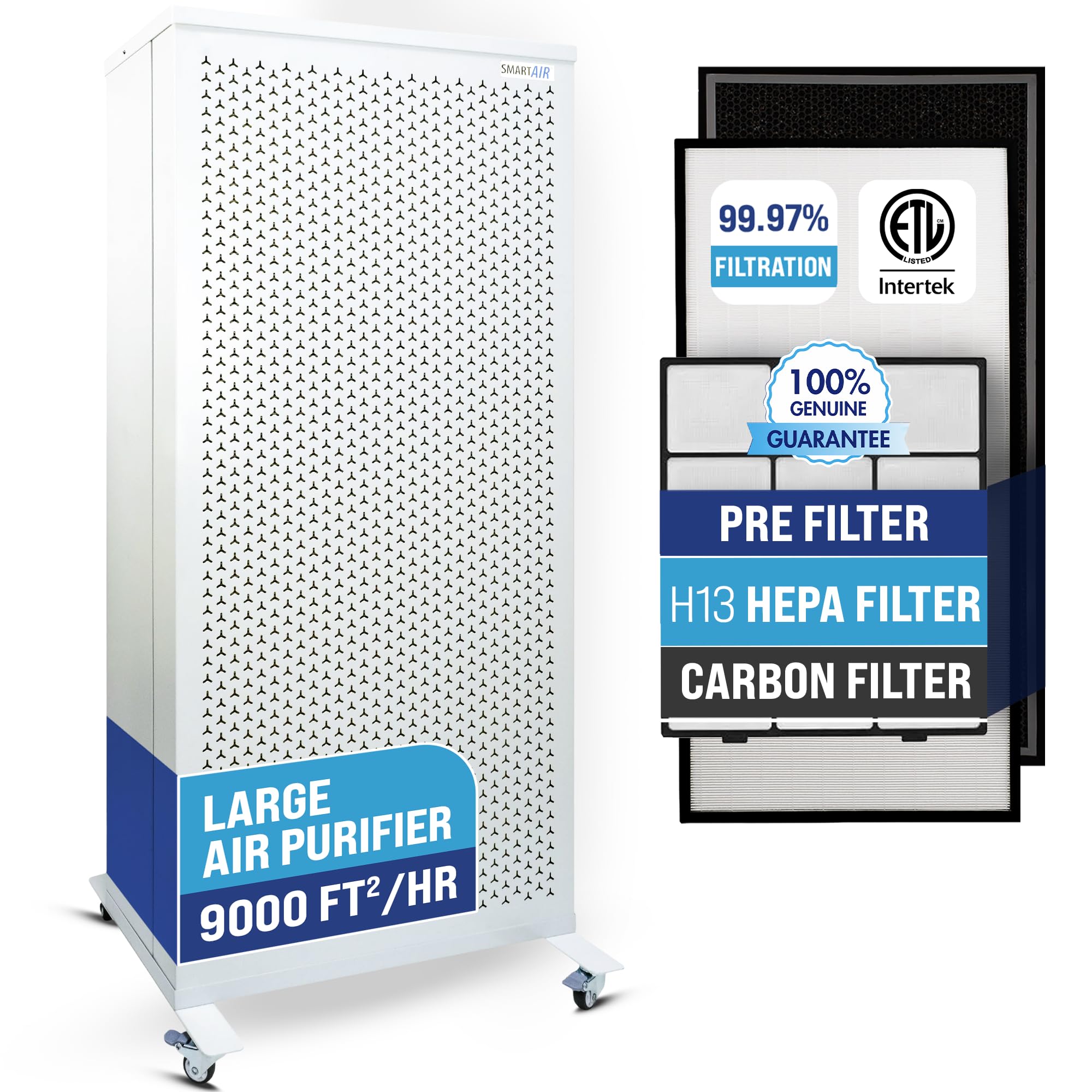
An industrial-grade machine delivering 1,140 CFM — enough to clean 4,280 sq ft in 30 minutes.
The Blast MKII is not a typical home purifier — it is a 69-pound system designed for entire houses, open-plan offices, gyms, and classrooms. The H13 HEPA filter (a grade higher than standard True HEPA) captures 99.97% of particles at 0.3 microns and also traps ultra-fine particles down to 0.07 microns through diffusion, meaning mold spores and microscopic allergens are caught no matter how small they are. A washable pre-filter catches pet hair and large dust before air reaches the HEPA and carbon filters, which extends the life of the main filters. The unit moves 1,140 CFM (cubic feet per minute) of clean air — far more than any other pick here.
Despite the massive airflow, the manufacturer claims the low setting runs at approximately 29 dBA and the high setting at about 43 dBA. Some reviewers disagree, calling the low speed an annoying high-pitched motor hum and reporting the high speed hits 58 dB., louder than smaller models. The controls are a simple analog dial with three speeds — no sensors, no auto mode, no app. Filters last about a year and are relatively affordable given the size. One buyer strongly warns that the HEPA filter “smells strongly of sweet chemicals” and caused throat irritation, Others call it one of the safest purifiers for HEPA filtration and low EMF emissions. The 69-pound weight makes it a permanent fixture once placed.
What it delivers
- 1,140 CFM airflow — handles spaces no other home purifier can touch
- Washable pre-filter reduces long-term maintenance costs for pet owners
- Simple analog controls with no electronic failure points
What holds it back
- Poor consistency in noise complaints — some buyers find the low-speed hum irritating
- No auto mode, no air quality sensor, no smart features — you set it and leave it
- At 69 pounds, it is the size and weight of a small piece of furniture
Meant for: large open spaces, workshops, or homes with severe mold or allergy problems where volumetric airflow matters more than convenience or silence.
Wrong pick if: you want something compact, quiet, or smart-featured — this is a heavy-duty machine built for performance, not for your nightstand.
Understanding the Specs
True HEPA vs H13 HEPA
Standard True HEPA filters trap 99.97% of particles at 0.3 microns — the hardest size to catch. Some models like the Smart Air Blast MKII use H13 HEPA, a European grade that meets the same 99.97% threshold at 0.3 microns but also traps ultra-fine particles down to 0.07 microns through diffusion. For mold and allergies, both grades work well, but H13 adds an extra layer of insurance for the smallest particles.
CADR — Clean Air Delivery Rate
CADR tells you how many cubic feet of clean air the machine delivers per minute for smoke, dust, and pollen. A higher CADR means faster cleaning. The Whirlpool WPPRO2000M, for example, has a CADR of 328, which is high for its 508 sq ft room size. Always match the CADR to your room size: a good rule is a CADR for smoke that is at least two-thirds of the room’s square footage.
Carbon Filter and Odor Control
Mold often has a musty smell, and cooking, smoke, and pet odors add to the problem. An activated carbon filter absorbs volatile organic compounds (VOCs) and odors that a HEPA filter cannot catch. The thickness of the carbon layer matters — thicker carbon bricks, like the one in the Brondell Revive, last longer and handle stronger smells than thin bonded carbon sheets used in some compact models.
Decibel (dB) Ratings and Sleep Mode
Noise is measured in decibels (dB), with every 10 dB increase doubling the perceived loudness. A purifier running at 23-29 dB is typically described as whisper-quiet and suitable for sleeping. The Coway Mighty2 drops to 19 dB in sleep mode, while the WINIX 5520 hits 23.5 dB on its slowest speed. Models above 55 dB on high speed, like the Clorox Turbo in Turbo mode, are better for daytime use or when you are out of the room.
FAQ
Will an air purifier alone get rid of mold growing on walls or surfaces?
How often do I need to replace the filter for mold and allergy control?
What size room should my purifier be rated for if I have mold allergies?
Is a carbon filter necessary for mold and allergy control?
What does the air quality sensor actually do?
Can I leave an air purifier running 24/7 for mold spores?
What is the difference between Ionizer and Plasmawave?
How do I know if the filter needs replacing?
Final Thoughts: The Verdict
Across the board, the best air purifier for mold and allergies winner is the Coway Airmega Mighty2 because it combines a laser particle sensor, near-silent sleep mode at 19 dB, and 1,800 sq ft of coverage in a design backed by a 3-year warranty. If you want app control and a lower price point, grab the WINIX 5520. And for those dealing with both dry air and allergies, the standout is the Brondell O2+ Revive with its built-in evaporative humidifier and dual True HEPA filters.
How We Picked
We do not accept paid placement, and we did not hands-on test every unit. Instead, we match each pick to a real buyer and use-case by comparing the manufacturers’ published specifications against the patterns in verified customer reviews — so you get each pick’s real strengths and trade-offs instead of marketing copy.
Sources & Methodology
Specifications: manufacturer listings and product documentation. Review insights: verified customer reviews, as of July 2026. Pricing: not shown on this page (it changes often); check the current price via the retailer link.
As an Amazon Associate, Gadgets Feed earns from qualifying purchases. This does not affect which products we feature.
Product prices and availability are accurate as of the date/time indicated and are subject to change. Any price and availability information displayed on Amazon at the time of purchase will apply to the purchase of this product. As an Amazon Associate I earn from qualifying purchases.
CERTAIN CONTENT THAT APPEARS ON THIS SITE COMES FROM AMAZON. THIS CONTENT IS PROVIDED "AS IS" AND IS SUBJECT TO CHANGE OR REMOVAL AT ANY TIME.
Amazon and the Amazon logo are trademarks of Amazon.com, Inc. or its affiliates.