
Selecting an air source heat pump that actually delivers heat when the thermometer drops below zero is a fundamentally different challenge than picking a standard unit for mild winters. The compressor technology, defrost cycle logic, and refrigerant charge must all be engineered specifically to extract usable BTU from thin, frigid air — a task that separates cold-climate champions from equipment that simply cycles on a backup strip.
I’m Min — the co-founder and writer behind Gadgets Feed. My analysis for this guide involved cross-referencing dozens of specification sheets, reviewing real-world installation reports from verified purchasers in regions like Alberta, Minnesota, and Maine, and weighing performance data points such as low-ambient operating limits and Energy Star cold-climate certification against each unit’s actual BTUs.
Whether you are retrofitting a 2,000-square-foot home or outfitting a workshop, this guide provides a focused, spec-first breakdown of what matters when you shop for the best air source heat pump for cold climates.
How To Choose The Best Air Source Heat Pump For Cold Climates
A cold-climate heat pump must reliably extract heat from ambient air well below 0°F without relying exclusively on expensive electric resistance backup. Three specs define this ability: the low-ambient operating limit, the compressor type, and the defrost strategy.
Low-Ambient Operating Limit
The manufacturer’s rated minimum outdoor temperature for heating operation is the single most critical number for cold-climate buyers. Consumer-grade mini-splits often stop producing useful heat around 5°F, while cold-climate engineered models can deliver full capacity down to -13°F or even -22°F. Any unit that cannot maintain rated heat output below 0°F should be dismissed for serious cold-weather use.
Inverter-Driven Scroll Compressor
Inverter technology modulates compressor speed to match heating demand rather than cycling on and off. In cold weather, this allows the compressor to run at higher speeds to maintain discharge temperature, extracting more BTU per watt from cold outdoor air. A scroll compressor paired with a variable-frequency drive is the gold standard for sub-freezing performance.
Defrost Cycle Intelligence
Every air source heat pump needs to defrost its outdoor coil when ice forms. The difference lies in how the system manages that cycle. Advanced units use demand-defrost logic — monitoring coil temperature and pressure — rather than fixed timers, reducing unnecessary defrost events and maintaining more consistent indoor warmth during snow and freezing rain.
Quick Comparison
On smaller screens, swipe sideways to see the full table.
| Model | Category | Best For | Key Spec | Amazon |
|---|---|---|---|---|
| Senville 3-Ton Central Heat Pump | Central Mini-Split | Whole-home replacement | Low-ambient limit -22°F | Amazon |
| Senville AURA 33K BTU | Mini-Split | Single-zone performance | Low-ambient limit -22°F | Amazon |
| MRCOOL 24K BTU 5th Gen | DIY Mini-Split | Simplified DIY installation | Quick-Connect line set | Amazon |
| ROVSUN 38K BTU Quad Zone | Multi-Zone Mini-Split | Four-room coverage | Operating range -4°F to 122°F | Amazon |
| DELLA 28K BTU Dual Zone | Dual-Zone Mini-Split | Two-room climate control | Operating range down to -13°F | Amazon |
| Goodman 3-Ton 15 SEER2 System | Split System | Traditional ducted setup | R-32 refrigerant | Amazon |
| Goodman 3-Ton 14 SEER Package | Package Unit | Mobile homes or slabs | 14 SEER packaged system | Amazon |
| Goodman 3.5-Ton Package Unit | Package Unit | Larger single-floor homes | 3.5-ton capacity | Amazon |
| Pro Invert 90K BTU Pool Heat Pump | Pool Heater | Pool water heating | Operating ambient down to 10°F | Amazon |
In‑Depth Reviews
1. Senville 3 Ton Central Air Conditioner Heat Pump Split System, 36,000 BTU
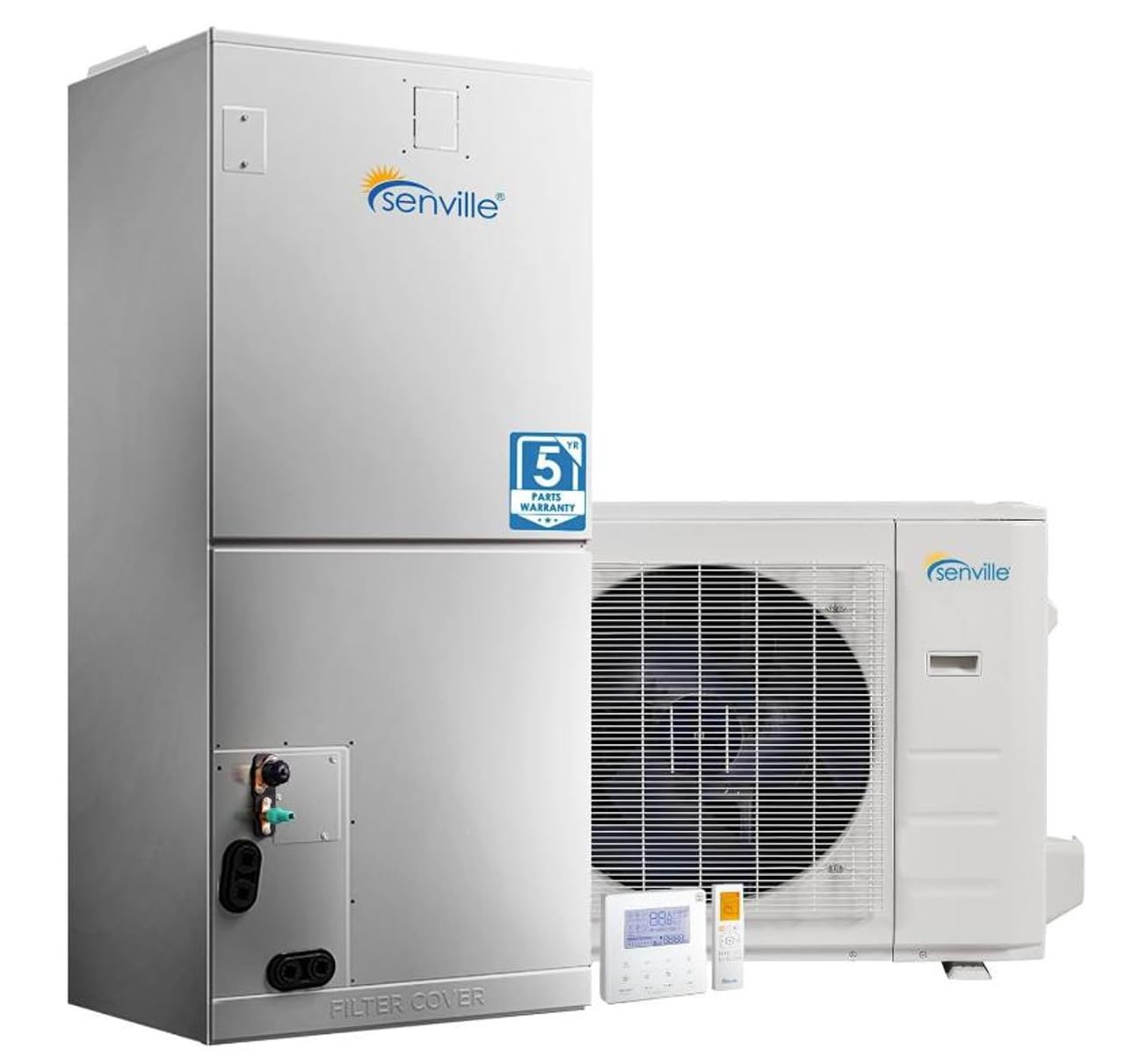
This Senville central split system is engineered specifically for cold climates, with a variable-speed scroll compressor and inverter technology that maintain heating performance down to -22°F. The 36,000 BTU capacity covers up to 2,000 square feet, making it a direct upgrade for homes with existing ductwork. The unit carries a Cold Climate Energy Star rating, confirming its low-ambient efficiency credentials beyond the typical SEER metric.
Installers and DIY owners praise the quiet operation and build quality, noting it competes with brands like Fujitsu at a significantly lower investment. The 10-year compressor warranty and 5-year parts warranty add long-term confidence. However, the included thermostat has a built-in 5°F temperature differential, which some users prefer to bypass by pairing the system with a third-party smart thermostat like Ecobee for tighter temperature control.
The system requires a dedicated 15A 208-240V circuit for the indoor air handler and professional installation to ensure proper refrigerant charge and line evacuation. Owners report that the unit is noticeably colder and quieter than older central AC systems, and the auxiliary 10KW heat strip provides emergency backup when temperatures exceed the heat pump’s operating window.
Why it’s great
- Rated for full heating output down to -22°F
- Variable-speed inverter compressor for energy efficiency
- Compatible with third-party smart thermostats
Good to know
- Factory thermostat has a 5°F temperature differential
- Professional installation strongly recommended
- Requires a dedicated 15A circuit for the air handler
2. Senville AURA Series Mini Split, 33,000 BTU

The Senville AURA shares the -22°F low-ambient capability of the central unit but packages it in a traditional mini-split form factor. The 33,000 BTU capacity and 2.75-ton rating make it suitable for large single zones — a three-car garage, a finished basement, or a large open-plan living area. The scroll compressor and DC inverter work together to maintain efficient heat extraction even when outdoor temperatures are punishingly low.
Alexa and app control come standard, allowing remote temperature monitoring and scheduling. Customer feedback highlights the unit’s quiet operation and the fact that it frequently idles down once the setpoint is reached, which contributes to real energy savings versus a single-speed system. Multiple reviewers with experience installing multiple Senville units report consistent performance and responsive customer support for troubleshooting.
This is not a DIY unit — the 16-foot line set requires professional evacuation and flaring. Owners who attempted self-install stress the need for a vacuum pump, torque wrenches, and a micron gauge to achieve a 500-micron pull. The unit is UL Listed and AHRI Certified, which is essential for qualifying for local utility rebates in cold-climate regions.
Why it’s great
- Full heating performance down to -22°F
- UL Listed and AHRI Certified for rebate eligibility
- Quiet scroll compressor with inverter drive
Good to know
- Professional HVAC installation required
- Line set length is 16 feet — longer runs may need additional refrigerant
- Self-install requires specialized tools
3. MRCOOL 24,000 BTU 230V Ductless Inverter Mini Split, 5th Gen
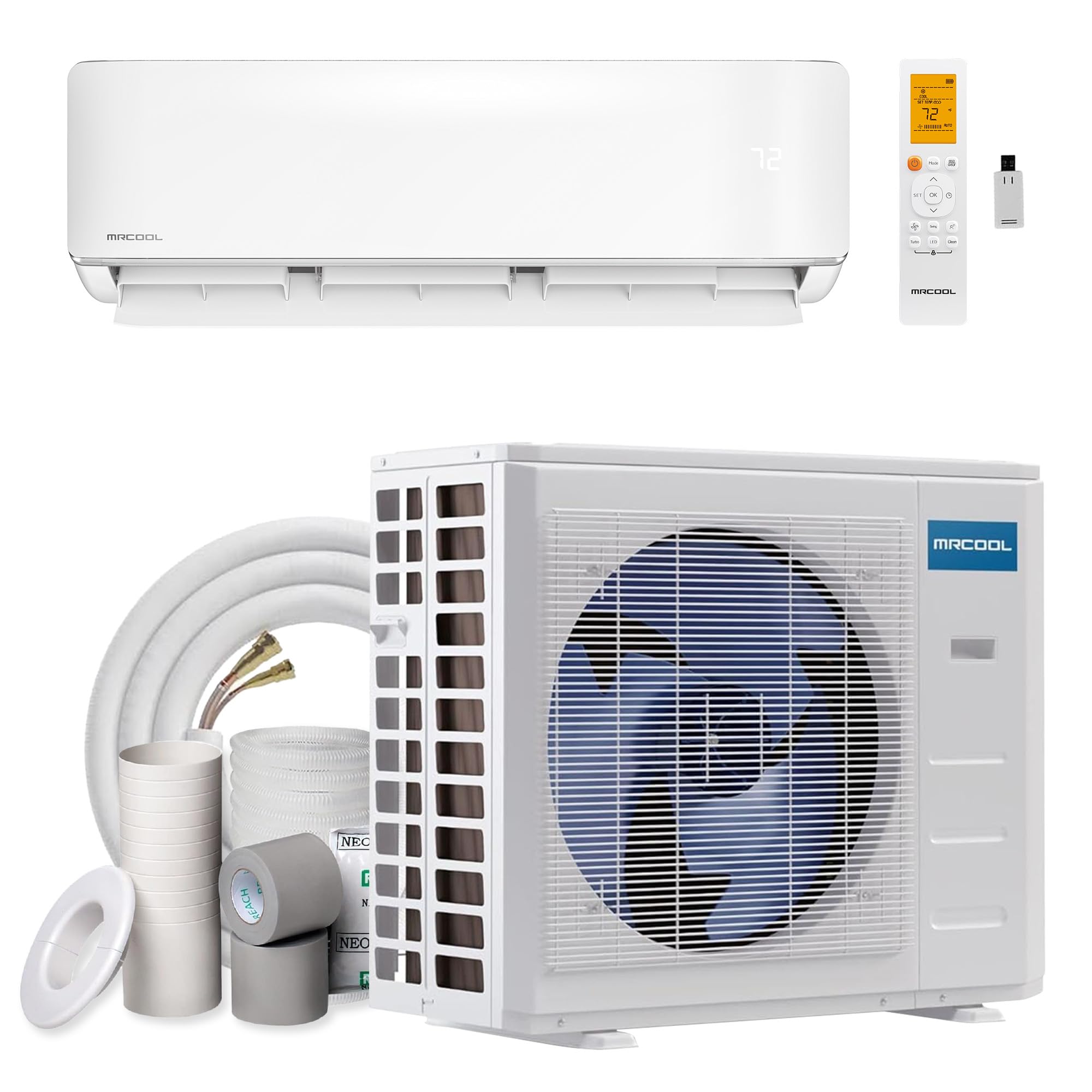
MRCOOL’s 5th Generation DIY system is the only unit on this list that eliminates the need for a vacuum pump and specialized gauges. The pre-charged 25-foot Quick Connect line sets allow a homeowner with basic skills to complete installation in a few hours. The 24,000 BTU capacity covers up to 1,050 square feet, making it a strong option for a single open zone such as a living room, workshop, or sunroom.
The inverter compressor and heat pump provide both cooling and heating down to ambient temperatures that cover typical winter conditions, though MRCOOL does not advertise the extreme -22°F limits of the Senville units. Four reviewers in the raw data own multiple MRCOOL units and consistently praise the reliability and quiet operation. The included smart controller works with Google Assistant and Alexa for app-based scheduling.
The trade-off for the DIY simplicity is a lower SEER rating and the lack of the extreme low-ambient specification found on cold-climate engineered competitors. It remains a solid choice for milder cold climates (zones 5-6) where temperatures rarely drop below 0°F for extended periods. The unit is designed for standard wall-mount indoor installation and includes a wireless remote.
Why it’s great
- Pre-charged Quick Connect lines — no special tools needed
- Smart home compatible with Alexa and Google Assistant
- Quiet operation suitable for living spaces
Good to know
- Not rated for extreme -22°F performance
- Lower SEER than some cold-climate competitors
- Online videos are essential — printed instructions lack detail
4. ROVSUN 38,000 BTU Quad Zone WiFi Mini Split
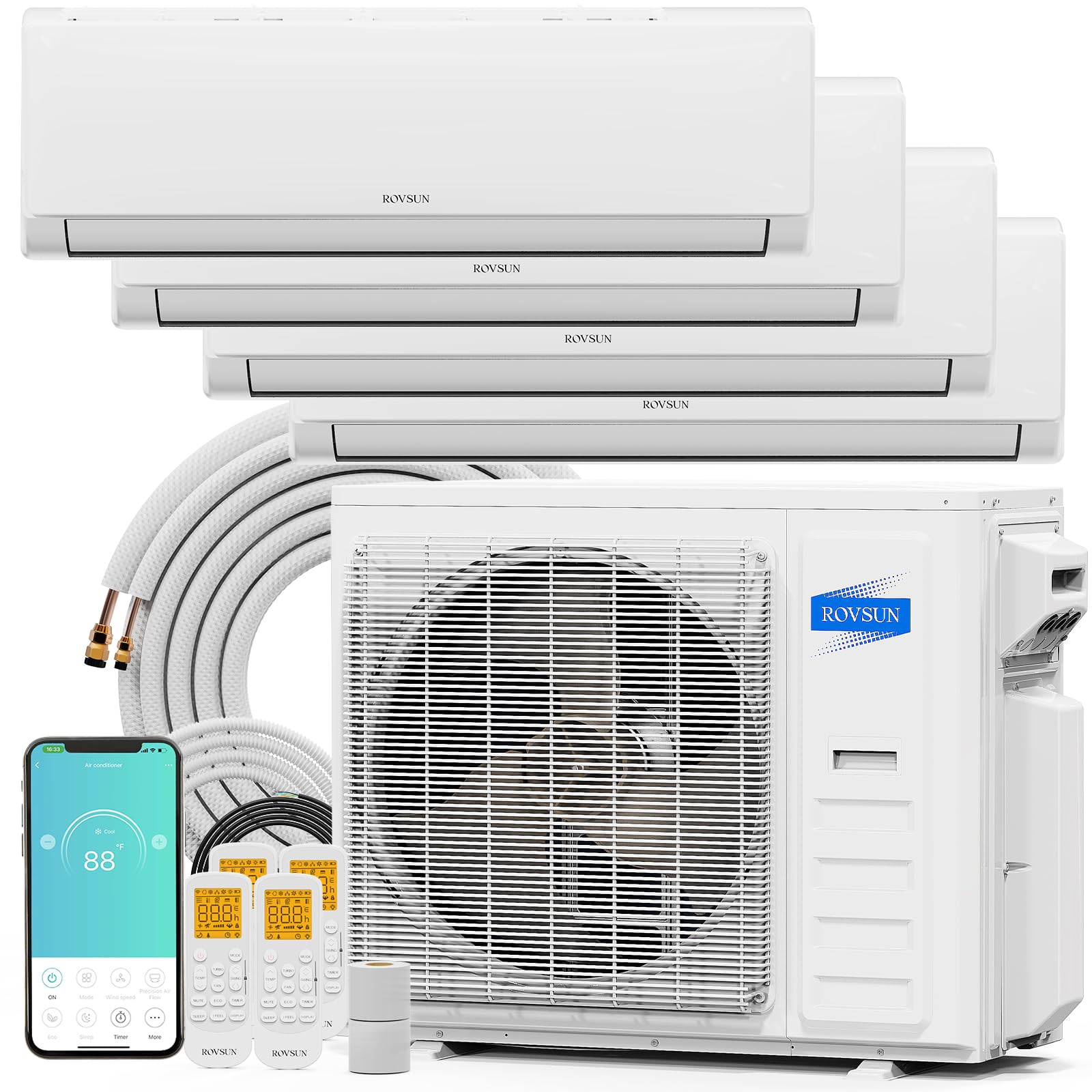
The ROVSUN system connects one 38,000 BTU outdoor condenser to four indoor air handlers (9K + 12K + 12K + 12K), each with its own remote control for individual temperature management. The heat pump is rated for operation between -4°F and 122°F, placing it firmly in cold-climate territory, though not at the extreme low end of the Senville units. The 20 SEER2 rating and inverter compressor mean the system adjusts output proportionally rather than cycling on and off.
User reports highlight that the outdoor condenser is exceptionally quiet — quieter than some high-end competitors — and that the indoor units produce a gentle, even air flow rather than a harsh blast. DIY installation is feasible for those comfortable with pulling a vacuum and brazing line sets, but the raw data notes that installation instructions are sparse, making YouTube research a necessary companion for first-time installers.
A notable concern from long-term users is the availability of replacement parts; one reviewer reported that major components failed after roughly two years. This is a risk factor to weigh against the cost savings versus premium multi-zone systems. The system uses R-454B refrigerant, a more environmentally friendly alternative to R-410A.
Why it’s great
- Individual temperature control across four zones
- 20 SEER2 inverter efficiency
- Extremely quiet outdoor condenser operation
Good to know
- Low-ambient limit is -4°F — not as extreme as Senville
- Parts availability reported as a concern after 2 years
- Installation instructions are minimal
5. DELLA 28K BTU Dual Zone Mini Split, 9K + 18K
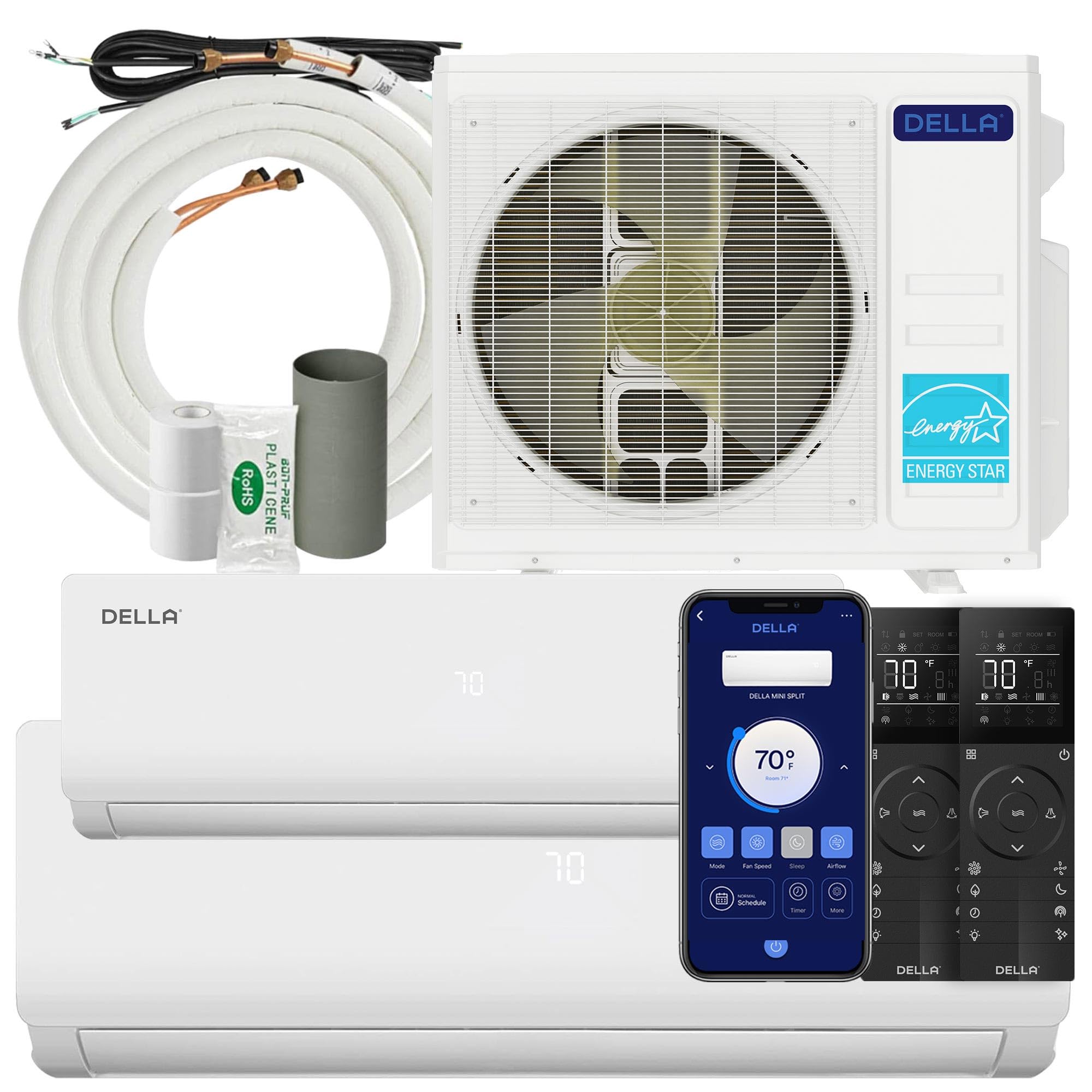
DELLA’s dual-zone configuration pairs a 9,000 BTU indoor unit (covering up to 400 sq. ft.) with an 18,000 BTU unit (covering up to 1,000 sq. ft.), powered by a single 28,000 BTU outdoor condenser. The heat pump operates down to -13°F, which is adequate for serious cold snaps in zones 5 and 6, and the 20 SEER2 rating translates to measurable electricity savings — one reviewer reported a monthly bill reduction of after replacing a traditional HVAC system.
At 32 dBa, this is one of the quietest units in this comparison, especially important when one of the air handlers is in a bedroom or home office. The dual-zone design allows each room to maintain its own setpoint, and the system supports WiFi and Alexa control out of the box. The use of R-454B refrigerant is a forward-looking environmental feature.
Professional HVAC installers in the raw data praise the build quality, noting it surpasses more expensive options. The included line sets are 16 feet, and vacuuming is mandatory during installation — the system is pre-charged but the lines must be evacuated before opening the service valves. The 78.7-inch drain hose length is generous for most mounting positions.
Why it’s great
- Rated for heating down to -13°F
- Ultra-quiet 32 dBa operation
- Smart WiFi and Alexa connectivity included
Good to know
- Does not support the self-cleaning function despite the button
- Indoor unit bracket not centered — may affect wall placement
- Requires line set vacuuming
6. Goodman 3 Ton 15 SEER2 Multi-Position R-32 Split System
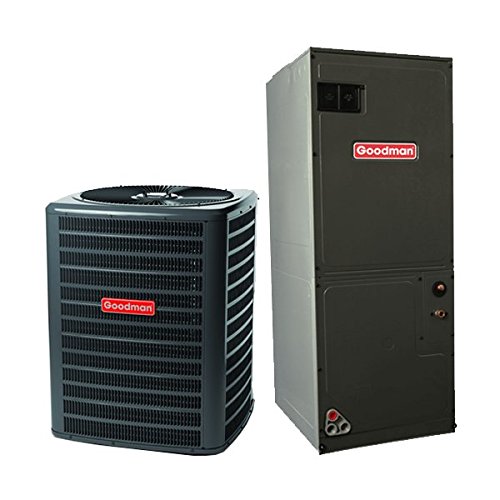
This Goodman split system pairs the GLZS4BA3610 heat pump with the AMST36CU1300 air handler, delivering 3 tons of capacity through standard ductwork. The multi-position air handler allows vertical or horizontal installation to fit tight attic or closet spaces. The R-32 refrigerant is a key update — it has a lower global warming potential than R-410A and is the refrigerant standard for new systems moving forward.
Owners in hot climates like Arizona and Florida report electric bill savings of per month after upgrading from older units. The 15 SEER2 efficiency is solid for a non-inverter system, though it lacks the variable-speed modulation of premium inverter units. The rotary scroll compressor is known for durability, and Goodman’s nationwide parts warranty is well-regarded among HVAC professionals.
This system does not include the line set, thermostat, or LP conversion kit — those are sold separately. Some installers noted that the valve take-offs on the condenser are small, making brazing the line set a bit tight. For cold-climate buyers, this unit is best paired with an electric heat kit for backup on the coldest nights.
Why it’s great
- R-32 refrigerant with lower environmental impact
- Multi-position air handler for flexible installation
- Goodman’s reliable rotary scroll compressor
Good to know
- Line sets, thermostat, and heat kit sold separately
- Valve take-offs are small — careful brazing needed
- Non-inverter — single-stage compressor
7. Goodman 3 Ton 14 SEER Package Heat Pump – GPH1436H41
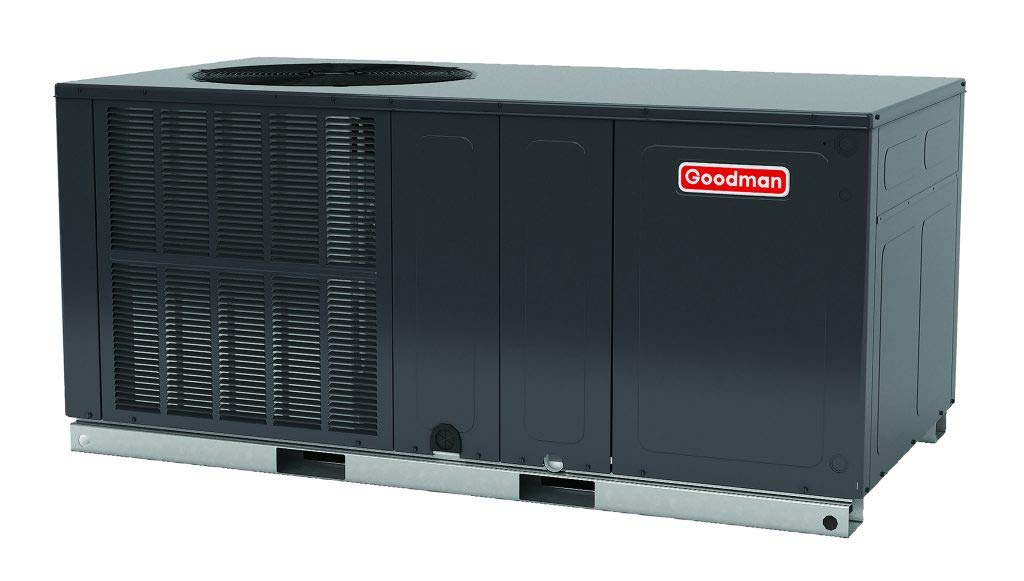
The Goodman GPH1436H41 is a self-contained package unit — all components (compressor, coil, air handler) are housed in a single outdoor cabinet. This design is ideal for mobile homes, slab-on-grade foundations, or any application where indoor space is unavailable for an air handler. The 3-ton capacity matches typical 1,200- to 1,600-square-foot homes, and the 14 SEER rating provides baseline efficiency.
Owners consistently report that this is a dependable workhorse. Multiple reviewers in the raw data are repeat Goodman buyers, with one reporting 41 years of ownership across three units. The unit is designed for R-410A refrigerant and includes both heating and cooling functions with a remote control. Installation of a package unit is generally simpler than a split system, though a proper curb adapter or roof mount is needed for a secure, weathertight fit.
The lack of inverter technology means the compressor operates at full speed whenever the thermostat calls for heat, which is less efficient than variable-speed systems. For cold climates, a backup heat source is recommended for the coldest extremes. The unit weighs approximately 400 pounds and requires professional handling for placement.
Why it’s great
- Space-saving packaged design ideal for mobile homes
- Proven reliability from a trusted HVAC brand
- Simpler installation than split systems
Good to know
- 14 SEER — not the most efficient option
- No inverter — single-stage operation
- Needs backup heat for severe cold snaps
8. Goodman 3.5 Ton 14 SEER Package Heat Pump – GPH1442H41

The 3.5-ton variant of Goodman’s package heat pump offers increased capacity for larger single-floor homes or open-plan floorplans. The R-410A system delivers 42,000 BTU of cooling and heating capacity in a single weatherproof cabinet. The 14 SEER rating and rotary compressor are consistent with Goodman’s traditional reliability-focused design philosophy.
Customer feedback points to straightforward installation for experienced professionals — one home replaced a 2-ton unit with this 3.5-ton model and reported the entire swap took about 4 hours. The unit arrives fully charged and boxed, with the cabinet pre-assembled and ready for curb mounting. For rural applications like barns and workshops, reviewers praise the long runtime and the ability to maintain setpoints without constantly cycling.
This is a single-stage, non-inverter system, so users will experience noticeable temperature swings between cycles. Cold-climate performance is limited — owners in northern zones should pair the unit with a heat kit. There is a notable risk: one reviewer received a unit with a wobbling fan defect that led to complete failure since the labor for repair was not covered under warranty.
Why it’s great
- 3.5-ton capacity for larger single-floor homes
- All-in-one package unit for slab or roof installation
- Pre-charged with R-410A refrigerant
Good to know
- Single-stage operation — not inverter-driven
- Quality control issues reported by some buyers
- Requires curb modification or adapter for installation
9. Pro Invert 90,000 BTU Pool Heat Pump for 24,000 Gallons

The Pro Invert is a specialized heat pump for pool water heating, not for home HVAC, but it still qualifies as an air source heat pump designed for cold-climate operation. It draws heat from ambient air down to 10°F and transfers it to pool water via a titanium heat exchanger. The 90,000 BTU unit is rated for pools up to 24,000 gallons and includes three adaptive inverter modes that adjust output based on demand, reducing energy consumption by up to 73% compared to non-inverter pool heaters.
Owners report that the 30,000 BTU model can raise a 7,600-gallon pool from 63°F to 80°F in about 30 hours, while the 27,000 BTU model maintains summer-level temperatures even when ambient temps drop. The smart WiFi control and touch panel make scheduling easy, and the 43 dB noise rating is remarkably quiet for pool equipment — important for hotels and resorts where guest comfort is a priority.
The unit includes automatic defrost logic for coil icing, along with IPX4 weather protection. One critical note: a variable-speed pool pump is required to maintain the proper flow rate; a standard single-speed pump may trigger low-flow shutoffs. Customer support is reported as responsive, with one reviewer receiving free replacement o-rings and a winter cover after reporting a minor issue.
Why it’s great
- Operates as low as 10°F ambient for pool heating
- Inverter technology cuts energy use by up to 73%
- Very quiet 43 dB operation for commercial use
Good to know
- Requires a variable-speed pool pump for proper flow
- Some users report WiFi connectivity dropouts
- Heavy unit at 152 pounds
FAQ
Can an air source heat pump really heat my home when it is -10°F outside?
What is the difference between a cold-climate heat pump and a standard heat pump?
Do I still need backup heat for a cold-climate heat pump?
Final Thoughts: The Verdict
For most users, the best air source heat pump for cold climates winner is the Senville 3 Ton Central Heat Pump because it delivers a proven -22°F low-ambient limit, inverter-driven scroll compressor, and full coverage for up to 2,000 square feet at a mid-range investment. If you want true DIY installation without sacrificing modern smart features, grab the MRCOOL 24K BTU 5th Gen. And for a multi-zone system that balances four rooms from one outdoor condenser, nothing beats the ROVSUN 38K BTU Quad Zone.