
Your attic is likely the single hottest space in your home during summer, radiating heat down into your living areas and forcing your HVAC system to run overtime. A properly ventilated attic doesn’t just lower peak temperatures; it prevents moisture buildup that rots roof decking and insulation, extends shingle life, and reduces the risk of ice dams in winter. Choosing the right air vents for attics is a structural decision that pays back in energy savings and roof longevity.
I’m Min — the co-founder and writer behind Gadgets Feed. I’ve spent hundreds of hours analyzing the technical specifications, installation requirements, and real-world performance data across the full spectrum of attic ventilation solutions so you don’t have to guess which product actually moves air.
Whether you are sealing off a soffit opening or installing a powered exhaust fan to pull heat out of your roof cavity, this guide breaks down the best air vents for attics by their measurable airflow, material durability, and real installation demands.
How To Choose The Best Air Vents For Attics
Attic ventilation is not a one-size-fits-all equation. The balance between intake (soffit vents) and exhaust (gable, ridge, or roof cap vents) must meet a minimum ratio of 1:300 of the attic floor area. Many homeowners install attractive gable vents only to realize they create a short-circuit path — air enters and exits the gable without ever sweeping the underside of the roof deck. Understanding the specific product type and its NFVA rating will prevent you from wasting money on a vent that looks right but performs poorly.
Passive vs. Active Ventilation: The Core Decision
Passive vents — soffit grilles, gable louvers, and roof caps — rely on natural convection and wind pressure to move air. They never consume electricity and have zero moving parts, making them maintenance-free for decades. Active vents — solar-powered fans and wall-mounted exhaust fans with automatic shutters — mechanically pull hot air out, creating negative pressure that draws cool intake air through soffits. Active systems are significantly more effective at reducing attic temperature by 15-25°F, but they introduce mechanical complexity, noise, and a connection requirement (solar panels or AC wiring).
Material and Finish: Resistance to the Elements
Attic vents endure direct sun exposure, freeze-thaw cycles, rain, and wind-driven debris. Galvanized steel offers high structural rigidity and stands up to hail, but it can eventually rust if the galvanized coating is scratched. Aluminum alloy is naturally corrosion-proof, lightweight, and easy to paint, but it dents more easily than steel. UV-stabilized plastic (polypropylene or ABS) is impact-resistant and won’t corrode, but it can become brittle after several years of intense sun exposure, especially in desert climates. The finish — powder coat vs. molded-through color — determines whether scratches reveal bare metal.
Measuring Airflow: CFM, Opening Size, and Net Free Area
A vent’s advertised airflow in CFM (Cubic Feet per Minute) applies to powered units like exhaust fans, while passive vents are rated by Net Free Vent Area (NFVA) in square inches. A typical gable vent with a 10″ x 16″ rough opening provides about 80-100 square inches of NFVA. To calculate whether you have enough exhaust vent area, multiply your attic floor area in square feet by 0.0033 (the 1:300 ratio). For a 1,500-square-foot attic, you need a total of approximately 5.0 square feet (720 square inches) of NFVA split equally between intake and exhaust. Always cross-reference the product specification — not the overall frame dimensions, but the actual free area the product lists.
Quick Comparison
On smaller screens, swipe sideways to see the full table.
| Model | Category | Best For | Key Spec | Amazon |
|---|---|---|---|---|
| VEVOR 18” Exhaust Fan | Active Exhaust | High-CFM forced air movement | 2200 CFM; 1450 RPM motor | Amazon |
| DC HOUSE 32W Solar Attic Fan | Solar Active | Zero-electricity temperature drop | 2500 CFM; 32W solar panel | Amazon |
| Zepoty 2-Pack 12″x18″ Gable Vent | Passive Gable | Matching paintable aesthetics | Aluminum; 10″x16″ opening each | Amazon |
| Zepoty 12″x18″ Gable Vent (Single) | Passive Gable | Single-unit aluminum gable install | Aluminum alloy; 10″x16″ opening | Amazon |
| Hon&Guan 4 Inch Roof Vent Cap | Passive Roof Cap | 4-inch duct exhaust termination | Galvanized steel; integrated damper | Amazon |
| Builders Edge Scallop Exhaust Vent | Passive Wall | Side-wall exhaust with self-closing flaps | UV-stabilized plastic; 4″ blade | Amazon |
| Vent Systems 4.5″x4.5″ Soffit Pack | Passive Soffit | Multi-point intake in soffits/sheds | 5-pack; built-in nylon mesh | Amazon |
In‑Depth Reviews
1. VEVOR 18” Exhaust Fan
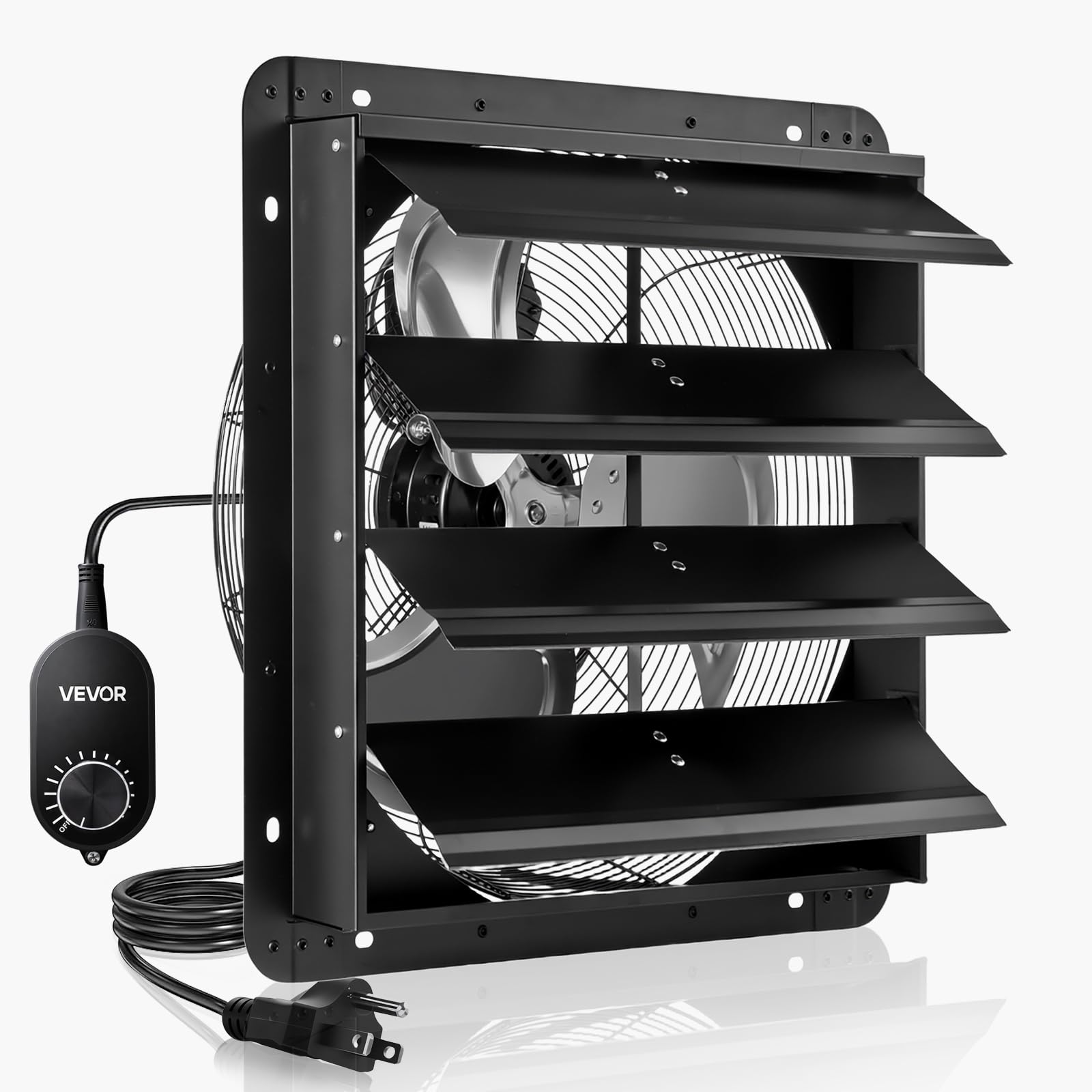
This wall-mounted shutter fan pushes 2200 CFM using a 117W AC motor spinning at 1450 RPM, which is aggressive enough to exchange the air in a standard two-car garage-sized attic in less than three minutes. The all-metal steel housing resists deformation from rain and humidity far better than any plastic vent, and the automatic shutters close tightly when the fan is off, blocking rain and pests without requiring a separate cover. The variable-speed controller lets you dial airflow from a whisper to a hurricane, which is useful for matching ventilation to seasonal temperature loads.
Installation is straightforward — the fan frame bolts into a 21″ square opening using the included expansion bolts — and the velocity of air movement creates a noticeable pressure differential that pulls cooler air from soffit intakes. Noise levels remain impressively low for a 2200 CFM unit, registering around 55-60 dB at full speed, which is quieter than a window air conditioner. The one quirk: the speed controller defaults to the highest setting when the unit first powers on, so you’ll want to dial it down immediately after each power cycle.
For homeowners who need active exhaust in a workshop, greenhouse, or unconditioned attic space, this VEVOR delivers more measurable airflow per dollar than any passive vent solution. The heavy-duty steel build means it will outlast multiple summer seasons without warping, and the replaceable motor extends the service life beyond that of cheaper plastic shutter fans. It is an excellent choice if you have existing soffit intake and need to add mechanical pull.
Why it’s great
- All-metal steel construction won’t warp or crack in sun exposure
- Stepless speed control from gentle breeze to 2200 CFM blast
- Automatic rain shutters close fully when off
Good to know
- Speed controller defaults to max on each power cycle
- Requires a precise 21-inch rough opening
2. DC HOUSE 32W Solar Attic Fan

This solar-powered roof fan moves up to 2500 CFM using a fully copper brushless motor rated IP68 waterproof, making it one of the few active vents that can handle direct rain exposure without a separate housing. The 32W monocrystalline solar panel charges the fan during daylight hours, and the unit automatically turns on when the sun hits and off at night — no wiring, no thermostats, no electricity costs. For a 1,500-square-foot attic in direct sun, owners report temperature drops of 15-20°F inside the attic cavity, which directly reduces the cooling load on the home’s central AC.
The 9-inch aluminum fan blades are designed for ultra-quiet operation (around 43 dB), meaning you won’t hear it running from inside the living space. The high-strength metal housing is rated hail-resistant and the unit comes pre-assembled with mounting brackets, making roof installation a simple 10-minute job with a drill and sealant. The MC4 connector system ensures a secure electrical connection to the solar panel, and the brushless motor eliminates the brush wear issue that plagues cheaper DC motor fans.
The primary limitation is that performance drops significantly if any portion of the solar panel is shaded during peak sun hours. Units installed on north-facing roof slopes or under tree canopy will see reduced airflow. For south- or west-facing roofs in full sun, this is the most energy-efficient solution available — zero operating cost, zero wiring, and enough CFM to rival a hardwired attic fan.
Why it’s great
- Zero electricity cost with 32W solar panel
- IP68 waterproof brushless motor handles rain directly
- Reduces attic temperature by 15-20°F in full sun
Good to know
- Airflow drops sharply if solar panel is partially shaded
- Requires south or west-facing roof for best output
3. Zepoty 2-Pack Aluminum Gable Vent 12″ x 18″

This two-pack of aluminum gable vents delivers exceptional value for homeowners covering both ends of a gable wall. Each unit offers a 10″ x 16″ rough opening, providing significant Net Free Vent Area for passive air exchange. The aluminum alloy construction is naturally rust-proof and weighs only about 1.6 kg per pair, making it easy to handle during installation without needing a second person. The paintable white finish accepts standard exterior latex paint, allowing you to match your siding or trim color exactly.
The built-in metal screen mesh blocks rodents, birds, and large insects from entering the attic while allowing maximum free airflow. Installation is simplified — no screws are required if you use construction adhesive to bond the flange to the siding, though you can drill pilot holes and use screws if preferred. Customer feedback repeatedly highlights the welded seam construction and sturdy feel, with many noting that the vents look high-end even compared to more expensive options at big-box stores. The 2-pack format lets you complete both gable ends in one purchase, saving shipping and waste.
One detail to watch: the vents have a shallow depth of approximately 3/4″, so they are not suited for situations where you need to bridge a thick wall cavity. Additionally, packaging has been reported as inconsistent — one customer received a box that came open during transit, though the vents inside were undamaged. For a corrosion-free, paintable, dual-pack gable vent that won’t rust after five years, this Zepoty set is a standout choice.
Why it’s great
- Aluminum alloy never rusts and takes paint perfectly
- Includes metal screen mesh for pest exclusion
- 2-pack completes both gable ends in one purchase
Good to know
- Shallow depth (~3/4″) not for thick wall cavities
- Packaging can arrive damaged if not taped
4. Zepoty Gable Vent 12″ x 18″ (Single)

This single-unit aluminum gable vent features a glossy powder-coat white finish that resists yellowing under UV exposure and is rated for outdoor use in both high-temperature and humid environments. The outer dimensions of 11.8″ x 17.6″ match a standard 10″ x 16″ rough opening, making it a direct replacement for many builder-grade gable vents installed in the 1990s and 2000s. The aluminum alloy screen mesh provides effective critter blocking while still allowing excellent airflow, and the louvers are fixed at an angle that sheds rain while maintaining ventilation.
Owners replacing original vents on mid-century homes report that the powder-coat finish closely matches white trim and that the vents install easily using caulk adhesive from the outside. The aluminum is lightweight (just 1 pound) but feels sturdy due to the welded frame construction. One minor manufacturing issue to be aware of: the internal tack-welds on the corners can crack if you try to drill through them directly, so avoid putting screws within 1/2″ of the corner welds.
For a single-gable installation or a replacement project where you need one high-quality vent rather than a two-pack, this Zepoty unit delivers a durable, paintable solution. The aluminum will not rust even in coastal salt air, and the gloss finish holds up well to power washing. It is a reliable choice for homeowners who want the corrosion resistance of aluminum without paying premium custom-vent prices.
Why it’s great
- Powder-coat white finish resists UV yellowing
- Aluminum alloy screen blocks pests effectively
- Lightweight at only 1 pound for easy handling
Good to know
- Avoid drilling in corner weld zones
- Screws and adhesive not included
5. Hon&Guan 4 Inch Roof Vent Cap
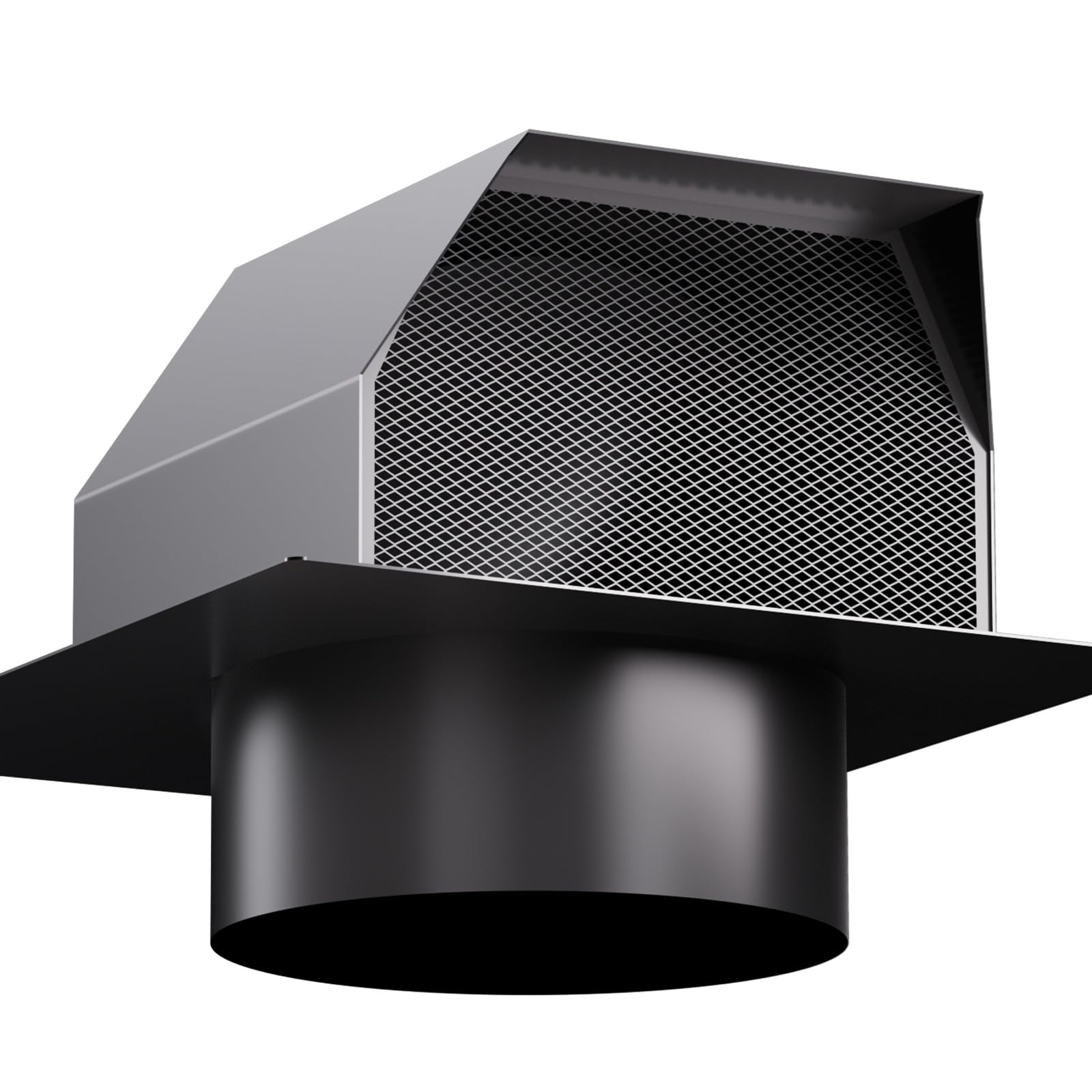
This 4-inch roof vent cap is built from heavy-gauge galvanized steel with a 0.6-inch waterproof platform that prevents water from tracking back down the ductwork — a common failure point on cheaper plastic roof jacks. The integrated gravity damper opens when the exhaust fan runs and closes when it stops, blocking outside air infiltration and preventing backdrafts. Hon&Guan specifically redesigned this model for 85% greater airflow compared to their earlier version, achieved by increasing the internal cross-section without enlarging the roof penetration.
The steel construction feels immediately substantial compared to plastic roof caps, with a weight of 2.8 pounds that resists wind uplift. The integrated pipe extension under the flange slides easily over standard 4-inch flex duct, and the pre-drilled mounting holes line up with common rafter or sheathing layouts. A small metal mesh screen is included that blocks birds and squirrels from nesting inside the duct. Installation hardware is included (three screws plus one spare), and the black finish blends well with dark roof shingles and flashing.
The one watch-out: the gravity damper flap can produce an audible tapping sound when wind gusts push it against the frame. Some owners have solved this by adding a thin rubber gasket around the damper seat. For terminating a bathroom fan or a small attic exhaust duct on the roof, this cap offers corrosion resistance and a proper backdraft damper that budget plastic alternatives lack.
Why it’s great
- Heavy-gauge galvanized steel resists rust and wind uplift
- Gravity damper prevents backdrafts when fan is off
- 85% improved airflow over previous model generation
Good to know
- Damper flap can tap in strong wind gusts
- Black color only — cannot easily be painted
6. Builders Edge Scallop Exhaust Ventilator

This scalloped exhaust ventilator from Builders Edge is designed specifically for side-wall installation, featuring patented exhaust flaps that remain closed when the fan is off to prevent cold air infiltration and pest entry. The mounting block is made from UV-stabilized plastic with color molded through the entire thickness, which means scratches from installation or cleaning will not reveal a different underlying shade — a significant advantage over painted plastic vents that chip. The snap-on trim ring simplifies installation and gives a clean finished look against any siding type.
The 4-inch blade diameter matches standard dryer boosters and small bathroom exhaust ducts, but the real focus here is on the wall termination, not the duct size. The scalloped design adds architectural detail that blends with Victorian, Craftsman, and traditional home styles far better than a plain square louver. Owners consistently praise the sturdiness of the plastic material, noting it does not warp in direct summer sun the way cheaper injection-molded vents do.
Be aware that this product is sold as a single unit and ships with the front louvers attached, which means you cannot easily separate the outer trim from the mounting block without ordering a whole new unit if damage occurs. Shipping can take several weeks for some colors, so plan your project timeline accordingly. For a durable, fade-resistant wall vent that maintains its scalloped aesthetic for years, this Builders Edge unit is a top choice among architectural vents.
Why it’s great
- Molded-through color won’t show scratches
- Patented flaps stay closed when not in use
- Scalloped design adds architectural detail
Good to know
- Front louvers are fixed to the unit
- Shipping may be slow for certain color options
7. Vent Systems 4.5″x4.5″ Soffit Vent Pack (5-Pack)

This 5-pack of square plastic soffit vent covers is the entry-level solution for adding multiple intake vents across a soffit run or for ventilating a shed, rabbit hutch, or RV. Each grille fits a 4.5″ x 4.5″ duct opening, with overall dimensions of 5.94″ x 5.94″. The plastic is UV-stabilized and rated for temperatures from -4°F to 158°F, making it suitable for both interior and sheltered exterior use. The built-in fine nylon mesh screen blocks dust and larger debris while maintaining smooth airflow — a key feature for soffit intake vents that can otherwise pull attic insulation particles into the living space.
Installation is straightforward: cut a hole matching the 4.5-inch opening size, secure the grille with screws (not included), and snap the screw covers into place. The screw head covers fit tightly and hide the fasteners for a clean look, though some users note the covers do not snap in as securely as they would like. The pack of five allows you to cover multiple rooms or zones without buying individual units.
The main limitation here is that these are small passive vents with no active airflow enhancement — they rely entirely on negative pressure created by higher exhaust vents or natural wind. They are not suited as primary attic exhaust vents for a whole-house system. For their size and price point, they are reliable soffit intake covers that include pest-blocking mesh. If you need to add intake air for a powered exhaust fan or simply want to close off unused duct openings, this 5-pack offers functional coverage at a very accessible cost.
Why it’s great
- Cost-effective 5-pack covers multiple locations
- Built-in nylon mesh blocks dust and debris
- UV-stabilized plastic resists sun damage
Good to know
- No mounting hardware included in the box
- Screw covers do not always snap securely
FAQ
Can I install gable vents without a soffit intake system?
How do I calculate how many roof vent caps I need for a 4-inch bathroom fan?
Will a solar attic fan work on a north-facing roof slope?
Final Thoughts: The Verdict
For most users, the air vents for attics winner is the VEVOR 18” Exhaust Fan because its 2200 CFM variable-speed AC motor and all-metal shutter construction deliver high-performance active exhaust at a reasonable cost. If you want to completely eliminate operating costs and wiring, grab the DC HOUSE 32W Solar Attic Fan. And for a passive, corrosion-free gable vent solution that looks great painted, nothing beats the Zepoty 2-Pack Aluminum Gable Vent.