
Our readers keep the lights on and my morning glass full of iced black tea. As an Amazon Associate, I earn from qualifying purchases.
Specs are compiled from manufacturer listings and verified buyer reviews and can change over time — please confirm the key details on the product page before buying.
A boat that can’t breathe turns into a floating mold farm. Stale air underneath the deck traps moisture, which eats wiring, corrodes fuel compartments, and leaves that musty cabin smell you can’t shake. The fix is an airlock for boats — a small vent that lets fresh air circulate while keeping rain and spray out.
I’m Min — the founder and writer behind Gadgets Feed. This guide is built by comparing the manufacturers’ published specifications and the patterns across verified customer reviews, so you get each pick’s real strengths and trade-offs instead of marketing spin.
To get the right airlock for boats, you need to match the vent style to your hull type and the airflow your engine bay demands—so you avoid overheating or moisture buildup.
Our Picks at a Glance

How To Choose The Best Airlock For Boats
Every vent on this list does one core job: move air through an enclosed space without letting water pour in behind it. The right choice depends on where the vent sits, how much air your setup needs, and what your boat’s finish can handle.
Match the vent style to the location
Louvered vents are the workhorses for hull sides and deck surfaces because their angled slats deflect rain. Clam shell vents work best for routing cables and hoses through a bulkhead, and cowl ventilators sit high to catch airflow when you are underway. Think about what is behind the vent — a fuel tank, a bilge pump, or just a wire run — before you match the style.
Measure, then measure again
The most common complaint across every vent is a fit that misses by a fraction of an inch. Note the exact cutout size in your hull and compare it to the vent’s dimensions before ordering. Some vents list a separate cutout size that is smaller than the overall flange, so always write both numbers down.
Pick the material for your water
Freshwater boats get away with marine-grade plastic like ASA or ABS, which resists fading and never rusts. If you run in saltwater, stainless steel resists corrosion longer but costs more and still needs care. One buyer watched a chrome vent rust from the inside after three months, so saltwater owners should lean toward 316 stainless.
Quick Comparison
| Model | Best For | Material | Style | Mounting | Amazon |
|---|---|---|---|---|---|
| Attwood Louvered Vent★ Best Overall | Flush hull vents on runabouts | White ASA Plastic | Flush Louvered | #8 Fasteners | Amazon |
| Five Oceans Hose VentBest Value | Replacing old slotted vents in pairs | Black ABS Plastic | Slotted Louvered | #8 FH Screws | Amazon |
| Five Oceans 5-Slotted Vent | Large cutouts on bigger boats | Black ABS Plastic | 5-Slotted Louvered | #8 FH Screws | Amazon |
| Attwood Cowl Ventilator | Engine bay and fuel compartment airflow | Chrome-Plated ZAMAK | Cowl with Hose Flange | 3″ Hose | Amazon |
| Seachoice Clam Shell Vent | Routing cables and hoses | Stainless Steel | Clam Shell | 3x #6 Fasteners | Amazon |
| Acouto Airflow Vent Covers | Adjustable airflow on RVs and yachts | 316 Stainless Steel | Round Grill | Locking Valve | Amazon |
| Kesoto Grill Vent Covers | Snap-in replacement on swim platforms | 316 Stainless Steel | Round Grill | Self-Locking | Amazon |
In-Depth Reviews
1. Attwood White Flush Louvered Marine Vent with Drain Slots
Our pick — over 4.5★ from 150+ verified ratings; the strongest balance of quality and price.
The flush-mounted standard that disappears into the hull and just works.
For a clean, low-profile look, this Attwood vent sits completely flush against the hull, so there is nothing sticking out to catch lines or fingers. The angled louvers deflect rain and sea spray, and the integrated drain slots stop water from pooling inside the system — a detail that keeps the whole setup drier over time.
The white ASA plastic resists fading and impacts, and since it is paintable, you can match it to any hull color. It needs a 2″ x 15-1/4″ installation hole, which is a long, narrow cutout, so measure your boat before ordering. Buyers report it fits classic runabouts perfectly, including a 92 Four Winns 180 Freedom.
You will need the Attwood collector box 1341 for 3″ systems or 1342 for 4″ systems, plus #8 fasteners, so budget for those extras. At 3.2 ounces, it is light, and the whole package weighs 0.2 kg, which makes shipping cheap.
Why it wins
- Flush mounting gives a clean, factory look on the hull
- Drain slots stop water from pooling behind the louvers
- UV-stable ASA plastic resists fading and is paintable
Before you buy
- Requires a separate Attwood collector box to function as a vent
- Long 15-1/4″ cutout means precise measuring is essential
Grab it for: runabouts and cruiser hulls where you want a flush, factory-finish vent that blends in.
Check first: your hull’s cutout length — this vent is a long one, and the collector box is sold separately.
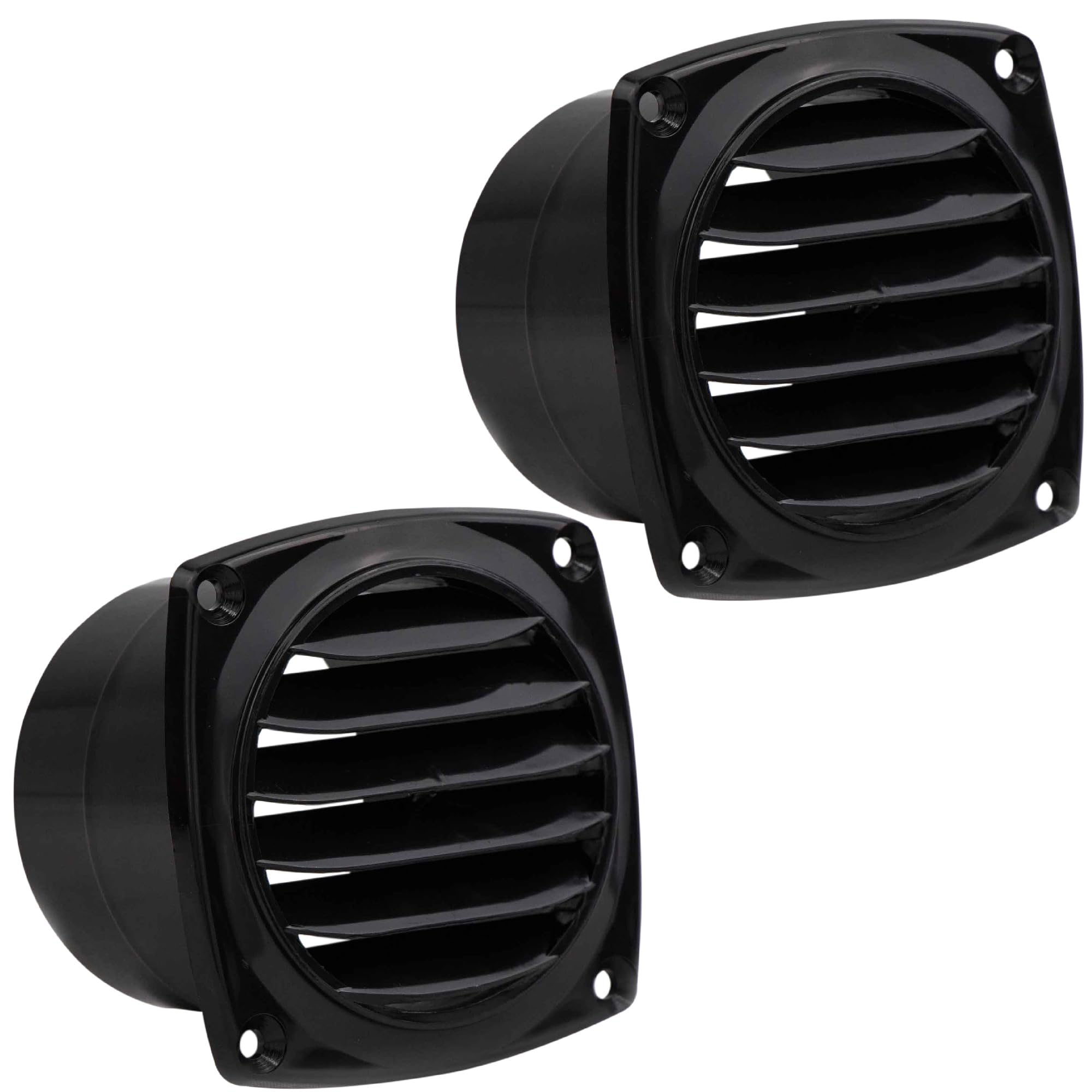
2. Five Oceans Boat Vent – Slotted Louvered Hose Vent
The rugged underdog that outlasts the original parts it replaces.
This Five Oceans vent comes as a pair in black ABS plastic, a marine-grade material that shrugs off saltwater corrosion. It lets fresh air in and stale air out, which cuts down condensation, odors, and the moisture issues that plague enclosed bilges and compartments.
It fits hose diameters of 3 inches and 4 inches, and mounting takes #8 flat-head screws that are not included. Owners mention it feels more heavy duty than the factory vents they pulled off, with one noting it fit a 06 Bayliner 175 snugly and looked great. The fit does get mixed feedback — some find it perfect while others say it was close but not exact.
This whole package weighs just 0.11 kg—about 82% lighter than the Attwood flush vent above—so shipping is a non-issue. Several owners noted the screw holes aligned perfectly, and the material is far more sturdy than the Sea Dog vents they compared it against.
Real-world take: owners praise the build quality and tough plastic above all, and call it visibly sturdier than the parts it replaced.
Honest fit note: measure your old vent’s footprint — a snug fit is common, and a small number report it is not an exact match.
Best for: boat owners replacing cracked factory slotted vents who want a tougher, corrosion-proof upgrade in a pair.
Who should pass: anyone whose hull cutout is an odd size that a snug fit will not cover.
3. Five Oceans 5-Slotted Louvered Ventilators
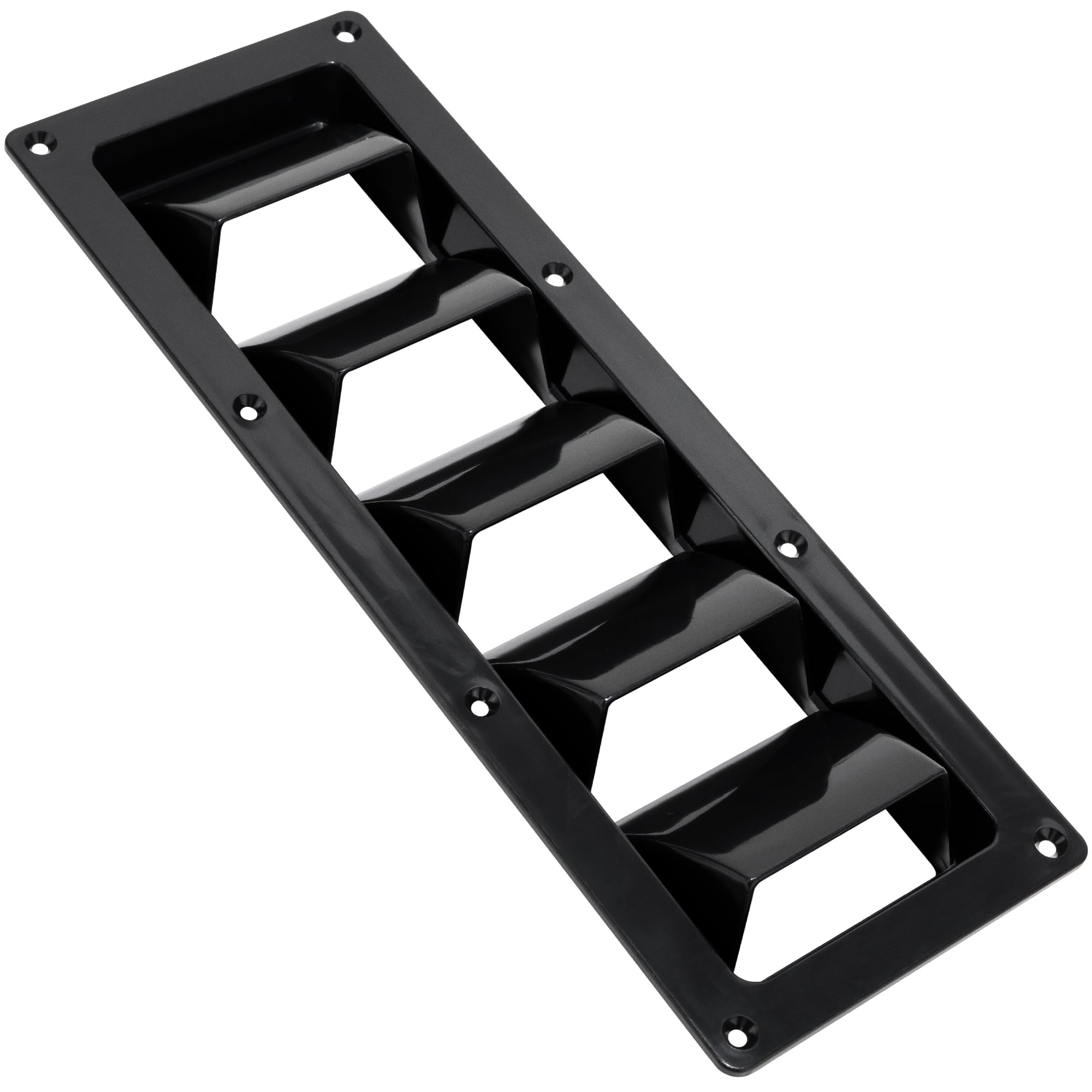
The long vent that modernizes an older boat’s whole look in one swap.
This is the big one — an external size of 4-3/4″ wide by 13-1/4″ long, with a cutout of 3-1/2″ by 12″. That makes it the right choice for larger hulls or deck spaces where a small vent would look lost. It is built from black ABS plastic, so saltwater corrosion is not a worry.
Owners have used it for more than just boats—one upgraded a 33′ Egg Harbor with four of these and called it an instant modernization, and another mounted a pair into a Jeep hood to help the engine breathe. The screw-in installation is straightforward with #8 flat-head screws, though one owner wished it had screen material on the back to keep insects and birds from nesting inside.
If you buy it as a replacement, expect it to be thicker and sturdier than the thin plastic that came off. For a large cutout vent at a reasonable price, this is the one to beat.
The takeaway: buyers consistently call it a direct upgrade — thicker, modern-looking, and easy to install, with several using it far beyond the marina.
Choose it if: you have a large cutout to fill and want a vent that looks thicker and more modern than the cracked plastic it replaces.
Plan around: the lack of a bug screen — you may want to retrofit your own if insects are a problem in your slip.
4. Attwood Marine Intake and Exhaust Cowl Ventilator
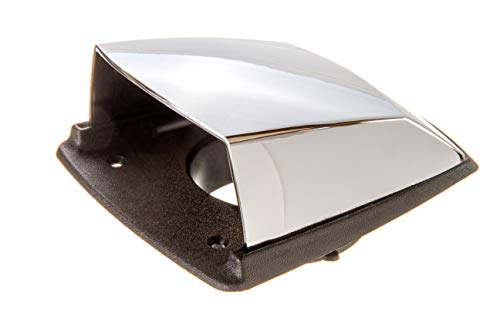
The chrome cowl that pushes serious air through fuel compartments and engine bays.
When you need real airflow, not just passive circulation, this cowl ventilator is the answer. It meets the ABYC H-2 cross-sectional area requirements — the standard that dictates how much vent opening a fuel compartment needs — and connects to a 3-inch inside diameter wire-supported ventilation hose. That makes it the right pick for clearing fumes from fuel tanks or cooling an engine bay.
The vent is constructed of chrome-plated ZAMAK, a zinc alloy known for its strength, and it has a classic appearance that looks at home on older bass boats and runabouts. One owner replaced the factory vents on a 1994 Bass Tracker and noted the airflow works great for clearing fumes, though it required mild drilling since it was not a direct replacement.
Customers note a perfect fit on 3-inch holes and praise the chrome finish, with a note that these do not exactly match OEM cowls on older bass boats—they are very close, so symmetry is down to your preference. Durability gets mixed feedback, with one owner reporting corrosion after a season, so freshwater use is the safer bet.
Why it stands out
- Meets ABYC H-2 airflow standards for fuel compartments
- Chrome ZAMAK shell looks classic and resists impact
- Fastens to 3″ wire-supported hose for directed airflow
Keep in mind
- May need mild drilling to replace factory vents on some boats
- Chrome finish showed corrosion for one saltwater owner
Reach for it if: you need active ventilation for a fuel compartment or engine bay and want a chrome finish that looks the part.
Think twice if: you run in saltwater exclusively — the chrome can corrode, and this is better suited to freshwater boats.
5. Seachoice Clam Shell Vent

The hinged shell that feeds cables and hoses through a bulkhead without letting spray follow them.
This clam shell vent is not just for airflow — it is the standard tool for routing cables, wire runs, and exhaust hoses through a deck or bulkhead while deflecting splash. The stainless steel shell is durable and corrosion-resistant, and its 3-3/4 inch by 3-3/4 inch footprint fits most pass-through spots.
Mounting takes three #6 fasteners, which are not included. One owner used it to feed power pole hoses through the boat and called the size perfect, while another noted the steel is thin but more than enough for an anchor chain locker, surviving days of saltwater soaking without rust. Because the material is malleable, it can be bent to follow a curved surface if your mounting point is not flat.
The trade-off is that it is thin, and a single owner reported rust from the inside after three months on the boat, leaving stains. For a cable pass-through that looks better than a raw hole, this is a solid, good-looking pick.
Owner verdict: the polish and build win praise, and reviewers point out it looks far better and sturdier than the cracked plastic vents it often replaces.
Worth watching: the steel is thin, and at least one saltwater owner saw rust from inside the shell.
Ideal for: routing cables and hoses through a bulkhead with a splash shield that looks sharp doing it.
Not for: anyone who wants a thick, heavy-duty plate — this one is deliberately thin and may need gentle bending.
6. Boats Airflow Vent Cover 4pcs 3.5in 316 Stainless Steel
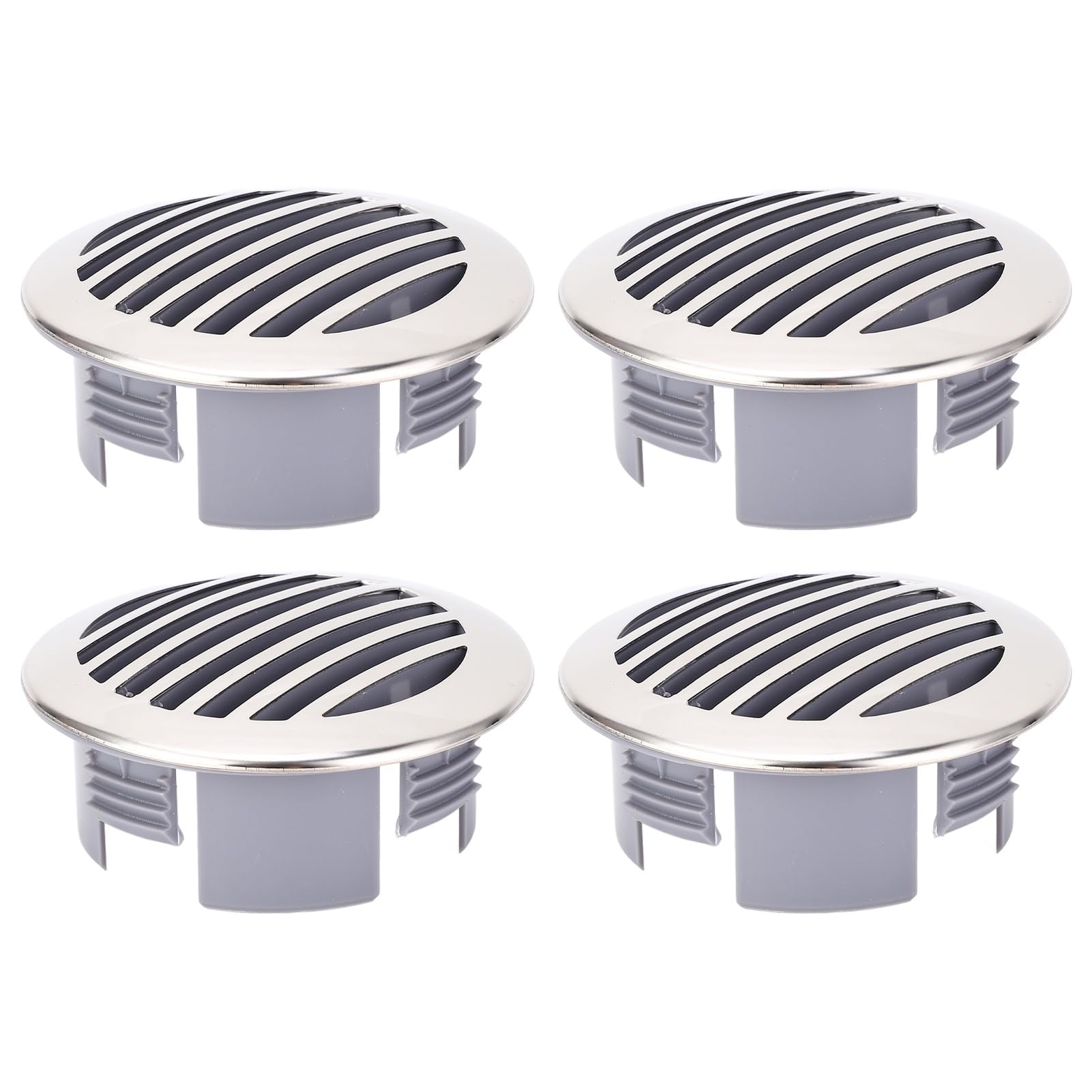
The polished round vent whose adjustable valve lets you dial airflow to the exact level you want.
Most vents either fully open or fully closed. This one gives you control — an adjustable regulating valve lets you tune how much air flows through the outlet, which is handy when you want maximum ventilation underway but less draft when at rest. It comes as a four-pack, making it a strong value for covering multiple vents across a boat, RV, or yacht.
The 316 stainless steel construction resists corrosion far better than chrome or basic steel, and the high-polish finish looks great on a deck or cabin wall. It fits pipes from 3in/7.6cm to 3.25in/8.3cm, and installation on a ceiling or wall is easy — disassembly for cleaning is simple too. Shoppers say they fit perfectly and look beautiful, including a set replacing the old vents on a Hurricane deck boat.
Buyers are uniformly happy, with the appearance and perfect fit being the standout qualities, and several noting they look just like the original parts. For a four-pack of adjustable, corrosion-resistant vents, this is the pick.
What you get
- Four vents in one pack at a strong per-unit value
- Adjustable valve controls airflow precisely
- 316 stainless resists saltwater corrosion
Consider this
- Round style fits pipes, not large flush hull cutouts
- Review count is smaller, so long-term durability is less proven
Buy it for: covering multiple vents at once with an adjustable, corrosion-proof steel grill that looks original.
skip it if: you need one large flush louvered vent for a hull side rather than a round pipe vent.
7. Kesoto 4 Pcs 3-inch Marine Grade 316 Stainless Grill Vent Cover

The no-drill snap-in vent that replaces factory grills in seconds.
If drilling makes you nervous, this Kesoto vent is the easiest install on the list — a self-contained locking device means no fasteners at all. It is made of 316 stainless steel with a curved surface polish, so it looks high-end while resisting rust. The four-pack covers multiple openings, and it fits pipes from 3 inches up to 4 inches.
Owners have used it to replace OEM vents on a Crownline 230 swim platform with a perfect, clip-in fit, and on Hurricane deck boats. The polished look is a clear upgrade over the busted plastic it often replaces. Because it is 316 stainless with anti-corrosion treatment, it is built for marine life.
The honest caveat is that some buyers report the parts are plastic where they snap in, and one reported them coming apart after 1.5 years. For a quick, clean swap with no tools, this is a great choice — just know the locking tabs do the heavy lifting.
Quick verdict: owners love the tool-free snap-in fit and the OEM-matching look, calling it a clean upgrade over old cracked plastic.
Long-term note: the snap-in tabs are plastic, and a few owners saw them degrade between a year and 18 months in.
Grab it if: you want a tool-free, no-drill swap that looks factory and covers four openings.
Pass it by if: you need a permanent, screw-down vent that will never loosen over years of vibration.
Understanding the Specs
Louvered vs. Cowl vs. Clam Shell
A louvered vent uses angled slats to deflect rain while letting air flow — the best all-rounder for hull sides. A cowl ventilator is a raised scoop that catches airflow and directs it through a hose, ideal for engine bays and fuel compartments. A clam shell vent is a hinged round cover meant primarily for routing cables and hoses with splash protection.
Cutout Size vs. External Size
Every vent lists two measurements: the external flange you see and the cutout you make in the hull. They are rarely the same — the 5-Slotted Five Oceans vent, for example, has a 4-3/4″ wide external size but needs only a 3-1/2″ cutout. Always measure the hole in your boat and compare it to the cutout size, not the flange.
ASA vs. ABS Plastic
Both are marine-grade plastics that resist corrosion, but they differ subtly. ASA has stronger UV resistance, so it fades less in direct sun — that is why the Attwood flush vent uses it. ABS is tougher against impacts and cheaper, which is why Five Oceans uses it on their louvered vents. Either beats plain plastic for boat life.
316 Stainless Steel
Not all stainless is equal. 316 grade contains molybdenum, which makes it far more resistant to saltwater corrosion than cheaper 304 or chrome-plated steel. The Acouto and Kesoto vents both use 316, making them the safer bets for boats that live in saltwater, while chrome-plated ZAMAK looks great but can corrode after a season in harsh conditions.
FAQ
How do I know which vent size fits my boat?
What is the difference between a louvered vent and a cowl ventilator?
Will a vent keep water out in heavy rain or waves?
Do I need a vent for my fuel compartment?
Are stainless steel vents always better than plastic for saltwater?
Can I install a boat vent myself without special tools?
Is a bigger vent always better for airflow?
What maintenance do boat vents need?
Final Thoughts: The Verdict
Across the board, the airlock for boats winner is the Attwood Louvered Vent because flush mounting and drain slots make it the most polished, functional hull vent on the list, backed by a strong rating from nearly 200 owners. If you want directed airflow for a fuel compartment or engine bay, grab the Attwood Cowl Ventilator, which meets ABYC H-2 standards. And for a tool-free upgrade across multiple openings, the Kesoto snap-in vents are the easiest install you will find.
How We Picked
We do not accept paid placement. Every pick is matched to a real buyer and a real use-case; we do not hands-on test units.
Sources & Methodology
Specifications: manufacturer listings and product documentation. Review insights: verified customer reviews, as of August 2026. Pricing: not shown on this page (it changes often); check the current price via the retailer link.
As an Amazon Associate, Gadgets Feed earns from qualifying purchases. This does not affect which products we feature.