
A magnetic compass remains the single most critical primary reference for directional awareness in an airplane, the one instrument that requires no electrical system or satellite signal to function. Whether you’re flying a panel-mounted instrument panel or a handheld backup, the right compass ensures you can hold a heading, navigate to an alternate, and maintain situational awareness when every other display goes dark.
I’m Min — the co-founder and writer behind Gadgets Feed. I’ve spent countless hours dissecting the technical specifications, installation requirements, and real-world accuracy claims of aviation-grade compasses to help pilots separate reliable instruments from decorative additions to the panel.
After evaluating nine of the most relevant models on the market, this guide presents a clear, research-backed breakdown of the best airplane magnetic compass options for panel-mount, handheld bearing, and electronic heading sensor applications.
How To Choose The Best Airplane Magnetic Compass
Selecting a magnetic compass for an airplane goes far beyond picking a round dial with numbers. The cockpit environment is harsh—vibration, rapid temperature changes, nearby electrical fields from avionics, and the constant need for reliable, instant heading information demand a compass built for precision and durability. You must evaluate the compass’s internal mechanics, its mounting method, and its intended role—whether it’s a primary panel instrument or a handheld backup for your flight bag.
Dial Movement and Damping
The heart of any magnetic compass is the dial assembly. The best airplane compasses use a liquid-filled capsule—typically a mix of kerosene and alcohol or a specialized damping fluid—to slow the oscillation of the magnetized dial. This damping prevents the card from spinning wildly during turns or in turbulence, allowing you to read your heading quickly. Look for compasses that specify “sapphire jewel and hardened steel pivot” as this combination minimizes friction and wear, maintaining accuracy over thousands of flight hours. A well-damped compass settles on a heading within seconds without overshooting.
Mounting Configuration: Flush, Surface, or Bracket
Your airplane’s panel space dictates the mounting style. A flush-mount compass requires a precise cutout in the panel—typically 3-5/8 inches to 4 inches in diameter—and sits nearly flush with the instrument panel surface for a clean, professional look. A surface-mount compass, like the Ritchie S-53W, sits on top of the panel with a visible base, which is easier to retrofit without cutting a large hole. Bracket-mount options offer flexibility to place the compass on a support frame or yolk. For a hand-bearing compass used as a backup, no panel mount is needed, but the instrument must be easy to sight and hold steady in turbulence.
Lighting and Readability
Night operations or flights into instrument meteorological conditions (IMC) require a compass with reliable internal lighting. The best units offer green NiteVu or photoluminescent lighting that doesn’t destroy your night vision. Some models use 12V DC power directly from the aircraft bus, while others rely on self-contained photoluminescent material. Check whether the compass’s lubber lines and numbers are large and high-contrast—white dial with black numbers or black dial with white numbers—for readability against a bright sky or dark panel.
Compensation and Deviation Adjustment
Every aircraft has magnetic interference from its own electrical system, metal structure, and engine components. The best airplane compasses include built-in compensators—small magnets attached to the compass housing that can be adjusted by turning screws on the face. This allows you to perform a compass swing and reduce deviation errors to within a few degrees. Models without compensators should only be considered for backup or non-primary use where exact heading is not safety-critical.
Quick Comparison
On smaller screens, swipe sideways to see the full table.
| Model | Category | Best For | Key Spec | Amazon |
|---|---|---|---|---|
| Ritchie Explorer Flush Mount F-50W | Panel Compass | Direct panel replacement with lighting | 2.75″ dial, built-in NiteVu green lighting | Amazon |
| Garmin Three-Axis Heading Sensor | Electronic Sensor | GPS/autopilot heading accuracy at low speed | ±3° accuracy, 10 Hz output rate, NMEA 2000 | Amazon |
| Suunto KB-14/360R G | Hand Bearing Compass | Precision sighting for flight planning | 360° scale, optical sighting, jewel bearing | Amazon |
| Ritchie Supersport SS-1002 | Panel Compass | Large dial, high visibility in turbulence | 3.75″ dial, PowerDamp Plus, blue/green lighting | Amazon |
| Suunto KB-14 | Hand Bearing Compass | General navigation and map work | Liquid-filled capsule, -30°C to +60°C range | Amazon |
| IRIS 50 Hand Bearing Compass | Hand Bearing Compass | Accurate bearing taking with prism sighting | 1° graduation, 20° field of view, 105g | Amazon |
| Plastimo Iris 50 | Hand Bearing Compass | Waterproof, floating backup compass | Floats, waterproof, 1° increments | Amazon |
| Ritchie Surface Mount S-53W | Panel Compass | Simple surface-mount retrofitting | 2.75″ dial, high-temp composite case | Amazon |
| Ritchie Angler RA-91 | Panel Compass | Bracket mount, value-oriented replacement | 2.75″ blue dial, bracket mount | Amazon |
In‑Depth Reviews
1. Ritchie Explorer Flush Mount Compass F-50W

The Ritchie Explorer F-50W is the quintessential panel-mounted magnetic compass for general aviation. Its 2.75-inch direct-read dial is large enough for quick scanning without dominating panel space, and the built-in green NiteVu lighting ensures excellent legibility during night operations without washing out your runway vision. The sapphire jewel and hardened steel pivot system is a hallmark of professional-grade compasses, delivering years of consistent accuracy in the high-vibration cockpit environment.
Flush mounting requires a clean cutout of roughly 3-5/8 inches, and the included compensators let you adjust for deviation during a typical compass swing. The plastic housing is lightweight at just 12 ounces, and the white dial with black numbers provides high contrast even in direct sunlight. Multiple pilot reviews confirm that the lighting wires easily to a 12V switch and that the compass matches heading data from GPS and iPhone apps within a few degrees after proper calibration.
For a primary panel compass, the F-50W strikes an excellent balance between cost, build quality, and ease of installation. It lacks the large 3.75-inch dial of the Supersport series, but for most single-engine aircraft and light twins, the 2.75-inch size is perfectly adequate. If you need a simple, reliable, and well-lit panel compass that is straightforward to install, this is the top pick.
Why it’s great
- Sapphire jewel and hardened steel pivot for long-lasting accuracy.
- Integral green NiteVu lighting preserves night vision.
- Built-in compensators allow easy deviation adjustment.
Good to know
- Requires precise 3-5/8 inch panel cutout for flush mount.
- 1A fuse for lighting not included in packaging.
2. Garmin Three-Axis Compass Heading Sensor
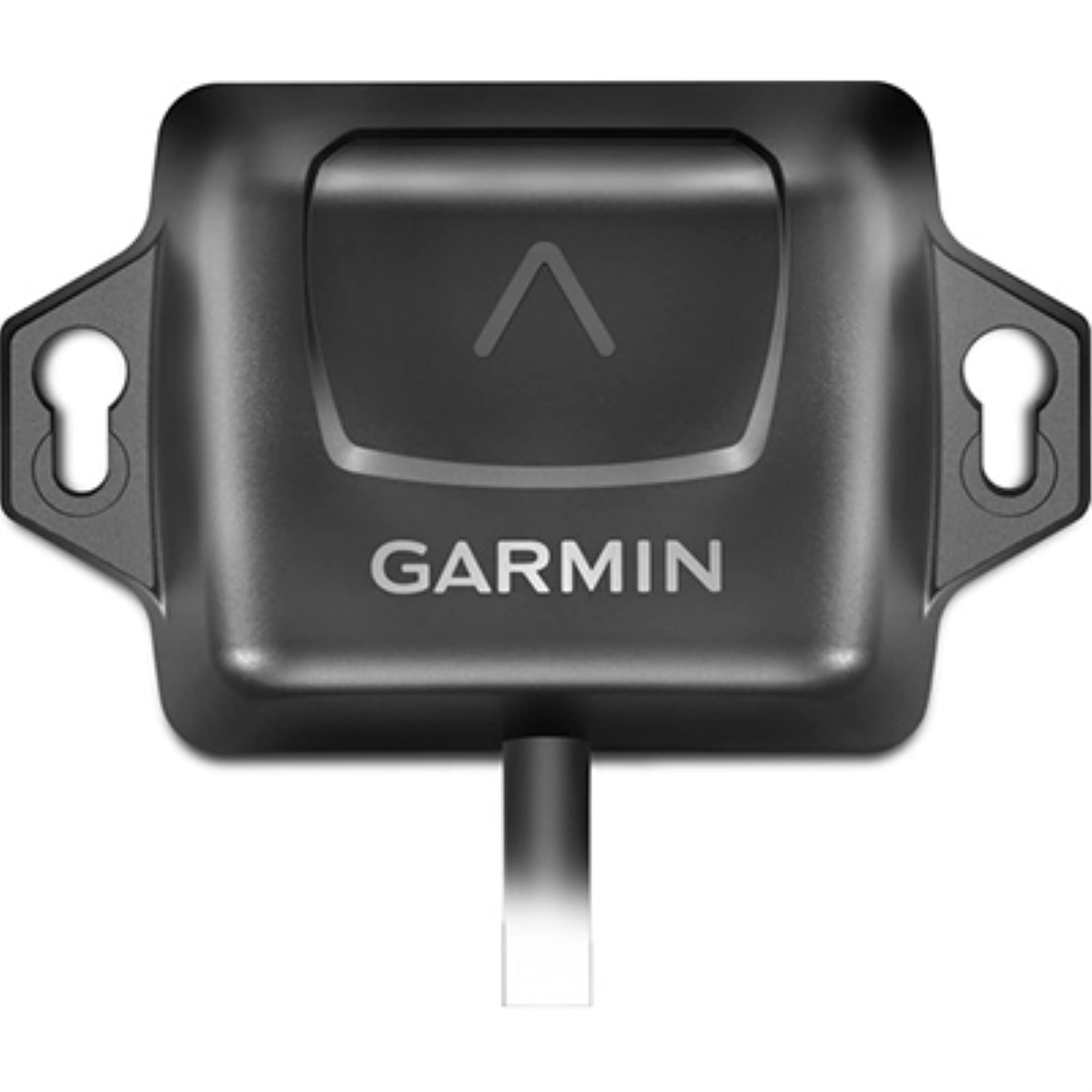
The Garmin SteadyCast is not a traditional magnetic compass dial—it is a three-axis electronic heading sensor that outputs heading data over NMEA 2000 to your GPS chartplotter, autopilot, or radar system. Its key advantage is delivering accurate heading at low speeds or even while stationary, solving the common “spinning boat” issue where GPS course over ground becomes unreliable. The sensor outputs heading at a 10 Hz refresh rate with a specified accuracy of ±3 degrees.
Installation is straightforward: connect the sensor to your existing NMEA 2000 backbone, mount it in a location clear of magnetic interference, and the chartplotter automatically recognizes it. The compact 5.9-inch cube weighs only 0.7 pounds and includes Bluetooth connectivity for configuration through the Garmin app. Pilots have reported that it immediately stabilized heading on their maps and eliminated radar target washout issues common with large-screen MFDs.
This sensor is ideal for aircraft retrofitted with modern glass cockpits or for experimental builders who want to integrate heading data into an electronic flight instrument system. It is not a replacement for a standby magnetic compass required by regulations, but it provides the accurate heading reference that panel-mounted GPS units need for advanced navigation functions. A top-tier upgrade for any aircraft with a digital panel.
Why it’s great
- 10 Hz heading output rate with ±3 degree accuracy.
- Simple NMEA 2000 plug-and-play installation.
- Solves GPS course wandering at low speeds.
Good to know
- Requires calibration on each power-up for optimal accuracy.
- Electronic unit, not a direct replacement for a magnetic dial.
3. Suunto KB-14/360R G Precision Global Compass
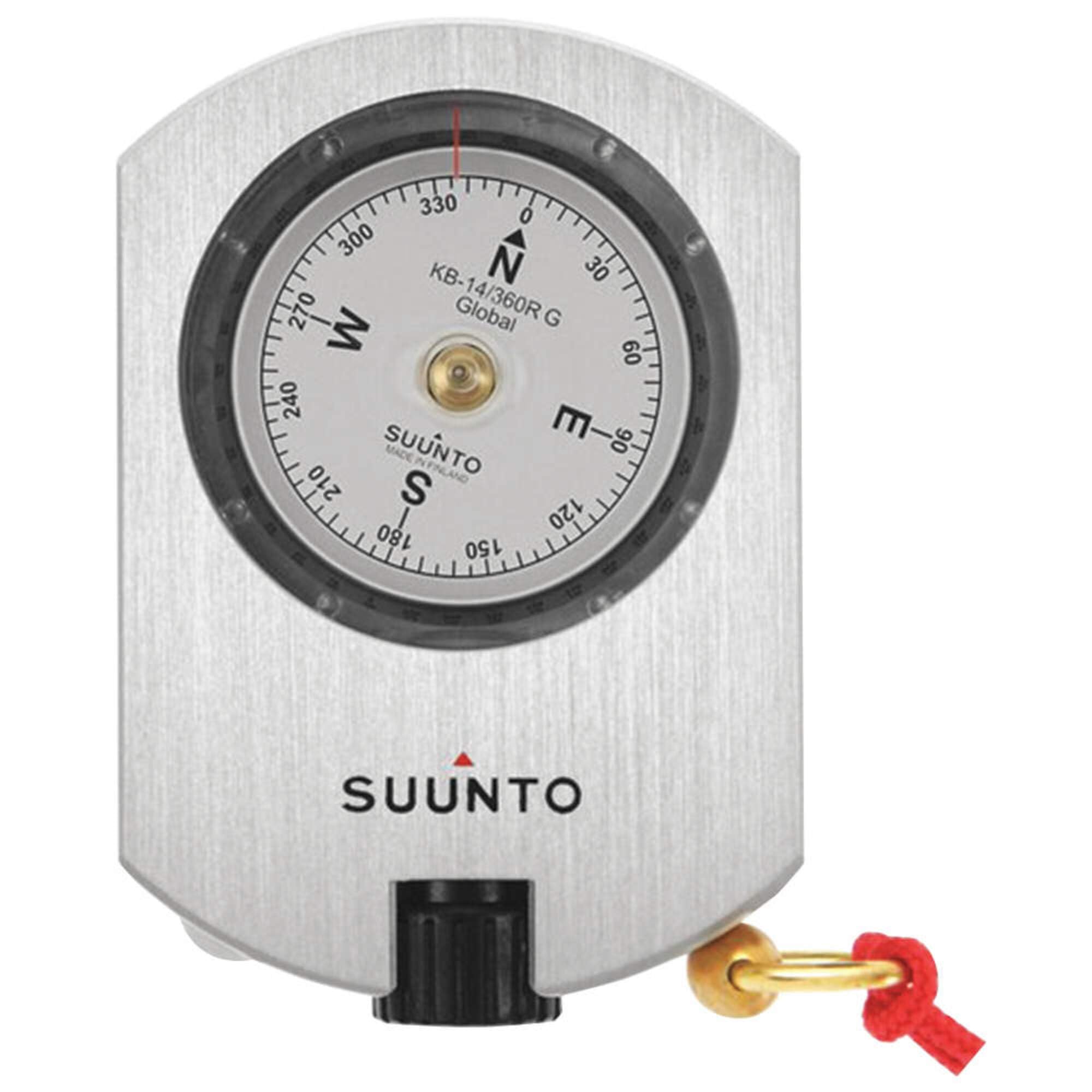
The Suunto KB-14/360R G is the gold standard for precision hand-bearing compasses, trusted by surveyors, cartographers, and serious outdoor navigators worldwide. Its optical sighting system allows you to simultaneously focus on the compass card and a distant target, enabling highly accurate bearing readings even in challenging light conditions. The globalized needle assembly ensures stable performance in all magnetic zones, making it suitable for international flying and journey-level flight planning.
Constructed from anodized aluminum with a sapphire jewel bearing and a liquid-filled capsule, this compass is built to survive extreme temperatures from -30°C to +60°C without forming bubbles or losing damping. The 360-degree scale with 1-degree increments is sharp and legible through the top viewing window and the angled sighting portal. The kit includes a nylon pouch with a belt loop and lanyard, making it easy to keep in a flight bag or kneeboard.
The primary limitation is the lack of a built-in magnetic declination adjustment—you must add or subtract the variation manually. For VFR pilots using sectional charts, this is a simple mental calculation, but it is worth noting compared to compasses with adjustable declination markings. If you want a sighting compass that can deliver 1/4-degree accuracy on a bearing, the KB-14/360R G is the best tool in its class.
Why it’s great
- Optical sighting for simultaneous target and card focus.
- Sapphire jewel bearing and aluminum housing for durability.
- Works globally without zone-based needle swaps.
Good to know
- No built-in magnetic declination adjustment.
- Heavier than plastic hand bearing compasses at 0.16 kg.
4. Ritchie Supersport Compass SS-1002
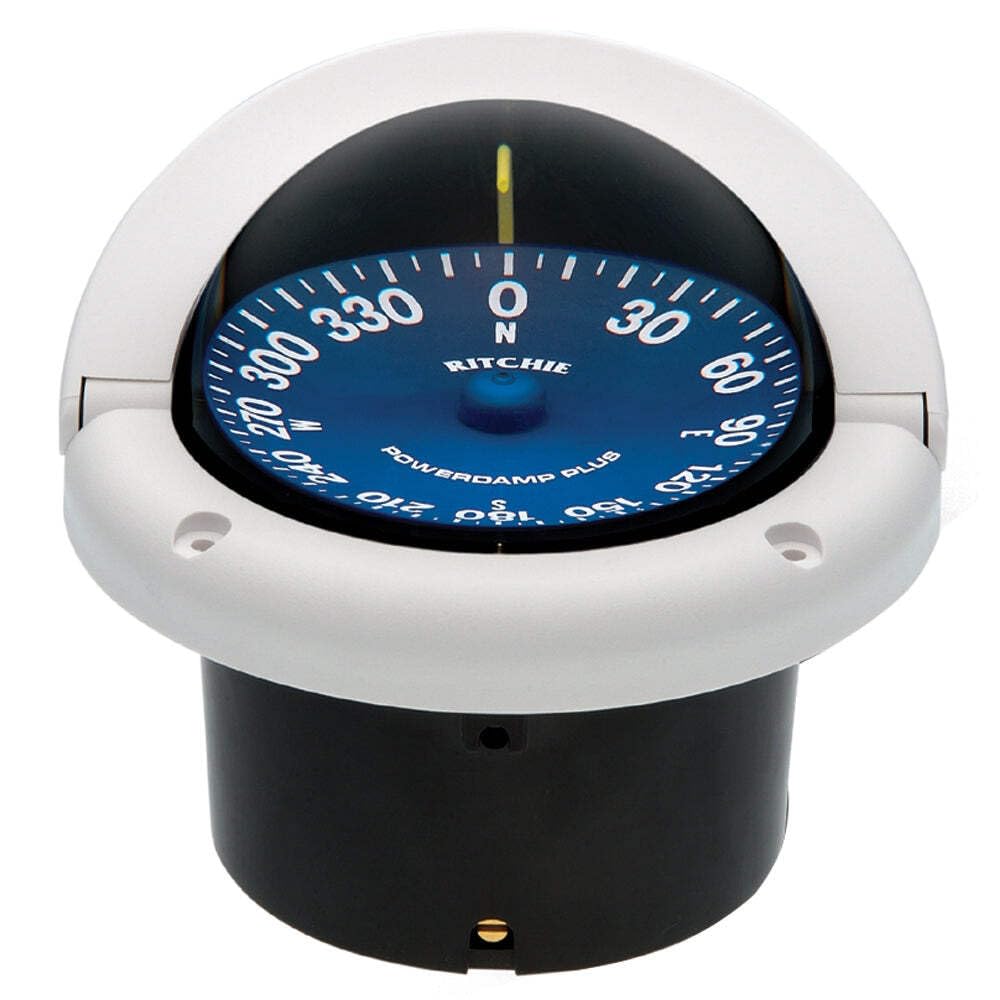
The Ritchie Supersport SS-1002 is a larger, premium flush-mount compass designed for pilots who demand maximum dial readability under high vibration and heavy sea conditions. The 3.75-inch dial is significantly larger than the Explorer’s 2.75-inch card, and the PowerDamp Plus technology locks the heading quickly without overshoot. The movable sun shield reduces glare in bright conditions, and the green NiteVu backlight is reported to be very strong and clear during night operations.
Installation requires cutting a larger 4-inch hole compared to the Explorer’s 3-5/8 inch, so verify clearance before buying. The unit includes built-in compensators, 45-degree lubber lines for quick cross-checking, and a custom fitted protective cover. Reviews from aircraft owners highlight that the compass looks excellent next to modern Garmin glass displays and is significantly more accurate than previous OEM units, with several reporting that no compensation adjustment was needed after installation.
At nearly three times the weight of the Explorer at 0.79 kg, the Supersport feels solid and substantial. The strong illumination is noted as very bright—some users describe it as too bright—which is a plus for high-ambient-light panels but may require dimming in a dark cockpit. If your panel has the real estate, the SS-1002 delivers the best dial visibility of any compass in this roundup.
Why it’s great
- Large 3.75-inch dial for maximum readability.
- PowerDamp Plus technology for fast heading lock-on.
- Very bright NiteVu backlight for night vision compatibility.
Good to know
- Requires a 4-inch panel cutout.
- Heavier than standard 2.75-inch compasses.
5. Suunto KB-14 Hand Bearing Compass

The Suunto KB-14 delivers professional-grade precision in a compact, all-analog package that requires no batteries whatsoever. The liquid-filled capsule with sapphire bearing provides smooth, accurate readings across a temperature range of -30°C to +60°C, making it a reliable backup instrument for any cockpit. The anodized light-alloy housing is durable enough for decades of use—one reviewer reported replacing a KB-14 after 50 years of service.
The optical reading system allows for precise direction measurement, and the compass includes a declination adjustment system that simplifies map-to-compass conversion. The 3-inch by 2-inch form factor fits easily in a flight bag, and the included lanyard prevents loss during pre-flight walkarounds. The nylon pouch with belt loop keeps it accessible without adding clutter to your kneeboard. Multiple pilots have verified its accuracy against GPS and panel compasses, confirming it holds its specification.
The sealed liquid chamber can fail if the compass is dropped hard on a hard surface, but with normal care it lasts a lifetime. There is no lighting system, so it is unsuitable for night navigation without an external light source. As a daytime backup for flight planning, map reading, and situational awareness, the Suunto KB-14 is the best value hand bearing compass available.
Why it’s great
- All-analog with no batteries required.
- Sapphire jewel bearing and aluminum case for extreme durability.
- Declination adjustment suitable for sectional chart work.
Good to know
- No integral lighting for night use.
- Liquid chamber can develop bubbles if dropped.
6. IRIS 50 Hand Bearing Compass (Blue)

The IRIS 50 by Plastimo is a specialty hand bearing compass designed for taking bearings with high precision, featuring a prism lens system that allows you to read the compass card simultaneously with your target. The 1-degree graduation scale and 20-degree field of view enable accurate bearings down to a quarter or half degree when used correctly. The built-in photoluminescent lighting provides low-level visibility in the dark without batteries, though it fades after about an hour and takes time to recharge.
Weighing only 105 grams, it is the lightest hand bearing compass in this list and sits very comfortably in hand for extended use. The red lubber lines are easy to position against a visual target, and the prism works well even for pilots who wear prescription glasses. The compass is accurate, stable, and well-built, though the included lanyard is narrow and some users prefer to replace it with a wider strap for security.
The primary use case for pilots is taking bearings during cross-country flights to identify checkpoints or during unusual attitude recoveries. The optical sighting feature is superior to standard baseplate compasses for accurate bearing work, but it is slightly less intuitive for quick map orientation. If you frequently need precise bearings for flight planning or navigation, the IRIS 50 is an excellent specialist tool.
Why it’s great
- Prism lens system for highly accurate bearing readings.
- 1-degree graduation with 20-degree field of view.
- Very lightweight at 105 grams.
Good to know
- Photoluminescent lighting fades within one hour.
- Lanyard is narrow and may need replacement.
7. Plastimo Iris 50 Bearing and Orientation Compass

The Plastimo Iris 50 is a fully waterproof, hand-bearing compass that floats on freshwater, a useful safety feature if it is ever dropped overboard during a float plane or seaplane operation. It is accurate, stable, and features a 1-degree increment scale that is easy to read even with polarized sunglasses. The housing is made from ABS plastic and includes a soft rubber grip for handling in wet or turbulent conditions.
The liquid-filled capsule ensures smooth damping, and the built-in photoluminescent lighting provides passive low-light visibility without batteries. The compass has a protective housing that shields the card when not in use, and the included lanyard keeps it around your neck during flights. Multiple users have checked its accuracy against a Silva Ranger 15 and Garmin GPS, finding it matches within expectations.
For a budget-friendly backup compass that can survive immersion and rough handling, the Plastimo Iris 50 is a smart choice. It lacks the optical sighting prism of the IRIS 50, so bearings are taken via standard lubber line alignment. It is best suited for general orientation and as a backup VFR navigation instrument.
Why it’s great
- Waterproof and floats on fresh water.
- Accurate 1-degree increments with stable damping.
- No batteries needed for photoluminescent lighting.
Good to know
- No prism sighting system for precision bearings.
- Plastic housing is less durable than aluminum models.
8. Ritchie Surface Mount Compass S-53W

The Ritchie S-53W is a classic surface-mount compass that sits on top of the panel rather than being cut into it, making it an excellent option for retrofitting older aircraft where flush-mount cutouts would be complex or destructive. The 2.75-inch white dial is clear and readable, with green NiteVu lighting for night operations. The high-temperature composite housing is designed to withstand the heat buildup common on small aircraft dashboards.
Installation requires drilling mounting holes rather than a single large hole, and the compass accepts a constant 12V input that keeps the green light illuminated whenever the master switch is on. Some users have noted that the directional markings are sparse on the card, and the light remains on with the battery switch, which may cause a slight green glow in the cockpit at night. Wiring a switched feed solves this issue.
The S-53W has been a workhorse in the marine market for years, and its aviation applications are clear: small panel aircraft, experimental builds, and ultralights benefit from a rugged, easy-to-mount compass that does not require panel surgery. It is not as refined as the Explorer flush mount, but for a straightforward, no-cut installation, it works reliably.
Why it’s great
- Surface mount avoids panel cutout requirements.
- High-temperature composite case suited for cockpit environments.
- Green NiteVu backlighting for night readability.
Good to know
- Card markings are less detailed than some competitors.
- Light is powered when battery switch is on—may require separate switch.
9. Ritchie Angler Compass RA-91

The Ritchie Angler RA-91 is a bracket-mounted compass designed for general purpose navigation on boats, but its simple bracket mount and robust construction make it a viable option for non-panel aircraft installations such as experimental aircraft, gyrocopters, or ultralight trikes. The 2.75-inch blue dial is readable in daylight, and the bracket mount allows you to position the compass on the yoke, frame, or any flat surface using screws of your own length—none are included.
The compass works on a standard magnetic dial and pivot system, and it has been praised by owners for lasting over a decade in service, even in challenging weather conditions. One user reported that a fluid leak developed after the compass was left in a freezing garage for a winter, which killed the damping ability. This is a risk with any liquid-filled compass in extreme cold, so storage matters.
The RA-91 lacks a backlight, so you will need an external flashlight for night reading. It is also not TSO’d for instrument panel use in certified aircraft, so it is best suited as a non-certified backup compass on experimental amateur-built (E-AB) or light sport aircraft (LSA). If you need a simple, low-cost magnetic compass for a non-traditional cockpit layout, the Angler is a functional choice.
Why it’s great
- Simple bracket mount for non-standard panel installations.
- Well-built and durable for long service life.
- Low cost, ideal for experimental and ultralight aircraft.
Good to know
- No integral backlight for night operations.
- Liquid capsule can develop a bubble after freezing exposure.
FAQ
What is the difference between a surface-mount and flush-mount compass for an airplane?
Can I use a marine compass as a primary magnetic compass in my aircraft?
What does the “sapphire jewel and hardened steel pivot” specification mean for accuracy?
How do I perform a compass swing to compensate for deviation?
Why do some liquid-filled compasses develop air bubbles, and is it a problem?
Final Thoughts: The Verdict
For most pilots flying certified aircraft with a standard instrument panel, the best airplane magnetic compass winner is the Ritchie Explorer Flush Mount F-50W because it combines a proven sapphire jewel bearing system, built-in green NiteVu lighting, integral compensators for deviation adjustment, and a flush-mount design that fits most panels without major modification. If you are upgrading a glass cockpit that requires accurate heading data for GPS and autopilot systems, grab the Garmin Three-Axis Heading Sensor. And for a precision hand bearing compass that lives in your flight bag and delivers survey-grade bearing accuracy, nothing beats the Suunto KB-14/360R G.