
The struggle is real: your brain simply doesn’t register a standard phone alarm, leaving you late, rushed, and frustrated before the day even begins. For individuals with ADHD, executive dysfunction often turns waking up into a daily battle against time blindness and sensory under-responsiveness. A generic beep won’t cut it — you need a device engineered to pierce through deep sleep and deliver a multi-sensory trigger that your brain cannot ignore.
I’m Min — the co-founder and writer behind Gadgets Feed. I’ve spent countless hours analyzing the technical specifications and user feedback for dozens of wake-up devices, focusing specifically on the decibel output, vibration motor strength, and light simulation patterns that actually break through ADHD-related sleep inertia.
Whether you sleep through everything or struggle with morning routine transitions, finding the right tool changes everything. This guide breaks down the top options to help you identify the best alarm clock for adhd that finally gets you out of bed.
How To Choose The Best Alarm Clock For ADHD
Standard alarms fail the ADHD brain because they rely on a single sensory channel — usually a quiet beep — that your brain filters out as background noise. You need a device that delivers a wake-up signal through sound, physical sensation, or light, ideally with multiple triggers working together. The right choice depends on your specific sleep depth, sensitivity to different stimuli, and morning routine needs.
Sound Output and Decibel Level
Volume matters, but so does sound quality. A 113 dB alarm is significantly more effective than a 90 dB one, but the tone itself — whether a piercing buzzer, a bird chirp, or a gradual chime — affects how your brain processes it. For heavy sleepers, sharp, high-frequency sounds cut through deeper. For those with sound sensitivity, a loud but less jarring nature sound may work better without triggering a stress response.
Vibration and Physical Stimulation
A bed shaker placed under your pillow delivers a tactile cue that bypasses auditory processing entirely. This is critical if you sleep through loud sounds or wear earplugs. Look for a wireless shaker with adjustable intensity and a long battery life — a 1500 mAh rechargeable unit can last months between charges. Wearable options like a wristband are another route, providing a direct physical trigger without disturbing anyone else in the room.
Light Simulation and Gradual Wake-Up
Sunrise alarm clocks mimic natural daylight, which can ease the transition from sleep to wakefulness for ADHD brains prone to grogginess. A 30-minute fade-in from a warm glow to bright light preps your circadian system before sound kicks in. Look for models with at least 13 brightness levels and a 10–60 minute adjustable sunrise window so you can fine-tune the ramp-up speed to your sensitivity.
Routine Support and Snooze Management
Dual alarms let you set separate times for different schedules or for a partner. Snooze functions can be a trap for ADHD — some clocks let you limit snooze cycles or set a maximum extra sleep duration. App-controlled devices add features like bedtime reminders, sleep tracking, and gradual alarm escalation (vibration first, then sound, then a stronger stimulus). These digital tools help build consistent routines rather than relying on willpower alone.
Quick Comparison
On smaller screens, swipe sideways to see the full table.
| Model | Category | Best For | Key Spec | Amazon |
|---|---|---|---|---|
| ANJANK Extra Loud | Premium | Multi-sensory awakening | 112 dB sound + wireless bed shaker (1500 mAh) | Amazon |
| Sonic Bomb | Premium | Proven reliability | 113 dB sound + wired bed shaker | Amazon |
| REACHER Vibrating | Mid-Range | Portable silent wake-up | Rechargeable battery + bed shaker | Amazon |
| Simulated Sunrise Alarm | Mid-Range | Gentle light wake-up | 30 nature sounds + 13-level brightness | Amazon |
| Acedeck Super Loud | Mid-Range | Budget-friendly loud alarm | 115 dB sound + 4.2-inch display | Amazon |
| Hatch Baby | Premium | App-based routine building | Wi-Fi + Bluetooth + 20+ light colors | Amazon |
| Pavlok Shock Clock 3 | Premium | Wearable for deep sleepers | Vibration + beep + adjustable zap | Amazon |
In‑Depth Reviews
1. ANJANK Extra Loud Alarm Clock with Wireless Bed Shaker

The ANJANK Extra Loud Alarm Clock combines a front-facing 112 dB speaker with a powerful wireless bed shaker that has a 10-meter range, making it a comprehensive solution for ADHD heavy sleepers. The shaker runs on a 1500 mAh rechargeable battery that lasts 2–3 months per charge, and you can choose from three vibration intensity levels. This dual-threat approach — loud sound plus physical vibration — targets both auditory and tactile sensory channels, drastically reducing the chance your brain filters out the wake-up signal.
Beyond raw power, the clock offers thoughtful features for routine management. You get two separate alarms with eight gradual sound options (including piano, rain, and stream), a 0–100% dimmable display with nine-color RGB night light, and a USB-C port for charging your phone. The 6.89-inch wide display and 5.7-inch height make it a substantial bedside presence, but the key advantage is the flexibility: you can set the shaker alone, sound alone, or both, adapting to different mornings or sleep states without needing a second device.
Setup is straightforward, and the magnetic or Type-C charging options for the shaker are convenient. The one notable caveat is the lack of battery backup — this clock must remain plugged in to function. For ADHD users who move devices around or have unreliable power, this is a minor friction point. However, for sheer effective wake-up power and customization, this is the most complete package on this list.
Why it’s great
- Wireless bed shaker with 2–3 month battery life and three intensity levels.
- 112 dB front-facing speaker with eight gradual alarm sounds.
- Dual alarms with separate schedule and sound options per alarm.
Good to know
- No battery backup — must stay plugged into AC power.
- Ambient night light relatively dim at the lowest setting.
2. Sonic Bomb Dual Extra Loud Alarm Clock with Bed Shaker

The Sonic Bomb from Sonic Alert has been a reference standard for heavy sleepers and the hearing-impaired for years, and its 113 dB alarm is famously loud — users report hearing it clearly from three rooms away. The included wired bed shaker vibrates with enough force to wake even the deepest sleepers, and you can choose between a vibration-only mode, a sound-only mode, or both firing together. The red flashing alert lights add a third visual cue, making this a triple-sensory assault that the ADHD brain struggles to ignore.
Customization is granular: you can adjust the alarm duration from 1 to 59 minutes and the snooze time from 1 to 30 minutes. This is a crucial feature for ADHD users who need to limit how long they can delay getting up. The 5.5-inch square design is compact, and the dimmable red display won’t disrupt your bedroom’s darkness. Battery backup ensures your time and alarm settings survive a power outage, though the clock itself won’t run the alarm on batteries alone without AC power.
The main trade-off is the wired shaker — it physically connects to the clock with a cable, limiting placement options compared to wireless units. Some users also report that the vibrating module can build up static electricity, occasionally causing the clock to reset. But for raw, reliable wake-up power at a reasonable investment, the Sonic Bomb’s long track record and proven effectiveness make it a strong contender for ADHD sleepers who need a guaranteed physical jolt.
Why it’s great
- 113 dB alarm with adjustable tone and volume settings.
- Wired bed shaker with three modes: vibration, buzz, or combo.
- Battery backup maintains settings during power interruptions.
Good to know
- Bed shaker is wired, limiting placement flexibility.
- Lacks weekday/weekend alarm differentiation.
3. REACHER Super Loud Vibrating Alarm Clock

The REACHER alarm clock is the most portable option here, with a built-in rechargeable battery that completely frees you from wall outlets. You can place it under your pillow, on a nightstand, or throw it in a bag for travel — the 3.2-inch square frame and 0.41 kg weight make it genuinely compact. The vibration motor is strong enough to wake users even with earplugs in, and the three wake-up modes (vibration only, sound only, or both) let you tailor the experience to your environment.
An auto-dimming feature uses a built-in light sensor to adjust display brightness throughout the day — bright in daylight, soft at night — which helps maintain a sleep-friendly environment. Raised tactile points on top help you find key buttons by feel in the dark, a thoughtful design touch for drowsy mornings. The unlimited snooze cycle and one hour of continuous ringing ensure you cannot simply roll over and ignore it, which is particularly helpful for the ADHD tendency to dismiss alarms without conscious awareness.
Battery life is the primary consideration: while the rechargeable battery frees you from cords, users report that it requires fairly frequent charging, typically every few days depending on use. There’s also a single alarm rather than dual alarms, so if you need separate wake-up times for different days, you will need to reset it manually. For ADHD users who travel often or share a bed and need a silent wake-up, this is an excellent tool despite the battery maintenance.
Why it’s great
- Fully cordless with a built-in rechargeable battery.
- Three wake-up modes: vibration, sound, or both.
- Auto-dimming display adjusts to ambient light levels.
Good to know
- Single alarm only — no dual alarm capability.
- Battery needs frequent recharging compared to wireless shaker models.
4. Simulated Sunrise Alarm Clock with 30 Soothing Sounds
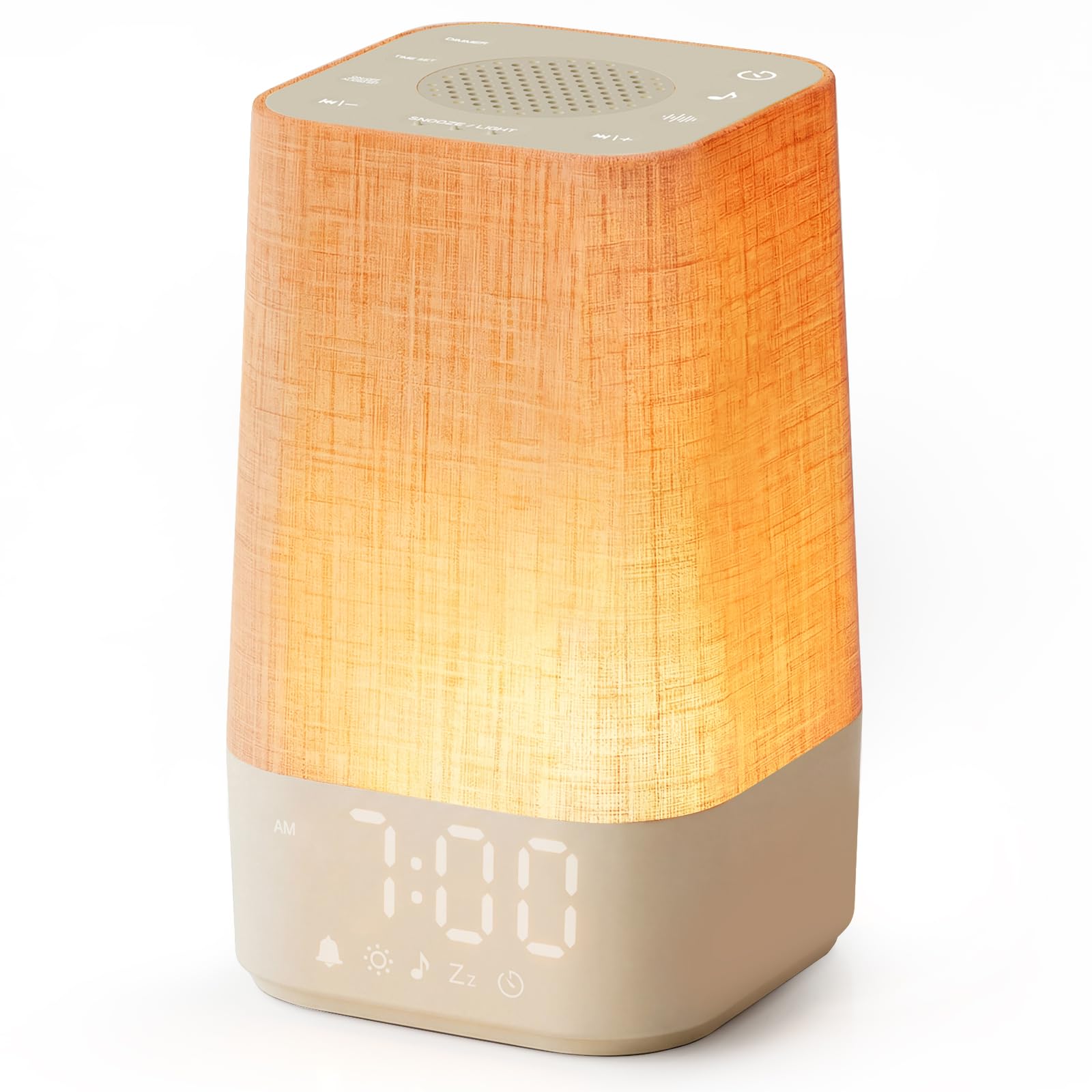
This sunrise alarm clock takes a fundamentally different approach — instead of blasting you awake, it uses a 10–60 minute simulated sunrise to gently transition your brain from sleep to wakefulness. For ADHD brains that experience severe morning grogginess or alarm-induced anxiety, this gradual light ramp-up can significantly reduce the cortisol spike of a sudden loud beep. The 13-level brightness control and 32-level volume adjustment give you precise control over the transition intensity.
The device doubles as a white noise machine with 30 sounds total — 10 white noise variants (including pink and brown noise) and 20 nature sounds like birdsong, rain, ocean waves, and a crackling fire. A 30–480 minute sleep timer lets you fall asleep to sound and have it automatically shut off. The 5-level display dimmer, backlit buttons, and memory function that retains your last settings between sessions all reduce friction for ADHD users who struggle with complex menus or remembering which settings they prefer.
At 3.74 x 3.74 x 7.08 inches, the vertical cylinder shape takes up minimal bedside real estate. The main limitation for heavy sleepers is that the alarm sound itself tops out at a moderate level — it will not compete with a 115 dB dedicated loud alarm. Users who need a gentler start to their day and can wake to moderate sounds plus light will find this ideal, but those who sleep through fire alarms should look at the vibration-based options instead.
Why it’s great
- 10–60 minute adjustable sunrise simulation for gradual waking.
- 30 sound options including white, pink, brown noise and nature tracks.
- Sleep timer up to 480 minutes with memory function.
Good to know
- Maximum alarm volume moderate — not for extreme heavy sleepers.
- Multiple button presses with hold functions can be confusing at first.
5. Acedeck Super Loud Alarm Clock
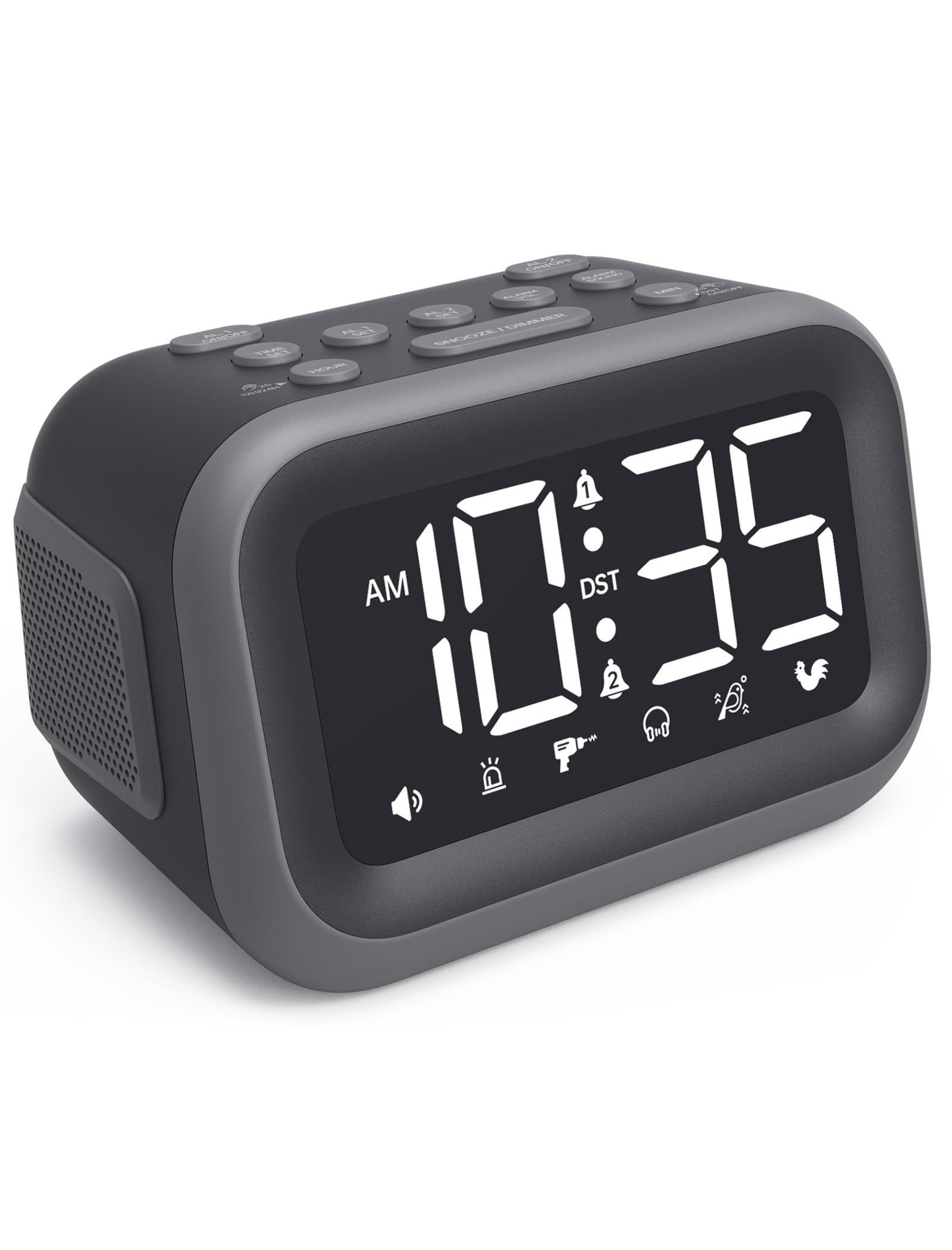
The Acedeck Super Loud Alarm Clock delivers 115 dB of sound — the highest raw decibel rating on this list — in a simple, no-frills package at a budget-friendly price point. The 4.2-inch LED display is large and clear, with adjustable brightness that can be dimmed low enough to not disturb sleep. Six different alarm sounds give you variety, from sharp tones to gentler options, and the gradual volume increase helps ease the transition before hitting full blast.
Dual alarms are a welcome feature for ADHD users with varying schedules — set one for weekdays and another for weekends, or stagger alarms for a partner. The alarm memory system uses AAA batteries to retain your settings during a power outage, and a built-in USB charging port lets you top up your phone overnight. At 4.8 x 3.15 inches, it’s compact enough for cramped nightstands but large enough to read without glasses.
The main trade-off is the absence of a bed shaker or vibration component — this is purely an audio-based wake-up. For ADHD users who sleep through loud sounds or need physical stimulation, this alone may not be sufficient. Additionally, the AAA batteries only backup settings, not power the alarm itself, so it must stay plugged in. For a straightforward, extremely loud sound-based alarm at a minimal investment, this is an effective entry point.
Why it’s great
- 115 dB maximum volume — loudest audio alarm in this guide.
- Large 4.2-inch LED display with adjustable brightness.
- Dual alarms and USB phone charging port.
Good to know
- No bed shaker or vibration component included.
- AAA batteries only backup settings, not alarm power.
6. Hatch Baby Sound Machine, Night Light, Alarm Clock
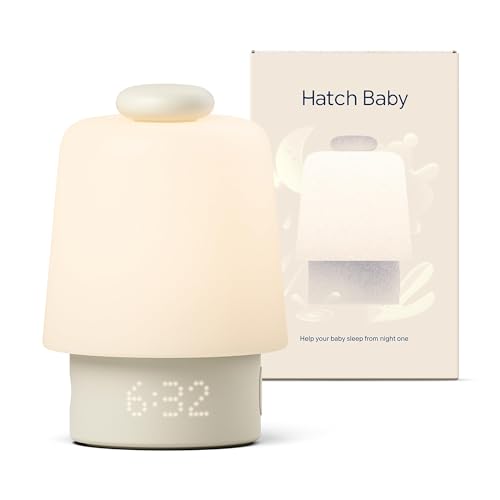
The Hatch Baby is fundamentally different from every other device here — it’s a Wi-Fi and Bluetooth-connected smart device designed for building sleep routines rather than just blasting you awake. You control everything through the Hatch Sleep app, which lets you customize light colors (over 20 options), sound selections (white noise, pink noise, nature sounds, stories, and lullabies), and create schedule-based programs that change throughout the night. For ADHD users, the ability to automate bedtime wind-down and morning wake-up sequences removes the need to manually adjust settings every day.
The Time-to-Rise feature uses a color-changing light to signal when it’s acceptable to get out of bed — a visual cue that can help with time blindness and reduce early-morning decision fatigue. The physical controls are intuitive: a large top button to start or stop favorites, a volume dial on the side, and a night light button for late-night adjustments without reaching for your phone. The companion app also includes access to sleep consultants and guides, adding a layer of behavioral support that extends beyond hardware.
The main limitation is volume — the Hatch Baby is not designed as a loud alarm clock. Its maximum sound output is moderate, intended for gentle waking rather than forcing heavy sleepers out of bed. It also requires a stable Wi-Fi connection and stays plugged in at all times. For ADHD users who respond well to routine cues and gentle transitions rather than brute-force wake-ups, and who are willing to invest in an ecosystem, the Hatch Baby supports long-term habit formation in a way that traditional alarms cannot.
Why it’s great
- App-controlled routines automate bedtime and wake-up sequences.
- Time-to-Rise color-coded light helps with time blindness.
- Over 20 light colors and extensive sound library including stories.
Good to know
- Sound volume is moderate — not for extreme heavy sleepers.
- Requires stable Wi-Fi and stays plugged into AC power.
7. Pavlok Shock Clock 3

The Pavlok Shock Clock 3 represents the most aggressive option for ADHD users who have literally tried everything else and still sleep through it. This wearable wristband delivers a three-stage wake-up sequence: gentle vibration, followed by an escalating beep, and finally a safe, adjustable “zap” — a mild electrical stimulus similar to a TENS unit. The zap is configurable in the companion app from subtle to strong, designed to be startling enough to break through deep sleep without being painful. For individuals with severe sleep inertia who miss morning classes or work, this can be a genuine lifeline.
Beyond the alarm, the app includes cognitive challenges like solving a QR code puzzle or performing jumping jacks to turn off the alarm — actions that require getting out of bed and engaging your brain, defeating the autopilot snooze reflex common in ADHD. The smart alarm feature can track your sleep cycles and wake you during light sleep, making the transition less jarring. With an IP67 waterproof rating, you can wear it in the shower to ensure you cannot go back to bed. The 7-day battery life and 1-year warranty add practical reassurance.
The main concerns revolve around reliability: some users report that the app pairing can occasionally fail, leading to a missed alarm, and the wristband sizing may be uncomfortable for those with small wrists. The zap mechanism, while safe, requires a tolerance for electrical stimulation that not everyone is comfortable with. At a premium investment, it is not a casual purchase, but for ADHD users whose sleep depth defeats every other solution, the Pavlok Shock Clock 3 provides a unique and effective physical trigger that no standard alarm can match.
Why it’s great
- Three-stage wake-up: vibration, beep, and adjustable safe zap.
- App includes cognitive challenges (puzzle, jumping jacks) to defeat snooze autopilot.
- IP67 waterproof — wear in the shower to prevent going back to bed.
Good to know
- App pairing reliability can be inconsistent for some users.
- Wristband may be tight for very small wrists.
FAQ
Why do standard phone alarms not work for ADHD heavy sleepers?
Is a sunrise alarm clock loud enough for someone who sleeps through standard alarms?
What is the difference between a wired and wireless bed shaker?
Final Thoughts: The Verdict
For most users, the best alarm clock for adhd winner is the ANJANK Extra Loud because it combines a 112 dB front-facing speaker with a long-lasting wireless bed shaker, dual alarms, and extensive customization — covering both auditory and tactile wake-up channels in a single device. If you want a proven, budget-friendly workhorse with a wired shaker, grab the Sonic Bomb. And for the deepest sleepers who have exhausted every other option, nothing beats the wearable Pavlok Shock Clock 3 with its adjustable zap and cognitive challenges that force you out of autopilot.