
Our readers keep the lights on and my morning glass full of iced black tea. As an Amazon Associate, I earn from qualifying purchases.
Specs are compiled from manufacturer listings and verified buyer reviews and can change over time — please confirm the key details on the product page before buying.
You have probably figured out the frustrating truth: the biggest names in home security lock you into a monthly contract that quietly adds up to hundreds a year. That is the exact pain point a smart alarm system solves—you get real-time door and motion alerts, a blaring siren, and the ability to arm or disarm from anywhere, all without a recurring bill unless you want professional monitoring. Understanding which kit actually delivers reliable protection and which one is just a box of plastic is the difference between a safe home and a false sense of security.
I’m Min — the founder and writer behind Gadgets Feed. This guide is built by comparing the manufacturers’ published specifications and the patterns across verified customer reviews, so you get each pick’s real strengths and trade-offs instead of marketing spin.
Whether you are securing a small apartment or a multi-bedroom house, the best alarm system smart home puts you back in control—ditch the contracts and pick the kit that fits your life today.
Our Picks at a Glance

How To Choose The Best Alarm System Smart Home
The best alarm system for a smart home stays connected when you need it most. Here is what to look at.
Connectivity: Wi-Fi Only vs. Cellular Backup
A system that relies only on Wi-Fi is dead the second your router goes down or a thief cuts the line. Systems with a cellular backup—either built-in 4G/GSM or a slot for a SIM card—keep your alarm active and push alerts to your phone even during a blackout. If you live in an area with spotty internet, this feature should be a dealmaker.
The Siren: Decibels Tell the Real Story
A 95 dB siren (roughly as loud as a motorcycle engine idling) will wake you up and annoy a burglar. A 120 dB siren (close to the threshold of physical pain) is a genuine deterrent that forces an intruder to flee. The difference is significant, and for a standalone system without professional monitoring, the louder the better—it becomes your only first responder.
Monthly Fees: The Trap to Avoid
Most premium brands push a subscription for cloud recording or professional monitoring. The good news is that many mid-range kits offer full local functionality—instant app alerts, a loud siren, and push notifications—with zero recurring fees. If you are willing to self-monitor, you can keep your home safe without ever typing a credit card number again.
Quick Comparison
| Model | Best For | Piece Count | Siren Loudness | Connectivity | Amazon |
|---|---|---|---|---|---|
| Like-New Ring Alarm 8-Piece Kit★ Best Overall | Best Overall | 8 | — | Wi-Fi (cellular backup with plan) | Amazon |
| 15-Piece WiFi Home Security SystemBudget Champion | Budget Champion | 15 | 120 db | Wi-Fi (2.4 GHz) | Amazon |
| XUK Smart 4G/GSM/Wi-Fi 24-Piece KitTriple Connectivity | Triple Connectivity | 24 | 95 db | Wi-Fi + 4G/GSM | Amazon |
| PGST WiFi/4G 24-Piece Kit | Expandable System | 24 | 110 db | Wi-Fi + 4G/GSM | Amazon |
| PGST Wireless WiFi+GSM/4G 24Pcs | Color Screen Control | 24 | 110 db | Wi-Fi + 4G/GSM | Amazon |
| XUK WiFi Wireless 24-Piece Kit | Touch Screen | 24 | 120 db | Wi-Fi + 2G/4G | Amazon |
| PGST Wireless Home Alarm System | Easy Customization | — | — | Wi-Fi | Amazon |
| Arlo Home Security System | Compact Sensors | 8-in-1 sensors (5) | — | Wi-Fi (SecureLink) | Amazon |
| ADT Blu Security Starter Kit | Pro Monitoring Option | 5 | — | Base: Cellular Backup, Accessories: Bluetooth | Amazon |
| Ring Alarm 14-Piece Kit | Full Home Coverage | 14 | — | Wi-Fi (cellular backup with plan) | Amazon |
| SimpliSafe 11-Piece Kit Gen 3 | Camera Included | 11 | 95 db | Wireless (cellular backup with plan) | Amazon |
In‑Depth Reviews
1. Like-New Ring Alarm 8-Piece Kit (newest model)
Our pick — over 4.5★ from 800+ verified ratings; the strongest balance of quality and price.
This crowd favorite turns a 45-minute setup into real confidence.
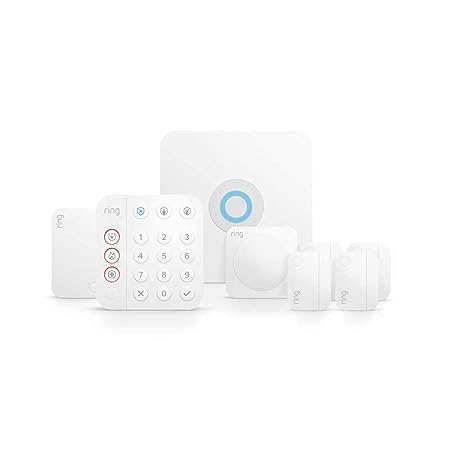
This 8-piece kit is made for a 1-2 bedroom home, and what wins people over is how it just works—functionality is the top praise among hundreds of owners. The base station creates the network, while the keypad lets you arm and disarm with a code. Four contact sensors monitor doors and windows, and the included motion detector is pet-friendly (it ignores small animals so you do not get false alarms from a cat strolling by). A range extender ensures the signal reaches every corner.
The crowd gives this the top spot by a wide margin—4.7 stars from nearly a thousand ratings—and the refurbished unit arrives tested to work like new. The Ring app gives you instant push alerts when a sensor trips, and you can add a Ring Protect plan later for cellular backup and professional monitoring if you want it. Buyers report that the adhesive mounting makes installation a single-person job without tools.
The trade-off is clear: to get the full feature set (remote arming, cellular backup), you eventually pay for a subscription. As a standalone local alarm, though, it provides everything a smaller home needs.
What Owners Love Most
- Super easy setup—owners mention 45 minutes flat with the app guiding every step.
- Pet-friendly motion detector avoids false triggers from animals.
- Expandable with additional sensors sold separately whenever you need more coverage.
A Fair Caveat
- Remote control and cellular backup require a paid Ring Protect subscription.
- As a refurbished unit, it ships in a plain box—but function is guaranteed.
Reach for this if: you want the most trusted ecosystem in DIY home security with a proven track record.
A different path if: you want a system that never asks you for a monthly fee—look at the no-subscription kits below.
2. 15-Piece WiFi Home Security System
This 15-piece arsenal makes the loudest statement on this list for under a hundred bucks.
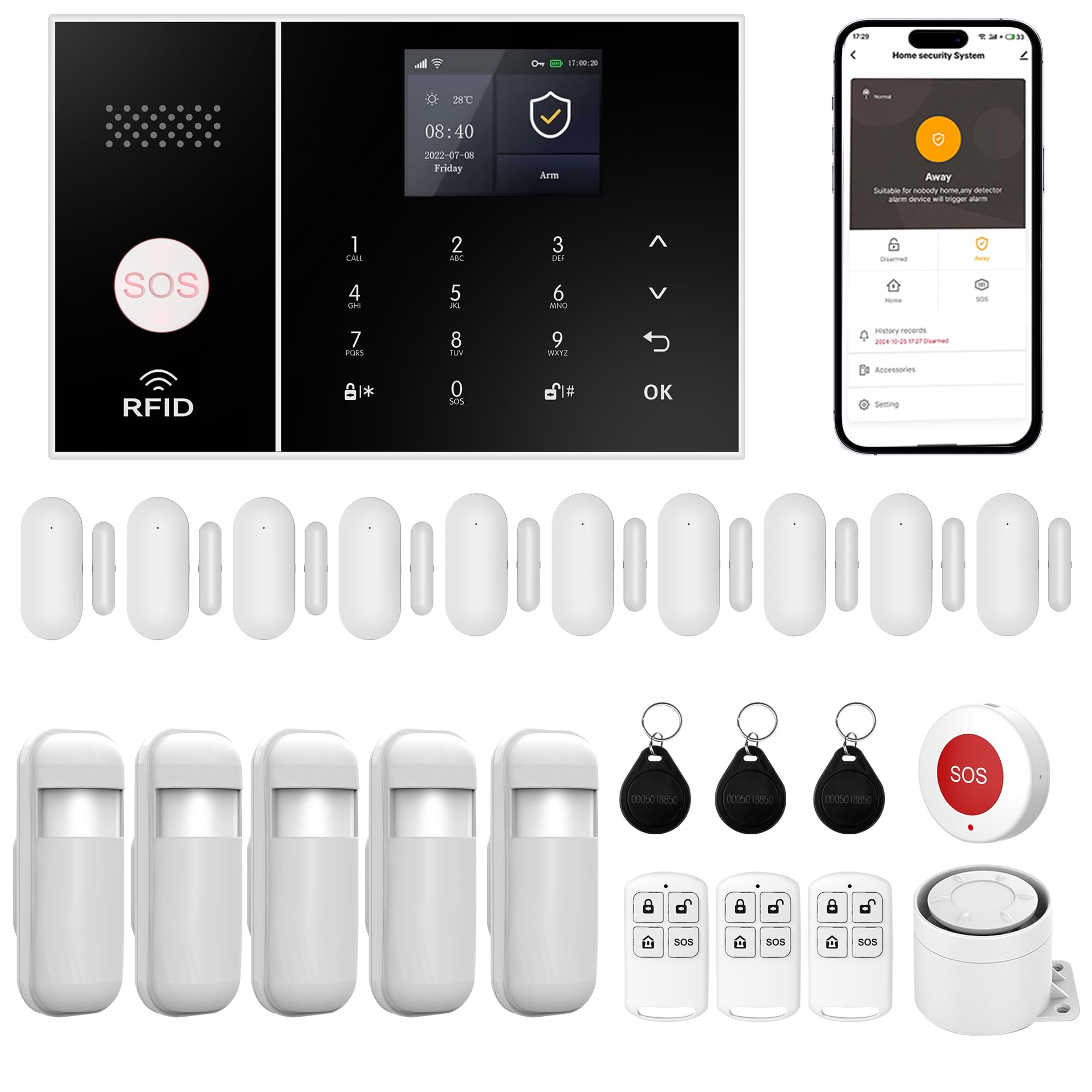
This kit is built for the buyer who wants comprehensive coverage without ever paying another cent. It packs 10 door sensors, one motion sensor, a keypad, two remote controls, and the base station—enough to cover every exterior door and a few key windows. The 120 dB siren is the loudest in this roundup; it is genuinely painful to be near, and that is exactly the point—it forces an intruder to flee immediately. An 8-hour backup battery keeps the system live during a power cut.
Buyers are overwhelmingly positive—setup is the most-praised aspect, with many finishing in under an hour. The system requires a 2.4 GHz Wi-Fi network (it does not support 5 GHz), which can trip up people with newer mesh routers, but the fix is simple: enable the 2.4 GHz band or grab a cheap extender. The app sends real-time alerts, and it works with Alexa for voice control. This kit includes 15 sensors, while the Ring 8-piece kit has 8 sensors, and that sheer piece count gives it an edge for covering a larger home.
The catch is that, unlike the Ring, this system does not have a dedicated cellular backup option—if your Wi-Fi is out, the siren still works but you will not get a phone alert.
Why It Stands Out
- Zero monthly fees—ever. You own the system outright.
- 15 pieces for less than many 8-piece kits cost.
- 120 dB siren—louder than most competitors and a real deterrent.
Know Before You Buy
- Only works on 2.4 GHz Wi-Fi; 5 GHz networks need a configuration change.
- No cellular backup—alerts stop if the internet goes down.
Best for: the budget-conscious homeowner who wants maximum sensor coverage and a siren that scares, with zero recurring costs.
Look elsewhere if: you need a system that can still phone home during a blackout—choose a kit with GSM/4G backup.
3. XUK Smart 4G/GSM/Wi-Fi Home Security Alarm System, 24-Piece Kit
This kit keeps talking even when the internet goes silent.
This is the system you pick if you cannot afford a single point of failure. It connects over 2.4 GHz Wi-Fi, but also accepts a 4G SIM card for SMS and call alerts—so if the Wi-Fi drops, you still get a phone call when a sensor trips. The 24-piece kit includes door sensors, PIR motion detectors (with a 110° detection angle and a range of 8–12 meters), remote controls, RFID tags, and a powerful siren. That PIR sensor covers a very wide arc, meaning one unit can monitor an entire corner of a room.
The physical tamper protection is a nice touch: if someone tries to rip the sensors off the wall, the system triggers an alarm that requires a code to disarm. There is also a one-touch SOS button for emergencies. Compared to the simpler 15-piece kit above, this one adds a 4G/GSM layer and RFID tags—but the siren is quieter at 95 dB vs. 120 dB. The lower rating (3.8 stars) reflects some mixed experiences with setup support, but for the price, the triple connectivity is rare.
Customers note that it alerts your phone during power outages to let you know the battery backup has kicked in, which is a thoughtful detail.
Triple Connectivity: Wi-Fi plus 4G/GSM means you are never offline—you get SMS, app alerts, and phone calls even when the router is dead.
Choose this if: your home has spotty internet and you need a system that independently calls you during an alarm.
skip it if: you want the loudest siren on the block—the 95 dB output is adequate but not the scare-factor of a 120 dB unit.
4. PGST WiFi/4G 24-Piece Apartment Alarm System
This 24-piece system can grow to 100 sensors without ever charging a subscription.
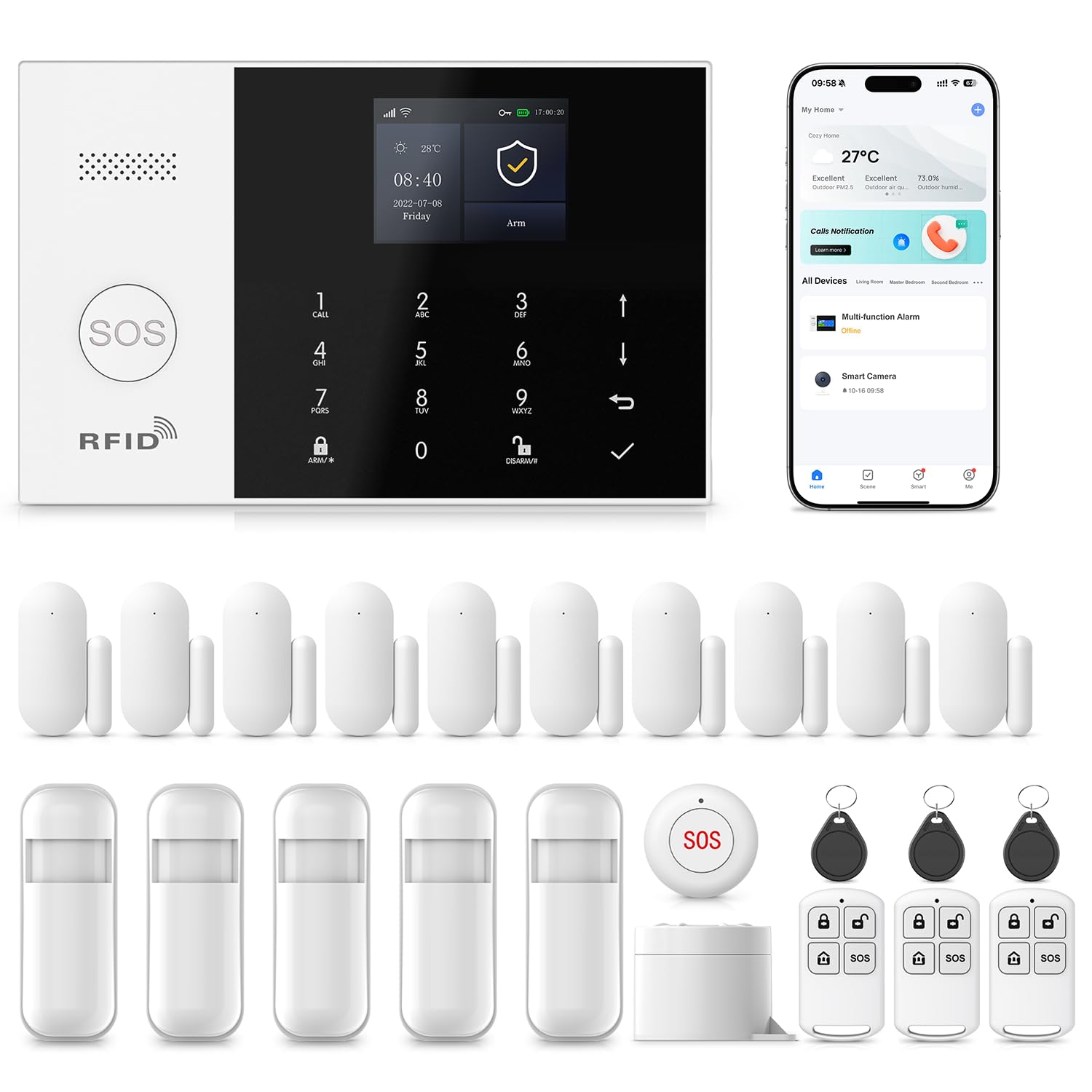
This alarm from PGST is built on the Tuya and Smart Life app platforms, giving you a familiar interface for controlling and naming every sensor. The big story here is expandability: the system offers 100 wireless storage locations, so you can add motion detectors, door sensors, outdoor alarms, and SOS devices as your needs change.
The hub runs on Wi-Fi (2.4 GHz) and also accepts a 4G SIM card for failover—if the internet goes out, you still get phone and SMS alerts. The siren hits 110 dB, which splits the difference between the mild 95 dB and the punishing 120 dB units. It includes a compact emergency SOS button, ideal for elderly family members. Some owners note that the PIR sensors and door sensors are straightforward to pair, though the overall reliability feedback is mixed—a few buyers found the setup instructions sparse. At 9.6 ounces, the hub is one of the lightest on the list.
For the buyer who wants to gradually build a total security net without being locked into an ecosystem, this is the most future-proof option in the mid-range.
100-Slot Capacity: You can add up to 100 individual sensors to this one hub—plenty of room for a large house.
Best for: a buyer who wants to start with a strong kit and expand sensor-by-sensor over time, all with no monthly fee.
Think twice if: you want a simple to use out-of-the-box setup—this system rewards patience and some tech comfort.
5. PGST Wireless Alarm System 24Pcs (WiFi+GSM/4G)
This 24-piece kit talks back from a color touchscreen hub.
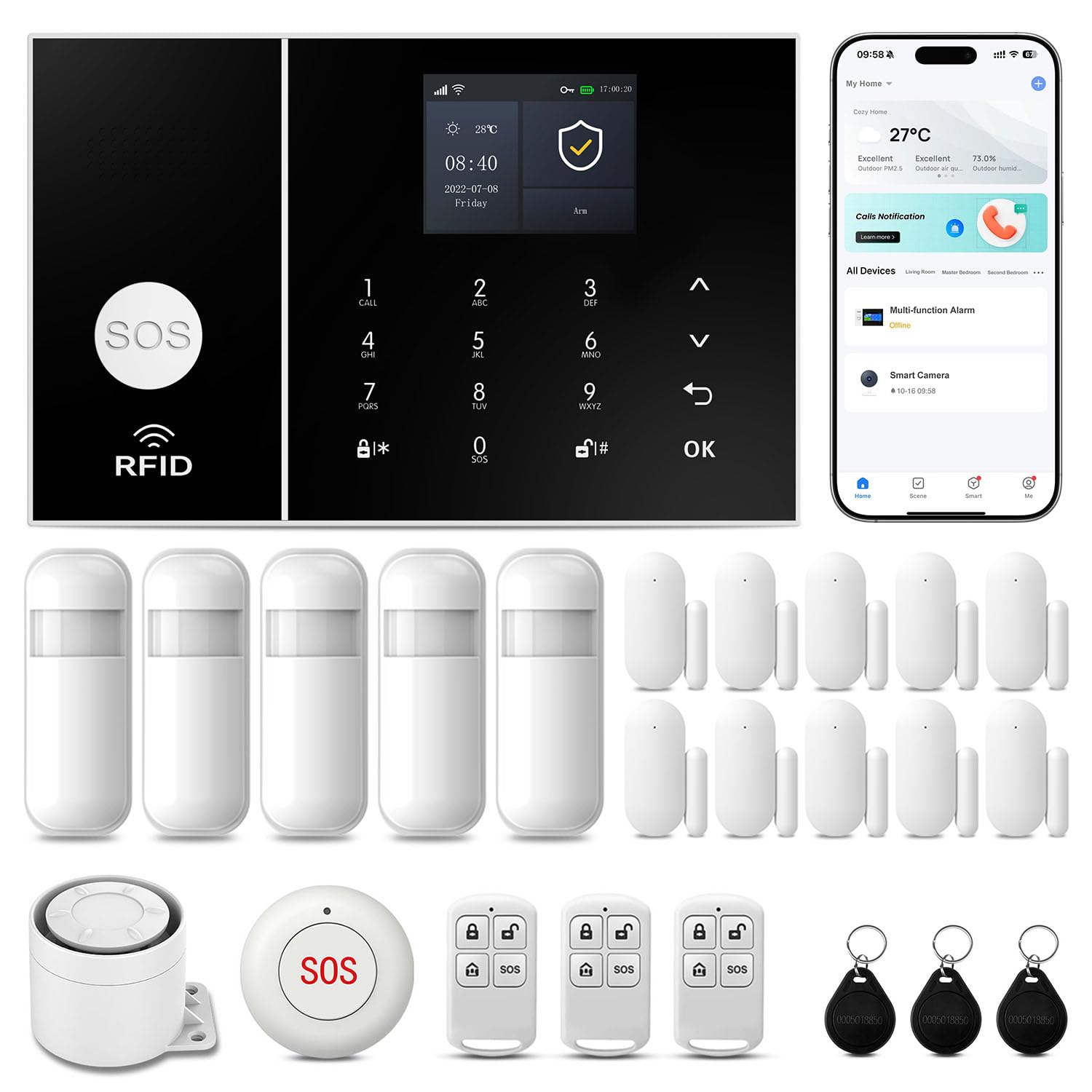
This PGST system differs from its sibling above mostly through the hub’s color screen display—it shows system status, time, weather, and date in 10 languages. That makes it more approachable for family members who are not app-first. The Wi-Fi plus 4G/GSM connectivity again provides a dual safety net: if Wi-Fi drops, a SIM card keeps the phone and SMS alerts flowing. The siren hits 110 dB.
The physical tamper protection is a strong feature—if someone removes the hub without disarming first, it triggers an alarm and immediately sends an alert to your phone. The kit includes the SOS button and remote controls, so it works well for households with elderly members who might need a one-press assistance alert. Buyers praise it for giving instant phone alerts to designated contacts. A recurring negative point is that Alexa connectivity is not always reliable, and the setup can test your patience with tiny font instructions.
Color Touch Hub: The 4.3-inch screen shows weather, time, and alarm status at a glance—great for non-smartphone users.
Reach for this if: you want a central display that everyone in the family—including elderly parents—can read and use.
pass on it if: you need flawless Alexa integration; some owners find the voice control spotty.
6. XUK WiFi Wireless Alarm System 24-Piece with 4.3″ Touch Screen
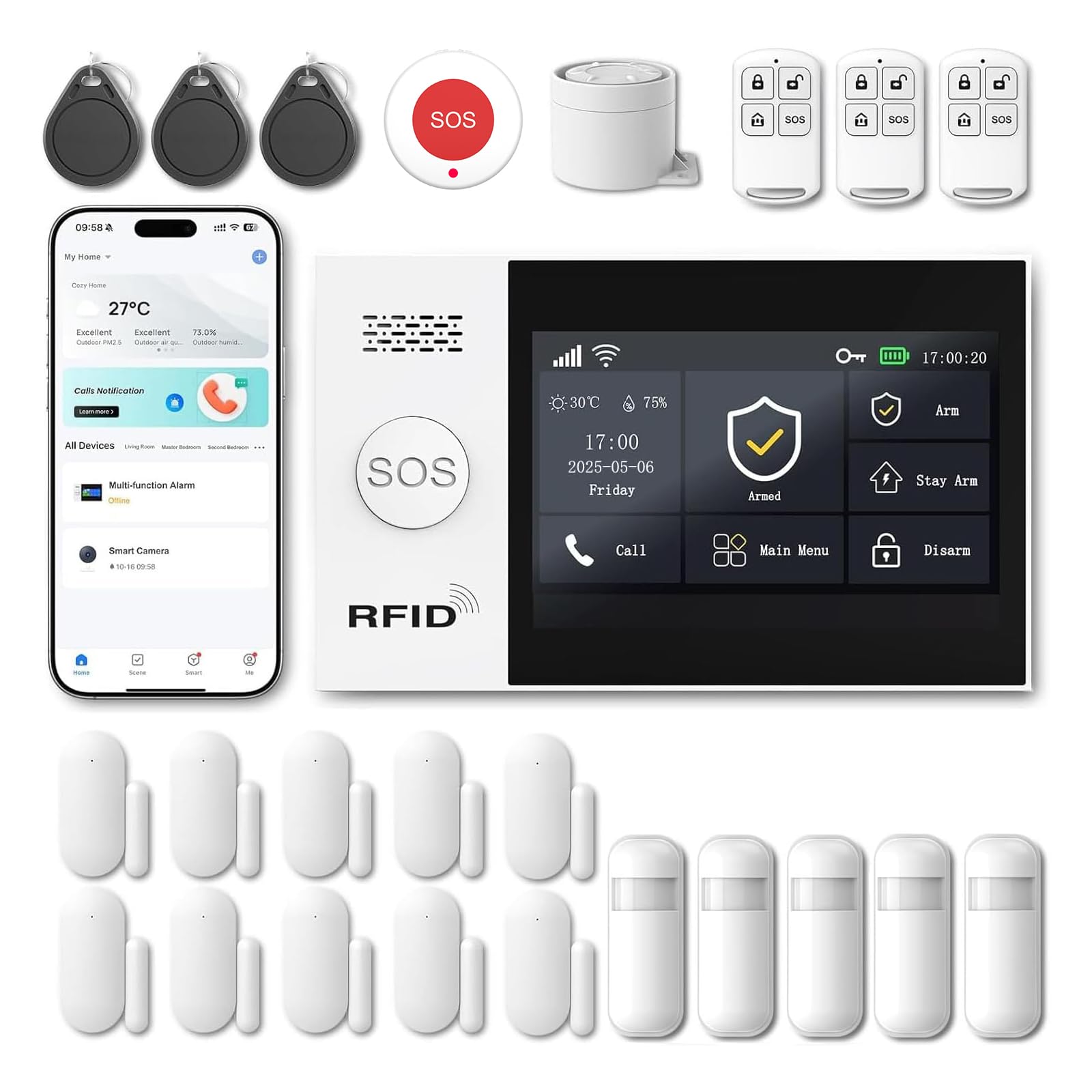
This 24-piece kit matches a loud siren with a vivid touchscreen hub.
This XUK system is remarkably similar to the PGST color-screen unit, but it packs a 120 dB siren—tied for the loudest on this list—and boasts a 500-meter wireless range between the hub and sensors, which is excellent for large or multi-story homes. The 4.3-inch color touch interface replaces a traditional keypad, and you can also control the system via the app, remote, or RFID cards. It works with Alexa and Google Assistant.
It supports up to 100 sensors and 10 RFID keychains, so it is a fully scalable platform. The backup battery ensures it stays on during blackouts. However, the mixed reliability feedback (3.5 stars from 125 ratings) is worth noting. One early adopter reported the siren triggering uncontrollably during setup, and another found the configuration confusing. For the price, the spec sheet is generous, but the experience can be rougher than more polished brands like Ring or SimpliSafe.
500m Range: The wireless signal between hub and sensors covers 500 meters, ideal for large homes where standard kits drop out.
Best for: a tech-enthusiast who wants maximum hardware specs—loud siren, long range, big screen—and is willing to work through some setup quirks.
Look elsewhere if: you want a system that works perfectly on the first try without troubleshooting; the more polished Ring or SimpliSafe kits are smoother choices.
7. PGST Wireless Home Alarm System (A107F)

This A107F panel gives you a clear touchscreen and room to grow.
This is the base model of the PGST A107F platform—a hub with a color display, plus the ability to add sensors as you need them. Reviewers point out that the motion detectors are sensitive without causing false alarms, and the external siren is loud enough to hear from outside. The system works with the Tuya app for push notifications and phone alerts. An often-cited positive is that the remotes work reliably throughout a 2,200-square-foot home.
The honest caveat: the documentation is thin, and the SMS arm/disarm feature can be finicky depending on your mobile carrier. One owner called it a system that “works but requires significant time” to set up correctly. For a buyer comfortable with a little homework, the hardware quality is solid for the price, and the 1-year warranty adds confidence.
DIY-Friendly Panel: The A107F display shows system status clearly, and motion sensors can be set to doorbell mode—handy for the front entrance.
Choose this if: you are comfortable with a technical setup and want an expandable Tuya-based system with a good display.
it’s not for you if: you want a system that works immediately with zero manual reading—stick with Ring or SimpliSafe.
8. Arlo Home Security System (SS1501)
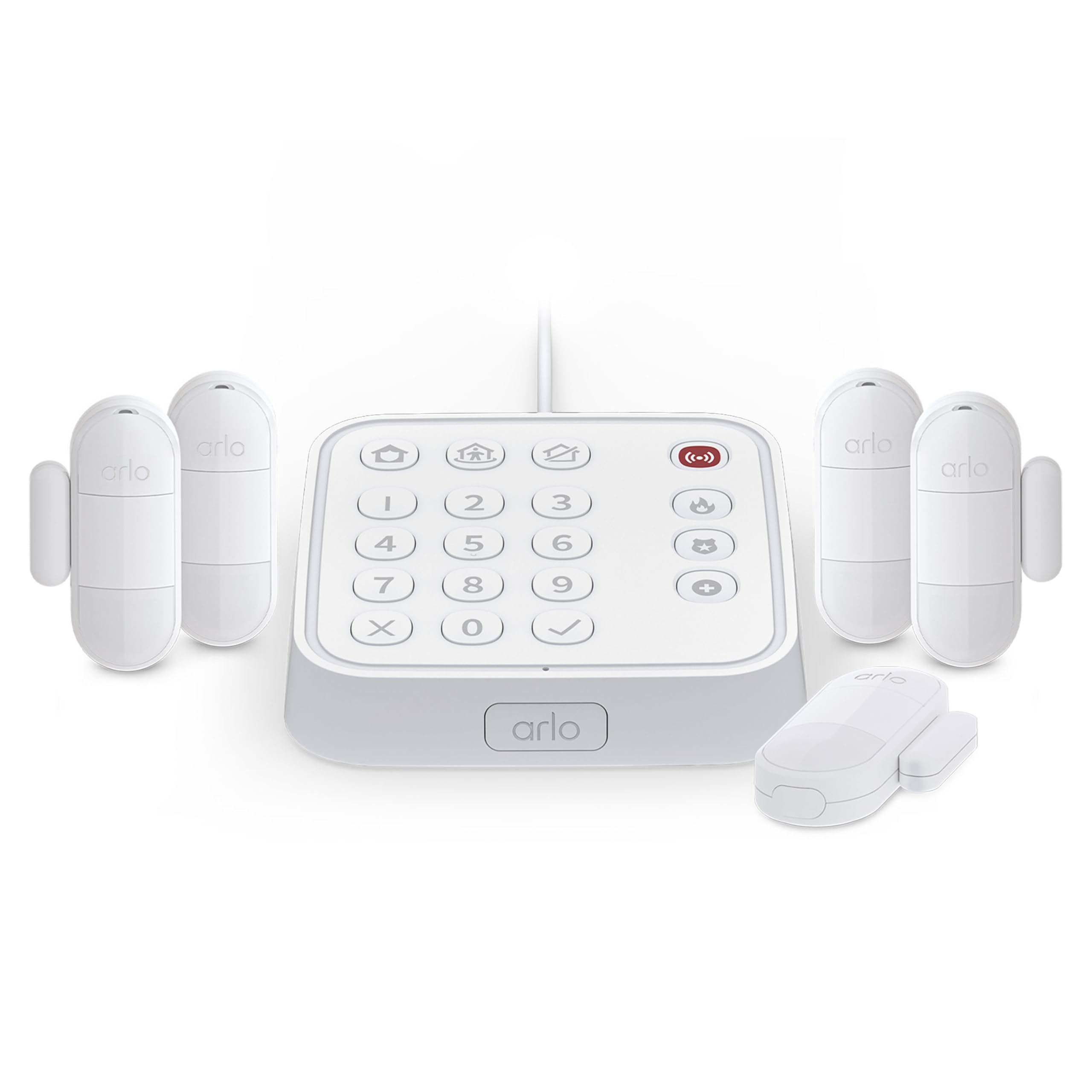
The system that stuffs eight sensing functions into one sensor the size of a key fob.
Arlo takes a different approach: instead of giving you many single-purpose sensors, it gives you five 8-in-1 sensors that each detect motion, door/window opening, temperature, leaks, and more. That means you can cover a door, a window, and a pipe in the same room with one device. The keypad itself is also a sensor hub—it has a built-in siren, motion detector, and smoke/CO alarm listening.
The app is intuitive, and buyers highlight how fast the setup is. The Arlo SecureLink technology claims extended range and better battery life. That said, to open up the full punch of features—including video cloud storage and professional monitoring—you need a paid Arlo Secure plan. This kit is best for someone already in the Arlo ecosystem, but as a standalone alarm, the sensor versatility is class-leading.
8-in-1 Sensors: One device covers motion, open/close, temperature, and leak detection—fewer units to mount, more coverage per square foot.
Best for: those who want minimal hardware on the walls and maximum function per sensor, especially in a smaller home or apartment.
Think twice if: you want a self-contained system with no subscription—you will need a plan for the full Arlo cloud features.
9. ADT Blu Security Starter Kit
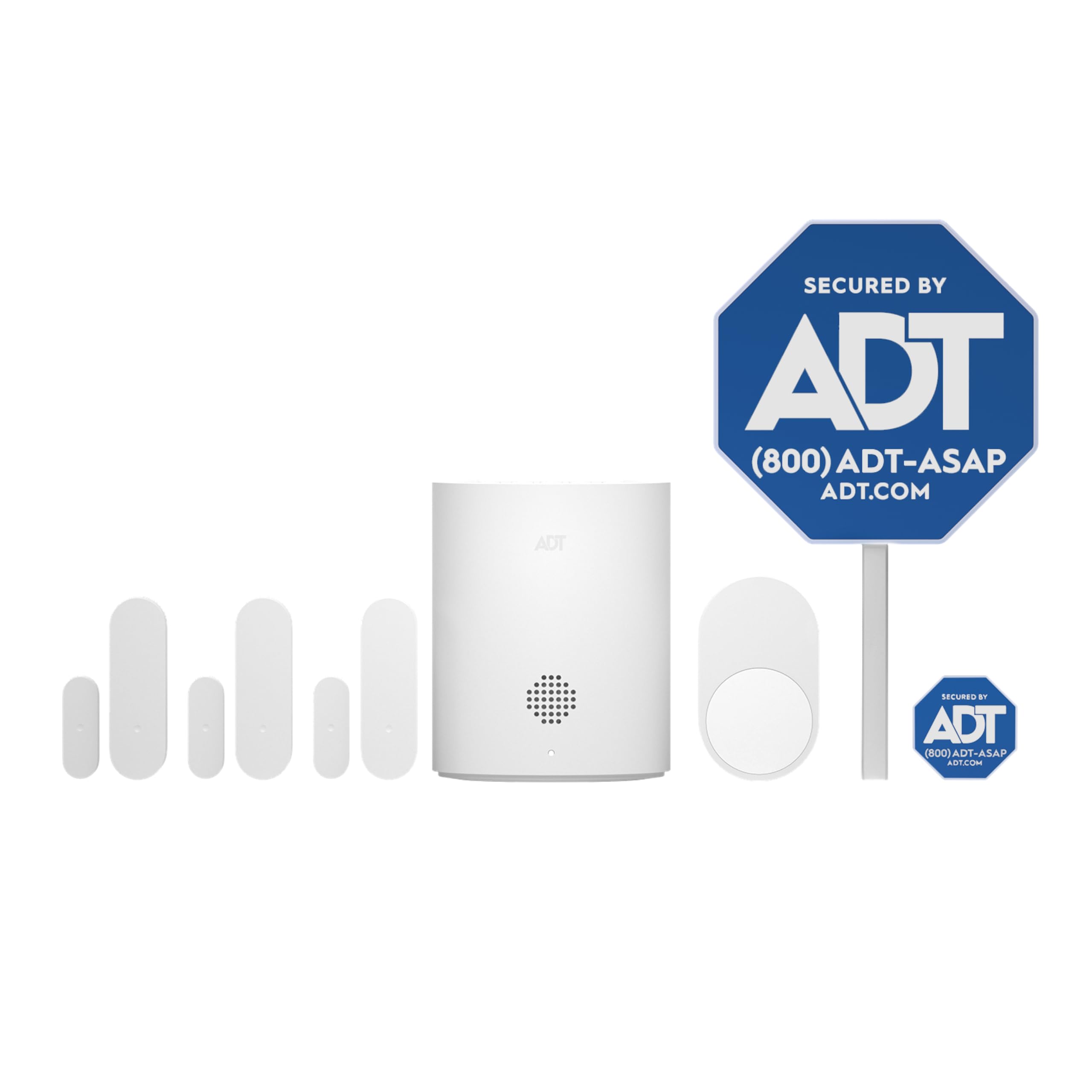
The name you have trusted for decades, now in a DIY starter box.
The ADT Blu Starter Kit includes a base hub with cellular backup, three door/window sensors, a pet-friendly motion sensor, a yard sign, and window stickers. Setup is a DIY adhesive job, and the ADT+ app walks you through pairing. The cellular backup in the base hub is a big plus—it keeps the system connected even if Wi-Fi is cut. You can use it as a local siren-only alarm with no plan, or subscribe to the Pro-Protect plan for 24/7 professional monitoring on a month-to-month basis with no long contract.
The starter kit is lean—only three contact sensors—so you will likely need to buy more for full coverage. A buyer who is a long-time ADT customer reported a frustrating setup experience with an invalid email error, so early adopters may hit rough edges. Still, for those who want ADT’s brand reliability without a multi-year commitment, this is a clean entry point.
Cellular Backup: The base hub has a built-in cellular connection, so the alarm stays active even when your home internet goes down.
Pick this if: you want the option of professional monitoring from ADT without locking into a long contract.
Pass if: you need a comprehensive system from the start—you will need to purchase additional sensors separately for full coverage.
10. Ring Alarm 14-Piece Kit (newest model)
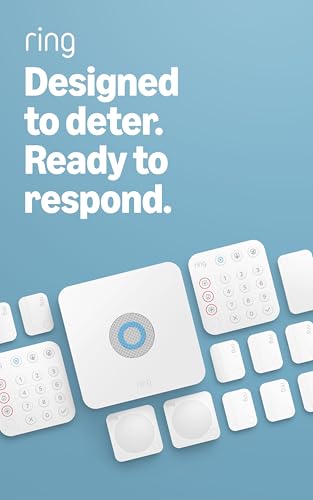
The 14-piece kit that is basically the larger, ready-for-anything sibling of the 8-piece.
For a 2-4 bedroom home, this kit is the logical upgrade over the 8-piece version. It includes a base station, two keypads, eight contact sensors, two motion detectors, and a range extender—enough hardware to cover every door, main window, and hallway in a typical house. The crowd backs it up: 4.6 stars from over six thousand ratings, making it the most-reviewed system on this list with a clear thumbs-up.
Buyers consistently praise the easy setup and the intuitive app. A very common positive note is the affordable optional monitoring— a month for professional response and cellular backup. That is significantly cheaper than traditional ADT plans. The two motion detectors use a pet-friendly algorithm, and with two keypads you can place one by the main entrance and another in the master bedroom. The only recurring complaint is that the entry delay volume cannot be adjusted, leading to a false alarm if you fumble the disarm.
8 Contact Sensors: That is eight doors or windows covered from the start—plus two motion detectors for interior rooms.
Reach for this if: you want the most popular, well-reviewed Ring system that covers a whole home without buying extra sensors immediately.
look elsewhere if: you want a no-subscription system—like the smaller Ring kit, the best features require a Protect plan.
11. SimpliSafe 11 Piece Wireless Home Security System Gen 3
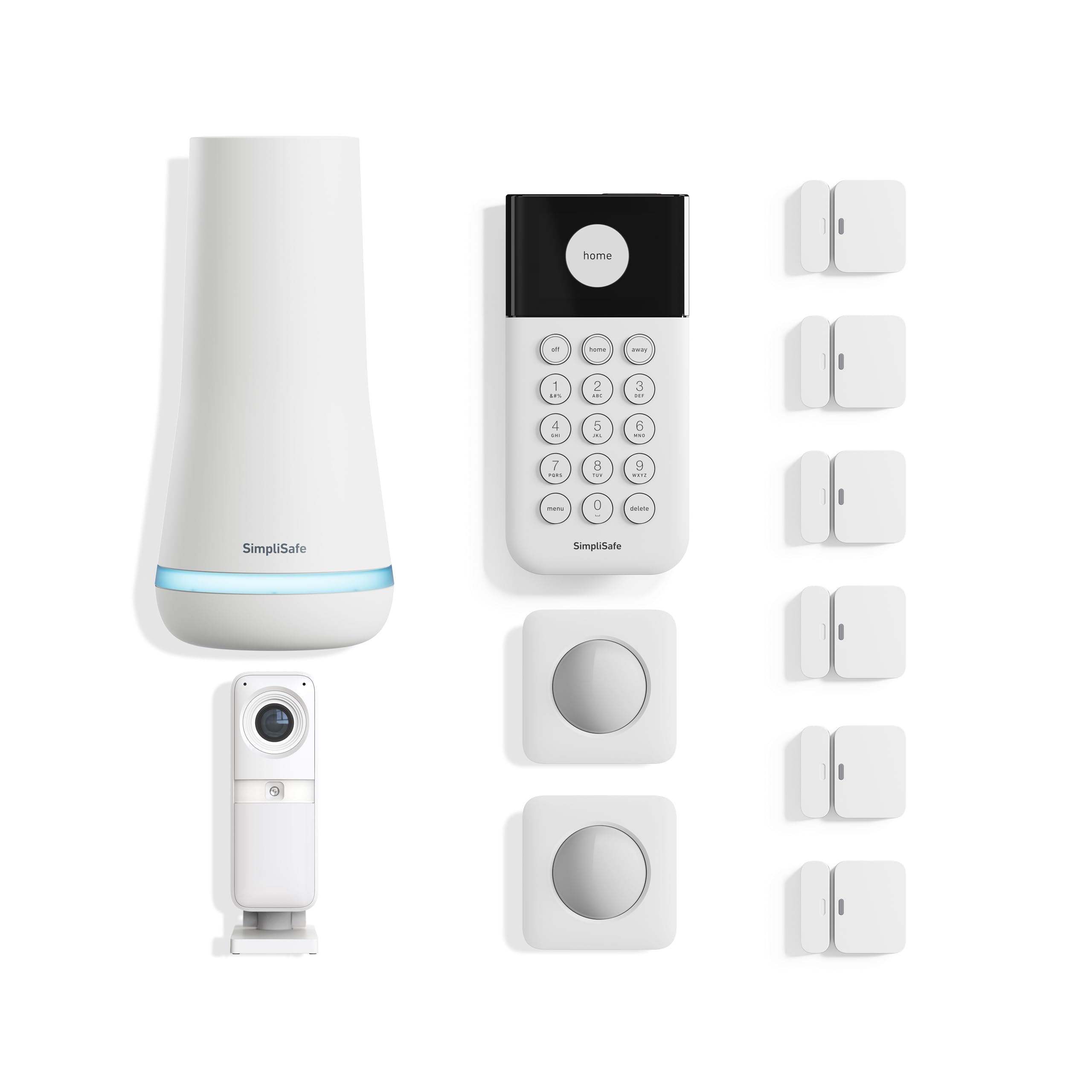
The system that pairs Gen 3 reliability with a wireless indoor camera for video verification.
The SimpliSafe Gen 3 is a direct competitor to Ring, and this 11-piece kit brings one advantage the Ring does not include in its box: a wireless indoor HD camera. That means you get visual verification during an alarm—monitoring agents can see the intruder and speak through the two-way audio. The kit also includes a base station with a 24-hour backup battery, a keypad, two motion sensors (with a 35-foot detection range and 90-degree field of view, and pet-friendly up to 60 pounds), and six entry sensors.
Buyers consistently highlight how easy it is to install—one owner set up three motion detectors in an hour. The app is intuitive, and the professional monitoring plan (optional, no contract) allows agents to act on an alarm within 5 seconds. The catch is the siren is only 95 dB—quieter than the punishing 120 dB kits. And the camera quality is not as sharp as a dedicated security cam, but it is enough for identification. Without a subscription, the system still works as a powerful local alarm with app control.
What Makes It Unique
- Includes a wireless indoor HD camera from the start for video verification.
- Base station battery lasts up to 24 hours—one of the longest backup times.
- Pet-friendly motion sensors ignore pets under 60 pounds.
An Honest Trade-Off
- The 95 dB siren is on the quieter side of this list; suitable for a home but not a head-turning deterrent.
- To get the video verification and 5-second agent response, you need the Fast Protect monitoring plan.
Best for: the homeowner who wants a camera in the box and the fastest professional monitoring response available.
Look elsewhere if: you want the loudest possible siren without a subscription—the 15-piece kit at 120 dB is a better fit.
Understanding the Specs
Sirens: Loudness in Decibels
The decibel (dB) rating of the siren tells you how much of a deterrent it really is. A 95 dB siren is roughly as loud as a bulldozer idling—it will wake you up and alert neighbors, but an intruder might not flee immediately. A 120 dB siren is close to the threshold of physical pain (think a jet engine at 100 meters). For a system without professional monitoring, the louder the siren, the more it acts as your on-site first responder.
Cellular Backup: Why Wi-Fi Alone Is Not Enough
A system that relies only on Wi-Fi is vulnerable: a power outage, a router failure, or a burglar cutting the internet cable kills your alerts instantly. Cellular backup (often labeled 4G/GSM) uses a SIM card to independently send SMS and phone call alerts even when Wi-Fi is dead. Some systems, like the Ring family, offer this only as part of a paid subscription. Others, like the XUK and PGST kits, provide a SIM slot so you can buy a cheap pay-as-you-go data plan for around a month—keeping the whole system free of a recurring monitoring contract.
FAQ
Do I have to pay a monthly fee for a smart alarm system?
What is the difference between Wi-Fi and 4G/GSM connectivity?
Will a smart alarm system work with Alexa or Google Home?
Can I use a smart alarm system in an apartment?
How many sensors do I need for my home?
Do smart alarm systems work when the power goes out?
What does “pet-friendly” mean for a motion sensor?
Can I add cameras to my smart alarm system later?
Why do some systems only work on 2.4 GHz Wi-Fi?
How long do the sensor batteries last?
Final Thoughts: The Verdict
For the majority of shoppers, the best alarm system smart home winner is the Like-New Ring Alarm 8-Piece Kit because it combines the most intuitive setup, the highest crowd-sourced approval rating (4.7 stars from nearly a thousand ratings), and an ecosystem that grows with you via the Ring Protect plan. If you want a loud siren with zero fees forever, grab the 15-Piece WiFi Home Security System—its 120 dB blare and 15-piece count are class-leading at this tier. And for the largestSimpliSafe 11-Piece Gen 3 because it bundles a wireless indoor camera with Gen 3 reliability and the fastest optional professional monitoring response.
How We Picked
We do not accept paid placement. Every pick is matched to a real buyer and a real use-case; we do not hands-on test units.
Sources & Methodology
Specifications: manufacturer listings and product documentation. Review insights: verified customer reviews, as of July 2026. Pricing: not shown on this page (it changes often); check the current price via the retailer link.
As an Amazon Associate, Gadgets Feed earns from qualifying purchases. This does not affect which products we feature.