
Our readers keep the lights on and my morning glass full of iced black tea. As an Amazon Associate, I earn from qualifying purchases.
Specs are compiled from manufacturer listings and verified buyer reviews and can change over time — please confirm the key details on the product page before buying.
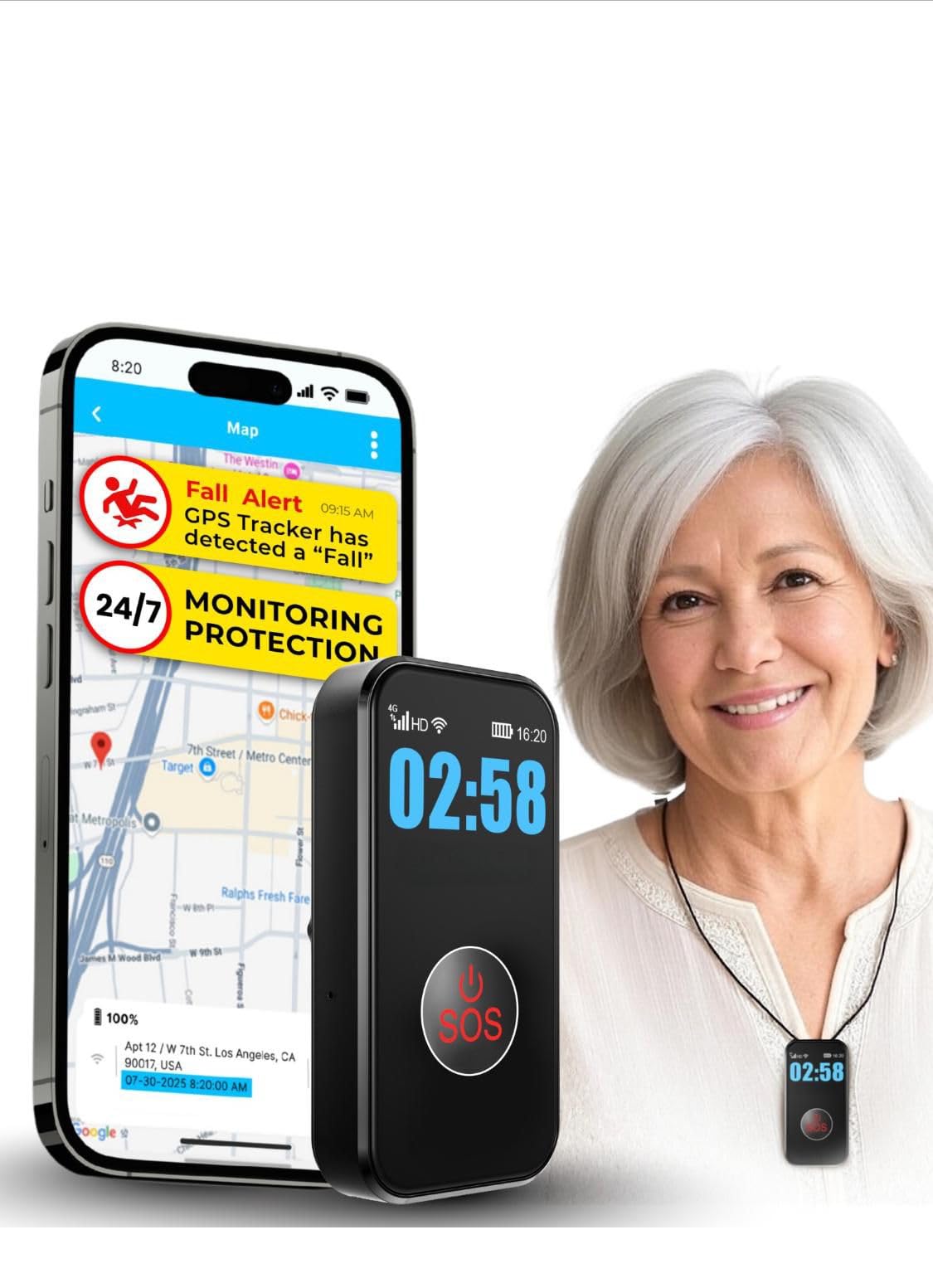
When your loved one falls and can’t reach a phone, an alert necklace needs to work instantly. The difference between a pendant that saves minutes and one that collects dust depends on three things: battery life (so it stays charged), fall detection (so it acts without a button press), and a clear line to a real person or a family member. This guide covers six alert necklaces for seniors — from budget-friendly monitors with family-only alerts to premium devices with 24/7 professional monitoring — so you can match the right level of protection to your situation.
I’m Min — the founder and writer behind Gadgets Feed. This guide is built by comparing the manufacturers’ published specifications and the patterns across verified customer reviews, so you get each pick’s real strengths and trade-offs instead of marketing spin.
Choosing the right life-saving pendant means balancing battery life, monthly cost, and how alerting works — and this guide breaks down the alert necklace for seniors market to help you decide which one is worth buying.
Our Picks at a Glance

How To Choose The Best Alert Necklace For Seniors
An alert necklace is a simple device on the surface, but the specs under the hood decide whether it actually helps in an emergency. Here is what real buyers tell us matters most.
Fall Detection vs. Manual SOS Button
The core question: does the necklace act on its own? A manual SOS button requires the wearer to press it. That works great if your loved one is awake and aware. But if a fall leaves them unable to move their arms, auto fall detection is the only way help gets called. Every product on this list includes fall detection — but sensitivity and reliability vary. Some pendants send a fall alert to a monitoring center; others notify family directly. Your choice depends on whether the wearer lives alone or has a caregiver nearby.
Battery Life — The Daily Charge Trap
A pendant that needs nightly charging is a pendant that will be forgotten, and a dead necklace at the bottom of a drawer is zero help in a crisis. Look for a battery average life of 5 days or more. Reviewers consistently mention that “must be charged daily” is a real hassle, especially for seniors with memory issues. Longer battery life means fewer opportunities for the necklace to be left uncharged.
Monitoring Model: Family Direct vs. Professional 24/7
There are two approaches. Some necklaces (like the SecuLife) send alerts straight to pre-selected family members — no middleman, no monthly monitoring fee. Others (like the ADT and Smart Med Alert) connect you to a 24/7 professional call center that dispatches emergency services. The family-direct route usually costs less per month and puts you in control, but if your loved one lives alone, the call-center model from a trusted name like ADT adds a layer of urgency that a busy family member might miss. Factor in the monthly subscription cost before deciding — the range goes from around to a month.
Water Resistance and 24/7 Wearability
If the necklace comes off before a shower, it is not on when a fall happens in the bathroom. An IP67 rating means it is fully waterproof (submersible up to 1 meter), while “water-resistant” handles splashes but not submersion. For seniors who are active or bathe independently, IP67 is the gold standard.
Quick Comparison
| Model | Best For | Battery Life | Fall Detection | GPS Tracking | Amazon |
|---|---|---|---|---|---|
| SecuLife Medical Alert Pendant★ Best Overall | Family-direct alerts | 5 days | Automatic | Real-time + Geo-fence | Amazon |
| Smart Med Alert Cellular Necklace24/7 Monitored | 24/7 professional monitoring | 3-6 days | Automatic | Built-in GPS (4G LTE) | Amazon |
| FONIE GPS Medical Alert Mini Phone | Full two-way calling + tracking | 7 days | Automatic | Real-time GPS + Wi-Fi | Amazon |
| 321 Alert Mini X2 | 24/7 monitoring with a dock | 6 days | Automatic | GPS + 4G LTE | Amazon |
| Medical Guardian MGMini | Discreet style + omniSIM | 120 hours (5 days) | Automatic (add-on /mo) | GPS location updates | Amazon |
| ADT On-The-Go Mobile Medical Alert | 150-year brand trust + waterproof | 40 hours (< 2 days) | Automatic | GPS on 4G AT&T network | Amazon |
In‑Depth Reviews
1. SecuLife Medical Alert Pendant
Our pick — over 4★ from 150+ verified ratings; the strongest balance of quality and price.
The alert necklace that calls family directly and skips the monthly middleman fee.
This pendant is built for caregivers who want to be notified immediately without going through a call center. The big thing here is that the SOS button places a hands-free 2-way call straight to your pre-selected emergency contacts — not a monitoring operator. So if you are the one who wants to hear your loved one’s voice and decide the next step, this puts you in the driver’s seat. It uses 4G LTE cellular for connectivity (a SIM card is included), and the GPS tracking is real-time with geo-fence zones — meaning you set safe areas and get an alert if the wearer leaves them.
Battery life is listed at 5 days, though buyers report that with standard tracking settings it feels very reliable. One reviewer wrote: “Battery life, depending on tracking setting, is very reliable regardless.” The magnetic charging is a practical touch — one reviewer noted no “messing with which way the cord has to be plugged in.” The pendant is fully IP67 waterproof (protected against dust and immersion in 1 meter of water for 30 minutes), so showers and rain are no problem. At per month for unlimited fall alerts and live tracking, it undercuts most professional monitoring services on price.
The trade-off: you are the response team. If you cannot answer the call immediately, or if the wearer lives alone with no one nearby, the family-direct model may not act fast enough. A few reviewers did flag a tricky activation process — one buyer mentioned multiple fraud alerts trying to pay — so note that the payment system might flag as suspicious on first try.
Direct-to-Family Advantages
- No call center — SOS calls go straight to your phone
- Real-time GPS tracking with geo-fence (1-year location history)
- IP67 waterproof — can be worn in the shower
- Easy-to-push SOS button even for arthritic hands, per buyer reviews
The Responsibility You Need to Carry
- You must be reachable — no 24/7 professional dispatcher if you miss the call
- Payment activation may trigger fraud alerts on some cards
Grab it if: you are the primary caregiver and want to be the first point of contact without an extra monthly fee for a call center.
Look elsewhere if: the wearer lives alone and needs a professional dispatcher to handle an emergency when you are not available.
2. Smart Med Alert Cellular Medical Alert Necklace
Full-time professional monitoring at a mid-range fee — with a catch on the battery.
This pendant connects to a 24/7 emergency response center at the press of an SOS button. A trained operator talks through the built-in speaker and dispatches help. It runs on the AT&T 4G LTE network with GPS, AGPS, Wi-Fi, and LBS location-tech (a combination of satellite, Wi-Fi, and cellular tower positioning) so responders know exactly where the wearer is. Fall detection is automatic, and you can customize the sensitivity by calling support. The IP67 rating means it can handle rain and showers without a problem.
The monthly cost of puts it in the mid-range for professional monitoring. Owners mention that the response time is adequate — one owner reported that accidental fall alerts still triggered a call from the company and that the speaker was “loud and clear.” However, there is a real battery caveat. While the specs say 3-6 days, one buyer flatly stated: “Must be charged daily, inconvenient for memory loss patients.” That is a critical trade-off if the wearer is prone to forgetting charges.
Comparing it to the SecuLife above: the Smart Med Alert gives you a professional dispatcher, but SecuLife lasts 5 days vs this one’s 3-6 day claim that customers note falls short. Some users also reported activation delays — one customer observed it took two weeks to get the device working. The touchscreen is a nice addition for navigating settings, but the device itself is simple enough for someone with arthritis to press the button.
Monitoring You Can Rely On
- 24/7 trained operators respond within seconds of an alert
- Fall detection with customizable sensitivity
- IP67 water-resistant body — safe for showers
The Daily Charge Trade-off
- Reviewers point out it must be charged daily in practice
- Monthly fee of is higher than some family-direct alternatives
- Activation issues reported by several buyers
Best for: seniors who want a professional monitoring center on call and someone can reliably charge the device each evening.
skip it if: the wearer has memory issues and will forget to charge it — the short battery life makes it a risky choice.
3. FONIE GPS Medical Alert System — 4G Mini Phone
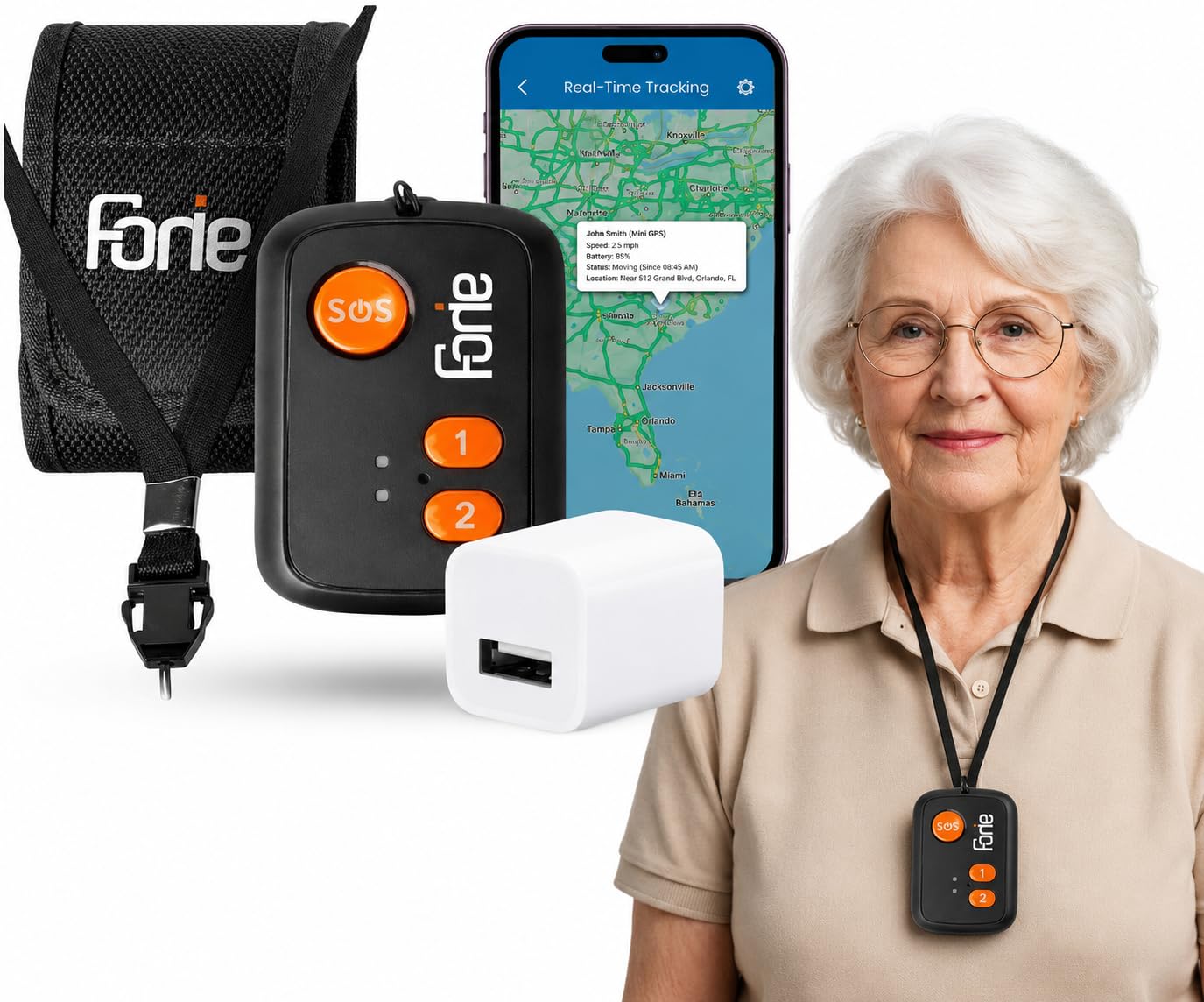
The only pick that doubles as a real phone and lasts a full week between charges.
FONIE takes a different approach: it is a mini phone that you wear around your neck. That means three speed-dial buttons for two caregivers plus 911 (or any number you set), full two-way voice calls, and an auto-answer feature so the wearer never has to fumble with a screen. It uses advanced 4G GPS and Wi-Fi for real-time tracking with 10-second updates — so caregivers see the location almost live on their app. The geo-fencing sends alerts when the wearer leaves a set safe zone, and location history goes back one year.
The standout spec is the 7-day battery life — that is 2 days longer than the SecuLife (5 days). Buyers confirm this: one user highlighted “very long battery life” was a major positive. Service starts at /month after a 3-month free trial, making it among the most affordable options here in the long run. The IPX67 waterproof rating (protected against dust and immersion in 1 meter of water for 30 minutes) means it is fine in the shower or rain. It weighs just 3 ounces — 1.24 oz heavier than the ADT necklace but still light enough for daily wear.
The limitation is cellular reception. Some reviewers noted that the FONIE failed to connect to cellular service in areas where a standard cell phone worked fine. It works well in town, giving location data to 911, but in weak-signal areas it may not be reliable. Customer service gets strong praise — one shopper added Ralph called back quickly and activated the device within 24 hours — but the signal issue is a real geographic risk.
Mini-Phone Perks
- 7-day battery life — longest on this list, rarely needs charging
- Works as a full hands-free telephone with three speed-dial buttons
- 3 months free service, then /month — lowest ongoing cost here
- Real-time GPS tracking with 10-second updates
Signal Weakness
- May not connect to cellular service in areas with weak reception
- Instructions printed in extremely small text, per a buyer complaint
Best fit for: caregivers who want the longest battery life and a device that works as a real phone, in areas with strong AT&T/4G coverage.
The catch: test the signal at home first — the device needs a solid cell connection to work.
4. 321 Alert Mini X2 Medical Alert System
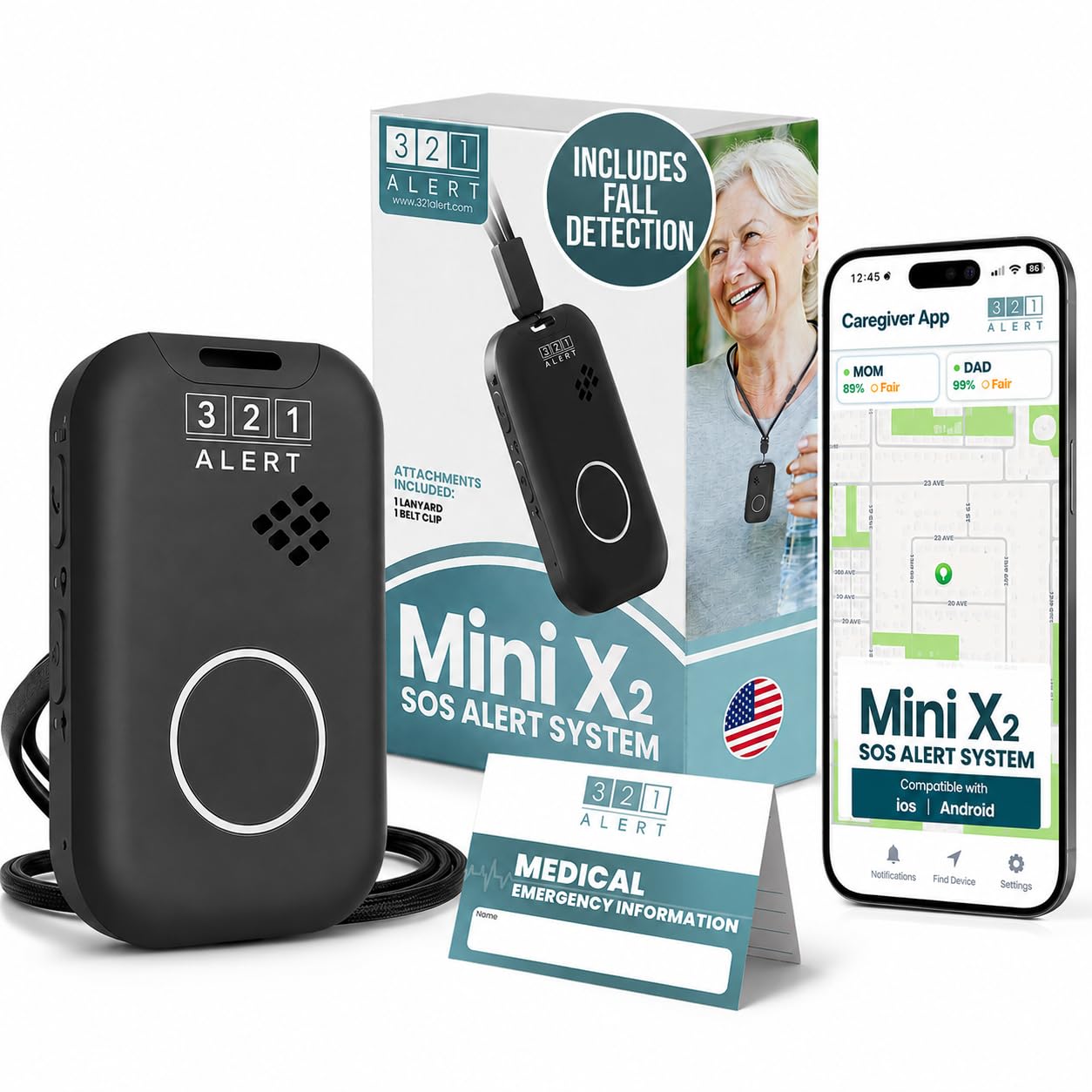
The highest-rated pick on this list, combining 24/7 monitoring with a bedside charging dock.
The 321 Alert Mini X2 earned a 4.6 out of 5 from 62 reviews — the best average score here. It connects to a 24/7 emergency response center with GPS and 4G LTE, meaning the call button works anywhere there is cellular coverage in the USA. The battery life is listed at 6 days — that is one day better than the 5-day battery life of the SecuLife, and a full day longer than the Medical Guardian MGMini’s 120 hours. But the real design win is the charging dock, which has a built-in help button on the dock itself. So even if the pendant is sitting on the charger, the wearer can still press the help button on the dock to call for assistance. For seniors who frequently forget where they left their necklace, that is a practical safety net.
Buyers consistently mention easy setup and confidence. One reviewer noted they bought it for their 79-year-old mother who wants to stay independent, and they appreciated the affordable price and simple activation. Another mentioned the device was adaptable for a non-speaking user — the monitoring center adjusted the setup to fit her needs, which shows flexibility in the service.
The shape of the pendant is intentionally thicker than slim models — the manufacturer notes it has a “nice feel and easy-to-hold shape for seniors with arthritis.” Unlike the SecuLife’s family-direct model, this one uses professional monitoring, so it is better for seniors living alone. The USB-C charging (a modern reversible connector) is a nice modern touch and the included car charger means it can charge on the road.
Smart Design Choices
- 6-day battery life — strong for a monitored device
- Charging dock has its own help button for backup when pendant is docked
- Highest customer rating on this list (4.6/5)
A Few Limits
- Monthly fee of is mid-range — cheaper than some, not the cheapest
- Relies on cellular coverage — no Wi-Fi backup mentioned
Top pick if: you want the best-rated device that balances long battery life, professional monitoring, and a clever dock that keeps help accessible even when the pendant is charging.
Consider another if: you need a device that works without any monthly subscription fee.
5. Medical Guardian MGMini
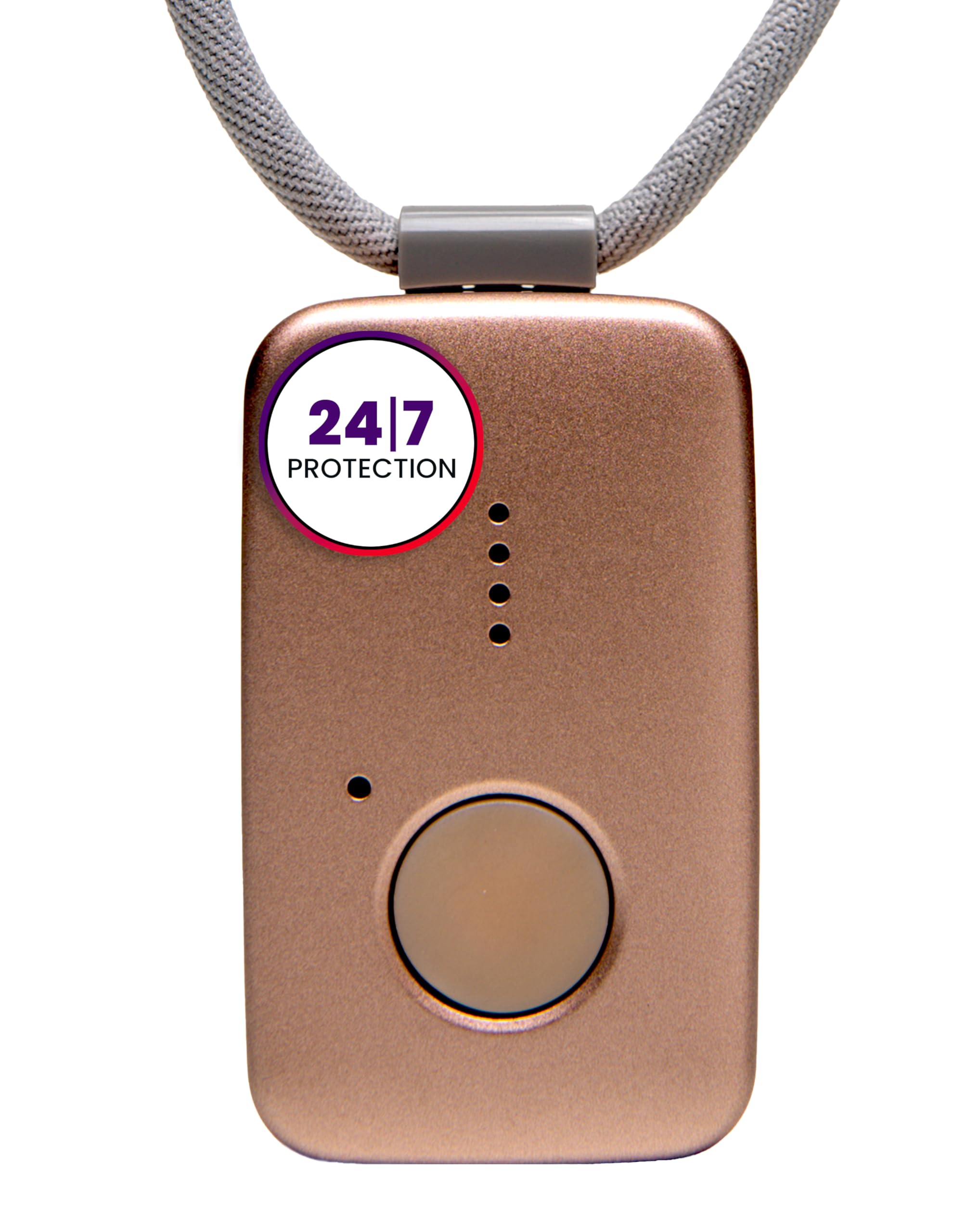
A trusted name that looks more like jewelry than a medical device, with omniSIM network switching.
The MGMini is designed by Medical Guardian, a company that says over 625,000 people rely on its devices. The standout feature here is omniSIM technology — the pendant automatically switches between AT&T and Verizon 4G LTE networks to grab the strongest signal wherever the wearer is. That is a meaningful difference from the other picks, which typically lock into a single carrier. At 120 hours (5 days) of battery life, it matches the SecuLife but trails the FONIE (7 days) and 321 Alert (6 days). Pressing the SOS button connects you to a US-based operator within 10 seconds through the two-way speaker.
Fall detection is available as a /month add-on — it is not built into the base subscription of /month. The device comes in rose gold and is noticeably styled to look less clinical, which some seniors will appreciate. Shoppers say that setup requires an activation call — one buyer mentioned the customer service was “very helpful and professional,” though another noted the company’s cancellation process requires a business-hours call and involves a retention specialist.
Compared to the ADT system below (also 4/5 stars but 40-hour battery), the MGMini’s 120 hours (5 days) is triple the battery life. That is a huge difference for daily wear — the ADT needs almost-daily charging, while the MGMini can go most of the week. However, one critical reviewer noted that the device is not a true GPS tracker — it uses Wi-Fi and Bluetooth for location, not standalone GPS, so it may be less accurate in remote areas. For tracking purists, the FONIE or SecuLife are better choices.
Premium Feel, Smart Network
- omniSIM switches between AT&T and Verizon for best signal
- Discreet rose gold design — less medical-looking
- 120 hours (5 days) battery life
Cost and Tracking Concerns
- Fall detection costs an extra /month on top of base fee
- Uses Wi-Fi/Bluetooth for location, not true standalone GPS
- Cancellations require a phone call during business hours
Best for: seniors who care about how the device looks and want the reassurance of a brand trusted by over 625,000 users.
pass on it if: you need true GPS tracking for outdoor location accuracy or you want fall detection without a /month extra fee.
6. ADT On-The-Go Mobile Medical Alert System

ADT’s name carries weight — but the 40-hour battery is the shortest on this list by far.
ADT brings its 150 years of monitoring experience to this mobile pendant. Pressing the single SOS button sends an immediate alert via the nationwide AT&T 4G network to a US-based ADT monitoring center. What ADT does well is step-by-step updates: senior-sensitivity trained agents keep emergency contacts informed with updates from first responders. That means you are not left wondering what happened — the center calls your family as events unfold. It weighs just 1.76 ounces, which is the lightest of the bunch (the FONIE is 3 oz, for comparison), making it comfortable for all-day wear around the neck or as a wristband.
But the 40-hour battery life (under 2 days) is the weakest on this list. The Medical Guardian MGMini gets 120 hours (5 days), the FONIE gets 7 days — the ADT needs charging roughly every day and a half. For a senior who might forget nightly charges, that is a genuine risk. Reviewers noted that the print on the box is too small for people with eye issues, and one buyer received a device that did not work, requiring a replacement after a 1.5-hour phone call. At /month (billed quarterly), it sits in the same range as the Smart Med Alert and the 321 Alert but with much less battery endurance.
On the positive side, setup is known to be simple — one reviewer with a 79-year-old mom said they just called the activation number and were walked through everything, including a test run for confidence. The included waterproof wristband or necklace gives flexibility. But given the battery gap, it is hard to recommend over the 321 Alert Mini X2 (6-day battery, also professional monitoring) unless you specifically want the ADT name on the response.
Brand Legacy That Matters
- 150 years of monitoring experience — ADT is a household name
- Agents provide step-by-step updates to family during emergencies
- Lightest device at 1.76 ounces
Battery Is a Real Weakness
- 40-hour battery life — requires near-daily charging
- /month is mid-range but delivers the least battery endurance here
- Some units arrived non-functional, per buyer reports
Reach for this if: you want the backing of ADT’s monitoring centers and the lightest possible pendant, and you are willing to charge it every day.
Look elsewhere if: battery life matters — the 321 Alert or FONIE give you multiple extra days between charges.
Understanding the Specs
Fall Detection — The Auto-Save Feature
Fall detection uses motion sensors to detect the G-force of a fall and automatically sends an alert, even if the wearer cannot press the SOS button. When triggered, the device automatically sends an alert — even if the wearer is unconscious or cannot press the SOS button. This is the single most important spec for a senior who lives alone or has mobility issues. Some pendants send the alert to a professional monitoring center; others notify family directly. The reliability of fall detection varies by brand — some buyers report accidental triggers during sudden movements, while others say the sensitivity can be customized by calling support.
GPS Tracking — Knowing Where They Are
GPS tracking uses satellite signals to pinpoint the pendant’s location, enabling responders or family to find the wearer. Real-time GPS updates (every few seconds to minutes) give you live location data. Geo-fencing (digital boundary setting) sends you an alert if the wearer leaves a safe zone you set, like their home or yard. Not all GPS tracking is equal — some devices rely on GPS plus Wi-Fi and cellular tower positioning, which works well in cities but can be less accurate in rural areas. The best GPS trackers here update every 10 seconds, as the FONIE does.
FAQ
Do all alert necklaces for seniors require a monthly subscription?
How long do alert necklace batteries last in real use?
Will these necklaces work if my loved one falls in the shower?
Fall detection vs manual SOS button — which is more important?
Can I use an alert necklace for a parent with dementia or Alzheimer’s?
Will a pendant work in rural areas with poor cell reception?
How does two-way calling work on a medical alert pendant?
Can more than one family member get alerts from the same device?
Final Thoughts: The Verdict
For most people, the alert necklace for seniors winner is the SecuLife Medical Alert Pendant because it sends alerts directly to family without a call center middleman, carries a 5-day battery life, and costs just per month with GPS geo-fencing and fall detection included. If you want full-time professional monitoring and the confidence of a 24/7 response center, grab the 321 Alert Mini X2 — it has a 6-day battery, a clever docking station with its own help button, and the highest customer rating on this list. And for the longest battery life at the lowest ongoing cost, the FONIE GPS Medical Alert Mini Phone runs for 7 days on a charge, works as a real telephone, and costs /month after the free trial period.
How We Picked
We do not accept paid placement. Every pick is matched to a real buyer and a real use-case; we do not hands-on test units.
Sources & Methodology
Specifications: manufacturer listings and product documentation. Review insights: verified customer reviews, as of July 2026. Pricing: not shown on this page (it changes often); check the current price via the retailer link.
As an Amazon Associate, Gadgets Feed earns from qualifying purchases. This does not affect which products we feature.