
Our readers keep the lights on and my morning glass full of iced black tea. As an Amazon Associate, I earn from qualifying purchases.
Specs are compiled from manufacturer listings and verified buyer reviews and can change over time — please confirm the key details on the product page before buying.
Alfalfa seed splits into two very different jobs, and buying the wrong bag is the number one mistake: some lots are cleaned and tested for eating as sprouts in a jar, and others are bred and coated for planting into soil as pasture, hay, or a cover crop. Decide which job you have first. If you want crunchy sprouts on a sandwich, you need a food-grade sprouting lot with a stated germination rate. If you want a green field, a food plot, or hay for animals, you need a forage or cover-crop lot built for the ground.
I’m Min — the founder and writer behind Gadgets Feed. This guide is built by comparing the manufacturers’ published specifications and the patterns across verified customer reviews, so you get each pick’s real strengths and trade-offs instead of marketing spin.
Below you get the exact numbers that separate a good bag from a dud. Germination rate is the first spec to check, then seed weight, organic status, and coating. The list below matches each of those to the right buyer so you never overpay for the wrong kind of seed again. Here are the best alfalfa seed picks for sprouting jars and for planting into real soil.
Our Picks at a Glance

How To Choose The Best Alfalfa Seed
Before you compare bags, answer one question honestly: are you growing sprouts indoors in a jar, or planting into ground outdoors? That single answer eliminates half the list. The pick that wins for a sprouting jar is a food-grade lot with a high germination rate and clean handling. The pick that wins for a pasture is a coated forage lot with winter hardiness and rapid regrowth after cutting.
Sprouting seed versus planting seed
Sprouting seed is cleaned and tested for home growing indoors. You soak it, rinse it daily, and eat the sprouts. Planting seed is bred for yield and often comes coated. That coating helps the seed fix nitrogen (pull usable nitrogen from the air into the soil for the plant) and hold water, but it also means a portion of the bag’s stated weight is coating, not seed. Never sprout coated planting seed in a jar — the coating is not meant for eating.
Read the germination rate before anything else
Germination rate is the share of seeds that actually sprout. It is the single spec that decides how much food or forage you get per ounce. A stated rate like 95% means third-party testing confirmed 95 of every 100 seeds germinate. Lower stated rates, or unstated ones, usually signal a commodity lot where the seller cannot guarantee consistency.
Weight, coating, and how far a bag goes
A 16-ounce bag and a 3-pound bag differ by a lot of batches. If you sprout weekly, the larger lot wins on servings per bag. For planting, coated seed can mean you receive a portion of the stated weight in coating, not actual seed. A grower who lists the seed as not coated is telling you every ounce is seed.
Quick Comparison
| Model | Best For | Weight | Use | Key Trait | Amazon |
|---|---|---|---|---|---|
| Food to Live Alfalfa Seeds for Sprouting★ Best Overall | Sprouting in a jar | 3 pounds | Indoor | GMO Free | Amazon |
| Outsidepride Perennial Alfalfa SeedsTop Forage Pick | Pasture and hay | 16 ounces | Outdoor | Nitrocoated & inoculated | Amazon |
| TitaniX Organic Alfalfa Sprout Seeds | Organic sprouting | 16 ounces | Indoor | USDA Organic, 95% germ. | Amazon |
| Majero Organic Alfalfa Sprout Seeds | Budget organic sprouting | 16 ounces | Indoor | USDA Organic, 95% germ. | Amazon |
| Country Creek Alfalfa Sprouting Seed | Repeat sprouters | 16 ounces | Indoor | Non GMO, USA grown | Amazon |
| Mountain Valley Seed Co Non-GMO Alfalfa Seeds | Field growing and cover crop | 16 ounces | Outdoor | Medicago sativa, perennial | Amazon |
| Green Stripe Alfalfa Seeds Cover Crop | Cover crop and pollinators | 16 ounces | Outdoor | Uncoated, farmer direct | Amazon |
In‑Depth Reviews
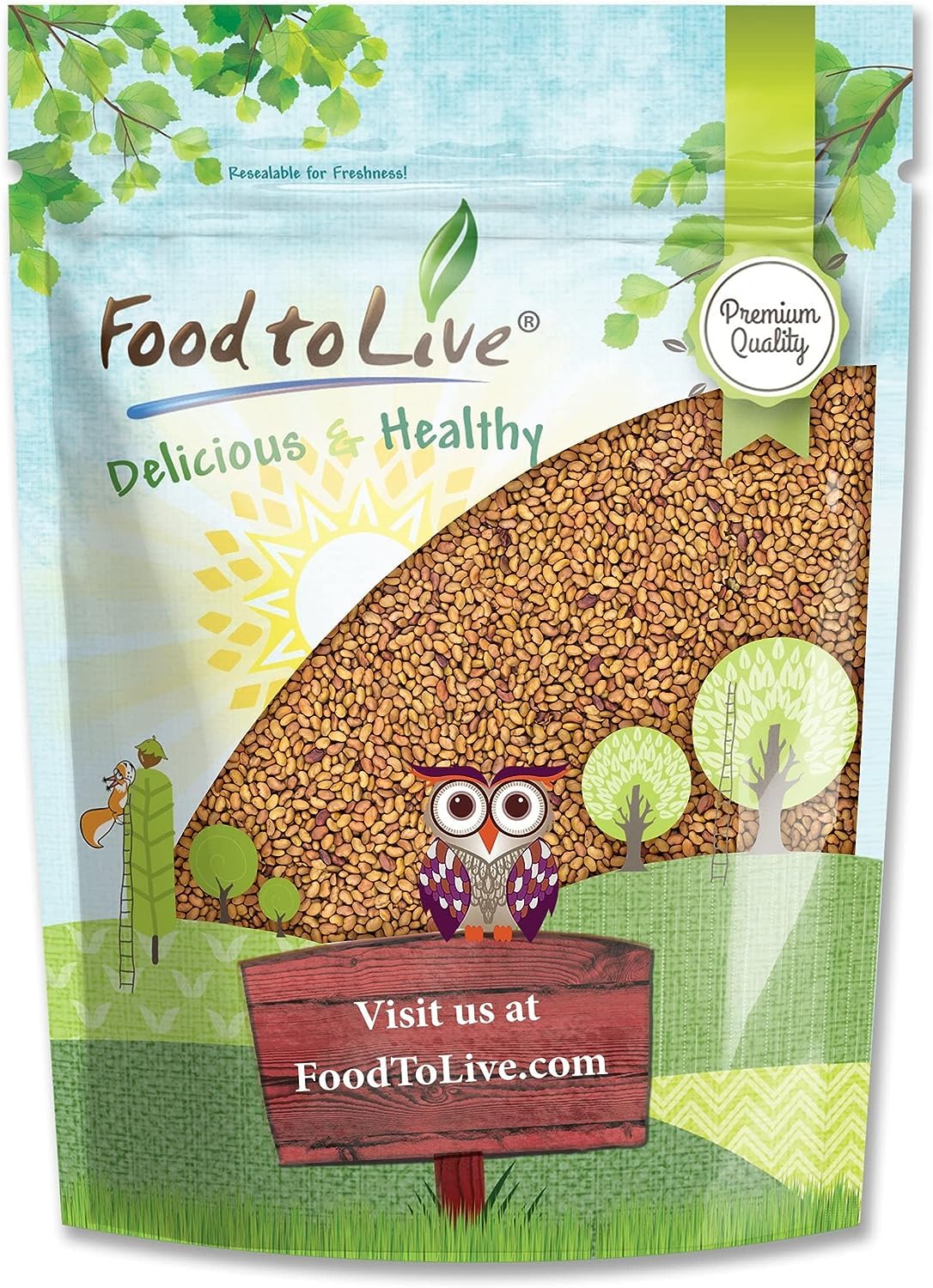
1. Food to Live Alfalfa Seeds for Sprouting, 3 Pounds
Our pick — over 4.5★ from 750+ verified ratings; the strongest balance of quality and price.
A three-pound bulk bag where one tablespoon fills a wide-mouth jar.
The crowd favorite here is the bulk buy that keeps a sprouting jar running for months. Most owners are sprouting within two days and eating finished sprouts around the three-and-a-half-day mark, so you are not waiting a week for a sandwich topping. It is GMO free, vegan, and kosher, and a single tablespoon fills a wide-mouth jar. That means a three-pound bag stretches far — the kind of math that turns a bulk purchase into real value.
What wins people over is how reliably these sprout. The germination is where owner enthusiasm concentrates, with taste close behind. Owners lean on the upside-down mason jar method and report clean, consistent growth across the bag, not just the first scoop. It also works as a microgreen lot for salad, sandwiches, and rolls, which adds use cases a plain sprouting seed does not cover. Buyers report putting it plainly: “These sprouted perfectly. They taste great even plain right out of the sprouting jar. They grew fast.”
The honest trade-off is pacing, not performance. These are low-calorie and fresh-tasting, and a serving of the finished sprouts runs about 30 calories. One buyer who worked a quarter of the way through the bag called it a value and delicious easy micro-greens, which is the typical read. It is a genuine bulk pick, not a small trial bag — if you are sprouting only occasionally, three pounds will outlast your interest.
Where It Wins
- Sprouts within about two days, ready to eat around 3-1/2 days
- One tablespoon fills a wide-mouth jar — a small scoop goes a long way
- Three-pound bulk bag stretches across dozens of batches
- GMO free, vegan, kosher, and works for sprouts or microgreens
- Crunchy texture with a pleasantly mild flavor, and about 30 calories per serving
Worth Knowing
- Two tablespoons overcrowds a 32-ounce jar — use one
- Home sprouting demands twice-daily rinsing and a clean jar
- Three pounds is more than an occasional sprouter needs
Buy this if: you sprout weekly and want one bag to carry you through many jars of crunchy, mild sprouts.
Skip this if: you only sprout a couple of times a season — the size is built for regular growers.
2. Outsidepride Perennial Alfalfa Seeds for Planting – 1 lb High Yield
A one-pound Vernal alfalfa lot, nitrocoated and inoculated for pasture and hay.
This is the pick for a field, a food plot, or a hay crop — not a jar. It is a one-pound bag of Vernal alfalfa, an heirloom non-GMO lot bred for dense coverage and up to 3-4 harvests a year. The seed is nitrocoated and inoculated, which means each seed carries a coating that boosts nitrogen fixation (pulling usable nitrogen from the air into the soil), improves water absorption, and lifts germination. It is drought tolerant and winter hardy, so it regrows after cutting and comes back strong through cold.
Where this lot shines is speed in real conditions. Growers have reported sprouts in about four days from a Saturday planting, and one Southern California first-timer saw them at five days after hand-sowing with just coconut fiber and water. It feeds animals well — one owner was growing it to feed 25 rabbits and cut hay costs. If you plant for wildlife, deer plots are a stated use, and a grower reported the deer seem to like it.
Here is the honest note: the germination is the most-discussed thing about this bag, and it goes both ways. Some growers see great sprouting, others see slow starts or nothing at all. Plant it correctly, keep it damp, and be patient — one grower who nearly gave up was relieved when the seeds finally came through. A durable, coated forage lot for ground use; keep it out of the kitchen, because that coating is not for eating.
Who it fits: someone planting a pasture, hedgerow, or hay field who needs multiple cuts a year and cold survival — the vernal variety delivers both.
The real caveat: results track how you plant. Several buyers found the seeds slow to start, and one grower even questioned whether the lot was the true Medicago sativa species. Sow it, water it consistently, and give it time instead of judging in the first week.
Reach for it when you have ground to cover and want a coated, winter-hardy forage legume you can cut again and again.
Look elsewhere if you want sprouts on a plate — this coated seed is a planting lot, not a food-grade one.
3. TitaniX Organic Alfalfa Sprout Seeds (16 oz)
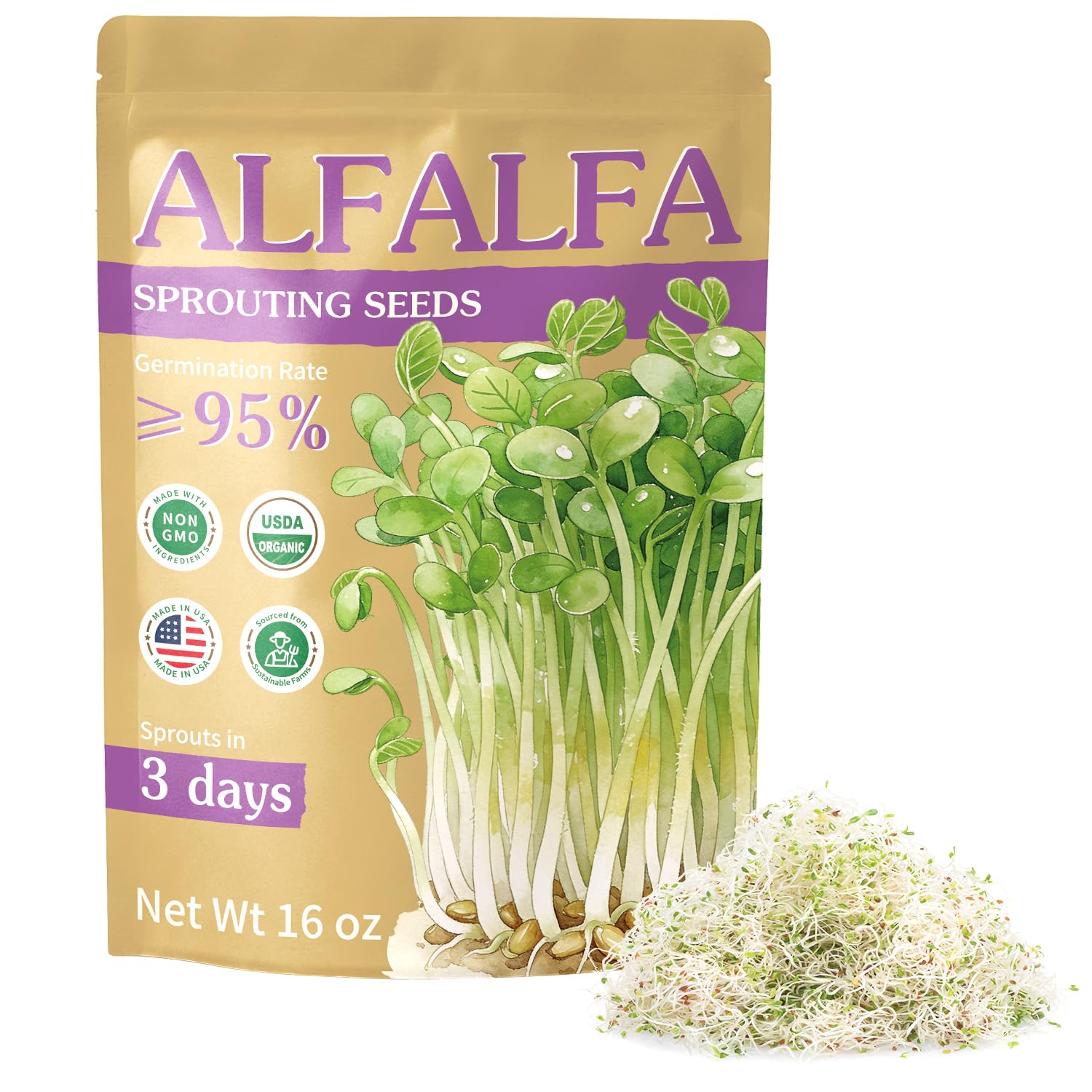
USDA organic and third-party tested at 95% germination, in a resealable 16-ounce bag.
If eating organic matters to you, this is the sprouting lot to beat. The 16-ounce bag is USDA organic and non-GMO, hand-selected and not treated with pesticides, which is the one thing a food-grade sprouting seed should get right. It is third-party tested to a dependable 95% germination rate (95 of every 100 seeds sprout), and the resealable bag keeps the lot fresh between batches. Harvest lands in the 6-11 day window, and there is no soil or green thumb required — soak and rinse daily.
The flavor is the other selling point. These are delicate, crisp, and mild, which is exactly what you want on a salad, sandwich, or wrap. Quality is what this bag is known for, and taste follows close behind. It is heirloom material, not hybrid commodity stock, which matters if you sprout year round and want the same result every cycle. At the same price as an 8-ounce bag while giving you double the volume, the value math is on your side.
The catch is that germination is the most-discussed topic here, and it is mixed. Some sprouters report fast, easy growth; one buyer counted only about a cup of sprouts from three tablespoons of seed across three batches. That gap is real, and it points to a fixable habit — soak the full time, rinse twice a day, and keep the jar draining well. Organic certification and a stated 95% rate still make this a strong buy, just one where your own routine decides the result.
Why it earns a spot: certified organic and third-party tested at 95% germination is a combination most sprouting lots do not carry, and the resealable bag keeps the seed fresh for the next batch.
What to watch: a few buyers found the germination short of the stated rate, so treat the rinse-and-drain schedule as part of the product, not an afterthought.
Best for the organic-focused sprouter who wants a tested 95% germination lot and a bag that reseals between batches.
Think twice if you want the greatest possible seed count per dollar and are less concerned about organic certification.
4. Majero Organic Alfalfa Sprout Seeds – 16 oz

A USDA organic 16-ounce pouch tested to 95% germination and ready in 3 to 7 days.
The headline here is speed and finishing. This USDA organic 16-ounce pouch is tested to a steady 95% germination rate — 95 of every 100 seeds come up — and it matures in just 3 to 7 days, which is faster than most of the organic sprouting lots on this list. You soak, rinse daily in any jar or tray, and no soil is needed. The seeds are non-GMO, untreated, and packed as an heirloom material, so the taste is clean and mild.
What keeps people coming back is that the sprouts fill out evenly. Owners describe max percentage sprouting with very quick results, and the resealable pouch is a small detail that gets mentioned often because it keeps the lot dry between batches. Flavor is on the mild, crisp side, which is exactly right for salads, sandwiches, tacos, and wraps. If you are new to sprouting and want a bag that is hard to get wrong, this is a forgiving lot to start with.
The usual sprouting caveat applies, sized to reality: these grow to a smaller, finer sprout than the fat ones sold in stores, and a few buyers noticed that difference. That is a preference, not a defect — home-grown alfalfa is naturally finer than commercial stock. Match this bag to a weekly rinse routine and it delivers, but treat inconsistent hydration as the reason some batches underperform.
The Strong Points
- 95% germination rate, third-party tested
- Harvest in 3 to 7 days — the fastest on this list
- USDA organic, non-GMO, heirloom material
- Resealable pouch keeps seed dry between batches
The Fine Print
- Sprouts come out finer than store-bought alfalfa
- Organic premium means it costs more than basic commodity lots
- Needs consistent daily rinsing to hit the fast harvest window
Choose this when you want the fastest organic sprouting result and a pouch that reseals between batches.
Move on if you insist on fat, commercial-size sprouts — these run naturally finer.
5. Country Creek Alfalfa Sprouting Seed, Non GMO – 16 Oz
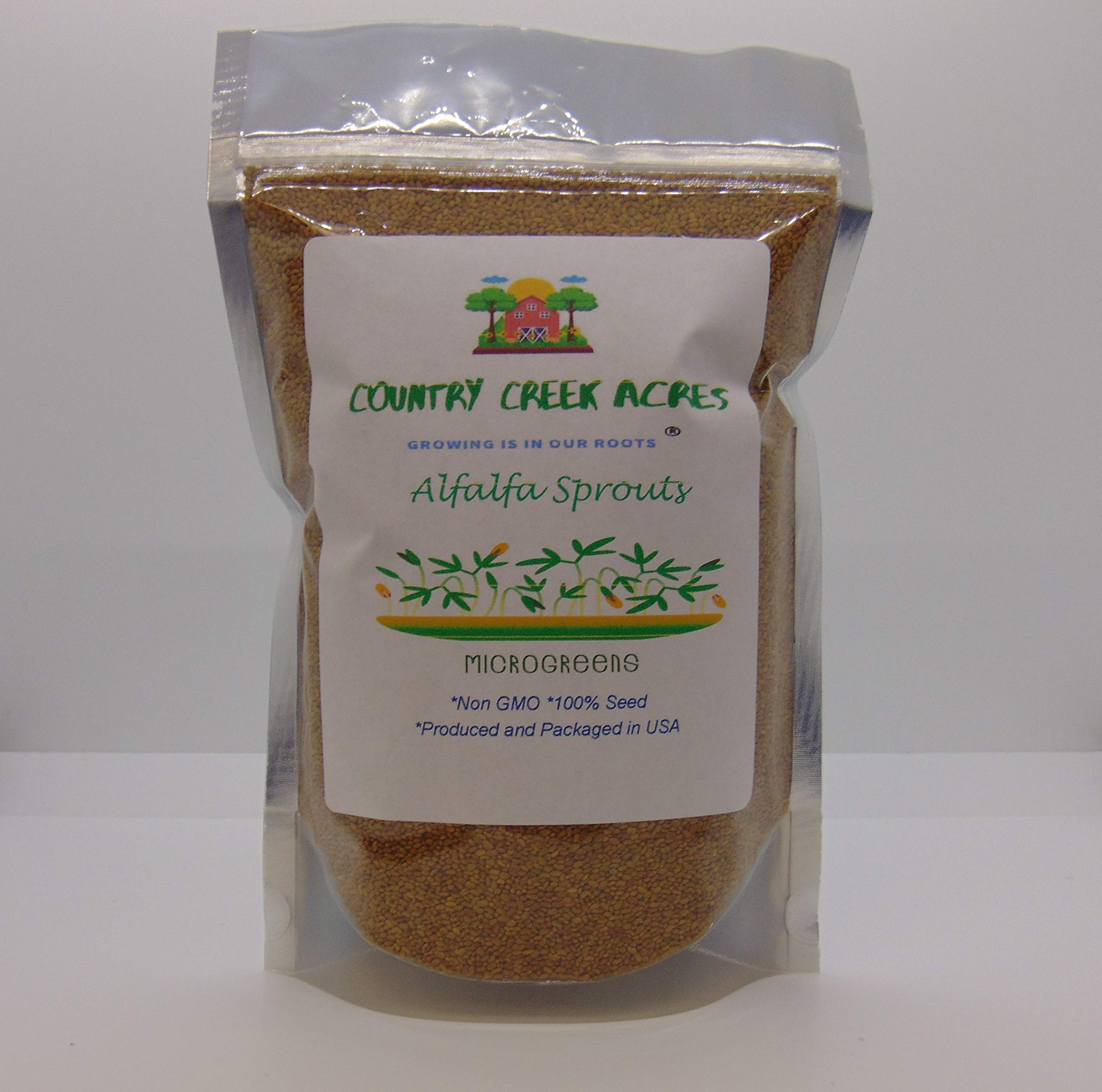
A non-GMO, USA-grown 16-ounce lot sold under one brand, with repeat buyers behind it.
What sets this one apart is loyalty. It is a non-GMO 16-ounce sprouting lot, grown and packaged in the USA, and the maker is firm that you should accept the Country Creek brand only, with no substitutions. That single-brand stance is backed up by the pattern of buyers who come back to it — repeat purchases are the story here, not a big discount. The seeds germinate easily in homemade containers, soak in the 8-10 hour range, and then rinse daily until you have sprouts.
Owners describe sprouts that taste great with the majority, sometimes all, of the seeds coming up. One notable point: where another brand reportedly went fishy after four days of daily water changes, this lot came through clean. That freshness difference matters in a jar you are rinsing twice a day. The resealable bag also gets called out for holding up — it seals well, resists ripping, and can be reused, which is unusual for sprouting seed packaging.
If you want a sprouting seed that behaves the same way on the tenth jar as it did on the first, this is a low-drama pick. It is a straightforward, one-brand bag for sprouters who value consistency over chasing a better price elsewhere.
Where it delivers: a clean, consistently sprouting lot with no off-smell and a resealable bag that survives repeated use — the traits that turn a one-time buyer into a repeat one.
What to know: the maker insists on the one brand, no substitutions, so you are buying into a specific source rather than the cheapest listing.
Pick it up if you want a USA-grown non-GMO sprouting lot that delivers the same clean result jar after jar.
Consider the bulk bag instead if your priority is the most seed per purchase rather than repeat-purchase consistency.
6. Mountain Valley Seed Co Non-GMO Alfalfa Seeds 1 Lb
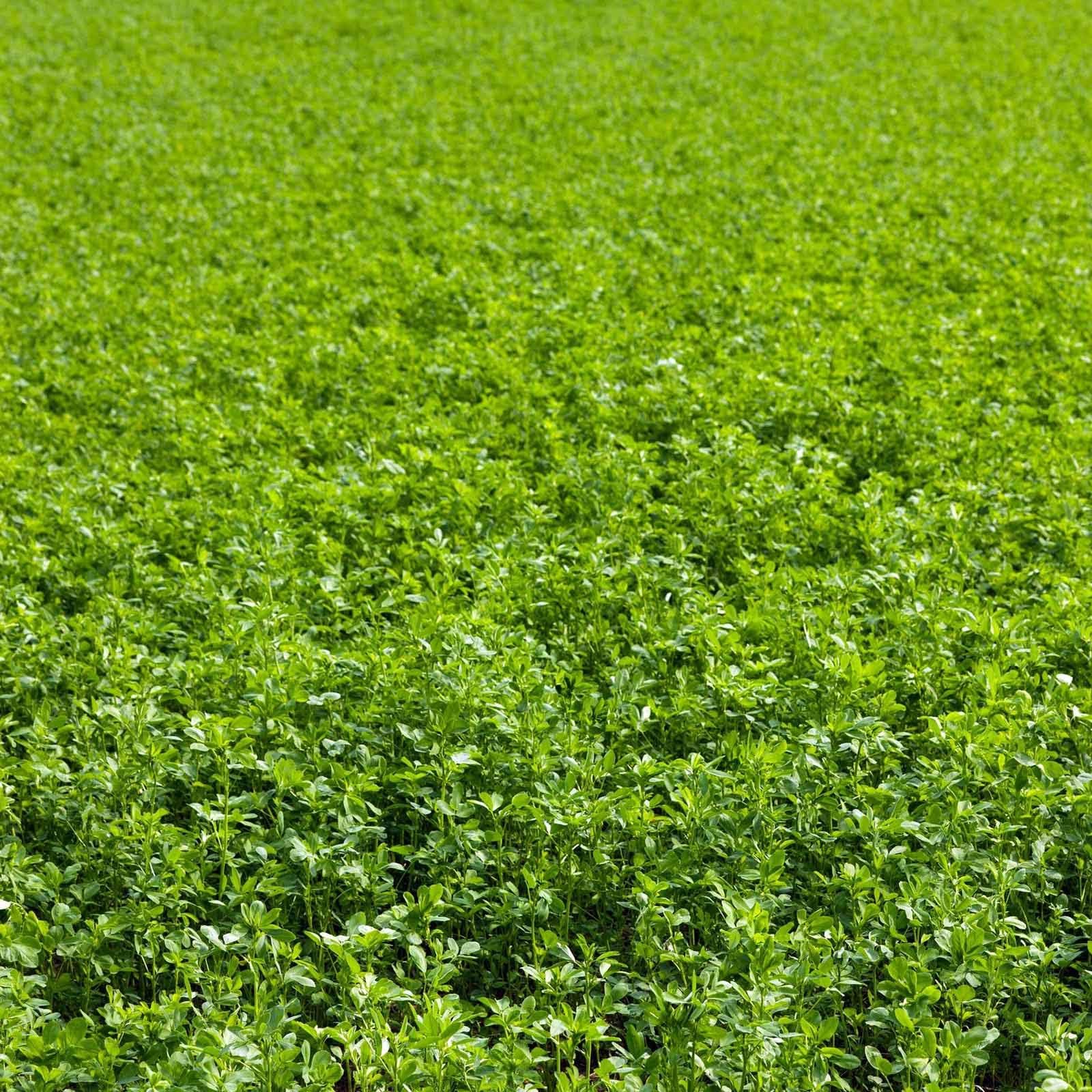
A one-pound lot labeled Medicago sativa by name, for field growing and cover crop.
This is the lot to reach for when the goal is ground, not a jar. It lists Medicago sativa by name — the true alfalfa species — with a high germination rate, heirloom, non-GMO, and open pollinated material. It is a one-pound bag built for gardening, field growing, and cover crop use, with a perennial habit that comes back year after year in USDA hardiness zones 2-9 and days to full maturity in the 60-70 range. For a grower who wants the species stated plainly on the label, this is a rarity.
The results track the ground conditions. Owners mention quick sprouting in glass jars, with one seeing completion around five days and the sprouts storing well in the fridge for more than four days. Others planted it as field stock for their animals. That range tells you this lot is meant to be flexible — you can grow it out in a container or put it in a field.
The important caveat is crop identity. Performance is the most-discussed topic and it is uneven: some customers note thriving, quick growth, while one grower who prepped pH and fertilizer for their field found the crop came up as red clover rather than alfalfa, and another noted a sparse stand. Neither a strong performer nor a wreck — it is a working field lot whose results track your conditions and seed handling.
What Works
- Species stated by name: Medicago sativa
- Perennial, hardy zones 2-9, 60-70 day maturity window
- Non-GMO, heirloom, open pollinated
- Sprouts quickly in jars and stores well in the fridge
Worth Considering
- Field results vary with soil and seed handling
- One grower reported a red clover mix instead of alfalfa
- Some buyers found the stand sparse
This is for you if you want a perennial field alfalfa with the true species species named on the label and a cover-crop habit.
Know your ground first — field seed rewards good soil prep, and one grower’s crop did not match expectations.
7. Green Stripe Alfalfa Seeds – Regenerative Cover Crop – 1 Lb
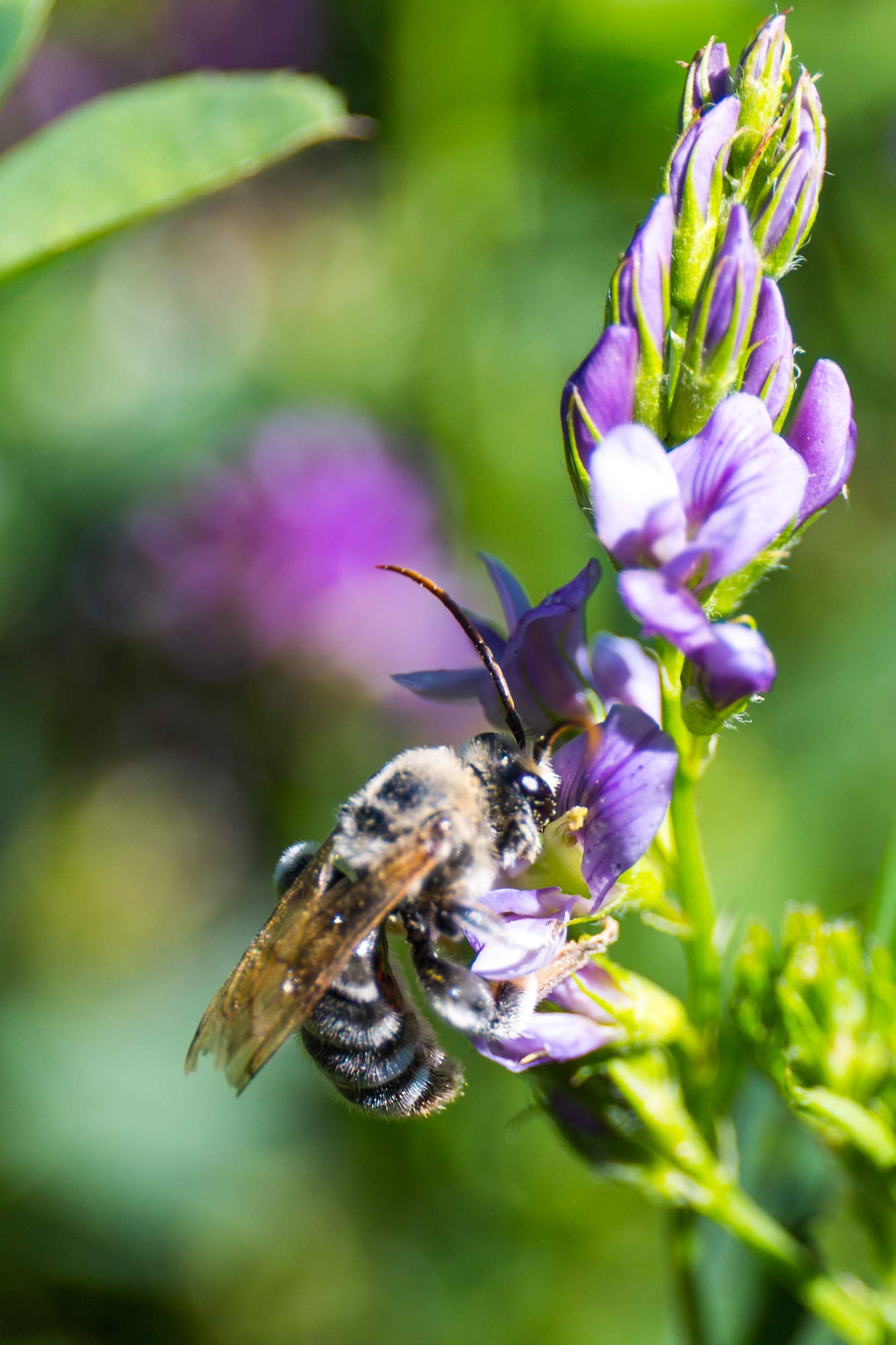
Uncoated 1-pound seed from a fourth-generation family farm, for cover crop and pollinators.
Here is the standout number: this is uncoated seed, which the grower notes matters because coated seed can leave you up to 40% less actual seed in the bag. Every ounce here is seed. It comes from a fourth-generation family alfalfa farm, non-GMO, heirloom, open pollinated, and describes itself as farmer-direct and weed-free. It is a conventional 1-pound cover-crop lot for field growing, a bee food source, and a treat for chickens, rabbits, and sheep.
The planting instructions are worth remembering: alfalfa roots quickly, so half an inch deep is enough. Sprinkle the seed evenly, cover it lightly, and expect sprouts within 7 to 10 days. The typical seeding rate for alfalfa hay is stated as 20-25 pounds per acre, so you will want bulk for real acreage. It fixes nitrogen well and attracts pollinators, which is where the honey angle comes from — bees that pollinate alfalfa produce honey — and it is perennial, coming back year after year in zone 2. As a hay and forage crop it produces high biomass and forage, and the maker explicitly notes this is a newer, non-vernal variety.
The one thing to plan for is scale. A single pound is a garden or pollinator-strip purchase, not an acre of hay. Reviewers point out the seed arrives quickly and in quality condition, and one grower saw small growth within 24 hours with a bunch of sprouts by day three. If you want to plant real acreage, remember the stated 20-25 pounds per acre and buy in bulk — the maker ships up to 10 at a time.
Why it stands out: an uncoated lot from a named family farm, so the bag contains only seed — and the maker flags that coated seed can cost you up to 40% of your seed weight to coating.
Plan your scale: the stated seeding rate for hay is 20-25 pounds per acre, so a one-pound bag is a garden or pollinator-strip purchase, with bulk available for larger plantings.
Ideal if you want uncoated, uncoated-direct seed from a family farm for a cover crop, bee strip, or small hay plot.
Budget for bulk if you are seeding acreage — the stated hay rate runs 20-25 pounds per acre.
Understanding the Specs
Germination Rate
Germination rate is the share of seeds that actually sprout, usually written as a percentage. A stated rate like 95% means a lab tested the lot and found 95 of every 100 seeds come up. Higher rates mean more food or forage from the same ounce, and third-party tested lots usually post higher numbers than unstated commodity seed. If a bag does not state a rate, assume you are getting a commodity lot with less consistency.
Coated vs Uncoated Seed
Coating is a layer around a planting seed that helps it fix nitrogen, hold water, and germinate faster — but that layer adds weight, so a portion of a coated bag’s stated weight is coating rather than seed. A grower who advertises uncoated seed is saying the whole bag is seed. Coated seed belongs in the ground; uncoated food-grade seed belongs in your sprouting jar.
Organic, Non-GMO, and Heirloom
These are three different labels, and they are not interchangeable. USDA organic means the crop was grown and handled without synthetic pesticides. Non-GMO means no genetically modified seed was used. Heirloom means a traditional, open-pollinated variety that is not hybridized. For eating sprouts, USDA organic is the certification to look for. For planting, non-GMO and heirloom are useful markers but carry no certification cost.
Bag Weight and How Far It Goes
Sprouting seed is measured in ounces or pounds, and the math differs by use. A sprouter uses roughly a tablespoon per jar, so a 16-ounce bag lasts many batches and a 3-pound bag lasts far longer. For planting, weight is tied to seeding rate — alfalfa hay is stated at 20-25 pounds per acre, so a 1-pound bag covers a garden bed or a pollinator strip, not a field.
FAQ
Can I sprout the alfalfa seeds sold for planting?
How long do alfalfa seeds take to sprout?
Is 95% germination rate actually good?
How much alfalfa seed do I need per jar?
Do I need to rinse alfalfa sprouts every day?
What does uncoated alfalfa seed mean for planting?
Is the Outsidepride lot true alfalfa (Medicago sativa)?
How long do alfalfa seeds last once the bag is open?
Can I use alfalfa seed for a cover crop or bee food?
How much alfalfa seed do I need per acre for hay?
Final Thoughts: The Verdict
Match the bag to the job. For most home sprouters, the winner is the Food to Live Alfalfa Seeds for Sprouting — the 3-pound bulk bag sprouted within about two days in owner reports, and one tablespoon fills a wide-mouth jar, so the 4.7-star crowd favorite is the one to grab if you sprout every week. If eating organic is the deciding factor, splurge on the TitaniX Organic Alfalfa Sprout Seeds for its third-party tested 95% germination rate. And if the job is ground rather than a jar, the Green Stripe Alfalfa Seeds is the pick to reach for — uncoated, so every ounce is seed, from a family farm built for cover crop and pollinators.
How We Picked
We do not accept paid placement. Every pick is matched to a real buyer and a real use-case; we do not hands-on test units.
Sources & Methodology
Specifications: manufacturer listings and product documentation. Review insights: verified customer reviews, as of September 2026. Pricing: not shown on this page (it changes often); check the current price via the retailer link.
As an Amazon Associate, Gadgets Feed earns from qualifying purchases. This does not affect which products we feature.